How to Build a Sales Battlecard for a SaaS Competitor

The battlecard from the launch is still pinned in the sales channel. But the competitor changed its packaging, a new objection keeps coming up, and nobody knows which claims are still approved. You built a sales battlecard for a SaaS competitor, but now every seller is working from a slightly different version of it.
So the page becomes the problem everyone can see. The bigger problem sits underneath it. Sources need checking. Product needs to confirm boundaries. Sales needs usable guidance. Someone needs to own the current version.
A useful battlecard gives the seller a credible next move in a specific deal. It doesn’t need to hold everything PMM knows. It needs to help someone recognize the situation, ask a good question, and know what they can safely say.
Key takeaways
- Start with recurring deal questions, not a full feature inventory.
- Keep evidence separate from interpretation and seller guidance.
- Give material claims a source, owner, verification date, and confidence level.
- Let PMM own framing while product confirms internal truth and sales tests usability.
- Choose tools after a one-competitor pilot shows where the workflow breaks.
Battlecards Decay Beneath the Page
A battlecard can look current long after the evidence behind it has aged. Pricing changes. Packaging moves around. Product capabilities get renamed. The sales team starts hearing an objection that wasn’t part of the original launch.

Experienced sellers notice these gaps pretty fast. They stop trusting the card, then fall back on memory or whatever another rep told them. Sometimes they repeat a claim PMM can’t defend anymore.
Our Content Refresh Loop describes monitoring factual and positioning drift, prioritizing fixes, updating the affected content, and measuring what changed. For a battlecard, I’d apply that by monitoring competitor and product changes, deciding which ones matter, updating the guidance, and asking sellers whether the new version answers the deal question. A quarterly calendar reminder won’t catch a packaging change that happened last week.
The Page Hides Ongoing Work
The visible document sits at the end of several jobs. Someone collected the evidence. Someone decided what it meant. Someone approved the claim, translated it into seller language, distributed the current copy, and listened for what was still missing.
If you use a chat tool only to draft the page, the assembly work remains. PMM still has to gather sources, reconcile conflicting opinions, track approvals, manage versions, and decide when the card needs another pass.
Deal Questions Determine the Card
Start with questions sellers hear in real deals. What do buyers ask about the competitor? Which objections shift the conversation? Where do reps hesitate?
Focus the card on one competitor, buyer segment, use case, and sales stage. This keeps it practical and prevents it from becoming a market-wide research project.
Use win-loss research, but respect its limits. One lost deal reveals what happened in that deal not a broader competitor pattern.
Evidence and Guidance Stay Separate
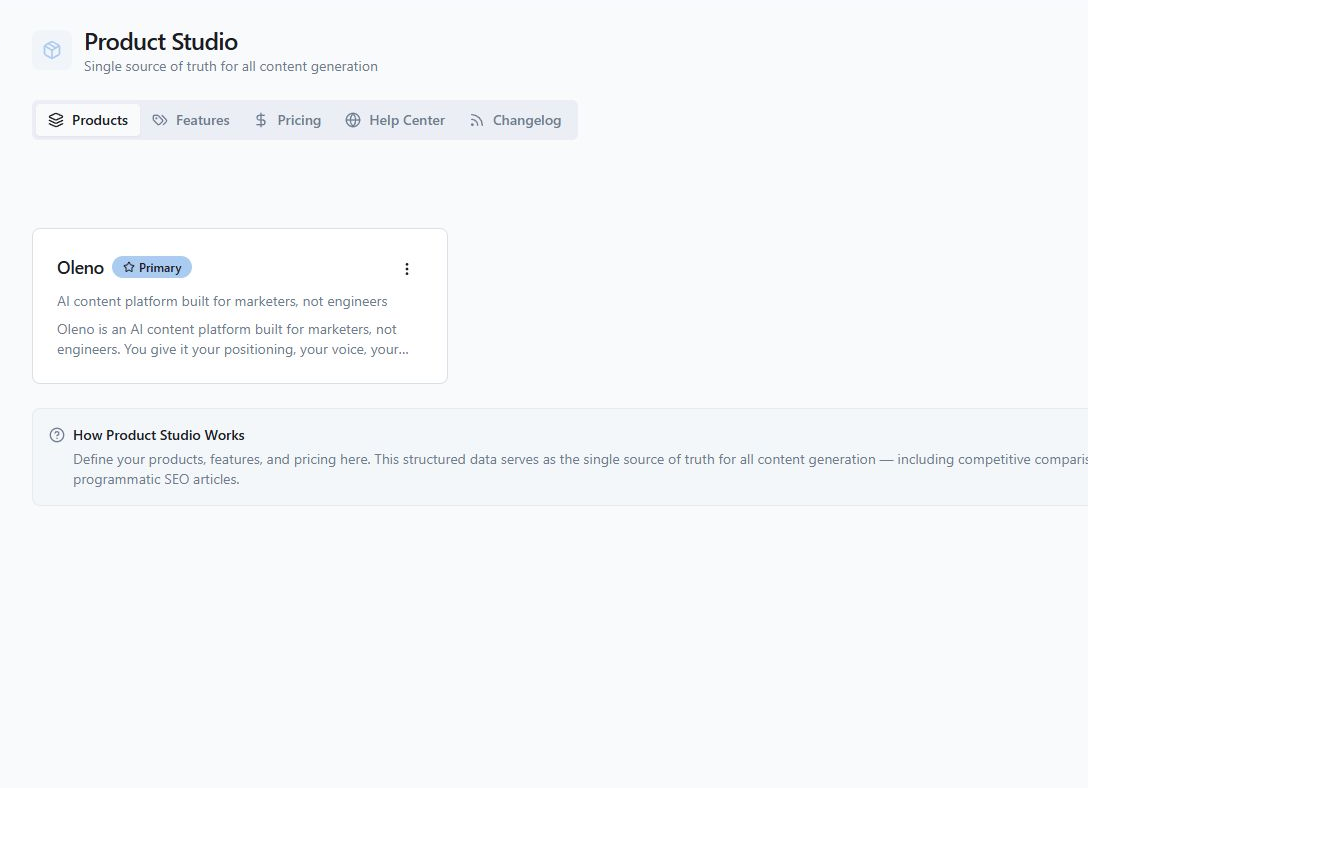
Our Content Governance for AI framework keeps product truth, audience context, and boundaries separate so each can stay current. Applying that principle to a battlecard, I’d keep three layers distinct because they answer different questions:
- Evidence: What does the source actually say? Record the URL or internal record, relevant excerpt, capture date, and context.
- Approved interpretation: What conclusion is PMM drawing, and who approved it?
- Seller guidance: When should the rep use the point, what should they ask, and what must they avoid claiming?
That separation gives reviewers a way to catch a seller anecdote before it becomes an approved competitive claim through repetition. It also makes updates easier. When a source changes, you can find the affected interpretation and guidance without rebuilding the whole card.
A lightweight claim ledger should include the claim, claim type, source, source date, owner, approval status, confidence, seller guidance, and refresh trigger. A spreadsheet is fine if the team will maintain it.
Credibility Includes Competitor Fit
A useful card should acknowledge where the competitor makes sense. Sellers already know when a document has been written to make your company win every row. If the card ignores obvious trade-offs, experienced reps will ignore the card.
Give space to the buyer trigger, legitimate competitor strengths, your relevant difference, discovery questions, objection responses, supporting proof, and prohibited claims. Conditions matter. “Our approach fits teams that need X” is more defensible than a categorical claim about every buyer.
And keep internal product truth separate from competitor research. Your product team can confirm what your company supports. Competitor capabilities need current first-party competitor sources.
A Staged Workflow Protects Accuracy
Scope Comes Before Conclusions
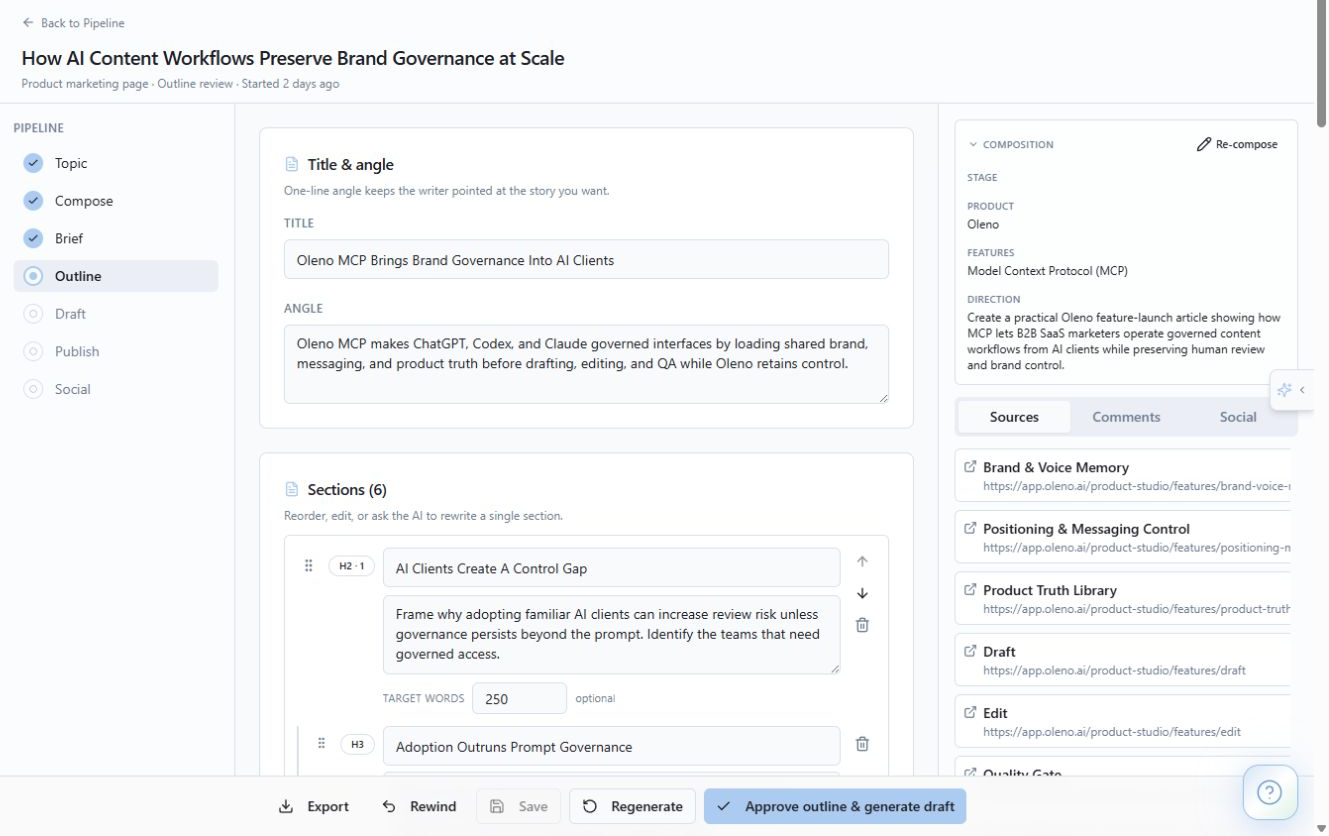
The Oleno Writing Process separates topic, brief, outline, and draft decisions, with human review before the next stage. For a battlecard, apply the same principle: check the evidence and approve the claims before drafting seller guidance.
- Choose the decision. Name the competitor, segment, use case, sales stage, and recurring buyer question.
- Collect evidence. Save the source, excerpt, capture date, owner, and confidence before writing conclusions.
- Normalize the comparison. Compare like with like. Don’t turn a packaging difference into a capability claim.
- Approve material claims. PMM owns framing. Product confirms your capabilities and boundaries. Legal reviews consequential claims when needed.
- Convert claims into seller actions. Explain when the point matters, which question reveals it, what proof supports it, and what the rep shouldn’t say.
- Draft for scanning. Keep the core card concise. Put detailed evidence in source notes or an appendix.
- Run separate reviews. PMM checks accuracy and positioning. Sales checks whether the guidance works during a call.
- Pilot in active deals. Record hesitation, unanswered objections, and requested follow-up assets.
- Publish one approved version. Name the owner, revision date, and canonical location.
- Set refresh triggers. Review after product releases, competitor changes, updated proof, repeated objections, or new win-loss findings.
Reviewers Own Different Decisions
One group review tends to blur responsibility. Product starts editing positioning. Sales debates product boundaries. Legal gets pulled into low-risk wording. Then PMM spends the meeting trying to figure out whose feedback actually decides the issue.
Split the review instead. PMM owns the narrative and competitive framing. Product confirms internal truth. Sales tests whether the questions and responses are usable. Legal or leadership reviews claims with material risk. Revenue enablement owns delivery when that function exists.
Live Deals Test the Guidance
An internal review can confirm that the card is accurate. It can’t show whether a rep can use it while listening to a buyer, taking notes, and deciding what to ask next.
So pilot the card in active deals before treating it as finished. Ask sellers where they paused. Which answer felt too long? Which claim needed proof they couldn’t find? What question did the buyer ask that the card never covered?
Sales feedback should return as field evidence, not as automatic product truth. “A prospect told me Competitor X does this” belongs in the research queue until someone verifies it.
Common Shortcuts Create Credibility Risk
Copying the competitor’s website into a large table can make the battlecard look complete. But the rep still has to figure out which row matters in the current conversation.
The same problem appears with universal cards. A point that matters for an enterprise buyer may be irrelevant for a smaller team. Geography, sales stage, and use case can change the comparison. One card usually can’t carry all of those situations without becoming hard to scan.
Confidence Cannot Replace Verification
Keep verified facts, assumptions, roadmap items, and seller anecdotes visibly separate. “Unknown” and “not verified” are acceptable entries. Guessing creates a talking point that gets harder to retract each time it’s repeated.
Let’s pretend the weak claim is:
Competitor X cannot support complex teams.
A more defensible version would be:
The current source does not verify support for the buyer’s specific requirement. Confirm the requirement, then validate it against the competitor’s current documentation before making a comparison.
Whether a person or AI drafted the words, the source still has to support the claim. Product-truth controls can reduce errors about your own product. They don’t prove anything about a competitor.
Publishing Alone Creates Version Drift
Multiple copies create multiple versions of the truth. A PDF lives in Slack, another copy sits in the enablement platform, and someone has a personal document from the last launch.
Pick one canonical location and put the owner and review date on the card. Use change signals rather than an arbitrary quarterly update as the main trigger. Better control over what sellers receive and what PMM can support doesn’t by itself demonstrate higher win rates or shorter sales cycles.
Tool Choice Follows Workflow Complexity
Tool selection gets easier after you know which part is causing the work. Research, verification, delivery, maintenance, and adoption are different problems.
| Situation | Likely fit | Trade-off to acknowledge |
|---|---|---|
| Few competitors, small sales team, infrequent updates | Shared document or spreadsheet | PMM manages verification, version control, and delivery manually |
| Many competitors or frequent market changes | Competitive intelligence software | Requires setup, ownership, and disciplined source review |
| Cards must appear inside the seller’s daily workflow | Sales enablement platform | Better delivery doesn’t fix weak evidence |
| Research and claim control create most of the workload | Governed content workflow | May still need a seller-facing repository |
| Work is occasional and strategically sensitive | PMM, analyst, or specialist consultant | Internal product and sales validation remain necessary |
Manual Tools Fit Low Complexity
A shared document can work well when the team has few competitors and changes are infrequent. Everyone knows where the current version lives. PMM can manage the claim ledger without a large system around it.
The trade-off is manual ownership. Someone still has to verify claims, replace stale guidance, and remove old copies.
Specialist Platforms Solve Specific Gaps
Competitive intelligence software fits teams monitoring many competitors or frequent market changes. Sales enablement platforms make more sense when the main issue is getting the card into the rep’s normal work.
Neither category removes the need for source review. Alerts still need interpretation. Better content discovery still depends on the content being accurate.
Operating Burden Determines the Fit
A governed content workflow fits when most of the work sits in research, claim control, related buyer assets, and review. General workflow builders may also fit, but check who will configure and maintain them. If engineering time is limited, test the setup and ownership requirements before buying.
Governed Workflows Have Clear Limits
Oleno can support the research and production side of the workflow. Its Research step can gather internal knowledge and competitor material for marketer review. The Product Truth Library constrains claims about your own product, while the Brief and Outline stages keep source and argument decisions separate from drafting. Your team still needs to update that library when the product changes.
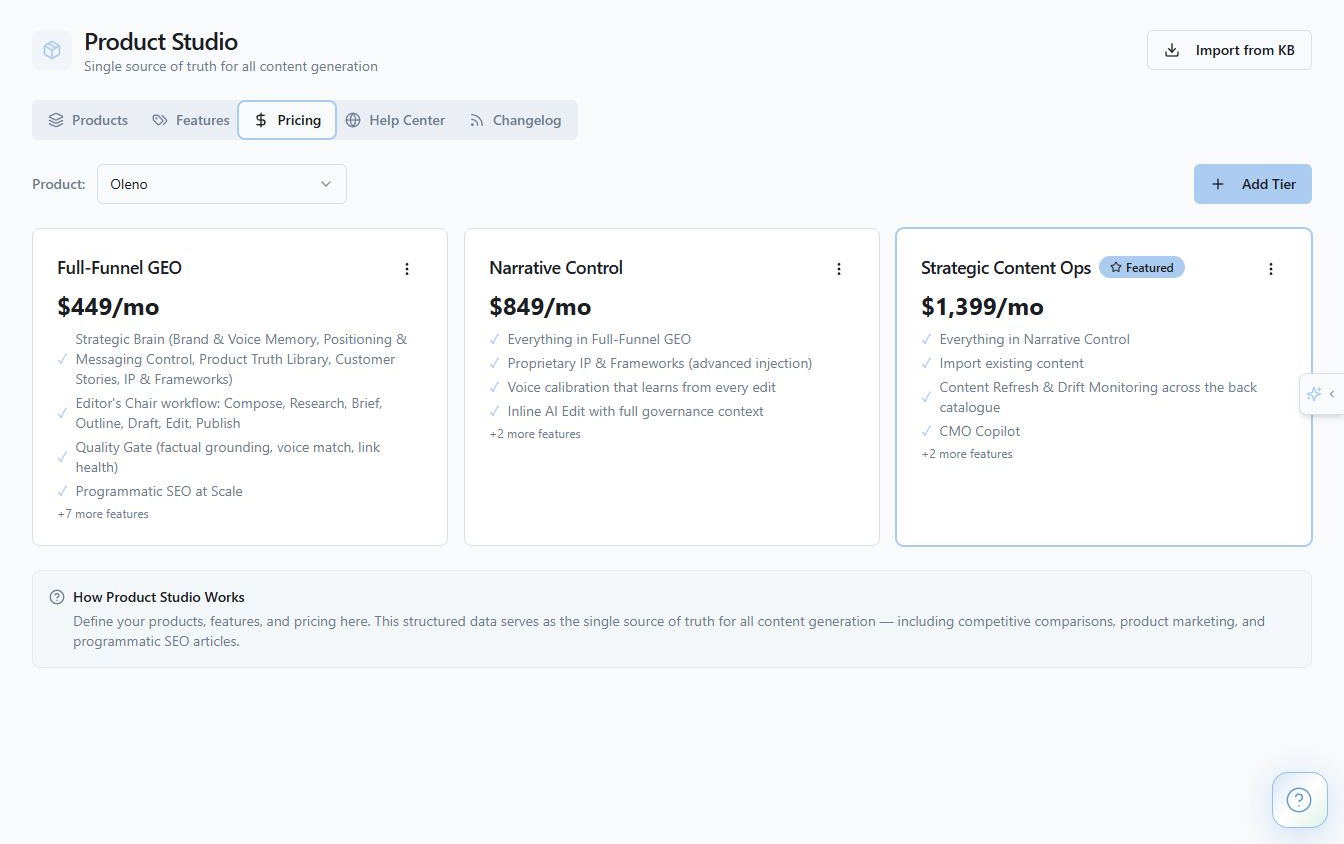
The Quality Gate can flag uncited competitor claims in competitive content. Demand Evidence Intake can capture redacted qualitative evidence when the controlled beta is enabled. None of those mechanisms verify a competitor fact by themselves. The marketer still reviews the source and approves the interpretation.
Specialist Functions Remain Separate
Oleno doesn’t have a verified dedicated battlecard feature. It doesn’t provide in-call battlecard delivery, seller usage analytics, or universal competitive monitoring.
A team needing those capabilities should keep its manual enablement system or evaluate specialist software alongside Oleno. A governed content platform can support the work that produces the card without replacing the place sales uses it.
Teams comparing their current review process against a governed content workflow can Request a Demo and inspect how Oleno keeps sources and approved product context attached to the work.
Writing Assistants Solve a Smaller Job
Using a writing assistant to draft a response or summarize source material leaves other decisions with PMM. Someone still needs to check that the draft uses the approved strategy, evidence, and current product truth, and route material claims for review.
Oleno handles a broader governed content pipeline, with Marketer Mode as the primary workflow. You shape the research, brief, outline, and draft. Autopilot is secondary for teams that want a different operating model. Neither mode turns Oleno into specialist battlecard software.
A One Competitor Pilot Comes First
Choose the competitor appearing most often in one active segment. Collect the current deal questions and first-party competitor sources. Then build the claim ledger before drafting the card.
Keep the first version concise and test it with a small seller group. You don’t need software to start. A document and spreadsheet can expose the workflow problems just fine.
Observed Friction Guides Investment
Record what breaks during the pilot. Missing answers point to a research problem. Stale sources point to maintenance. Reps using old copies point to delivery. Accurate cards that nobody opens point to adoption.
Product releases, competitor packaging changes, lost deals, updated proof, and repeated seller questions should trigger review. Tooling comes after you know which constraint keeps recurring.
Ownership Sustains the Pilot
A consultant can help with occasional or sensitive work. But recurring updates still need an internal owner who understands the product, the sales motion, and the limits of the evidence. Apply the Content Refresh Loop to the pilot: monitor the issues sellers report, prioritize the affected claims, update the guidance, and check whether the same issues recur. Recording the update alone doesn’t show that sellers used it.
If the pilot shows that source review, product-truth control, and governed production create most of the burden, Request a Demo to see how Oleno handles those parts. Keep the seller-delivery and usage-analytics requirements separate when you evaluate the fit.
About Daniel Hebert
I'm the founder of Oleno, SalesMVP Lab, and yourLumira. Been working in B2B SaaS in both sales and marketing leadership for 13+ years. I specialize in building revenue engines from the ground up. Over the years, I've codified writing frameworks, which are now powering Oleno.