3 Common Mistakes That Hurt Marketing Team Efficiency

Most of the common mistakes that hurt demand generation have nothing to do with effort. They come from trying to run a full content engine with a tiny team, too many disconnected tools, and no real system tying it all together. I’ve seen this over and over. The marketer works hard. The company has ideas. The problem is the work doesn’t compound.
If you’re a Head of Marketing at a growth-stage SaaS company, this probably feels familiar. One quarter you’re pushing SEO. Next quarter it’s product launches. Then sales needs battlecards, leadership wants thought leadership, and suddenly your whole content plan is a bunch of half-finished tabs and Slack messages. You’re not lazy. You’re overloaded.
Key Takeaways:
- Most demand gen problems come from fragmented execution, not a lack of ideas
- Prompting can create output, but it doesn’t create a repeatable marketing system
- Small teams usually lose time in handoffs, rewrites, and resets, not drafting alone
- Consistency matters more now because LLMs reward repeated, clear signals
- The fix is building a governed execution system that holds strategy, voice, and product truth together
Why Common Mistakes That Hurt Demand Generation Start With Fragmentation
Demand generation breaks when execution gets split across too many tools, people, and workflows. The visible problem looks like low output or inconsistent content. The real problem is fragmentation, and that problem gets worse as your team adds more pressure without adding a system.

You don’t have a content problem
A lot of small teams think the issue is volume. They think, if we could just write more, publish more, repurpose more, we’d be fine. I don’t buy that. Usually the issue is that each piece gets created in isolation, with no shared logic behind it.
Back in 2012 to 2016, I ran a site called Steamfeed. We got to 120k monthly visitors because we had both depth and breadth. We had a lot of contributors, a lot of pages, and a lot of angles on similar topics. That worked because there was enough volume and enough real perspective that the library started compounding. Traffic spikes came at 500 pages, 1000, 2500, 5000, then 10000. Most individual pages didn’t look special on their own. Together, they mattered.
That’s the part most marketers miss. A library compounds when the pieces reinforce each other. If your blog posts, launch pieces, comparison pages, and founder POV all sound like they came from different companies, you don’t get that compounding effect. You get activity.
Small teams get punished harder
When I was the sole marketer at PostBeyond, I could write 3 to 4 solid posts a week because I had all the context in my head. I knew the product, the customer, the objections, the market language. Then the team grew. And the content got harder, not easier.
Why? Because the writer didn’t have my context, and I had less time to give it. So drafts took longer. Quality dropped. Reviews got heavier. Everybody worked, but the engine got worse. Sound familiar?
That’s what happens in growth-stage SaaS. You don’t have enough people to specialize cleanly. So one person is doing strategy, briefs, editing, launches, reporting, and random fire drills from sales. The cost is not just time. The cost is losing continuity. Every week feels like starting over.
GEO makes this more obvious
LLMs changed what good content execution looks like. It’s not enough to have a few strong pieces and a decent keyword list anymore. You need a repeated signal. Clear positioning. Clear audience. Clear product truth. Clear point of view.
Some people still think GEO is just SEO with a different label. I think that’s wrong. SEO let a lot of teams win on tactics. GEO is much less forgiving. If your market story is fuzzy, your content will feel fuzzy too. And if your content feels fuzzy across 100 pieces, that becomes your brand in the model’s eyes.
That’s why fragmented execution hurts more now. It doesn’t just slow you down. It makes you look inconsistent at scale. And that’s a real problem when your buyers are increasingly learning through AI answers before they ever hit your site.
The Common Mistakes That Hurt Small Marketing Teams the Most
The common mistakes that hurt small marketing teams are usually operational, not creative. People blame weak copy or poor SEO. But most of the damage happens before the draft even exists.
Mistake one: treating prompts like a system
Prompting feels productive because it gives you output fast. You type something in, get a draft, edit it a bit, and feel like progress happened. For one-off tasks, sure, that’s useful. For running demand gen week after week, it falls apart.
Prompting pushes system work back onto humans. Someone still has to decide what should exist, what audience it’s for, what product truths must be included, what angle matters, how it maps to funnel stage, and whether the draft drifted off message. That person is usually you.
And that’s the trap. You think AI reduced the workload, but really it changed the shape of the workload. Instead of writing every word yourself, you become the coordinator, fact checker, editor, and quality control layer for a machine that has no memory unless you keep feeding it one. That gets old fast.
Mistake two: letting strategy live in people’s heads
A lot of growth-stage companies have decent instincts. The founder knows the pitch. The Head of Marketing knows the audience. Sales knows the objections. Product knows the limits. But none of it is encoded anywhere in a way execution can reliably use.
So what happens? Every brief becomes a rebrief. Every writer has to relearn the same nuance. Every review call turns into a debate about wording, framing, or claims. It’s expensive. Not always in dollars. Definitely in time.
I’ve seen teams burn hours arguing over a headline, when the real issue was they never got aligned on category framing in the first place. That’s a much bigger problem than a bad intro paragraph. If your strategy only exists in meetings and smart people’s heads, your content engine will always be fragile.
Mistake three: separating content, narrative, and demand gen
This one is sneaky. A lot of teams split work into buckets. SEO content over here. Product marketing over there. Social somewhere else. Founder content whenever there’s time. Then they wonder why the pipeline impact is hard to trace.
The issue is not specialization by itself. The issue is when each bucket runs on different logic. Different voice. Different promise. Different version of the product story. You lose repetition, and repetition is how markets learn.
A buyer should be able to read your comparison page, your feature article, your category piece, and your founder post and feel the same company underneath it. Not the same wording. Same spine. Most teams never get there because each asset is treated like a separate project instead of part of one demand gen system, especially when evaluating common mistakes that hurt.
Mistake four: measuring output without measuring drift
More publishing is not always better. I learned that the hard way years ago. Volume matters when it compounds. Volume without control just creates more cleanup.
If you publish 20 articles a month and each one has a slightly different audience assumption, slightly different product framing, and slightly different point of view, you’re not building an asset. You’re building confusion. It feels productive because the calendar looks full. But the market signal gets weaker.
That’s what I think a lot of AI content programs are doing right now. They’re speeding up production while quietly lowering consistency. The drafts are fine. The system behind them is broken.
What These Mistakes Cost You When You Wear All the Hats
These mistakes cost small teams time, trust, and momentum. The obvious cost is slower content. The less obvious cost is that you start doubting your whole demand gen motion, even when the real issue is execution design.
Rework becomes your default operating model
When you’re a Head of Marketing on a small team, rework sneaks up on you. A draft comes in and it’s not terrible, but it’s missing product nuance. So you fix it. Then sales asks for a comparison page and you realize the messaging doesn’t match the site. Then the founder wants more POV content, but there’s no easy way to pull in real stories. So you start over again.
That pattern is exhausting. Not dramatic. Just draining.
You spend your week doing high-friction fixes that shouldn’t exist in the first place. And because each fix feels small, it’s easy to ignore the total cost. But stack enough of them and you lose the time you were supposed to spend on strategy, experiments, and actual pipeline work.
Quarterly resets kill compounding
This is one of the biggest hidden costs in growth-stage SaaS. Every quarter, the plan resets. New targets. New pressure. New priorities. So the content motion resets too.
One month it’s launch mode. Then SEO mode. Then customer story mode. Then founder brand mode. None of those are bad on their own. The problem is they rarely connect. The system never gets enough continuity to build real momentum.
I’m pretty opinionated on this. If your content engine depends on you manually restarting it every quarter, you don’t really have an engine. You have a project. And projects don’t compound the way systems do.
Inconsistency leaks into pipeline
Buyers notice drift even if they don’t call it that. One page sounds sharp and specific. Another sounds vague. A third sounds like it came from generic AI. The result is subtle, but it matters. Trust gets weaker.
That’s especially risky in B2B SaaS where buyers are already comparing you against other options, internal status quo, and doing early research through LLMs. If your narrative is fuzzy, you give them no clean frame to evaluate you with. And a confused buyer rarely moves quickly.
If this feels frustrating, fair. It should. You’re doing the work. You’re just paying a tax because the work isn’t held together by a reliable system.
How to Fix the Common Mistakes That Hurt Content Performance
You fix common mistakes that hurt content performance by building a system before you ask for more output. That means encoding the rules, the narrative, the audience, and the product truth first. Then you let execution run inside those boundaries.
Start with governed inputs, not faster drafts
Most people start at the draft. I think that’s backwards. If your inputs are fuzzy, faster drafting just gives you faster confusion. You need to lock in what the company actually believes, who it sells to, and what is true about the product.
That means getting very clear on a few things:
- Your category framing
- Your key messages
- Your audience segments
- Your main personas
- Your use cases
- Your product boundaries
You don’t need a 70-page strategy deck. But you do need a place where these decisions live in a reusable way. Otherwise every article becomes a fresh negotiation. And that’s exactly what burns out small teams.
Build around repeatable job types
The best content systems don’t treat everything like a blank page. They break work into repeatable job types. Acquisition content. Competitive content. Product education. Buyer enablement. Founder POV. Different jobs. Different arcs. Same underlying governance.
That matters because a comparison page should not be built the same way as a category article. A feature walkthrough should not follow the same logic as a founder-led opinion piece. Once you accept that, the path gets clearer. You can define what good looks like by content type and stop reinventing the wheel every week.
This is what I’ve seen work best. You standardize the execution pattern, not the creativity. Big difference. The voice can stay human. The system just removes the random chaos, especially when evaluating common mistakes that hurt.
Tie planning to coverage, not mood
A lot of small teams plan content based on what feels urgent that week. I get it. I’ve done it too. But that approach creates gaps fast. You end up overproducing top-of-funnel posts and underproducing the stuff buyers actually need later in the journey.
A better way is to map coverage across audience, persona, product, and use case. Then plan based on gaps. That keeps the engine honest. You’re not just asking what sounds good to publish. You’re asking what’s missing from the system.
This also makes content planning less political. You’re not debating random ideas in a vacuum. You’re filling known holes in the market story and buyer journey. Much cleaner.
Put quality gates in the system, not only in your head
Most solo or lean marketing leaders become the quality gate by default. That works for a while. Then it breaks. You get busy. You rush reviews. Standards drift. Or you become the bottleneck and nothing ships.
The fix is not to care less. The fix is to define the bar in a way the system can enforce before content reaches you. Voice rules. structure. product claims. narrative alignment. audience fit. Those checks should happen upstream.
Honestly, this is the part that surprised me most when I started thinking more deeply about orchestration. People assume the value is in drafting faster. I think the bigger value is preventing bad work from moving downstream. That saves way more time.
Keep execution continuous
Demand gen works better as an operating rhythm than a series of campaigns. You still run launches and pushes and big moments, of course. But the underlying content engine should keep moving whether you’re in a busy month or not.
That’s how you get compounding. The audience keeps seeing the same signal. The content library grows with intention. The quality holds. Your positioning gets repeated enough times that it starts to stick.
And for a small team, that consistency is everything. You probably can’t outspend bigger competitors. But you can out-repeat them if your execution system is tighter.
If you want to see what that kind of governed execution looks like in practice, Request A Demo.
Where Oleno Fits When You Need Consistency Without More Headcount for Common mistakes that hurt
Oleno is built for teams that need a governed execution system, not another drafting tool. It takes the messy parts that usually live in meetings, prompts, and scattered docs, then turns them into operating rules the content pipeline can actually use.
Governance that keeps the story intact
Brand drift usually starts when voice, positioning, and product truth live in separate places. Oleno addresses that with Brand Studio, Marketing Studio, and Product Studio. Brand Studio holds tone, style, vocabulary, and writing rules. Marketing Studio holds key messages, category framing, and narrative structure. Product Studio holds approved product descriptions, feature boundaries, and supported use cases.
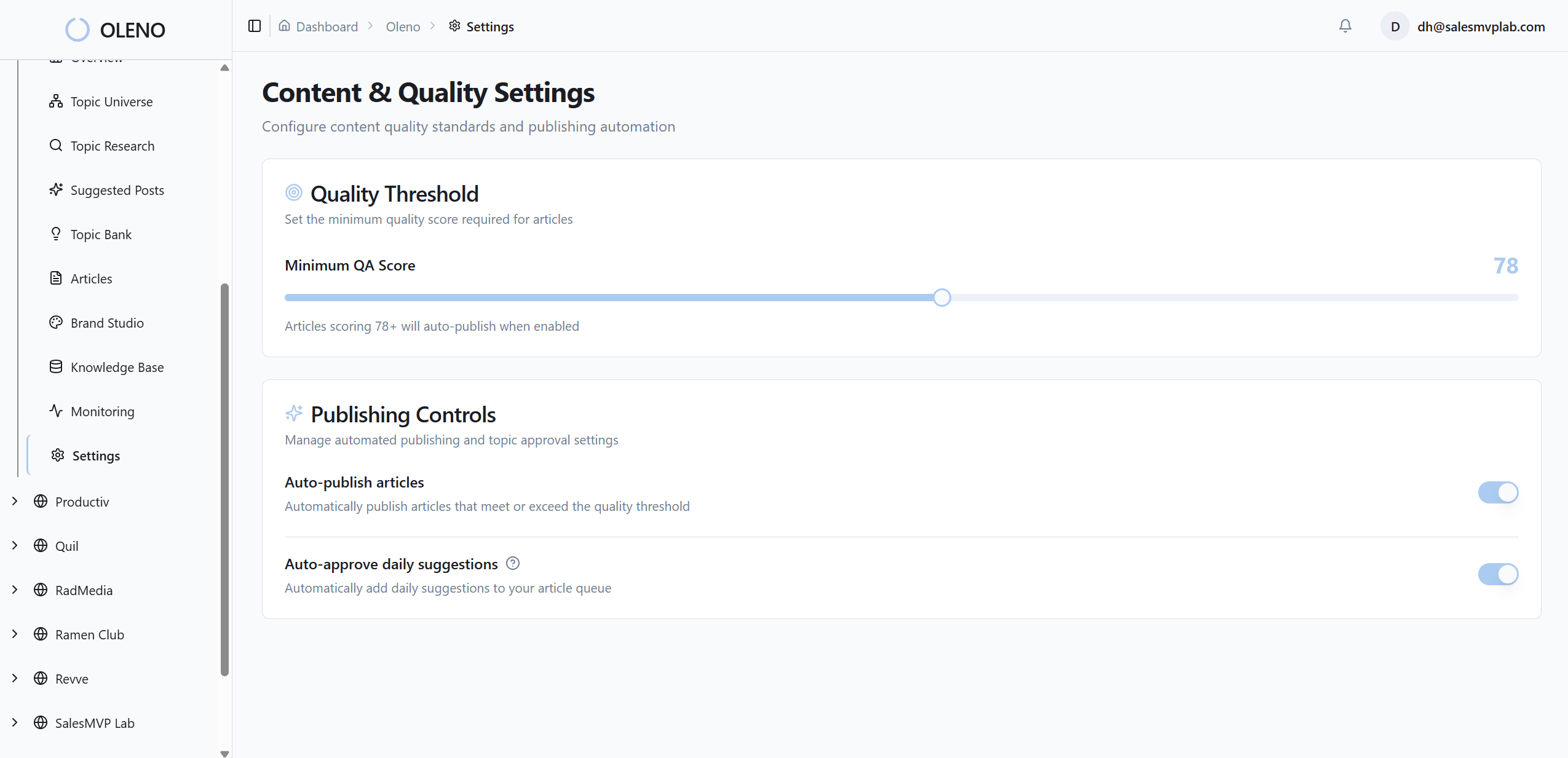
That matters because the problem usually isn’t that your team lacks smart people. The problem is smart people are working from different versions of the truth. Oleno pulls those inputs into the brief and draft process so the work starts aligned. Then Quality Gate checks whether the output actually stayed aligned. That cuts a lot of the rewrite tax that usually lands on the Head of Marketing.
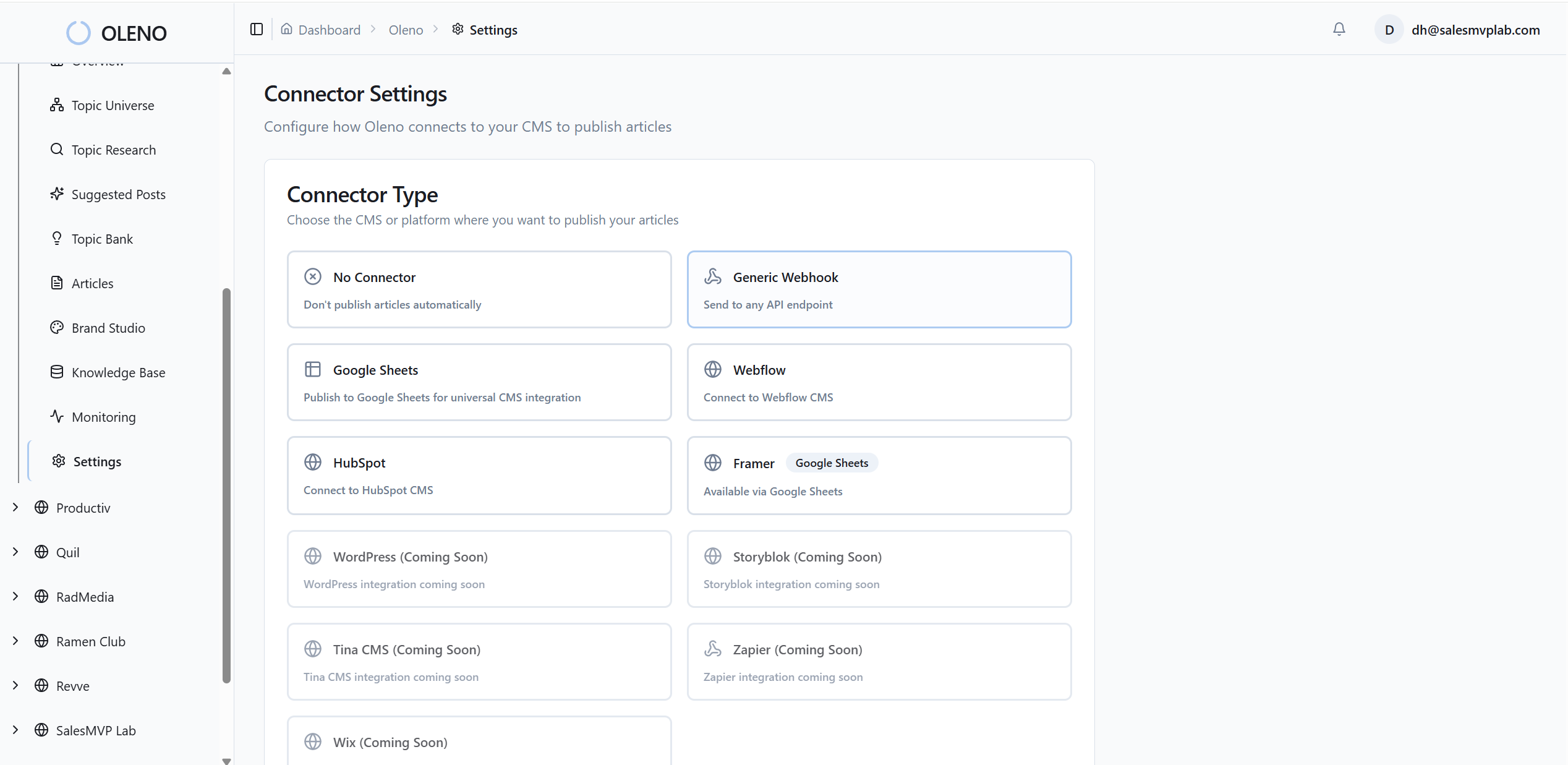
Execution that maps to real demand gen work
Oleno also doesn’t treat all content the same. Programmatic SEO Studio handles acquisition content at scale. Competitive Studio supports evaluation content. Product Marketing Studio handles feature and use case education. Buyer Enablement Studio supports decision-stage content. Category Studio is there when you need long-form market narrative, not just another blog post.
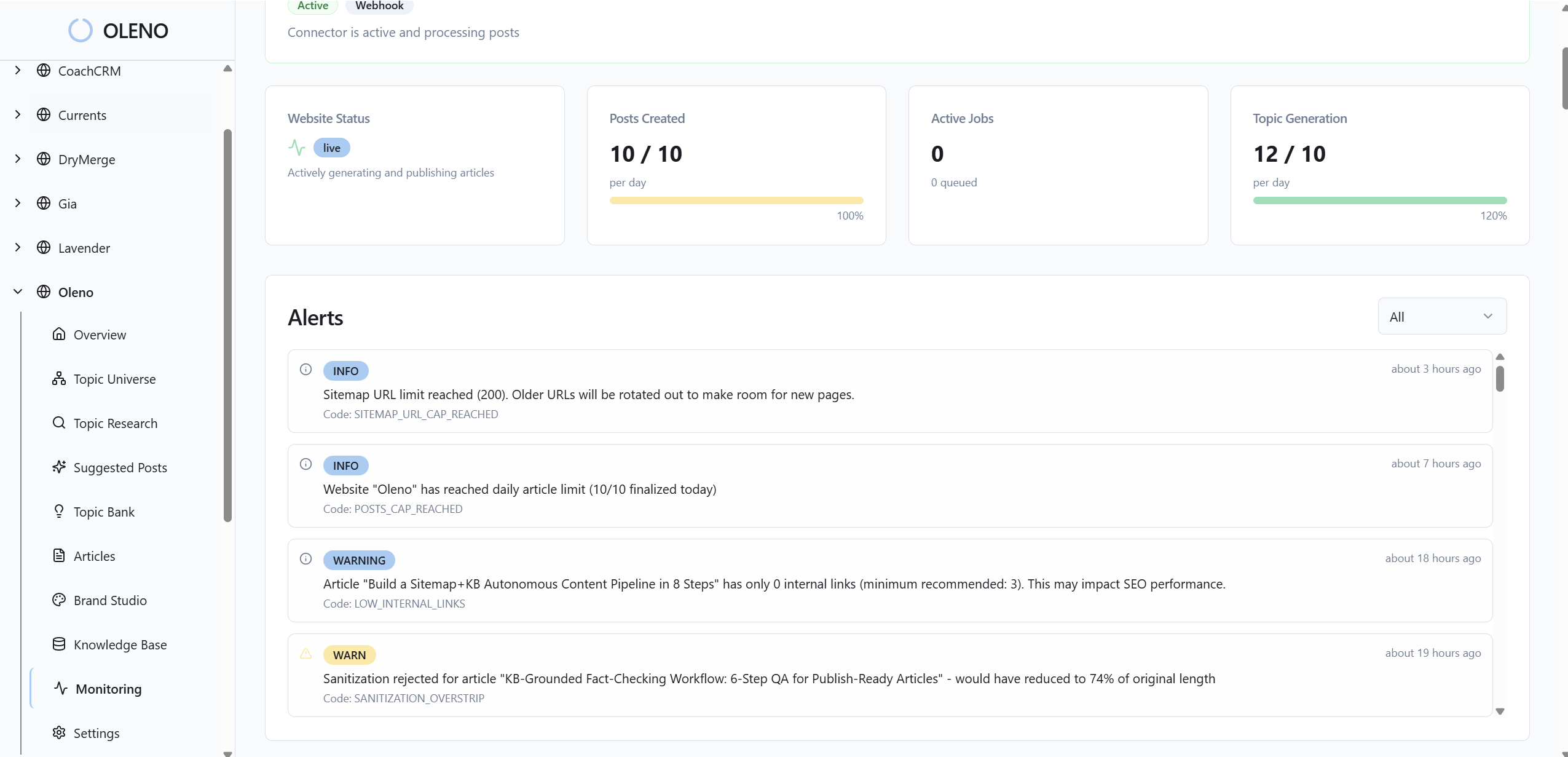
For a small SaaS team, that’s a big deal. You’re not trying to force one generic workflow across everything. You can run different job types, but still hold one coherent market signal across them. Audience & Persona Targeting and Use Case Studio help shape who the content is for and what job the reader is trying to get done. So the system is not just producing more. It’s producing with clearer intent.
Midway through all of that, the Orchestrator keeps the pipeline moving based on approved topics and quotas, while the Executive Dashboard gives leadership a read on cadence, quality trends, gaps, and pipeline health. If your week is getting eaten alive by planning, coordination, and review overhead, that’s where the relief shows up.
Oleno won’t invent your strategy for you, and that’s the point. It lets marketing stay in control of the rules, then executes inside those rules with a lot more consistency than prompt-by-prompt work ever will. If your team needs a system that can hold steady while you wear twelve hats, Book A Demo.
Stop Repeating the Same Demand Gen Mistakes
Most small marketing teams don’t lose because they aren’t working hard enough. They lose because the work resets, drifts, and fragments before it has time to compound. That’s why the common mistakes that hurt performance keep showing up. They’re systemic.
The good news is the fix is not hiring five more people or writing better prompts. It’s building a system that keeps your voice, product truth, audience focus, and execution rhythm connected. If that’s the gap you’re trying to close, Request A Demo.
About Daniel Hebert
I'm the founder of Oleno, SalesMVP Lab, and yourLumira. Been working in B2B SaaS in both sales and marketing leadership for 13+ years. I specialize in building revenue engines from the ground up. Over the years, I've codified writing frameworks, which are now powering Oleno.
Frequently Asked Questions