3 Key Challenges in Scaling Content Production and Solutions

Most teams think the key challenges in scaling are headcount, output, or whether AI can write fast enough. That's not it. The real problem is that scaling breaks the moment your marketing system lives in scattered docs, random prompts, Slack messages, and whoever happens to be in the review chain that week.
I learned this the hard way a few times. Back in 2012-2016 I ran a site that hit 120k monthly visitors because we had both depth and breadth at volume. Then later in SaaS, I saw the opposite problem. Small teams could write great content when one person held all the context in their head. But once more people got involved, quality dropped, speed dropped, and everything got heavier.
Key Takeaways:
- The key challenges in scaling usually have less to do with effort and more to do with fragmented execution.
- Most content quality problems show up after teams add contributors, handoffs, and review layers.
- AI tools speed up drafting, but they don't solve positioning, product truth, audience fit, or narrative consistency.
- Scaling content without encoding your fundamentals creates more rework, not more leverage.
- Teams that scale well turn demand generation into a system with governance, planning, and quality control.
- GEO raises the bar because LLMs reward consistent signals, clear positioning, and repeated expertise across volume.
Why the Key Challenges in Scaling Start with Fragmentation
The key challenges in scaling start when your team adds more people without adding a real operating system. That's when coordination cost starts beating creation cost. You don't notice it right away, because activity still looks high. But under the hood, the machine is getting shaky.
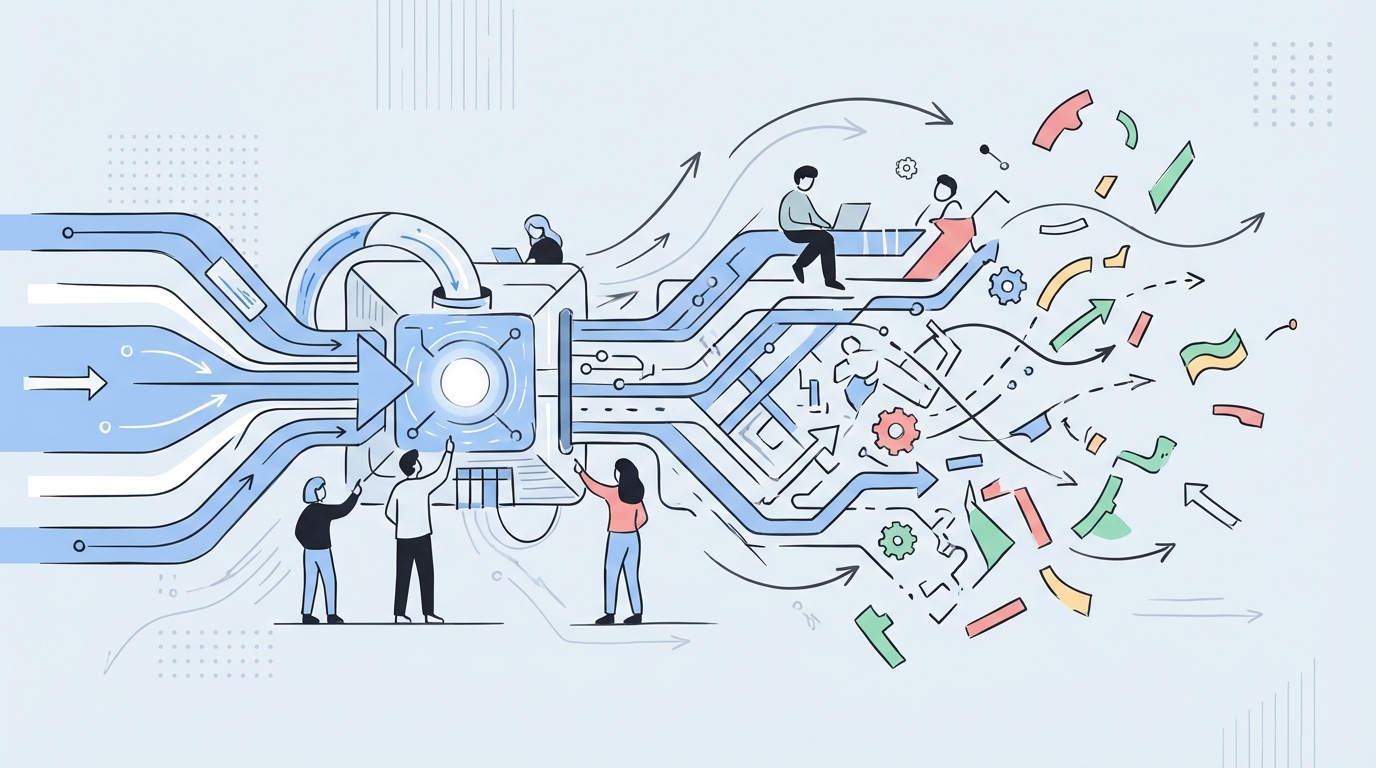
More contributors usually means less shared context
When you're the only marketer, or one of two, you can move fast because context is compressed. You know the product, you know the buyer, you know what the CEO actually means when they say "we need better positioning." So a draft comes together quickly. It sounds sharp. It has conviction.
Then the team grows. Now content sits with a writer, product truth sits with PMM, SEO sits with another person, demand gen wants campaign alignment, and leadership wants it all to sound strategic. Fair point, you do need specialists. But every new handoff creates another place where the message can drift. The content isn't bad because your team is weak. It's bad because the system has no shared brain.
I've seen this a lot. A team with good people starts producing content that feels weirdly generic. Nobody did anything obviously wrong. That's the trap.
The old way scales activity, not quality
A lot of teams buy more tools when this starts happening. One tool for keywords. Another for outlines. Another for drafting. Another for editing. Maybe an agency on top. Maybe freelancers too. So now you have more movement, more docs, more reviews, more opinions. But you still don't have alignment.
That's why the key challenges in scaling keep getting mislabeled. Leaders say they need more output. What they often need is fewer disconnected steps. They say they need better writers. What they often need is better inputs, tighter positioning, and less manual coordination. The bottleneck isn't content. It's fragmented execution without a system.
And once that sets in, every article starts costing more than it should. More meetings. More rewrites. More approvals. More second-guessing. It's exhausting, especially when you have a real team and still can't get consistent work out the door.
GEO makes this problem harder, not easier
GEO raises the stakes because now you're not just writing for humans and search engines. You're also writing for LLMs, and LLMs don't reward scattered thinking. They reward clarity, consistency, and repeatable signal across a lot of content.
That changes the math. In the old SEO world, you could get away with tactical wins for a while. Rank a page. Build some links. Patch things together. In the GEO world, that falls apart faster because the market is being read at the system level. McKinsey's work on gen AI pushed a lot of teams to move faster with AI, but speed without structure creates more noise than authority.
So yes, the key challenges in scaling are real. But the overlooked truth is that most of them begin long before volume shows up. They begin when execution gets split apart and nobody rebuilds it into one system.
What Most Teams Get Wrong About Scaling Content Quality
Scaling content quality fails because teams treat channel execution as marketing strategy. It isn't. A keyword plan is not a market point of view. A prompt library is not positioning. And a pile of drafts is definitely not demand generation.
Tactics are not the root issue
I remember being at a marketing panel years ago, back when I was at LevelJump. One guy kept rattling off tools. Use this for lists, use this for outreach, use this for whatever. Just tactic after tactic. Then April Dunford jumped in and basically cut through the whole thing. Tactics without strategy are useless. That's the point I walked away with.
That stuck with me because it's the same mistake most AI content tools make now. They are anchored in channels and outputs. They know how to produce words. They don't know what marketing actually is. They don't know your market POV, your category framing, your enemy, your differentiators, your audience segments, your use cases, your product boundaries, or your brand voice rules.
And if none of that is present, the output was always going to miss. Not sometimes. Most of the time.
The real issue is missing marketing fundamentals
The real problem isn't that AI writes poorly. It's that the system feeding the AI is usually empty. No product truth. No clear positioning. No audience specificity. No repeatable narrative. Then people act surprised when the article sounds like it could belong to any SaaS company.
That's why so many teams get disappointed with AI-generated content. They expected leverage. What they got was another review burden. Now a senior marketer has to step in, fix the angle, correct the claims, sharpen the point of view, adjust the tone, and clean up the examples. So the junior person or tool saved time on drafting, then the senior person lost time on repair.
You can feel the cost of that pretty quickly:
- PMM context doesn't make it into drafts
- content writers guess at product nuance
- demand gen wants campaign relevance after the fact
- leadership rewrites intros to make them sound more like the company
- SEO structure gets bolted on separately
None of this compounds. It just piles up.
Why the key challenges in scaling get worse in bigger teams
This is where scaling SaaS teams get hit the hardest. Not tiny teams. Not massive enterprises with giant content ops functions. The mid-market team. Big enough to have contributors. Not big enough to absorb waste forever.
At that stage, the key challenges in scaling get sharper because you have enough people to create misalignment and enough pressure to feel the cost. You have a CMO or VP Marketing trying to prove ROI. You have writers, SEO leads, PMMs, maybe agencies, maybe freelancers. Everybody is busy. Yet the output still feels inconsistent.
HubSpot's State of Marketing keeps showing how much pressure marketing leaders are under to do more with the same team. I don't think the answer is squeezing people harder. I think the answer is reducing the number of places where your message can get lost.
If your system can't carry strategy into execution, you will keep paying the same tax. More content. Same problems.
How Strong Teams Solve the Key Challenges in Scaling
The teams that solve the key challenges in scaling stop treating content like a series of one-off tasks. They build a system that carries context from strategy into execution. That's the shift. Not more prompts. Not more reviewers. A better operating model.
Start by encoding what should never drift
First, define the stuff that should not change every time a new draft gets written. Your voice. Your market POV. Your category framing. Your product truth. Your audience segments. Your use cases. Your rules around what claims are allowed and what claims are not.
This is boring work to a lot of people. I get it. It's not as fun as publishing. But it's the part that makes scaling actually possible. Because once the basics are encoded, the team stops reinventing the same strategic decisions over and over again.
That means getting specific about things like:
- What you want the market to believe
- Who the content is for
- What jobs those buyers are trying to get done
- What your product actually does and does not do
- How your brand should sound in the wild
Without this, you're asking writers and AI to guess. And guesswork is where inconsistency starts.
Build around governed workflows, not ad hoc effort
The next move is operational. You need a workflow that runs the same way every time, with the right context injected at the right stage. Topic selection. Briefing. Drafting. QA. Editing. Publishing. That should not depend on who had coffee first that morning.
What I've seen work is a governed path where strategy gets set once, then applied programmatically. Content should pull from defined audience and persona context. It should reflect use cases. It should stay inside approved product boundaries. It should follow a narrative structure that matches your point of view. And it should get blocked if it misses the bar.
That doesn't remove humans. It removes random. Big difference.
A useful operating model usually includes:
- one planning layer deciding what content should exist
- one governance layer defining truth, tone, and positioning
- one execution layer producing the work
- one quality layer stopping weak or risky content before it ships
That's what scaling should feel like. Fewer resets. Less arguing with drafts. More consistency across output.
Treat quality as a gate, not a hope
A lot of teams say quality matters, but their workflow tells a different story. In practice, quality gets checked late, inconsistently, and by tired people. That's why weak content slips through or creates long review loops.
Strong teams do the opposite. They define what good looks like up front, then they check against it every time. Voice. structure. clarity. factual grounding. audience fit. Narrative cohesion. If it fails, it doesn't go out. Simple.
Honestly, this surprised us more than anything else when we looked at how teams actually scale. The quality problem rarely starts at the draft. It starts in the lack of standards before the draft. Once you fix that, your hit rate goes up.
If you want to see how a governed system handles this across planning, drafting, and QA, Book a Demo.
Scale for compounding signal, not random volume
This matters even more in GEO. You're no longer trying to just fill a blog. You're trying to create repeated, coherent signal across a large body of work so humans, search engines, and LLMs all understand what your brand stands for.
That means content can't be isolated. It has to reinforce the same truths from different angles. One article builds category clarity. Another supports evaluation. Another explains a use case. Another sharpens product understanding. Same core narrative. Different entry points.
The teams that win here don't just publish more. They publish in a way that compounds. Google's guidance on helpful, reliable content points in the same direction. Clear purpose. Real expertise. Consistent value. That's not a trick. That's discipline.
And that's why the key challenges in scaling are really system design problems. Once you see that, the path gets a lot clearer.
How Oleno Turns Scaling Into a Governed System
Oleno turns the key challenges in scaling into something manageable by carrying strategy, truth, and quality rules through the full execution flow. It doesn't ask your team to remember everything on every draft. It gives the system the context it needs, then enforces it.
Governance keeps the message tight as volume grows
A lot of tools start with output. Oleno starts with governance. Brand Studio defines tone, style, vocabulary, and structure rules so voice doesn't drift as more contributors get involved. Marketing Studio encodes category framing, key messages, and narrative structure so content doesn't collapse into neutral education. Product Studio stores approved product descriptions, boundaries, use cases, and pricing context so articles stay accurate.
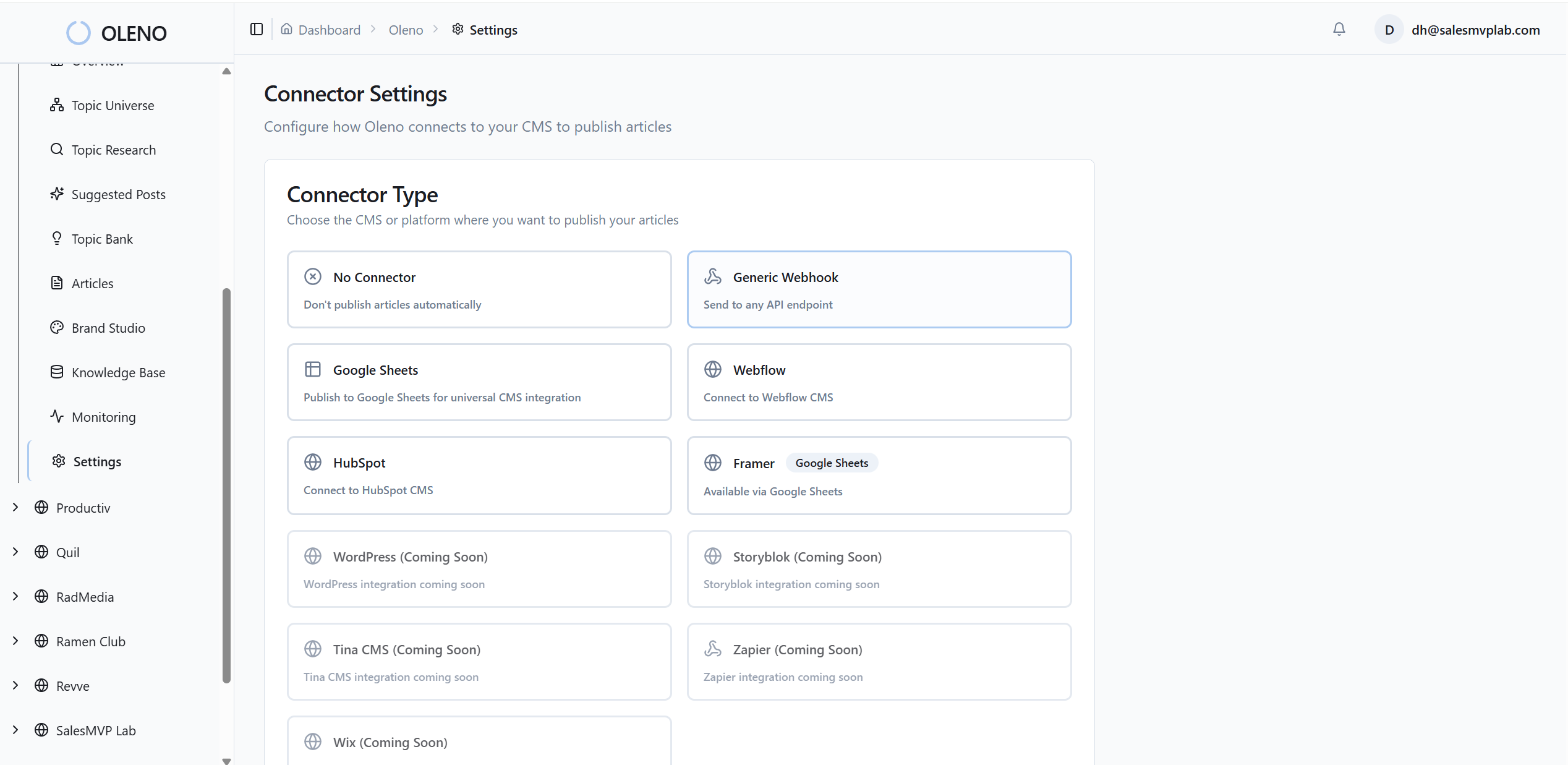
That matters because the key challenges in scaling usually show up as rework. A draft gets written. Then someone fixes the voice. Someone else fixes the positioning. Then PMM fixes product claims. Then leadership makes it sound like the company again. Oleno reduces that repair cycle by loading those rules into the brief and draft process from the start.
Execution and planning stop the reset cycle
Oleno also tackles the operational side of scaling. Storyboard helps allocate content across audiences, personas, products, and use cases based on coverage gaps and governance weights. The Orchestrator then runs the execution flow against approved topics and quotas, so the machine keeps moving without constant manual coordination.
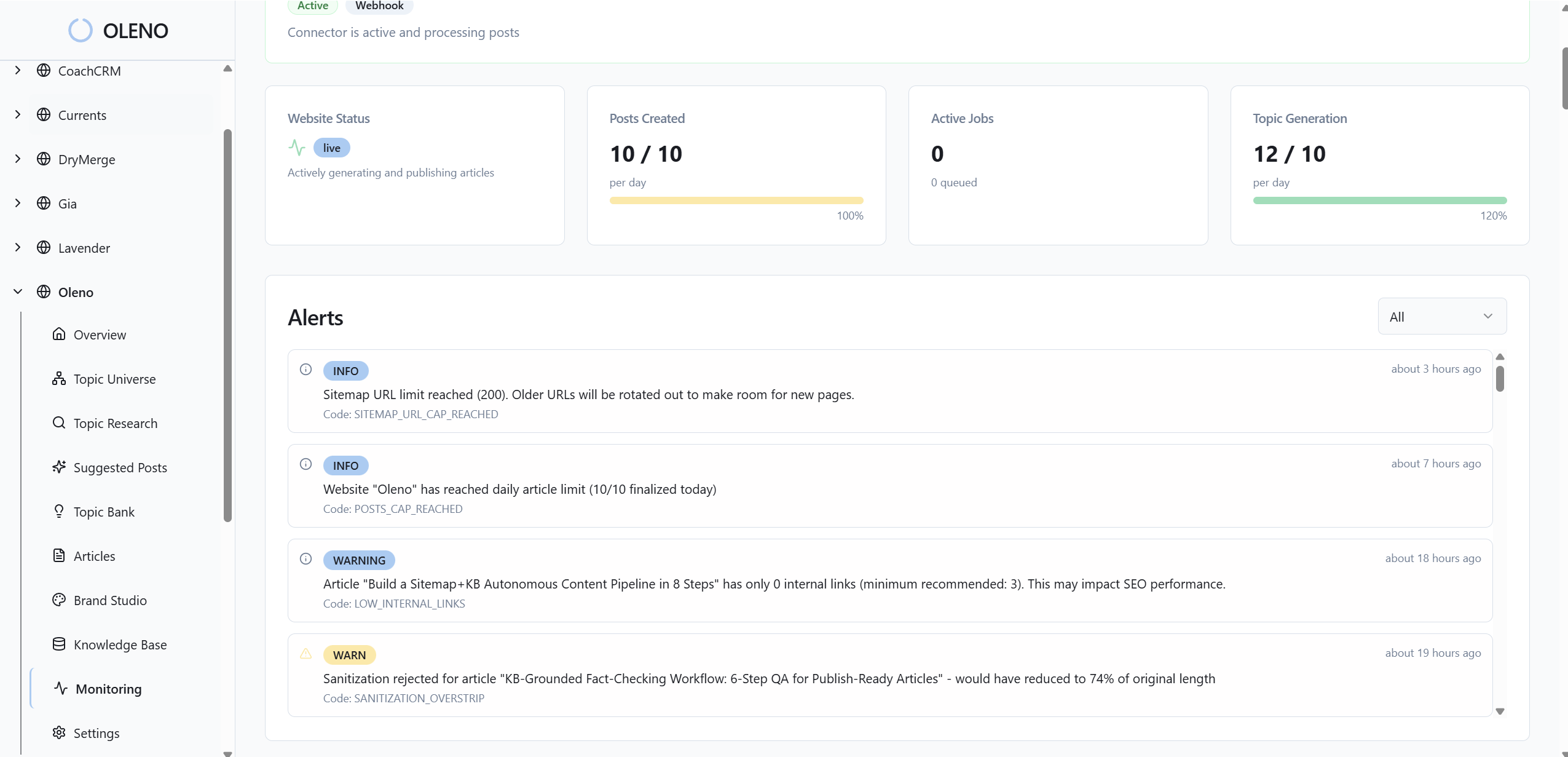
For executive teams, this is a big deal. You don't want demand generation resetting every quarter because the team got busy or priorities shifted. You want a system that keeps cadence steady, keeps coverage balanced, and shows where the gaps are. That's where the Executive Dashboard comes in. It gives a read on output cadence, quality score trends, coverage gaps, and quota utilization without forcing a CMO to micromanage the whole content engine.
If your team is stuck in manual planning, prompt rewriting, and endless review loops, Request a Demo and see how Oleno handles governed execution.
Studios map content to real buying motion
One thing I like about Oleno's structure is that it doesn't treat all content the same. Programmatic SEO Studio handles acquisition content at scale. Category Studio supports long-form thought leadership that defines the market narrative. Buyer Enablement Studio generates decision-support content for evaluators. Audience & Persona Targeting plus Use Case Studio shape content around who the buyer is and what they're trying to do.
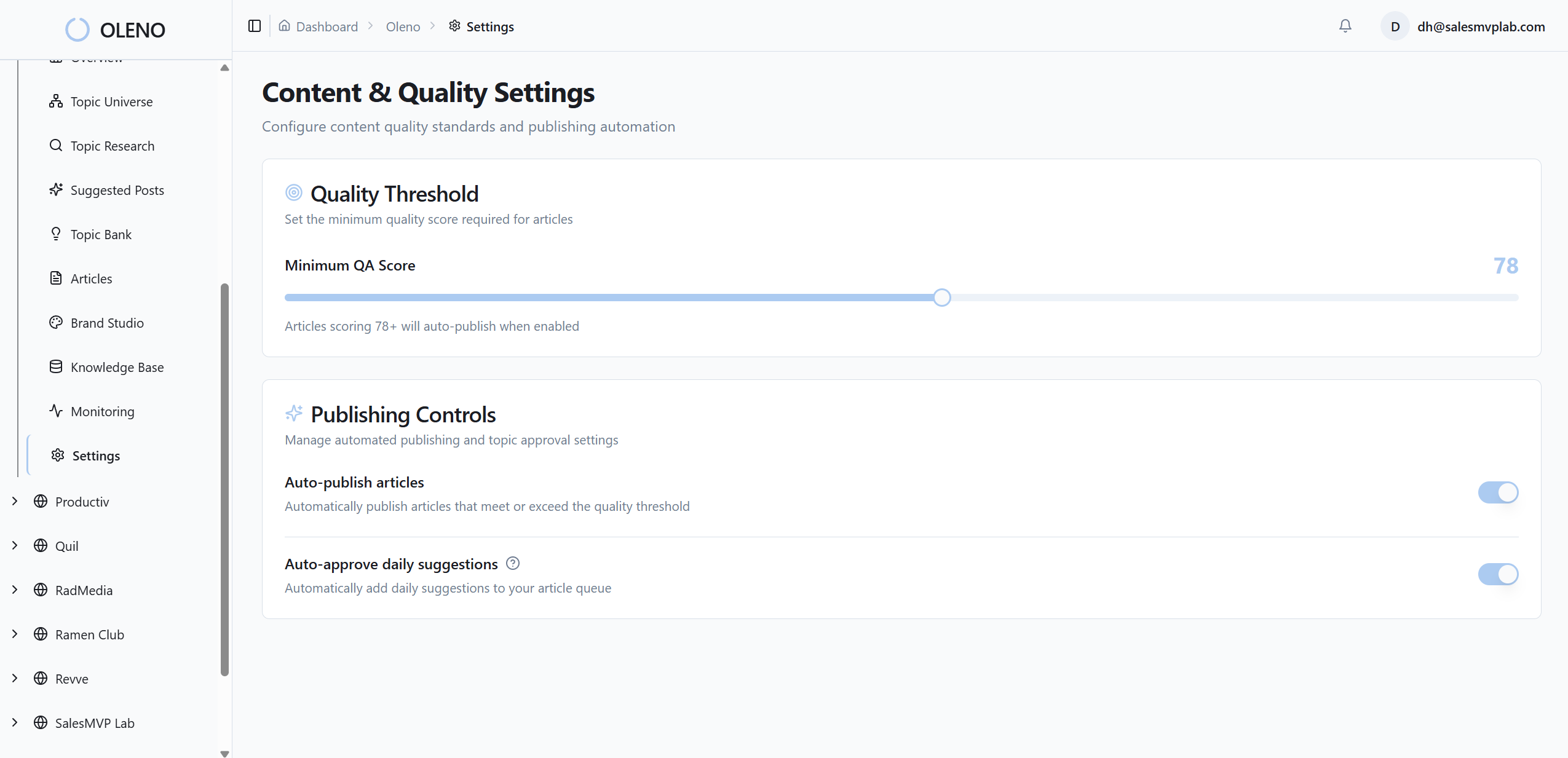
That's important because demand gen is not one content type. And it's not one funnel stage. The old way usually throws everything into the same bucket, then wonders why it feels random. Oleno separates governance from execution and maps jobs to actual buying motion. That's a much better fit for how scaling SaaS teams really work.
So the payoff is pretty straightforward. Less coordination overhead. Less narrative drift. Lower fabrication risk. More consistent output. And content that actually sounds like it came from one company with one point of view, not five different people trying to meet a deadline.
What Scaling Looks Like When the System Finally Holds
The key challenges in scaling don't go away because you hired one more writer or bought one more AI tool. They go away when strategy stops living in people's heads and starts living inside the system that produces the work.
That's the shift. Demand generation becomes a system instead of a string of content tasks. And once that happens, quality and volume stop fighting each other so much. If you want to see how Oleno can help your team scale content without the usual drift, rework, and coordination mess, Book a Demo.
About Daniel Hebert
I'm the founder of Oleno, SalesMVP Lab, and yourLumira. Been working in B2B SaaS in both sales and marketing leadership for 13+ years. I specialize in building revenue engines from the ground up. Over the years, I've codified writing frameworks, which are now powering Oleno.
Frequently Asked Questions