30-Day Demand‑Gen Sprint: 6 Rapid Tests to Validate Channels
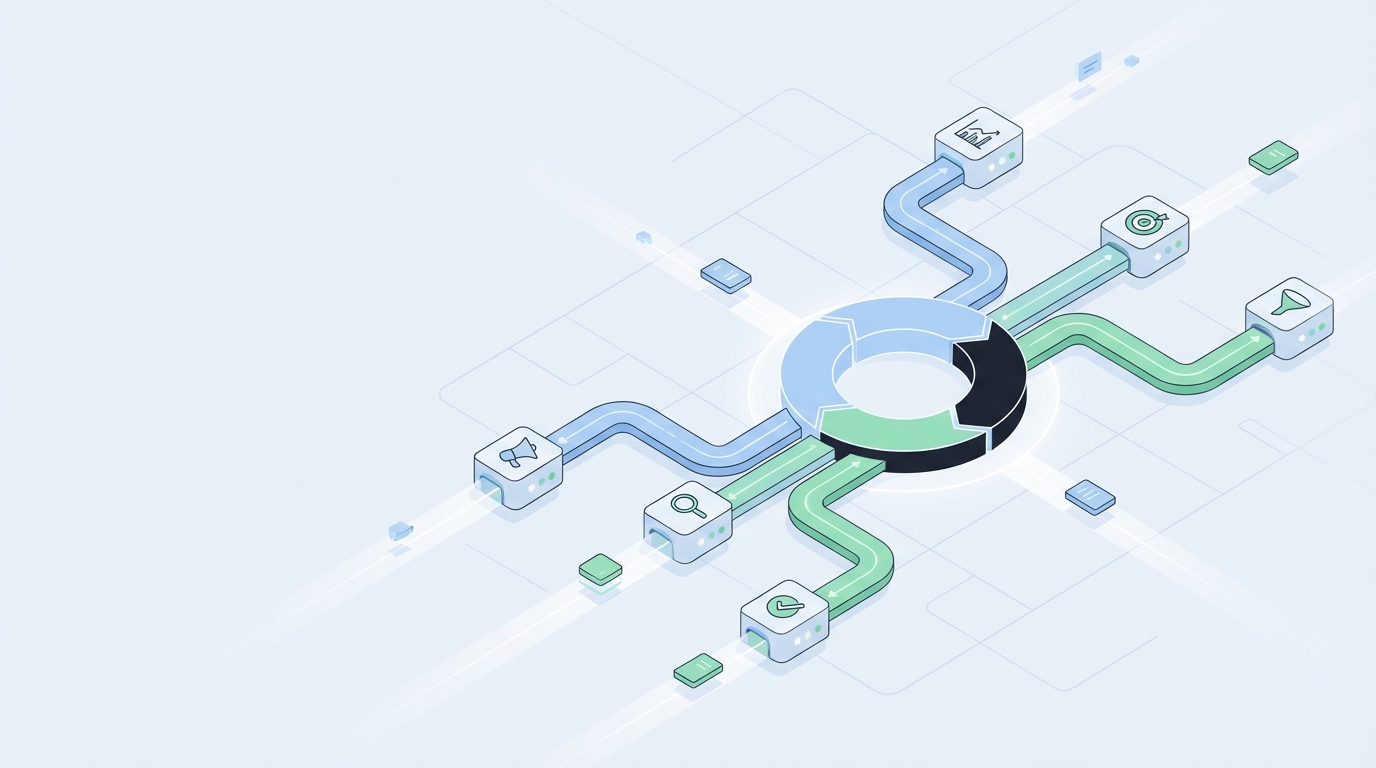
Long pilots feel safe. They also hide the real winners. By the time you finish a 90-day pilot, the team has changed copy, refreshed the website, and rewired attribution. Now you’re arguing about noise instead of signal. I’d rather ship six clean tests in 30 days, make a call, and move on.
I’ve been on both sides. As the sole marketer, I could crank out content and see what moved pipeline that week. As a head of sales watching inbound from content, I saw great looking metrics that didn’t translate to deals. Short sprints force clarity. What are we testing, what does “pass” look like, and can we run it with the team we have right now.
Key Takeaways:
- Set one primary success metric per channel test, plus two guardrails, and write them down before you spend a dollar
- Treat channel validation as an experiment, not a campaign, and lock your offers, CTAs, and landing patterns for the sprint
- Quantify costs of drift: delays, mismatched CTAs, broken tags, and small sample sizes create inconclusive results
- Run six parallel tests in 30 days using simple, governed templates so results are comparable
- Cut or scale based on LTV-adjusted CAC thresholds, not feel
- Systematize execution so sprint assets ship without coordination headaches
Why Long Pilots Hide The Real Winners
Long pilots hide real winners because too many variables shift over time, which muddies your read on causality. A 30-day sprint forces steady inputs, one primary outcome, and faster cuts. Teams that standardize assets and decisions upfront get cleaner data and make better calls.

The Metric Trap That Misleads Early Tests
CTR looks good on a slide, but pipeline tells the truth. Early tests don’t need perfect attribution, they need directional signal against outcomes you actually care about. Pick one primary metric, like LTV-adjusted qualified leads, and two guardrails for quality and cost. Everything else is noise that burns time and budget.
When I skip this, I regret it. You chase a higher click-through, watch CPC drop, and feel good. Then sales says nobody showed to the calls. The fix is boring and effective, decide the metric stack before launch, add it to your sprint brief, and hold the line for 30 days. No mid-sprint metric swaps because the graph looks nicer.
The fastest way to stay honest is to set pass and fail thresholds up front, then review once a week with the same sheet. If your head of sales can’t glance at it and understand the call, you’ve overcomplicated the test. Keep it human-readable. Keep it tied to revenue outcomes.
Why Short Sprints Beat Sprawling Pilots
Short sprints force crisp hypotheses, tight execution, and fast cuts. Long pilots accumulate variation, team fatigue, and QA drift, which makes results harder to interpret and easier to rationalize. I’ve seen quarter-long pilots that produced pages of slides and zero conviction.
Thirty days is enough to answer a simple question, is this channel likely to scale to your CAC-to-LTV target within your sales cycle with the team you have. You won’t perfect creatives or landing pages. You will see if qualified demand shows up at an acceptable cost and if you can run the motion without breaking.
If you want a quick sanity check on creative and formats, look at the guidance from platforms like the Google Ads Demand Gen overview. Then lock a lightweight pattern and run the play. Ready to cut setup time and skip guesswork? Request A Demo.
Channel Validation Is An Experiment, Not A Campaign
Channel validation works when you isolate variables, standardize assets, and predefine decision rules. Campaign thinking optimizes outputs. Experiment thinking proves or falsifies a simple claim about a channel’s ability to produce qualified demand at a target cost within a defined window.

What Traditional Approaches Miss About Causality
Campaigns drift. New offers appear midstream. Landing pages change because a VP saw another company’s site. Then you’re left with a nice looking dashboard and no idea what caused the lift. Experiments fix the unit of analysis, the exposure window, the offer, and the CTA, which lets you attribute a short-window lift to the channel.
Pick your test unit, like account, visitor, or retargeting pool. Fix the core components, the promise in the ad, the headline and CTA on the page, the form fields, and the follow-up step. Decide stop-start dates and don’t move them. If something breaks, log it, don’t quietly change the rules. Consistency beats creativity in sprints.
A quick frame helps, hypothesis, audience, offer, asset template, metric stack, sample size target, decision rule. That’s it. When you’re tempted to add one more variant, remember the point isn’t to be clever, it’s to learn fast and make a call you trust.
The Hidden Costs Draining Channel Tests
The biggest costs in channel tests are coordination delays, QA drift, and unreliable samples, not just media spend. When copy lives in docs, assets live in chats, and publishing depends on people, you lose days to handoffs and rework. Every slip narrows your exposure window and corrupts your data.
Weeks Lost To Coordination And QA Drift
Here’s the pattern. A designer is waiting on final copy. Copy is waiting on a CTA decision. Paid is waiting on UTMs. Web is waiting on the form spec. By the time it goes live, you’ve burned nine days and still missed two tracking tags. I’ve lived this. It’s not malice, it’s fragmentation.
QA drift sneaks in fast. Different CTAs per ad set. Mismatched form fields. Tag breaks after a hotfix. The cost isn’t just spend, it’s inconclusive results. Let’s pretend CPL looks great at 40 dollars, but sales flags low fit and no follow-ups. You spend 6,000 dollars on leads that never qualify. If only 5 percent become SQLs, your effective cost per SQL is 800 dollars, not 40.
Small samples make it worse. If you need 20 SQLs to see a directional pattern and you only get 7, you’ll make gut calls. Define minimum sample size per hypothesis and lock your window. Use one leading indicator, like meetings set, plus one lagging indicator, like SQLs, to avoid waiting months while still protecting against false positives. When in doubt, stick to consistent formats encouraged by platforms like Google Ads Demand Gen creative formats so creative isn’t the variable you’re unknowingly testing.
The Stress Of Betting On The Wrong Channels
The pressure is real. You know the board will ask where marketing-sourced pipeline is, by channel, and what you’ll scale next quarter. If your answer is we’re still waiting on pilot results, confidence drops. A clean sprint gives you a tight story, here are the six tests, what passed, and where we’ll put the next dollar.
When The Board Asks Where Pipeline Is
You need a simple, credible readout. Not 18 slides. One page that says, channels tested, pass or fail, why, next step, spend plan. If you can’t defend your decision on a single page, the sprint didn’t create clarity. That usually means assets drifted or metrics changed midstream, not that the channel “needs more time.”
I’ve seen leaders get stuck defending vanity lifts. More traffic, more clicks, lower CPC. Feels good. Then you ask how many meetings. Silence. That’s the gap sprints close when they enforce one primary metric and a clear decision rule. You can disagree on the threshold. You shouldn’t disagree on whether the threshold was hit.
Consistency earns trust. Even a failed test buys you credibility if you can show it was run cleanly and a fast cut saved budget. If you want a planning lens for exec alignment, the 30-60-90 leadership plan keeps focus on near-term decisions without losing the bigger arc.
What Happens When Message And Landing Page Do Not Match?
Your ads promise a mini product demo. The landing page offers a long ebook. Drop-off spikes, SDRs get the wrong context, and you spend the next week fixing forms and copy. I’ve done this dance. The fix is simple, standard templates and governed CTAs across every sprint asset so message stays tight, even under speed.
This sounds small, but it’s the difference between a clean decision and a mess you can’t interpret. If the promise, the CTA, and the follow-up are consistent, you can trust the outcome. If they change per asset, you’re comparing apples and oranges. That’s where frustration and rework creep in, and your team loses faith in the process.
Want to stop debating messy results and start scaling what works? Request A Demo and see how to run a sprint with fewer moving parts.
Run A 30-Day Sprint With 6 Rapid Channel Tests
A 30-day sprint should include six parallel tests, each with a single offer, a governed asset template, and a clear decision rule. The goal isn’t to find perfection, it’s to find channels that can produce qualified demand at an acceptable cost, with your current team, inside a fixed window.
Test 1: Organic Spike Article With CTA
Ship one high-velocity article tied to a product outcome, not a generic topic. Use a lightweight structure, a strong H1, three benefit-driven H2s, specific proof, and a single mini demo CTA. Keep the reading path short. If you need 15 minutes to get to the ask, it’s the wrong article for a sprint.
Instrument UTMs so you can separate sprint traffic, and set the primary metric as SQLs within 21 days. Add two guardrails, bounce under 70 percent and form completion above 12 percent. If the piece drives traffic but fails the guardrails, you don’t have an acquisition asset, you have a brochure. Useful later, not for the sprint.
Make the CTA contextual. Embed the mini demo snippet inside the article where the reader needs it, not only at the end. You’re testing whether organic can trigger qualified action now, not whether someone remembers to book later.
Test 2: Targeted LinkedIn Ads To A Single Offer
Run two audience hypotheses, recent visitors who viewed pricing and a cold list of high-fit titles. One offer only. A mini demo or a simple ROI calculator both work because they’re close to value and easy to consume. Keep creative simple, one hook, one visual, one promised outcome, and a product cue so intent stays tight.
Track with UTMs and set cost per SQL as the primary metric. Add a guardrail on meeting set rate above 25 percent. If meetings set fall below that, you’ve likely got a message-to-offer mismatch or a landing page that’s doing too much. Fix the bottleneck, not the audience, unless you’ve already hit your sample size with no movement.
Don’t let creative churn hijack the sprint. Choose two variants you believe in, lock them, and spend to your sample target. You’re testing the channel at this stage, not an art contest.
Test 3: Gated Webinar With Fast Follow
Host a 30-minute session that promises one job-to-be-done and a live walkthrough. Co-host if you can borrow an audience, but don’t add a second topic. The landing page should be short, five fields max, and a date within 10 days so urgency works for you.
Primary metric is meetings set within seven days post-event, driven by a tight follow-up sequence. Add a guardrail on show rate above 35 percent. If the show rate tanks, tighten the promise and shorten the deck. If meetings don’t convert, look at the CTA and the handoff, not the webinar itself.
Keep Q&A real and cut fluff. If attendees hear clear answers to questions they actually have, follow-ups jump. If they hear a generic pitch, they bounce.
Test 4: Partner Co-Marketing Drop-In
Get a partner newsletter or community slot. Provide one crisp blurb that points to a partner-branded landing page with your demo clip. Make it easy for them to say yes by doing the work, copy, visual, link, tracking, and a thank-you note with assets they can reuse.
Primary metric is qualified form fill to SQL rate. Add a guardrail on partner traffic to form conversion above 8 percent to avoid vanity reach. If it fails, you still learned which partners move, and you didn’t spend three weeks building a joint campaign no one remembers.
If you need a template for partner execution, align the shape to something you can run every month, not a one-off event. You want repeatable slots, not random spikes. The Microsoft Ads 30-day sprint example is a good reminder that fast cycles beat perfect plans.
Test 5: Nurture Email To High-Intent List
Pull users who viewed pricing or a product page in the last 60 days. Send a single, clear CTA to a problem-solution explainer with a booking module right on the page. Keep copy short and specific, one proof point, one next step. The point is conversion, not thought leadership.
Primary metric is meetings booked. Guardrail is unsubscribe below 0.5 percent. If unsubscribes spike, your targeting is off or timing is wrong. If clicks are fine but meetings lag, fix the on-page booking interaction before you rewrite the email. Don’t over-test subject lines. Get the offer right.
One overlooked trick, send the second email to non-clickers with a shorter copy variant and a direct calendar link. It’s simple and often recovers easy wins.
Test 6: Product-Triggered In-App Invite
Target active users in a free tier or an adjacent feature. Trigger a contextual invite, see how teams like you automate X, that lands on a micro-landing with a tight demo. This is great for catching users with intent but low awareness of your broader value.
Primary metric is PQL to SQL rate. Guardrail is opt-out below 1 percent and no negative NPS comments citing spam. If you see pushback, reduce frequency and increase relevance. If the rate is strong, you just found a channel you control that doesn’t depend on ads or algorithms.
Two small checks save pain here, confirm event tracking before day one, and run a 24-hour shadow test to catch edge cases before you scale to everyone.
How Oleno Powers A 30-Day Channel Sprint
Oleno turns sprint rules into templates, jobs, and a predictable flow so you can run six tests in parallel without coordination headaches. You define voice, product claims, and CTA patterns once, then the system produces sprint assets that match, pass QA, and publish on schedule.
Governed Asset Templates, Faster And Safer
Define how you sound, what you believe, and what claims are allowed, and Oleno turns those rules into reusable templates for articles, landing pages, emails, and simple ads. The big win is speed without the frustrating rework caused by message mismatch. One promise, one CTA, same structure, across every asset in the sprint.
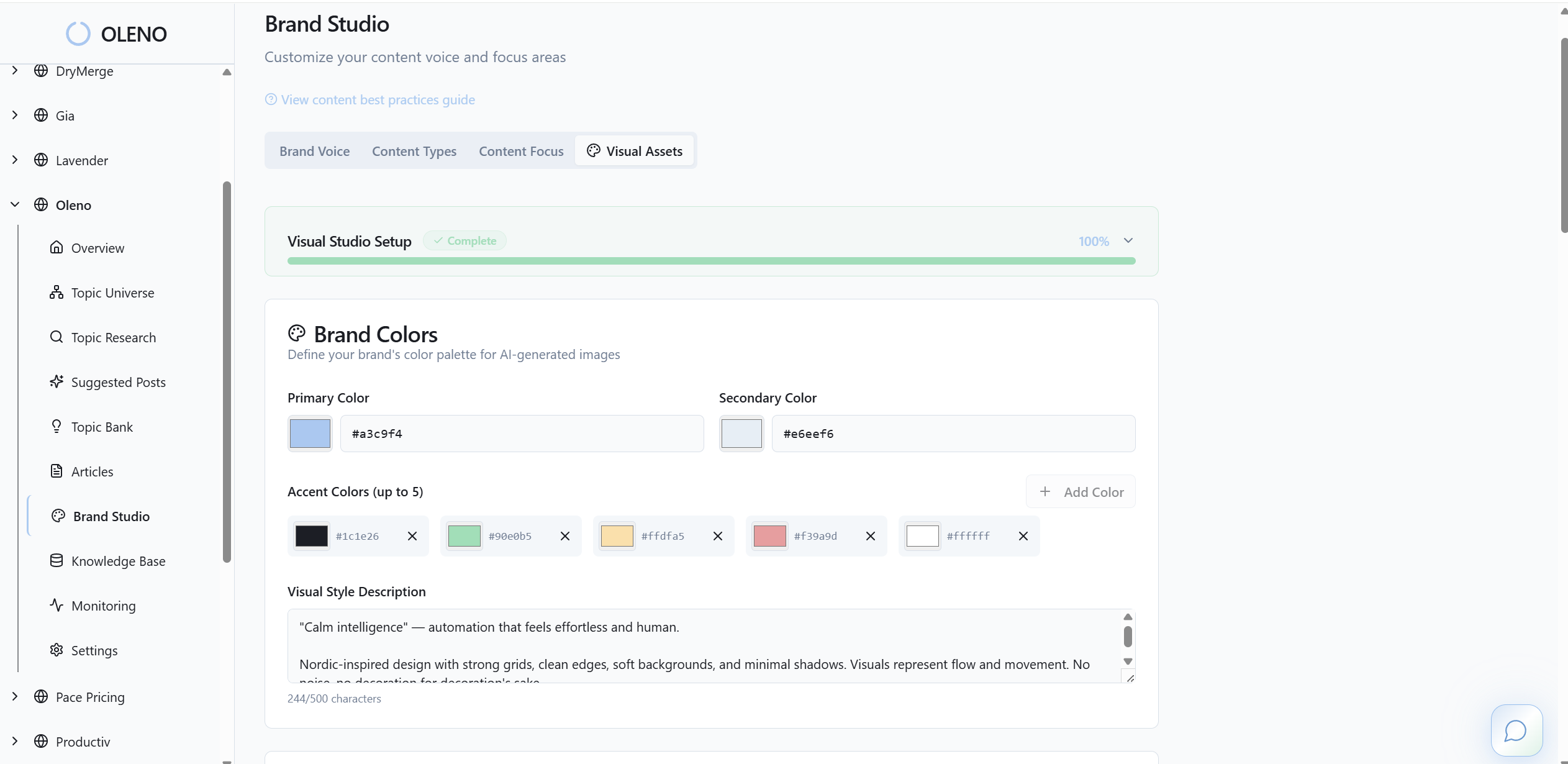
Because governance applies everywhere, quality doesn’t erode as volume increases. Voice, structure, and claim boundaries are enforced automatically, so you don’t rely on memory or a checklist someone forgets to open. Under sprint pressure, that’s the difference between clean data and inconclusive results.
If your team is small, this is leverage. You move from handoffs in chats to publish-ready assets that already meet your rules. Less back and forth. Fewer edits.
Deterministic Jobs That Produce Sprint Assets On Demand
Enable the jobs you need, acquisition article, product explainer, partner blurb, webinar landing, nurture email, and Oleno runs the same deterministic pipeline every time, Discover to Angle to Brief to Draft to QA to Publish. No prompt chasing. No ad-hoc formatting. Just consistent execution.
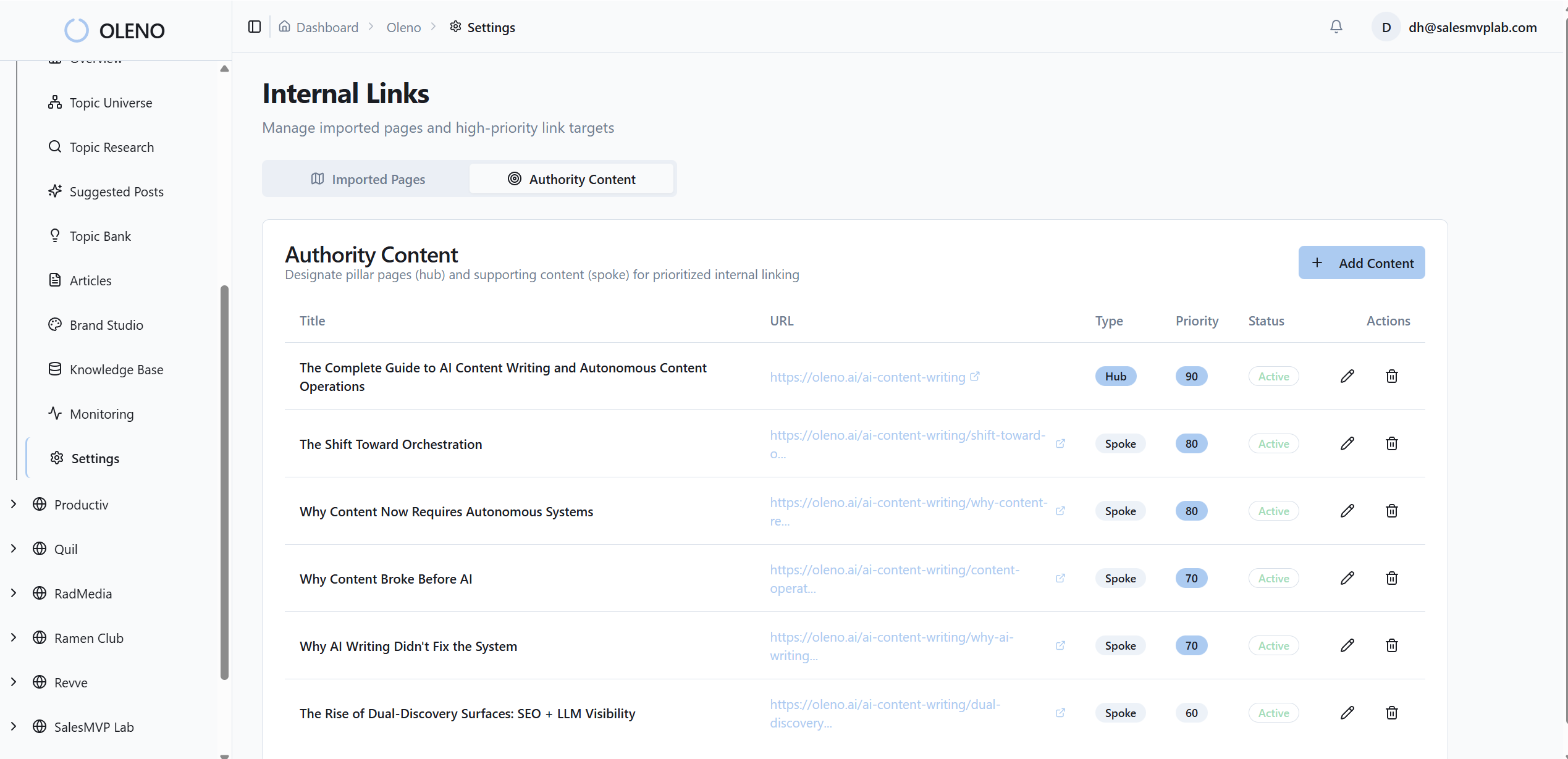
This makes parallel testing practical. You can line up all six tests on the same day, with the same inputs, and trust that outputs will be comparable. That makes your decision meeting simple, because you’re not arguing about different formats or missing pieces.
It also keeps cadence steady. Oleno runs daily, so if a piece fails QA it’s revised automatically until it passes, then ships. No resets. No stalled sprint because someone got pulled into a launch.
QA Gates And Publishing Control To Prevent Drift
Before anything goes live, Oleno checks voice and tone alignment, narrative structure, clarity, repetition, grounding, and accuracy against your governed knowledge. It also enforces SEO and LLM-readable structure where relevant, and respects prohibited language. Nothing publishes until it meets the bar.
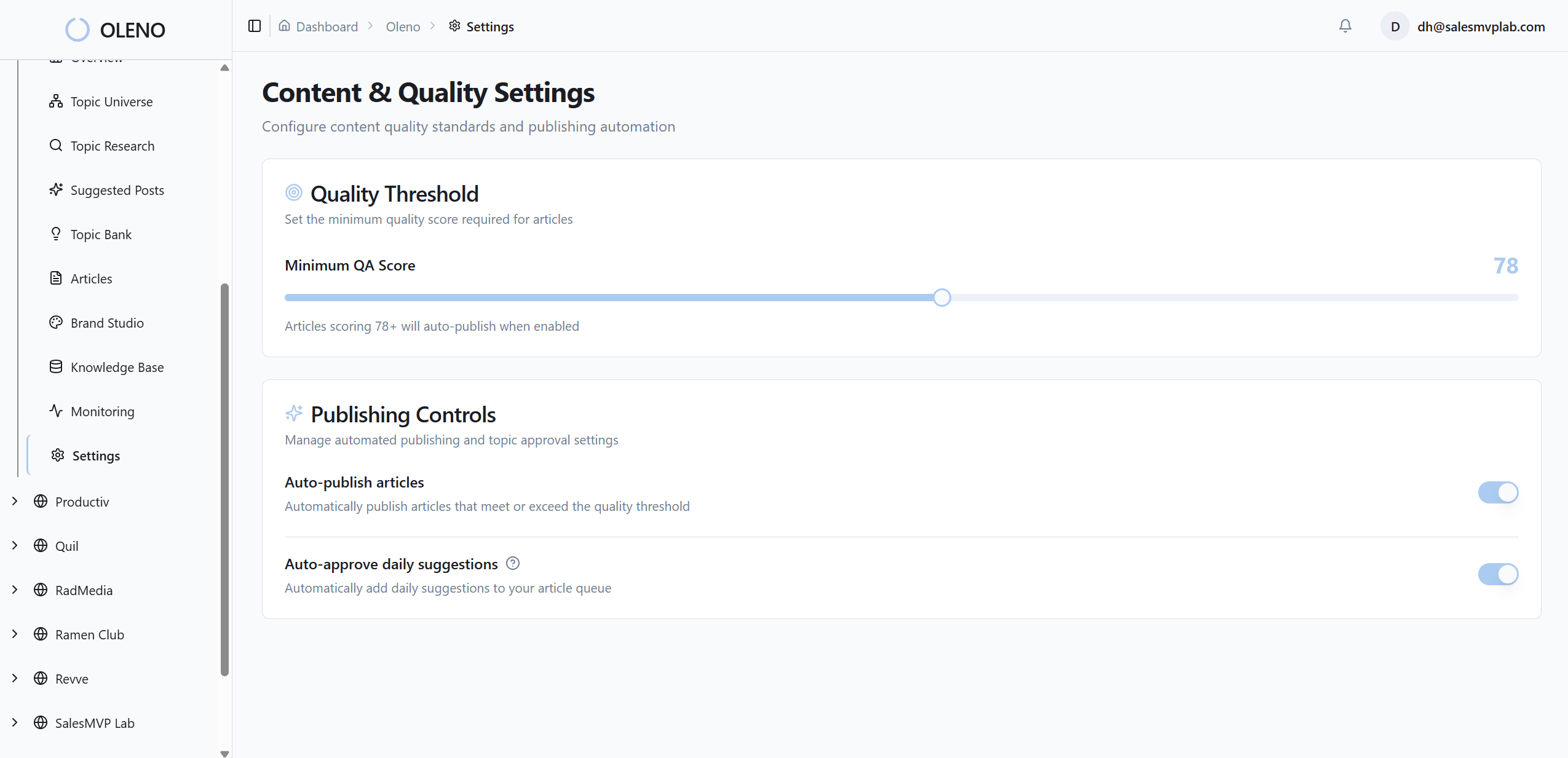
Publishing connects directly to your CMS, WordPress, Webflow, HubSpot, and more, with draft or live control and no duplicates. Optional distribution can reuse approved content across social channels with scheduling and reuse rules, but it never invents new messaging. The point is operational reliability, not another analytics dashboard.
Ready to run your sprint with fewer moving parts and clearer decisions? Oleno was built to run demand gen as a system, not a pile of prompts. Request A Demo and see the flow in action.
Conclusion
Short sprints don’t just save time, they surface truth. When you set one primary metric, lock your assets, and ship six clean tests in 30 days, you stop debating vanity lifts and start scaling channels that actually produce qualified demand. I’ve seen the opposite too, long pilots that feel busy and go nowhere.
If you want this to compound, turn the rules into a system. Govern the voice and claims once. Use job-based execution. Enforce QA before publishing. Whether you use Oleno or not, the principle holds. Humans set direction. The system runs the work. That’s how a small team validates channels fast and builds a demand engine that keeps shipping.
About Daniel Hebert
I'm the founder of Oleno, SalesMVP Lab, and yourLumira. Been working in B2B SaaS in both sales and marketing leadership for 13+ years. I specialize in building revenue engines from the ground up. Over the years, I've codified writing frameworks, which are now powering Oleno.
Frequently Asked Questions