6-Module Curriculum for Category Education: Reframe Buyers in 12 Weeks

Most teams publish smart explainers that go nowhere. Not because the content is bad. Because buyers still carry yesterday’s mental model into tomorrow’s narrative and map your product to the wrong drawer.
I learned this the hard way. At Proposify, our SEO was excellent. But some high-traffic topics didn’t point back to what we actually solved. At PostBeyond, I could write fast and on-message, then lost the thread as headcount grew and context scattered. Volume wasn’t the issue. Fragmentation was.
Key Takeaways:
- One-off explainers rarely reframe beliefs; curricula do
- Design objectives around belief shifts and observable behaviors
- Quantify rework, pipeline stalls, and budget waste from drift
- Sequence six modules over twelve weeks with lightweight assessments
- Standardize briefs, lock claims, and protect cadence with a runbook
- Measure belief movement via polls, quizzes, and micro-conversions
- Use a system so a small team ships without heroics
Want to see a system that enforces this end to end? Try Generating 3 Free Test Articles Now
Why One-Off Explainers Will Not Reframe Your Market
One-off explainers don’t reframe markets because they inform without rewiring mental models. Belief change needs sequencing, repetition, and checks for understanding across formats. Instructional design principles show learning sticks when ideas are scaffolded, practiced, and assessed, not tossed into a feed and forgotten. Instructional Systems research.

The Difference Between Information and Instruction
Information tells. Instruction changes how people think and act. If a buyer keeps an old frame, “AI writing equals faster drafting”, they’ll evaluate you on speed, not reliability, and you’ll lose to the wrong alternative. Instruction asks for behavior: apply a new criterion, make a different call, spot a faulty assumption in the wild.
You move from “we explained it” to “they can use it.” That’s a different standard. Instruction breaks a concept into lessons, gives deliberate practice, and checks for transfer. Think long-form article to set the concept, short video to reinforce, and a tiny quiz or checklist to force recall. Layer repetition on purpose, not as filler.
What Is a Mental Model and Why It Blocks Adoption?
A mental model is a shortcut that compresses a messy world into something you can act on. Helpful, until it’s wrong. If buyers believe “prompting equals demand gen,” they’ll interpret your system as just another content tool. Every claim is filtered through that lens, so your value shrinks to draft speed.
You have to name the current model, contrast it with the new one, then teach through specific examples and small wins. “Before” and “after” statements make the shift concrete. Ask, check, nudge. You’re not filling gaps; you’re replacing a framework, one decision at a time. That’s how adoption actually happens.
Why Curriculum Beats Content Calendars for Category Building
Calendars optimize output variety. Curricula optimize learning transfer. Calendars bounce between topics, which creates novelty but not belief change. Curricula sequence modules that build on each other, repeat key lines across formats, and include assessments that verify the shift. Same cadence, different intent.
You still publish weekly. You just give every piece a job in the journey. The result is compounding effect rather than isolated bursts. Think of a six-module path that turns “What is it?” into “I can teach it to my team.” That’s when the market starts repeating your language back to you, correctly.
Design Learning Objectives That Change Beliefs, Not Just Knowledge
Belief-shifting objectives translate misconceptions into observable behaviors tied to micro-assessments. You’re designing for what buyers say, do, and choose differently after each lesson. Guidance from UDL Guidelines suggests multiple representations and actions to support transfer, which helps make the shift measurable with lightweight tools you already have.

How Do You Translate Misconceptions Into Measurable Objectives?
Start with a list of top misconceptions, ranked by impact on adoption. Then write the belief you want to hear back in your buyer’s words. Convert that belief into an observable behavior: picking the right comparison criteria, completing a diagnostic, or choosing a better next step after a lesson.
Tie each behavior to a simple check. A one-question poll, a two-minute quiz, a gated checklist, or a click-path that shows they prioritized the right action. If you can’t measure it, you can’t manage it. This doesn’t need fancy analytics. It needs clarity on the signal you expect after each lesson.
Define Desired New Mental Models and Belief Statements
Write a one-sentence before/after for each belief. Before: “More pages mean better SEO.” After: “Deterministic pipelines beat draft speed for demand generation.” That contrast gives you the lesson arc: expose the faulty heuristic, teach the better model, give a small application, check for transfer, and repeat in another format.
Keep language concrete. Replace slogans with choices. Show a side-by-side: prompt-based workflow drift vs. orchestrated rules that sustain voice and claims. Then ask learners to apply the model in a scenario. They should be able to spot drift, pick a fix, and explain why their choice aligns to the new model. That’s evidence, not vibes.
Pick Assessment Metrics You Can Run With Existing Tools
You don’t need a new platform to start. Use on-page polls, lesson-level quizzes, gated checklists, and micro-conversions like “downloaded diagnostic” or “completed criteria builder.” Track completion and recall prompts in follow-up emails. Cohort by first-touch lesson to see which module moves which belief the most.
Keep it lightweight so the team actually runs it weekly. A spreadsheet and your email platform gets you 80% there. If a metric is hard to pull, pick a simpler proxy. The goal isn’t perfect measurement; it’s consistent signals you can act on. For structure ideas, the Curriculum Development Handbook offers practical framing.
The Operational Cost of Publishing Disconnected Education
Disconnected education multiplies rework, misalignment, and pipeline stalls. Each unsequenced piece introduces tone drift and contradictory claims that require rewrites, approvals, and cleanup. Planning guidance like EDCI702’s curriculum planning module shows why sequencing and coherence reduce this waste by design.
Hours Lost To Rework And Misalignment
You’ve seen it. A “what is X” piece says one thing, a “how it works” says another. Sales flags it. Product edits it. Marketing re-publishes it. Now multiply that by every format you pushed into the world that week. The hours feel invisible because they’re scattered across Slack and docs.
Let’s pretend you publish 12 pieces in a quarter. If 30% require three hours of rework, you burned roughly 10–12 hours. The bigger cost is trust erosion. Once sales stops believing content is reliable, they stop using it. Then you’re rebuilding confidence and assets at the same time. That’s an expensive reset.
Pipeline Impact When Buyers Stall at “What Is It”
When buyers can’t articulate your category in their words, they pause after the first demo. Deals drift into “no decision” because the internal pitch gets mangled in translation. A sequenced curriculum reduces this stall by building shared language before evaluation. Suddenly, discovery goes deeper on the first call.
You’ll hear it in how champions describe you to a VP. Less “it’s like X tool” and more “we need a system that runs demand gen end-to-end.” Expect earlier qualification, tighter discovery, and fewer calls spent untangling basics that could’ve been taught asynchronously. That’s pipeline velocity you can actually influence.
A Simple Budget Example to Quantify Waste
Let’s pretend your content lead costs $80/hour and rework drains 20 hours a month. That’s $1,600 burned on fixes, not growth. Now add the opportunity cost of one lost pilot per quarter. Your spreadsheet starts to frown. The fix isn’t more edits. It’s upstream rules, sequencing, and checks that stop drift before it starts.
A curriculum reduces variance by locking claims, voice, and order. It prevents orphaned pieces that need custom slides to make sense. You get hours back for creation, not cleanup. It’s not perfection, just fewer avoidable loops. That compounds faster than another brainstorm.
Still doing this manually and hoping it holds? There’s a simpler path. Try Using an Autonomous Content Engine for Always-On Publishing
When Prospects Do Not “Get It”, Everyone Feels It
Misunderstood categories create friction everywhere, sales calls stall, champions freeze, and your best explainer underperforms because sequencing is off. Using modular education principles from UDL Guidelines helps reduce cognitive load, build shared vocabulary, and give champions reusable assets to teach internally.
The Sales Call Where a Champion Freezes
You know the moment. Great fit. Smart champion. And then the conversation takes a left turn into basics that should’ve been settled by content. They try to explain your category up the chain and stumble over the frame. Not their fault. They’re translating in a hurry with mismatched materials.
Your job is to make the champion a teacher, not a translator. Give them short videos to replay in Slack, checklists to anchor criteria, and a one-pager that names the before/after beliefs. When they can teach the idea in two minutes, they stop improvising. That reduces risk and accelerates internal consensus.
Your Best Explainer Underperforms Because Sequencing Is Off
Great assets still fail when they show up in the wrong order. Myths should come before how-it-works. Diagnostics before proof. Proof before next steps. If you invert that order, you ask buyers to trust claims they can’t anchor. They nod politely and move on. Not because they disagree, because they’re overloaded.
Build repetition across formats so the idea sticks. The article sets the concept. The 60–90 second video makes it memorable. The tiny quiz forces recall. The checklist drives action. You’re stacking learning, not repeating yourself. That’s how memory and momentum work together.
Who Benefits Most When You Teach in Modules?
Early-stage buyers who are curious, not yet committed. New stakeholders pulled into the conversation late. Partner sellers who need a clean story. They all need scaffolding, not deep dives. Modular education reduces cognitive load and creates shared vocabulary that travels well across teams.
Your team benefits too. Fewer custom explainers, fewer DM threads, fewer last-minute slides. You regain hours and reduce the risk of frustrating rework. The narrative feels lighter because pieces do their job without you on every call. That’s what consistency buys you.
A 6-Module Curriculum You Can Run in 12 Weeks
A six-module curriculum run over twelve weeks builds belief step by step without burning the team. Two weeks per module, three assets each, lightweight assessments, and tight reuse rules. For planning and sequencing tactics, see guidance like EDCI702’s curriculum planning module.
What Is the 6-Module Structure and 12-Week Cadence?
Sequence six modules over twelve weeks, two weeks each: problem reframe, myth busting, diagnostic, how-it-works, proof, next steps. Plan three lessons per module: one long-form article, one short video or email, and one checklist or quiz. Close each module with a simple assessment that signals belief shift.
Keep one core thread and repeat key lines deliberately. The goal isn’t novelty; it’s mastery. Week one sets the idea and checks understanding. Week two reinforces and moves them one decision forward. Then you move to the next module. Same rhythm, cleaner judgment, fewer stalls.
Asset Templates and Lesson-Level Briefs to Speed Creation
Standardize H2 scaffolds, sample intros, proof blocks, and CTA patterns. Lock claims and voice rules so nothing drifts as assets multiply. Build microlearning variants from the same brief: email, 60–90 second video, and a one-page checklist. One spine, many formats. Fewer edits, more publishing.
This is where deterministic structure pays off. The brief encodes the arc, not just the topic. Writers stop reinventing flow. Editors enforce rules, not taste. You get faster without getting sloppy. And when something misses, you fix the brief upstream and regenerate, not rewrite from scratch.
Distribution Cadence and Channel Sequencing for Retention
Publish Tuesday long-form, Thursday micro, Friday recap. Map channels by complexity: feed for awareness, email for instruction, site hub for depth, community for Q&A. Drip rules help: if a contact engages Lesson 1, queue Lesson 2 in seven days. Cohort by start week so everyone sees a complete path.
Consistency beats volume. Protect cadence with a simple runbook: asset checklist, QA checks, approvals, and scheduling windows. No heroics, just reliable pulses. The repetition is the feature. It keeps the narrative intact even when your week gets chaotic elsewhere.
Measurement and Assessment Plan to Track Belief Shift
Instrument lightweight checks: a one-question belief poll per module, a three-question quiz in the diagnostic, and gated checklists for how-it-works. Track completion rates and micro-conversions by cohort and start week. You’re watching movement, not perfection.
If a belief isn’t shifting, tune the lesson brief, not just the headline. Change the example, tighten the contrast, or move the module earlier in the sequence. The system keeps moving while you adjust upstream. That’s the advantage of treating education as a program, not a set of posts.
How Oleno Runs This Curriculum With a Small Team
Oleno turns your category education plan into a running system: rules up front, deterministic jobs, QA gates, and steady publishing. It’s built so lean teams can keep shipping even when priorities shift. The result is consistent, belief-shifting output without the usual coordination tax.
Governance Encodes Objectives, Misconceptions, and Allowed Claims
You define narrative, voice, product truth, and safety rules once. Oleno enforces them everywhere, so lessons stay consistent across formats. That prevents invented claims and keeps the belief-shift arc intact. When rules change, they apply to new assets automatically. No retrofitting old drafts across five channels.
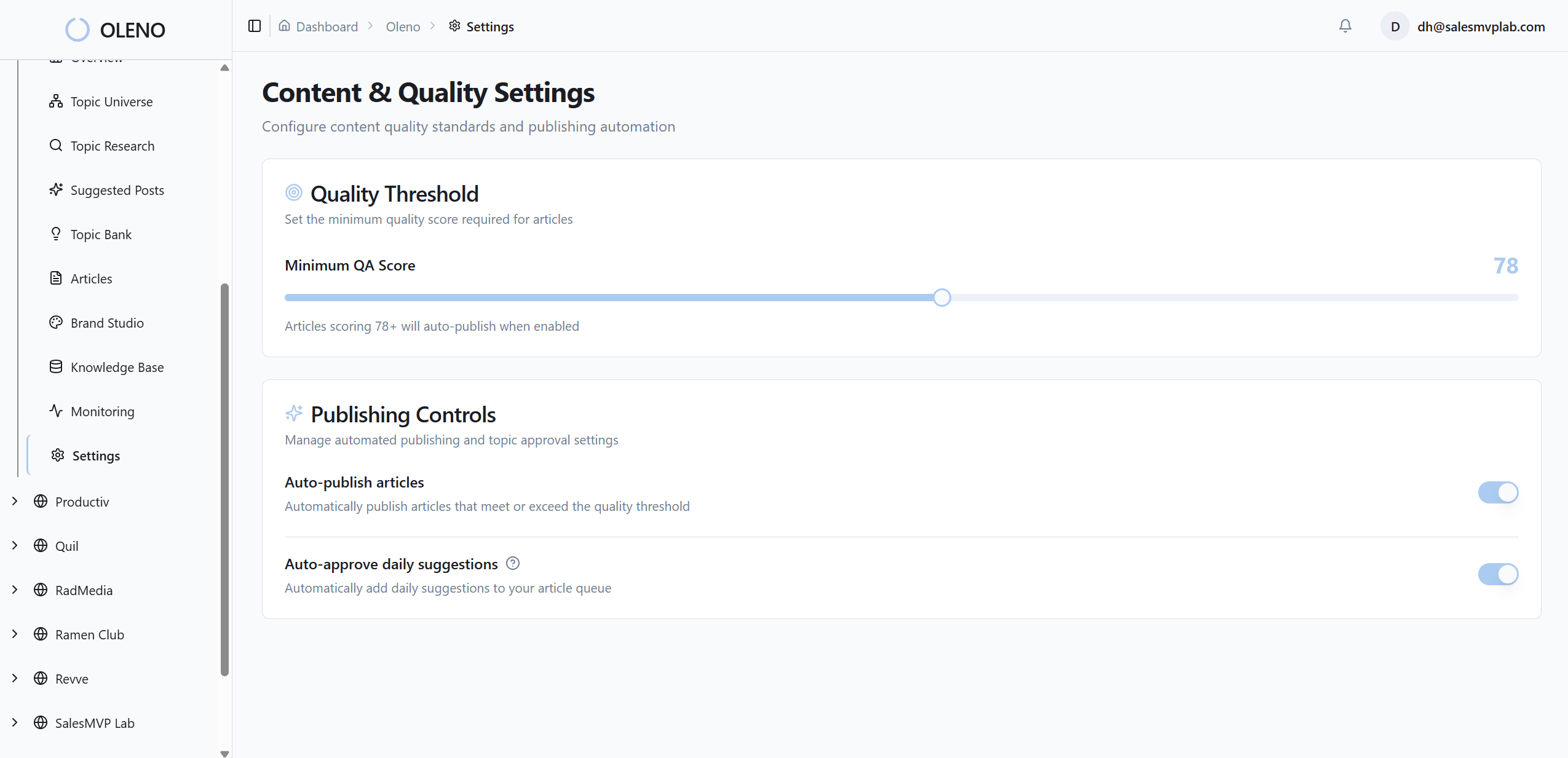
Governance spans brand, marketing, product, design, and knowledge. It covers voice and tone, category framing, approved use cases, and claim boundaries. That’s how you scale output without losing control. Fewer reviews, fewer corrections, less headache for a team of two trying to run a 12-week program.
Studios Generate Module Assets With Deterministic Briefs
Enable POV & Category Education and Frameworks & Guides jobs to produce long-form modules and micro variants off a single brief. Oleno runs a deterministic pipeline, Discover → Angle → Brief → Draft → QA → Enhance → Visuals → Publish, so the six modules ship on schedule without heroics.
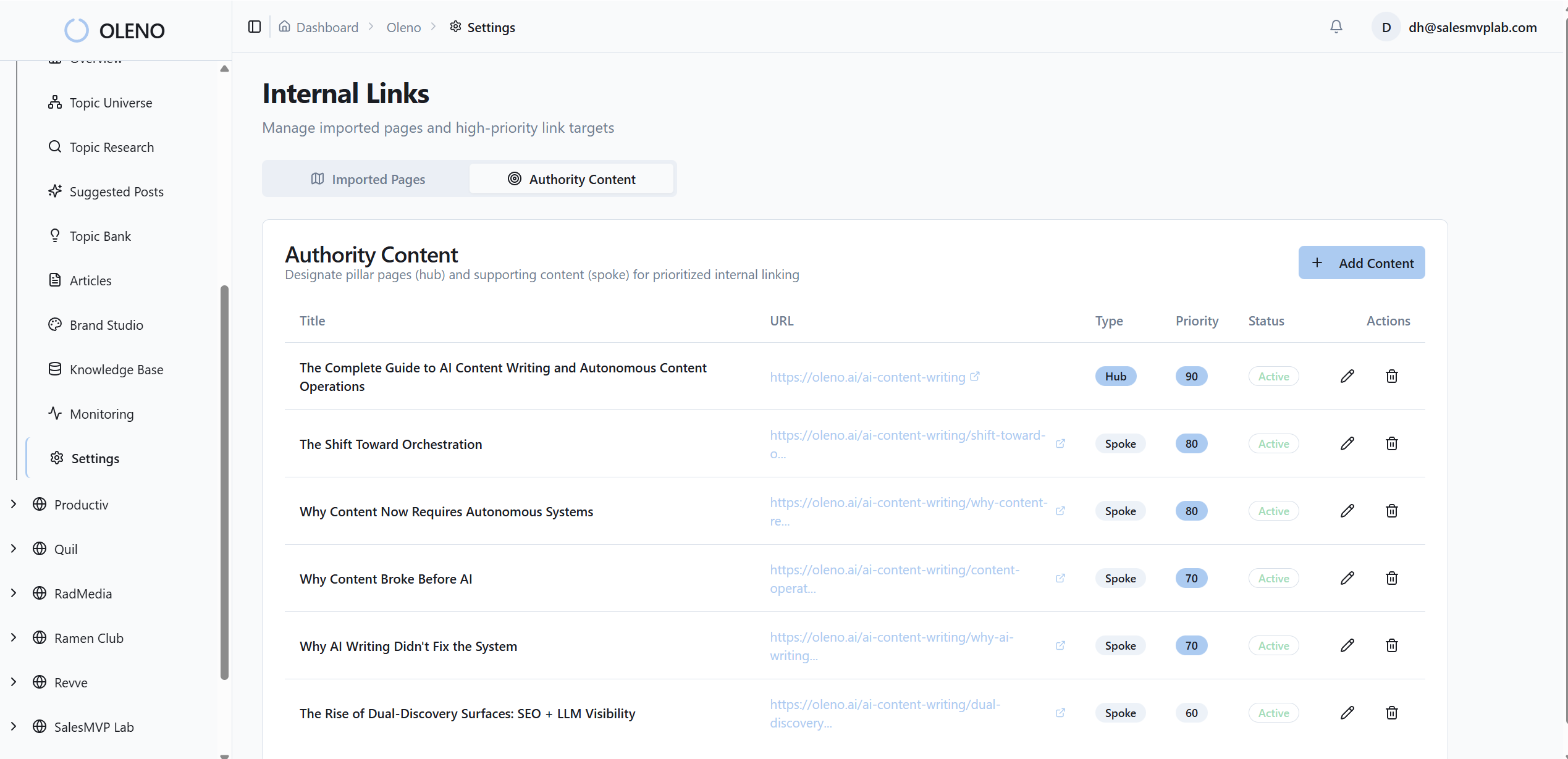
QA gates block anything off-voice or off-claim before it reaches your CMS. The upside isn’t just fewer errors; it’s less decision fatigue. Writers focus on substance. The system enforces structure. That’s how one strategic writer produces like a team, while you maintain the spine of the story.
Distribution and Cadence Controls Keep the 12-Week Schedule
Oleno’s distribution options schedule approved assets, enforce weekly cadence, and apply reuse rules. Map emails, site hubs, and short video drops to your planned sequence. Cadence remains steady even when launches or sales requests pop up. You can pause, resume, or roll cohorts without rebuilding the plan.
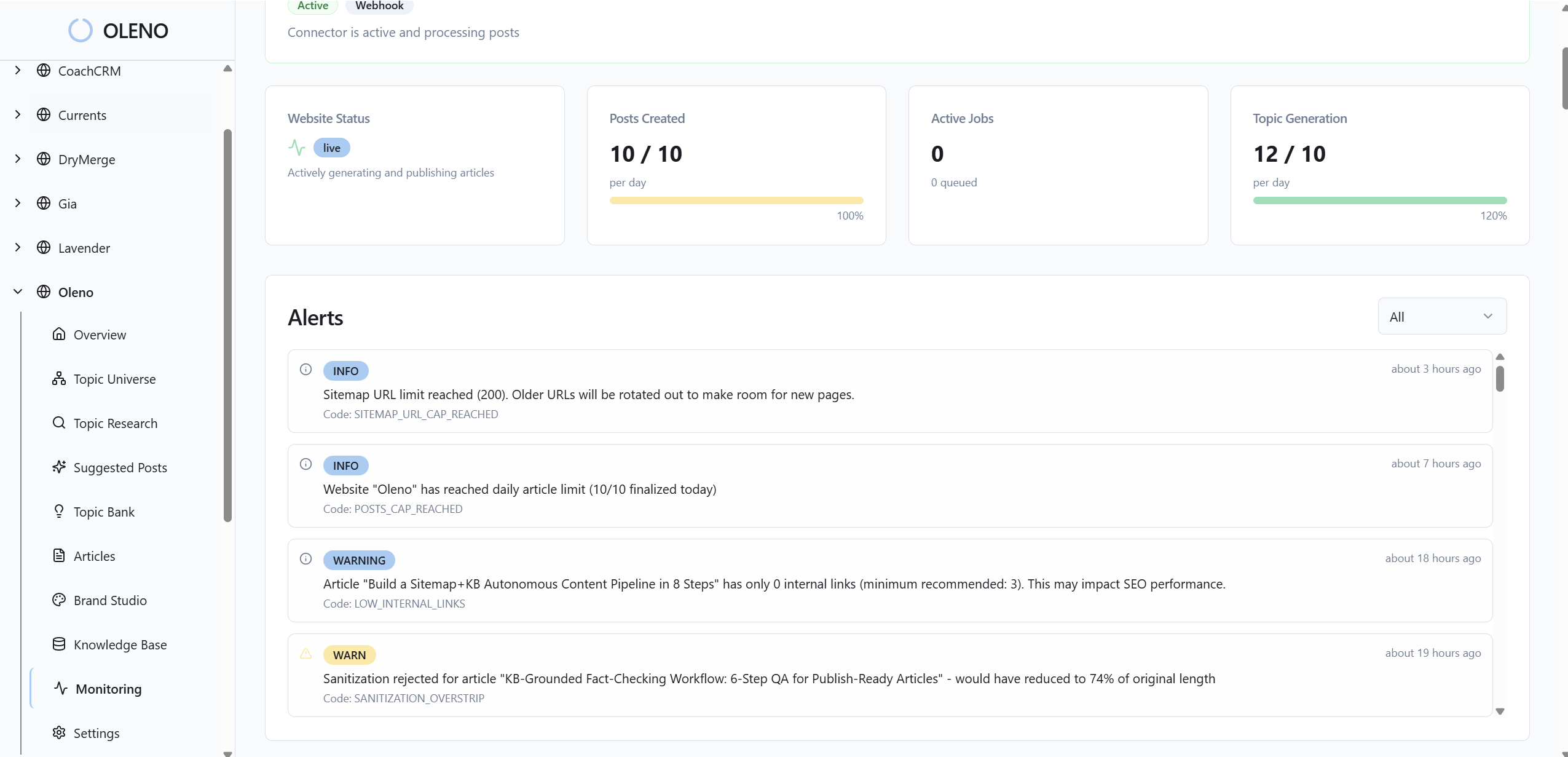
Publishing integrates with platforms like WordPress, Webflow, Storyblok, HubSpot, and more, draft or live, without duplicates. The operational layer replaces coordination, not people. Your strategy stays human. The engine keeps the calendar honest.
Measurement Signals and Feedback Loops to Iterate and Scale
Oleno provides visibility into output volume, cadence, coverage, and quality trends. Pair that with your lightweight belief polls, quizzes, and checklists to see where modules land. If a module lags, update the brief upstream and regenerate assets. The system keeps moving while you adjust.
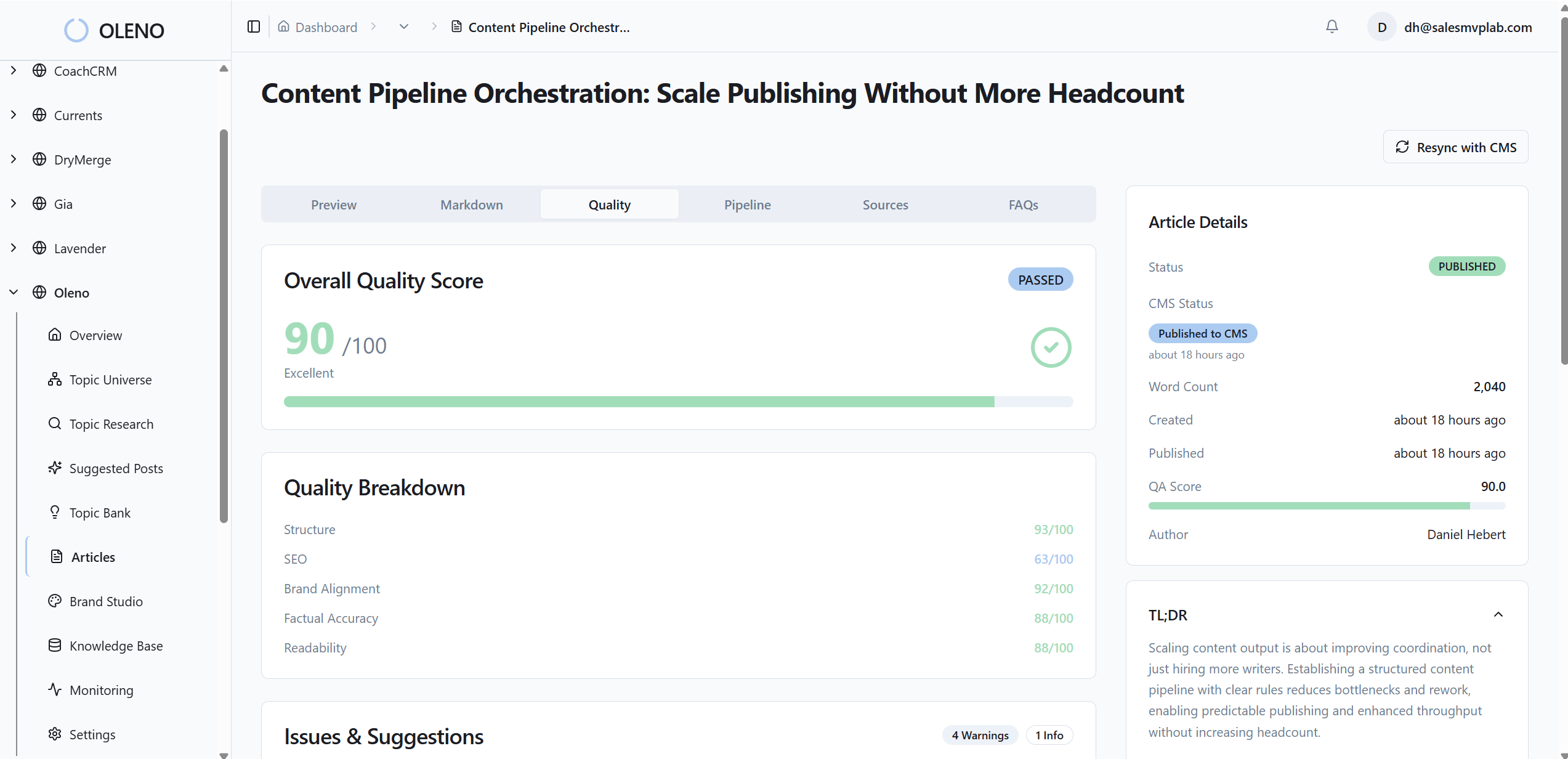
Over time, this reduces resets and drift. The narrative strengthens because rules and jobs keep it in bounds, not because you begged everyone to remember the deck. That’s the real leverage: continuous execution that compounds instead of restarting each quarter.
Ready to operationalize education without adding headcount? Try Oleno for Free
Conclusion
If you want the market to think differently, you have to teach differently. Not more posts, sequenced instruction that rewires beliefs with practice and proof. Set the rules, define the path, protect cadence, and measure the shift. Do that for twelve weeks and the conversation changes. Your buyers start teaching it back. That’s the signal you’re after.
About Daniel Hebert
I'm the founder of Oleno, SalesMVP Lab, and yourLumira. Been working in B2B SaaS in both sales and marketing leadership for 13+ years. I specialize in building revenue engines from the ground up. Over the years, I've codified writing frameworks, which are now powering Oleno.
Frequently Asked Questions