6‑Week Cross‑Channel Sequencing: Amplify One Pillar Article
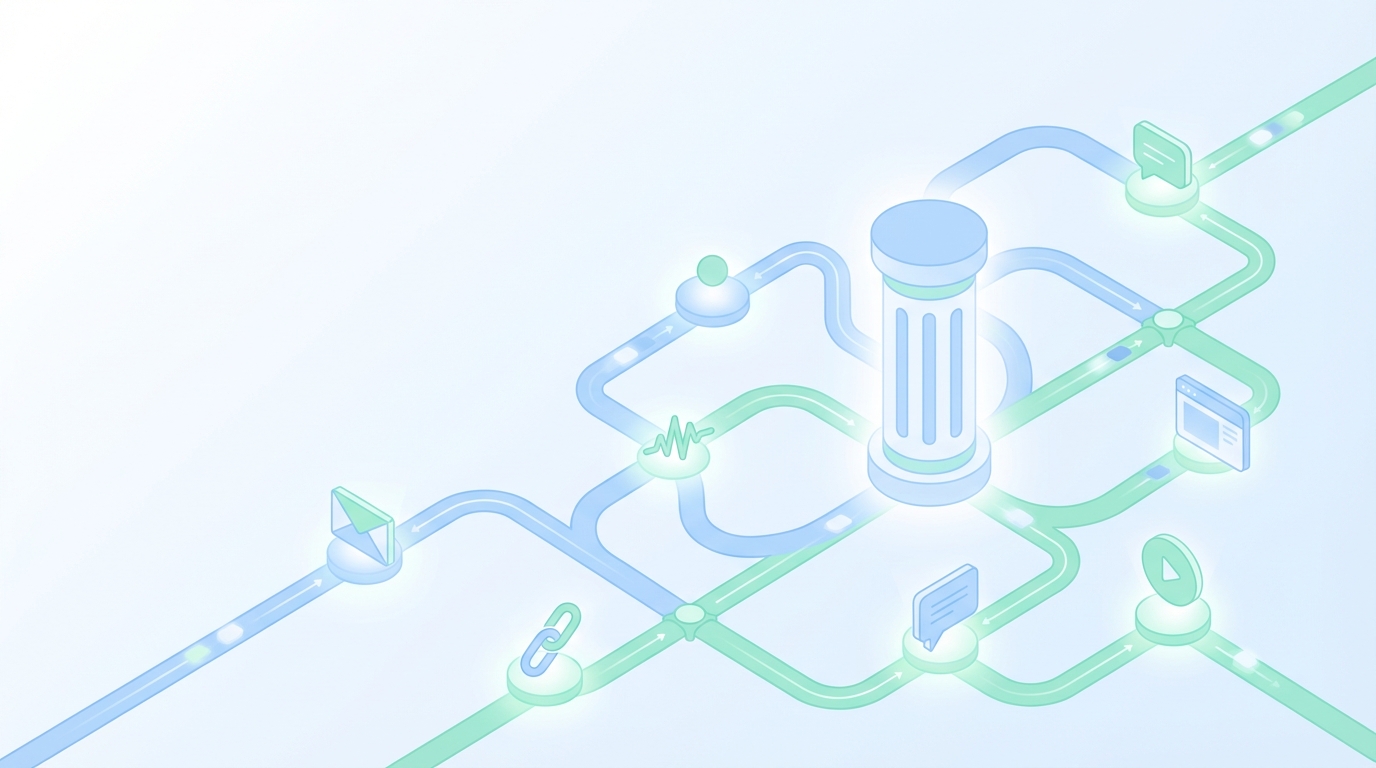
Most teams ship a pillar, post it once, then watch it fade. I did that for years and felt clever because the calendar moved. The truth, it is lazy distribution. 6week crosschannel sequencing fixes that by turning one pillar into a six week plan where each touch stacks on the last. You get compounding reach, cleaner learning, and predictable next moves.
The play is simple, not easy. You plan the six weeks up front, build channel native assets before launch, and set clear KPI triggers that tell you when to push harder or pivot. Small team friendly. No heroics, no late night rewrites. Just a drumbeat that builds.
Key Takeaways:
- Plan six themed weeks against one pillar so touches stack and learning compounds
- Use KPI triggers, not gut feel, to decide when to escalate channels or budget
- Prebuild channel native assets to cut review time and reduce creative thrash
- Track reach, CTR, dwell time, and assisted conversions by week to see compound lift
- Keep cadence intact when a channel underperforms, adjust the asset and trigger
- Aim for clear outcomes by week 2 and week 6 so confidence builds on schedule
Why 6week crosschannel sequencing beats one-and-done distribution
One-and-done distribution wastes assets, fragments learning, and misses predictable reach. A six week sequence compounds attention because every touch points back to the same pillar and message. The plan also reduces risk since you are not betting on a single post but on a structured series that collects signal.
The hidden cost of publish-and-pray
Publish-and-pray burns time in the worst way. You spend effort on creation, then lose the learning because there is no follow up to validate hooks, formats, or offers. Engagement data becomes noise. Teams miss the hidden compounding you get when a message repeats with variety over time.
You feel the waste in small ways first. A solid post lands, then disappears because it only lived in one format. That is a preventable loss. Think about the same idea as a 90 word email, a two frame video, and a community prompt. Each format reaches different people, at different times, without extra research. That is leverage.
There is also a reach problem. Omnichannel sequences outperform single channel blasts because frequency and variety build mental availability. The point is not spam, it is memory. Research from Think with Google on omnichannel effectiveness shows coordinated presence multiplies results compared to isolated posts.
- Common hidden costs to avoid:
- Lost learning when you never test variants
- Shrinking reach from single channel habits
- Brand drift when each post is a one off
What changes when you work the sequence?
Cadence replaces chaos. You prebuild assets for each channel, set weekly goals, and use thresholds to unlock more distribution. Results stack because every touch references the same pillar and message. Review time drops, creative fatigue fades, and your team learns faster with tight weekly loops.
It also gets easier to manage stakeholders. When voice, format, and CTA rules are documented, approvers focus on substance, not commas. Designers know sizes and templates. Writers know how long each piece should be. That shared kit trims dead time. You spend energy on better hooks, not formatting debates.
Confidence grows because progress is visible. You can look at week 2 and say, we hit frequency targets and lifted CTR on two channels. That clarity beats vibes. The cadence most marketers dream about is just a checklist, enforced over six weeks. HubSpot’s research on cadence in the State of Marketing 2024 echoes this, steady beats sporadic.
- Signs your sequence is working:
- Engagement increases while review time falls
- Reuse feels natural, not forced
- Weekly standups shift from status to insights
The real bottleneck is orchestration, not more content
Distribution fails because orchestration is missing, not because your team lacks ideas. Handoffs, ad hoc briefs, and manual repurposing eat the week. Without a system, you trade writing time for coordination time, and the sequence slips. You need a playlist, not loose instruments.
Where small teams lose the week
The problem is never a shortage of topics. The problem is scattered work. Calendar shuffles on Monday, rewrites on Wednesday, scramble posts on Thursday, and silence on Friday. Approvals stall because voice is fuzzy. By the time assets are ready, the window is gone.
Fix the system first. Centralize voice, templatize assets, and pre-commit channels so execution does not rely on meetings. When templates handle 80 percent of decisions, people can focus on the 20 percent that actually moves performance. That is how you protect cadence with a lean team.
Orchestration also saves morale. Nothing kills momentum faster than late approvals and unclear owners. When roles, formats, and triggers are defined up front, blockers shrink. Speed rises without risk because quality rules are baked into the process.
- Common coordination traps to remove:
- Ad hoc briefs written the day of publishing
- One off design asks with shifting specs
- Multi step approvals with no deadlines
Why prompts and tools cannot carry distribution
Prompts produce drafts. They do not manage cadence, enforce message, or decide which channel fires next. Without orchestration, you get more text and the same old thrash. The work still depends on humans to judge voice, pick formats, schedule posts, and track results. That does not scale.
Speed without structure is noise. The right order is system first, then tools. You want a calendar that says what ships each week, with clear rules for when to escalate. AI can fill the templates, but the playlist must exist. Cross platform reach also requires planned frequency, not wishful thinking. See how Nielsen’s Total Ad Ratings frames coordinated reach across channels.
One more risk, drift. Two prompts a week apart will not match. Tone shifts, claims wobble, and the message erodes. Orchestration locks the rules so creative variation does not become brand confusion. You do not need more drafts, you need fewer decisions.
Prove the stakes: numbers that make 6week crosschannel sequencing a smart bet
A six week sequence is a safer bet because it stacks small wins into material outcomes. By week 2 you should see reach and CTR gains. By week 6 you should see assisted conversions tied to touches and stronger repeat engagement. The plan turns guesswork into checkpoints you can defend.
Baseline gains to expect by week 2 and week 6
By week 2, aim for two to three touches per audience member on your top channels, a lift in CTR on repurposed assets, and a 10 to 20 percent rise in branded search mentions. These are early signals that the message is landing and frequency is building memory.
By week 6, look for three to five assisted conversions that include sequence touches and a 20 to 30 percent increase in repeat engagement on owned channels. That combination tells you the sequence is warming buyers and supporting pipeline, not just vanity views. Assist data is your friend here. Guidance from Think with Google on assisted conversions helps frame this correctly.
Set the bar conservatively at first. Confidence compounds when targets are hit on schedule. Teams that chase heroic spikes burn out. Teams that seek steady lift learn faster and spend smarter.
What KPI triggers justify escalation?
Use thresholds, not gut feel. Escalate when CTR beats your 30 day median by 20 percent on any channel, CPC drops by 15 percent on retargeting, save rate or dwell time on social beats baseline, or community comments request deeper assets. When two triggers fire in the same week, unlock budget or add a high intent channel like partners or paid search.
Qualification matters. A single outlier should not move your plan. Look for signals sustained across at least two touches or two channels. That reduces the risk of chasing noise. You are building a system that gets smarter weekly, not a slot machine.
Keep the rule simple enough to follow under pressure. If the team cannot recite the triggers from memory, they will miss them. Clear rules beat dashboards that no one opens.
- Practical escalation triggers to adopt:
- CTR above 30 day median by 20 percent or more
- CPC down 15 percent on retargeting audiences
- Dwell time or save rate beats baseline for two weeks
- Repeated audience requests for deeper content
What it feels like when distribution clicks
When the sequence clicks, the week feels calm and productive. You ship on a drumbeat, reviews are quick, and questions shift from style to substance. Meetings get shorter. Confidence grows because the story is consistent across channels and the numbers back it up.
Less thrash, more signal
You stop chasing approvals and start shipping. Writers know the asset kit, designers know the formats, and approvers focus on what matters. Inboxes get quieter because decisions live in templates, not threads. Work feels lighter even as volume rises.
Quality holds because the rules hold. The voice stays tight across posts. The CTA is consistent across weeks. People experiment inside boundaries instead of reinventing the wheel. That is the difference between pushy hustle and repeatable craft.
It is not magic. It is a simple system run well. Teams that honor cadence learn faster and feel better at work. That matters.
Confidence from clean measurement
Tie every asset to the pillar and the week in the sequence. Reporting starts reading like a story, not a spreadsheet. You can see which channels introduce, which nurture, and which close. That clarity builds trust with leadership and unlocks budget.
Leaders want to know what is working and why. When you show assisted conversions, frequency, and dwell time by week, the pattern is obvious. You keep what works, retire what does not, and improve next week. If you need a primer on attribution views, the Google Analytics 4 attribution docs are a solid reference.
Simple rules help here too. Pick a small set of metrics, trend them weekly, and write a one paragraph narrative. That habit turns data into decisions.
Your 6week crosschannel sequencing playbook
A repeatable six week sequence turns one pillar into predictable reach and learning. Plan assets and triggers before launch, then hold the cadence. When a channel lags, change the asset, not the whole plan. You are training the system to improve weekly.
Week-by-week cadence and asset kit
Start with a pillar strong enough to anchor six weeks. Week 1 launches the pillar, a short email, and two social posts. Weeks 2 to 4 rotate formats, for example a carousel, a snippet email, a short video, and one community prompt. Weeks 5 to 6 run proof and conversion plays.
Tie each week to a clear goal. Early weeks build reach and memory. Mid weeks deepen understanding. Late weeks push proof and action. Every touch should feel native to its channel and point back to the pillar for context.
Keep production sane. Prebuild the kit with templates so you can swap hooks without redesigning everything. That is how you protect the schedule when real life hits.
- A simple six week kit might include:
- 1 pillar article and CMS publish
- 3 short emails tied to the series
- 6 to 8 social posts in native formats
- 1 community prompt and follow up
- 1 light webinar clip or customer quote post
Channel templates for email, social, communities, and paid
Templates are your force multiplier. Email should be a 90 word teaser, one image, one CTA, with the same subject pattern across the series. Social should follow a simple rule, one hook, one insight, one action. Communities work best with a question first, value next, link last. Paid needs a clear value line, social proof, and a tight audience.
Write the do’s and don’ts so anyone can execute. Limit choices. If the team can open a template and ship in under 30 minutes, you are winning. That speed compounds over six weeks and cuts review time sharply because format debates disappear.
You will still test. Hooks, images, and offers will evolve. The template just protects the frame so variation creates learning, not drift.
- Template cues that save time:
- Character counts and visual specs per channel
- Voice examples for hooks and subject lines
- CTA phrasing that stays constant across weeks
How do you adapt when a channel underperforms?
Do not pause the whole sequence. Adjust the asset and the trigger for that channel next week. If social underdelivers, test a stronger hook or shift the format. If email lags, tighten subject lines or move the send day. If paid struggles, shift budget to retargeting or try a narrower audience.
Keep cadence intact so the system keeps learning. Momentum is the asset you cannot buy. One weak week is signal, not failure. Respond with a small change and watch the next checkpoint. That is how you avoid overcorrection.
Write the rule into your plan. When X underperforms Y for two weeks, change A or B. Clear, simple, and easy to follow when the heat is on.
After you put this playbook in motion, you may want to see it running inside a real system. If you are curious how to operationalize it with guardrails and templates, Request a Demo.
How Oleno Automates 6week Crosschannel Sequencing for Small Teams
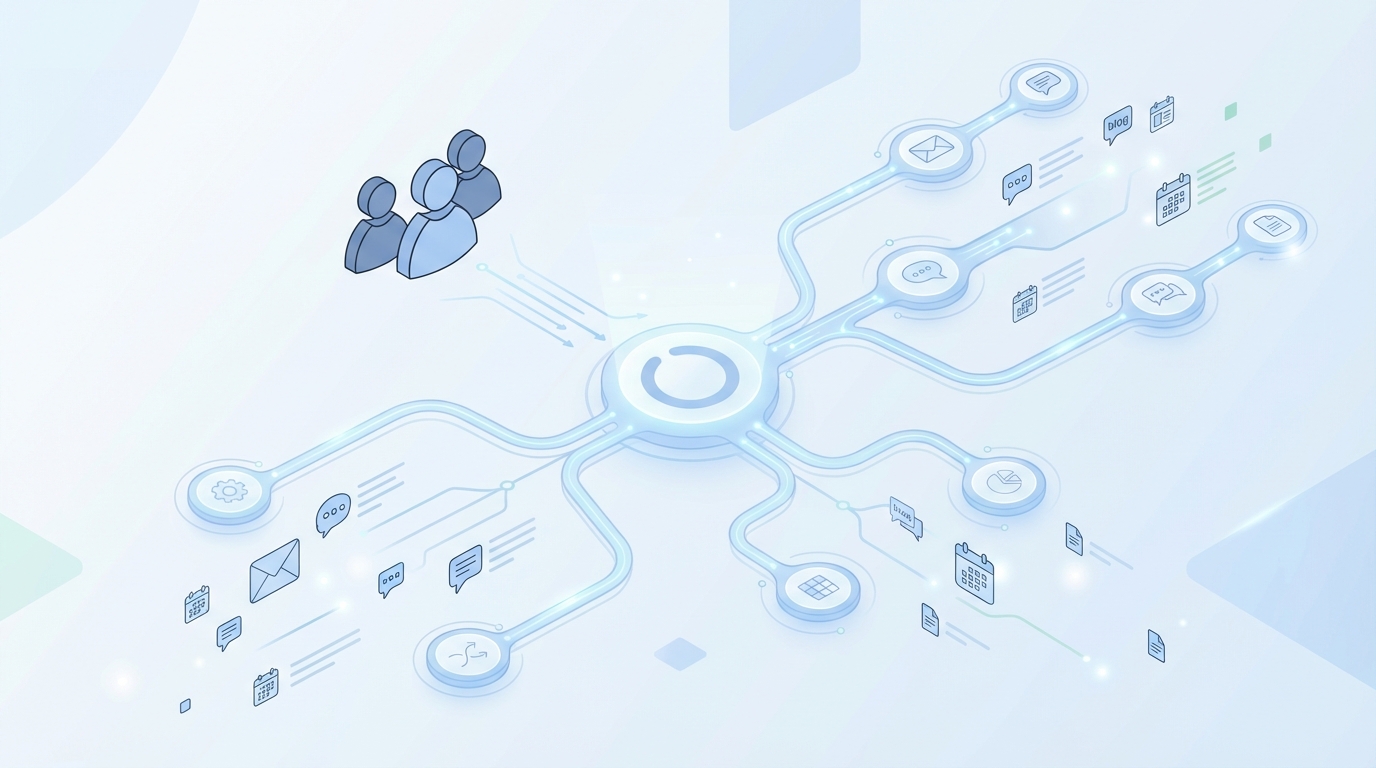
Oleno turns the six week plan into a governed workflow. You define voice, key messages, safe claims, and channel templates once, then the system generates, schedules, and monitors assets against your triggers. That closes the loop you designed, with less manual coordination and fewer review cycles.
Governance and voice locked before distribution
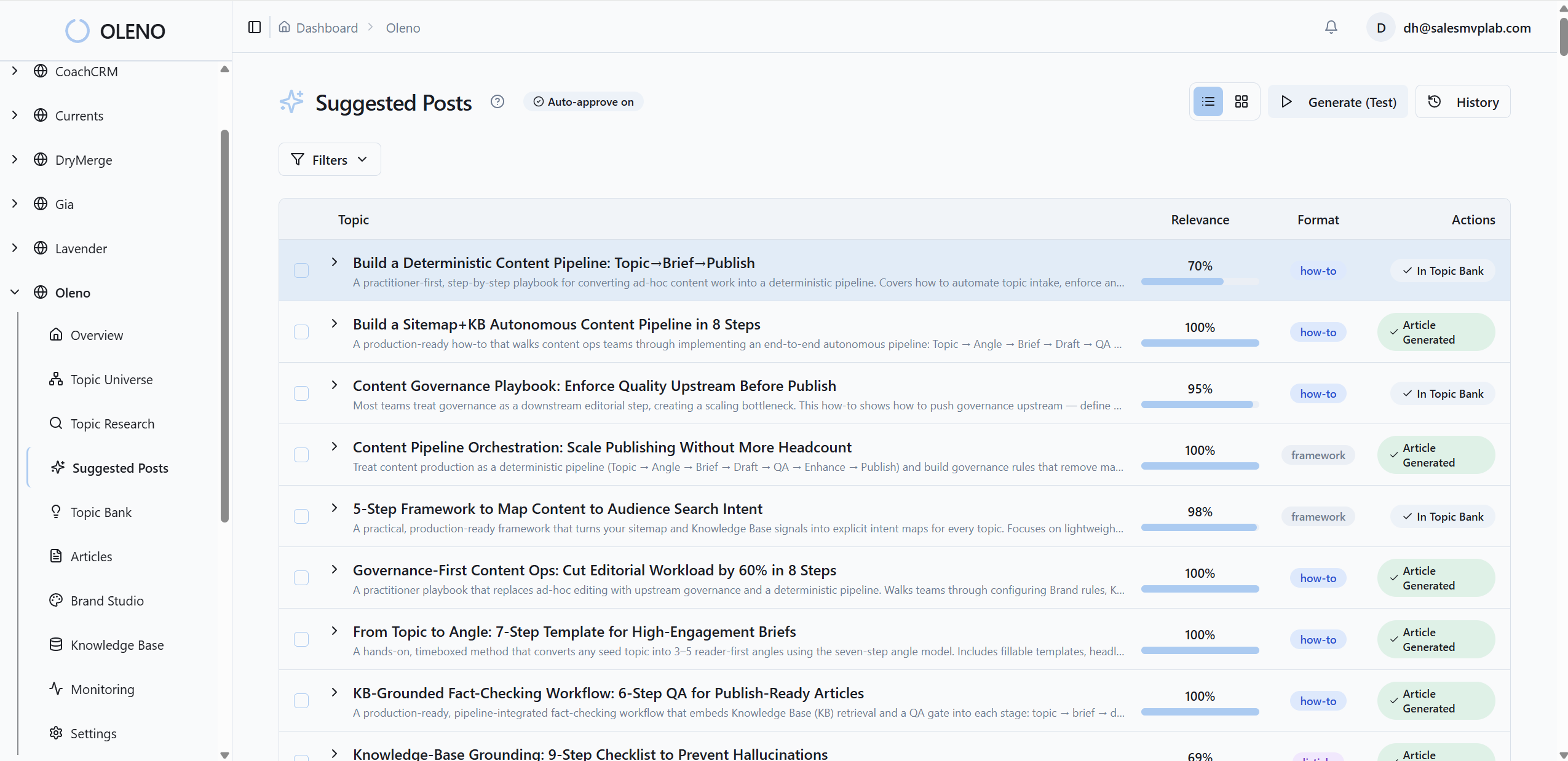
Oleno’s Brand, Marketing, and Product Studios capture tone, phrases to use and avoid, approved claims, and visual rules. Those rules apply to every asset in the six week plan. The result is fewer rewrites and faster approvals because voice and facts are settled up front.
That shift reduces risk and saves time. If manual reviews used to consume 20 minutes per asset, governance can bring that down to a quick scan. Multiply that across a dozen assets per pillar and you reclaim hours without lowering the bar. Consistency stops being a tax and becomes the default.
When governance runs first, creative work gets easier. Writers and designers start from the same playbook, so quality holds as volume rises.
- Governance outcomes you can expect:
- Fewer approval loops on style and claims
- Consistent tone across channels and weeks
- Clear boundaries that prevent risky phrasing
Auto-generate channel assets from one pillar
Load the pillar into Oleno, select your channels, and generate native assets, from email teasers to social carousels and short video scripts. The system uses your templates and voice rules, then flags off brand phrasing or missing claims in QA. Teams typically cut repurposing time by more than half while raising consistency.
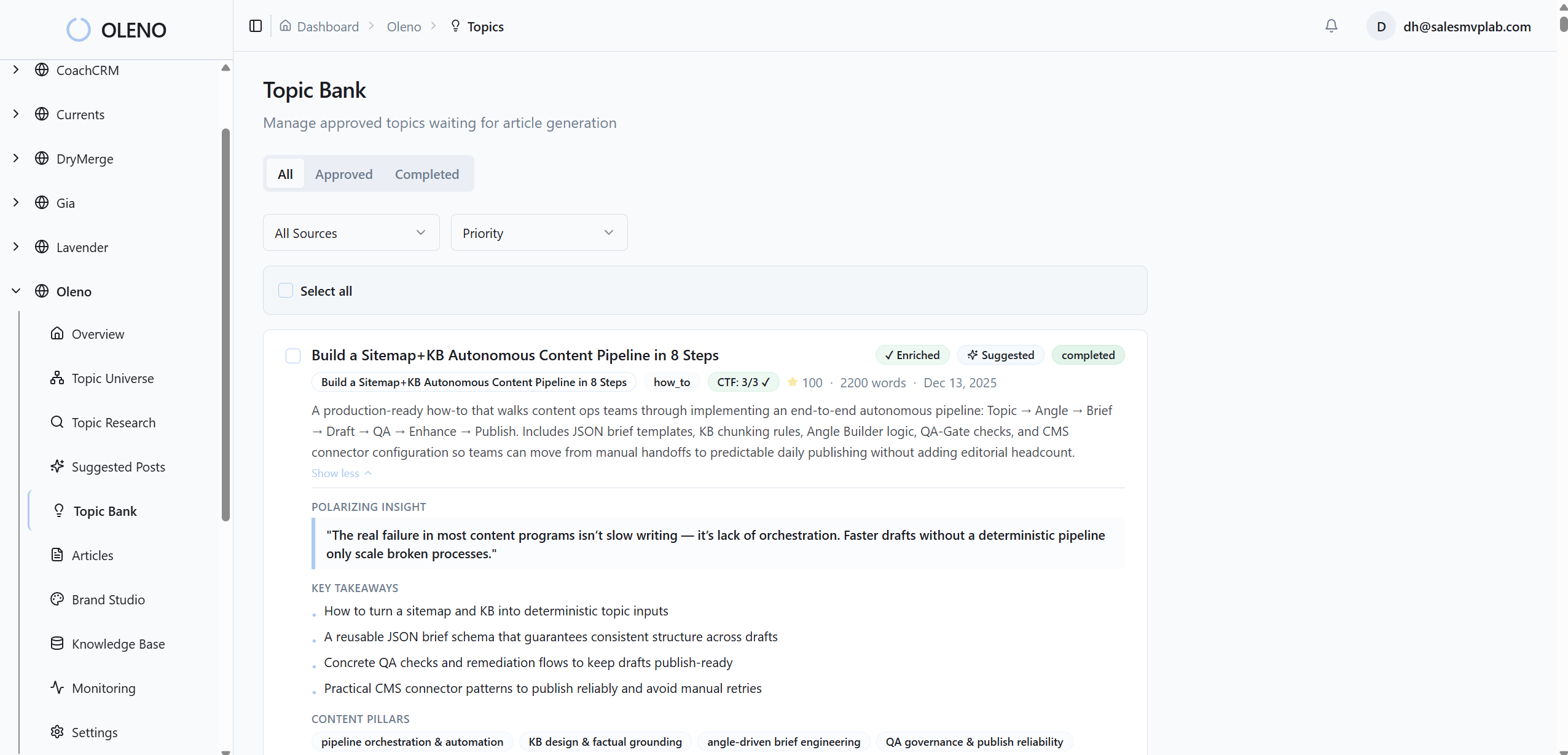
You still control the key moves. Swap hooks, tighten intros, and pick the offers. Oleno just handles the heavy lift so your small team can keep cadence without late nights. That is the difference between more drafts and more results.
When assets start from the same pillar and rules, repetition drives memory, not boredom. You get variety inside a shared message, which is what builds reach and trust.
- Channel asset jobs inside Oleno:
- Email teaser packs with subject line variants
- Social post sets in native formats
- Short video scripts tied to the pillar’s core points
If you want to see how fast the repurposing flow runs with your content, Request a Demo.
Cadence, triggers, and publishing handled in one place
Oleno schedules the six week sequence, watches performance against your thresholds, and suggests escalation when triggers hit. It publishes to your CMS and channels directly, then rolls insights into the next week’s assets. That closes the loop you defined earlier and turns KPI triggers into automatic next actions.
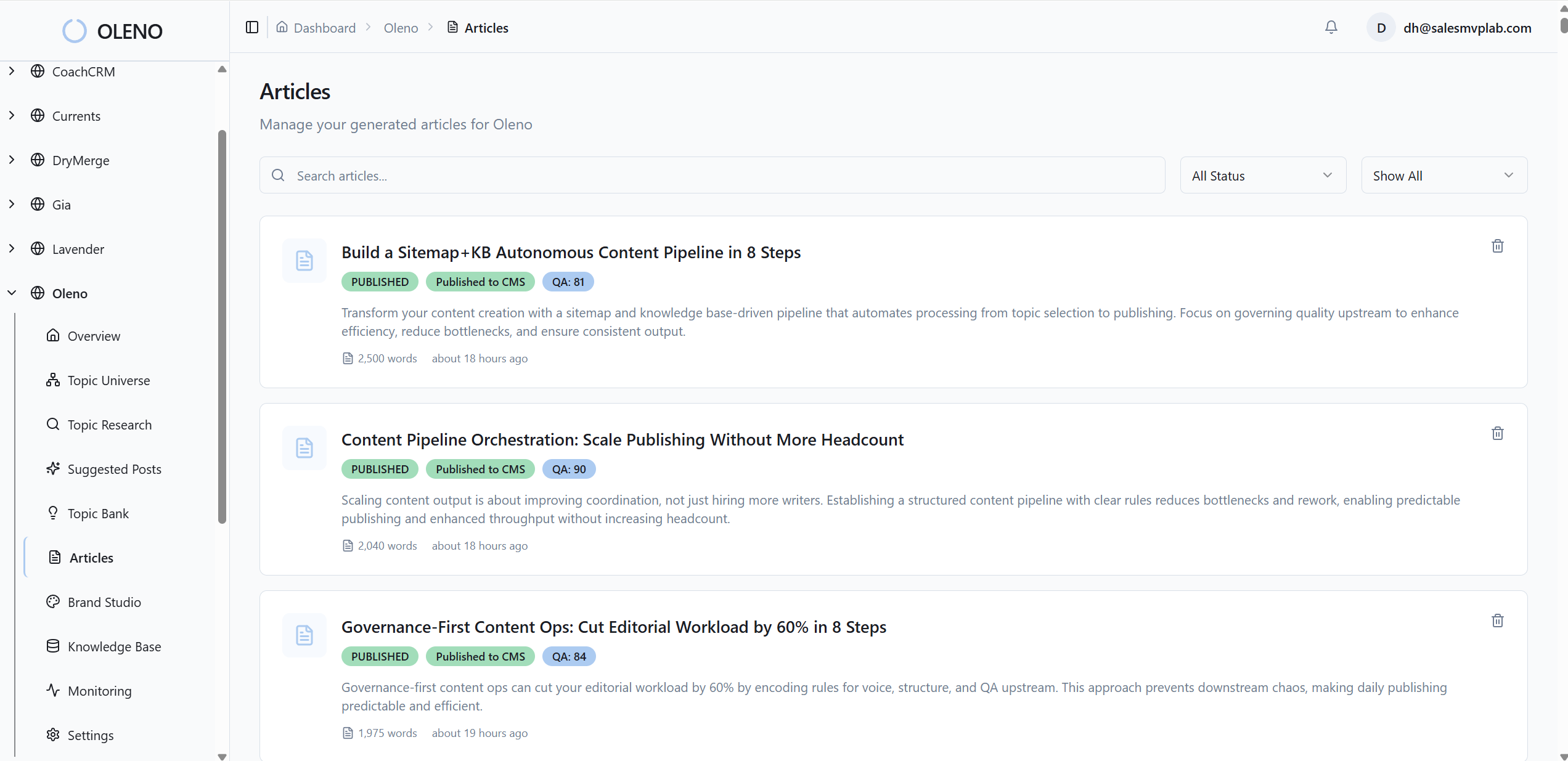
Tie this back to the stakes we covered. If each manual review took 20 minutes and each week needed six assets, you were burning two hours weekly on checks alone. Oleno’s governance and QA compress that time and protect cadence, which is where compounding comes from. Less coordination, more learning.
You will still steer. The system surfaces what crossed a trigger and proposes the next move. You accept, tweak, or park it. The work stays yours. The overhead does not.
Right now is a good time to see it live with your pillar and channels. If cutting repurposing time and locking cadence would save your team a day a week, Book a Demo.
Conclusion
Turning one pillar into six weeks of predictable reach is not a stunt. It is a simple system that compounds attention, reduces waste, and builds confidence. Start with 6week crosschannel sequencing, set clear triggers, and protect the cadence. Small teams win when the work runs like this. The next quarter looks a lot less chaotic, and a lot more reliable.
About Daniel Hebert
I'm the founder of Oleno, SalesMVP Lab, and yourLumira. Been working in B2B SaaS in both sales and marketing leadership for 13+ years. I specialize in building revenue engines from the ground up. Over the years, I've codified writing frameworks, which are now powering Oleno.
Frequently Asked Questions