7 Best Content Creation Software Platforms for 2026

You felt this this week: a draft looked finished at 4 p.m., then collected 27 comments before lunch the next day. That’s the trap with a lot of content creation software—the draft gets faster, but publishing still drags.
A lot of “best content creation software” lists still judge tools like isolated writing assistants. That misses the real buying question. If you run content, SEO, or marketing, you’re not really buying words. You’re buying less rework, fewer review loops, and a cleaner path from brief to published page.
This guide compares AirOps, Jasper, Copy.ai, Byword, Outrank, and one governance-first alternative later in the piece. The lens here is practical: pricing, SEO workflow depth, governance, publishing support, and what kind of team each platform actually fits.
| Platform | Best for | Starting price | Primary strength | Primary limitation | Ideal team size/use case |
|---|---|---|---|---|---|
| AirOps | SEO and content ops teams needing custom workflows | ~$99/mo | Workflow customization and AI search optimization | Higher setup and operating overhead | Mid-market teams with dedicated ops ownership |
| Jasper | Marketing teams needing broad creative support | $49/mo | Brand voice controls and marketing usability | Requires manual fact-checking and external SEO process | Small to mid-size marketing teams |
| Copy.ai | Solo marketers and lean GTM teams | ~$29/mo | Fast adoption and broad template coverage | Weaker long-form consistency | Small teams optimizing for speed |
| Byword | Programmatic SEO teams and agencies | $99/mo | Bulk article generation from keyword sets | Less nuance for complex positioning | High-volume SEO use cases |
| Outrank | Lean growth teams wanting automated SEO flow | $49 to $99/mo | Keyword-to-publishing automation | Quality control can be uneven | SMBs prioritizing throughput |
| Oleno | Scaling SaaS marketing teams needing governed execution | $109/mo | Governance-first content operations | Requires upfront strategy setup | Teams scaling output without adding review chaos |
Key Takeaways:
- AirOps is a strong fit for SEO and growth teams that want flexible workflow design, but that flexibility usually comes with setup tax.
- Jasper works well for broad marketing use cases and on-brand drafting, yet teams still need separate systems for SEO depth and factual control.
- Copy.ai wins on speed and ease of adoption, especially for smaller GTM teams, but it isn’t built for heavy governance.
- Byword and Outrank are attractive when volume matters most, especially for programmatic SEO, though nuance and review quality can become the tradeoff.
- The biggest dividing line in content creation software is simple: drafting tools generate text, but content systems reduce rework.
What Buyers Actually Need From Content Creation Software
The best content creation software doesn’t just produce copy. It reduces review loops, protects brand consistency, and connects planning to publishing. Google’s guidance on helpful content keeps pushing in the same direction: useful, credible, people-first material wins over generic output. So if your software speeds up drafting but adds 45 minutes of cleanup, you didn’t buy leverage. You bought nicer-looking backlog.
The shift from standalone writing tools to content systems
Standalone AI content creation tools can absolutely help. For one person, maybe two, they often do. But once four stakeholders touch the same article, the cracks show.
A Head of Content opens Google Docs at 8:40 a.m., checks Slack, then flips to Asana and the CMS. One post has three versions. Product marketing changed one claim. SEO added target terms in another file. Demand gen swapped the CTA after the campaign moved. The draft came quickly. The alignment did not.
That’s why I use a simple framework here: the Draft-to-Publish Ratio. If a tool gives you a draft in 10 minutes but creates 90 minutes of edits, approvals, and patchwork, the ratio is broken. If it cuts total cycle time from brief to published page, now you’re looking at genuinely useful content creation software.
Templates help with variation. Sure. They do not solve narrative drift, outdated claims, or approval bottlenecks. Different layer of the problem. And that leads straight into how to evaluate these platforms without getting distracted by shiny drafting demos.
Evaluation criteria for the best content creation software
Buyers usually over-index on draft quality and underweight everything that happens after. That’s backwards. Gartner’s marketing research has repeatedly emphasized operational control and connected execution, not just point solutions for isolated tasks (Gartner marketing research).
So when I evaluate content marketing software, I use a five-part filter:
- Draft quality: Is the output usable without a major rewrite?
- Governance depth: Can the team control voice, messaging, and claims?
- Workflow fit: Does it support the way your team already works?
- Publishing distance: How many handoffs remain after the draft?
- Scale behavior: Does quality hold when volume goes from 5 pieces a month to 25?
Here’s the part buyers miss: bad systems often look fine at low volume. Then the edge cases pile up. Product nuance gets lost. Writers improvise. Editors become human middleware. Not ideal.
There is a fair case for lighter tools, by the way. If your work is mostly campaign copy, brainstorms, or quick-turn social content, lower-governance software may be exactly right. That’s a real exception. But if you’re evaluating the best content creation software for SEO programs, long-form content, or product-led narratives, the post-draft workflow matters more than the draft itself.
A drafting tool without operational control is like putting a bigger engine into a car with loose steering. You’ll feel the speed first. You’ll feel the downside on the first turn. So where does that downside usually show up?
Why Choosing the Wrong Platform Creates More Rework
The wrong platform rarely fails on day one. It fails in month two, when PMM edits pile up, review loops stretch, and “almost done” starts becoming a permanent project status. That’s the real cost behind a bad content creation software choice: not weak drafts, but hidden operational drag.

Where teams lose time after the first draft
Most rework starts in the gap between generated content and approved content. Picture this. A marketer prompts a draft on Tuesday at 2:15 p.m. The structure looks solid. They send it to product marketing. Product marketing adjusts the claims. SEO adds missing search intent. Leadership tweaks the tone. By Thursday morning, the “fast” article has touched four people and still isn’t publishable.
That’s the Editing Tax. It’s messy, distributed, and easy to underestimate because it lives in comments, Slack threads, and side conversations instead of a neat dashboard.
Here’s a useful threshold: if your team spends more than 25 minutes reviewing the average article draft, your issue is probably upstream governance, not downstream editing. Above that mark, labor cost starts erasing the time benefit the tool promised in the first place.
And yes, there’s a valid counterargument. Some teams are happy to trade quality for speed, especially for low-risk campaign assets. Fair. But for long-form SEO content software and durable demand-gen assets, mistakes compound. Search pages stick around. So do weak claims. Which raises the bigger question: why do governance, workflow, and publishing keep breaking together instead of separately?
Why governance, workflow, and publishing matter together
These three layers tend to fail as a bundle. A tool can be strong at workflow automation and still weak on content accuracy. Another can produce decent drafts and still leave the team manually copying everything into the CMS at the end.
I use a simple diagnostic here. Call it the 3-Layer Test:
- Layer 1: Does the platform know how you should sound?
- Layer 2: Does it know what you can truthfully say?
- Layer 3: Does it help approved content move to live without extra chaos?
Miss one layer and manual work shows up somewhere else. Always.
Now imagine a growth team publishing 20 SEO articles a month. The SEO lead owns the roadmap. PMM owns message accuracy. The Head of Marketing wants stronger category framing. If the system can’t hold those inputs together, every article becomes a tiny negotiation. Not strategy. Negotiation.
That’s the ugly little secret in a lot of best content creation software comparisons: they score the drafting moment and ignore the coordination burden after it. The next section fixes that by looking at how these platforms actually differ in practice.
How the Leading Platforms Compare
The market is not one big bucket. The leading options usually fall into three groups: flexible workflow builders, polished drafting tools, and high-volume SEO engines. That distinction matters more than a long feature checklist because each group solves a different operational problem—and creates a different operational headache.
AirOps Review
AirOps is a strong fit for SEO and AI search teams that want customization, extractable content, and workflow control. Public coverage has highlighted its momentum in AI search optimization and workflow design (AICerts coverage). The tradeoff is pretty straightforward: more flexibility usually means more setup, more maintenance, and more need for someone who actually likes building systems.
Strengths in AI search optimization and workflow customization
AirOps stands out when a team wants to design its own operating model instead of accepting a fixed one. Its own positioning around AI search, extractability, and content performance in newer search environments is pretty direct (AirOps AEO strategy).
For the right team, that’s useful. A growth operator can build branching logic, custom prompts, routing rules, and process steps that mirror how the company already works. That’s not beginner-friendly. But it can be powerful.
Think of AirOps as a workflow workbench. If you’ve got an operator who can architect content flows, test them, and clean them up over time, the flexibility can pay off. Without that person, though, the same flexibility can become a maintenance hobby. And nobody needs another one of those.
Limitations around setup effort and ongoing operational complexity
Here’s the trade. Workflow-heavy platforms move work from manual drafting into system design. Sometimes that’s smart. Sometimes it just hides the labor in a different place.
A content ops manager might spend the first two weeks building prompts, approval paths, extraction logic, and format-specific workflows. Then reality shows up. A campaign needs a different angle. A new product line changes the message. Legal wants a new approval step. Somebody has to update the machine.
That’s where the Setup-to-Steady-State Rule matters: if your team does not have a dedicated ops owner, highly configurable systems often degrade into partially configured systems within 60 days. And partially configured systems are risky because people assume the workflow is doing more than it actually is.
To be fair, governance-first systems have their own downside. They ask for more upfront clarity, which can feel slow if your team is still figuring out its positioning. That’s a real limitation. Still, if your current process already burns hours in revisions, loose flexibility may be costing more than structured setup.
Pricing, team fit, and when AirOps makes sense
AirOps starts around $99/month on entry pricing, with higher tiers for more advanced use, based on public references (AirOps pricing context via company coverage). Best fit is usually SEO or growth teams with some process maturity and enough technical curiosity to manage a custom content workflow.
So who should actually buy it? Teams that value flexibility first and can support the operational overhead. If that’s you, AirOps deserves a serious look in any best content creation software shortlist.
How Oleno is Different: AirOps gives teams a toolkit for building content workflows. Oleno starts one layer earlier by defining tone, style, approved messaging, audience context, and structure rules in Brand Studio and Marketing Studio so execution runs from shared governance, not from a stack of custom logic.
Jasper Review
Jasper is one of the better-known names in content creation software for a reason. It’s polished, accessible, and designed for marketing teams that want fast, on-brand drafting across many formats. Public reviews continue to position it as a broad marketing writing platform rather than a deep content operations system (Jasper review).
Strengths in brand voice controls and marketing usability
Jasper is easy to understand quickly. That matters more than vendors like to admit.
A marketer can jump in, use templates, work inside Canvas, and start producing drafts without needing to think like an automation architect. For emails, landing pages, ads, social posts, and blog drafts, that ease of use is a real strength. Jasper also offers brand voice features and collaboration capabilities that appeal to agencies and in-house teams (Jasper site).
If your biggest problem is blank-page friction, Jasper can help fast. No complicated story there. It lowers the activation energy for content creation, which is why it keeps showing up on best content creation software lists.
Limitations around factual reliability and built-in SEO depth
But here’s the split. Brand-aware drafting is not the same as governed execution.
Public pricing analyses suggest Jasper can get more expensive as teams expand, especially in seat-based environments (Jasper pricing analysis). More importantly, factual reliability still depends heavily on the prompt quality, source material, and human review layer. That’s not unique to Jasper. It’s just still true.
There’s also the SEO issue. Jasper can help draft long-form pieces, but it doesn’t replace structured keyword research, approval logic, or publishing coordination. So teams often add separate tools for briefs, SERP analysis, optimization, and CMS workflow. Helpful, yes. Complete, not really.
My read: Jasper is strongest when the problem is creative throughput. If the problem is reducing review loops in high-stakes long-form content, the manual checking burden usually remains.
Pricing, collaboration fit, and buyer considerations
Jasper starts at $49/month based on public pricing references (pricing review). It fits marketing teams and agencies that need broad creative support and want a collaborative drafting environment without a heavy setup process.
If your team values speed, usability, and on-brand assistance across many content types, Jasper makes sense. If your buying criteria for the best content creation software center on strategic consistency, governance, and fewer stakeholder rewrites, you may need another layer around it.
How Oleno is Different: Jasper improves drafting quality inside a marketing workflow. Oleno connects strategy inputs to execution by defining point of view, category framing, key messages, and approved product truth before content jobs run, which reduces the review burden that brand-trained drafting alone can’t remove.
Copy.ai Review
Copy.ai is attractive for a very simple reason: it’s fast, approachable, and relatively inexpensive to start. For smaller GTM teams, that simplicity is a real advantage. For larger content operations, it can also become the point where quality starts wobbling.
Strengths in speed, templates, and ease of use
If speed is the job, Copy.ai does a lot right.
Third-party reviews consistently point to usability and breadth of templates as major strengths (Deeper Insights review). A solo marketer can use it for ideation, campaign copy, email drafts, social posts, and quick-turn writing tasks without much onboarding.
That kind of immediate value matters. Especially when one person is carrying six jobs and content is just one of them. No implementation project. No giant playbook. Open it and go.
Limitations in content consistency and team controls
The challenge shows up when the operating context changes.
Push Copy.ai into longer-form content or multi-stakeholder review environments, and control starts to matter more. Comparisons between Jasper and Copy.ai often note differences in long-form depth and content control (Zapier comparison). That lines up with how these lighter drafting tools generally behave.
A useful rule here: if more than three stakeholders routinely review the same content stream, lightweight drafting tools start straining. They were not built to hold product truth, category nuance, and campaign alignment across a larger content system.
That doesn’t make Copy.ai bad. It makes it context-sensitive. Small teams often love it. Bigger teams often outgrow it. Same tool. Different environment.
Pricing, value, and who should choose Copy.ai
Copy.ai starts around $29/month based on public comparisons and reviews (Autoposting review). That entry price makes it compelling for solo marketers, small GTM teams, and anyone optimizing for quick output with low adoption friction.
If your priority is cheap speed, it has a strong case in the best content creation software conversation. If your actual pain is review chaos, inconsistent messaging, or scaling long-form content without drift, it usually won’t solve enough of the system around the draft.
How Oleno is Different: Copy.ai is built for fast drafting across many GTM tasks. Oleno is built for repeatable execution across SEO, competitive content, product marketing, buyer enablement, and distribution, with governance rules set first so scale doesn’t create narrative drift.
Byword Review
Byword is built for scale-first SEO production. That focus is useful when keyword coverage and throughput are the main goal. It also narrows the kind of content operation the platform is meant to support, which is important if you’re comparing the best content creation software for broader marketing needs.
Strengths in bulk generation and programmatic SEO workflows
Byword’s value proposition is pretty plain: feed in keyword sets, generate articles in bulk, and move fast. Reviews and programmatic SEO discussions regularly associate it with scaled article generation (Skywork review, TripleDart programmatic SEO guide).
For agencies or SEO teams managing large keyword maps, that can work well. Especially when the economics depend on covering a wide long-tail surface area.
There’s a portfolio logic here. At scale, not every page needs to be a star. Some will underperform. A smaller number will carry the whole program. That’s often how high-volume SEO really works, whether people like saying it out loud or not.
Limitations in nuance, accessibility, and strategic breadth
Volume and nuance usually pull in opposite directions.
Programmatic SEO engines tend to optimize for throughput, not for complex positioning, category education, or precise product narrative. So if your strategy spans SEO, product marketing, comparison pages, and buyer enablement, a bulk engine usually won’t cover the full operating surface.
This is another place for a clear exception. If the job is narrow and repeatable, that limitation may not matter. Totally fair. But when leaders expect one platform to support every content motion, a scale-first engine starts to feel thin.
Pricing, volume economics, and best-fit teams
Byword is commonly cited around $99/month or on a per-article pricing basis depending on usage model (Babylove Growth comparison). Best fit is agencies and SEO teams running high-volume publishing programs with a strong appetite for programmatic workflows.
If your buying criteria for content creation software are mostly about output volume, Byword is worth serious consideration. If your criteria include message control across a broader content engine, it likely needs support from other systems.
How Oleno is Different: Byword scales keyword-to-article output. Oleno keeps SEO scaling tied to planning, audience framing, messaging, and governed execution through Storyboard, Content Calendar, and job layers built for more than one content motion.
Outrank Review
Outrank is built for buyers who want one flow from keyword planning to article generation to publishing. That all-in-one pitch is appealing, especially for lean teams. The tradeoff is simple: more automation can reduce handoffs, but it can also reduce control.
Strengths in end-to-end SEO automation
Outrank positions itself around automated SEO workflows, including keyword planning, article generation, and direct publishing (Outrank overview).
For a founder-led team or a small SEO function, that’s attractive. The distance between idea and live page gets shorter. Fewer tools. Fewer tabs. Less duct tape.
That kind of compression can create real value. Especially when nobody on the team has time to build a giant workflow stack from scratch.
Limitations in output reliability and strategic control
Now the catch.
Third-party comparisons and alternatives content have flagged concerns around output quality and strategic control in some use cases (alternatives comparison). When the content needs to do more than rank—represent the company accurately, support product narrative, survive executive review—those concerns matter.
So here’s the rule: if your content is low-risk and high-volume, heavier automation can work. If the cost of an inaccurate claim is high, quality control matters more than speed. Every time.
Pricing, publishing workflow, and ideal buyer fit
Public references place Outrank roughly in the $49 to $99 range depending on plan and source (Outrank blog). Best fit is SMBs and lean growth teams that want an automation-first SEO workflow with fewer handoffs.
That said, automation-first doesn’t fit every review culture. Teams with strict approvals, detailed product nuance, or multiple stakeholders usually need more governance than this style of platform naturally provides.
How Oleno is Different: Outrank compresses SEO work into an automated flow. Oleno starts with governance, then executes recurring jobs across Programmatic SEO, Competitive Studio, Product Marketing Studio, Buyer Enablement Studio, and Distribution planning so output stays aligned as the system scales.
How Oleno Approaches Content Operations Differently
Oleno is designed for teams that don’t just need faster drafts. They need fewer translation layers between strategy and published output. That makes it a different kind of entry in the best content creation software category: less drafting assistant, more governed execution system.
Why governance comes before generation
Most tools start with generation. Oleno starts earlier.
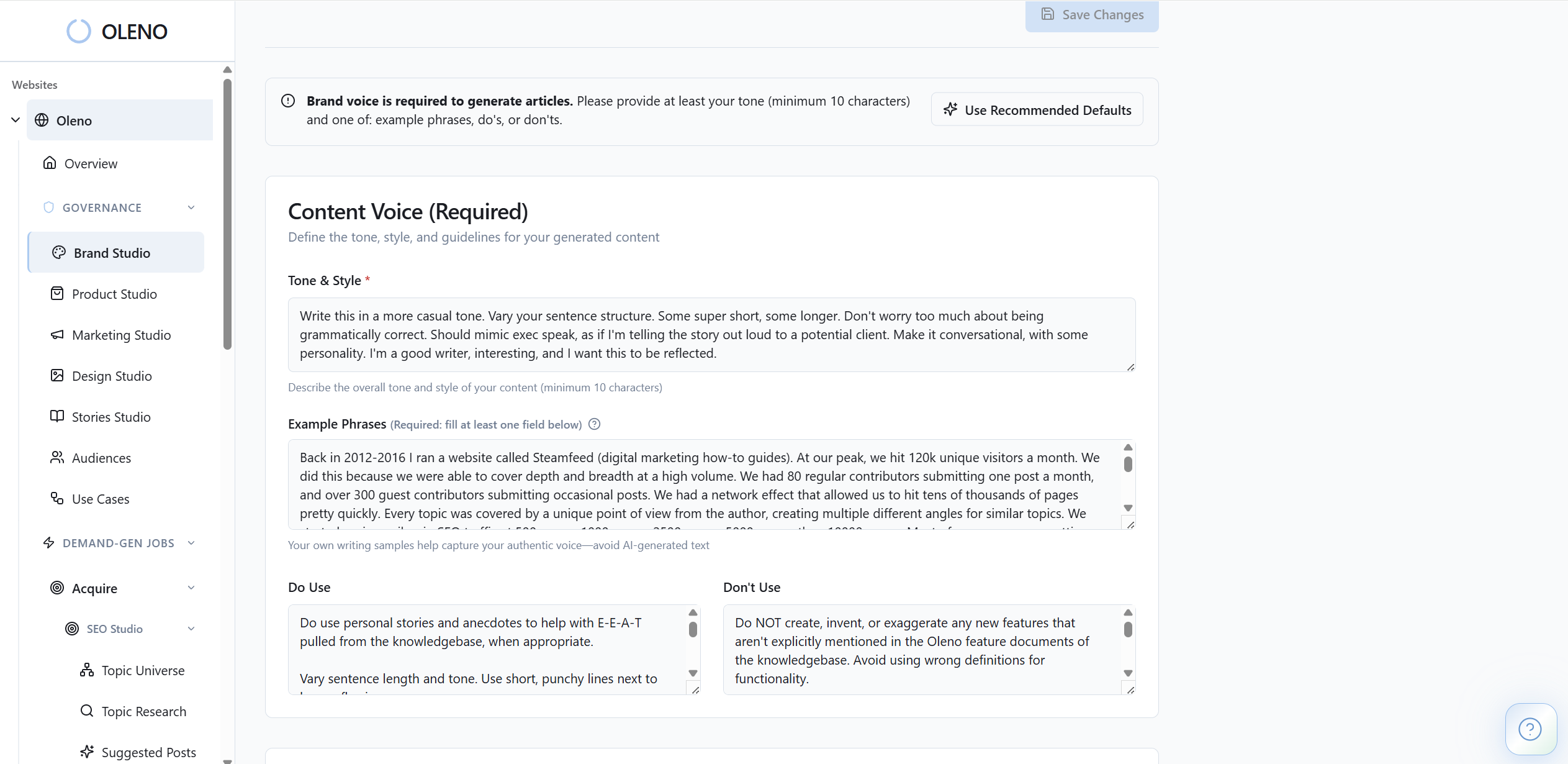
Governance first means the team defines how it sounds, what it believes, and what is true before content gets produced. In practice, that shows up through Brand Studio for tone, style, preferred and prohibited terms, CTA style, and structure rules, plus Marketing Studio for key messages, point of view, category framing, and narrative frameworks.
That order matters because unmanaged content work behaves like a relay race where every runner rewrites the baton before handing it off. SEO changes the angle. PMM fixes the claim. Leadership adjusts the tone. Demand gen swaps the CTA. By the end, everyone touched it and nobody really owns the final shape.
There is a downside here, and it’s worth saying plainly. Governance-first systems require upfront thinking. You have to codify voice, messaging, and approved claims. Some teams won’t want that work. Fair enough. But if you’re publishing 20 to 40 articles a month, the setup cost is usually lower than the perpetual rewrite cost.
How planning and execution stay connected
Planning only helps if it survives contact with production.
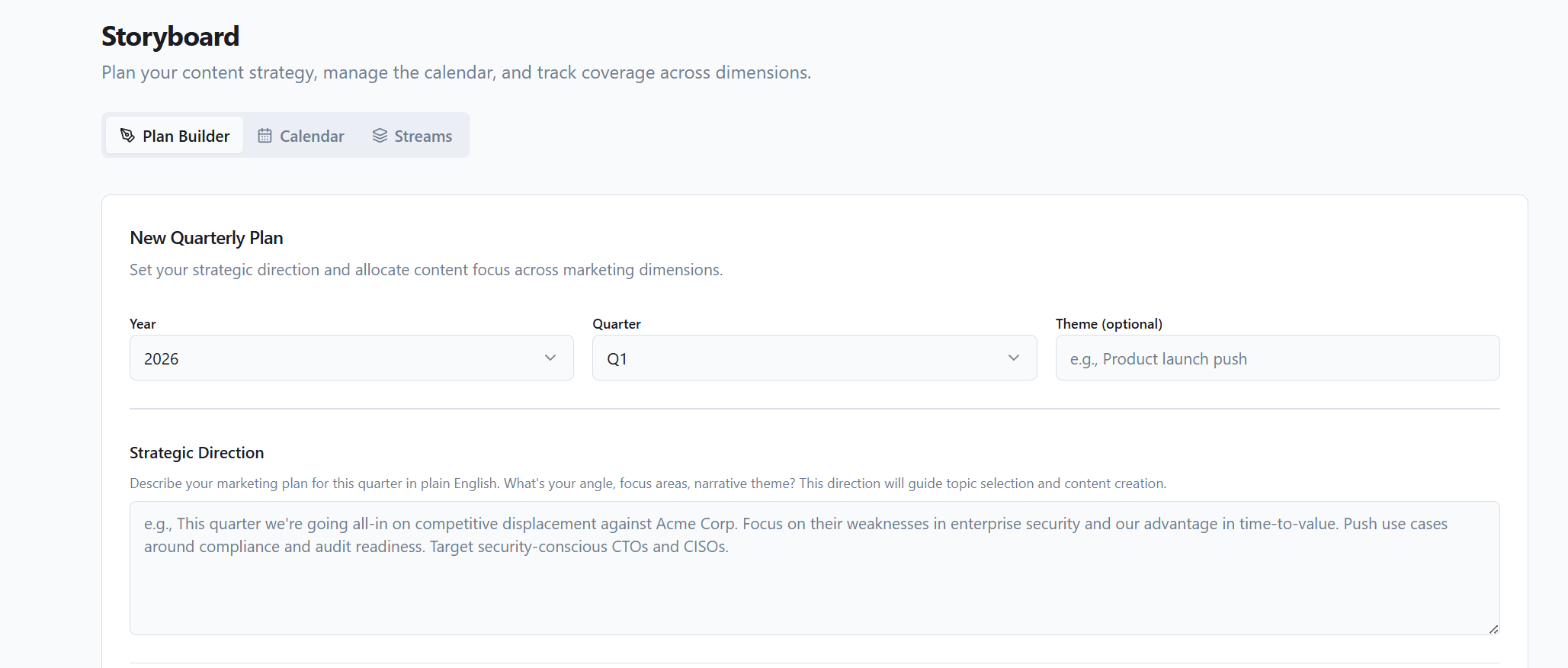
Oleno connects Storyboard and Content Calendar to job execution layers across Programmatic SEO, Competitive Studio, Product Marketing Studio, Buyer Enablement Studio, and Distribution & Social Planning. That closes a common SaaS marketing gap: strategy lives in one place, execution in another, and drift fills the space between them.
If a CMO sets narrative direction, PMM guards accuracy, and SEO pushes output volume, the system has to preserve all three inputs at once. Otherwise the content team becomes a translation department. That’s expensive. Quietly expensive.
Explore how Oleno handles SEO content scaling if that’s the exact operating problem you’re trying to solve.
Which teams get the most value from Oleno
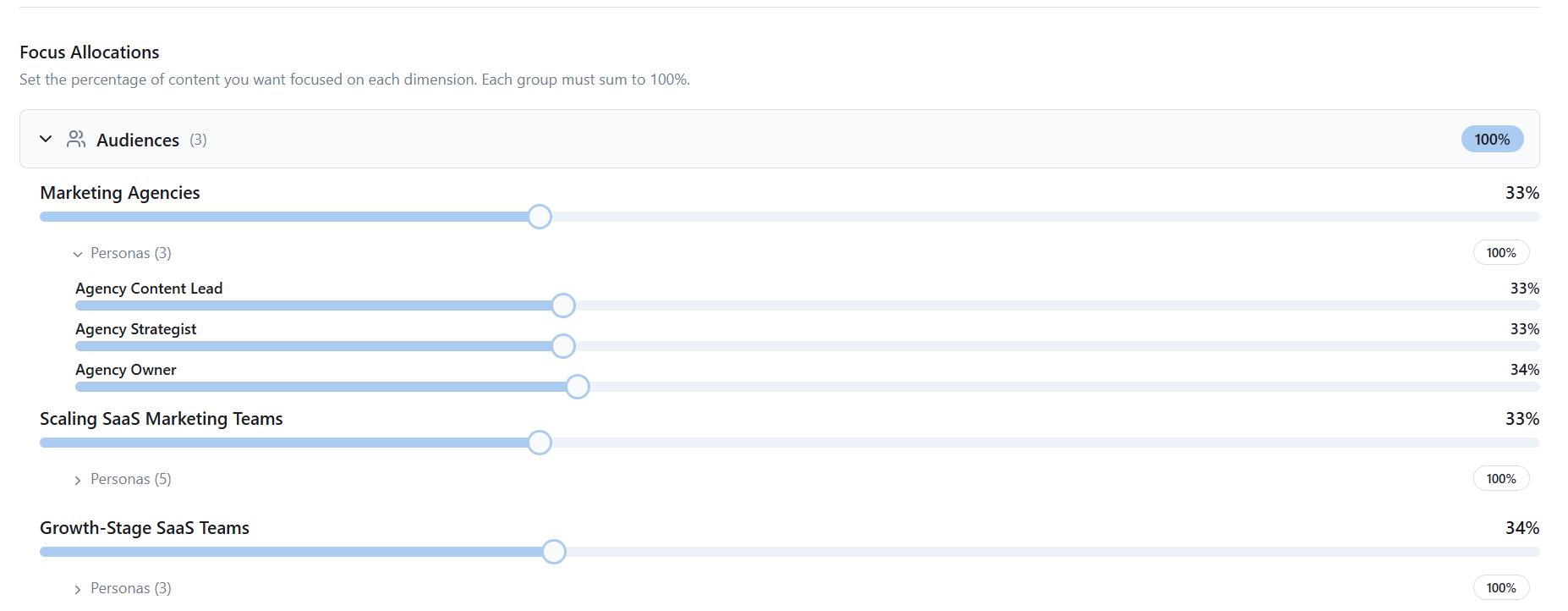
The fit is fairly specific. Scaling SaaS teams, often in the 100 to 500 employee range, with enough content demand that inconsistency starts getting expensive. Think CMO, Head of Marketing, SEO or Growth Manager, and Head of Content all pulling on the same machine.
Public pricing starts at $109/month for 1 post per day, with higher output tiers such as $537/month for 5 posts per day, $1,057/month for 10 posts per day, and custom pricing for 11+ posts per day. That output-based model will not be ideal for every team. If publishing cadence is highly erratic, a seat-based tool may feel simpler.
But if your team is trying to increase output without hiring more writers or multiplying review cycles, the economics change. At that point, you’re not really comparing drafting apps anymore. You’re comparing systems for content creation software that either preserve strategy or force humans to keep patching it back in.
Final Comparison Table for 2026 Buyers
The final choice comes down to the kind of operational pain you’re solving. Some teams need flexibility. Some need speed. Others need a governed content system that keeps output aligned as volume rises. In other words, the best content creation software depends less on feature abundance and more on workflow fit.
| Platform | Core positioning | Best-fit buyer | Primary content type | SEO workflow depth | Brand governance depth | Product accuracy controls | Workflow customization | Publishing support | Collaboration/team controls | Pricing model | Starting price | Main tradeoff | Recommended use case |
|---|---|---|---|---|---|---|---|---|---|---|---|---|---|
| AirOps | Workflow-heavy AI search and SEO platform | SEO/Growth Manager, content ops team | SEO and AI-search content | High | Medium | Medium | High | Medium | Medium | Hybrid | ~$99/mo | More setup overhead | Teams wanting custom workflows |
| Jasper | Marketing drafting platform | Marketing team, agency | Multi-format marketing content | Medium | Medium | Low | Medium | Low | High | Subscription | $49/mo | More manual fact-checking | Broad creative marketing output |
| Copy.ai | Fast GTM drafting tool | Solo marketer, small GTM team | Short-form and campaign copy | Low to medium | Low | Low | Medium | Low | Medium | Hybrid | ~$29/mo | Weaker long-form consistency | Speed-first small teams |
| Byword | Programmatic SEO engine | SEO agency, programmatic team | Bulk SEO articles | High | Low | Low | Low | Medium | Low | Hybrid | $99/mo | Less nuance in messaging | Large-scale keyword coverage |
| Outrank | Automation-first SEO workflow | Lean growth team, SMB | SEO articles and briefs | High | Low | Low | Medium | High | Low | Subscription | $49 to $99/mo | Less strategic control | Keyword-to-publishing automation |
| Oleno | Governance-first content operations platform | Scaling SaaS marketing team | SEO, competitive, PMM, enablement | High | High | High | Medium | High | High | Output-based subscription | $109/mo | Requires upfront setup | Teams needing governed scale |
For buyers who care mostly about speed or workflow freedom, the main alternatives are pretty clear. AirOps makes sense if you want customization and have the resources to manage it. Copy.ai makes sense if you want low-friction output for a smaller GTM team. If you need the system itself to preserve brand, positioning, audience context, and approved product truth, that’s the lane where Oleno is differentiated.
The short version? Buy Jasper if you need a polished creative assistant. Buy Copy.ai if you need cheap speed. Buy AirOps if you want to design your own workflow system. Buy Byword or Outrank if volume-first SEO is the job. But if your actual problem is content rework, narrative drift, and too many people fixing drafts after they’re supposedly done, you probably don’t need another drafting tool. You need a content operating system.
About Daniel Hebert
I'm the founder of Oleno, SalesMVP Lab, and yourLumira. Been working in B2B SaaS in both sales and marketing leadership for 13+ years. I specialize in building revenue engines from the ground up. Over the years, I've codified writing frameworks, which are now powering Oleno.
Frequently Asked Questions