7 Pre-Publish Checks Your Content Workflow Needs
7 Pre-Publish Checks Your Content Workflow Must Run
Most content teams doing a content workflow automation workflow aren’t losing because they write bad drafts. They lose because they ship avoidable mistakes at volume: voice drift, uncited claims, repeated angles, weak snippet structure, missing metadata, off-brand images, and reruns that don’t reproduce the same output.
And the annoying part is those mistakes are predictable. You can catch them. But manual review doesn’t scale, and prompt-by-prompt writing turns into a coordination tax. You end up spending your “creative time” on frustrating rework and Slack archaeology.
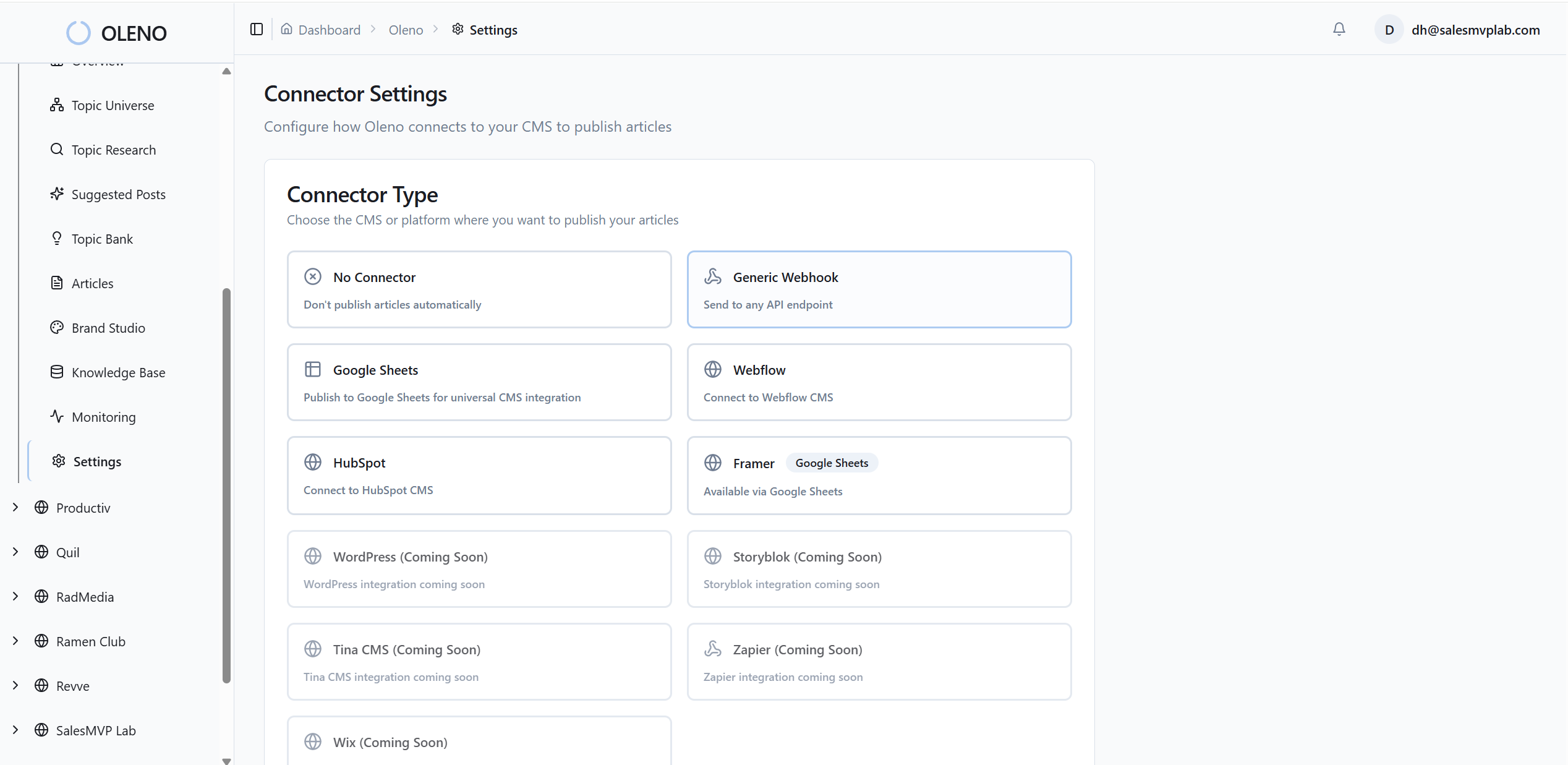
That’s why we built Oleno around pre-publish gates. Not taste. Checks. Binary pass or fail. You encode the rules once, then the system runs them every single time before CMS publishing.
Key Takeaways:
- You can turn pre-publish QA into seven deterministic checks, then stop relying on subjective editorial taste as your “process.”
- Teams using a system like this often move from single-digit articles per month to several dozen, without adding headcount, because review stops being the bottleneck.
- Your highest-risk failure mode isn’t “bad writing,” it’s ungrounded product claims, and Product Studio plus Knowledge Archive exist to stop that.
- A Quality Gate that blocks failures beats “we’ll fix it in edits,” because edits don’t happen consistently when you’re shipping fast.
- If you don’t define remediation (auto-revise vs escalate), your checks become noise and people learn to ignore them.
Why Content Workflow Automation Quality Gates Matter
Manual checks miss predictable errors at scale
Manual review works when you’re publishing a couple posts a month and you’ve got one person who knows everything. As soon as you add writers, freelancers, agencies, or even just more content types, your review becomes a game of telephone.
Back in 2012 to 2016 I ran Steamfeed. We hit 120k uniques a month, and we saw those step-function SEO spikes at 500 pages, 1000 pages, 2500 pages, 5000 pages, 10000 pages. But you know what kept it from turning into a garbage pile? Rules. Lots of them. And we enforced them, constantly, because volume multiplies every tiny mistake.
Here’s the problem. Humans are decent at taste. They’re terrible at catching the same seven failure modes, over and over, across dozens of assets, every week, without getting tired or inconsistent.
So you end up with:
- one editor who’s a bottleneck,
- inconsistent enforcement across reviewers,
- “ship it” decisions because you’re behind schedule,
- and random brand risk, because nobody can keep it all in their head.
GEO rewards consistency more than clever copy
GEO is basically the new pressure test. You still write for humans. You still care about SEO. Now you also care about LLMs deciding whether you’re a brand worth citing.
And LLMs don’t reward clever one-offs the way people think. They reward consistency across a corpus: the same positioning, the same product definitions, the same audience specificity, the same structure showing up again and again. That’s a cleaner retrieval and citation signal.
That’s why “we wrote a banger” is not a strategy. One great post doesn’t create a clear signal. Fifty consistent posts do.
Still, you can’t just brute-force consistency with more meetings. That’s where things get weird. More reviewers tends to create safer, blander writing, which often performs worse.
Systemized gates beat ad-hoc edits every time
A gate is just a rule that runs before publishing. It’s objective. It’s measurable. And it’s the only way I’ve seen teams keep quality stable while increasing output.
When I was building a B2C app last summer, I went through the classic phase: lots of GPTs, lots of copy-paste, lots of “why is this taking me 3 to 4 hours a day.” That was the breaking point. Not because writing is hard. Because the workflow was broken. So I hard-coded a system that queued topics, wrote, QA’d, and posted.
That experience is basically the philosophy behind using quality gates in a content workflow automation workflow. Stop asking humans to be the system. Make the system run the system.
Run These 7 Content Workflow Automation Checks Before You Publish
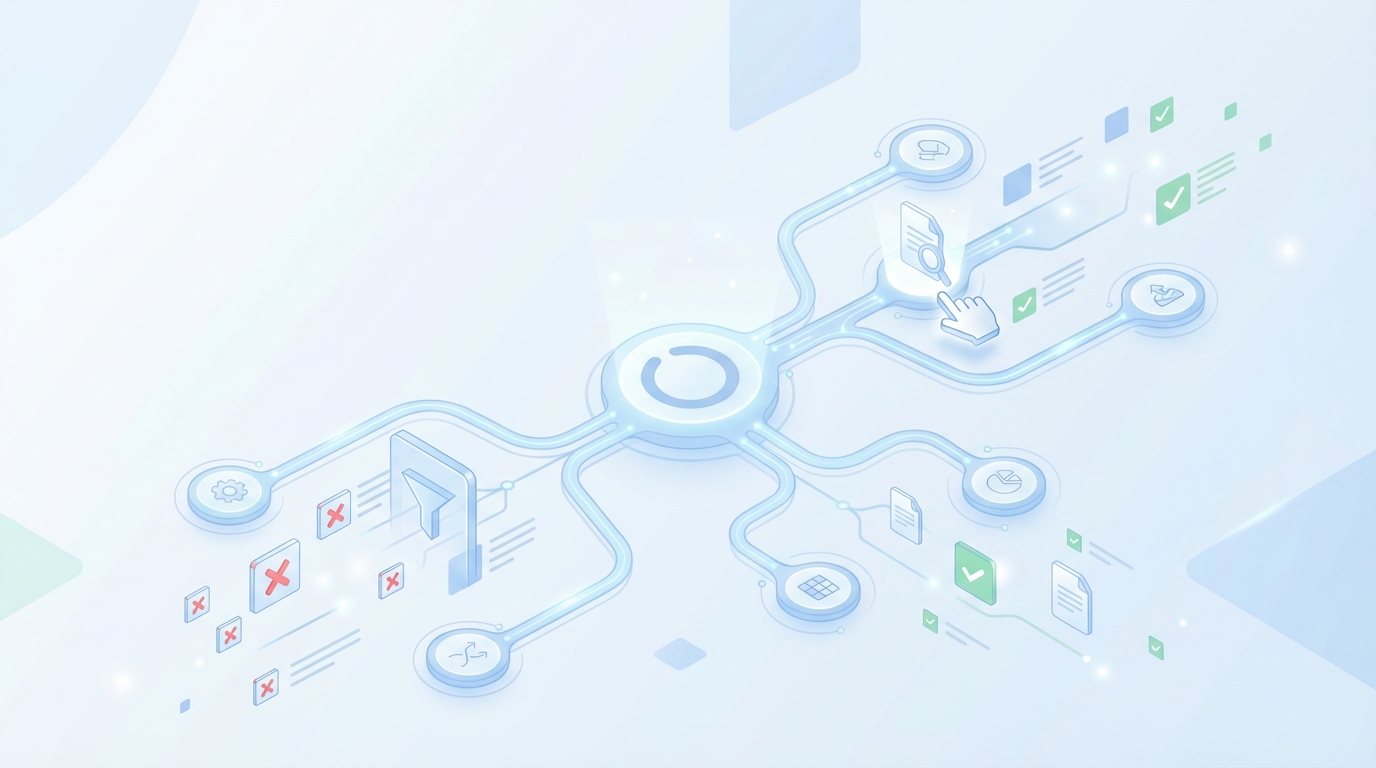
A content workflow automation workflow should run these checks automatically inside the generation pipeline, not as a manual checklist you “try to remember.” In Oleno, that’s the point of the Orchestrator plus the Quality Gate: the job moves through deterministic steps, and the Quality Gate blocks anything that fails the standards you encoded before CMS Publishing.
I’m going to lay out each check with three things:
- what it verifies
- pass and fail criteria
- which Oleno capability runs it
Governance blocks voice drift before it hits your CMS
If you only run one check, run this one. Voice drift is sneaky because it shows up as “pretty good writing” that still doesn’t sound like you. Then you do two rounds of edits and everyone’s annoyed, especially when evaluating content workflow automation workflow.
Check 1: Voice alignment
What it verifies: The draft matches your brand voice rules (tone, rhythm, prohibited terms, CTA construction), and it’s framed for the right audience and persona instead of a generic reader.
Pass criteria:
- Style metrics match your Brand Studio voice profile (tone, sentence rhythm, formality rules you set).
- Audience and persona language is present (role goals, objections, decision factors).
- CTAs follow the CTA rules you encoded (sentence-case, correct pattern, correct link text length).
Fail criteria:
- Off-tone phrases show up, or prohibited terms appear.
- The draft reads generic, like it wasn’t targeted to a specific persona.
- CTA formatting or construction doesn’t match your rules.
Runs in Oleno: Brand Studio (voice rules) plus audience & persona targeting, enforced by the Quality Gate.
Now we’re going to shift from “how it sounds” to “what it claims,” because that’s where teams get burned.
Check 2: Provenance (citations and product truth)
What it verifies: Claims about your product, your customers, and your competitive space are grounded in approved truth, not vibes.
Pass criteria:
- Product facts match what you’ve approved in Product Studio (features, boundaries, pricing guidance, supported use cases).
- Supporting context is grounded in what you’ve loaded into the Knowledge Archive (docs, help center content, internal notes, competitive intel).
- External sources, when used, are explicitly cited and consistent with your allowed truth.
Fail criteria:
- Any product capability is stated that isn’t present in Product Studio.
- Assertions appear without grounding in the Knowledge Archive or approved sources.
- The draft implies unsupported claims or stretches language past what you’ve approved.
Runs in Oleno: Product Studio plus Knowledge Archive, enforced by the Quality Gate.
Let’s pretend you ship 25 articles this month, and 3 of them contain slightly wrong product claims. Now you’ve created a long-term headache: sales decks pick it up, customers repeat it back to you, and your team has to unwind it later. That’s the hidden cost. Fixing it later is always more expensive than blocking it up front.
Structure and operations prevent waste and rework
A lot of teams focus on “quality” as tone and facts. Fair. But the real waste shows up in operations issues: duplication, weak snippet structure, missing fields, and reruns that drift.
Check 3: Repetition and duplication
What it verifies: You’re not publishing the same angle twice, and the writing itself isn’t looping on repetitive phrasing.
Pass criteria:
- The topic is unique relative to what’s already mapped and scheduled in your Topic Universe.
- Repetitive phrasing stays under your threshold (you shouldn’t see the same sentence skeleton 10 times in a row).
- The article adds new coverage, not a near-duplicate of an existing asset.
Fail criteria:
- It collides with an existing topic or published asset in your topic map.
- It’s “the same post again” with a different headline.
- Repetition crosses your threshold and the draft reads like it’s stuck.
Runs in Oleno: Topic Universe mapping plus Orchestrator scheduling, with a repetition check enforced by the Quality Gate.
One interjection. Duplication isn’t just an SEO problem. It’s a morale problem.
People hate working on content that feels pointless. It kills momentum.
Check 4: Snippet-readiness (LLM and SERP answers)
What it verifies: The piece contains direct answers that can be extracted by search engines and LLMs, and the structure makes it easy to cite.
Pass criteria:
- Each major section starts with a direct answer that is concise (roughly one sentence to a short paragraph, not a long warmup).
- Headings are descriptive and match likely queries.
- 2 to 4 FAQs are present and written like real questions with direct answers.
Fail criteria:
- You bury the answer under a long intro.
- You write walls of text with no extractable structure.
- No FAQs, or FAQs that read like marketing copy instead of real questions.
Runs in Oleno: Programmatic SEO Studio templates and Article Editor structured blocks to enforce answer-first writing, plus Quality Gate snippet checks.
To ground this in something real, when we were doing founder-led content at LevelJump, we’d record a video, transcribe it, and call it a blog post. Faster, yes. But it missed the structure search needs. Snippet-readiness wasn’t there, so the output didn’t compound.
Check 5: Schema-ready metadata present
What it verifies: The article isn’t just “good writing,” it’s shippable content with complete metadata needed for CMS publishing and downstream schema templates.
Pass criteria:
- Title, meta description, author, publish date, canonical are populated.
- FAQ blocks are structured consistently so your CMS can render them and your schema templates can pick them up.
- SEO fields are complete enough that you’re not doing a second manual pass inside the CMS.
Fail criteria:
- Missing metadata fields.
- Malformed fields or inconsistent formatting.
- FAQs present in prose but not in structured blocks.
Runs in Oleno: Orchestrator pre-publish metadata validation with the Quality Gate before CMS Publishing.
Check 6: Image branding compliance
What it verifies: Visuals match your brand identity rules so you don’t ship random design drift across your library.
Pass criteria:
- Image style, color palette, and logo usage follow what you encoded in Design Studio.
- Correct aspect ratios for where the image is used (hero, inline, social card).
- Alt text is present.
Fail criteria:
- Visual identity doesn’t match your brand rules.
- Wrong ratios.
- Missing alt text.
Runs in Oleno: Design Studio visual identity constraints, enforced by the Quality Gate.
Quick nuance. This check only works as well as the rules you put in. If your design rules are “be modern,” that’s not a rule. That’s a vibe. You want real constraints.
Check 7: Idempotency (deterministic re-runs)
What it verifies: Re-running the job gives you the same governed output, except for time-sensitive deltas you’ve explicitly allowed.
Pass criteria:
- Same outline and messaging architecture on rerun.
- Same canonical slug logic, and no unexpected topic drift.
- Only minor differences show up where you expect them (like a date reference, if you allow that).
Fail criteria:
- Material drift between runs, where the content starts telling a different story.
- Outline changes unexpectedly.
- Messaging shifts enough that you’d have to re-review from scratch.
Runs in Oleno: Orchestrator deterministic steps with Brand/Product/Design Studio rules applied, with a stability check enforced by the Quality Gate.
If you’ve ever tried to “just rerun the prompt” and got a totally different piece back, you know why this matters. Cadence dies when reruns aren’t stable.
After you implement these seven checks, you’ve basically built a pre-publish firewall. Not for creativity. For repeatability.
If you want to see what this looks like inside a real pipeline, request a demo and we’ll walk through how the Quality Gate blocks failures before anything hits your CMS.
Make Content Workflow Automation Checks Stick Week After Week
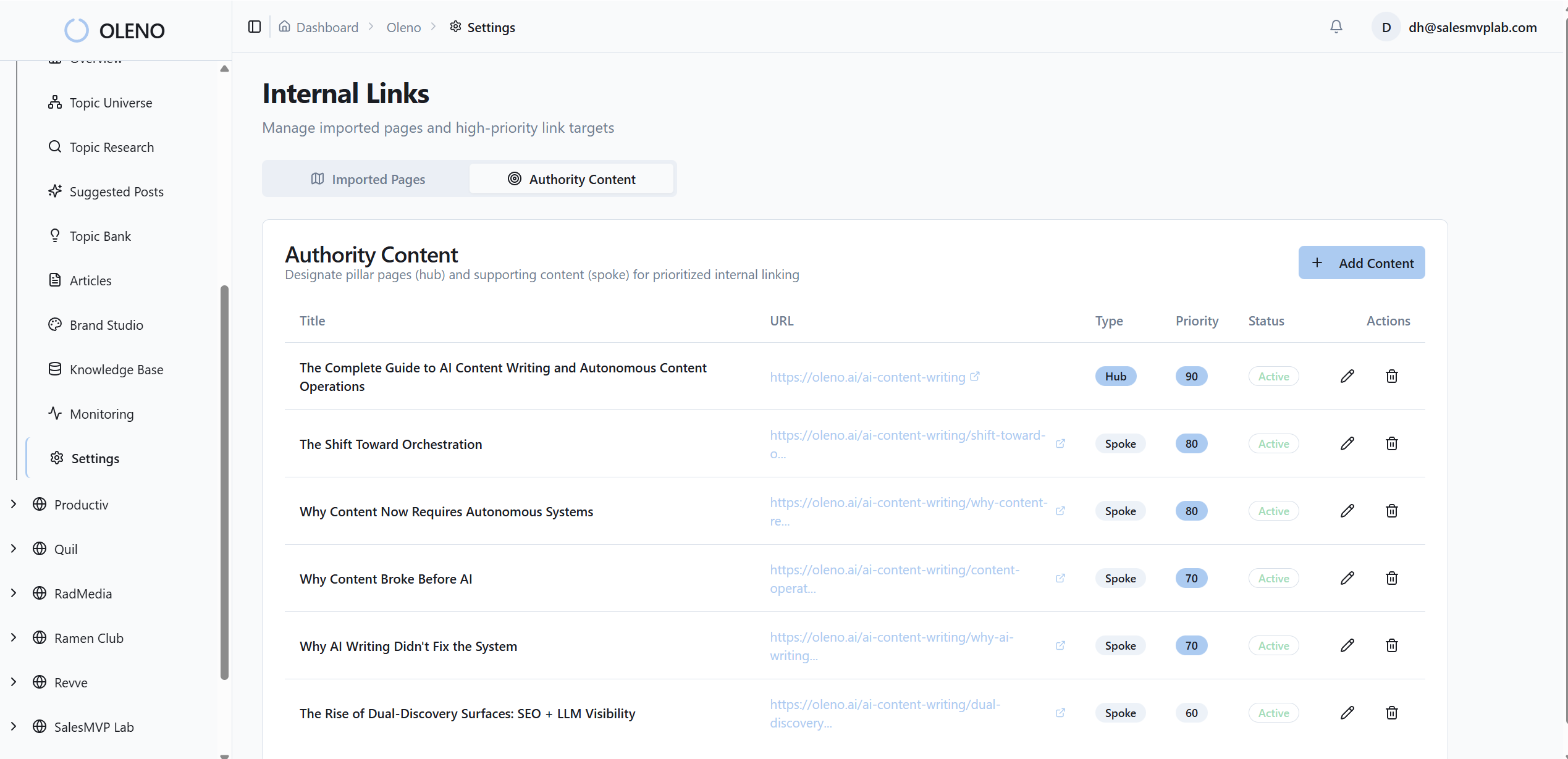
Encode truth once; reuse it everywhere
Most provenance failures happen for a boring reason. Stale truth.

Your Product Studio needs to reflect what you actually sell right now, including boundaries. Your Knowledge Archive needs to include the docs and narratives you actually want referenced. If those drift, your QA gates will start tripping constantly, and people will blame the system instead of the root cause.
So the “process” is simple:
- update Product Studio when product truth changes,
- update Knowledge Archive when your source material changes,
- and treat those updates like part of shipping, not a side quest.
This is also where small teams win. One update propagates everywhere. You don’t have to remember to fix 19 different docs, especially when evaluating content workflow automation workflow.
If you want help setting this up the first time, request a demo and we’ll do a working session to encode your voice, product truth, and the pass fail thresholds.
Tune thresholds to reduce false positives
If you set thresholds too strict on day one, you’ll hate your own QA. Everything fails, and now you’ve created more work than you removed.
Start conservative:
- repetition checks should catch obvious looping, not stylistic quirks,
- snippet checks should enforce direct answers, not rigid word counts everywhere,
- voice checks should block prohibited terms and CTA violations first, then get more nuanced later.
Then tighten over time as your corpus stabilizes and you’ve got examples of what “good” looks like.
And yes, sampling matters. Run a statistical QA sample even on “passes” so you catch edge cases without blocking throughput. That’s how you keep the system honest.
Separate governance from execution to scale cleanly
This is the boundary that most teams miss.
Governance is what’s true and how you show up. Execution is the pipeline that produces content. If you mix them together in a pile of prompts and docs, you’ll constantly rewrite the same rules, and you’ll still ship inconsistencies because nobody knows which doc is the source of truth.
One honest limitation here: Oleno enforces what you encode. It doesn’t independently verify brand-new third-party facts that you haven’t approved and loaded into the Knowledge Archive yet. If you want something to be “allowed truth,” you have to actually put it in the system.
What Content Workflow Automation Unlocks After These Checks Are Live for Content workflow automation workflow
Fewer edits, faster publishing, higher consistency
Once your pre-publish gates are real, your review changes shape. You’re not spending time catching obvious errors. You’re spending time on actual judgment calls.
Let’s pretend you publish 20 pieces a month and each piece takes 45 minutes of manual pre-publish review across voice, facts, structure, and metadata. That’s 900 minutes, 15 hours, basically two working days, every month, spent on stuff a deterministic check can catch. If you cut that manual review time by around 60%, you just got a day back. Maybe more. And you didn’t hire anyone.
That reclaimed time is what gets reinvested into better POV, better distribution, better offers. The things humans should be doing.
GEO signals compound across every asset
The GEO era rewards brands that are consistent across hundreds of assets. These seven checks are really about one thing: keeping the signal clean.
- voice alignment keeps you recognizable,
- provenance keeps you credible,
- snippet-readiness keeps you extractable,
- metadata and schema readiness keeps you publishable without a second pass,
- image compliance keeps your library visually coherent,
- idempotency keeps your cadence stable.
That combination tends to show up as compounding outcomes, not a single viral win.
Small teams scale output without adding headcount
This is where it gets practical. The SEO scaling use case we see most often is teams moving from a handful of articles per month to dozens, without adding headcount, because the system is doing the coordination and the pre-publish checking.
Not every team wants that volume. Fair. But even if you only want to ship 8 to 12 pieces monthly, these gates prevent the “we’re publishing more, and everything feels a little worse” problem.
If you’re curious what your current workflow would look like with these seven checks turned into an actual pipeline, book a demo and we’ll map your current process to the Quality Gate, then pick thresholds that won’t create a bunch of false alarms on day one.
QA Issues to Address
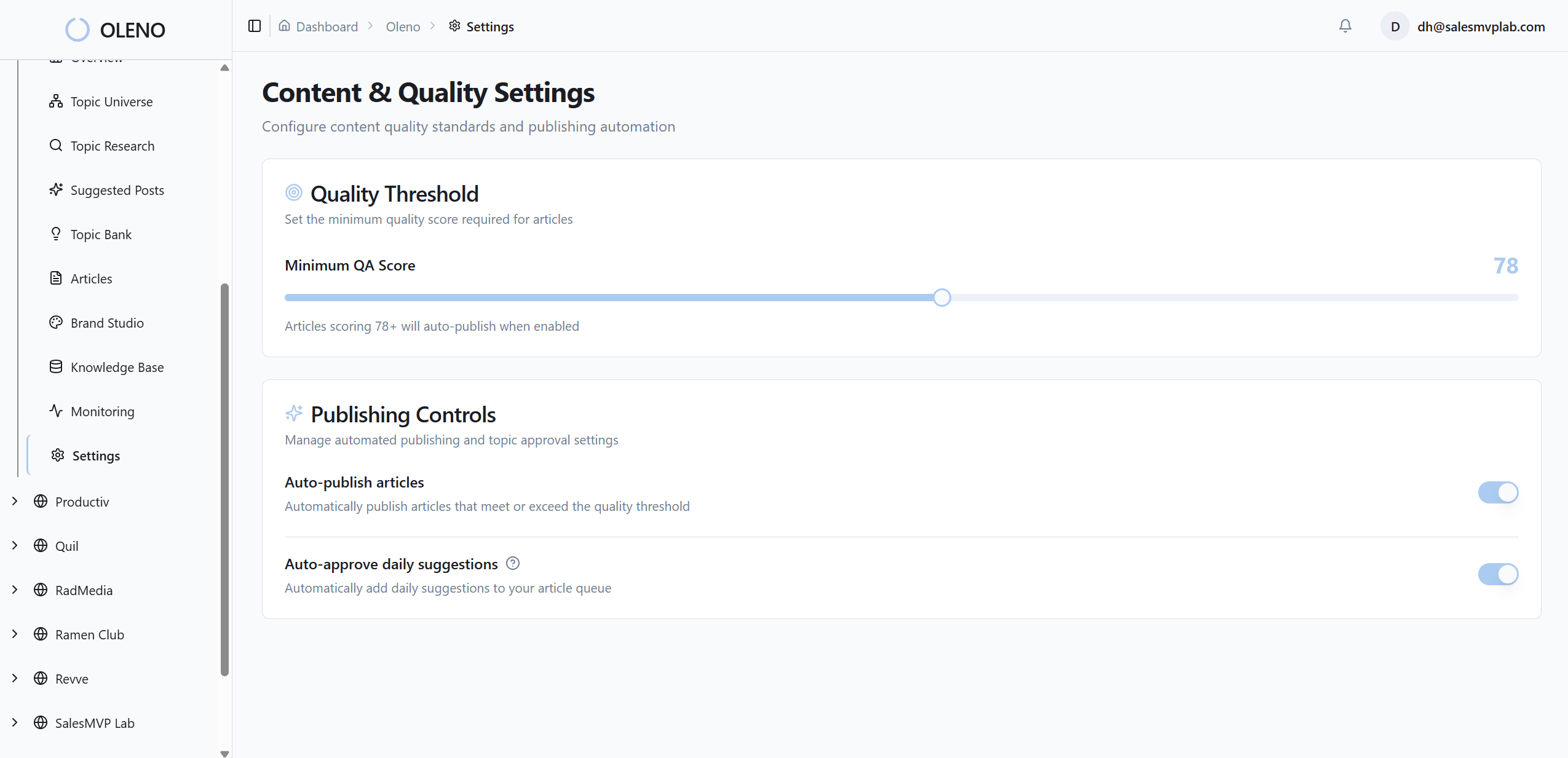
Score: 0/100 (threshold: 78)
Issues: No specific issues identified
Quick Fixes Suggested: No quick fixes suggested
Context
About Daniel Hebert
I'm the founder of Oleno, SalesMVP Lab, and yourLumira. Been working in B2B SaaS in both sales and marketing leadership for 13+ years. I specialize in building revenue engines from the ground up. Over the years, I've codified writing frameworks, which are now powering Oleno.
Frequently Asked Questions