9 Persona-Tailored Article Templates That Drive Micro-Conversions
Most persona content looks tailored on the surface, but it barely moves behavior. Teams swap examples and job titles, then reuse the same intro, proof, and CTA. Readers nod, scroll, and leave. You do not have a conversion path. You have decoration. The fix is structural, and it starts with 9 persona-tailored article templates you can run on command.
I learned this the hard way. At small teams, I shipped fast when I had a clear structure. When structure drifted, results fell off a cliff. You probably feel the same. Map each persona plus stage to a single micro-conversion, wire the article around that, then measure it cleanly. Do that with 9 persona-tailored article templates and you cut briefing time by about 40 percent and often see a 20 to 50 percent lift in persona-specific micro-conversions within a quarter.
Key Takeaways:
- Stop swapping examples, start matching structure to persona plus stage
- Tie every template to one micro-conversion you can actually measure
- Use the 9 templates with H2s, CTA placement, and metadata ready to paste
- Build a simple persona by stage matrix and publish nine pieces in nine workdays
- Instrument events per template, not per site, so signal is clean
- Expect faster briefs, fewer rewrites, and clearer attribution to what works
Why 9 Persona-Tailored Article Templates Beat Generic Playbooks
Nine persona templates outperform generic shells because structure drives action more than surface language. Match narrative beats, proof type, and CTA to how that buyer decides at that stage. When structure aligns to evaluation behavior, micro-conversions jump without begging for demos. Think small asks early, bigger asks later, one ask per piece.
The hidden failure of structure reuse
Teams reuse the same arc across personas, then wonder why time on page is fine while clicks are flat. The problem is the arc, not the copy. A Head of Content wants process and pitfalls, a CFO wants cost math and risk, a PM wants feasibility. They need different beats, in a different order, with a different ask.
I have made this mistake many times. Engagement looked healthy, scroll depth held, but the button everyone needed sat in the wrong place with the wrong promise. You lose momentum when the first CTA asks for too much, or the intro frames the wrong tension. Fix the structure first, then swap stories and screenshots.
Here is the simple test that rarely fails:
- Does the intro frame the persona’s job-to-be-done, not your product?
- Does proof match their comfort zone, story versus numbers versus steps?
- Is the CTA the next smallest step they can commit to right now?
What is a micro-conversion and why it matters?
A micro-conversion is a small, trackable step that signals progress for that persona at that stage. Think worksheet copy, calculator use, calendar click, product page view, pricing hover. Anchor each template to one of these, and you will prove movement even when a demo is too big an ask. Google calls these high intent micro-moments for a reason, you can catch and guide them when the structure fits the moment, see Think with Google on micro-moments.
Tie the article to one action, place the first CTA where attention is still high, and measure completion cleanly. Noise fades when the ask is clear. Attribution gets easier when each piece owns a single event.
How this list saves time without losing specificity
You get speed by standardizing the parts that repeat without flattening the voice. The templates include H2 scaffolding, CTA placement, and analytics suggestions. You swap in vocabulary, persona objections, and relevant proof. The bones stay the same across variants, which is where most waste hides, so briefs get shorter and edits get lighter.
In my experience, this is where teams claw back hours. Writers stop re-litigating structure on every piece. Editors stop moving CTAs around. PMM stops chasing voice drift. You ship more, with fewer meetings, and you keep the message intact.
The Real Conversion Gap Behind Persona Content
Persona content stalls when it changes nouns and examples but keeps the same conversion mechanics. The real gap is the sequence of tension, proof, and ask. When you map persona plus stage to beats and a right-sized next step, you guide behavior instead of hoping for it. That is the missing system.
Symptom vs root cause in “personalized” posts
Low bounce and weak clicks scream the same story. People read, then hesitate. The ask is wrong for where they are or who they are. A CFO wants quantified risk before any pricing click. A PM needs feasibility proof before a feature tour. Diagnose stage fit first, then write to the job-to-be-done.
Swap the ask, not just the example. Early stage needs light touches like checklists or short courses. Mid stage needs tools and criteria. Late stage needs calculators, tradeoffs, and implementation clarity. One article, one action, zero confusion.
Why does swapping examples not convert?
Swapping examples tweaks flavor, not calculus. Without tension that matches their risk lens, proof they trust, and an ask they can accept, you get polite agreement and no movement. User intent research backs this, intent predicts behavior better than topic match, see Nielsen Norman Group on user intent.
The fix is boring in the best way. Decide the action first. Place it early. Use the rest of the article to earn it with the right beats in the right order. You will see fewer dead ends and cleaner paths to the next touch.
The Cost of Reusing Structures Across Personas for 9 persona-tailored article templates
Misaligned structures are expensive. They waste hard-won traffic, inflate CAC, and bury signal in blended dashboards. Quantify the damage so the team stops treating structure debates as taste. Then switch to persona plus stage templates and watch the waste drop.
3 measurable losses you can stop now
Bad structure sends good readers past the ask or into the wrong ask. Paid traffic leaves when the first button demands too much. Blended CTAs erase signal by hiding which persona-stage variant actually works. You can stop these losses fast by isolating one action per template and tagging it cleanly, see CXL on micro-conversions.
I have watched teams burn budget here. Strong topics, solid writing, zero lift in pipeline. Not because people did not care. Because the path was unclear. That is preventable, and it pays back quickly, especially when evaluating 9 persona-tailored article templates.
- Waste, quality traffic never seeing the right ask due to placement mismatch
- Cost, paid clicks bouncing because intent does not match the commitment
- Missed signal, pooled CTAs hiding which persona-stage variant performs
How to prove the waste in your analytics
Run a two-week split. Keep topic and distribution constant. Change structure and CTA by persona plus stage only. Track three numbers, scroll to first CTA, clicks on the single micro-conversion, and assisted conversions within seven days. If structure is wrong, you will see healthy engagement with weak action. That is your gap. Fix the beats, not the headline.
Configuration is easy in modern tools. Set a distinct event per template so reporting does not collapse variants, then compare view to click to completion ratios. Start with directional proof, then harden it with more data as you scale, see Google Analytics 4 events.
The 9 Persona-Tailored Article Templates by Funnel Stage
Nine templates cover awareness, consideration, and decision. Each template specifies H2 structure, CTA type, and a single micro-conversion. Use them as specs, then edit vocabulary, objections, and proof for each persona. Repeatable structure gives you speed. Targeted content gives you relevance.
Awareness templates 1 to 3: Problem, myth, category POV
Awareness is about recognition and language, not product. Readers need to see their world described accurately, with stakes they feel, plus a low friction next step. Keep the ask small, like a checklist or short series. Save product for later, unless it clarifies the new frame.
Most teams overreach here, which kills momentum. Lead with the problem or a belief worth challenging, then give one safe action that keeps them close to you.
- Problem Teardown H2s, symptom, root cause, stakes, first fix. CTA, problem checklist. SEO, problem signs and cost queries. Measure, checklist copies.
- Myth Breaker H2s, myth, truth, proof, safe first step. CTA, email course. SEO, common myths queries. Measure, enrolls.
- Category POV H2s, old way, new way, use cases, proof. CTA, POV PDF. Measure, downloads.
Consideration templates 4 to 6: Guide, success pattern, risk
Consideration is where buyers compare, collect criteria, and picture success. The best content here reduces uncertainty and teaches them how to evaluate. Keep CTAs tool-centric, not sales-centric. People want help making the right choice, even if it is not you.
Overlooking risk language is a common mistake. Name the traps and how to spot them. Credibility jumps when you acknowledge tradeoffs.
- Buyer Guide H2s, options, criteria, tradeoffs, scoring table. CTA, worksheet. Measure, worksheet copies.
- Success Pattern H2s, goal, process, pitfalls, examples. CTA, template pack. Measure, pack downloads.
- Risk Checklist H2s, top risks, detection, prevention, escalation. CTA, audit call. Measure, audit clicks.
Decision templates 7 to 9: ROI, competitive truth, implementation FAQ
Decision is where numbers, fit, and time-to-value matter most. Speak directly to budget, tradeoffs, and rollout. The right late-stage article can replace three calls if it answers the hard questions clearly. Use calculators, comparison criteria, and concrete timelines.
I prefer to make fit explicit. Who wins with us, who will not, and why. Buyers reward that level of clarity with trust, even when the answer is no.
- ROI Explainer H2s, cost baseline, levers, calculator walkthrough, case math. CTA, ROI sheet. Measure, calculator uses.
- Competitive Truth H2s, who we fit, who we do not, key tradeoffs, switching plan. CTA, comparison download. Measure, downloads.
- Implementation FAQ H2s, timeline, roles, data, risks, day one plan. CTA, setup checklist. Measure, copies.
How to Operationalize 9 Persona-Tailored Article Templates Fast
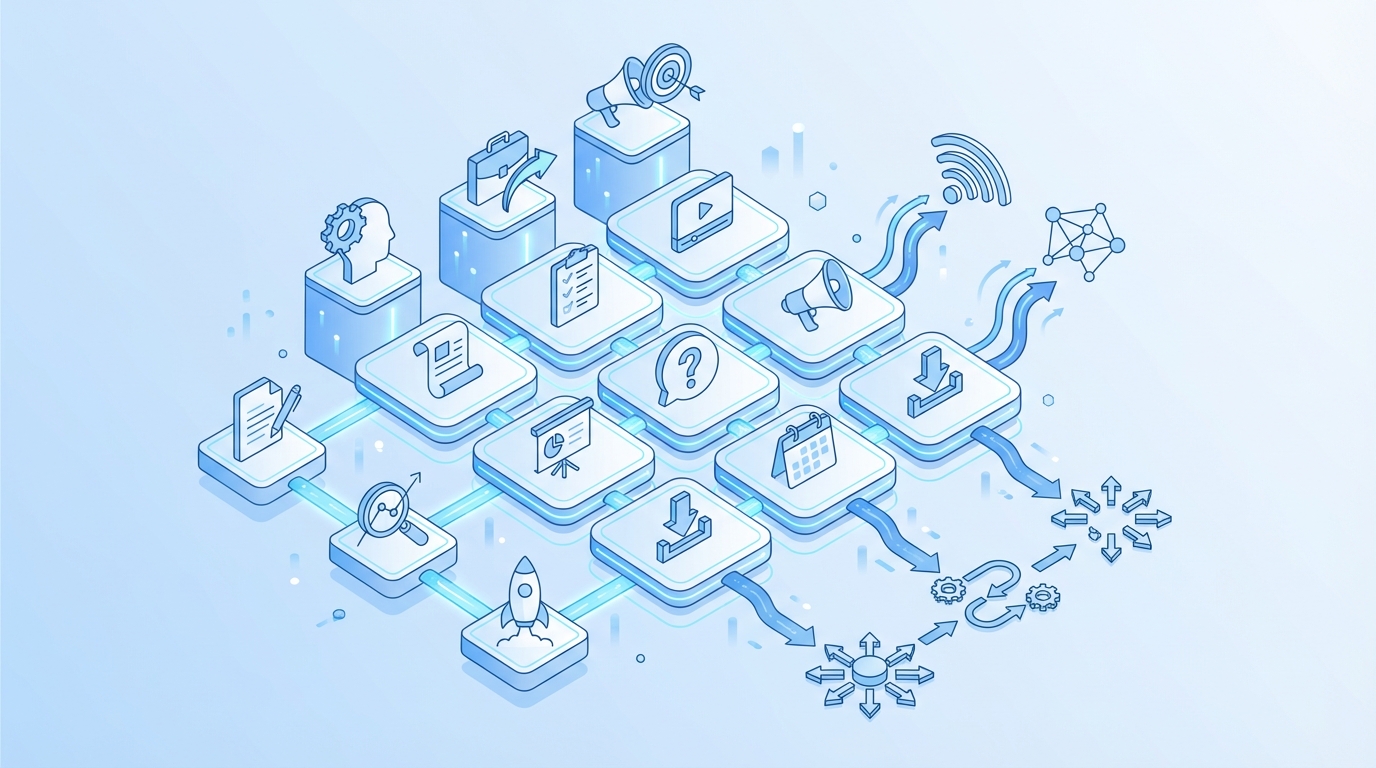
Operationalizing starts with a simple matrix and ends with clear instrumentation. Pick your top three personas and three stages. Assign one template per cell, one action per template, and one distribution channel per piece. Publish nine articles in nine workdays. That cadence alone will surface winners quickly.
Build your persona to funnel matrix in 30 minutes
Start with a whiteboard or doc. Map personas on one axis, funnel stages on the other. For each cell, assign a template, a single micro-conversion, and the first channel you will use. Add vocabulary notes, key objections, and the right ask. That becomes the brief starter for each piece.
Once the matrix exists, publishing becomes a checklist, not a brainstorming session. Your team moves from debating to doing, which is where speed and quality come from. Expect fewer status meetings and more drafts that are already 80 percent right.
Steps I give teams:
- List three personas and three stages in a 3 by 3 grid
- Assign one template and one micro-conversion per cell
- Write vocabulary and objection notes per cell This is particularly relevant for 9 persona-tailored article templates.
- Pick one channel per cell for first distribution
- Turn each cell into a one page brief with H2s and CTA placement
How do you measure micro-conversions quickly?
Create one event name per template so dashboards do not collapse variants. Track three things for each article, first CTA view, first CTA click, and completion. Mark the right ones as conversions. Then build a simple dashboard with nine tiles, one per template. Dark tiles mean pause. Bright tiles mean double down. A light footprint like this beats overbuilt funnels early, see Looker Studio dashboards for simple views and GA4 event configuration for setup.
You will rarely need more than this to see the pattern. The right structure shows its hand fast. The wrong structure does too. That is the point.
Ready to stop guessing on structure and start shipping persona-stage templates with guardrails? Request a Demo
How Oleno Automates 9 Persona-Tailored Article Templates From Brief to Publish
Oleno turns the templates into a repeatable system. You define voice, market POV, product truths, and persona context once. Oleno uses that governance to generate briefs, draft in your voice, enforce quality, and publish to your CMS on a steady cadence. Operational signals show whether the engine is running cleanly.
Governance Studios lock voice, claims, and CTAs by persona
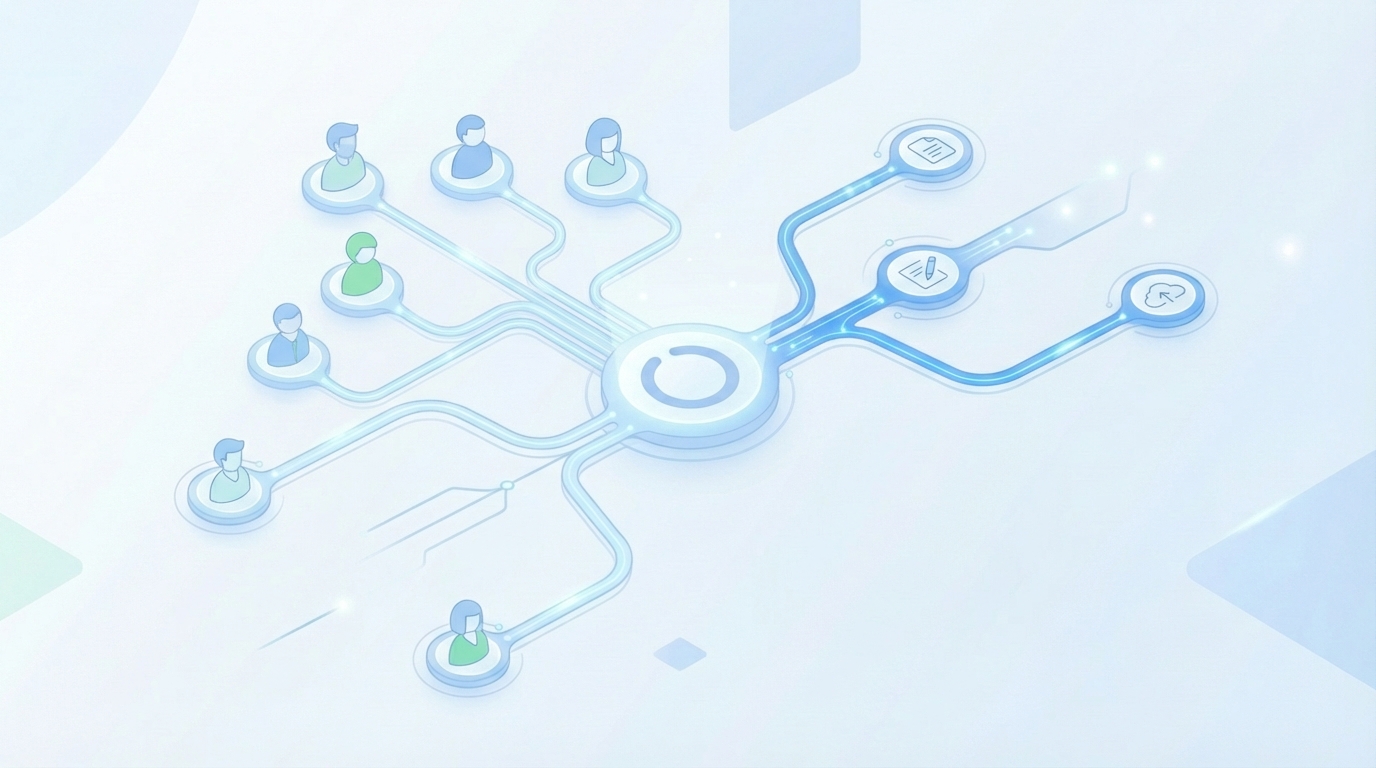
Brand Studio encodes your tone, preferred terms, call to action style, and structural rules so drafts read like you, even as volume grows. Marketing Studio captures the narrative you want the market to learn, including old way versus new way frames and key messages. Product Studio grounds claims in approved descriptions and boundaries so evaluation content stays accurate and safe.
Oleno applies this governance during Brief and Draft, then checks against it in QA. That is how voice drift, risky claims, and off message tangents get blocked before anything hits your site. You get the speed of generation with the safety of rules.
Template jobs, AI briefs, and QA cut research time dramatically
Programmatic SEO in Oleno can produce acquisition content at scale, but the same governed approach works across these nine templates. Briefs pull in persona goals and objections, then lock the H2 order to match the template. Drafts follow that structure, not a one off prompt. The QA gate enforces clarity, structure, voice, and factual grounding before publishing.
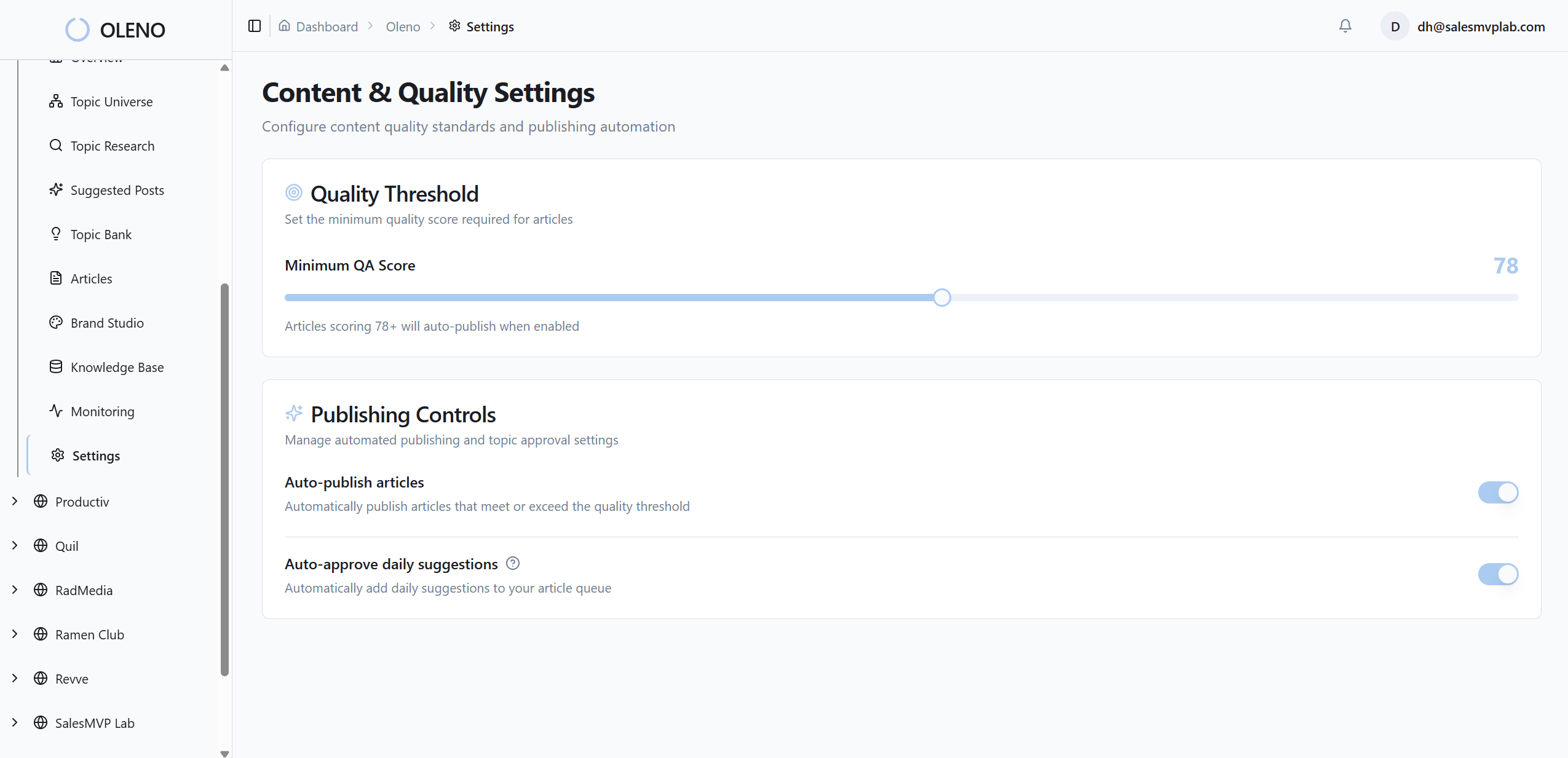
Teams often see large cuts in research and editing time because they are not reinventing the wheel. The system catches thin sections and off voice lines. You spend energy where it matters, adding lived examples and sharper proof, not fixing format every time.
Forty percent less briefing time in the first month is common when you standardize structure and let QA handle the basics. That is what Oleno delivers. Request a Demo
Publishing and iteration keep your engine honest
CMS Publishing pushes approved drafts to WordPress, Webflow, HubSpot, and more as drafts or live posts, with mapped fields and duplicate protection. Distribution repurposes long form pieces into platform ready posts so channels stay warm without new positioning. Measurement and System Health tracks cadence, volume, and quality trendlines so you can spot bottlenecks early and fix the right thing.
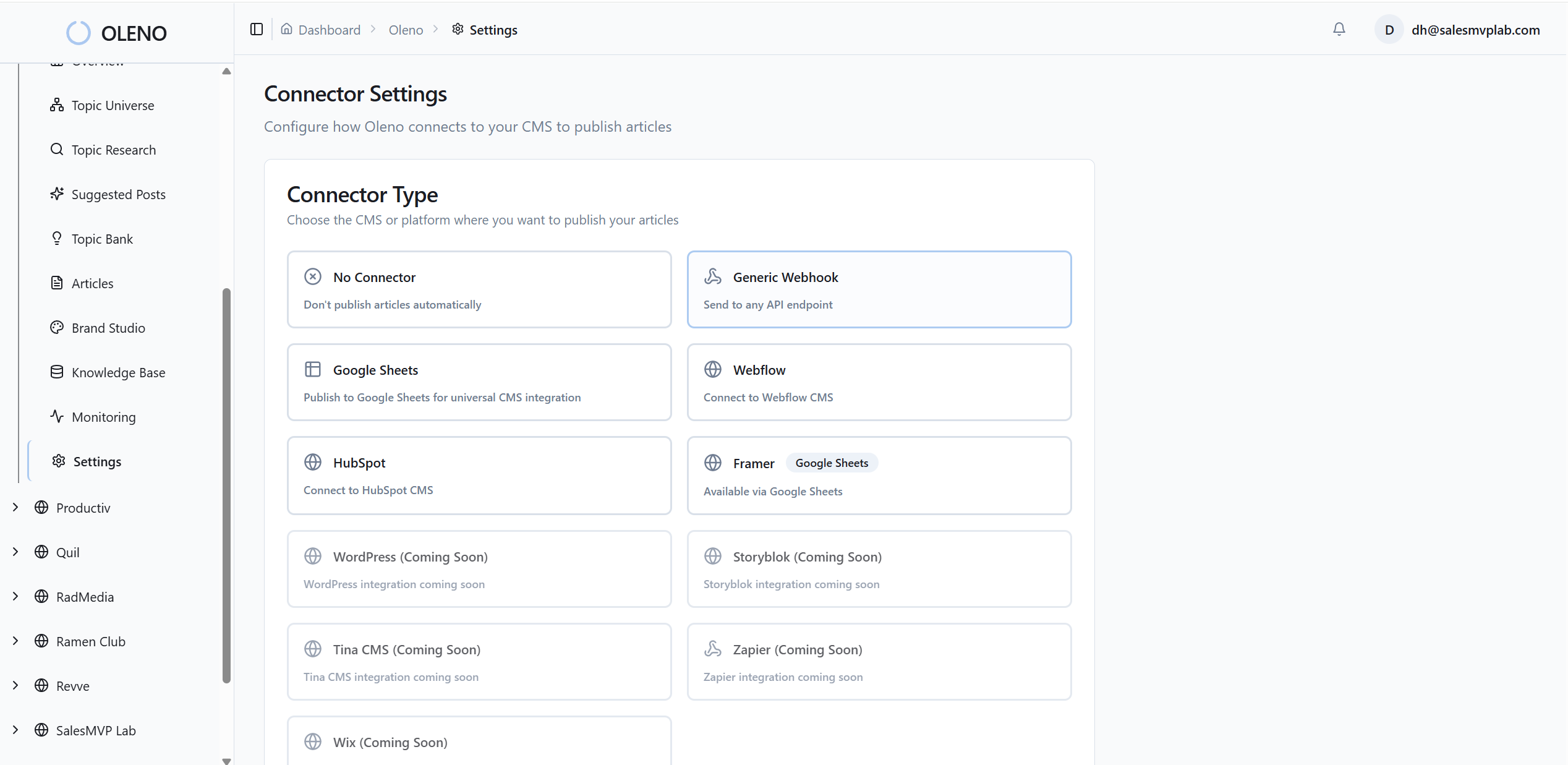
That loop matters. Earlier we quantified waste from misaligned structure and blended CTAs. Here is the callback. Governed briefs reduce time lost to rework. The QA gate reduces manual review churn. Publishing reliability keeps cadence steady so your tests get clean reads. Operational signals surface failure patterns before they compound.
Want feature level confidence that your voice and accuracy hold while you scale the nine templates? Oleno’s Brand Studio and QA gate handle consistency automatically, and CMS Publishing removes handoffs that slow you down. Book a Demo
Conclusion
Most persona content fails for structural reasons, not effort. When you adopt nine persona-tailored article templates, tie each to one micro-conversion, and instrument the basics, you turn polite engagement into measurable movement. Expect shorter briefs, fewer rewrites, and clearer wins by persona-stage. Then let governance and QA keep the engine honest while you keep shipping.
About Daniel Hebert
I'm the founder of Oleno, SalesMVP Lab, and yourLumira. Been working in B2B SaaS in both sales and marketing leadership for 13+ years. I specialize in building revenue engines from the ground up. Over the years, I've codified writing frameworks, which are now powering Oleno.
Frequently Asked Questions