90-Day Playbook: Migrate to AI-Orchestrated Content Ops

Most content teams try to “add AI” to the same messy process they’ve been living with for years. It feels faster for a week. Then the backlog returns with interest. I’ve run content both as the writer and as the exec trying to scale it. The pattern is predictable: tools accelerate drafting; the system still slows you down.
Back when I ran Steamfeed, we hit 120k monthly uniques by combining depth and volume. At PostBeyond, I could ship 3–4 strong posts a week because my framework did the heavy lifting. Later, with a three-person team at LevelJump, we recorded the CEO and transcribed it. Faster, sure. But search structure and governance weren’t there. That’s where quality drift creeps in.
Here’s the uncomfortable truth: if you don’t fix the system, speed amplifies noise. You need a deterministic pipeline, enforced rules, and gates. Autonomy isn’t “fewer typos with AI.” It’s content that’s decided, written, and published without you in the middle of every step.
Key Takeaways:
- Treat content creation as a system, not a string of tasks or prompts
- Define autonomy with gates, logs, and thresholds before increasing volume
- Shift RACI toward rules and knowledge stewardship, not manual edits
- Quantify coordination cost and brand drift to build urgency and budget
- Pilot in 90 days with clear SLOs, error budgets, and rollback rules
- Use QA as a gate, not a suggestion, to prevent rework debt
- Scale only after the pilot proves reliability and traceability
Ready to skip the theory and see it run? Try Generating 3 Free Test Articles Now.
Stop Treating AI As A Writing Tool, Fix The System That Creates Content
AI doesn’t fix broken content ops; it accelerates them. Autonomy means the pipeline runs end to end—discovery through publish—without daily human handoffs. Put quality as a gate, not a suggestion, or you’ll scale rework. That’s the shift most teams miss.
Why tool-first rollouts stall out
Speeding up drafting on a shaky workflow just creates faster chaos. You still decide topics, structure, edits, and the moment of publish. That coordination tax doesn’t shrink on its own, and it rarely gets budgeted. The result is “busy” teams with little throughput that leadership actually trusts.
I’ve seen the movie: you roll out a prompt library, freelancers produce more drafts, and the backlog moves from “first draft” to “editing and approvals.” If you don’t define rules, logs, and gates, quality becomes optional and rework rises. The very thing you were trying to avoid shows up in the backlog—just wearing a different label.
What is a realistic definition of autonomy?
Autonomy in content ops means a deterministic pipeline, not a helpful copilot. Discovery, angle, brief, draft, QA, visuals, and publish execute without daily human coordination. People still set the rules and constraints. The system enforces them. No dashboards or performance analytics live inside that pipeline—only internal logs and gates.
Put differently, autonomy is governance plus execution without you babysitting every step. It’s not perfection, and it doesn’t replace strategy. It’s simply reliable. The work moves forward because the pipeline is designed to move it forward safely.
Why governance has to come before scale
If governance trails output, you scale the failure modes. Voice drift, factual errors, off-theme topics, and publishing mistakes multiply. Put quality as a gate, not a suggestion. Codify pass thresholds, banned terms, and rejection rules first. Then raise volume. Not the other way around.
You don’t need a 200-page manual. You need minimums: pass scores, what gets blocked, and what triggers rollback. A light but firm set of rules beats a verbose style guide nobody enforces. That’s how you scale without repainting the same wall every week. If you want a broader take on lean AI rollouts, the Official Lean AI Company Playbook offers a useful framing for governance-first adoption.
The Real Blocker Is Coordination, Not Writing Faster
The real problem isn’t “we need more words.” It’s the manual steps around the words—deciding topics, structuring, fact-checking, approvals, and publishing. Replace handoffs with a deterministic pipeline and enforce standards programmatically. Throughput follows from fewer decisions, not faster typing.

What traditional approaches miss
Prompts help with words, not the work. Editorial calendars, briefs, edits, and publish still depend on humans. That’s where throughput stalls. The leverage point is replacing handoffs with a deterministic pipeline and enforcing standards in code, not asking writers to go faster.
Here’s where nuance matters. Freelancers and agencies can do good work. So can in-house writers. But without enforced structure and grounding, you rely on heroics and memory. The minute people churn or priorities change, your process degrades. Systems protect you from that fragility. For teams building their readiness plan, the 90 Day AI Readiness Playbook provides a solid operational checklist.
How do roles and RACI actually change?
Writers shift into knowledge curators. Editors become governance designers. Marketers operate systems. Leadership owns outcomes, not drafts. Your RACI reflects this. Accountable for the rules and error budgets. Responsible for KB stewardship. Consulted on brand language changes. Informed on cadence and exceptions.
The day-to-day feels different. You’re not debating sentence rhythm in review meetings. You’re refining pass criteria and adjusting the exception taxonomy. It’s less artisanal, more operational. That’s the point. Creativity stays; chaos goes.
The hidden complexity behind handoffs
Every handoff hides variation. Structure, voice, facts, and publishing quirks create drift. Without internal logs and QA gates, you can’t see or prevent it. When you remove prompts in favor of a governed pipeline, you reduce the places errors sneak in and make exceptions explicit.
We’ve all watched a “minor tweak” create a cascade: new structure, broken links, missed alt text, last-minute legal edits. A simple set of logs and gates stops the domino effect. You may still make exceptions, but they’re declared, tracked, and closed with a rule change—not a heroic late-night fix. For broader adoption guidance, the DCO AI Adoption Playbook outlines change patterns that translate well here.
The Hidden Costs Draining Your Content Budget
Coordination time is the tax you never line-item. It shows up as “editing,” “approvals,” and “prep,” but it’s operations debt. Quantify it. Then reduce it with QA gates, internal logs, and rollback rules. You’ll see fewer incidents and less rework.
Let’s pretend we measure the real time cost
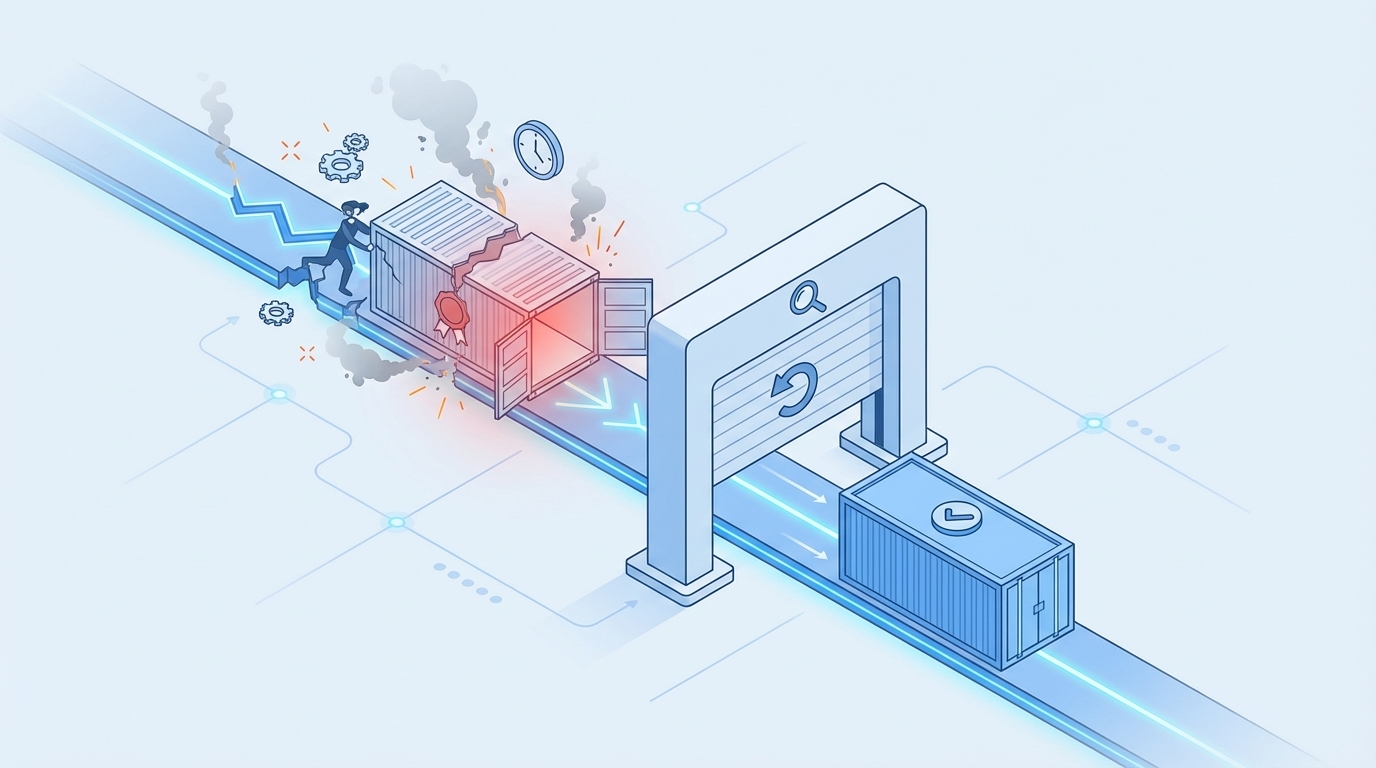
Say a team ships 20 articles per month. Each piece burns 4 hours of coordination, 3 hours of edits, and 1 hour of publish prep. That’s 160 hours monthly on non-writing work. At $80 per hour, you’re spending $12,800 on glue tasks. Not counting incidents, rollbacks, and rework when content fails checks after publish.
Those numbers aren’t extravagant. They’re conservative. And they compound with context switching and missed windows. The moment you model them, the budget for enforcing rules and building a proper knowledge base appears. You’re reallocating waste into reliability.
The compounding risk of brand drift
One off-brand article is a headache. Ten in a quarter turns into retraining, rework, and lost trust with stakeholders. The root cause is missing rules and gates. A voice linter, banned terms, and structural checks reduce that drift before a draft ever goes live. Prevent, don’t patch.
Brand drift is subtle. It’s not a typo; it’s tone misalignment that makes Sales stop sharing your work. Prevention is cheaper than repair. Don’t boil the ocean—codify five voice rules and five structural must-haves. Then enforce them every time.
Why lack of logs and gates becomes incident debt
Without internal logs for pipeline events and minimum QA thresholds, you can’t reproduce failures or enforce remediation. You rely on memory. Incident debt grows. Define pass scores and rejection rules, keep version history, and block publishing until standards are met to cap unplanned work.
Think audit trail, not a performance dashboard. You need to know what ran, what failed, what changed, and why it shipped. That’s how you fix causes, not symptoms. If you need a governance lens, the guidance in 90 Days To Audit-Ready AI and AI Agent Security Architecture can inform your risk posture for content systems.
Still doing this manually and paying the coordination tax every month? Try Using An Autonomous Content Engine For Always-On Publishing.
When You Ship Content You Do Not Trust
Shipping content you don’t trust burns time and political capital. The fix isn’t hero edits; it’s gating quality before publish and having a clean rollback policy. Make rework the exception—not the process.
The late publish you regret
You push an article live under deadline. It reads close, but the voice is off and a claim is ungrounded. Legal flags it. Sales stops sharing it. You roll it back, patch it, and lose a week. This is preventable when quality is a gate and KB grounding is enforced before a publish attempt.
We’ve all been there. The cost isn’t just time; it’s confidence. The next time you hesitate to publish, you slow the cadence. Confidence comes from rules the system enforces the same way every time.
When your biggest customer reads it first
High-stakes posts get read by people who matter. If structure and claims aren’t enforced, the blowback is heavy. Incident reviews burn leadership time. A clear rollback policy, error budgets, and an escalation path turn a scary moment into a contained event.
You don’t need a war room. You need a one-page plan: what triggers rollback, who approves, how to remediate (rule or KB update), and how to prevent recurrence. Treat it like ops, not PR clean-up. For a playbook-shaped perspective, the Official Lean AI Company Playbook includes governance rhythms that map well here.
What should leaders watch in the first 30 days?
Watch rework hours, fail-to-pass cycles at the QA gate, and exception volume. If exception paths spike, either the rules are wrong or the training set is thin. Fix rules first, expand the KB second, then revisit output volume. Don’t scale noise.
Three metrics, that’s it. If you try to track everything, you’ll dilute the signal. You want to know: Are we getting to pass faster? Are exceptions dropping? Are we spending less time fixing and more time publishing?
Your 90-Day Migration Plan, Week By Week
A 90-day plan works because it time-boxes risk. Start with baselines. Define SLOs and gates. Engineer your KB and voice rules. Pilot in draft mode. Then turn on publishing with governance. Keep scope tight. Prove reliability before scale.
Week 0-2: Run the baseline audit
Inventory content, roles, and manual hours. Capture quality baselines across structure, voice, and accuracy. Map handoffs and failure points. Define a topic universe snapshot to see coverage gaps. Document current rejection reasons and typical edit loops. This sets your north star and first SLOs.
Two outputs matter: a time budget and a rule deficit list. Time budget shows where hours go today. Rule deficit shows what’s missing (voice rules, banned terms, structure checks, KB grounding). Don’t jump to tools. Tighten the rules first.
Week 3-4: Define autonomy SLOs and QA thresholds
Set a minimum QA pass score at 85 with rejection rules for voice drift, ungrounded claims, and structure violations. Define error budgets for publish failures and rollback triggers. Specify logging requirements for pipeline events. Write your exception taxonomy and escalation paths now.
Keep it simple: a handful of pass/fail criteria, a named owner for each, and a weekly review. The goal isn’t bureaucracy. It’s predictability. When the system fails, you should know exactly what failed and what to change.
Week 5-6: Engineer your KB and brand studio
Consolidate canonical sources, kill outdated docs, and chunk content for retrieval. Encode voice rules, banned terms, preferred phrasing, and narrative scaffolds. Make KB grounding mandatory for claims. Seed a small brand lexicon that editors can extend as new patterns emerge.
This is where teams slip. They assume “we’ve got docs” equals “we’re grounded.” It doesn’t. You need clean, current, retrievable sources. And you need voice guardrails that are short enough to be enforceable, not just “guidance.”
Week 7-8: Set up the pilot
Pick 10 to 20 sample topics with clear success metrics. Lock scope. Configure the pipeline, QA gates, and publishing idempotency in a draft-only mode. Build an incident playbook with rollback steps and on-call roles for exceptions. Do not widen scope mid-pilot.
What you’re testing isn’t creativity. It’s the system’s ability to produce consistent, trustable drafts with minimal human intervention. Treat every exception as a data point that should end with either a rule change or a KB update.
Week 9-10: Run the 30-day pilot
Execute at a modest cadence. Monitor internal logs, fail-to-pass cycles, and exception categories. Tune rules first, then prompts inside the guardrails only if needed. Track time-to-publish, rework hours, and pass rate trends. Close each incident with a rule or KB update, not a one-off fix.
The discipline here matters. If you “just fix it,” you’ll reintroduce fragility. If you fix the underlying rule or source, you harden the system. That’s the habit you want to build.
Week 11-12: Scale and govern for production
Move from draft to publish with QA gating. Finalize RACI: accountable for rules, responsible for KB curation, consulted on voice changes, informed on cadence. Schedule continuous QA audits. Establish a weekly cadence to propose rule changes, review exceptions, and adjust quotas.
This is your go/no-go: you’re not looking for zero incidents; you’re looking for traceable, repeatable operations. If you have that, increase volume. If you don’t, extend the pilot by two weeks and fix the bottleneck. For a supporting checklist, see the 90 Day AI Readiness Playbook.
How Oleno Operationalizes The 90-Day Rollout
Oleno runs content creation as a system. It determines what to write, structures the angle, writes in your voice, enforces quality, and publishes—without prompting or coordination. Features like topic discovery, QA gating, and idempotent publishing match the plan you just defined.
Topic Universe and daily discovery
Oleno analyzes your sitemap and knowledge base to determine what to write, avoids duplication, and matches output to your daily quota. This removes editorial planning overhead and keeps the pilot scoped to safe, differentiable topics tied to your expertise and coverage gaps.
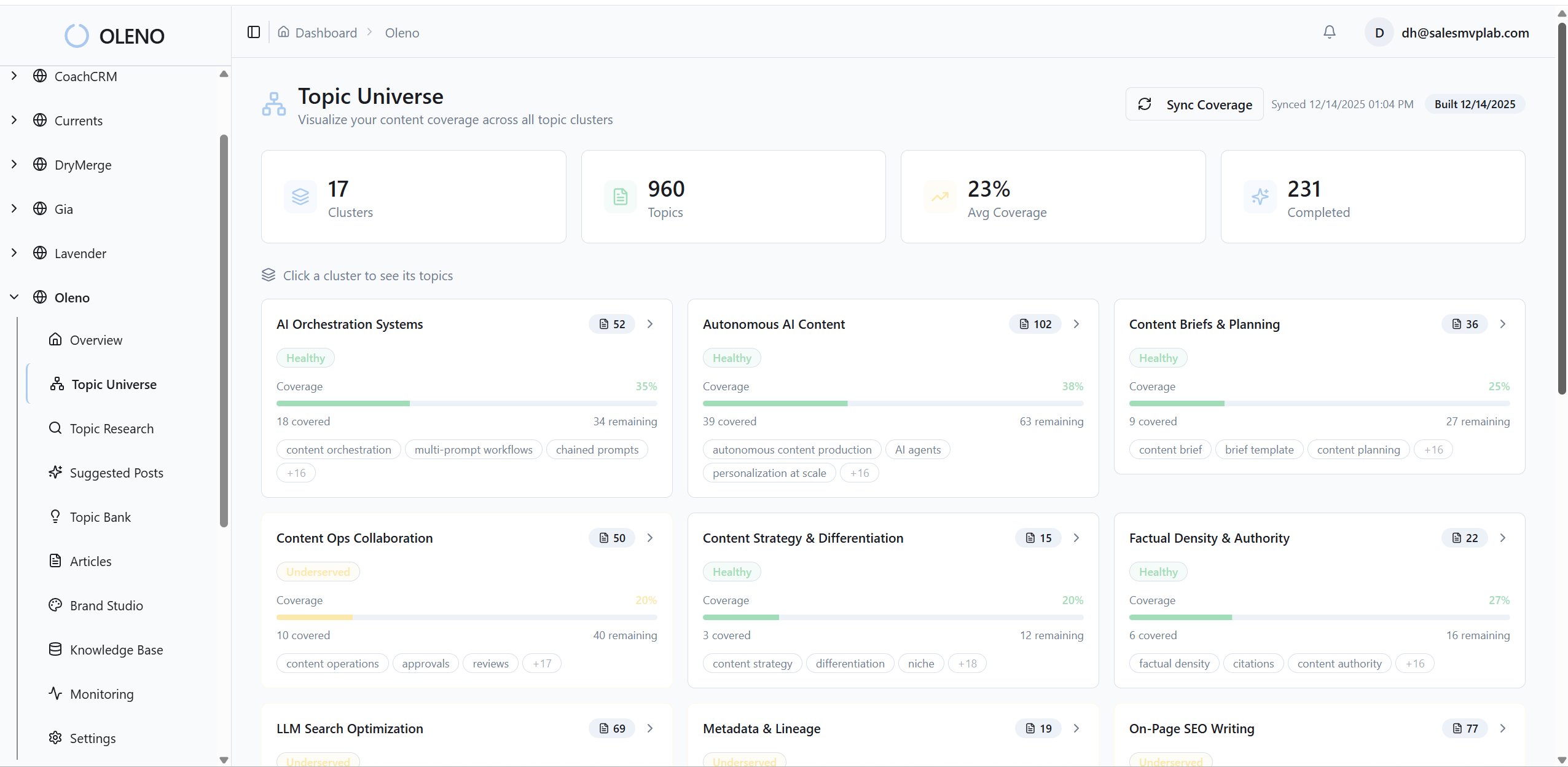
Practically, that means you’re not juggling keyword lists or calendars. Oleno selects topics that can be written safely from your KB and blocks low-information-gain ideas before they enter briefing. During the pilot, that guardrail keeps variance low and outcomes predictable.
Brand Studio and KB-grounded drafting
Voice rules, preferred phrasing, and banned terms are enforced during drafting. Claims are grounded in your uploaded KB. This reduces brand drift and factual errors—the big rework drivers from your baseline audit. Editors evolve the rules; the system applies them consistently.
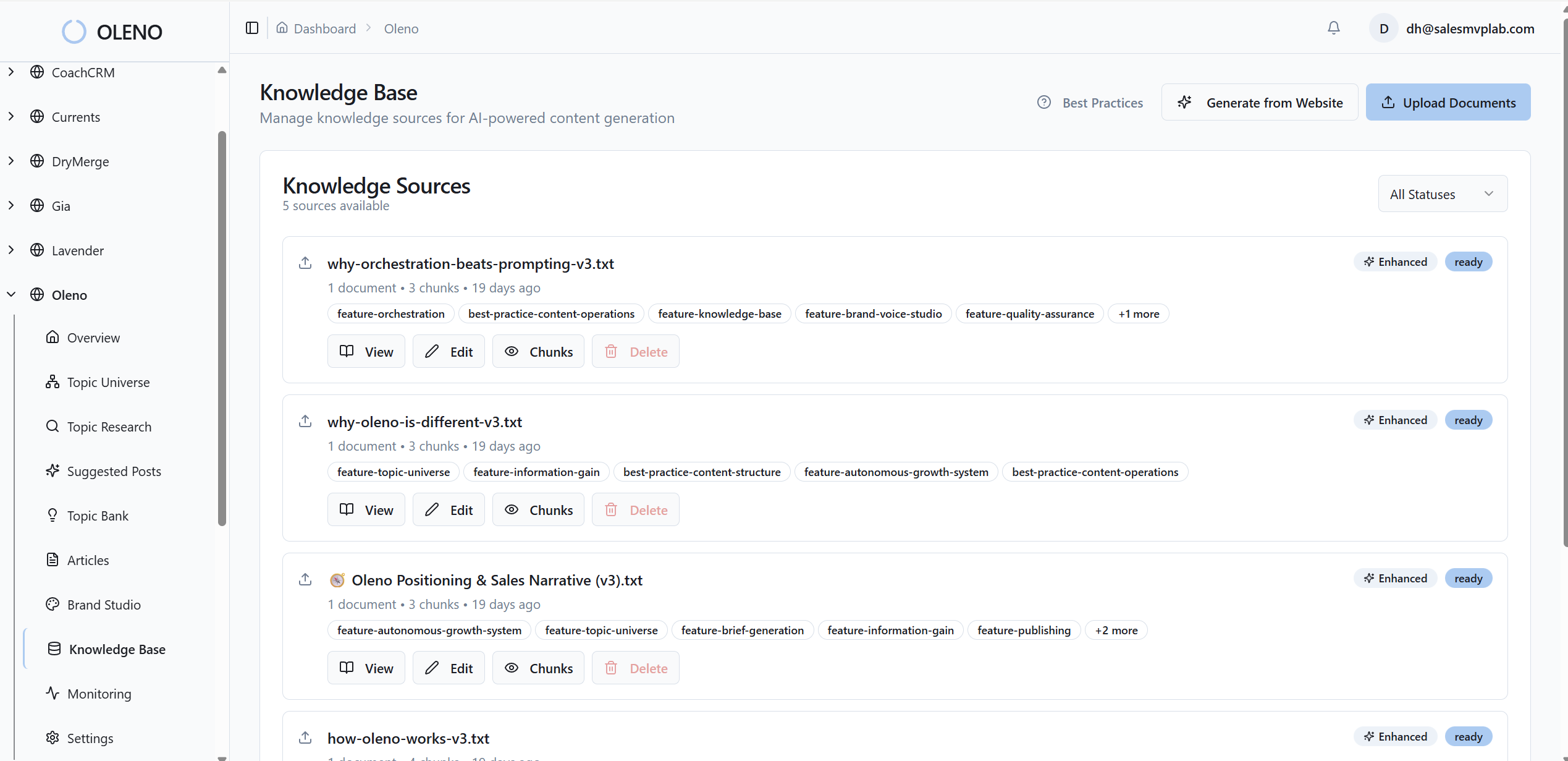
You’ll feel the difference in reviews. Instead of rewriting, you’re adjusting rules and updating sources. Oleno’s drafting respects those constraints from the first sentence, which shortens the fail-to-pass loop and helps you hit your SLOs.
QA gate with enforced thresholds
Articles are scored for structure, voice, clarity, LLM readability, SEO placement, and KB grounding. Minimum pass score is set to your threshold, typically 85. Sub-threshold drafts are revised and re-evaluated. Publishing is blocked until quality clears. This aligns directly with your error budgets.
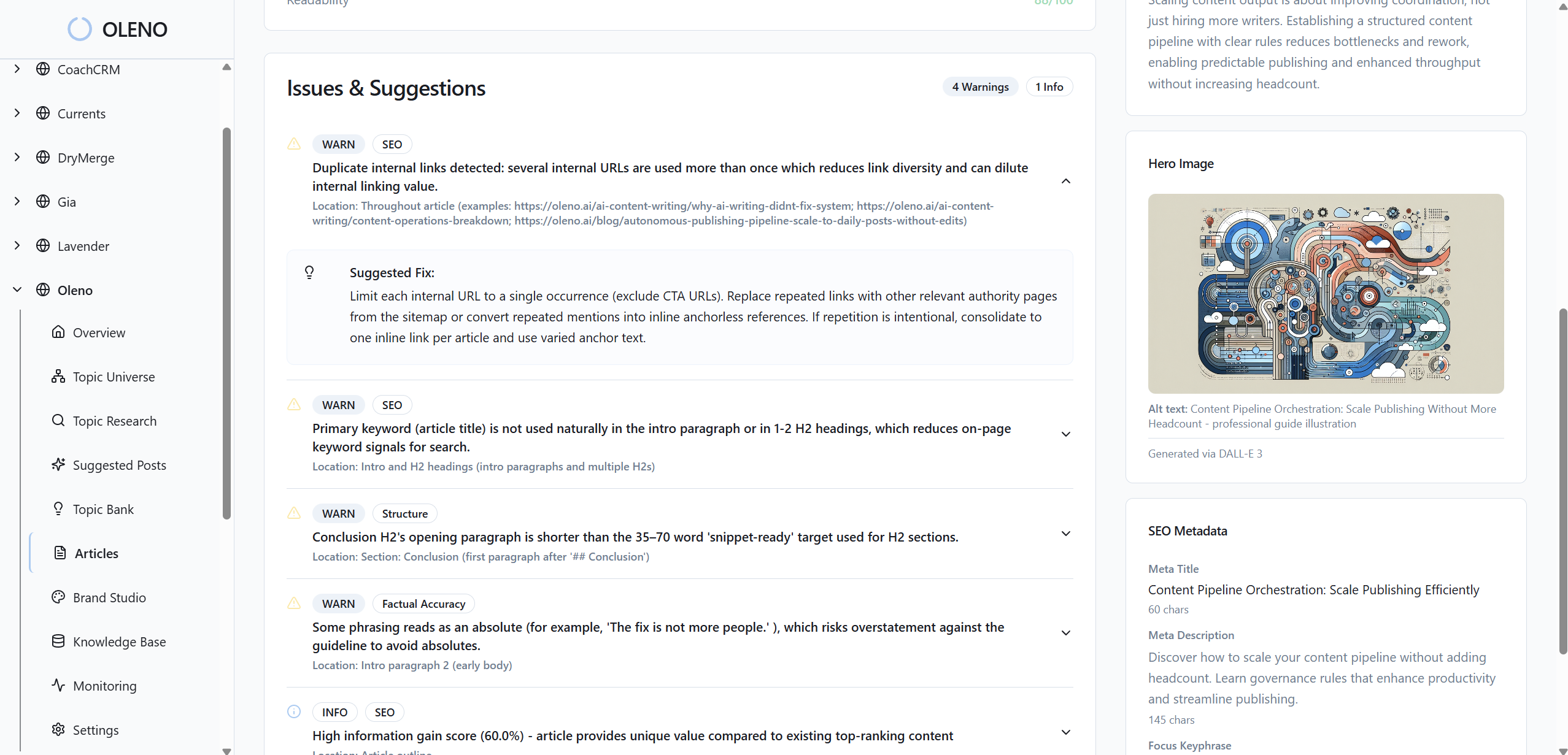
The loop is simple: draft → QA gate → auto-revision → re-test. If it still fails, it stays blocked. You don’t need to police the process. Oleno enforces the gate so your team can focus on rule quality and KB depth, not line edits.
Idempotent CMS publishing and internal logs
Oleno publishes to your CMS in draft or live mode and prevents duplicates through idempotent publishing. Internal logs capture pipeline inputs, outputs, QA events, and version history. When an incident occurs, you can trace, roll back, and remediate by updating a rule—not rewriting a process.
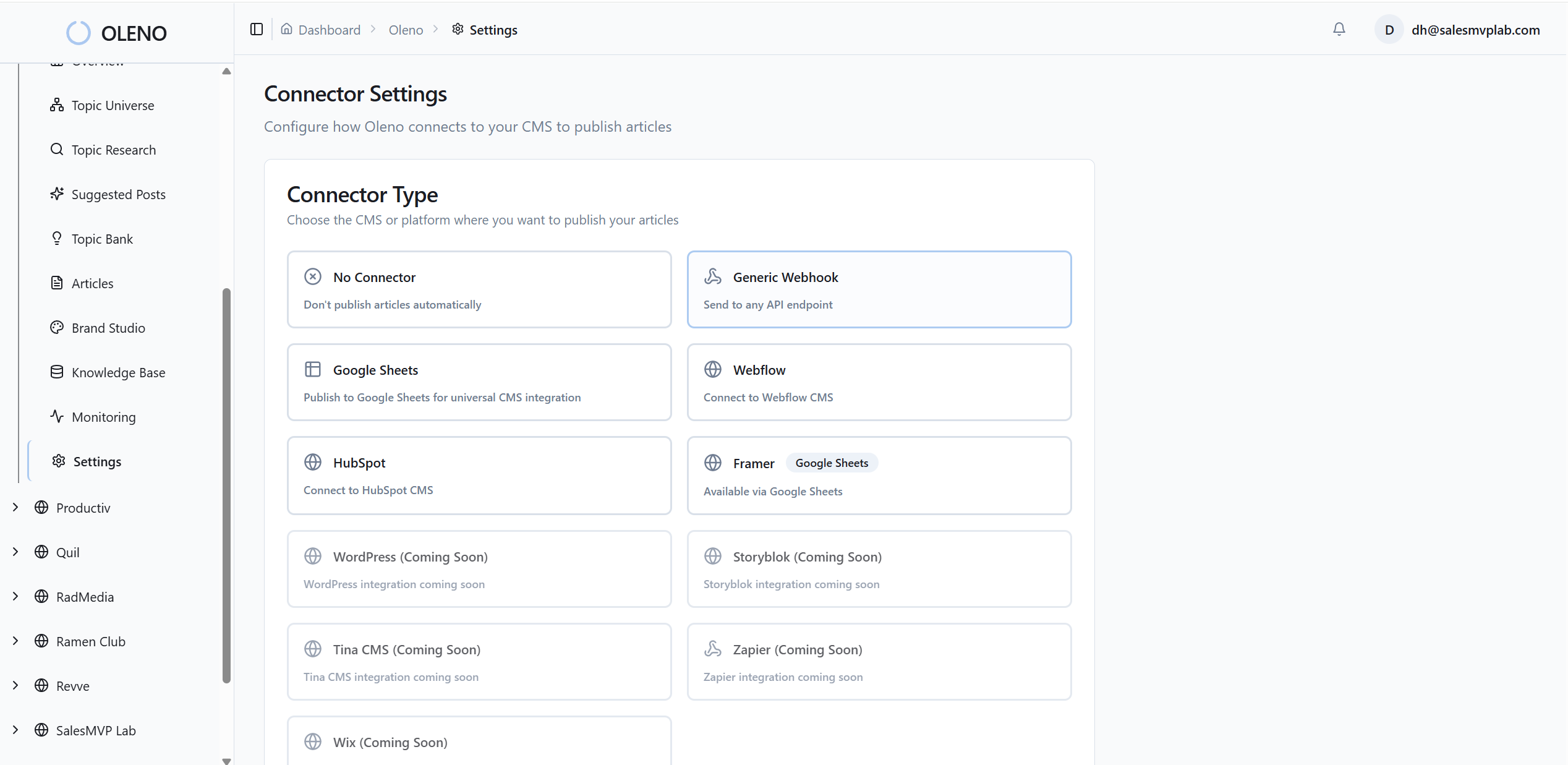
This is why incidents stop snowballing. You have a clear record of what ran and why it passed. If you need to roll back, you can. If you need to improve, you adjust the rule or the source and rerun. That’s controlled, reliable operations.
Want to see the system end to end? Try Oleno For Free.
Conclusion
If you’ve been “adding AI” to your workflow and not getting compounding returns, you’re not alone. Most teams overinvest in drafting speed and underinvest in the system that makes publishing reliable. Flip that. Define gates, encode voice and facts, run a tight pilot, and then scale.
Autonomy isn’t fancy. It’s boring in the best way—predictable, enforceable, repeatable. Set the rules. Let the system run. Spend your human time on story and strategy, not chasing commas or patching incidents. That’s how you migrate in 90 days without trading trust for speed.
About Daniel Hebert
I'm the founder of Oleno, SalesMVP Lab, and yourLumira. Been working in B2B SaaS in both sales and marketing leadership for 13+ years. I specialize in building revenue engines from the ground up. Over the years, I've codified writing frameworks, which are now powering Oleno.
Frequently Asked Questions