A GEO-Ready Outline Template for Feature Pages and Comparisons

A geo-ready outline template is only useful if the system behind it keeps your positioning, product truth, and audience context consistent every single time you publish. Demand-generation execution software is a governed marketing system that turns strategy, product truth, and narrative into consistent, publish-ready demand generation by orchestrating planning, creation, review, and distribution as one coordinated workflow. Unlike a normal content brief, demand-generation execution software keeps the same definitions and point of view intact across every page, so feature pages and comparison pages reinforce one signal instead of drifting apart.
Most teams have a Fragmented Demand Generation problem. They don't call it that, obviously. They call it content ops, page production, PMM workflow, review process, SEO execution. Same mess. Product facts are in one doc. Positioning is in someone's head. SEO notes are in a brief. Drafts live somewhere else. Reviews happen in comments. Then everyone acts surprised when the page sounds fine to a human reader but falls apart when an LLM tries to extract a clean answer from it.
And timing matters here. GEO changed the standard. SEO let people get away with a lot of tactical patchwork for a long time. GEO is less forgiving. LLMs don't just scan for a phrase and bounce. They look for repeated clarity. They look for definitions that don't wobble. They look for language that stays coherent across dozens of pages, not one lucky asset that happened to come out well on a Tuesday.
Key Takeaways:
- A geo-ready outline template is a coordination system, not just a page outline
- Feature pages and comparison pages fail when product truth, narrative, and audience pain live in separate places
- GEO rewards repeated clarity across many pages more than isolated page quality
- The strongest page templates force definition, fit, and proof before persuasion
- Small teams feel the cost of fragmented execution fastest because every reset steals time from strategy
Why A GEO-Ready Outline Template Fails Without A System
A geo-ready outline template only works when the operating model behind it preserves the same narrative, definitions, and buyer context from page to page. If the system still runs on scattered docs, Slack messages, and memory, the template can't save you. It just gives Fragmented Demand Generation a cleaner wrapper.
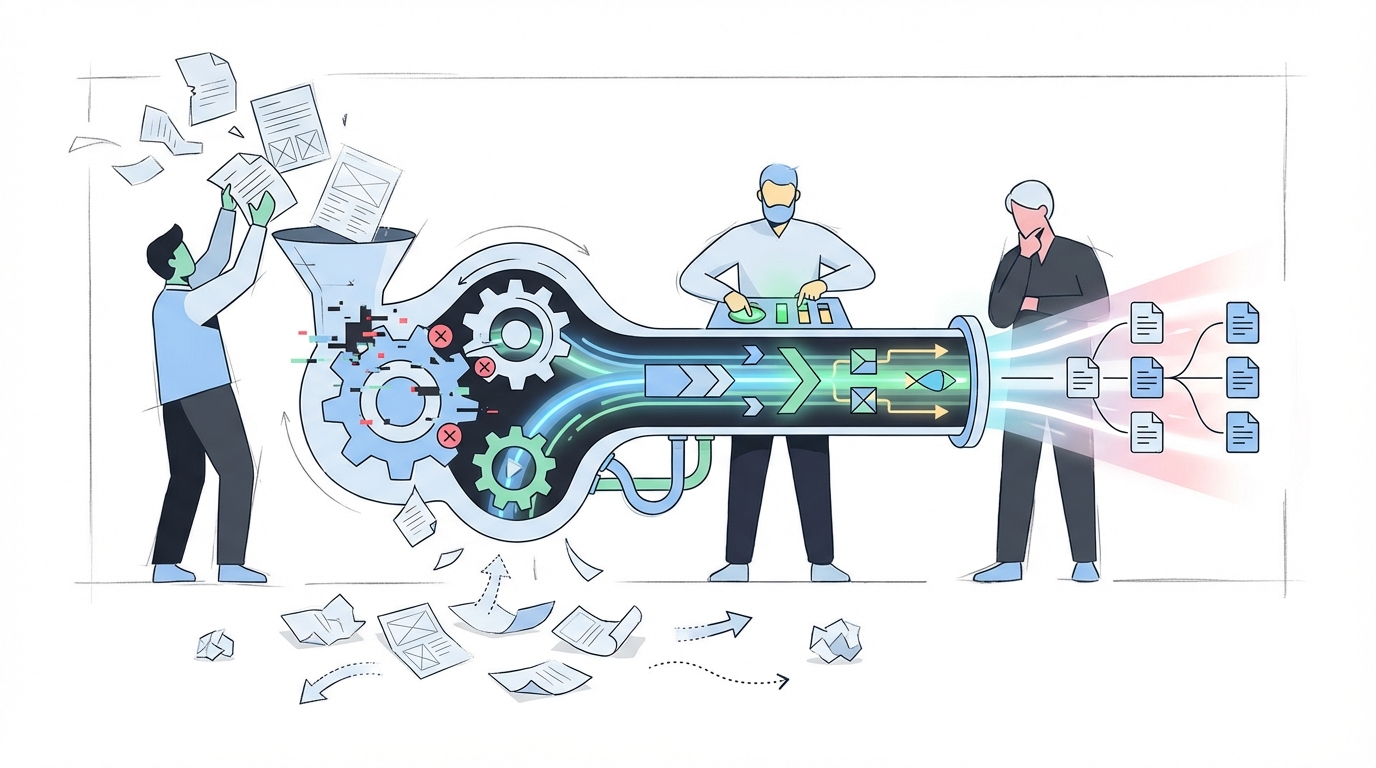
Most Teams Publish Pages, Not A Coherent Market Signal
Most feature pages and comparison pages don't fail because the writer is bad. They fail because the system is broken. Different problem entirely.
You see this constantly on small SaaS teams. A PMM sends product notes. SEO adds a keyword angle. The founder has opinions in Slack. Sales wants objection handling. The writer turns all of it into a page. Then review starts. Then positioning shifts a little. Then someone updates feature language. Then legal or leadership asks for another pass. By the end, sure, you have a page. But you do not have a clean signal.
That's the issue. GEO doesn't reward isolated page assembly nearly as much as people think. It rewards repeated clarity. If one feature page defines the category one way, another comparison page frames the problem differently, and a third page talks to a different buyer with different language, you're teaching the market three different stories. LLMs notice that. Buyers feel it too, even if they can't articulate why the whole thing feels a little off.
I saw a version of this years ago at PostBeyond. I could crank out 3 to 4 good posts a week because I had the context in my head and a structure I trusted. As soon as more people got involved, output didn't get easier. It got slower. Quality got less consistent. Not because people weren't smart. Because context transfer is hard. And when context isn't built into the system, every new asset starts leaking signal.
GEO Punishes Inconsistency More Than It Rewards Volume
A lot of marketers still think GEO is basically SEO plus formatting. Add direct answers. Add FAQs. Clean up headings. Done. Nice little checklist. Ship it.
I don't buy that.
GEO is much more of a fundamentals test. Positioning clarity. Product definitions. Audience specificity. Differentiation. Repeated structure. That's the real work. If those things are loose, the formatting layer won't save you.
Back in 2012 to 2016, I ran a digital marketing site that got up to 120k unique visitors a month. We had 80 regular contributors and 300 plus guest contributors. We saw traffic spikes at 500 pages, 1000, 2500, 5000, then 10000. Most pages got less than 100 views a month. But the catalog worked because there was both breadth and depth. Volume mattered, yes. But volume only paid off because there was enough quality and enough coverage to create compounding search value.
GEO takes that same idea and raises the bar. Raw page count without consistency is a weaker asset now. You can publish 50 pages. If they all frame the problem differently, define your product differently, and speak to different buyers by accident, you may get activity without much market memory. That's expensive. It looks like momentum from the outside. Underneath, it's drift.
A Template Cannot Fix A Broken Execution Model
A geo-ready outline template matters, but it cannot fix Fragmented Demand Generation when execution still depends on scattered prompts, scattered reviews, and scattered truth. Then the template becomes one more layer sitting on top of chaos. Better formatting. Same underlying mess.
Prompting made this more obvious, not less. For a while it felt like progress because drafts got faster. I had that exact experience building a B2C app last summer. I was investing in SEO and GEO, spinning up GPTs, prompting, copy-pasting, pushing things into the CMS manually. It was taking 3 to 4 hours a day. It looked productive. It wasn't. It was repetitive work dressed up as speed.
That's why the bottleneck isn't really content. It isn't prompts either. It's fragmented execution without a system. A page template works when it pulls from fixed definitions, fixed product truth, fixed audience framing, and a repeated narrative spine. Without that, you don't have a template. You have a formatting suggestion.
What A GEO-Ready Outline Template Is Really Supposed To Do
A geo-ready outline template should control meaning before it controls layout. That sounds subtle, but it's the whole game. The page has to preserve category definition, buyer fit, contrast, and proof in a way both humans and LLMs can understand consistently.
The Outline Is A Control Surface For Strategy, Not Just Structure
A geo-ready outline template should control what the page means, not just what sections show up on the page. That's the shift.
Most outlines are thin. Headline. Problem. Features. Benefits. FAQ. CTA. Fine. But that kind of outline doesn't force the hard work. It doesn't force you to define the category clearly. It doesn't force you to state who the page is for. It doesn't force you to explain what the product is not. It doesn't force you to line up pain, proof, and fit in a way that buyers and LLMs can both understand.
So the outline has to do more. It has to coordinate strategy at the page level. It has to make sure the person writing the page can't drift from approved product language, can't accidentally flatten the point of view, and can't talk to the wrong buyer. That's a lot. But that's actually the job.
For a Head of Marketing on a small team, this matters even more. You're not trying to win an academic exercise. You're trying to ship pages that stand up to product review, support search intent, and don't create a headache two weeks later when someone says the messaging feels off.
Feature Pages And Comparisons Need The Same Narrative Spine
Feature pages and comparison pages look different on the surface, but they should run on the same strategic spine underneath. If they don't, the company starts telling different stories in different buying moments. That's how Fragmented Demand Generation shows up in public.
They serve different moments, yes. A feature page explains capability and fit. A comparison page helps evaluation. But both pages need the same underlying spine. Clear definition. Clear problem. Clear contrast. Clear proof. Clear fit.
When that's missing, weird things happen. The feature page sounds broad and abstract. The comparison page sounds defensive. The use case page sounds like it was written by a different company. You end up with page-level quality and market-level confusion.
This is where a lot of content programs quietly lose. At LevelJump, we were recording videos with the CEO and turning those into content because it was faster. The ideas were good. The thinking was solid. But the structure needed for SEO wasn't there, and topic discovery was loose. So we were publishing useful stuff without enough search alignment. Good effort. Weak compounding effect.
Feature pages and comparisons have the same problem when the structure isn't shared. They might each be decent on their own. But together, they don't reinforce one market story.
GEO-Ready Pages Are Designed For Extraction, Not Just Browsing
GEO-ready pages have to do two jobs at once. They need to persuade a human who is browsing and also provide clean chunks an LLM can extract, summarize, and cite. If the outline only supports one of those jobs, the page underperforms.
Humans browse. LLMs extract. You need both.
That means your page outline has to create clean answer blocks. A direct category or feature definition early. A simple clarification sentence that separates you from the nearest confusing alternative. A factual comparison structure. A fit section that says who should care and why. FAQs that answer real buying questions in plain English.
That's why a geo-ready outline template is not an SEO checklist, and it's not a prompt wrapper either. It's a page design for understanding. Browsing still matters. Design still matters. Persuasion still matters. But if the page can't be cleanly understood and lifted into an AI-generated answer, the page is leaving value on the table.
Where The Cost Shows Up On Feature Pages And Comparison Pages
The cost of Fragmented Demand Generation doesn't usually show up as one dramatic failure. It shows up as accumulated friction. Extra review cycles. Repeated re-briefing. Lower confidence in what goes live. And weaker odds that your pages create one coherent signal the market remembers.
Resets And Reviews Become A Tax On Every New Page
Fragmented Demand Generation gets expensive in boring ways first. That's why people miss it.
Let's pretend you're a solo marketer or a Head of Marketing with one PMM and a freelance writer. You need to launch 4 feature pages, 3 comparison pages, and 2 use case pages this quarter. If every page starts from a blank doc, every page needs product context re-explained, every page triggers a fresh positioning debate, and every page goes through two or three rounds of preventable review, you don't just lose time. You create a tax on output.
A rough math example makes it obvious. Say each page needs 2 hours of briefing, 3 hours of drafting, 2 hours of review coordination, and 1 hour of revisions caused by missing context. That's 8 hours a page. Across 9 pages, that's 72 hours. Almost two work weeks. And that's before distribution, refreshes, or CMS cleanup.
Most of that work isn't content creation. It's re-creation. That's the part people rarely budget for.
Inconsistent Positioning Lowers Your Odds Of Being Surfaced
When positioning shifts from page to page, GEO performance weakens because LLMs have less confidence in what you actually are, who you're for, and how you're different. Consistency is not a nice-to-have here. It's part of extractability.
LLM visibility is partly an authority problem, but it's also a consistency problem. If your feature pages define the problem one way and your comparison pages define it another way, the market signal gets diluted.
This came up in a different form at Proposify. The team ranked really well for a lot of topics. Great writers. Strong design. A lot worked. But much of the content was too detached from the product and demand-gen narrative. So ranking happened without enough path back to the solution. Traffic was there. Pipeline impact was weaker than it should've been, especially when evaluating a geo-ready outline template.
That's the hidden cost. You can look successful on paper while still missing the business outcome. Comparison pages are especially sensitive to this because buyers are looking for sharp framing. They want a frame of reference. They want to know what category they're really evaluating. They want to understand why the difference matters. If your page hedges, wanders, or sounds generic, you're less likely to be the brand that gets cited.
More Contributors Usually Means More Drift
More contributors can absolutely increase output. But on small teams, they often increase variance first. If the system doesn't hold the context, every new contributor becomes another place where the story can bend.
I learned this the hard way scaling content in different environments. On the big publisher side, lots of contributors worked because there was enough volume, enough topic coverage, and enough editorial shape for the whole system to compound. On the smaller SaaS side, adding people often created gaps. The writer didn't have the PMM context. The marketer didn't have time to brief deeply. The founder's point of view showed up inconsistently. Reviews got heavier because trust was lower.
So what happens? Coordination cost climbs faster than output.
That's especially brutal for feature pages and comparisons. These aren't generic blog posts. They're high-precision assets. They need product truth. They need positioning discipline. They need buyer context. If those inputs are scattered across different people and tools, every added contributor can increase drift instead of reducing it.
| Dimension | Old Way | Category Way |
|---|---|---|
| Source Of Truth | Product facts, SEO notes, and messaging live in separate docs | Narrative, product truth, and audience context are defined together |
| Page Creation | Each page is rebuilt from prompts and manual coordination | Each page follows a repeatable outline with fixed inputs |
| Consistency At Scale | Voice and positioning drift across contributors and page types | Repeated structure reinforces one market signal |
| Review Process | Reviews catch preventable errors late and repeatedly | Core definitions reduce preventable mistakes before drafting |
| GEO Visibility | Scattered language makes extraction and citation less likely | Clear repeated framing improves extractability |
| Coordination Cost | More output creates more meetings, handoffs, and resets | More output compounds through a system |
When You’re Living It, It Just Feels Like Busy Work
When you're inside Fragmented Demand Generation, it rarely feels like some big strategic failure. It feels like annoying work. Small resets. Little delays. Context hunting. Extra comments. Another rewrite. Another pass. That's exactly why it sticks around so long.
Every Page Starts Over When The System Holds No Memory
If you've ever had to rebuild a feature page from scratch because nobody can find the latest product language, you know the feeling. You open a blank doc. You pull notes from Slack. You skim old pages. You check the website to see what you said last time. You ask product for validation. You try to remember how sales framed the objection. Then you start writing.
And the whole thing feels productive right up until you realize you've spent half the day just reconstructing context.
I had that exact headache when I was manually prompting, copy-pasting, and loading content into a CMS for a side project. It was 3 to 4 hours a day of repetitive work. The work wasn't intellectually hard. That almost made it worse. It was just waste. Small teams feel this more than anyone because nobody has slack in the system. If you're the one carrying strategy and execution, every reset steals time from something important.
The GEO-Ready Outline Template That Makes Pages Compound for A geo-ready outline template
A geo-ready outline template starts paying off when it forces consistency before copywriting. That's what makes pages compound. Not prettier formatting. Not longer prompts. A governed structure that keeps definition, contrast, proof, and fit aligned every time.
The Best Outline Templates Force Definition Before Persuasion
The strongest page templates start with meaning. Not copy tricks. Not feature hype. Meaning first.
Governed Definitions Reusable Narrative Spine Systematic Execution
If you want a geo-ready outline template for feature pages and comparisons, start with three rules:
- Governed Definitions: Every page starts from approved category, product, and audience definitions so LLM-visible content stays consistent and factual.
- Reusable Narrative Spine: Feature pages and comparisons should share a common structure that repeats positioning, differentiation, and fit criteria without drift.
- Systematic Execution: Pages compound when planning, drafting, review, and publishing happen inside one repeatable system instead of across disconnected tools and people.
That list matters because most teams skip straight to persuasion. They want to write the compelling stuff first. I get it. But if the definition layer is weak, the rest of the page gets shaky fast.
So the actual template should look something like this in practice. Start with a direct definition sentence in the first section. Then clarify what the thing is not, so the reader has a frame of reference. Then anchor the page to a specific buyer and problem. Then move into proof, contrast, and fit. Then answer likely questions cleanly.
That's the pattern.
If you want to see how a system handles this across multiple page types, see how Oleno works.
Every Comparison Page Should Answer The Same Strategic Questions
A comparison page should make evaluation easier, not noisier. The best ones don't just show rows and columns. They establish the category, define the decision, and explain the tradeoff the buyer is actually making.
Comparison pages go wrong when they become opinion dumps or feature grids with no narrative. Buyers don't just need a table. They need a way to evaluate.
So every comparison page should answer the same set of strategic questions.
What category is this buyer actually choosing within? What problem are they trying to solve? What makes the alternatives different in approach, not just feature count? Who is each option a fit for? What tradeoff is the buyer really making?
A strong comparison outline usually includes these blocks:
- Direct definition of the category or problem space
- Clear "unlike X" clarification to prevent confusion
- Buyer context and trigger event
- Criteria table for evaluation
- Side-by-side approach differences
- Fit guidance by team size, workflow, or use case
- FAQ section with direct answers
- CTA tied to the buyer's current evaluation stage
One sentence matters a lot here. Force the page to say what each option is really for. Without that, comparisons become mushy. And mushy pages rarely get cited.
Consistency Across Dozens Of Pages Turns Into Visibility
One good page helps. A library built from the same spine is what actually compounds. That's when repeated clarity turns into market memory, easier extraction, and better odds of being surfaced in category conversations.
The value of a geo-ready outline template is not just that one page gets better. It's that page number 12 is built from the same spine as page number 3. And page number 30 still sounds like the same company.
That's what creates compounding signal.
The brands that tend to get surfaced more often are usually not just publishing more. They're repeating core truths with discipline. Same category definition. Same problem framing. Same audience precision. Same product boundaries. Not word-for-word. But close enough that the market starts to understand what they stand for, especially when evaluating a geo-ready outline template.
And yes, not everyone agrees with how strict this should be. Some teams prefer looser creative freedom, and that's valid for some editorial programs. But for feature pages, comparison pages, and product-led assets, I think loose is expensive. These pages need consistency more than they need novelty.
What A Geo-Ready Outline Template Looks Like In Practice
A geo-ready outline template should make page creation simpler by fixing the blocks that matter most. Not everything has to be rigid. But the meaning layer does. Definition, contrast, fit, proof, and FAQs should show up with discipline every time.
A Feature Page Outline Needs Fixed Blocks
A feature page should be built on the same core blocks every time, even if the examples and proof change.
Start with a direct answer. What is the feature, in plain English, and who is it for. Then explain the problem it solves. Then clarify what it is not, because buyers often misclassify products. Then bring in proof or concrete implications. Then show fit. Then handle objections or FAQs.
A clean version looks like this:
- Definition: what the feature is
- Buyer problem: what breaks without it
- Clarifier: unlike adjacent tools or methods, what makes this different
- How it works at a high level
- Why it matters for a specific team or use case
- Proof, examples, or grounded outcomes
- FAQ and next-step CTA
Short version. Don't bury the meaning.
A Comparison Page Needs Evaluation Logic, Not Just Columns
A comparison page needs narrative before matrix. If you drop the reader straight into a table, you force them to invent the evaluation lens on their own. That's risky for buyers and pretty useless for extraction.
A comparison page should not start with a giant table and hope for the best. That's where a lot of pages go wrong.
You need context first. A buyer needs to understand what they are evaluating before they compare rows and columns. That means the opening should define the category, explain the job to be done, and state the lens for the comparison. Then the table becomes useful.
I prefer a simple structure. Open with the category definition. Add the "not X but Y" clarification. Explain who should care. Then present the evaluation table. Then add interpretation after the table, because raw data without narrative creates more questions than answers.
That post-table interpretation matters a lot. Few teams do it well.
FAQs Should Be Written For Extraction
FAQ sections on feature pages and comparison pages should work as standalone answer blocks. That means direct questions, direct first-sentence answers, and just enough supporting context to remove ambiguity without turning the section into fluff.
FAQs on these pages shouldn't be filler. They should be clean answer blocks.
Use direct questions buyers actually ask. Keep the first sentence answerable on its own. Then add one or two short supporting sentences. No rambling. No throat clearing. No trying to sound clever.
If the page is about a feature, answer implementation, fit, pricing sensitivity if relevant, alternatives, and edge cases. If the page is a comparison, answer migration concerns, use case fit, scale questions, and buying criteria.
Before you write a single FAQ, stop and ask one thing. Could this answer stand alone if an LLM pulled only that chunk? If not, tighten it.
Want to turn this into a repeatable page system instead of doing it manually every time? request a demo.
What This Looks Like When Oleno Runs The System
This is the point where the template turns into an operating model. The outline still matters, but now it is connected to governed inputs, review logic, and publishing flow. That's how you stop rebuilding the same thinking over and over.
Oleno Turns Page Templates Into Governed Execution
Oleno takes the template logic above and turns it into a repeatable operating model. That's the useful part.
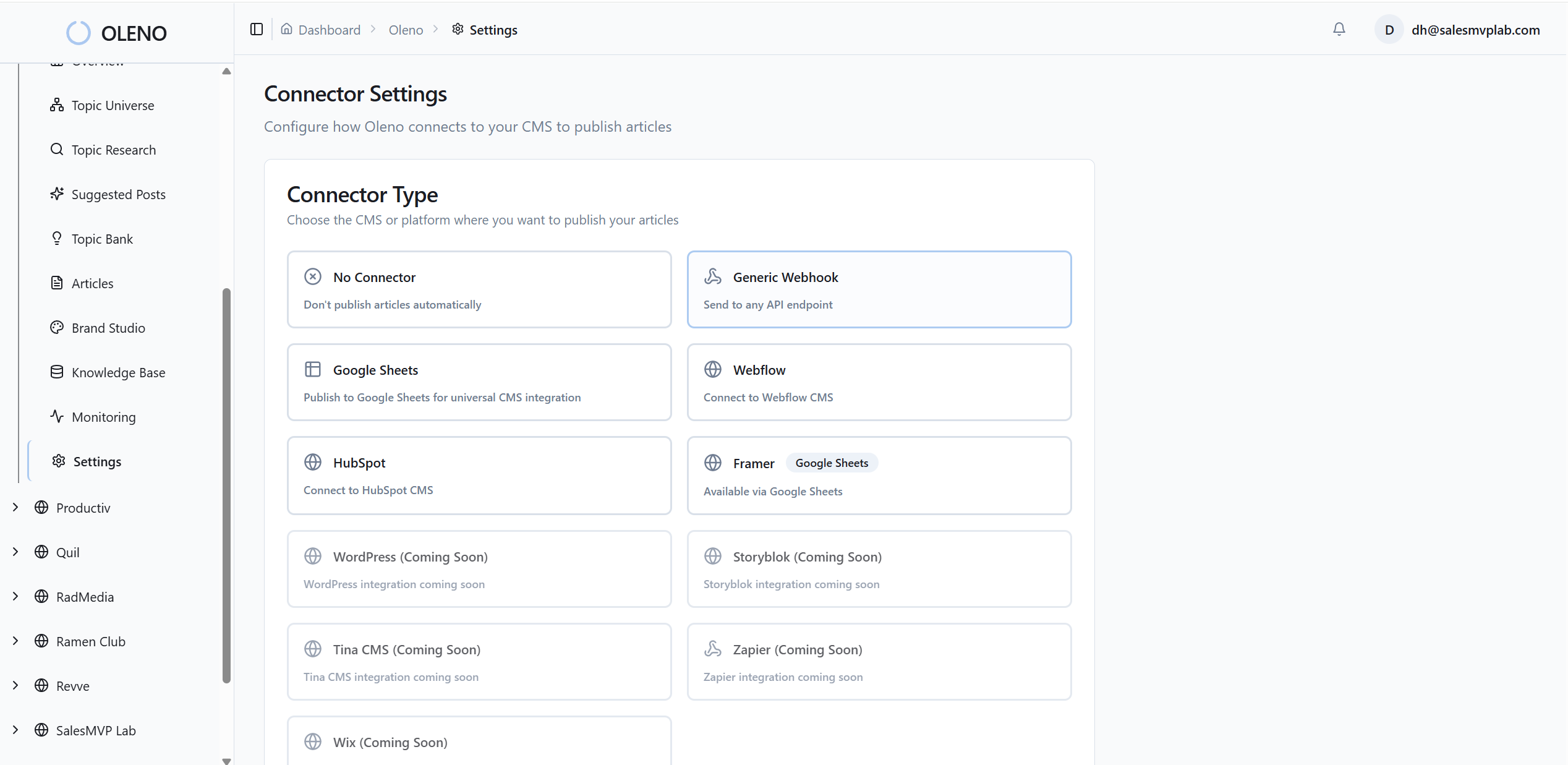
Instead of rebuilding feature pages and comparisons from scattered notes every time, Oleno keeps the important inputs in one system. marketing studio holds the market framing and point of view. product studio keeps approved product descriptions, boundaries, pricing context, and supporting truth. audience & persona targeting keeps the buyer context straight, so the same topic can be framed differently for the right reader without changing the core story.
That means the outline is no longer just a doc. It's attached to fixed inputs. So the page doesn't drift every time a different contributor touches it.
Product Truth And Buyer Context Stay Lined Up
This is where the day-to-day benefit really shows up. Teams can usually draft fast enough. What they struggle with is drafting accurately, reviewing quickly, and keeping product truth tied to buyer context without reopening the same debates on every page.
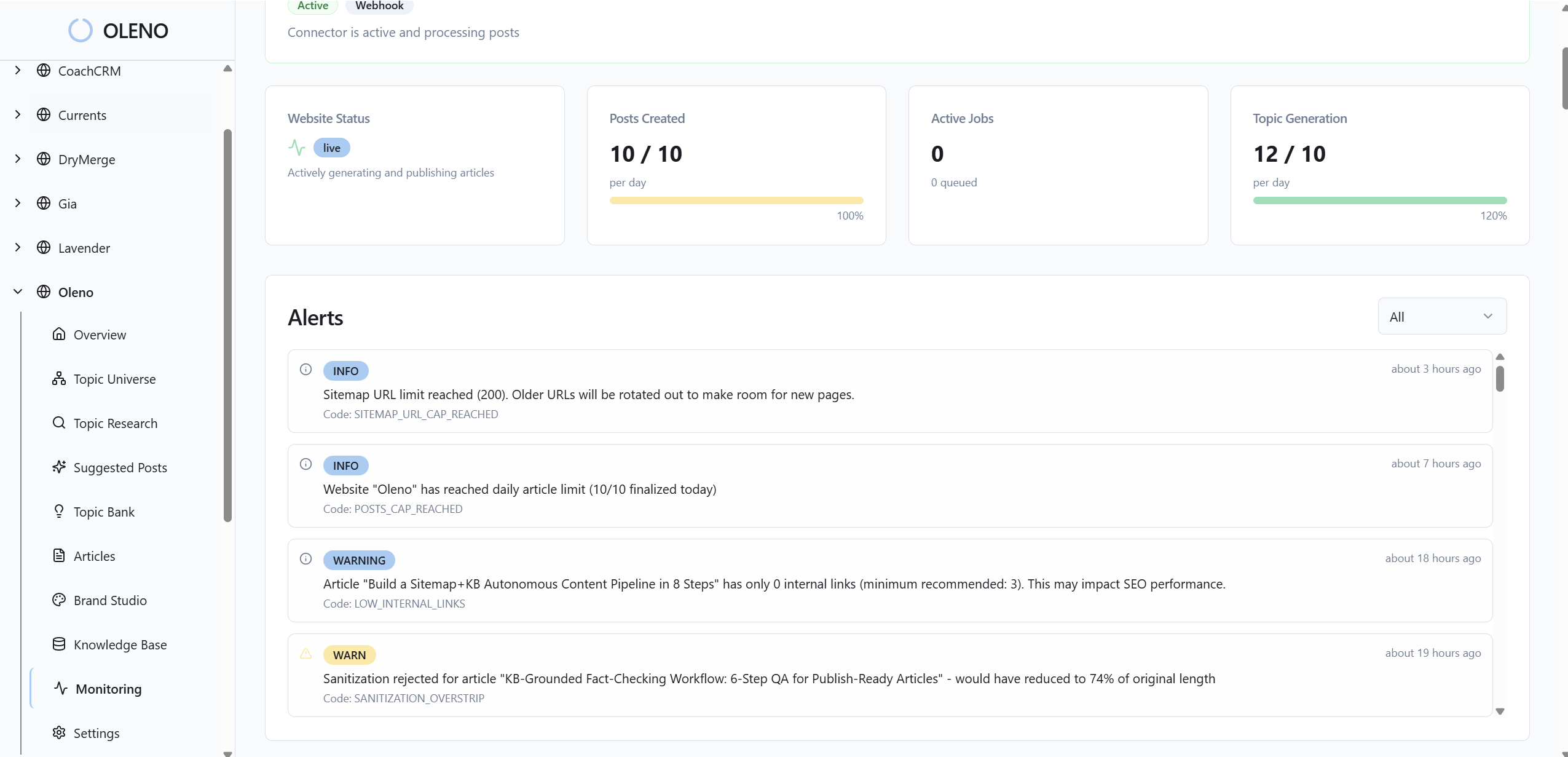
Oleno uses product marketing studio for product-led pages and competitive studio for evaluation content, so feature deep dives and comparisons follow defined arcs instead of random page structures. quality gate checks whether the output stays within the rules you've already set. cms publishing pushes approved content directly to your CMS, which cuts out a bunch of annoying handoff work.
And if you're trying to scale thought leadership or founder-led perspective alongside these pages, stories studio can feed real anecdotes and company context into the content mix. That's useful because the page stays grounded instead of turning into generic copy.
Start building governed feature pages and comparison pages with request a demo.
The Real Win Is Repeatable Page Creation
The big upside is not just speed. It's reliability. Once the system holds the context, the team stops asking how to reconstruct the page and starts deciding which page should exist next. That's a much higher leverage conversation.
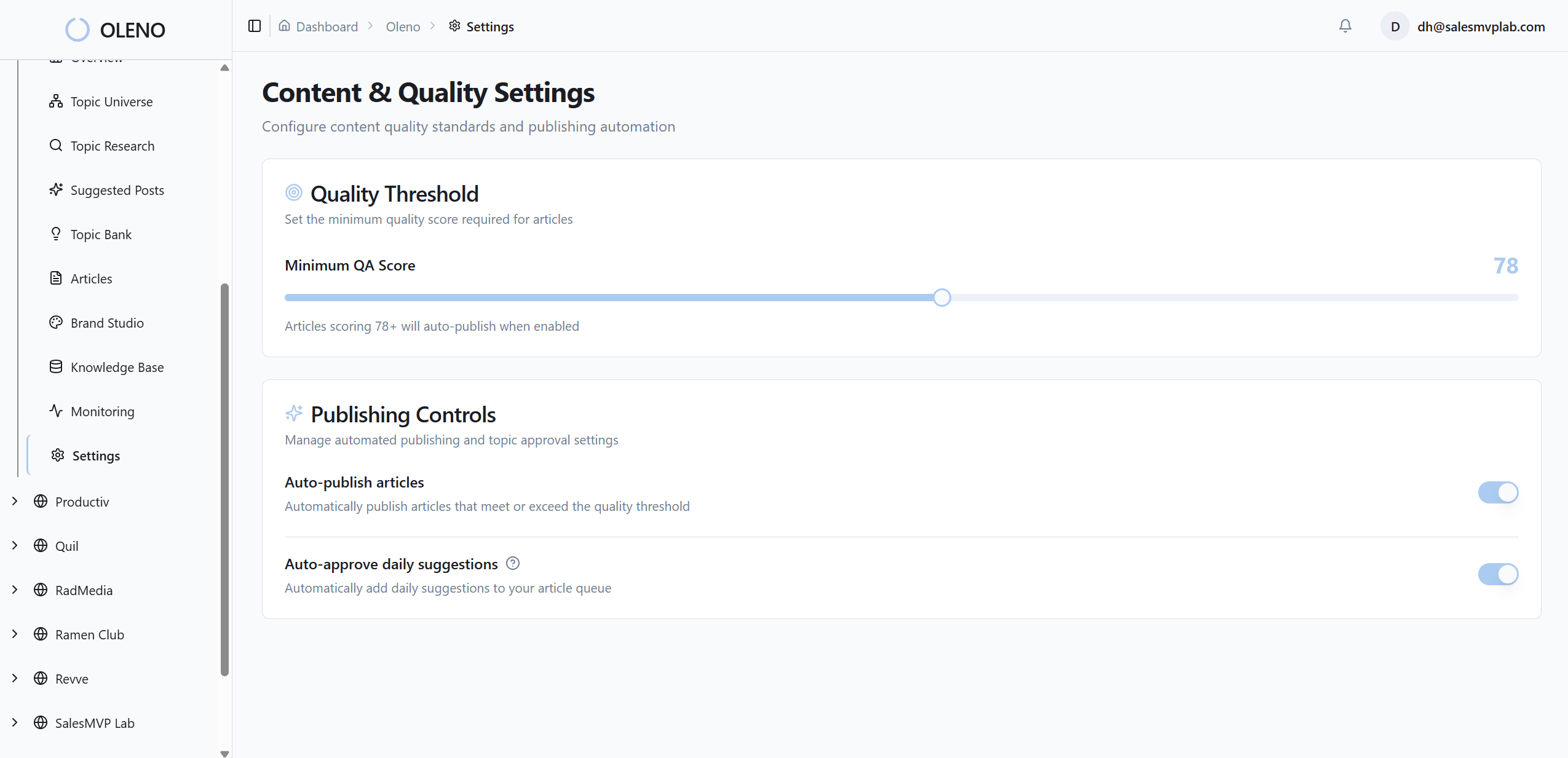
The real leverage isn't that drafting gets faster, though that matters. It's that the whole page creation cycle becomes more repeatable.
programmatic seo studio can support acquisition content. competitive studio handles bottom-of-funnel evaluation content. product marketing studio covers feature launches, workflow guides, and use case pages. orchestrator runs approved topics through the pipeline and respects your cadence settings. So instead of asking, "How do we build this page again?" your team is asking, "Which page should exist next?"
That's a much better question.
And for a Head of Marketing on a small team, that's usually the shift that matters most. Less resetting. Less rebriefing. Less worried back-and-forth about whether the page is still accurate. More time on strategy, positioning, and choosing what to publish next.
If you're ready to stop rebuilding every page from scratch, book a demo.
Why This Template Matters More As Your Page Library Grows
A geo-ready outline template matters more as your page count grows because page libraries teach the market cumulatively. Every feature page, comparison page, and use case page either reinforces the same story or introduces more noise. Over time, that difference compounds.
A geo-ready outline template matters because pages don't live alone. They teach the market together.
If your feature pages, comparisons, use case pages, and product-led articles all tell roughly the same truth in slightly different contexts, you build something valuable over time. Buyers understand you faster. Reviews get easier. New contributors ramp faster. LLMs have a clearer signal to work with. Not every team will feel the pain at the same speed. But most growth-stage SaaS teams run into it sooner than they expect.
That's why I wouldn't treat this as a writing problem. I'd treat it as an execution problem. The template matters. The system matters more.
About Daniel Hebert
I'm the founder of Oleno, SalesMVP Lab, and yourLumira. Been working in B2B SaaS in both sales and marketing leadership for 13+ years. I specialize in building revenue engines from the ground up. Over the years, I've codified writing frameworks, which are now powering Oleno.
Frequently Asked Questions