Accurate, product-grounded marketing content at 5-10x manual speed with zero fabrication risk
Most teams don’t fail at content because they lack ideas. They fail because execution is scattered, slow, and hard to trust. Your mandate is clear: produce accurate, product‑grounded marketing content at 5–10x manual speed with zero fabrication risk. Not more drafts. Not more review cycles. A system that ships the right work, at the right quality, on a steady cadence.
I learned this the hard way. I’ve run founder‑led programs. I’ve been the solo marketer cranking 3–4 strong posts a week. Then quality dipped the second more people got involved. Context got lost. Reviews piled up. Everyone looked busy, but the stuff that actually moved pipeline? Rare. In the GEO era, consistency at scale wins. Random acts of content lose.
Key Takeaways:
- Consistency across scale beats blind volume; GEO rewards clear positioning and product truth repeated reliably
- The bottleneck isn’t ideas or writers, it’s fragmented execution and weak governance
- Quantify the waste: review debt, context gaps, rewrite loops, and missed GEO signals add up fast
- Teach a new way: start with governance, then run job‑based pipelines that enforce voice, claims, and structure
- Product accuracy isn’t optional; “zero fabrication risk” demands a single source of product truth
- Orchestrate end to end so cadence holds, quality holds, and teams stop guessing
Why Prompting Breaks Product-Grounded Marketing Content
Prompting is fast, but it doesn’t run content as a system. You still carry the judgment, the governance, and the publishing work, so drift and rework creep in as volume rises. GEO punishes that drift because LLMs cite brands with consistent, product‑grounded signals across hundreds of pieces.
I get the speed chase. Instant drafts feel great for a week. Then reviews double. Voice wanders. Product claims get “polished” by five people. The original POV disappears. You’re left with copy that reads safe and says nothing. Not leverage. Just noise.
Actionable guardrails when you do use prompts:
- Lock product definitions and voice rules first; pull them into every brief
- Write to a job type (goal + structure), not a generic “blog post”
- Add a GEO checklist: claim-first sections, snippet‑ready intros, extractable definitions
Prompting Produces Outputs, Not Systems
Prompts don’t decide what should exist next or enforce your POV. They don’t lock product definitions or map content to funnel jobs. Without those guardrails, every piece starts from scratch and the system depends on whoever’s at the keyboard that day. That’s brittle.
So teams compensate with more meetings and more reviews. Each pass tries to drag the draft back to center. Writers lose confidence. PMMs add caveats. Leaders add “just one tweak.” You can feel the life leaving the content. The cost isn’t just time. It’s missed momentum.
Why GEO Punishes Inconsistency
GEO engines synthesize, then cite. They look for repeated, reliable patterns of positioning, product truth, and audience specificity. Sporadic quality, shifting definitions, or conflicting claims signal risk. Risk gets ignored.
You can optimize keywords all day and still get sidelined if your fundamentals aren’t consistent. The guidance is public too. Google’s own Search Central structured data docs push clarity, structure, and extractable patterns: https://developers.google.com/search/docs/appearance/structured-data/intro-structured-data. GEO behaves similarly. Reliable signal wins.
Volume Without Governance Creates Drift
Pushing more content without rules invites mistakes. Voice changes by writer. Product screenshots are old. Feature boundaries shift mid‑paragraph. The rewrite tax grows. You don’t notice right away because the machine is moving. Quietly, quality debt compounds.
It shows up in longer review cycles and lower confidence in publishing. It shows up when sales says “we can’t share that article.” It shows up when a founder pings at 10 pm asking why a claim is off. None of that is free. It drains momentum.
The Real Bottleneck: Fragmented Execution, Not Ideas
Most orgs have plenty of ideas. The breakdown (https://oleno.ai/ai-content-writing/content-operations-breakdown/?utm_source=oleno&utm_medium=internal-link&utm_campaign=achieving-produce-accurate-product-grounded-marketing-content-at-5-10x) happens between idea and publish. Handoffs multiply. Context gets lost. Accountability blurs. You get a pile of nearly‑done work that doesn’t ship, or ships watered down.
If you’ve watched a simple post turn into a four‑week project, you’ve seen it. Add more people and it gets worse, not better. Execution needs a spine.
Symptoms Teams Blame vs. The Root Cause
People blame writer quality, slow reviewers, or “we need better prompts.” The real cause is missing governance and no defined system that runs end to end. Without shared rules, every task becomes a fresh debate.
Once a system exists, those debates fade. Writers know the voice. PMMs know the claims. Leaders know what “good” looks like. Same people. Faster outcomes. Because structure supports them.
Where Context Falls Apart Inside Teams
Context lives in heads, Slack threads, and random docs. Writers don’t have the product nuance PMMs have. PMMs don’t always have the market language the field hears daily. That gap shows up in your first draft every time.
Bridging it after the fact is expensive. You either rewrite the whole thing or layer in caveats that dilute the point. Neither wins. A single source of truth up front saves the downstream fights.
Practical move:
- Centralize approved product truth (features, limits, use cases, pricing)
- Add claim templates and banned phrases
- Link that truth into briefs so drafts inherit accuracy
Why Review Cycles Get Longer Over Time
Reviews don’t just “get slow.” They get slow for reasons: a claim is off, a section misses voice, the angle fights positioning. Each fix invites two more. Approvals start to feel like a gauntlet.
Frameworks and pipelines shrink that cycle. When voice, claims, and structure are locked on the way in, reviewers focus on substance. That’s where they add real value.
The Hidden Cost of Inconsistent Content Quality and Review Debt
Content debt is measurable. You lose hours to rework, slip weeks on launches, and watch search pages stall because pieces aren’t citable. Multiply it across a quarter and it’s not a rounding error. It’s a headcount.
Leaders feel this even if they haven’t quantified it. The Stanford AI Index shows AI‑driven productivity gains are real and uneven. Teams without systems rarely capture them. The gap grows over time. See the AI Index 2024 report for context: https://aiindex.stanford.edu/report/
Time And Money You Lose Each Quarter
Start with rework hours. Add the meeting time. Add delay cost when a piece misses a campaign window. Then add the limp performance of a watered‑down article that never ranks or gets cited.
Most CMOs can find 10–20% of team time evaporating here. That’s one to two people, full‑time, lost to coordination and fix‑ups. You don’t need more tools. You need fewer handoffs and firm rules.
Quick audit to run this week:
- List in‑flight pieces; tag how many reviews each has
- Count rewrites per piece; note reasons (voice, claims, angle, facts)
- Tally meetings tied to content; convert to hours
- Estimate delay cost per missed launch window
SEO And GEO Losses You Do Not See
Thin or inconsistent articles don’t get featured snippets. They don’t get cited by AI engines. They don’t earn trust from evaluators. You feel the miss as slower pipeline, not a single glaring metric.
HubSpot’s State of Marketing echoes the same theme: strategic alignment and quality beat blind volume. GEO doubles down on that. If your brand narrative isn’t clear and repeated, visibility slips: https://www.hubspot.com/state-of-marketing
Quality Debt Compounds Like Interest
Debt pushes teams into “just ship it” mode. That shortcut triggers the next round of problems. The more you borrow, the more interest you pay later, last‑minute rewrites, emergency approvals, post‑publish edits.
Breaking the cycle requires upfront constraints. Not more post‑facto feedback. Constraints that make “the right way” the easy way, every time.
- Bold constraints that matter:
- Voice rules, so tone doesn’t drift
- Product truth, so claims don’t wobble
- GEO structure, so sections are extractable
- Job types, so content maps to the funnel
What It Feels Like When Content Ops Are Broken
You know the feeling. A clean draft turns into a thread with twelve opinions. Legal wants a change. Sales wants a different angle. The CTO hates a line about architecture. You start over. Again.
It wears people down. Creative energy gets replaced by process anxiety. The team gets quieter because every idea means another maze to run.
The 11 PM Rewrite You Keep Doing
Late edits are the tax on missing rules. When definitions change midstream, leaders feel obligated to fix it themselves. You can do it once or twice. Dozens of times a quarter? Morale tanks.
Confidence returns when people trust what’s entering the pipeline. Confidence compounds when what exits consistently meets the bar, without heroics.
Too Many Cooks, No Single Playbook
Most cooks are smart and helpful. They just use different recipes. Without a single playbook, you’ll keep debating style, claims, and structure in every thread. That’s a governance problem, not a people problem.
Once the playbook exists, cooks add seasoning, not new ingredients. The dish tastes the same every time, with room for flair where it matters.
The Confidence Hit On Your Team
People join to create, not to defend drafts from a gauntlet of opinions. When the system protects the essentials, they focus on story and proof. Pride returns. Throughput follows.
Leaders feel it too. Instead of micromanaging content, you scan a dashboard, spot trends, and intervene where it counts.
The New Way To Produce Accurate, Product-Grounded Marketing Content
The fix is counterintuitive. Don’t chase more prompts. Encode your fundamentals, then run the work through job‑based pipelines that enforce them. Strategy stays human. Execution becomes a system.
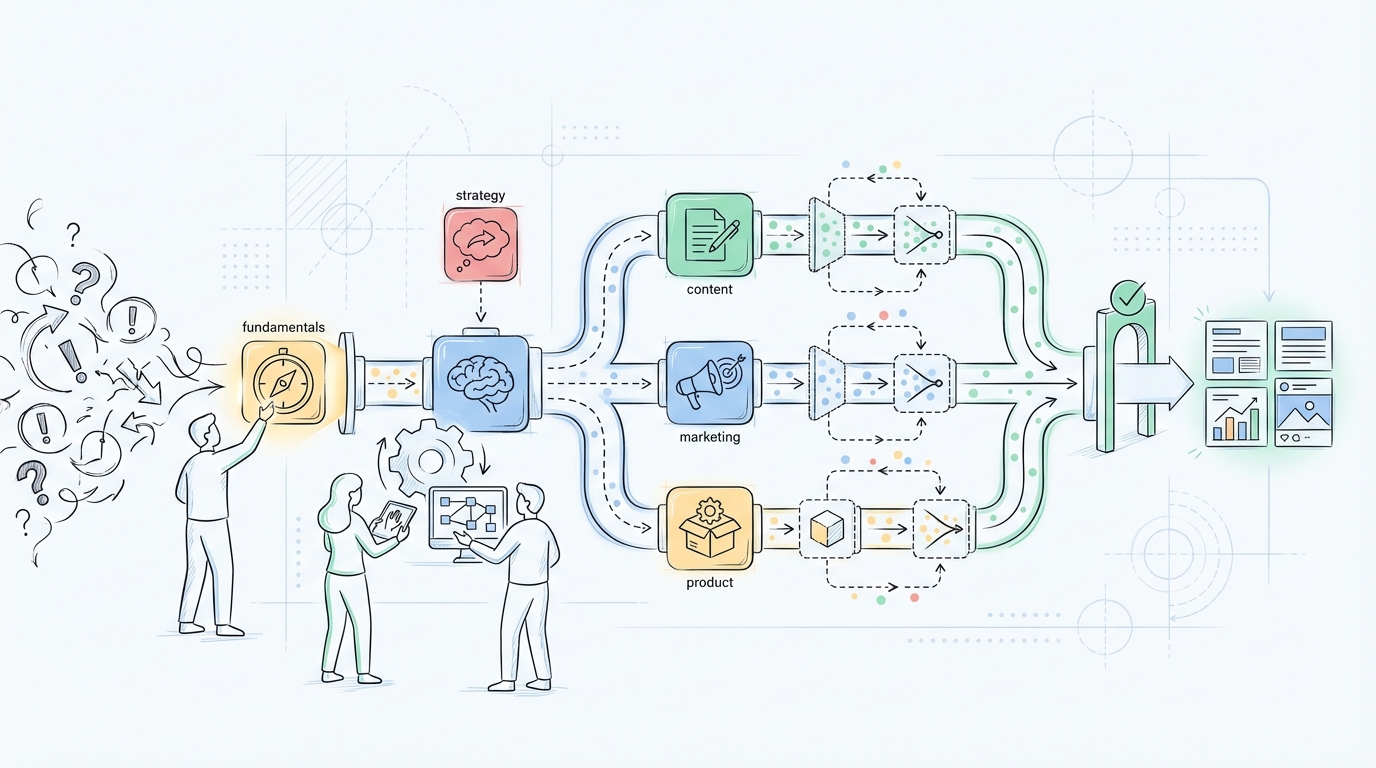
A good system looks boring from the outside. That’s the point. No drama. No last‑minute scrambles. No debate over voice or claims. Just steady, high‑trust output.
Start With Governance, Then Execution
Lock the essentials first: voice rules, key messages, category framing, product definitions, feature boundaries, audiences, personas, and use cases. Put them in one governed place where everything pulls from the same truth.
When a draft starts with the right constraints, reviews stop arguing about style or claims. They focus on clarity, examples, and proof.
Starter checklist:
- Write your banned/allowed claims list
- Document supported/unsupported use cases
- Capture tone, vocabulary, and “sounds like us/doesn’t sound like us” examples
- Store it all in a single source every brief references
Job-Based Pipelines, Not Ad Hoc Tasks
Define jobs by goal and structure, not by “write an article.” Programmatic SEO, competitive pages, product marketing deep dives, buyer enablement posts. Each job comes with a blueprint that matches funnel stage and structure.
Execution becomes predictable. Briefs show up aligned. Drafts map to the blueprint. QA checks for voice, grounding, and GEO‑readiness before anything hits review. That cadence drives scale.
GEO-Ready Structures Baked In
GEO wants claim‑first sections, snippet‑ready openings, and extractable definitions. Bake that in. The first sentence answers the section. Lists summarize key points. Comparisons are structured.
Google’s guidance on structured, scannable content isn’t a secret. It’s just rarely enforced at scale. Enforce it once, at the system layer, and you stop relying on individuals to remember every rule.
Ready to publish accurate, product‑grounded content at 5–10x speed without the review gauntlet? request a demo
How Oleno Delivers Zero Fabrication Risk At 5 to 10x Speed
Oleno turns those principles into an operating system for demand gen. Governance holds the truth. Job‑based pipelines execute it. QA blocks anything that doesn’t meet the bar. Leaders get visibility without getting dragged into every draft.
When teams ask “how do we scale without losing trust,” the answer is simple: encode the truth once, reuse it everywhere, and let the system do the boring parts.
Product Studio Keeps Claims Accurate
Product Studio centralizes approved product descriptions, feature boundaries, supported and unsupported use cases, and pricing. Drafts pull from that single source so claims stay correct across articles and time.
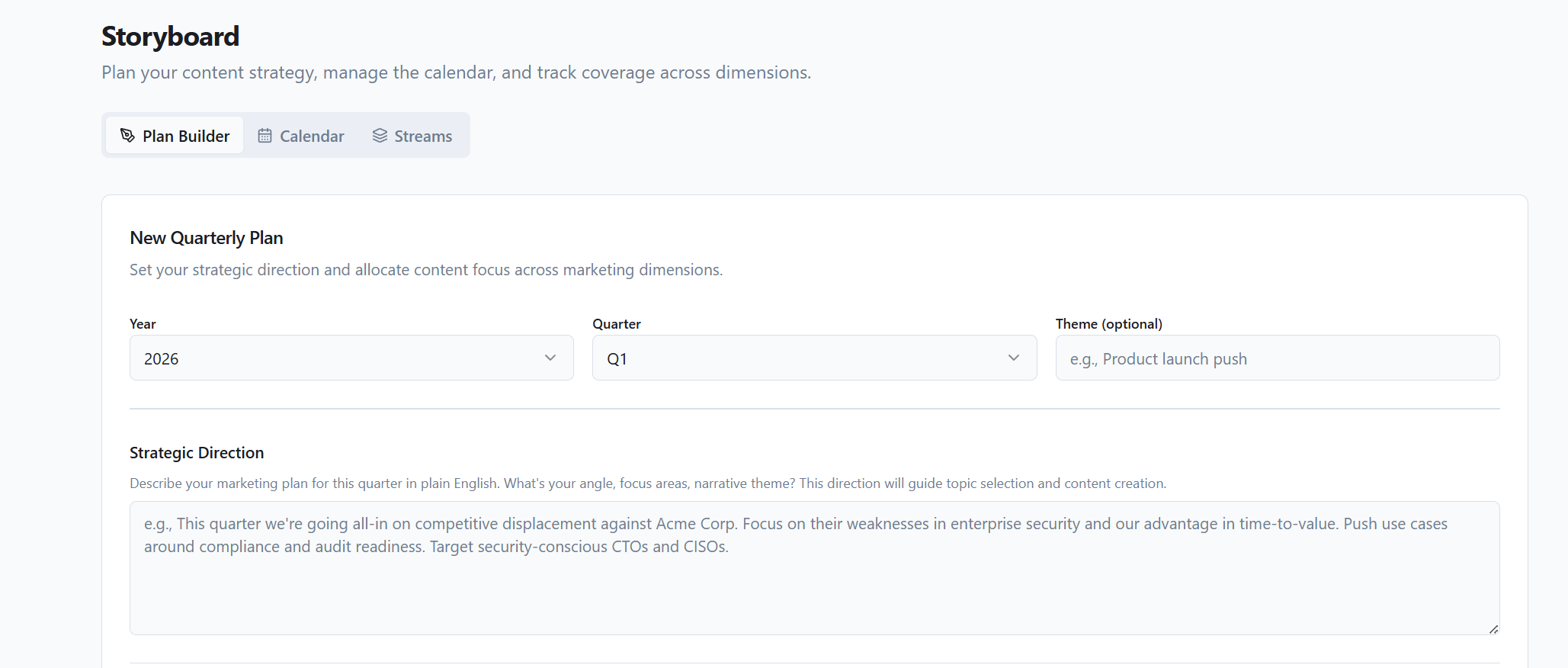
Review feels lighter because reviewers aren’t policing accuracy line by line. They know the draft drew from the right truth. That cuts hours from every cycle and prevents the late‑night edit that ruins weekends.
Marketing And Brand Studios Lock Voice And POV
Brand Studio carries tone, vocabulary, and style, while Marketing Studio injects your key messages, category framing, and old‑way vs new‑way stance. The result is content that sounds like you and argues your position without coaching every writer.
Voice and narrative drift stop being a weekly problem. New contributors slot in faster. Leaders stop rewriting intros. Consistency becomes normal.
Orchestrator And Executive Dashboard Keep Cadence And Control
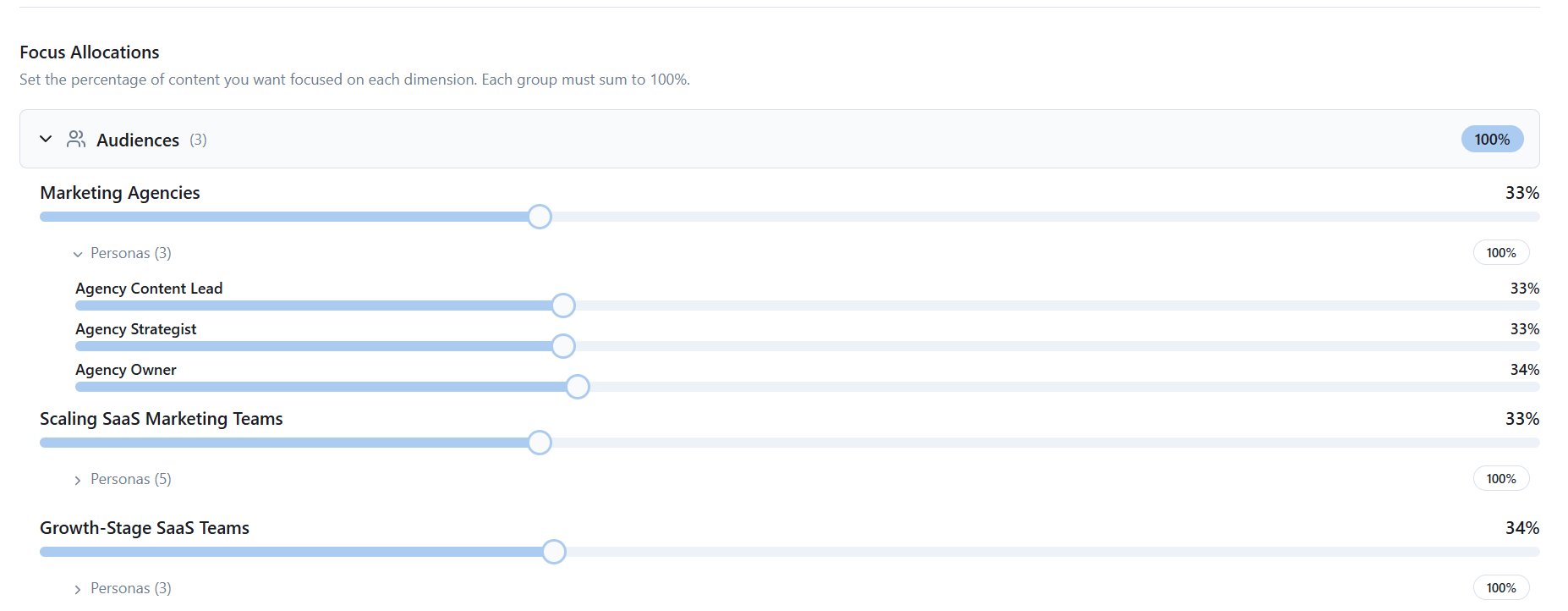
The Orchestrator schedules topics, runs blueprints, and keeps per‑type quotas on track. The Executive Dashboard shows cadence, quality trends, and coverage gaps so you steer, not chase.
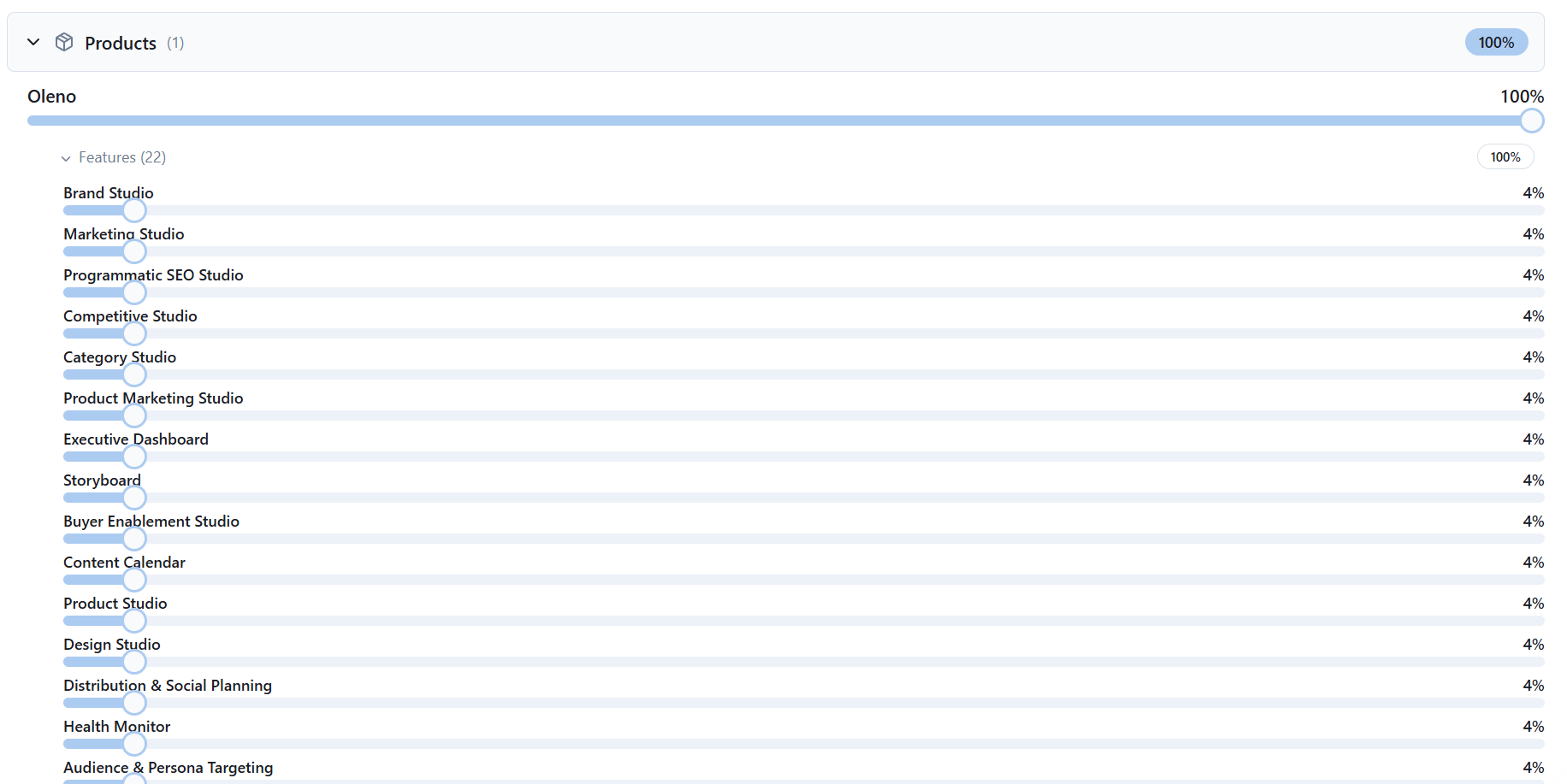
You can see where you’re light on audience or use case coverage, then correct it through Storyboard and quotas. No spreadsheets. No fire drills. Just a pipeline that holds.
- Oleno capabilities that enable the new way:
- Product Studio, single source of product truth that eliminates fabricated claims
- Brand Studio and Marketing Studio, voice and POV rules applied to every brief and draft
- Programmatic SEO Studio, locked outlines that scale acquisition content without drift
- Competitive and Product Marketing Studios, governed bottom and mid‑funnel outputs that evaluators trust
- Quality Gate, multi‑dimensional checks that block weak structure, off‑voice copy, or grounding misses
5 to 10x faster output with zero fabrication risk isn’t a slogan. It’s what happens when governance drives execution and QA enforces the bar. That’s what Oleno delivers. Book a demo: request a demo
Conclusion
Most teams don’t need more tools or more prompts. They need a system that encodes voice, product truth, and narrative once, then runs jobs that honor those rules at scale. That’s how you hit cadence, keep quality high, and become citable in the GEO era.
If you’re ready to stop paying the review tax and start shipping accurate, product‑grounded content on a steady rhythm, let’s talk. request a demo
About Daniel Hebert
I'm the founder of Oleno, SalesMVP Lab, and yourLumira. Been working in B2B SaaS in both sales and marketing leadership for 13+ years. I specialize in building revenue engines from the ground up. Over the years, I've codified writing frameworks, which are now powering Oleno.
Frequently Asked Questions