AI-Driven ABM: Generate Account-Personalized Demand Sequences
ABM personalization looks great in a spreadsheet. Variant counts go up. Stakeholders get excited. Then one “personalized” email references an integration you don’t have, a feature you sunset, or a claim legal never approved—and suddenly Sales is rewriting everything at 7 p.m. to save a deal that didn’t need saving in the first place.
I’ve been on both sides. Running demand-gen and living in RevOps. When execution gets messy, it’s not because people don’t care. It’s because the system asks humans to do judgment work the machine should protect by default. You don’t fix that with clever prompts. You fix it with governance, provenance, and deterministic flows that make personalization safe at scale.
Key Takeaways:
- Encode voice, claim boundaries, and knowledge sources before you scale variants
- Map account signals into clear intent profiles; route to stage/persona templates
- Lock risky copy slots (ROI, integrations); personalize only in “safe” zones
- Ground personalization in a vetted knowledge base with citation enforcement
- Add QA gates that block drift; let humans sample, not polish at the end
- Integrate with CRM using idempotent triggers and rollbacks to avoid duplicates
Why Most ABM Personalization Breaks When Sales Needs Predictability
Most ABM teams over-index on variant count and under-invest in rules. Personalization looks productive until minor inaccuracies multiply into rework and risk. The fix is upstream: governance for voice and claims, provenance for facts, and account-aware orchestration that ships consistent copy without last-minute heroics. Think fewer apologies, more pipeline momentum.
The allure of variant volume hides risk
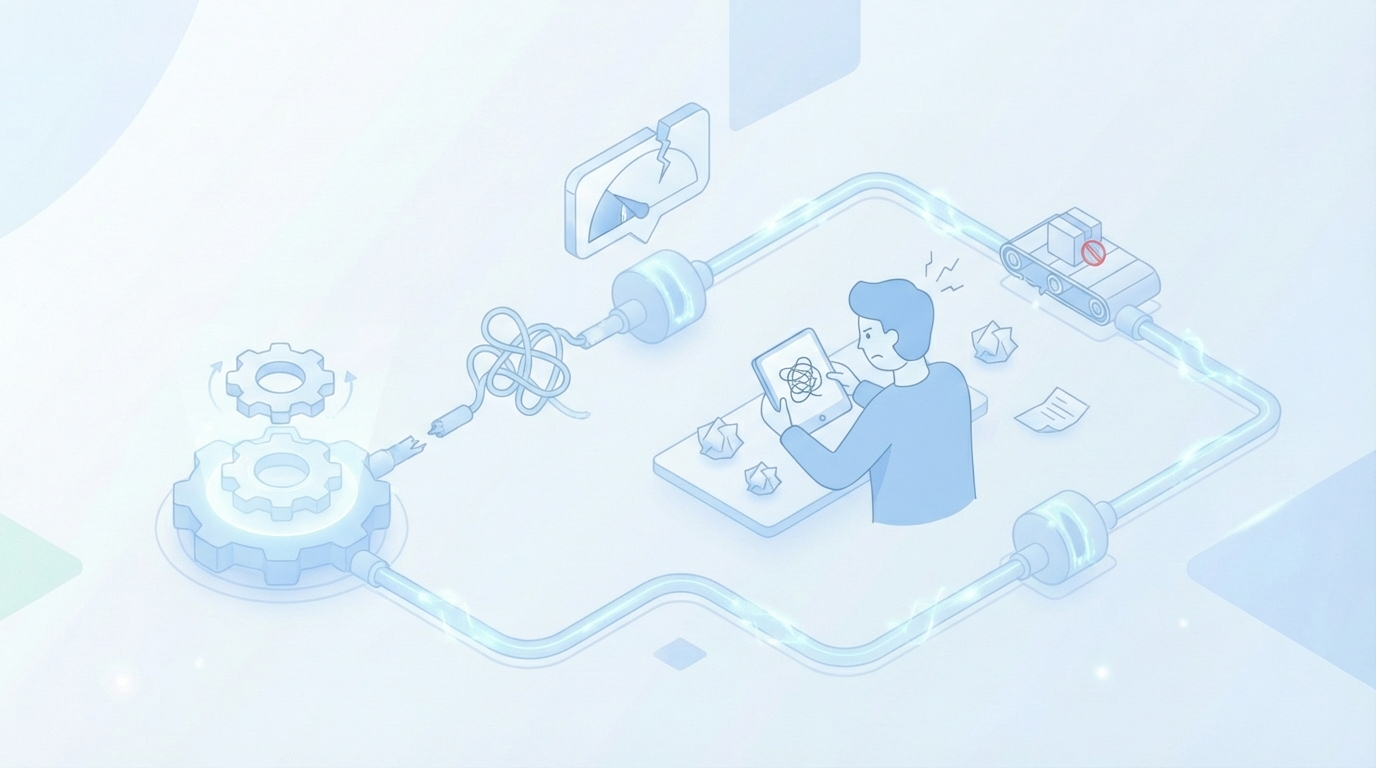
Variant volume feels like progress because output is visible. You see dozens of tailored emails, landing pages, snippets. Feels like traction. But without rules for voice, claims, and sources, volume multiplies risk with each send. One incorrect integration claim can ripple through a quarter’s pipeline. That’s not a copy issue. It’s a system issue.
I learned this the hard way leading teams where we “personalized” aggressively before we codified truth. We’d ship, then spend hours in Slack patching phrasing, pulling claims, rewriting CTAs. The rework wasn’t improving strategy; it was cleaning up preventable drift. Encode the bar up front and you won’t be paying interest on every variant later.
What is account-aware orchestration and why does it matter?
Account-aware orchestration reads signals, maps them to intent profiles, and triggers a safe, pre-approved template plus a narrow personalization layer. It’s not clever prompting. It’s deterministic flows with clear inputs, traceable decisions, and gated outputs. The payoff is simple: fewer rewrites, safer copy, and sequences Sales can trust on first pass.
When your logic encodes “who,” “why now,” and “what’s allowed,” the system carries the burden of consistency. Humans still bring story and judgment where it matters. But you’re not relying on memory to avoid risky claims or tone drift under deadline. That steadies delivery when calendars get crowded.
Why governance and provenance beat clever prompts
Prompts produce copy. Governance and provenance produce reliability. If you define voice rules, claim boundaries, and knowledge sources once—and require citations for sensitive assertions—you shift judgment upstream. The machine enforces structure; your team focuses on narrative. That’s the trade RevOps needs when Sales asks, “Can I send this now?”
This isn’t about making everything stiff. It’s about making the wrong things impossible. You still get personality in the message. You just remove the easy ways it goes wrong when volume increases. Even industry guidance trends this way—more systems, fewer one-off prompts—see the emphasis on execution in MarketingProfs on AI in ABM execution and targeting.
Ready to see governed personalization without the cleanup? Try a small batch. Try generating 3 free test articles now.
The Real Root Cause Is Unmapped Signals And Fuzzy Templates
Personalization fails when signals are noisy and templates are vague. Signals must map to intent profiles, and profiles must route to deterministic templates by stage and persona. Lock high-risk claims; personalize only in safe zones. That’s how you keep creativity where it helps and eliminate drift where it hurts.
What signals actually predict intent?
Use what you already trust: firmographics, technographics, opportunity stage, product usage, and any third-party intent you’ve validated. Normalize them into profiles that reflect readiness, fit, and risk flags. Then document thresholds. For example, two target roles hitting pricing in seven days plus ICP tech equals active evaluation. Explicit rules make decisions explainable.
When you write these rules down—plain English and JSON—you give Marketing, Sales, and RevOps the same map. No more “why did they get that email?” questions. And when a profile fires, you know which inputs did it. That traceability matters when you need to defend or adjust a program while keeping volume steady.
The hidden complexity tying signals to stage and persona
Signals don’t matter in isolation. A late-stage opp with no product usage is different from heavy usage at early stage. Your routing logic should reflect stage, persona, and the decision blockers you need to clear next—CFO risk vs. champion velocity isn’t the same story. Different emails. Different CTAs. Same guardrails.
When this layer is fuzzy, copy reads generically pleasant but situationally wrong. You see it in polite replies with zero movement. Templates that understand persona tension—budget, security, implementation—give Sales air cover. That’s the kind of “personalization” that actually progresses the deal instead of adding noise.
Why deterministic templates control risk, not creativity
Deterministic templates aren’t dull. They’re predictable where it counts. Lock the risky sections—ROI claims, integrations, compliance. Leave safe slots for story, examples, and problem framing. Creativity goes in places that can’t break trust. That’s how you scale without handholding every send. It’s also how you protect brand voice while giving reps useful nuance.
This is the same pattern teams use in other reliable systems: structure where risk lives, freedom where context helps. You’ll find similar thinking in enterprise takes on ABM and AI—consistent frameworks first, personalization on top—like Snowflake’s perspective on AI-driven ABM and B2B growth.
The Hidden Costs Of Blind Personalization In ABM Operations
Blind personalization burns hours, erodes trust, and clogs your stack. The costs hide in rework, approvals, and escalations that never show up in campaign dashboards. Quantify them and you’ll see why upstream governance and QA gates pay for themselves quickly—especially for lean teams.
Engineering and ops hours lost to manual fixes
Let’s pretend a five-person team ships 30 personalized emails weekly. If 20% need fixes for invented claims or off-voice copy, you just burned 6–8 hours on rework. Add QA, approvals, and re-sends, and your weekly cost balloons. That time should fund experiments and sequencing logic, not cleanup.
I’ve sat in those post-mortems. The vibe is always the same: “We moved fast.” Then the team quietly pays the interest through late-night edits and fractured coordination. When you add up the hidden labor, governance looks less like overhead and more like capacity you’re buying back.
Pipeline and trust erosion from invented claims
A single email promising a non-existent integration can stall a whole deal. SDRs apologize. AEs regroup. Legal raises an eyebrow. Buyers start asking for proof on everything. You may not see it in attribution dashboards, but the confidence hit is real. Preventing false claims up front preserves momentum you fought to build.
Trust accrues slowly. It also disappears quickly. Guarding sensitive claim slots with knowledge-backed rules is the simplest, least controversial way to keep deals moving. It’s also how you avoid awkward “we don’t actually do that” threads that consume your best reps’ time.
Where the rework creeps in across your stack
Rework shows up in ticket queues, Slack pings, and ad hoc copy-polishing sessions. Product Marketing tries to fix positioning drift. RevOps patches broken triggers. Content rewrites assets too late. The pattern is consistent: no upstream governance, no provenance, no QA gate. Fix those and you remove the most expensive kind of work—the redo.
It’s not that people did anything wrong. The system asked them to catch problems downstream where it’s costliest. Move the checks forward and the firefighting stops. Or at least it becomes a controlled burn you can plan for.
Still stitching this together manually? There’s a calmer path. Try using an autonomous content engine for always-on publishing.
The Sales Experience When Personalization Backfires
When personalization misfires, Sales pays the price. Wrong-fit messages force rewrites, stall handoffs, and shake confidence. Define what “good” feels like to Sales—on-voice copy, approved claims, stage fit, clean CTA—and bake that into your templates and QA. Confidence rises when surprises disappear.
When your best account gets a wrong-fit message
You know the feeling. Top-tier account, multi-threaded, then an email references a feature you sunset last quarter. Now your champion is explaining your product to their boss. Not ideal. Guard sensitive claim slots with knowledge-backed rules. If a fact isn’t in the knowledge base, the copy doesn’t say it. Simple, and it saves deals.
I’ve watched this exact scenario kick off week-long detours. Nobody wins. The fix isn’t a harder review. It’s a rule: no source, no claim. When that rule is enforced by the system, trust rebounds. Sales stops hovering over every draft. Buyers stop double-checking every line.
The late handoff that stalls deals
Sales opens a sequence and sees generic content. They rewrite half of it, then timing slips. The handoff becomes a headache. Fix it by aligning templates to opportunity stages, persona goals, and the specific pains Sales must resolve to progress. If the template tells the right story at the right moment, handoff accelerates.
This is the quiet killer of ABM velocity. Templates that anticipate Sales objections are as valuable as flashy personalization. And yes, industry peers are converging on this: use AI to support coherent execution, not just create variants—see CMO Alliance on AI-powered innovation in ABM.
A Practical Pattern For AI-Driven ABM Sequences That Do Not Drift
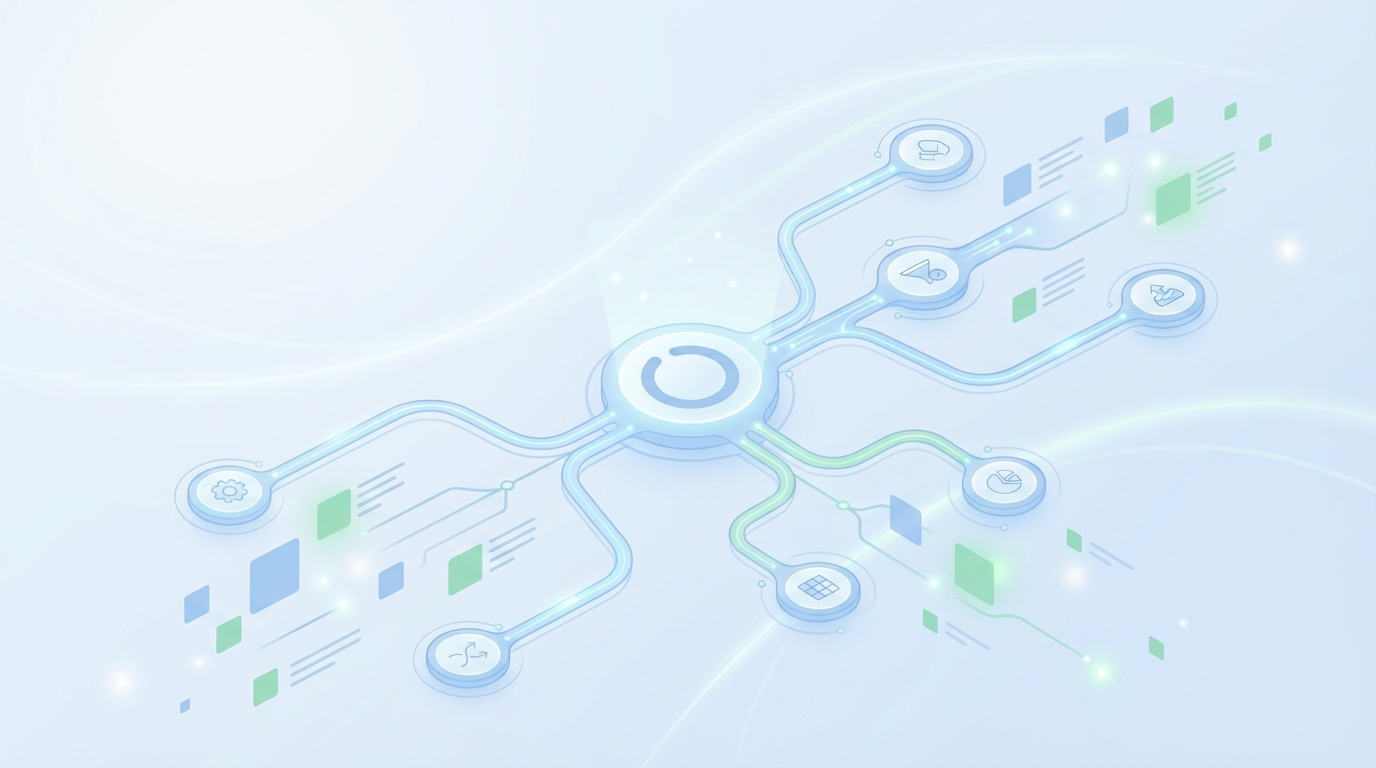
The pattern is straightforward: map signals into intent profiles, route to deterministic templates by stage/persona, then apply a provenance-first personalization layer. Add QA gates and safe CRM integration. You’ll get consistency without killing creativity, and scale without the rework tax that burns small teams.
Map account signals into intent profiles
Start by defining fields and events you trust. Normalize into a compact profile with stage, priority, and blockers. Create routing rules—profile to template mapping—with thresholds you can explain. Write them in plain English and in JSON so Marketing, Sales, and RevOps align. Keep audit trails. If a sequence sends, you should know why.
Two practical notes from experience. First, limit the number of profiles. Too many and you recreate chaos. Second, log the decision path for every send. When something looks off, you can trace the logic instead of debating feelings. That’s how you iterate without breaking confidence.
Design deterministic templates by stage and persona
Build sequence skeletons for awareness, consideration, and evaluation, tied to personas like champion, CFO, and security. Lock risky sections—ROI claims, integrations, compliance. Create safe slots for story and examples. Pre-approve CTAs by stage. Constraints prevent drift yet leave room for tone and context that feel genuinely personalized.
I like to write acceptance criteria from Sales’ perspective and attach it to each template: on-voice, cites approved claims, aligns to the specific stage, and offers a clear next step. If it doesn’t meet that bar, it doesn’t ship. Write the rules once and let the system enforce them every day.
Build a provenance-first personalization layer using RAG
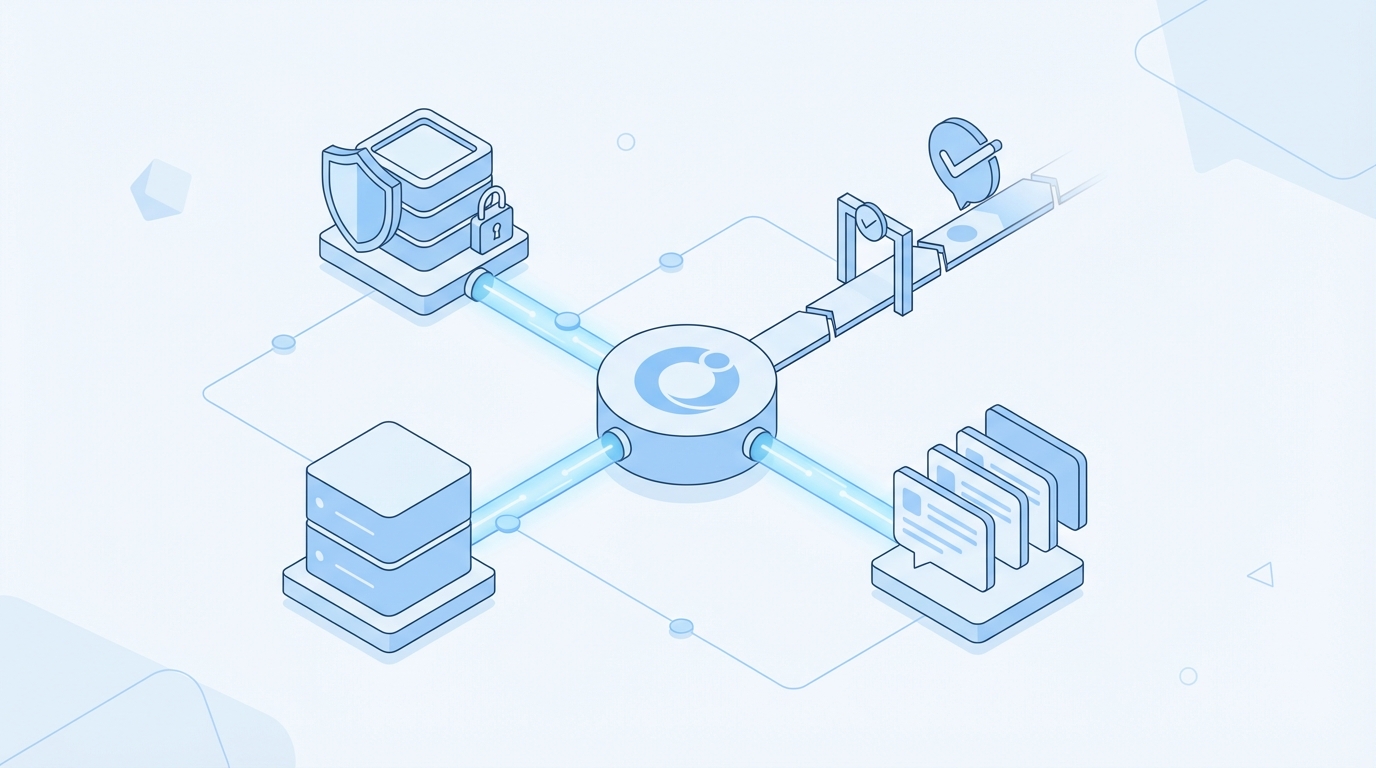
Ground model outputs in a curated knowledge base. Retrieve facts with citations and require citations where claims appear. Reject draft blocks that fail grounding. Add guardrails for banned terms and claim boundaries. The personalization layer enriches safe slots only, so it can’t override locked copy. If the KB can’t supply a fact, fall back to neutral language.
This is how you keep speed without inventing features. And when reviewers ask, “Where did this line come from?” the answer is traceable. Over time, that reduces subjective edits and speeds approvals because arguments become about strategy, not accuracy.
Integrate with CRM and automation safely
Use CRM fields to trigger sequences only after templates pass QA and approvals. Keep idempotent triggers, retries, and rollbacks so the same account doesn’t get duplicates. Update lead scoring and attribution with structured events for each touch. Start with a sampling gate so humans can approve early batches, then expand volume as metrics stabilize.
Treat this like any production workflow. You want control, observability, and a kill switch. The more predictable your pipeline, the more comfortable Sales becomes with sending governed personalization at scale. That’s the whole point.
For a broader industry lens on execution, see SingleGrain’s 2025 ABM outlook on AI and machine learning.
How Oleno Powers Governed Personalization For ABM Teams
Governed personalization needs three things: product truth and claim control, deterministic pipelines with QA gates, and clean fit with your sequencing stack. Oleno was built for exactly that—so small teams can run steady ABM without scaling headcount or coordination overhead. You own direction. The system runs execution.
Knowledge-base grounding and claim control
Oleno lets you define product truth, approved claims, and knowledge sources up front. Personalization can reference only what you’ve approved. Sensitive assertions require citations. If a fact isn’t in the KB, the draft defaults to neutral language. That reduces invented features and keeps content aligned to reality across emails, pages, and SDR snippets.
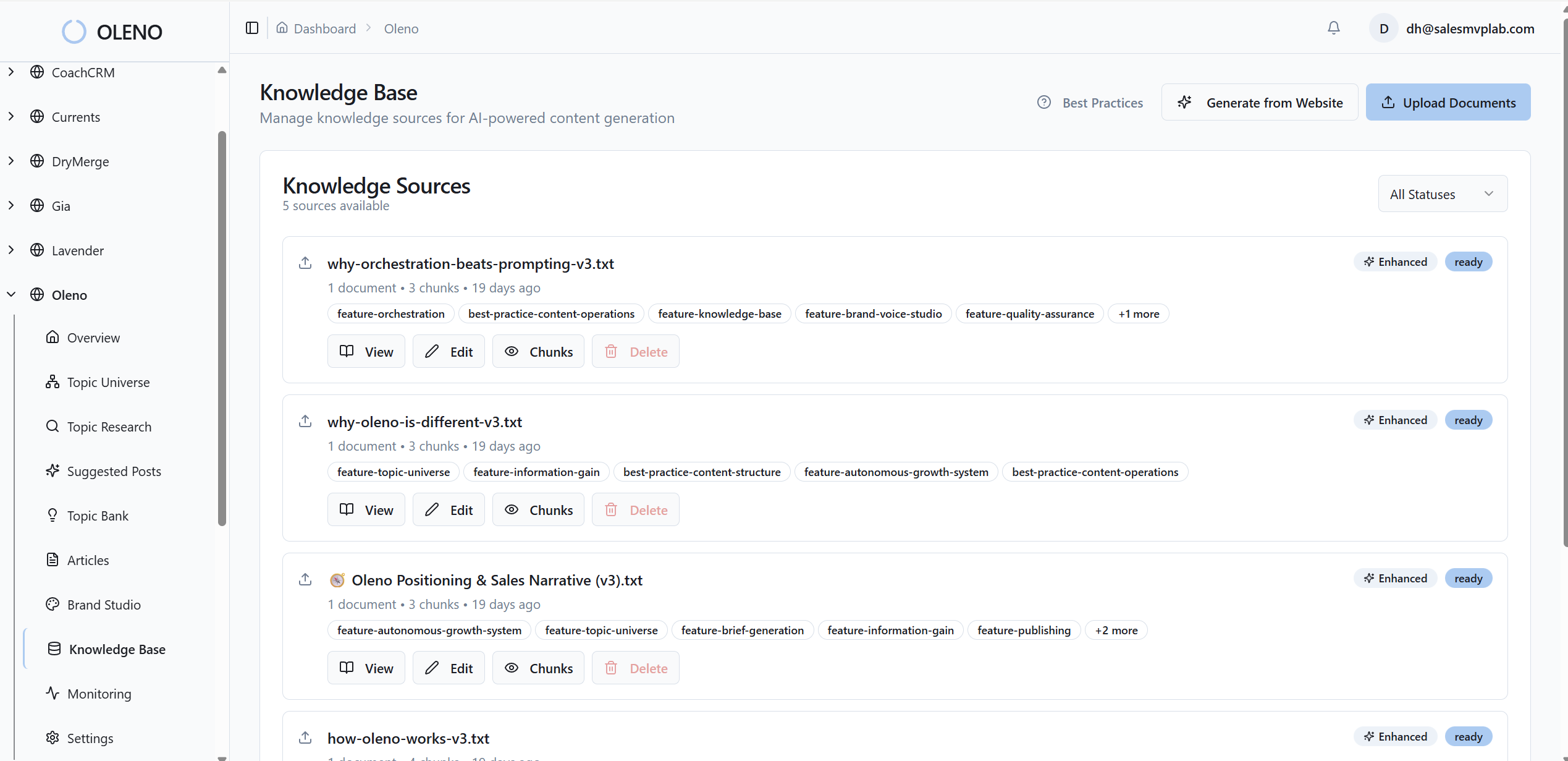
This makes approvals faster and less subjective. Reviewers can see what line came from which source. Disagreements shift from “do we sound right?” to “should we expand our approved claim set?” That’s a healthier debate—and it happens before a campaign is live.
Deterministic pipelines and a QA gate before publish
Oleno runs a repeatable pipeline—Discover → Angle → Brief → Draft → QA → Enhance → Visuals → Publish—with QA checks for voice, structure, grounding, and clarity. Nothing moves forward until it passes. You get predictable outputs, fewer last-minute edits, and safer assets feeding your ABM without prompt tinkering.
Tie this back to the hidden costs we covered. Every avoided correction is time reclaimed for experiments and stage-persona refinement. RevOps gets cleaner logs and fewer escalations. Sales gets assets they can send without hovering. The machine carries structure; your team focuses on story.
Fits alongside your CRM and sequencing tools
Oleno doesn’t replace CRM, sales engagement, or outbound sequencing. It integrates as the content execution layer. You produce governed assets and snippets, then route them into your existing tools. That keeps Sales confident, reduces rework, and gives RevOps traceable inputs for triggers, scoring, and attribution without re-plumbing your stack.
The goal isn’t a new “system of record.” It’s a reliable execution engine that safeguards voice and truth while you scale. That’s how you get volume without volatility—and demand-gen that compounds instead of resetting every quarter.
Want to experience governed personalization without the drift? Try Oleno for free.
Conclusion
Here’s the thing. Personalization isn’t the problem. Ungoverned personalization is. If you map signals to intent profiles, route to stage/persona templates, lock risky claim slots, and ground the rest in approved knowledge, you’ll stop paying the rework tax. Sales gets confidence. RevOps gets predictability. And your ABM starts compounding instead of resetting.
About Daniel Hebert
I'm the founder of Oleno, SalesMVP Lab, and yourLumira. Been working in B2B SaaS in both sales and marketing leadership for 13+ years. I specialize in building revenue engines from the ground up. Over the years, I've codified writing frameworks, which are now powering Oleno.
Frequently Asked Questions