AI Tool Orchestration: Handoff Patterns for Multi‑Tool Content Workflows
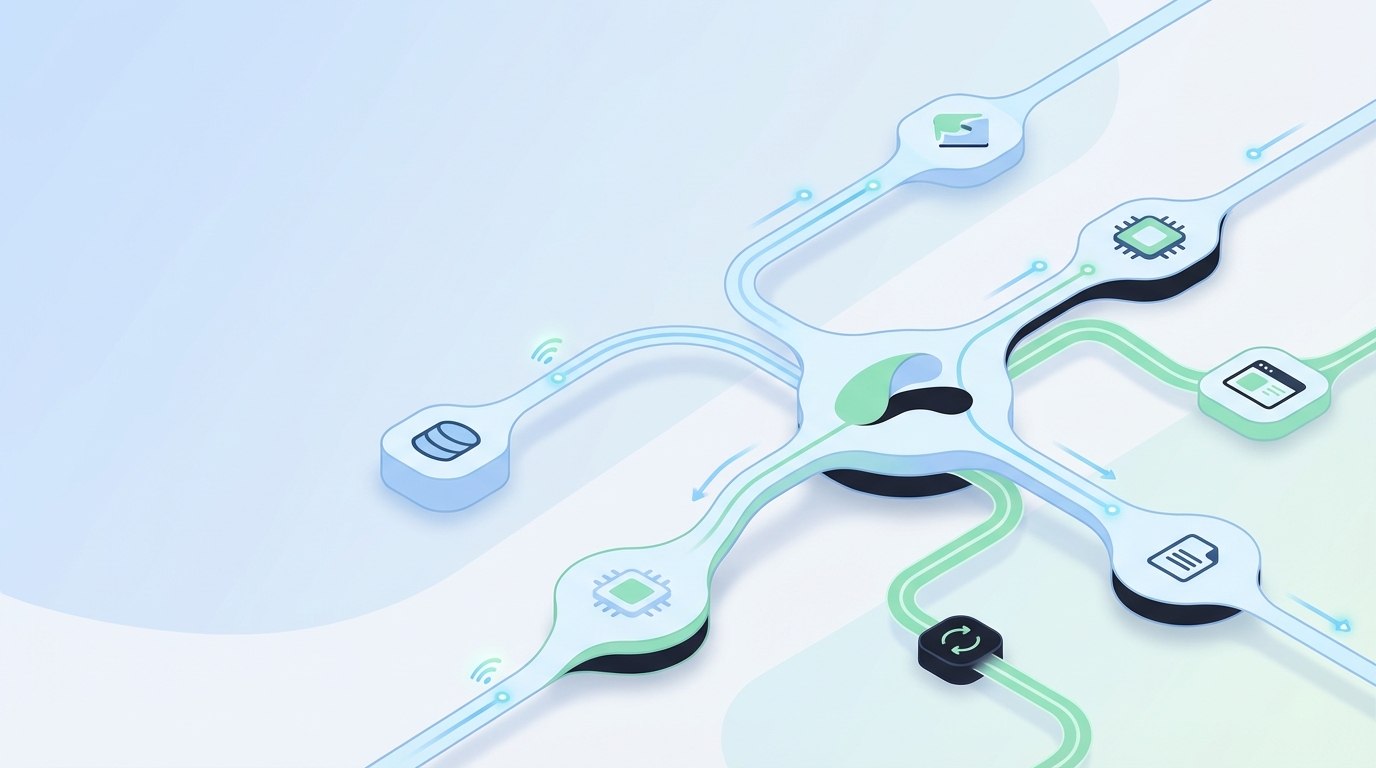
Stitching prompts, scripts, and point tools looks fast—until you have to run it for months. AI tool orchestration is not “connect GPT to a Google Sheet and hope.” It’s how work moves, who owns quality at each handoff, and what happens when a step fails. Without that, you’re stacking operational debt with interest.
I learned it the hard way. I once spent hours a day copy‑pasting AI drafts into a CMS. Felt busy. Wasn’t progress. Then I got fed up and coded an engine that handled the handoffs. Night and day.
Most teams feel the same pain. Drafts everywhere. Reviews missing. Rewrites at the last minute. You don’t have a content problem. You have a system problem. The fix isn’t more prompts. It’s orchestration with contracts, not vibes.
Key Takeaways:
- Treat models and tools like services with clear inputs, outputs, and SLAs
- Use versioned data contracts so handoffs don’t break when formats change
- Build idempotent connectors (safe to retry without duplicates) to stop race conditions
- Add observability at each step so you catch drift and hallucinations early
- Set fallback and throttling policies to protect cadence when APIs degrade
- Create a reusable connector template to cut setup time across jobs
- Expect a real payoff: fewer failed handoffs and less editorial rework
Why Prompting Alone Breaks AI Tool Orchestration
Prompting alone breaks orchestration because it creates output without guaranteeing behavior across steps. You can generate a draft, but you can’t ensure the right structure, state, or validation for the next tool. That gap multiplies review cycles and causes silent failures—missing citations, broken schema, or a payload a CMS won’t accept.
Prompts Create Output, Not a System
Prompts change week to week, so your “system” shifts under your feet. A draft can look great in isolation and still fail the second it hits a validator or CMS because headings, metadata, or links don’t match what downstream expects. I’ve watched great copy bounce around for days because the structure was wrong by one field.
When each person writes their own prompt, you get tone drift, inconsistent claims, and subtle schema changes. That forces humans to compensate with more meetings and more editing. It feels productive. It’s not. You’re paying a hidden tax in context switching and clean‑up.
Orchestration flips the job definition. You define the job, not the sentence. Inputs are validated, outputs are predictable, and the next step can trust the payload. That trust is the difference between a one‑off draft and a durable pipeline.
Where Drift Creeps In (And Why It Hurts)
Drift sneaks in at the seams. A writer tweaks a heading level. A model ignores CTA style. A connector posts the same draft twice because a webhook retried. None of these break the internet. Together they burn time, frustrate editors, and confuse buyers.
The worst part isn’t the one bad draft. It’s rework on ten “almost fine” drafts. You lose cadence, then confidence. Teams respond with heroics instead of design. That’s how a fast start turns into burnout and a flatline.
- Tone drifts because prompts aren’t governed
- Facts drift because claims aren’t grounded
- Structure drifts because outputs aren’t validated
Reframing the Work: Orchestration Is a System, Not a Script
Orchestration is a system that defines contracts, not a pile of scripts that push text around. Each tool becomes a service with a clear request and a guaranteed response. When you make that shift, quality stops depending on who typed the prompt yesterday and starts depending on agreements the system enforces.
Define Services, Not Steps
A step says “generate an article.” A service says “accept a governed brief and return a draft with H2/H3 layout, voice rules, and citation stubs.” That difference sounds picky. It isn’t. Services let you version expectations, roll back safely, and swap implementations without breaking everything.
Engineers have done this for years. Marketing needs the same discipline now that AI sits in the middle of our process. If you can’t state what a tool promises, you can’t hold it accountable. And then you carry the burden yourself.
For a mental model, study how AWS Step Functions documentation frames tasks and state. It’s boring in the best way. You want boring, predictable behavior when the deadline is tomorrow.
Quick checklist to define a service:
- Name the job and owner
- Request schema (inputs, required/optional fields)
- Response schema (structure, types, allowed values)
- Voice and claim constraints (must/never statements)
- Pass/fail rules and error messages
- Version number and deprecation plan
Design Contracts For Handoffs
A data contract says exactly what the next step will get—structure, types, allowed values. Missing? The step fails fast and logs it. Changed? Version the contract and deprecate the old one. No guessing. No “it worked on Tuesday.”
This removes more rework than any clever prompt trick. People stop editing structure by hand. Editors focus on substance. And when something does fail, you see where and why, not just “it’s stuck.”
Contracts also unlock reuse. Once you trust a “governed brief” format, you can point multiple generators at it. Same with “QA‑scored draft” or “CMS‑ready payload.” That’s real leverage.
The Real Costs of Broken Orchestration
Broken orchestration costs compound across time, money, and morale. You lose hours in manual review, pay more for agency edits, and watch cadence stall. The kicker is opportunity cost—slow cycles mean fewer shots on goal and weaker learning loops.
Time, Money, Morale
Teams often spend 20–40% of their week coordinating, not creating. Each manual review can burn 20–30 minutes. Multiply by multi‑person approvals and you’ve burned days before publishing. It’s not the big miss that hurts. It’s the thousand tiny cuts—especially when evaluating ai tool orchestration.
Morale follows cadence. When you publish steadily, the team feels momentum. When you’re fixing structure, chasing approvals, and rewriting voice, momentum disappears. People start avoiding the work that matters because it always turns into fire drills.
Research backs the macro trend. McKinsey’s 2023 analysis on generative AI’s impact points to big potential, but the gains come with new operational requirements. Without structure, you don’t capture the value.
Quality Debt You Don’t See
Quality debt is sneaky. It looks like traffic without trust, or long posts with shallow claims. AI makes it easy to write words. Orchestration makes it possible to publish truth. When you don’t ground claims or enforce voice, your brand erodes in small ways that never show up in a single dashboard.
Here’s where the hidden cost lands hardest:
- Duplicate articles that confuse search engines and buyers
- Inconsistent voice that weakens category authority
- Unchecked claims that invite legal edits late in the cycle
What It Feels Like When the System Fails for AI Tool Orchestration
Failure feels like doing the same work twice. You think you’re an editor, but you’re a traffic cop. You think you’re building a library, but you’re plugging leaks. People don’t quit because the work is hard. They quit because it’s pointless.
The 11 PM Rewrite
You hit publish tomorrow. The draft reads fine, yet it doesn’t sound like you. The CEO flags tone. Product flags two claims. You rewrite the intro, fix three headings, and swap a CTA. None of that work creates new value. It repairs a process that never enforced rules upstream.
I’ve been there. It’s exhausting and avoidable. Once voice and claims live as rules, not opinions, those edits vanish. You can still disagree about a point of view. You just don’t debate commas at midnight.
The Approval Pinball
Approvals bounce because no one trusts the inputs. Sales thinks it’s fluffy. Product thinks it’s risky. Brand thinks it’s off. So the doc pings around for a week. Every pass adds comments that conflict with the last set. You end up with a camel where a horse should be.
A working orchestration model removes that chaos. Each step certifies a concern: voice, facts, structure. Final approval becomes a real check, not a salvage operation.
The New Way: Practical AI Tool Orchestration Patterns
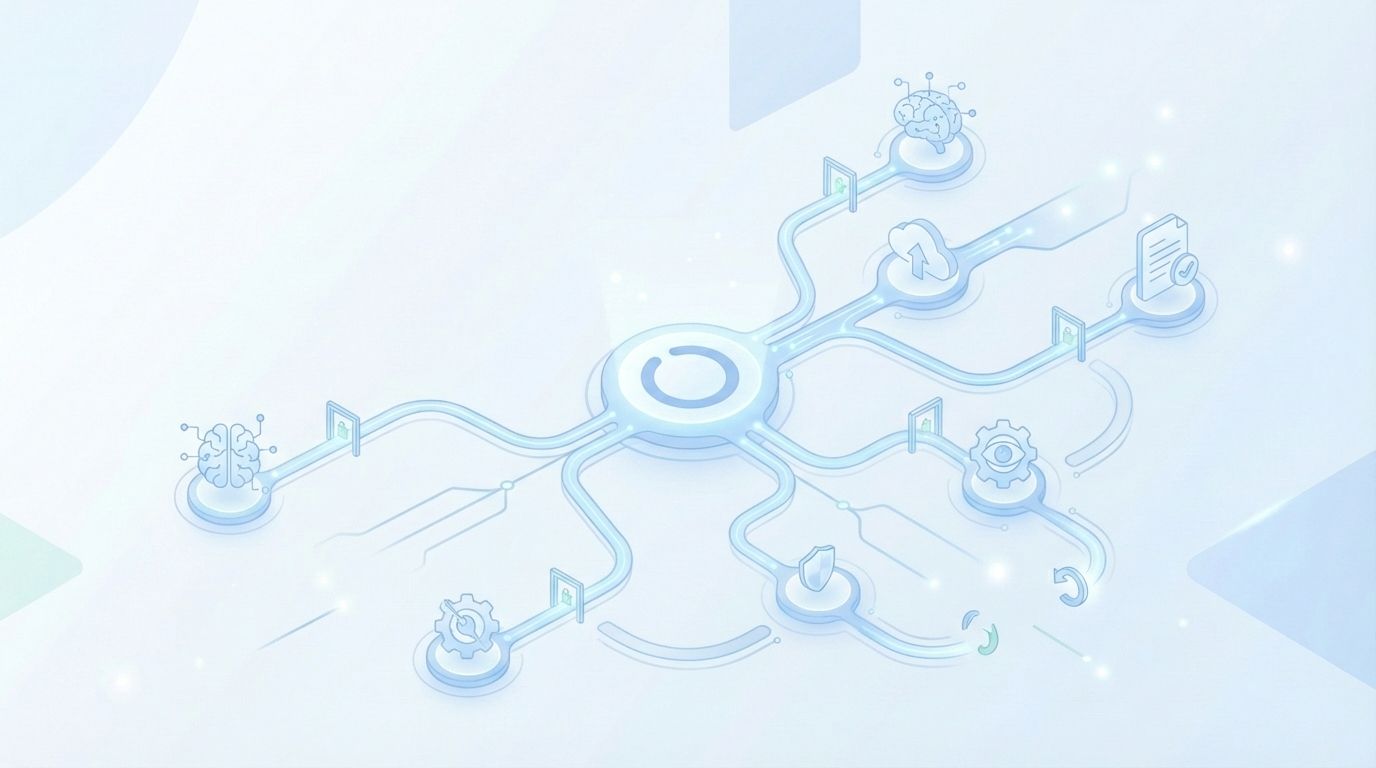
The new way treats every AI and content tool as a service with a contract, observability, and fallbacks. You define inputs and outputs, validate at each hop, and recover gracefully. Less exciting than prompting tricks—and it’s exactly why it works when volume rises.
Treat Models Like Services
Start by writing a one‑pager for each model job. Name the service. Define the request and response shape. Include voice and claim constraints. Add pass‑fail rules. If the output misses the contract, it fails and reports why. You’ll feel slower for a week. You’ll be faster forever.
I like to include examples and counter‑examples in the contract. Show what “good” looks like. Show what fails. People and machines both learn faster with clarity. And when a model updates, your contract keeps quality steady.
If you need inspiration on orchestration patterns, the Google Cloud Workflows overview shows how services coordinate, retry, and time out. Same idea, applied to marketing.
Make Connectors Idempotent and Observable
Idempotent connectors don’t double‑publish on retries. They check for a canonical ID, compare payload hashes, and no‑op when nothing changed. Observability logs each handoff with a job ID, version, and status. When something breaks, you know where to look.
Add fallbacks. If a third‑party API slows down, shift to cached data, skip a non‑critical enhancement, or queue the job for later. Better to publish on time with 95% completeness than miss a window—especially when evaluating ai tool orchestration.
Here’s a lightweight sequence that works:
- Define the job and its service contract
- Validate inputs and fetch governed context
- Generate output, then run contract checks
- Route through QA and publish only on pass
Stop chasing approvals. Start publishing faster with a process you can trust.
Ready to cut failed handoffs and drift? Request a Demo
How Oleno Operationalizes AI Tool Orchestration
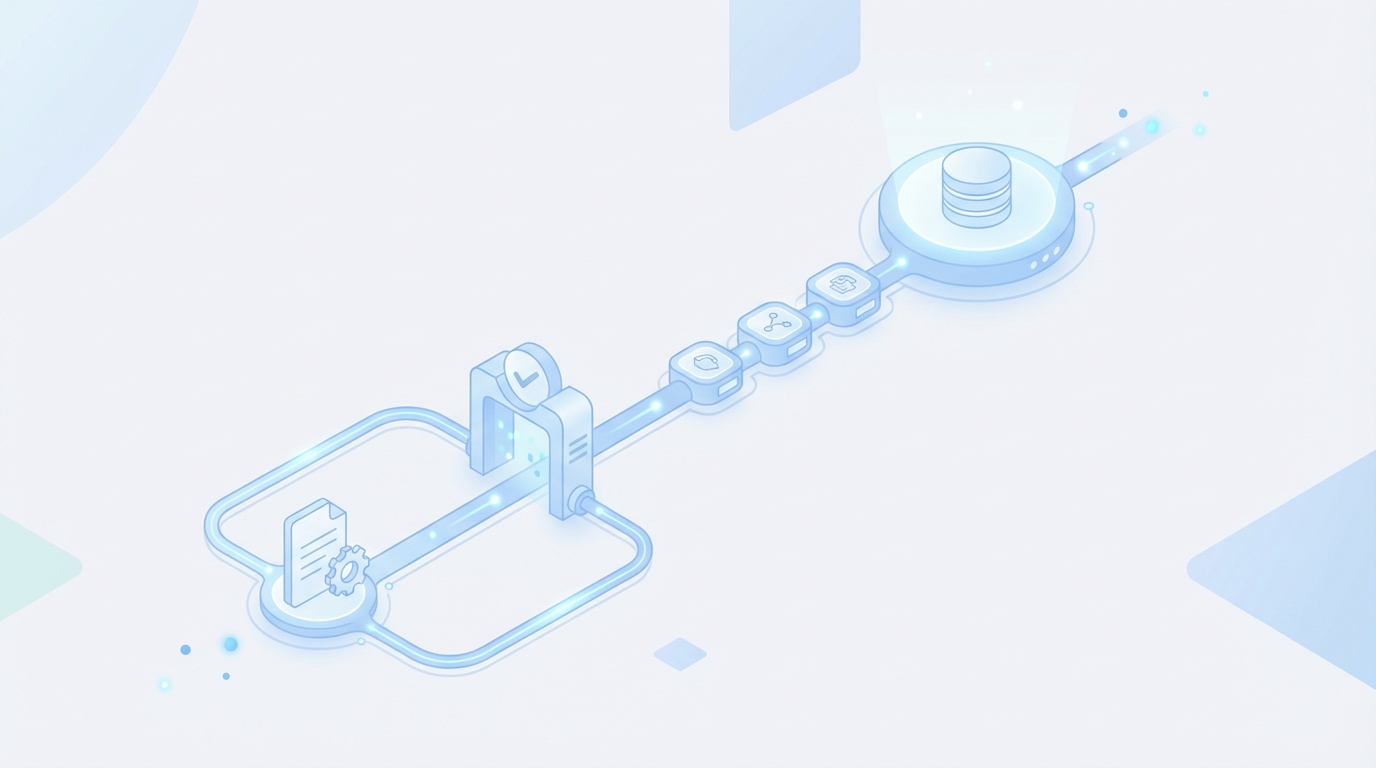
Oleno operationalizes orchestration by encoding governance, enforcing a QA gate, and running jobs through a deterministic pipeline to CMS. It turns contracts into running services, so content moves from Discover to Publish with checks at every hop. The result is fewer retries, faster approvals, and steady cadence.
Governance That Prevents Drift Upstream
Brand Studio and Marketing Studio store how you speak and what you believe as machine‑readable rules. During brief and draft, those rules shape structure, tone, terminology, and narrative. Product Studio and the Knowledge Archive ground claims in approved facts, so risky or invented features don’t slip through.
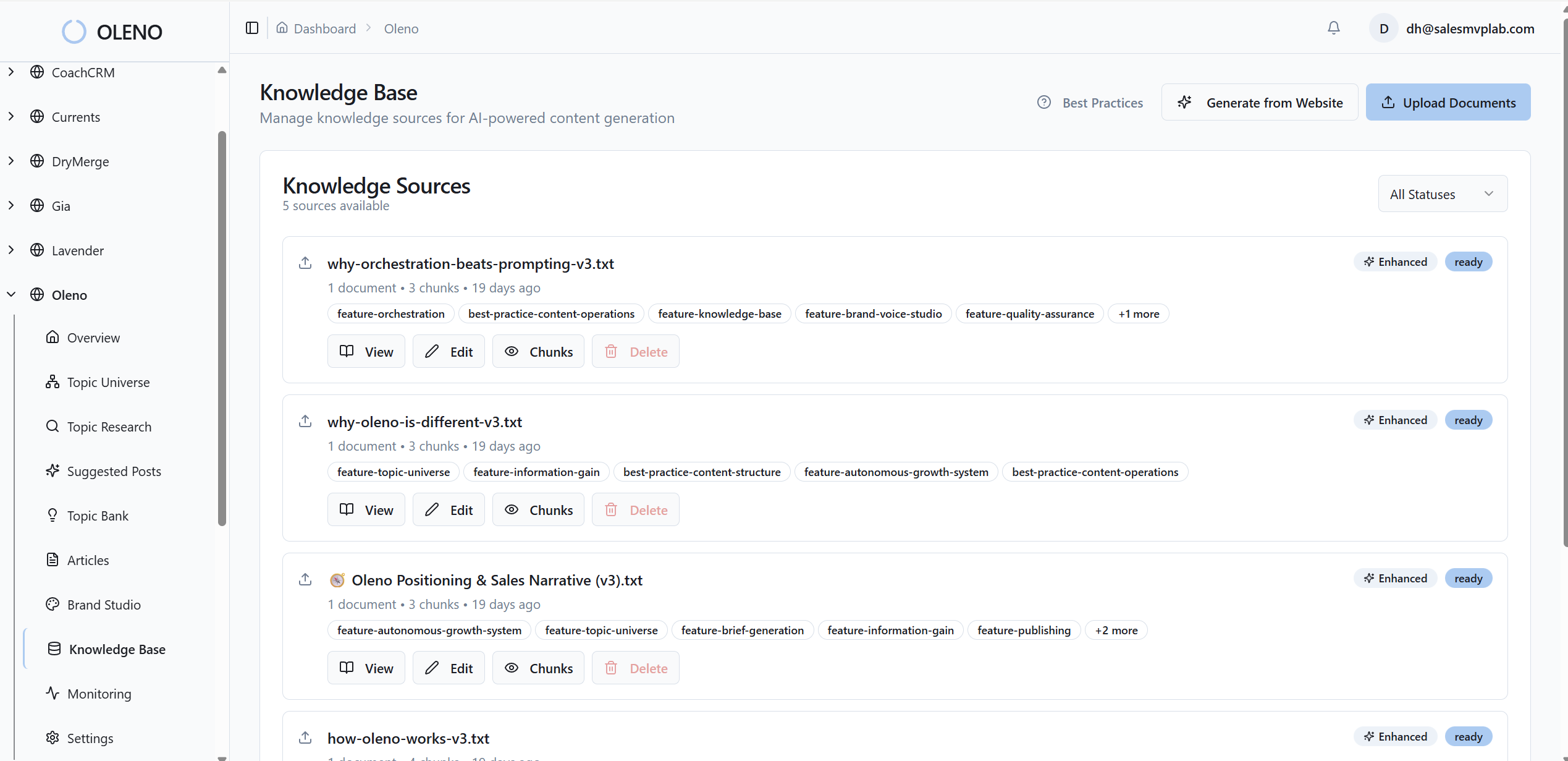
I like this because editors stop policing style and focus on substance. Governance isn’t a PDF. It’s the rails the system runs on. When rules change, you update them once. Every job picks them up on the next run.
A QA Gate and Publishing That Protect Cadence
Oleno blocks publication until content passes a formal QA gate for voice, structure, clarity, and factual grounding. Failed checks trigger targeted revisions and re‑runs, so you fix the issue at the right step instead of in a giant doc at the end. Then CMS Publishing pushes approved content as drafts or live posts—no duplicates.
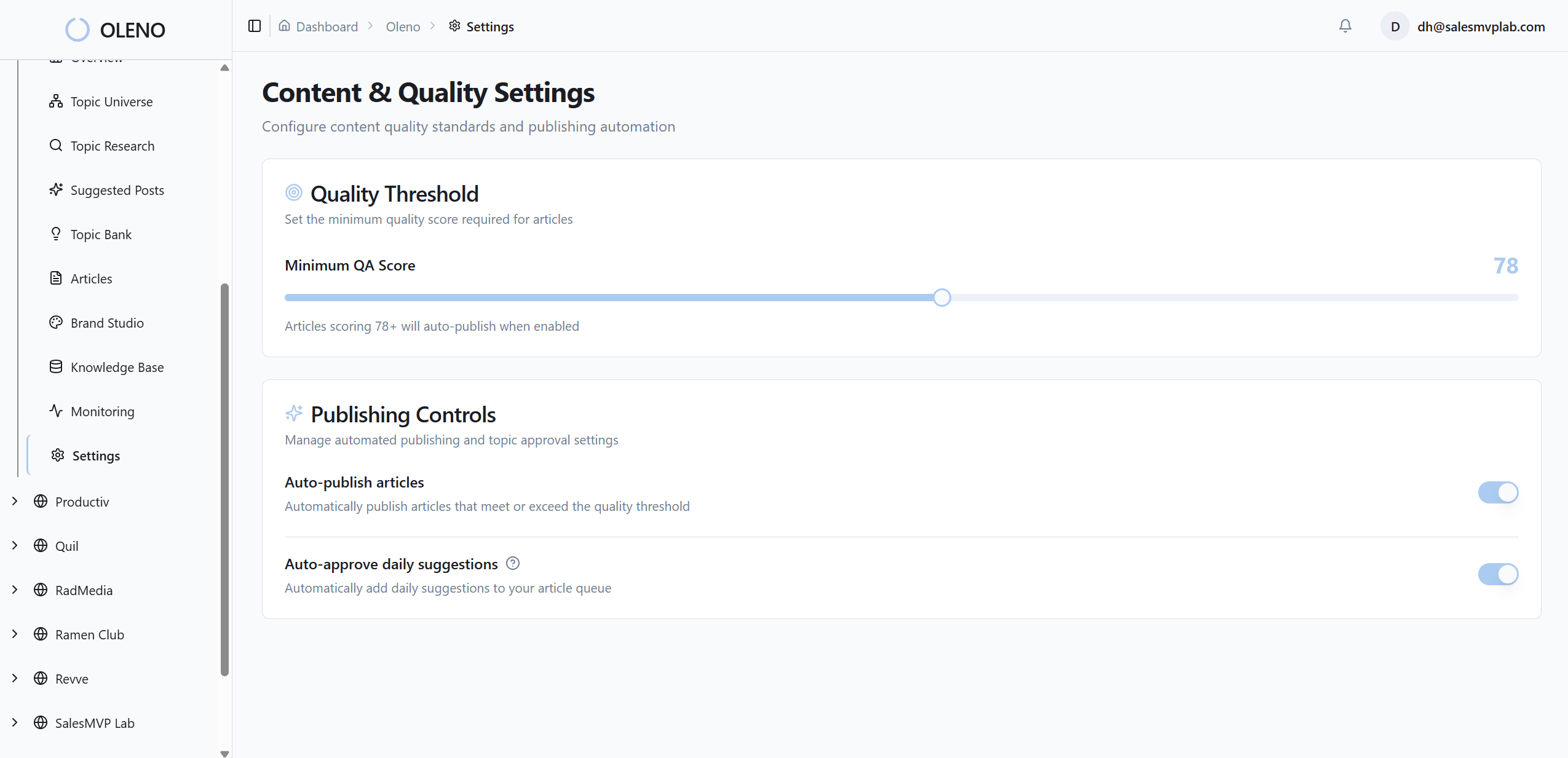
Measurement & System Health tracks volume, cadence, and where jobs failed. You spot bottlenecks early, adjust governance, and keep the engine humming. That’s how small teams avoid burnout and still grow output.
- Brand Studio: encodes tone, terms, structure, and CTA style as constraints
- Product Studio + Knowledge Archive Grounding: enforces allowed claims and real facts
- Quality Control (QA Gate Before Publishing): blocks drift and hallucinatory content before CMS
30 percent less editorial rework in two months. That’s what Oleno delivers. Book a Demo
With Oleno, the painful stuff disappears. Jobs run with contracts. Idempotent publishing prevents duplicates. Observability shows where to fix issues. You move from “did we publish?” to “what should we publish next?” That shift is where compounding starts. And it’s why orchestration beats prompting every time.
Before you ship another prompt pipeline, lock your voice, product truths, and narrative into governance—then make the pipeline enforce it. Oleno is built for that exact job.
Want the QA gate, contracts, and CMS publishing working for you next sprint? Request a Demo
Conclusion
AI tool orchestration isn’t about clever prompts. It’s about contracts, checks, and recovery paths that keep quality and cadence steady. Define services, version your data contracts, add idempotent connectors, and watch rework drop. If you’re serious about demand gen with a small team, build the system once and let it run.
About Daniel Hebert
I'm the founder of Oleno, SalesMVP Lab, and yourLumira. Been working in B2B SaaS in both sales and marketing leadership for 13+ years. I specialize in building revenue engines from the ground up. Over the years, I've codified writing frameworks, which are now powering Oleno.
Frequently Asked Questions