Automated Demand‑Gen Localization: Pipeline for Publish‑Ready Assets

You don’t have a translation problem. You have a “can we publish this reliably, at scale, without breaking SEO or getting legal on Slack?” problem. Different pain. Different fix. The teams that win don’t shove more humans into review queues. They build a governed pipeline that refuses to ship broken work.
I’ve seen the other path. Founder-led English content that’s great, then a scramble to “get it into five languages by Friday.” The work looks fine in Figma. It falls apart in the CMS. Duplicate slugs. Wrong canonicals. No hreflang. Reviewers playing traffic cop while pipelines create accidental variants. We can do better than that.
Key Takeaways:
- Stop treating localization as translation. Treat it as a governed, idempotent publishing pipeline.
- Encode locale priorities, claim constraints, canonicals, and hreflang in config, not in people’s heads.
- Quantify the manual hops you can remove; it’s often 50–100 hours a month.
- Use canary publishing, sampling, and safe rollbacks to avoid 2 a.m. CMS fire drills.
- Design an MT → TM → human review flow that routes by risk, not volume.
- Make publishing idempotent: upsert by stable IDs, deterministically transform fields, prevent accidental duplicates.
Why Translation Is Not Your Bottleneck, Publishing Reliability Is
Publishing reliability matters because most localization failures happen at the last mile, not in language quality. You feel it when CMS publishes duplicate entries, breaks hreflang, or ships off-brand claims. The fix is a pipeline with rules, QA gates, and idempotent publishing. Not another review meeting.

Where Localization Breaks: The Last Mile
Most teams wire MT and human review correctly. They stall when assets hit the CMS. I’ve watched en-GB and en-US collide because slugs weren’t namespaced, canonicals pointed at the wrong source, and hreflang omitted x-default. The content reads fine. The system quietly cannibalizes itself.
This isn’t about hiring a better translator. It’s about preventing the system from making new records when it should update existing ones, ensuring every locale inherits the right metadata, and blocking claims that don’t belong in that market. If your pipeline can’t guarantee those basics, quality editors end up doing janitorial work.
Idempotent Publishing, In Plain English
If publish is idempotent, running the job twice produces the same outcome: same slug, same metadata, no new record unless the ID is new. Press “publish” ten times and still get one correct page. That’s the point. Determinism beats heroics.
Make it boring by design:
- Upsert by a stable source ID plus locale key
- Derive filenames with version tags, not ad-hoc names
- Transform fields with deterministic functions, not ad-hoc scripts
For grounding, deterministic publish patterns are common in commerce systems; see how Salesforce’s Commerce API schemas define objects and relationships to avoid drift. You want that level of discipline in your content pipeline. Oleno leans into this by treating publish as an upsert job, not a “new page” event.
Ready to see a governed pipeline produce consistent output without the cleanup cycles? Generate a few examples and look at the diffs. Generate 3 Free Test Articles.
The Root Cause Hiding In Plain Sight: Governance And SEO Constraints
The real problem isn’t language quality. It’s missing governance and SEO rules encoded upstream. Without clear locale priorities, claim constraints, canonicals, and hreflang logic, you’ll ship inconsistently and burn time in review. Put the decisions in config so the system can enforce them.

Decide Locale Priorities Before You Touch a CMS
You can’t route work correctly if you haven’t decided what matters. Which locales get full human review? Which get MT with TM assist and spot checks? What claims trigger legal in DE but not in US? If this lives in Slack, it will drift.
Write it down. For each locale, define:
- Review level (human, sampling-only, or automation-first)
- Claims allowed and banned phrases
- Publish state by default (draft, staged, canary, live)
- Escalation rules when variance is detected
When the pipeline reads these rules every run, editors stop being the system. They become the exception handlers.
Canonical and Hreflang Rules That Don’t Fight Each Other
Canonicals and hreflang are not opinion-based once you pick the approach. If en-GB mirrors en-US text and claims, en-US can be canonical with en-GB hreflang pointing correctly. If claims differ by market, self-canonical per locale is safer. The mistake is leaving this to individual judgment per page.
Set rules in config:
- Canonical strategy by locale pair
- Hreflang generation for all language-region pairs
- x-default for the primary discovery page
- Override rules when content meaningfully diverges
Your CMS mapping should ingest these settings, not ask an editor to remember them.
The Hidden Cost Of Manual Localization You Can Actually Measure
Manual localization costs show up as ops time, cannibalized SEO, and delayed revenue. You won’t feel it in a single page. You’ll feel it in aggregate when a quarter slips and you’re “almost there” in three markets. Quantify the hops. Then remove them.
The Copy-Paste Tax You’re Probably Ignoring
Let’s pretend you localize 50 assets a month into 5 locales. If it takes just 20 minutes per asset to copy, paste, rename, set metadata, wire translations, and hit publish, that’s 83 hours of manual ops monthly. And that ignores retries when the CMS duplicates records.
A deterministic pipeline reduces those hops. Transform fields once, map IDs consistently, and publish idempotently. Writers and reviewers spend time on claims, meaning, and voice, not on clicking through forms. You’ll still review. You just won’t be stuck in administration.
SEO Cannibalization You Can See in Search Console
You know the pattern. Impressions climb. Clicks don’t. en-US outranks en-GB for UK queries because hreflang is missing. Spanish variants compete with each other because canonicals point in a circle. Crawl budget gets wasted on thin duplicates.
The pipeline should:
- Set canonical and hreflang correctly on every run
- Prevent duplicate slugs across locales
- Use keyword fallbacks where demand is thin
- Block publish if structural SEO checks fail
Do this, and “why aren’t we getting UK clicks?” becomes a rules issue you can fix upstream, not a mystery meeting.
Still pushing assets through manual hops? You don’t need more editors. You need a system that does the busywork reliably. Try an Autonomous Content Engine.
The Human Side: Where Localization Actually Hurts
The pain isn’t theoretical. It’s late-night rollbacks, voice drift no one intended, and review cycles that feel endless. People aren’t the problem. The pipeline is. Give them a system that routes work by risk and blocks bad output before they ever see it.
The 2 a.m. Rollback That Never Shipped
We’ve all been there. A locale ships with the wrong claim. Legal flags it. You try to revert in a CMS that duplicates entries on retry. Now you’re juggling slugs, redirects, and “which version is live?” while someone screenshares a spreadsheet. Not fun.
This is why canary publishing and safe rollbacks matter. Publish 5–10% first. Monitor. If checks fail, freeze the locale, roll back the canary, fix rules upstream, rerun. No heroics. Just a controlled release. It’s less exciting. That’s the point.
Voice Drift Across Markets
I’ve seen founder-led content with a strong voice lose its edge in Spanish and German. Reviewers fix it once. Two weeks later, it drifts back. Not because people don’t care, but because nothing enforces voice before publish.
Create explicit voice rules and banned terms per locale, plus examples in your knowledge base. Then enforce them automatically at QA. Tools can help manage the workflow, but the rules need to be yours. If you want ideas on AI-assisted localization trade-offs, Phrase’s overview of AI localization workflows is a decent starting point.
A Practical Pipeline Any Small Team Can Run End To End
A practical pipeline codifies decisions in config, routes work by risk, and publishes deterministically. You don’t need a big team. You need rules, stable IDs, and QA gates that block bad work. The rest is plumbing you can implement progressively.
Codify Governance and SEO Mapping in One Place
Start with a repo or config file that lists locales, priorities, claim constraints, review levels, hreflang pairs, canonical logic, and keyword fallback rules. Treat it like code. Version it. Review changes. The pipeline reads this on every run and updates behavior without retraining people.
This is where you also encode template-level metadata and link integrity checks. If a rule changes, say DE now requires a narrowed claim, the config changes, not the content brief. Want to see API-first approaches for localization components? Skim the Tolgee API automation guide for how teams script translations and metadata consistently.
Design Your MT → TM → Human Review Flow
Use MT for speed. Layer Translation Memory (TM) to enforce known phrasing and terminology. Route high-risk pages (pricing, regulated markets) to human post-edit with a checklist focused on claims, legal, and voice. Low-risk long tail? Automate with confidence checks and sampling.
Keep a risk label in metadata so the router knows the path. Continuously update TM as human edits resolve edge cases. If you run MT or LLM review in-house, efficient serving matters; the vLLM documentation is helpful context on reducing latency and cost so you don’t trade ops pain for inference pain.
Quality Gates, Sampling, and Safe Rollbacks
Gate publish on structure checks, voice rules, claim constraints, link integrity, and SEO metadata. Sample 5–10% of assets weekly per locale. Escalate sampling when failures spike; de-escalate when it’s clean. Keep a staging environment and a canary percentage in production.
When something goes wrong, freeze the affected locale, roll back the canary, fix the rule upstream, rerun. No mass deletions. No mystery diffs. Just controlled operations.
How Oleno Automates Localization From Rules To Publish
Oleno runs localization as part of a governed demand-gen system, not as ad-hoc translation tasks. You define claims, voice, and SEO rules once. Oleno applies them across assets, enforces quality at a QA gate, and publishes idempotently to your CMS. The result is fewer cleanups, fewer escalations, and more reliable velocity.
Governed Claims and Voice, Applied Everywhere
With Oleno, product truth, allowed claims, banned terms, and voice rules live in governance. Those constraints flow into every localized asset automatically. Editors aren’t chasing drift across five languages. They’re reviewing exceptions and high-risk pages where judgment matters.
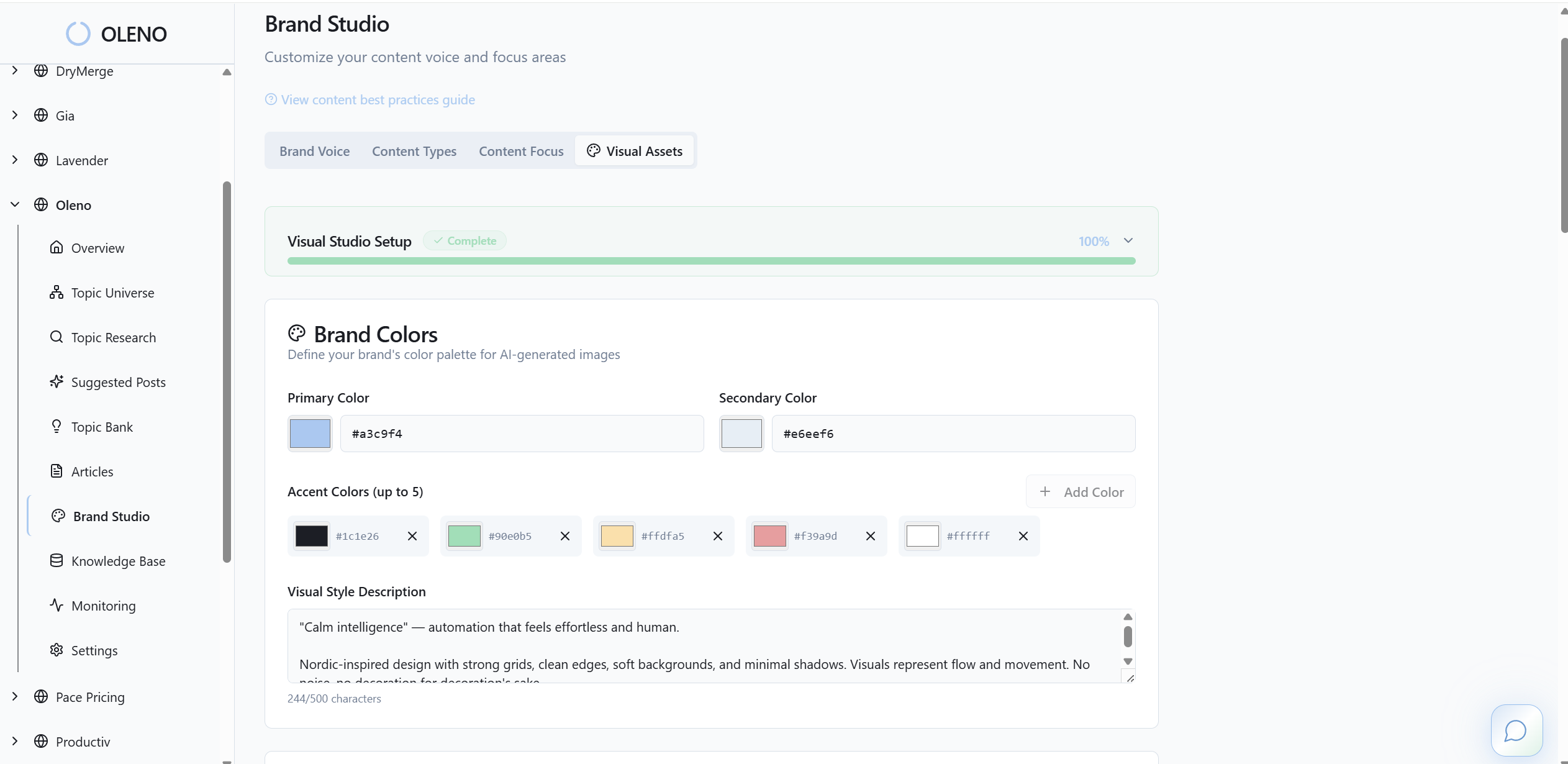
Benefit: fewer legal escalations, less time policing language, and a voice that actually survives localization. It ties directly to the pain we covered, no more “fix it once, drift back later.”
Automated QA and Sampling Before Anything Ships
Oleno’s QA gate blocks anything that fails structural checks, narrative compliance, voice, and accuracy constraints. Nothing ships until it passes. Measurement and system health features show quality trends over time and support sampling plans that catch what automation misses.
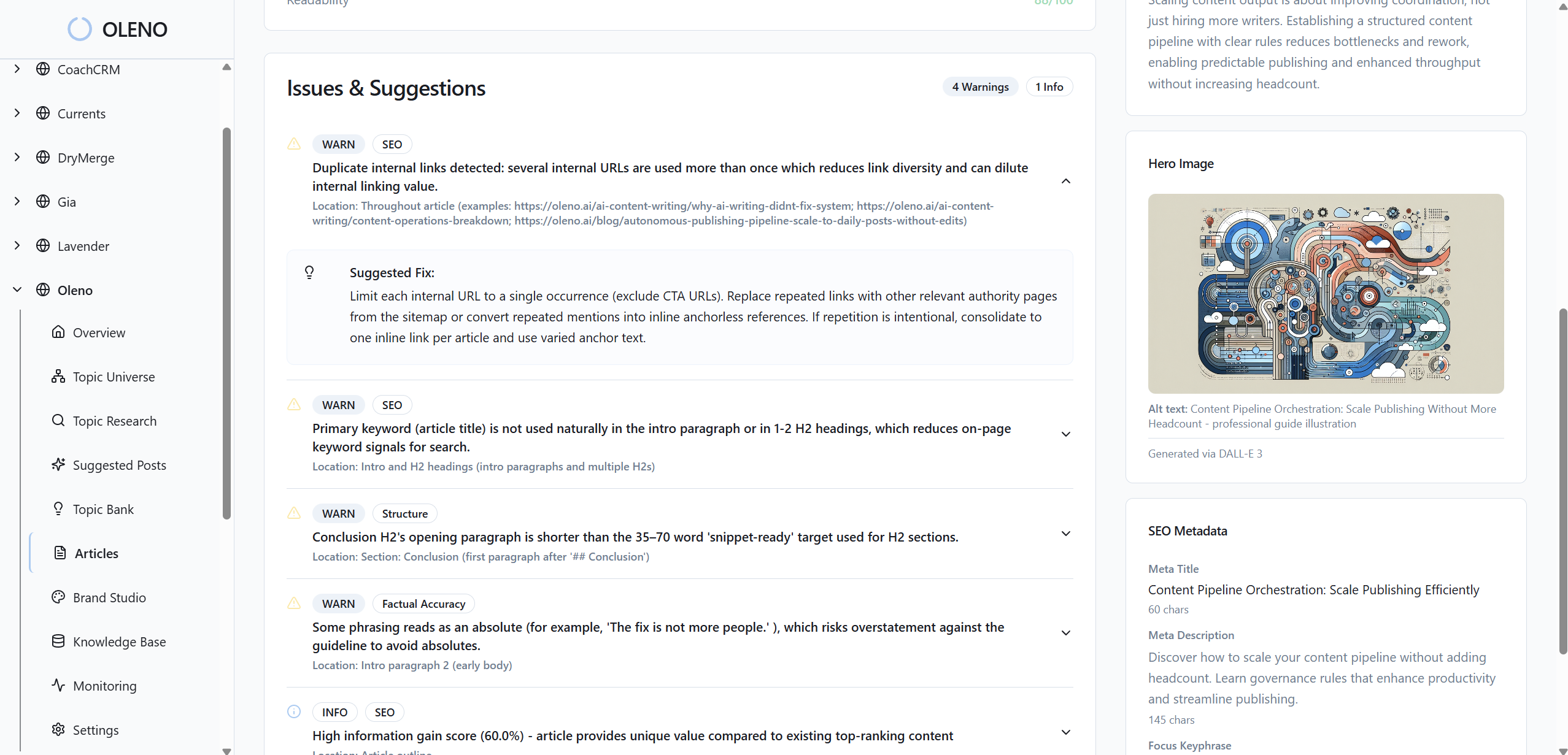
Benefit: predictable quality without a meeting wall on every asset. And when failures do appear, you’ll see patterns, not surprises, which reduces those frustrating rework cycles and keeps output moving.
Idempotent CMS Publishing and SEO-Safe Metadata
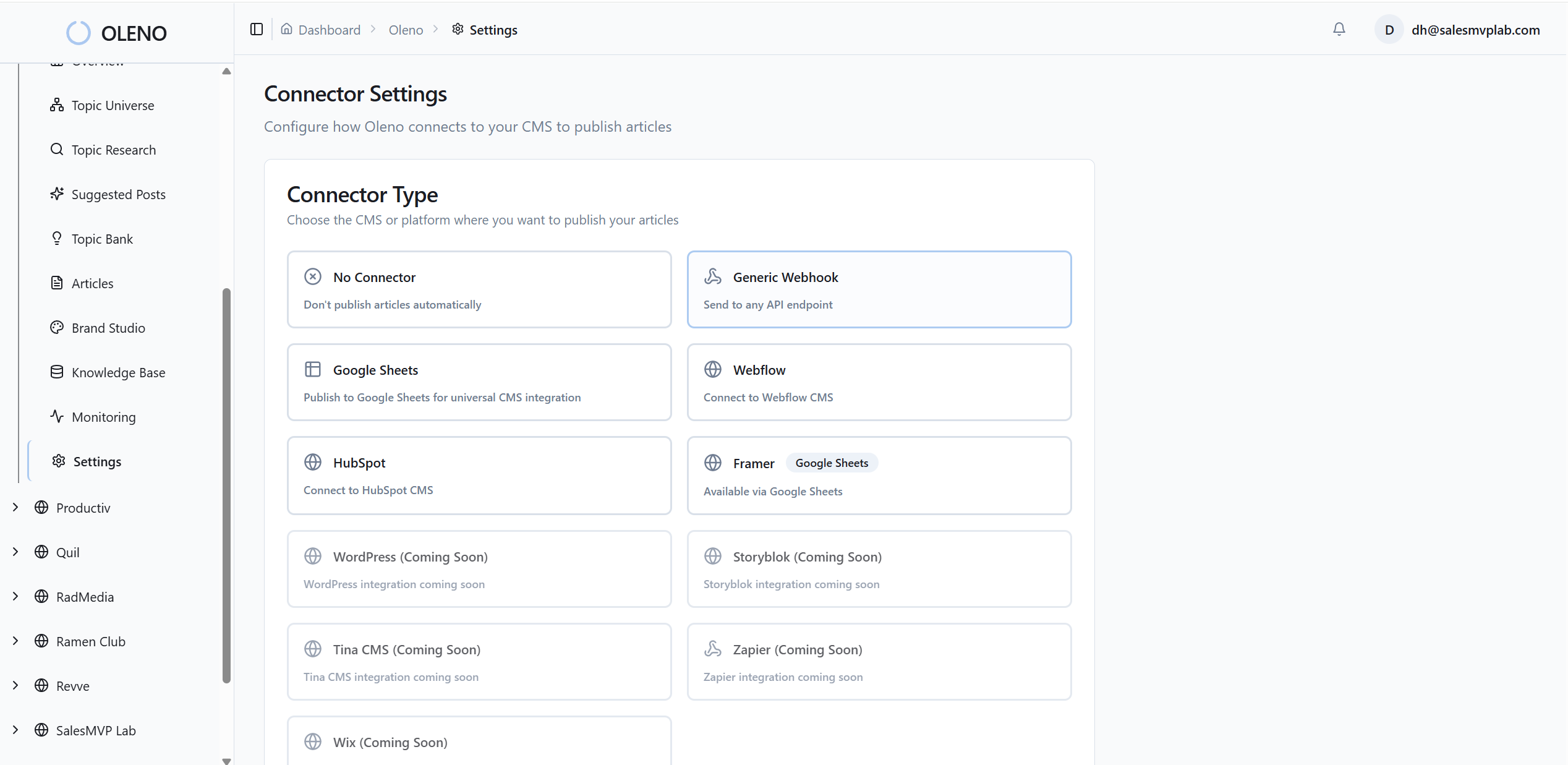
Oleno publishes directly to WordPress, Webflow, HubSpot, Storyblok, and more. Publishing is idempotent, upserts by stable IDs, deterministic transforms, and retries that don’t create duplicates. It also preserves canonical patterns and injects hreflang pairs consistently. Brand visuals and alt text can be produced to keep localized pages balanced.
Benefit: the last-mile bottlenecks shrink, dramatically fewer cleanup cycles, safer rollbacks, and SEO that doesn’t cannibalize itself. That’s the 83-hours-a-month problem turning into a scheduled job, not a scramble.
If you want to see governed, idempotent publishing in practice, end to end, spin up a run. Try Oleno for Free.
Conclusion
Translation makes words. A governed pipeline makes publish-ready assets you can trust. If you encode locale priorities, claims, canonicals, and hreflang up front, and insist on idempotent publishing with real QA gates, you stop firefighting and start shipping. Small teams can do this. Set the rules once. Let the system run the work.
About Daniel Hebert
I'm the founder of Oleno, SalesMVP Lab, and yourLumira. Been working in B2B SaaS in both sales and marketing leadership for 13+ years. I specialize in building revenue engines from the ground up. Over the years, I've codified writing frameworks, which are now powering Oleno.
Frequently Asked Questions