Automated Internal-Linking for Scaled SEO: A Practical Playbook
Most teams try to scale content, then bolt on internal links later. I did that too. It felt fast. It was a mistake. If you’re serious about automated internal-linking for scaled programs, you can’t treat links as an afterthought. The link graph is the system that lets volume compound. Without it, you’re just publishing pages that never help each other rank.
Here’s the kicker. LLMs and Google both look for coherent signals across your site. Not just good pages, but connected ones. That’s how topical authority emerges. If the site doesn’t help crawlers and models understand relationships between pieces, you lose equity with every publish. It’s like opening new stores with no roads between them.
Key Takeaways:
- Internal linking is infrastructure, not cleanup. Model clusters, rules, and targets before you hit publish.
- Convert topic metadata into prioritized link targets automatically, then enforce where anchors should land.
- Use three automation patterns together: pre-publish links in draft, post-publish linking jobs, and incremental re-link passes as your library evolves.
- Track orphan page count, indexation rate, anchor coverage, and crawl efficiency to prove impact within 60–90 days.
- Add QA rules that cap per-page link counts, control anchor text variants, and stop brand or narrative drift.
- Aim to reduce orphan pages and scattered PageRank by 70–80% within one or two quarters.
Why Volume Without Internal Linking Wastes Your Rankings
Publishing more pages without a link graph burns equity. Internal links transfer context, authority, and crawl paths, so clusters get discovered, indexed, and ranked together. When that structure is missing, pages stay isolated, crawlers miss relationships, and LLMs struggle to cite you as the definitive source.
Volume Without Links Equals Lost Equity
You can ship 50 posts this quarter and still stall. The reason is simple, every new URL needs a path in and a job to do. When related posts don’t reference each other, you split signals, weaken relevance, and make discovery harder. I’ve seen sites double output and barely move traffic, because the graph stayed broken.
Why AI And GEO Care About Your Link Graph
LLMs synthesize. They look for consistent, repeated claims across a body of content. Internal links concentrate those claims inside clusters and point to canonical definitions. That consistency earns citations. Google behaves similarly, rewarding clear site architecture and internal pathways. The link graph tells both systems what belongs together and what matters most.
The Real Bottleneck: No System To Build The Link Graph
The problem isn’t that writers forget links. It’s that the team has no deterministic way to convert topics into link targets and put those links in the right spots. You need system-level rules that say who links to what, where, and with which anchor patterns, then you need a way to run that at scale without meetings.
The Symptom: More Pages, Flat Growth
You see more drafts, more briefs, more “we published,” and then analytics barely budge. It looks like a traffic ceiling. It isn’t. It’s a routing problem. Pages ship with thin or inconsistent links. Clusters don’t form. Crawlers wander. People start chasing new keywords instead of fixing structure, and the cycle repeats.
The Root Cause: No Deterministic Link Map
Most teams rely on memory and reviewer preference. That fails at 200+ URLs. You need a map that ties each topic to parent pages, siblings, and children. You also need anchor rules. Without those, anchors drift, links point to whatever someone remembers, and priority targets stay underlinked. The result is scattered signals and missed intent.
The Cost of Missing Internal Links at Scale
Weak internal linking creates measurable waste. Crawlers burn time on dead ends, orphan pages don’t earn or pass equity, and anchors get diluted. That’s not just a ranking problem, it’s an indexation and maintenance problem that compounds each month you add content without structure.
Orphan Pages And Crawl Waste
Orphan pages stagnate. They don’t get discovered reliably, they don’t get refreshed crawls, and they don’t help anyone. Fixing them requires creating inbound links or updating sitemaps constantly, which is busywork. Google’s guidance on crawl management makes the same point, internal pathways help crawlers prioritize and move faster, which improves indexation and freshness over time. See the principles in Google’s crawl budget guidance.
Anchor Text Drift And Relevance Loss
Anchors that wander from “what is X” to “learn more about X” to “click here” confuse models and humans. You lose topical clarity and ranking relevance. Practical guides show consistent anchors improve performance and help distribute PageRank within clusters. Ahrefs has covered this extensively in their research on internal links.
Coordination Tax And Rework
Manual linking creates a review bottleneck. PMMs mark up drafts. Editors chase anchors. Someone forgets to add links to older cornerstone pages. Weeks later, you run a cleanup sprint. That’s lost time. It’s also demoralizing. Teams want to create, not keep fixing yesterday’s structure.
What It Feels Like When Links Are An Afterthought
You’re staring at a great draft and you can’t push it live because the internal links are wrong. Or you ship it and wake up to a Slack message asking why the new piece doesn’t point to the cornerstone page your boss cares about. You start to dread final review week.
Midnight Fixes And Slack Pings
It’s 10:47 PM, and you’re still combing through copy to add three links someone flagged as “critical.” You add them, but now the paragraph reads clunky. You edit, then QA flags the new sentence as off-voice. That’s the cost of layering links after the fact. Every tweak creates more tweaks, especially when evaluating automated internal-linking for scaled.
The Approval Loop That Never Ends
Approvals drag because links trigger opinions. One stakeholder wants branded anchors. Another wants exact-match phrases. Someone else wants fewer links, someone wants more. Without rules, every review becomes a debate. Momentum dies. Publishing cadence slips. Trust in the process erodes.
A Practical Playbook for Automated Internal Linking at Scale for Automated internal-linking for scaled
Treat internal linking like schema for your own site. Model clusters, define link rules, then run them the same way every time. The workflow is simple on paper, and it holds when your library grows. Start with topics, not keywords. Then enforce anchor and target rules in draft and after publish.
Model Topics, Not Just Keywords
Clusters form around clear topics with parent, sibling, and child relationships. Your topic record should include parent target, cornerstone definitions, preferred anchor variants, and “must link” pages. Capture that once so every new piece in the cluster knows who to point to and who should point back. This is how you stop anchor drift before it starts.
Here’s how to design the topic model without overthinking it:
- Define the cornerstone page and 3-5 subtopics with clear roles.
- Assign preferred anchor variants for each target, plus 2-3 safe alternates.
- Map inbound and outbound expectations per subtopic so every page has a job.
Define Rules For Automated Internal Linking
Rules beat memory. Document per-type link caps, where links appear, and which targets get priority. Example: “Every long‑form post links once to the cornerstone in the intro or first H2, once to two siblings in body paragraphs, and once to a bottom-funnel page when relevant.” Add anchor rules so copy stays natural without losing precision.
Useful guardrails to write down:
- Per-page link budget by length and type.
- Anchor patterns for definitions vs. how‑to vs. comparisons.
- Priority targets that require at least N inbound links per quarter.
Run Pre-publish, Post-publish, And Incremental Re-link Jobs
Pre-publish links go in the draft where readers expect them. Post-publish jobs catch gaps across the library and add links in older pages that should reference new work. Incremental re-link passes run monthly to reduce orphans and rebalance clusters as priorities shift. You don’t need heroics, you need cadence.
When you operationalize these three passes, measure improvement with:
- Orphan page reduction over time.
- Indexation rate for new URLs within 14 days.
- Anchor coverage vs. preferred variants per target.
How To Prove Internal Linking Improvements Fast
Executives don’t want theory. They want proof that linking work moves metrics. You can show movement within 60–90 days if you pick the right signals. Keep it simple. Track orphan reduction, crawl and index gains, and anchor coverage across priority targets. Tie those gains back to a repeatable process.
The Four Signals That Matter
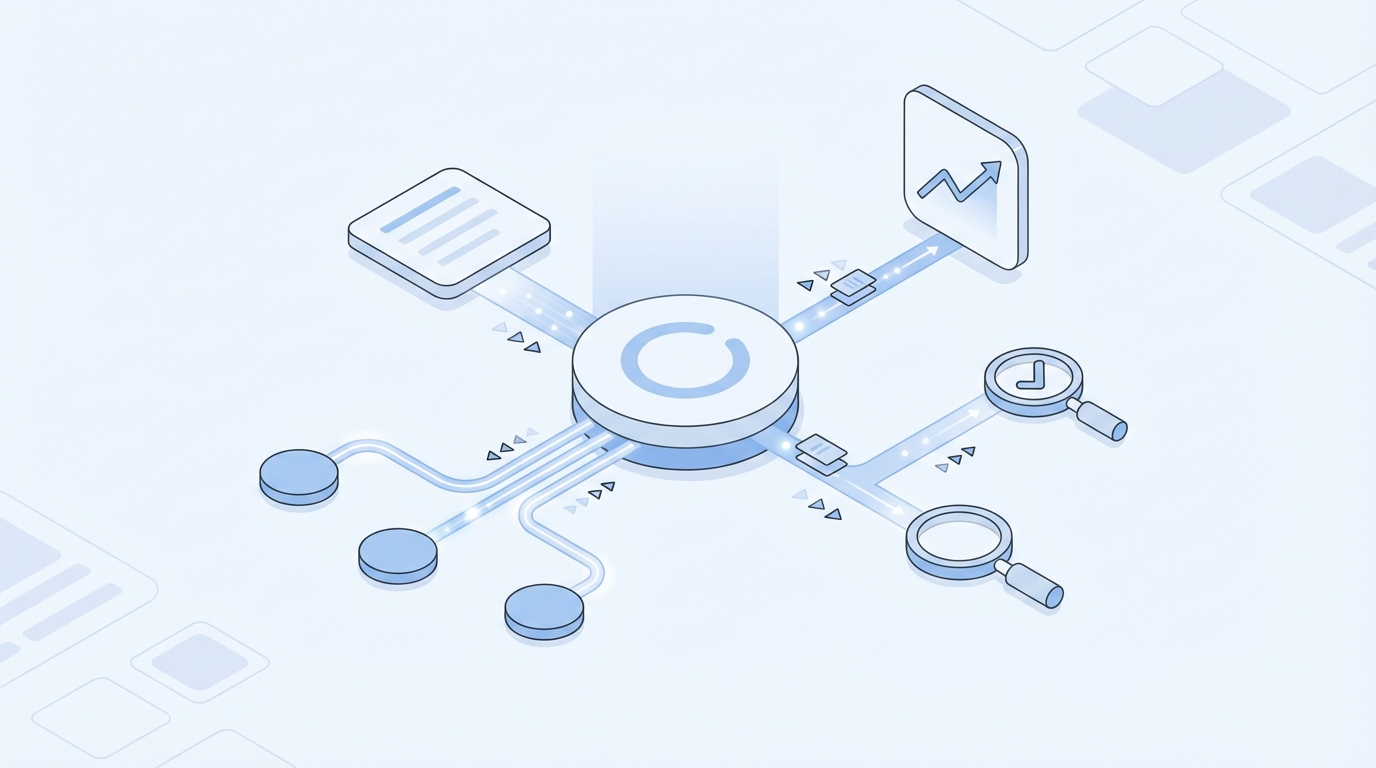
Orphans, indexation, crawl efficiency, and anchor coverage tell a clean story. Orphan pages should drop quickly when you run pre‑ and post‑publish passes. Indexation rates should climb as crawlers find consistent pathways. Crawl depth should shrink for key clusters. Anchors should converge around your preferred variants, especially when evaluating automated internal-linking for scaled.
Report Cadence And Targets
Set a monthly snapshot and a 90‑day target for each signal. Share a one‑pager with the before and after. Keep the narrative tight. Most leaders don’t need every detail, they need to see the system works and will keep compounding. If you need a primer on why internal links matter, Google reinforces it in the SEO Starter Guide.
Tooling Without Overkill
You can do a lot with your CMS, a crawler, and a spreadsheet. A focused crawl will surface orphans and missed anchors. Your CMS can store topic metadata that drives linking decisions. If you want a deep dive on orphans specifically, Screaming Frog’s guide is solid: how to find and fix orphan pages.
The Risks You Need To Control With QA
Internal linking can get messy if you overcorrect. Over-linking dilutes copy and looks spammy. Repetitive anchors read robotic. Brand voice drifts when editors jam links into sentence openings. You need simple QA rules that stop these regressions without slowing you down.
Cap Links And Control Placement
Set maximum internal links per 1,000 words per content type, then enforce “no links in H2s or first sentences of paragraphs” so readability doesn’t tank. Keep links inside natural phrases, not bolted onto generic verbs. When in doubt, protect your intros and conclusions for clarity.
Anchor Variants Without Chaos
Pick 3-4 anchor variants per target and stick to them. Rotate thoughtfully. Don’t invent new anchors every week. That’s how you lose relevance signals. Also avoid generic anchors like “click here” entirely. They carry no meaning and waste opportunity.
Editorial Safety Rails
Codify reviewers’ jobs. One person checks anchors and counts. One person checks voice and tone. One person checks target coverage. Small teams can combine roles, but the checklist shouldn’t live in anyone’s head. That’s how standards slip.
How Oleno Makes The New Approach Practical
You can run the playbook manually. It just won’t hold when you’re busy. Oleno exists so small teams operate like big ones, with governance, cadence, and quality control that doesn’t depend on heroics. Strategy stays human. Execution runs as a system.

Topic Universe And Clusters, Without Guesswork
Topic Universe finds and organizes what should exist across your site, knowledge base, and competitive landscape. Topics are enriched, deduplicated, and scheduled based on priority and strategic fit. That gives you clean clusters to build intentionally, so you’re not guessing what deserves attention each week.
Programmatic SEO Studio, From Brief To Publish
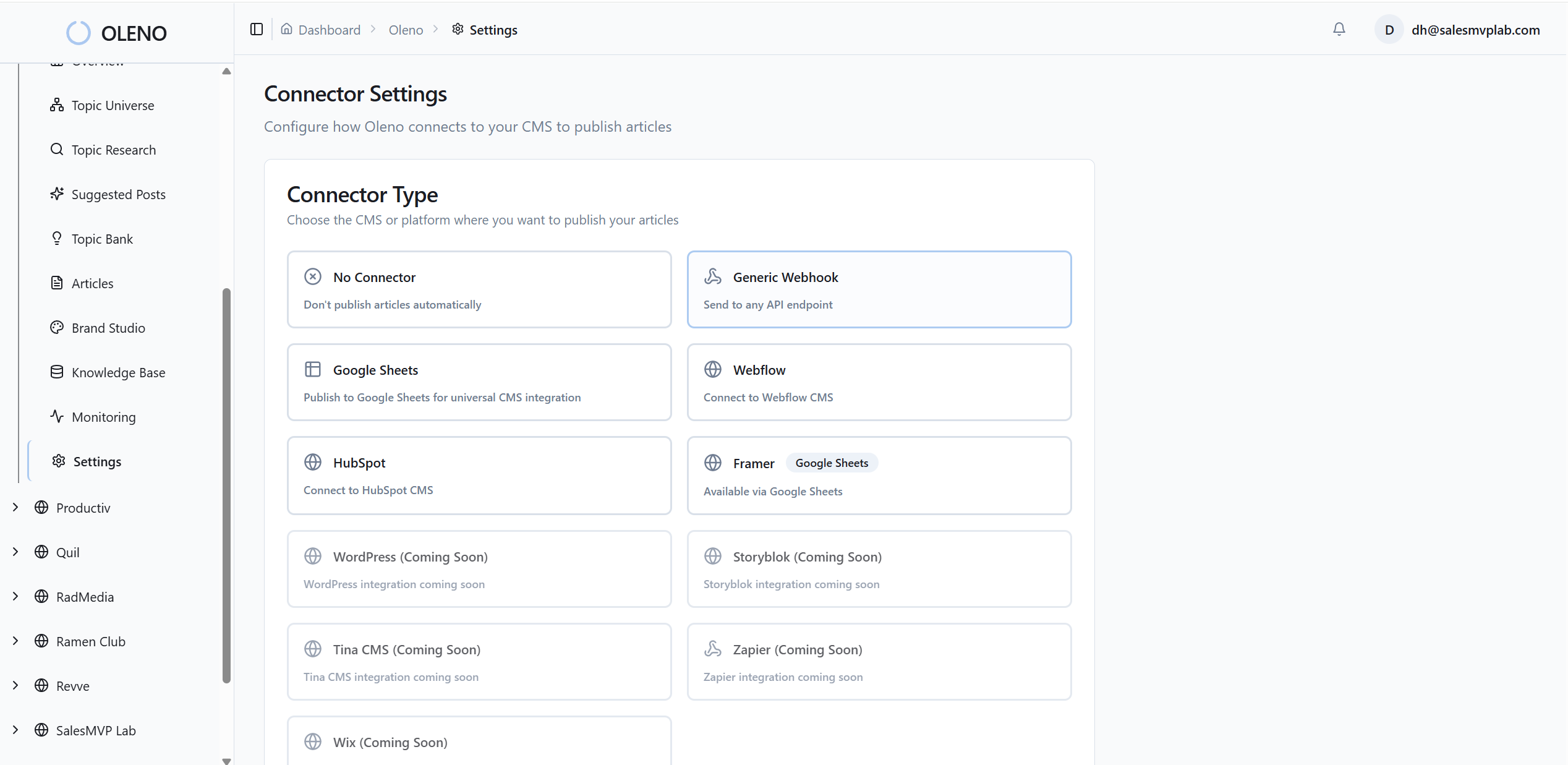
Programmatic SEO Studio runs a locked-outline pipeline from brief to draft to QA to publish. Governance gets injected at each stage, so voice, structure, and on‑page rules stay consistent while you scale output. The Quality Gate blocks thin or off‑brand articles, which reduces rework and keeps your library cohesive as you add volume.
Orchestrator, Quality Gate, And CMS Publishing Working Together
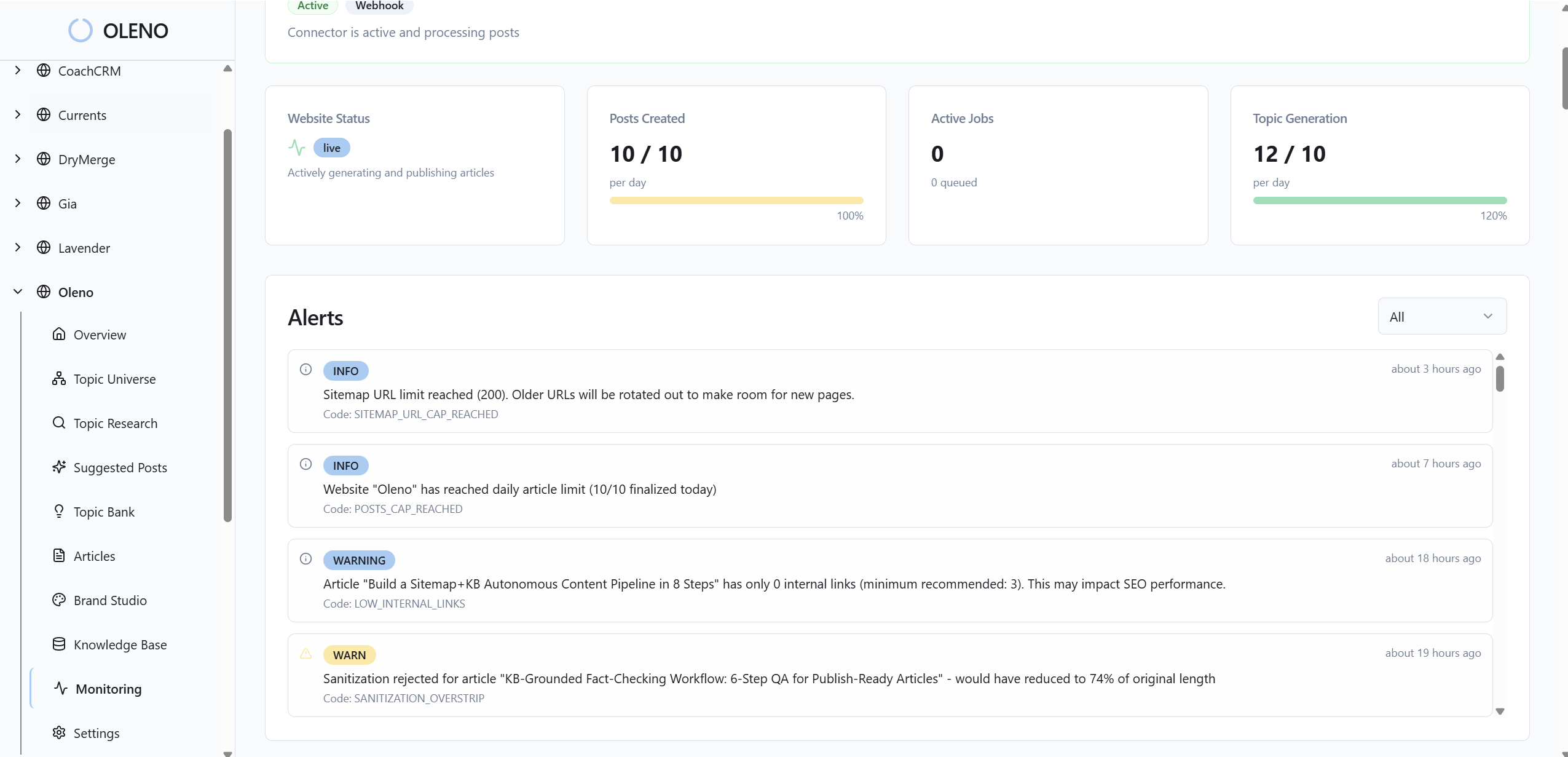
The Orchestrator keeps the cadence, selects the right topics to run, and moves each job through deterministic steps. Quality Gate enforces structure and clarity before anything reaches review. CMS Publishing pushes content directly in draft or live mode, so you don’t lose structure during copy‑paste. Together, you get reliable throughput that doesn’t collapse when priorities shift.
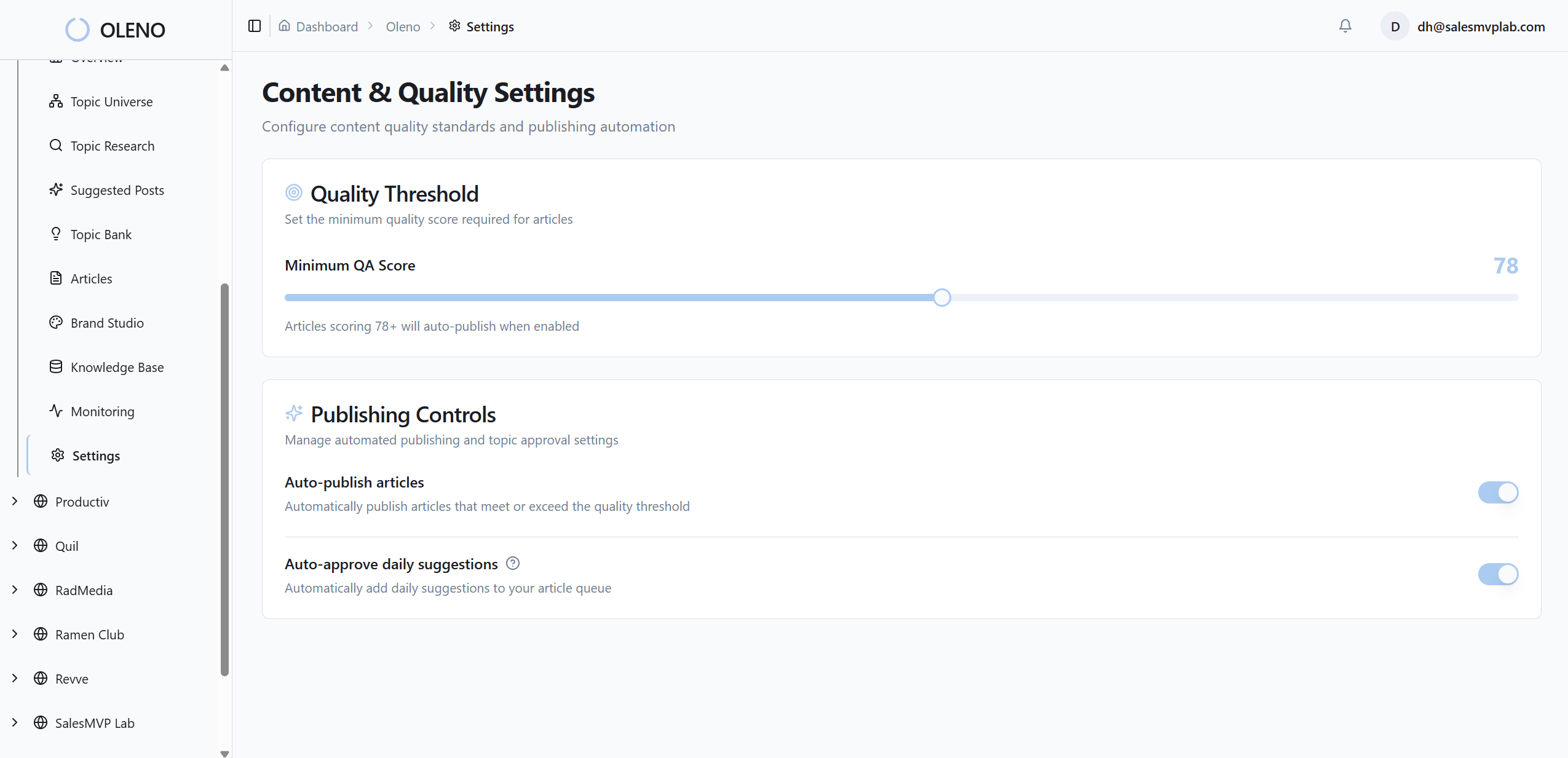
Oleno ties governance to execution, which is the real unlock here. You define how you want to show up once, then the system applies it across every publish. Small teams finally get consistency at scale without adding headcount.
Conclusion
Internal linking is not a cleanup task. It’s the operating system that turns content volume into durable visibility. Model topics, set rules, run pre‑publish, post‑publish, and incremental re‑link jobs, then track orphan reduction, indexation, and anchor coverage. Do that for 60–90 days and you’ll cut wasted equity fast. Keep doing it and clusters compound. That’s how you win when both Google and LLMs are judging the whole, not just the parts.
About Daniel Hebert
I'm the founder of Oleno, SalesMVP Lab, and yourLumira. Been working in B2B SaaS in both sales and marketing leadership for 13+ years. I specialize in building revenue engines from the ground up. Over the years, I've codified writing frameworks, which are now powering Oleno.
Frequently Asked Questions