Automated Scheduling Playbook: Preserve Brand Voice at Scale
You can push publish volume to daily. That part isn’t the problem. The problem is you end up scaling tiny inconsistencies that felt harmless at weekly cadence. A hedgy qualifier here. A passive line there. By Friday, including the rise of dual-discovery surfaces:, the voice feels off and nobody can explain why.
We’ve seen the same pattern on every team. Speed multiplies whatever system you already have. If your rules are vague, automation turns that vagueness into drift. If your rules are crisp and enforced upstream, automation compounds trust. That’s the point of a scheduling playbook, not a calendar.
Key Takeaways:
- Treat cadence as a multiplier, and make voice rules machine-checkable before you scale output
- Put visibility guardrails on topics with cool downs and per-pillar caps to prevent tone wobble
- Convert style into pass or fail checks, then block publishing below a composite threshold
- Quantify the rework tax and turn recurring edits into rules, not more headcount
- Tie sampling rates and pause policies to system health, not gut feel
- Use orchestration to apply Brand Studio and Knowledge Base at every stage for consistent voice and facts
- Let QA-gates decide go or no-go, then publish directly without manual handoffs
More Posts, More Drift: Speed Alone Dilutes Brand Voice
Publishing faster typically amplifies voice drift because small inconsistencies compound across dozens of posts. The real fix is to define observable rules for tone, phrasing, and structure, then gate publishing behind those checks. For example, “no passive headlines” becomes a block, not a nice-to-have.
Automation Amplifies Gaps
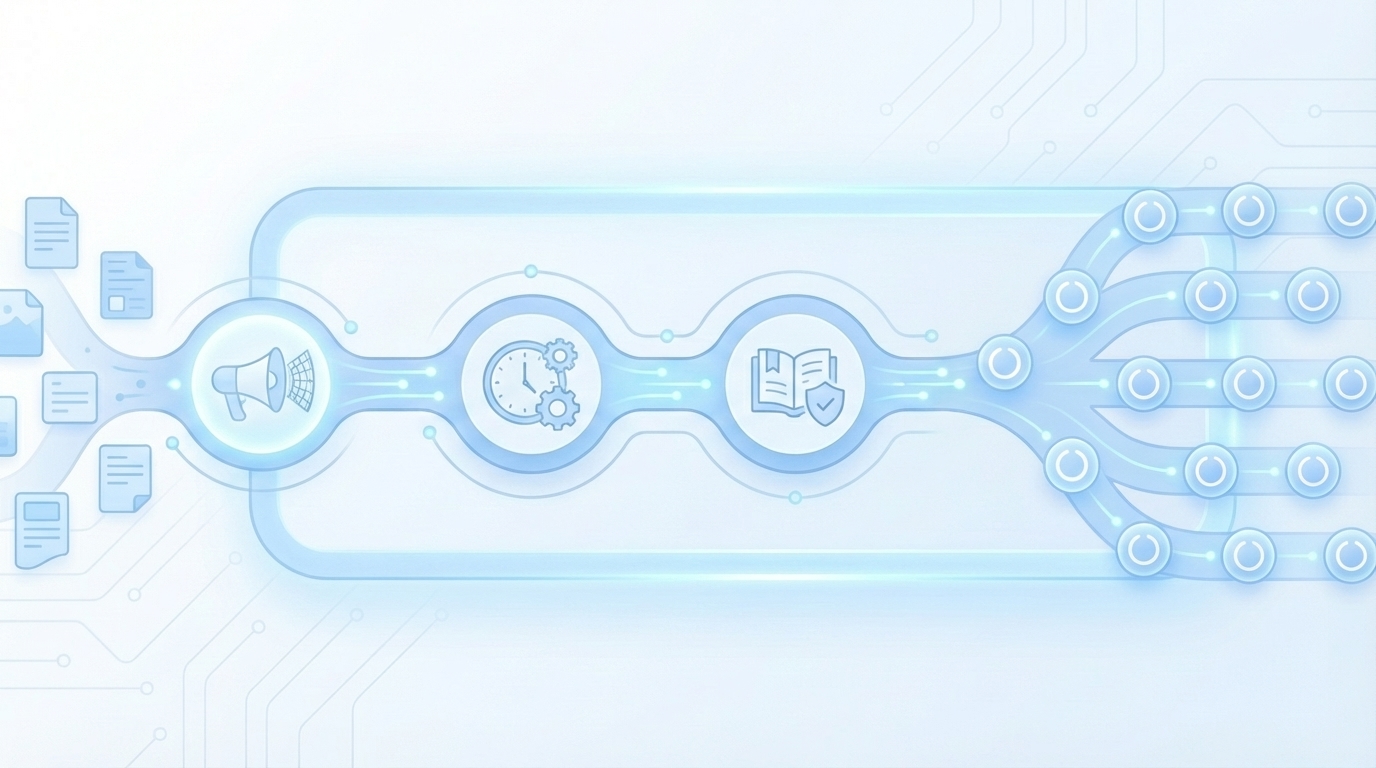
Ship more without rules and you scale inconsistency, not reach. The workaround is simple, though it takes discipline. Document what “on voice” means in observable terms, like sentence length bands, active voice ratio, and CTA verb choices. Then require articles to match those bounds before they can move forward.
Start with the top five places your brand slips. Hedgy qualifiers. Passive voice. Jargon that sneaks in. Convert each into a machine-checkable rule with examples. If a rule cannot be checked, it is not a rule yet. Tighten it until a script could verify it.
Gate publishing behind those checks. Make failure a hard stop with clear remedies. You’ll feel slower for a week. Then you’ll publish faster, with fewer “fix this” Slacks and less frustrating rework. If you want system-level context, this primer on autonomous content operations lays the foundation.
Set A Visibility Guardrail
Decide how often a topic can appear before readers tune out. Use cool downs to avoid “same idea, new title” churn. At minimum, set a re coverage window so automation does not dogpile one cluster. One or two posts per pillar per day usually holds voice better than five scattershot publishes.
Batch related topics so phrasing patterns reinforce themselves. Add a “do not repeat” list for core claims and lines you want phrased the same way every time. Keep the canonical variation in your brand studio and fail anything that drifts too far from it.
What Is Voice Drift And Why It Accelerates With Automation
Voice drift is deviation from your brand’s tone, phrasing, and narrative structure over time. Automation accelerates it because each run resets context unless you provide persistent memory. Banned terms, phrasing templates, and structural rules provide that memory at scale.
Publishing quickly is not the issue. Publishing quickly without system constraints is. Treat cadence as a multiplier on rule quality, not a substitute for it. If you need a broad reference point on tone fidelity, see Nielsen Norman Group on tone of voice.
Voice Drift Is A Scheduling Problem, Not A Writing Problem
Voice drift often looks like a copy issue, but it is usually a scheduling and governance issue. You fix it by translating voice into rules, putting those rules upstream, and enforcing them with pass or fail gates. The schedule aligns to rule health, not hope. Think less prompts, more pipeline.
Translate Voice Into Rules
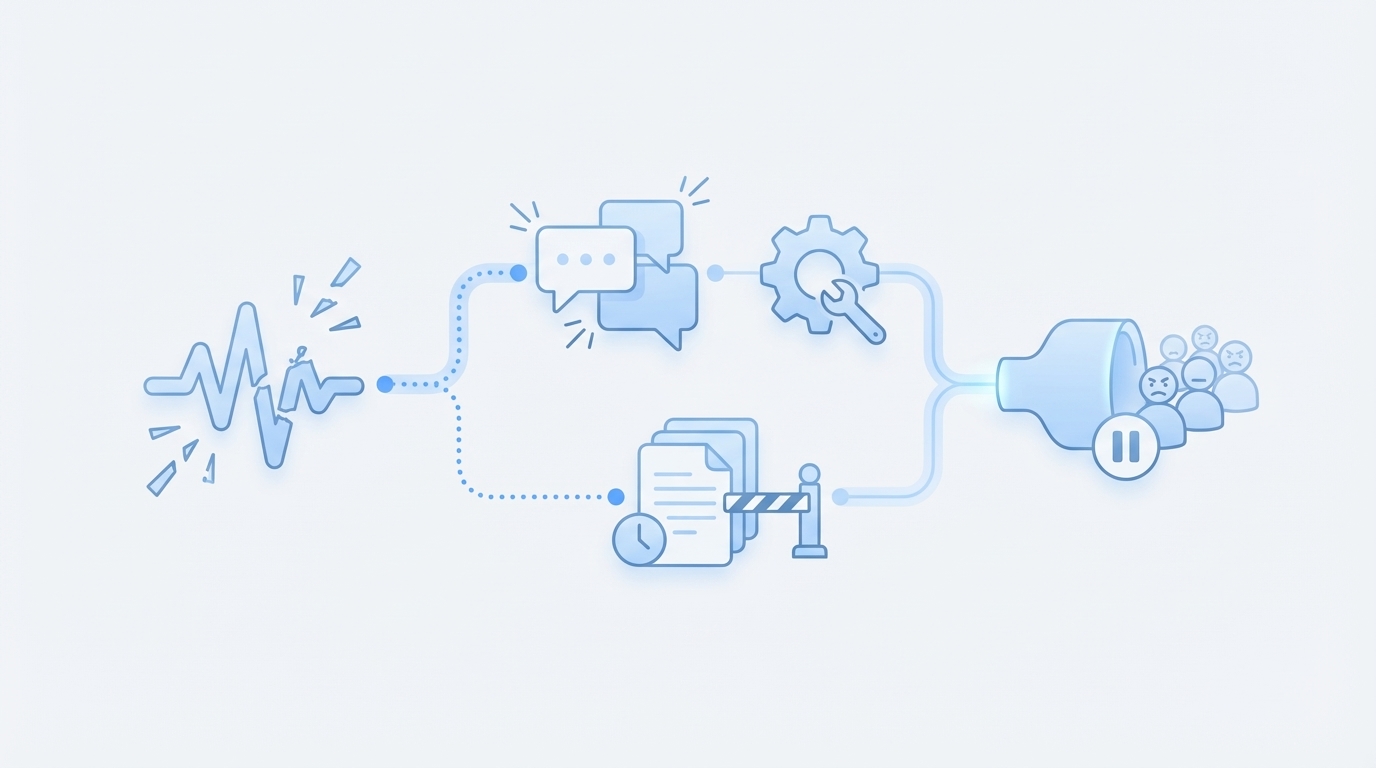
Build a compact “style token” set that a script could verify. Sentence length range, active voice bias, allowed qualifiers, CTA verbs, and signature phrases. Store canonical examples next to rules so checks compare text to template, not vibes to vibes. Structure is half of voice, so encode it too.
Keep a banned terms glossary with safe replacements. Small and high impact beats long and ignored. Define structural patterns like TL, DR placement, snippet-ready H2 openings, and link density ranges. Structure is easier to check deterministically and often drives tone the right way.
Convert Rules Into Pass Or Fail Checks
Map rules to machine checks. Regex for banned terms. Part-of-speech patterns for passive voice. Length bands for sentences. Semantic similarity thresholds for signature lines. Set a minimum composite score to publish. Below the line, block and auto requeue with targeted edits. Above the line with warnings, allow once, then sample.
Keep thresholds stable for two weeks before adjusting. You are tuning a system. Reacting to edge cases creates whiplash and, ironically, more drift. If you are shifting from prompts to pipelines, this perspective on the orchestration shift helps.
Curious what this looks like in practice? Try generating 3 free test articles now.
Where Rules Should Live To Be Enforced Reliably
Put rules upstream in the pipeline, not buried in docs. Checks should run the same way every time, regardless of who triggered the job. Keep brand voice and KB grounding as separate sources. One governs tone, the other governs facts. Both should be referenced at every stage.
Version rules like code. Each change gets an ID, including the shift toward orchestration, date, and rollback note. When drift appears, you can trace it to a rule change, not guess after the fact. That traceability reduces debate, saves time, and turns “why did this sound off” into a fixable diff.
The Hidden Costs Of Voice Drift In Automated Publishing
Voice drift carries real costs, even if you don’t see them on a dashboard. The rework tax adds invisible hours. Compliance misses trigger delays. Confidence erodes and teams add manual reviews everywhere. The compounding effect is lower throughput with higher stress, and nobody budgets for it.

The Rework Tax
Let’s pretend you publish 60 posts a month. If 30 percent need tone fixes at 20 minutes each, you burn 6 hours weekly on avoidable edits. Add context switching and review pings and you are closer to 8 to 10 hours. That is a day lost that nobody planned for.
Derailments stack. A blocked post triggers stakeholder pings and last minute swaps, which increases mistakes elsewhere. Treat each avoidable edit as a signal to update a rule. Price in handoffs too. Every human checkpoint adds latency and variability. Codify recurring edits as rules and remove them from the path.
Compliance, Trust, And Capacity
In regulated or sensitive categories, a single risky phrasing can create days of delay and worried stakeholders. Define risk based checks for claims, disclaimers, and product language. Enforce exact phrasing where it matters most, allow variation where it is safe. The FTC Endorsement Guides are a good baseline for marketing language.
Voice inconsistency erodes confidence. When leaders stop trusting automated posts, teams add manual reviews everywhere. Throughput drops while stress rises. Reduce optional reviews by proving rules work. Publish a short weekly report on pass rates, common failures, and rule changes. Not analytics, just operational hygiene. If you need concrete checks to start with, this post on an automated QA gate translates edits into enforceable rules.
What Teams Actually Feel When Voice Slips
Voice drift shows up as human friction before it shows up in metrics. A single off brand line triggers a flurry of Slacks. Editors become bottlenecks. Legal asks for holds. The team slows down and gets more cautious. Not because they want to, but because trust got dinged.
Missed Tone Creates Doubt
One off brand line in a solution section and sales asks for a pause. Marketing hesitates. Legal raises an eyebrow. You lose a week tightening language that should have been governed on day one. Capture the five lines you want repeated word for word, like your core promise or value exchange.
Score drafts for semantic closeness and block outliers. Keep a short “signature phrasing” list and force articles to use one of the approved variants when the concept appears. It lowers nervous escalations and makes the voice feel familiar again. If you want the deeper why, here is why AI writing limits show up most in post publish cleanup.
Editors Become Bottlenecks, Then Policy
Editors are escalation paths, not QA gates. If they are catching the same issues repeatedly, the system is failing them. Track the top three manual fixes editors make and write a rule for each. Remove the need to “have a good ear” to ship on time.
If failure rates spike for three consecutive days, freeze noncritical publishing for 48 hours. Fix rules, then resume. If a critical compliance rule breaks, set an immediate hold and trigger a rollback plan for queued content. Communicate the policy in advance so a slowdown is a procedure, not a surprise.
Ready to eliminate avoidable rework and slowdowns? Try using an autonomous content engine for always-on publishing.
A Voice-Safe Scheduling Playbook That Scales Without Drift
A voice-safe schedule is simple. Set cadence by pillar, enforce cool downs, block on voice and structure, and sample just enough to stay honest. You ramp volume when pass rates and audits support it. You pause when they do not. The math stays visible and light.
Cadence, Batching, And Cooldowns
Set cadence by pillar, not site wide. Cap daily posts per pillar and micro batch related topics to stabilize tone. Spread publishes so readers see a coherent arc, not a content dump. Enforce cool downs on topics and clusters, then re cover on purpose, not by accident.
Use micro batches to train patterns into the system. Same CTA structure. Similar sentence length. Repeatable solution framing. Consistency is cumulative and, in practice, faster. Pair these choices with the tactical patterns in this guide to a daily content cadence.
What QA Checks Must Block Publish
Voice alignment, structure compliance, and KB grounding should be non negotiable. Set a single composite quality threshold and require a pass to publish. Apply rule severity with intent. Use hard blocks for banned terms and compliance lines. Use soft warnings for stylistic nudges.
Soft warnings should accumulate. Too many convert to a block. Store failure reasons next to content versions so remediation is targeted. Make the fix obvious with the sentence, the rule, and a suggested replacement. Treat your rules as code using this approach to policy as code.
Sampling SLAs For Human Audit
Tie sampling rates to pass rate health. For example, 20 percent audit at 90 percent pass or higher. Forty percent at 85 to 89. Freeze and fix below 85. Keep the math simple and visible so everyone understands why volume changes week to week.
Sample across pillars and formats, not just random posts. You want coverage where drift risk is highest. Use audits to refine rules, not rewrite copy. If humans keep rewriting, you are patching symptoms. Fix the rule and stop the symptom from reappearing.
For clarity on snippet readiness, which often tightens voice, see Google Search Central guidance on structured data. Schema clarifies meaning and, paired with snippet ready sections, makes your content easier to reference.
How Oleno Enforces Schedule Rules And Brand Voice At Scale
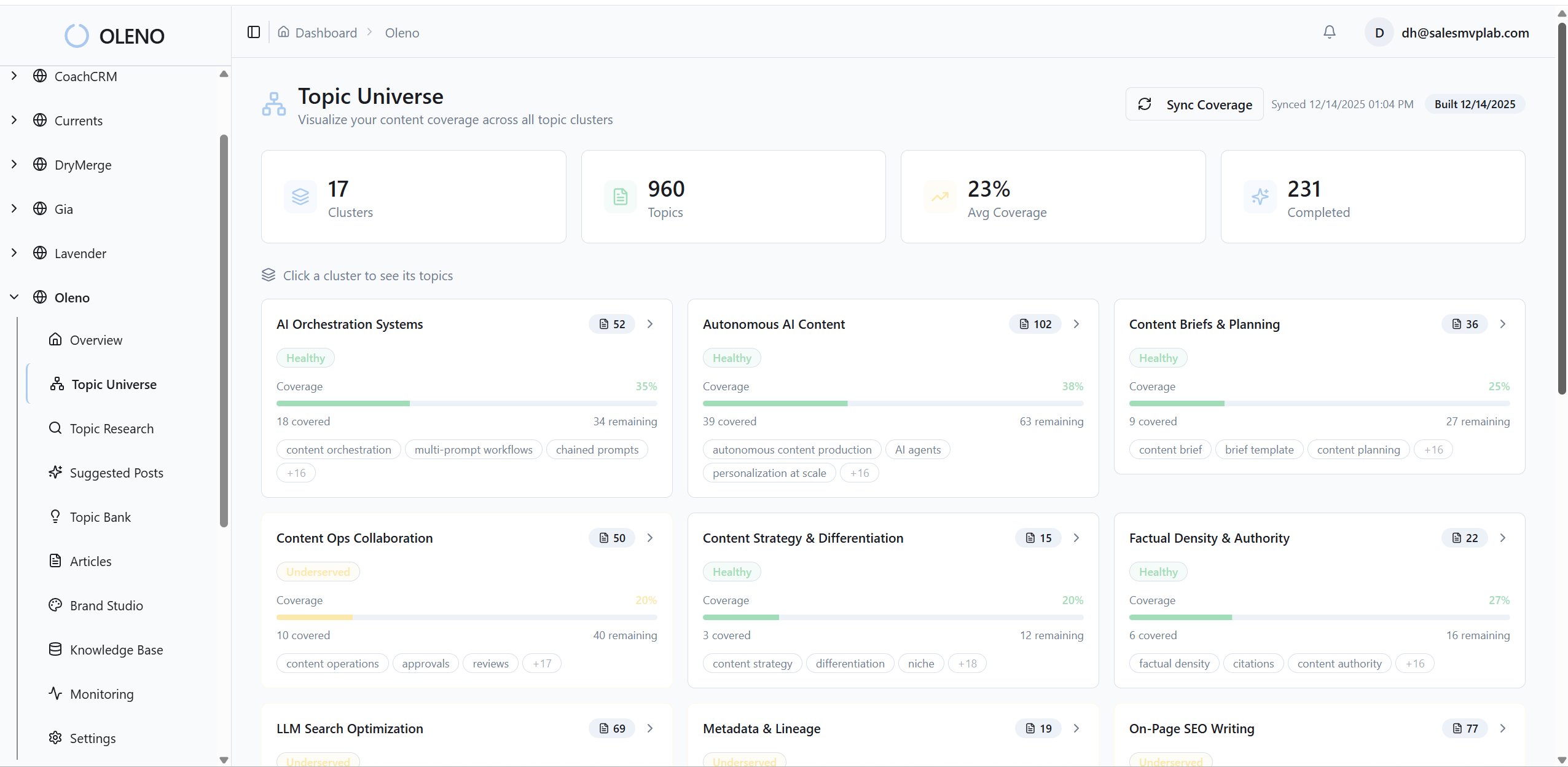
Oleno treats content as a governed pipeline. Brand Studio encodes tone and phrasing, the Knowledge Base grounds claims, Topic Universe manages cadence and cool downs, and QA-Gate decides go or no go. When quality passes, articles publish directly to your stack without manual handoffs.
Configure Voice Guardrails
Oleno applies your voice rules deterministically. You define tone, phrasing, and banned terms in Brand Studio. Those rules are referenced at every stage, from brief to draft to QA. Keep your critical lines as canonical snippets for exact matches when it matters most.
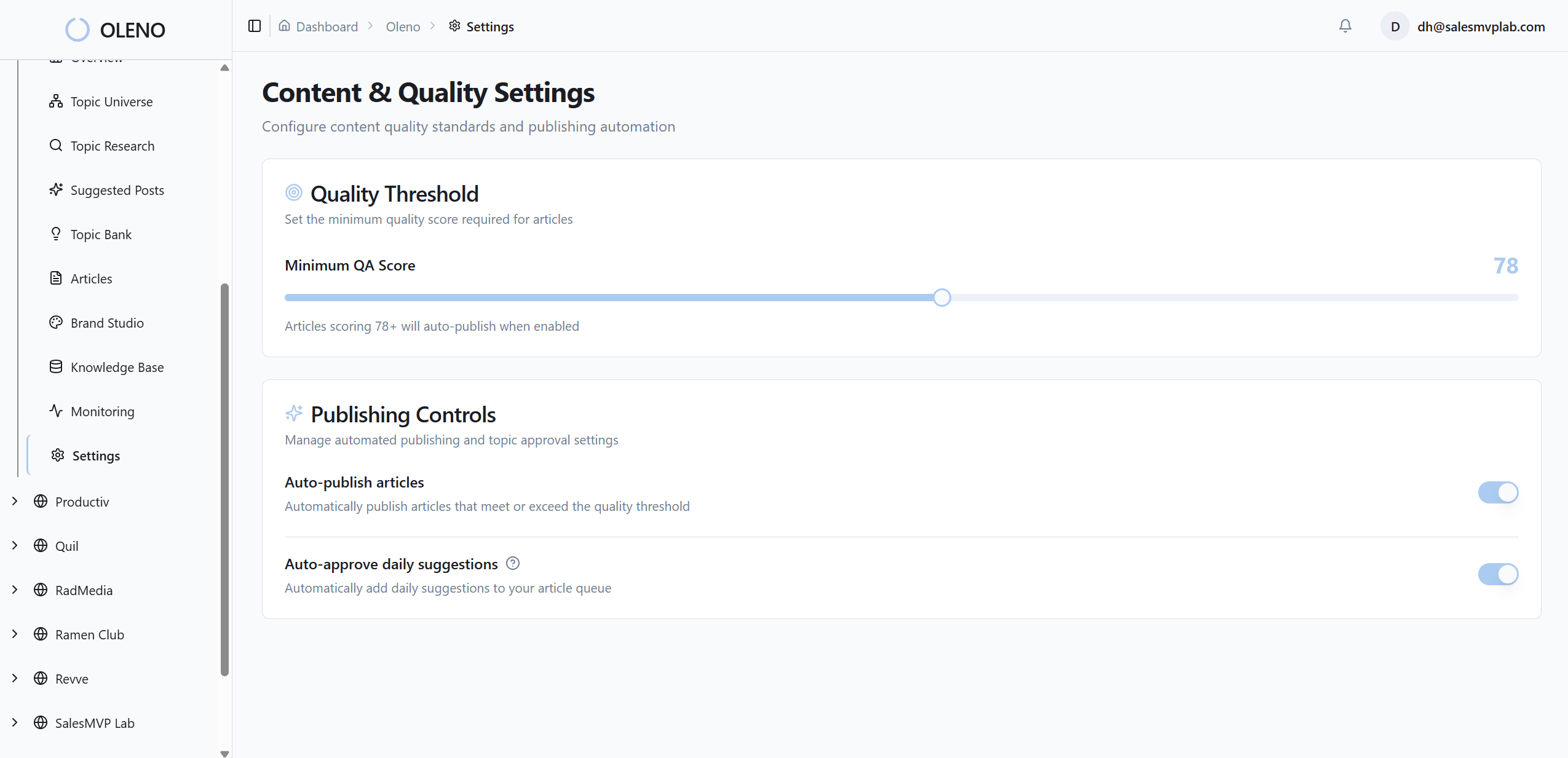
Voice rules and facts remain separate by design. Brand Studio governs tone. The Knowledge Base governs claims. Oleno uses both during brief generation and drafting, then validates them again during QA-Gate. Version changes and keep a short changelog so you can revert a rule if drift appears later. If you want a complementary approach, here is how to build a brand voice linter.
QA-Gate, Topic Universe, And Deterministic Publishing
Oleno’s Topic Universe maps pillars, tracks coverage, and enforces cool downs before re covering a topic. That prevents repetitive angles and holds tone steady as you scale. You approve suggested topics based on cluster gaps and relevance, then generation runs without handoffs or calendar thrash. See these patterns for setting a sustainable publishing cadence.
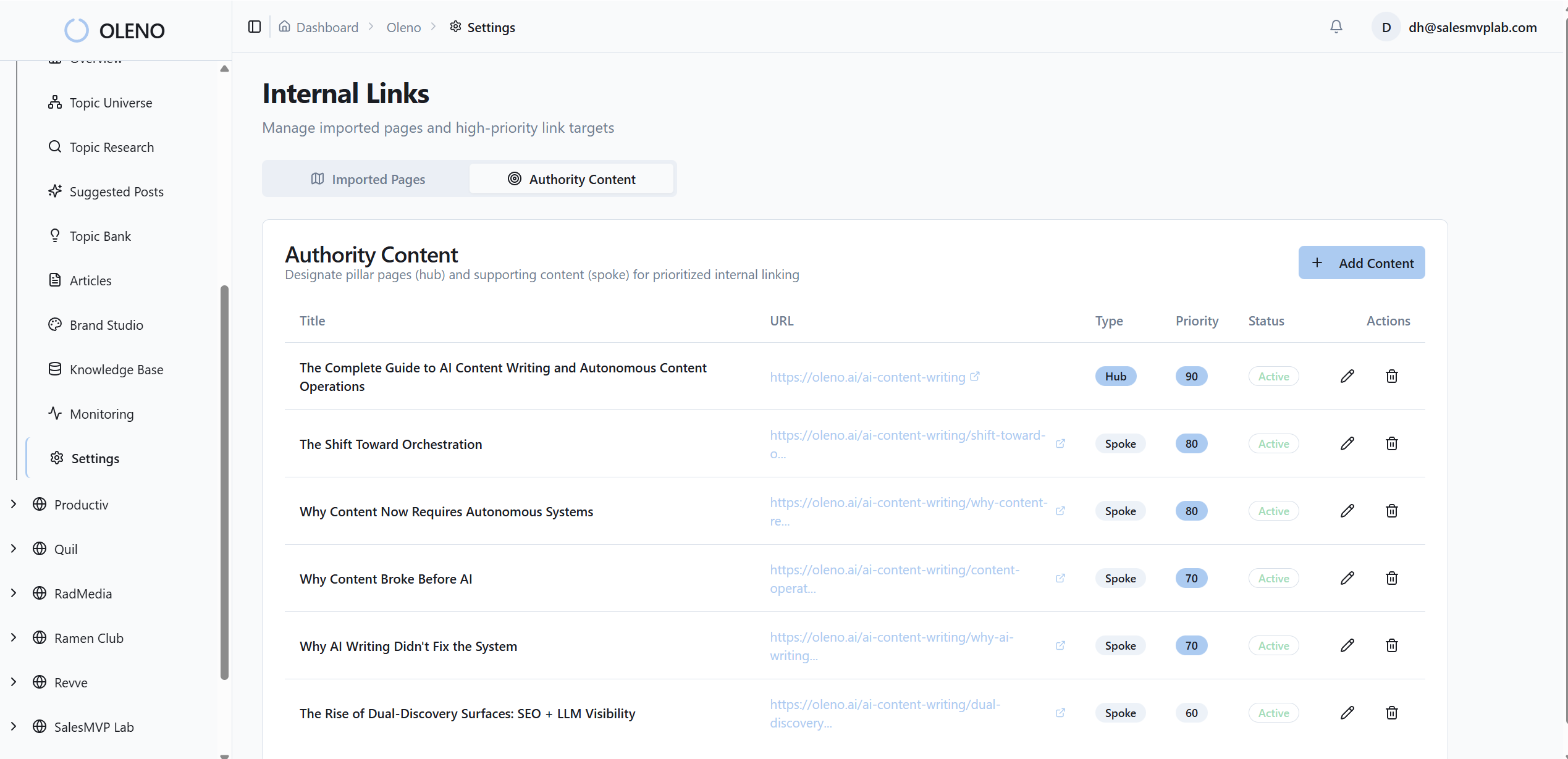
QA-Gate evaluates drafts against structural, voice, and grounding criteria. A minimum passing score is required to publish. If a draft falls short, Oleno refines the content, re tests, and repeats until thresholds are met. When quality passes, Oleno publishes directly to WordPress, Webflow, or HubSpot with mapped fields. Duplicate publishing is prevented and delivery failures trigger debounced notifications.
If a rule change produces unexpected voice outcomes, you can hold new publishes, revert the rule version, and requeue affected drafts for re evaluation. Logs capture version history and retries so remediation is precise and quick. The result is predictable enforcement without constant human coordination.
Remember that 8 to 10 hours per week in avoidable edits and fire drills? Oleno reduces that burden by shifting edits into rules, then enforcing those rules before you ship. Brand Studio, Knowledge Base, Topic Universe, and QA-Gate work together so schedule and voice stay in sync. Visual Studio handles hero and inline images with your brand inputs, and schema is generated automatically for each article.
Want to see it with your own content, not a demo deck? Try Oleno for free.
Conclusion
Publishing more does not have to dilute your brand voice. It does when rules are fuzzy, checks live in slides, and schedule decisions float on gut feel. Translate voice into code, enforce it upstream, and let cadence follow system health. That is how teams scale without wobble.
Oleno exists to make that practical. Not by adding dashboards or rank trackers, but by turning brand voice and facts into enforceable rules that govern your pipeline. When the rules are crisp, speed stops being scary. It becomes your advantage.
About Daniel Hebert
I'm the founder of Oleno, SalesMVP Lab, and yourLumira. Been working in B2B SaaS in both sales and marketing leadership for 13+ years. I specialize in building revenue engines from the ground up. Over the years, I've codified writing frameworks, which are now powering Oleno.
Frequently Asked Questions