Automated Scheduling: Prevent Brand Voice Drift at Scale
Speeding up your publishing schedule feels like progress. More posts. More surface area. More chances to win. Then the inbox fills with, “This doesn’t sound like us.” Same cadence, different headache. The schedule did not cause the tone drift. It just made it impossible to ignore.
If you want volume without the voice fallout, including why ai writing didn't fix, you need non-negotiables and gates that run every day. Not guidance in a slide. Actual rules in the pipeline. We’ve seen teams cut rework and keep pace when they treat content as a system, not a sequence of tasks.
Key Takeaways:
- Treat scheduling as a multiplier, not a strategy, and install voice constraints before you scale
- Codify brand invariants as machine-readable rules, then enforce them with gates at brief, draft, and pre-publish
- Quantify the rework tax and set a simple drift SLO to control error budgets
- Wire QA directly into your calendar so off-brand drafts never steal a publish slot
- Use cooldowns and cluster pacing to prevent repetitive phrasing and tonal fatigue
- Adopt deterministic delivery, linking, and schema so fixes are fast and predictable
Scheduling Alone Multiplies Voice Drift
Scheduling multiplies whatever is already in your pipeline, good or bad. If voice rules are loose, a faster cadence spreads inconsistencies across every channel quickly. Teams that quantify tone variance before scaling find error rates rise with volume. A simple example: double output, and you often double the number of off-brand lines.
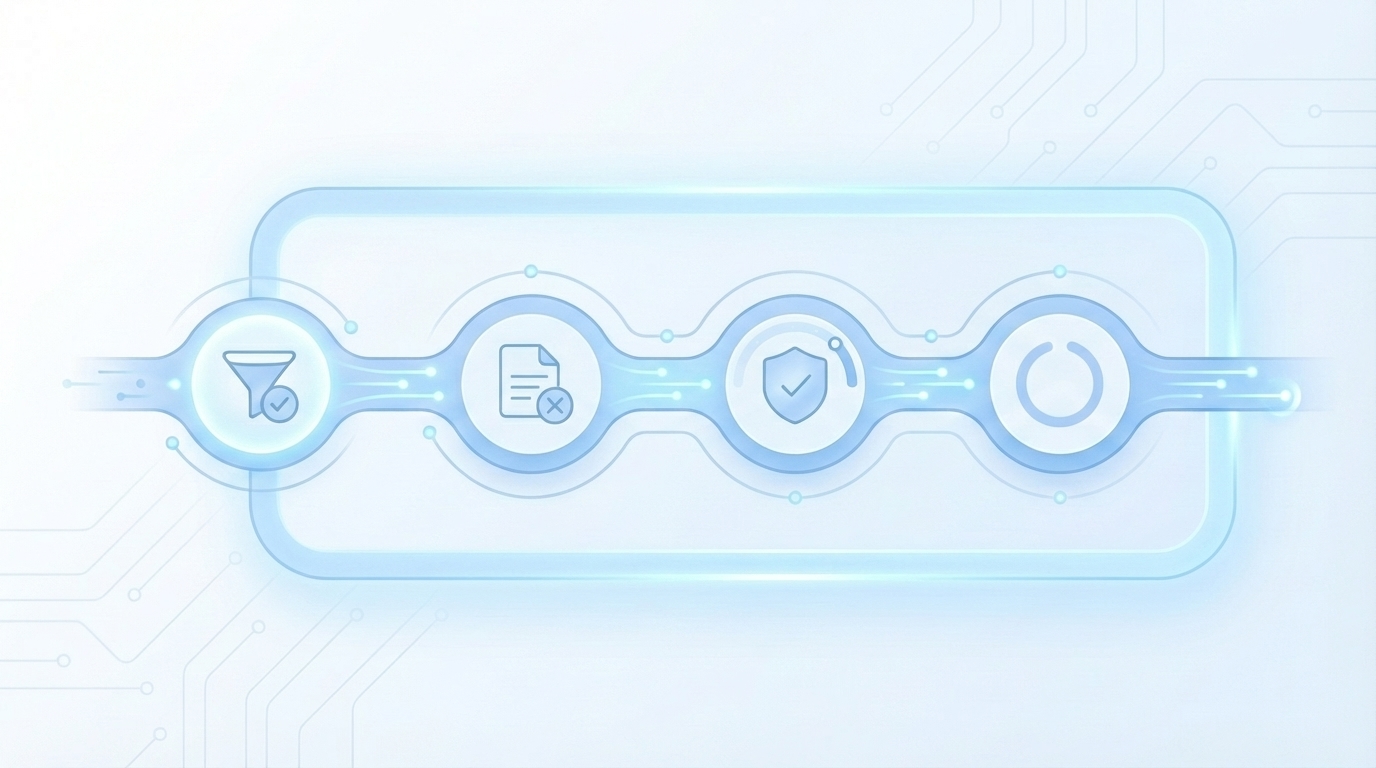
Why cadence amplifies small inconsistencies
A loose style note becomes a pattern when you publish daily. One off-brand CTA repeats across five posts in a week. One filler phrase becomes a habit. When you treat content as a system, cadence is a scalar. The safe move is to tighten voice constraints before you speed up. If you are moving to autonomous content operations, that discipline matters even more.
Quantify drift before you scale
Audit a week of publishes. Tag tone mismatches, banned phrases, and off-brand sentence patterns. Then simulate a doubled cadence and project the error rate. The punchline tends to be simple, the drift rate scales with volume. The fix is not less publishing. It is more constraints. If you want a reference model for coordination, study the orchestration shift.
Curious what this looks like when it runs every day? Try Oleno for free.
The Real Culprit Is Missing Invariants And Gates
Tone drifts when there are no non-negotiables with why content broke before ai and no gates to enforce them. You do not need a thick brand book. You need a short list of machine-readable rules and a few stage checks that block off-brand work. The combination is what keeps cadence from overwhelming voice.
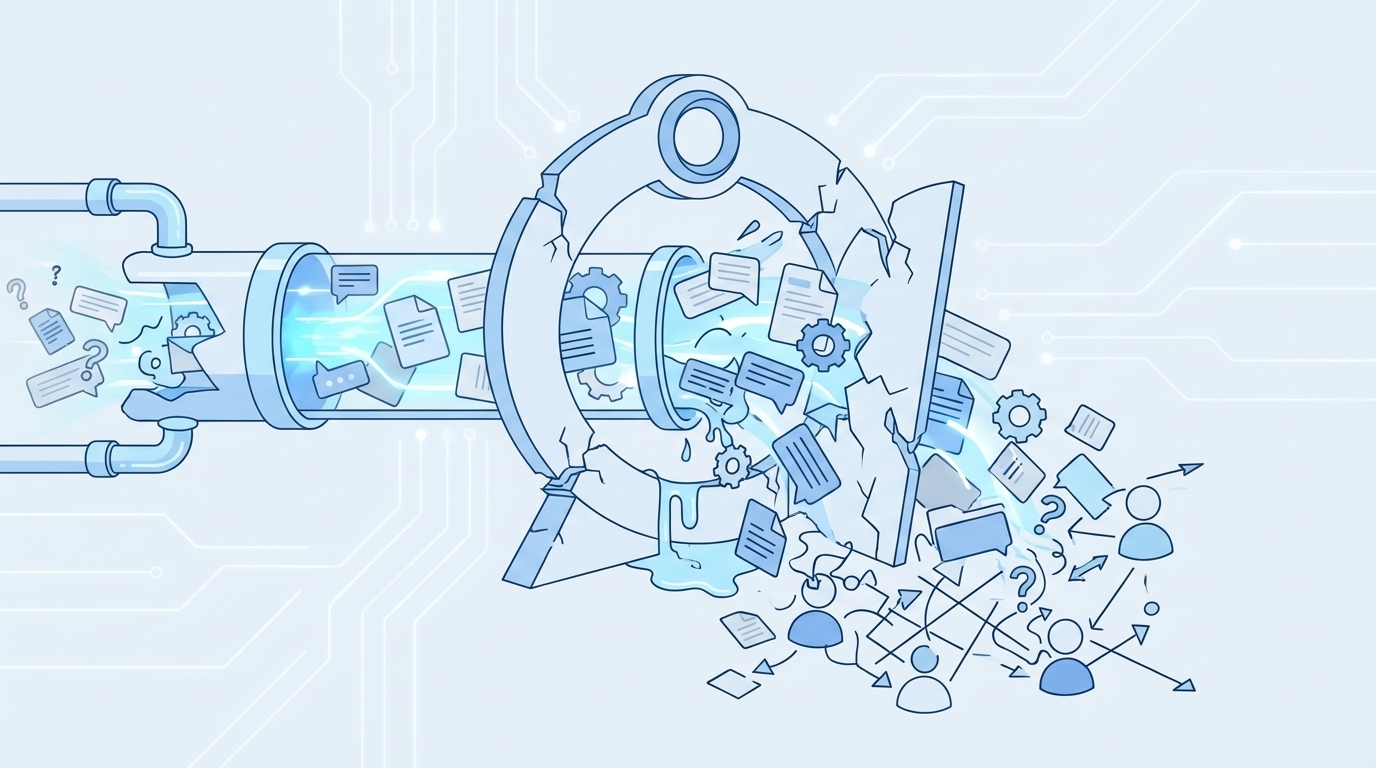
Codify non-negotiables as rules
Start with banned terms, preferred synonyms, approved sentence starters, and CTA scaffolds. Store them as data, not prose. A phrase map that swaps “AI writer” for “autonomous system” does more than a paragraph of guidance. Keep a couple of real examples per rule so usage is clear. If you need a pattern to implement this at scale, see the brand studio rules.
Examples that belong in your invariant set:
- Banned terms with preferred replacements
- Standard CTA microcopy patterns
- Approved intro cadence and bullets style
- Sentence patterns to avoid in solution sections
If a rule causes friction, refine it, do not turn it off.
Place gates where they matter, and tune their strictness
Gates work best at three points, brief completion, draft output, and pre-publish. Require a minimum voice alignment score before enhancements. If a draft fails, trigger auto-refine loops. Do not pass “soft” failures forward, the schedule will only make them louder. Governance should be light, but real. Start at an 85 pass requirement and inspect real edit effort before you tweak it. For a broader governance scaffold, review the voice governance playbook. If you want a general framework for reliability and gates, the NIST AI Risk Management Framework is a helpful lens for system controls.
The Hidden Costs Of Drifted Tone At Scale
Drift shows up as rework time, conversion drag, and brand confusion. You might not see it in week one. You will feel it after a month of daily publishing. The costs are not catastrophic, they are steady, compounding, and distracting. That is what hurts momentum.
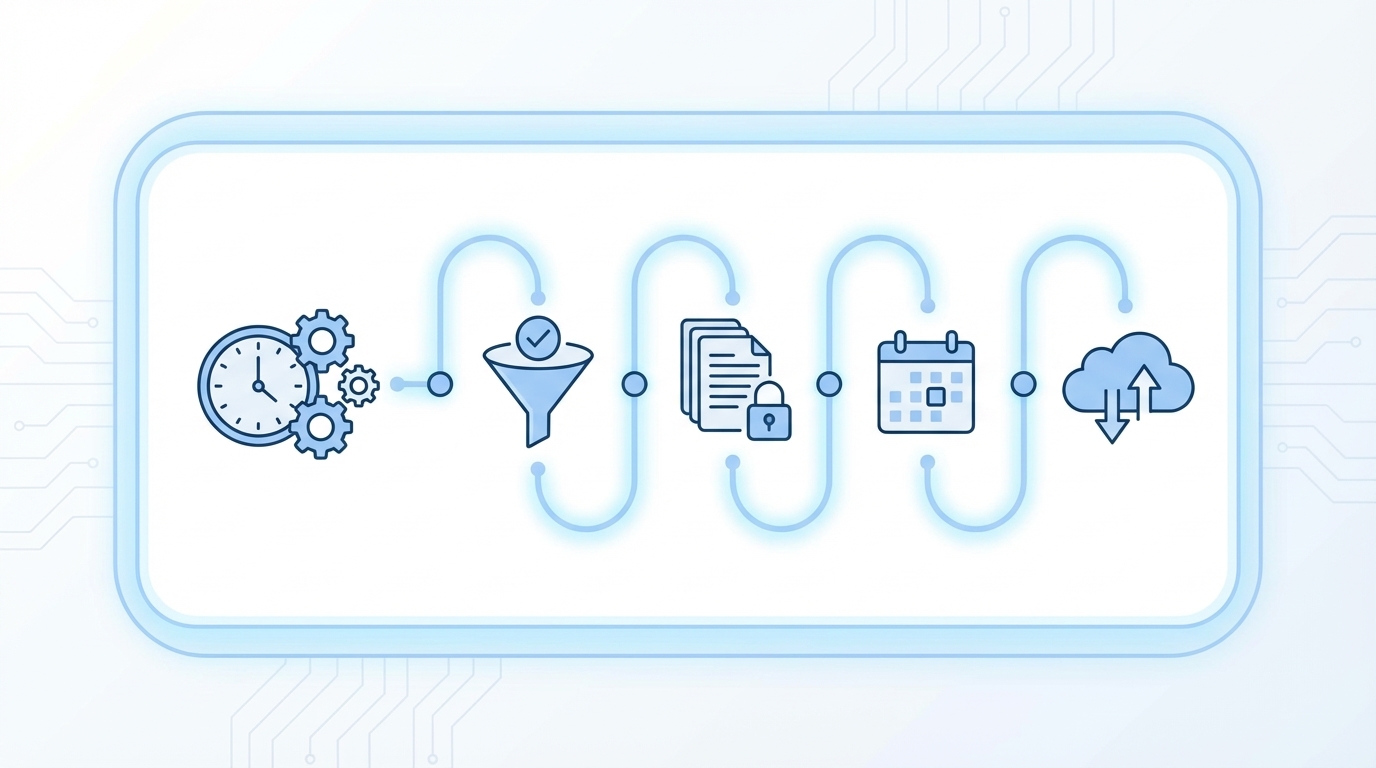
Model the rework tax with simple numbers
Let’s pretend you ship 100 posts this month. If 30% require post-publish edits averaging 18 minutes each, that is nine hours of cleanup. Assign an internal rate of $75 per hour and you are sitting at $675 in quiet waste. Add the conversion tax. If off-brand CTAs depress demo clicks by 3–5%, you are paying for traffic you did not convert. You do not need perfect voice. You need predictable voice that does not generate friction.
Two levers help justify stricter gates:
- A dollar figure for monthly edits
- A conservative estimate of conversion loss from off-brand CTAs
Track a small “drift SLO” to keep score
Keep score with three lightweight metrics, percent of drafts passing voice threshold on first try, average edit minutes per article, and post-publish edit count per week. Set a monthly error budget and tighten rules only when you exceed it regularly. This prevents over-correcting after one bad week. If you want a simple primer on SLO thinking, this overview of SLA vs. SLO vs. SLI is a useful reference for setting reasonable targets.
If you are weighing automation to lower rework, see how an automated QA gate turns common edits into enforceable checks and how to implement policy as code.
What It Feels Like When Volume Outruns Governance
When schedule beats governance, the human signal is unmistakable. Slack threads debating “Is this us?” Editors chasing repetitive fixes. PMMs worried about off-brand claims snuck in by accident. The team is not wrong. The system is missing rules.
Signals from the floor, and a short story
You start hearing the same feedback, “Feels off,” “reads robotic,” “not our cadence.” Treat those lines as data. Capture them verbatim and translate them into invariants. We had a week like this. We pushed volume. Rework spiked. We froze cadence, added banned terms and sentence patterns, and raised the QA threshold. Throughput returned without the headache. The trust came from seeing the rules remove the problem, not from asking for patience.
Own the knobs, clearly
Clear ownership reduces churn. Product marketing defines invariants. Content ops owns thresholds. Editors review failure reasons weekly and convert common edits into rules. One owner per knob. No committees. You can revisit settings next month. If you want a broad, non-technical reminder of why voice matters, Google’s guidance on featured snippets is a good proxy for how clarity and structure get rewarded.
Ready to pair pace with control? Try using an autonomous content engine for always-on publishing.
A Playbook That Couples Cadence With QA Controls
Couple your calendar to your controls. Audit, including the shift toward orchestration, codify, gate, schedule, recover. The order matters. You do not need a big rollout. You can ship this in a week, then tighten it over the next month. The goal is throughput without the rework drag.
Audit and freeze what matters
Run a voice variance audit across twenty recent posts. Score tone, phrase use, CTA patterns, and sentence structure. Convert the top five inconsistencies into banned terms, preferred synonyms, and sentence starters. Re-test variance after rules are live. Add rules only when they reduce edit time. For pacing mechanics and windows, this guide to a deterministic cadence and a practical daily content cadence will help you slot work without repeating yourself.
Wire QA into scheduling
Tie gates directly to the calendar. A draft that fails voice alignment auto-refines before it takes a publish slot. If it fails twice, requeue it and slot a different article. Protect the calendar from off-brand work, do not sacrifice throughput to babysit drafting. Use clear rejection reasons, structure, voice, factual grounding, and snippet readiness. Each one must map to a rule update or KB fix. Rejection without remediation just creates churn.
Want to see how this looks in practice with real gates and retries? Try generating 3 free test articles now.
How Oleno Enforces Voice Consistency Inside Deterministic Scheduling
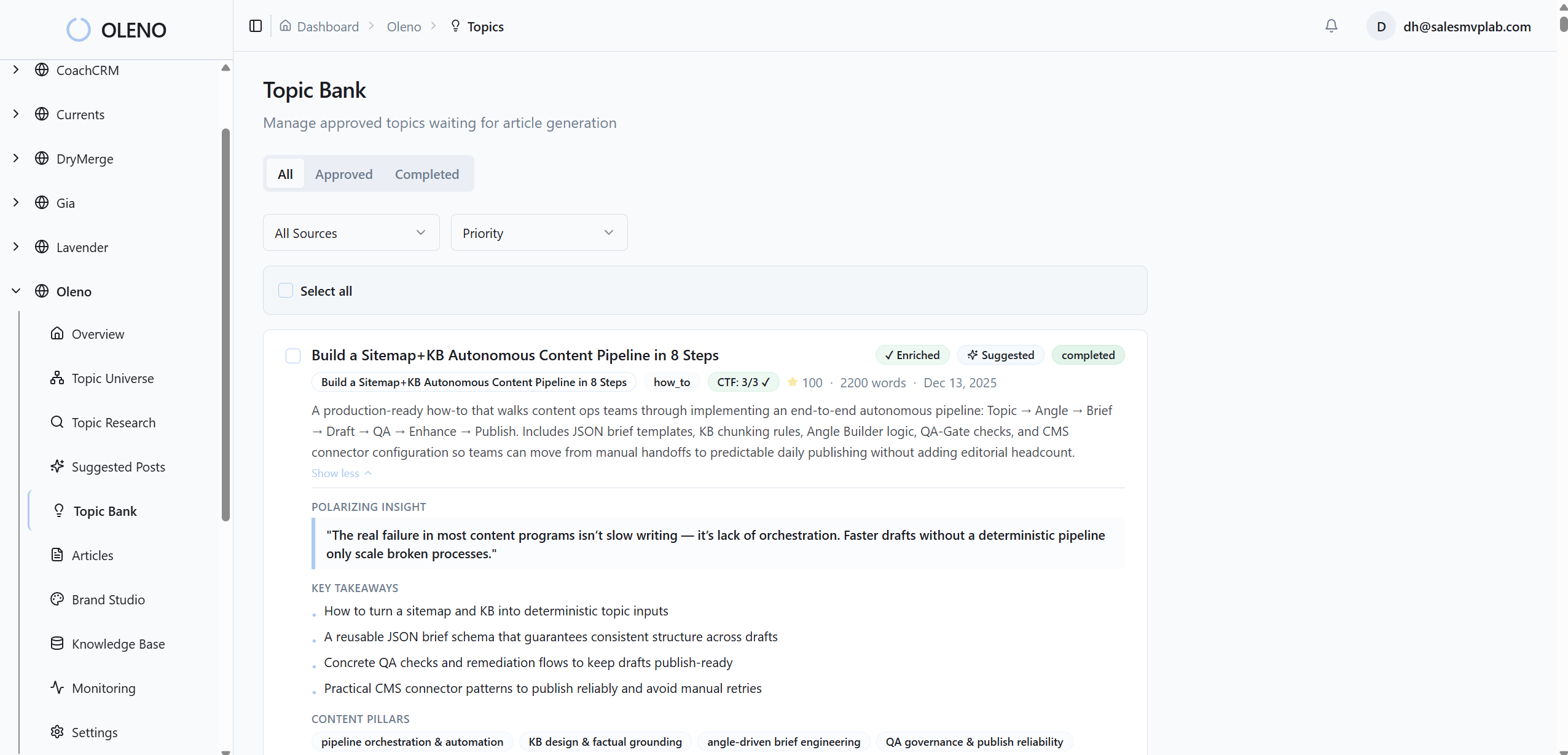
Oleno treats brand voice as rules that run at every stage, not as a suggestion. Brand Studio enforces banned terms and phrasing during brief and draft. QA-Gate scores voice, structure, KB grounding, and snippet readiness before anything publishes. Topic Universe balances coverage by cluster so tone does not repeat. Deterministic delivery makes fixes predictable.
Brand rules applied at every stage
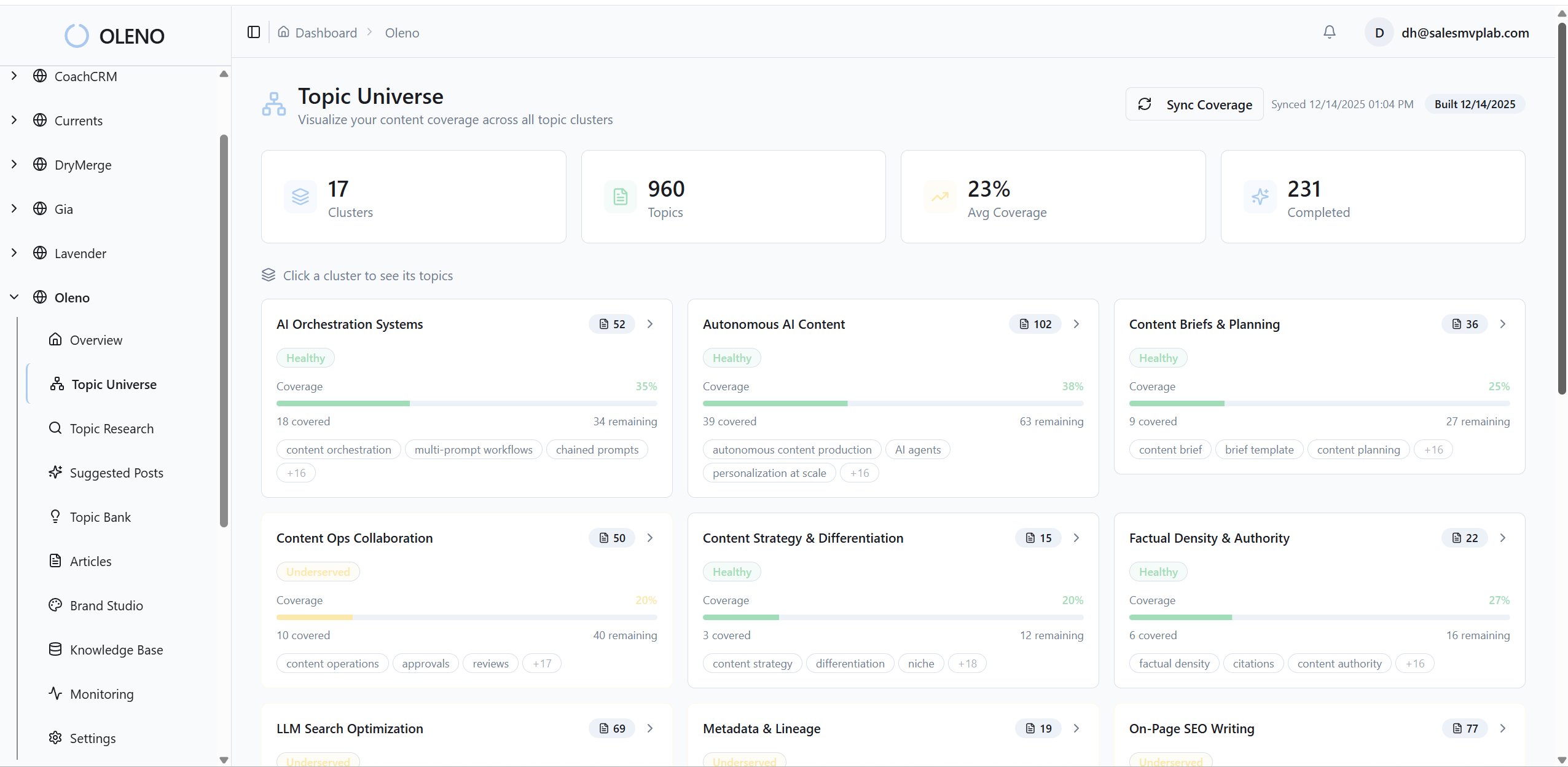
Oleno’s Brand Studio applies machine-readable invariants across brief and draft, so checks happen early and often. Rules are updated directly and applied on the next run without prompt rewrites. If tone drifts, drafts auto-refine before QA begins. For deeper automation ideas, this overview of a brand voice linter shows how phrase maps become code, not guidance. If you are evaluating approach, here is why autonomous systems beat manual coordination for always-on publishing.
QA, coverage control, and deterministic delivery
Remember the rework burden we quantified? Oleno reduces it by enforcing gates with ai content writing and codifying recovery. Three specifics matter most:
- QA-Gate evaluates 80+ criteria, including voice alignment, structure, KB grounding, snippet readiness, and clarity. Drafts that miss an 85 threshold auto-improve and re-test until they pass.
- Topic Universe distributes coverage by cluster and enforces a 90-day cooldown, which prevents repetitive phrasing and tonal fatigue as volume grows.
- Deterministic internals handle delivery and recovery. Internal links inject from verified sitemaps with exact-match anchors, schema is generated programmatically, and publishing through connectors prevents duplicates while preserving version history for clean retries.
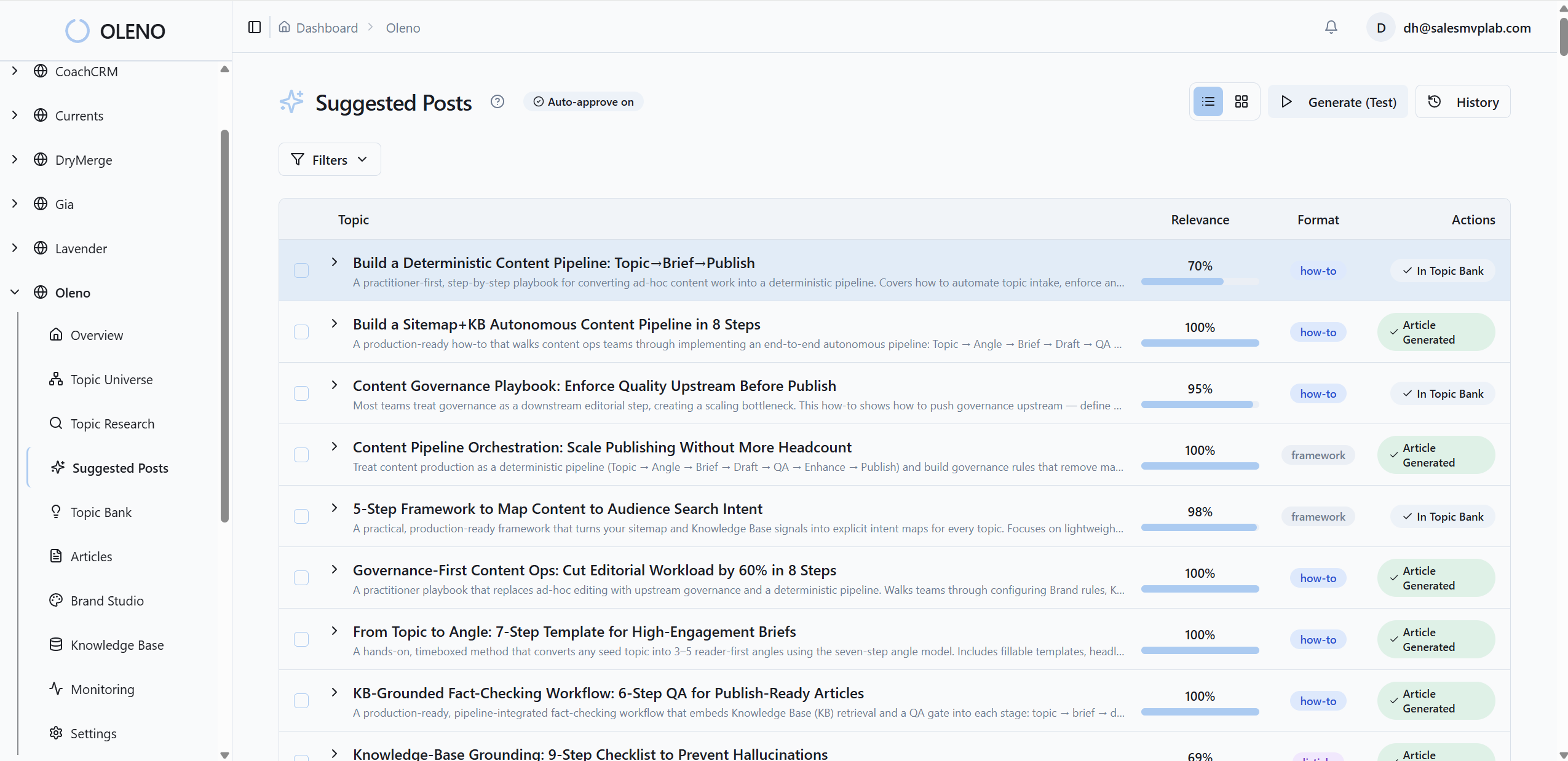
Oleno keeps structure predictable so rules and snippet-ready patterns work consistently. Publishing in draft or live modes through WordPress, Webflow, or HubSpot connectors maps fields automatically, which avoids manual copy and paste. If you want to understand why fragmentation creates drift, this content operations breakdown outlines how disconnected steps breed inconsistency. Teams use Oleno to run a closed loop, from topic selection to publish, which keeps voice intact even as cadence rises.
Conclusion
Scheduling is not the enemy. Scheduling amplifies what exists. If your pipeline has gaps, a faster cadence multiplies drift, rework, and those “Is this us?” threads nobody enjoys. If your pipeline is governed by invariants and gates, cadence multiplies signal, consistency, and the time your team gets back.
The move is straightforward. Codify a few non-negotiables. Place real gates. Wire QA into the calendar so off-brand drafts never steal a publish slot. Add cooldowns and cluster pacing so voice does not repeat. Then let a deterministic system carry the load.
About Daniel Hebert
I'm the founder of Oleno, SalesMVP Lab, and yourLumira. Been working in B2B SaaS in both sales and marketing leadership for 13+ years. I specialize in building revenue engines from the ground up. Over the years, I've codified writing frameworks, which are now powering Oleno.
Frequently Asked Questions