Automated Visual + Copy Quality Checks: Enforce Brand Consistency

Most teams think brand consistency is a copy problem. Then they push the draft live, tack on a stock image, and hope the visual doesn’t undermine the headline. That’s where drift creeps in, after the words feel “done,” when the picture tells a slightly different story and no one has time to redo it.
I’ve lived this. When we scaled content through hundreds of contributors, the voice sounded right, but visuals drifted in quiet ways. A bold claim about reliability paired with a chaotic hero image. A trustworthy tone next to an illustration that hinted at outcomes we couldn’t actually promise. Not a catastrophe, but a steady erosion that cost us time and trust.
The fix isn’t more reviewers or longer checklists. The fix is unifying how copy and visuals are checked, scored, and gated before publish. One pass. One policy surface. One yes or no.
Key Takeaways:
- Enforce copy and visual rules under one policy, not two checklists
- Make guidelines machine readable so automation can lint and block
- Quantify the cost of drift across rework, coordination, and conversion
- Keep humans on taste and nuance, automate deterministic checks
- Gate publishing with a single pass/fail across both modalities
- Use CMS-safe patterns like idempotency and retries to avoid broken states
Why Separate Copy And Visual QA Lets Brand Drift Ship
Separate copy and visual QA creates a blind spot where brand drift slips through. Most teams lint the draft, eyeball the image later, and ship under deadline pressure. A unified pass that evaluates copy and visuals against the same rules removes that gap and blocks quiet inconsistencies.

the blind spot in single modality automation
When copy and visuals are checked in different moments by different people, you invite contradiction. The headline says reliability, the image screams chaos. Reviewers miss it because the checks are sequential, not contextual. That’s why drift feels harmless at first, then shows up as confusing signals in your funnel metrics.
Automation makes this worse if it’s split by modality. A grammar or tone linter greenlights the draft. An image picker “looks fine” to the designer. No one evaluates them together with the same rulebook. Over time, that drift compounds. It’s not dramatic, it’s cumulative, and it’s expensive to unwind once it’s live.
A better approach treats copy, visuals, alt text, and captions as one surface. If the words and pictures disagree, the gate fails. No publish, no exceptions. That one constraint reduces rework because it prevents the contradiction from shipping in the first place. Teams breathe easier when the system catches what attention fatigue misses.
For context, style libraries and brand automation tools have been pushing toward unified enforcement for years. Even broad resources like Bynder’s overview of automated branding and Siteimprove’s brand consistency guides underscore the same theme: policy first, execution second.
what unified enforcement actually means
Unified enforcement is simple in concept, strict in practice. A single policy governs voice, claim boundaries, CTA style, hex codes, and acceptable image subjects. One orchestration pass evaluates both modalities together. If a claim in the copy violates product truth, or a visual implies a restricted outcome, it blocks.
That policy also covers accessibility and SEO fundamentals. Alt text completeness, color contrast thresholds, file naming patterns, and responsive variants are all verified before layout locks in. If you treat these as optional, you pay the tax later with late swaps and broken templates. And that tax always shows up at the worst moment.
Finally, tie the gate to your CMS so it triggers automatically on draft save, not at some vague “final review.” If it’s not integrated with publishing, people will bypass it under deadline pressure. A gate no one can skip is the only gate that holds.
a quick story from the trenches
Back when we scaled content through hundreds of contributors, manual reviews caught the big misses. The subtle ones slipped. Voice felt right, visuals drifted, and we’d notice after publishing. Fixing it meant design swaps, filename changes, alt text rewrites, and rushed approvals. It wasn’t one big error, it was a hundred tiny ones.
The lesson was simple. Policy has to catch what people overlook when volume increases and attention is thin. We didn’t need harsher reviewers. We needed rules that were explicit, checkable, and enforced every time. Once we wrote the rules down in a form machines could apply, quality stabilized. Rework declined. So did the headaches.
If you want to see how a unified QA gate feels in practice without rebuilding your stack, there’s a faster path. When you’re ready to compare notes, you can Request A Demo.
The Real Root Cause Is Policy, Not People
Brand drift isn’t a people problem, it’s a policy problem. Humans catch obvious mistakes under ideal conditions. They miss low grade contradictions when the calendar is full. If guidance lives in decks and memory, you get taste, not enforcement. Machine readable rules change that dynamic.
what traditional reviews miss
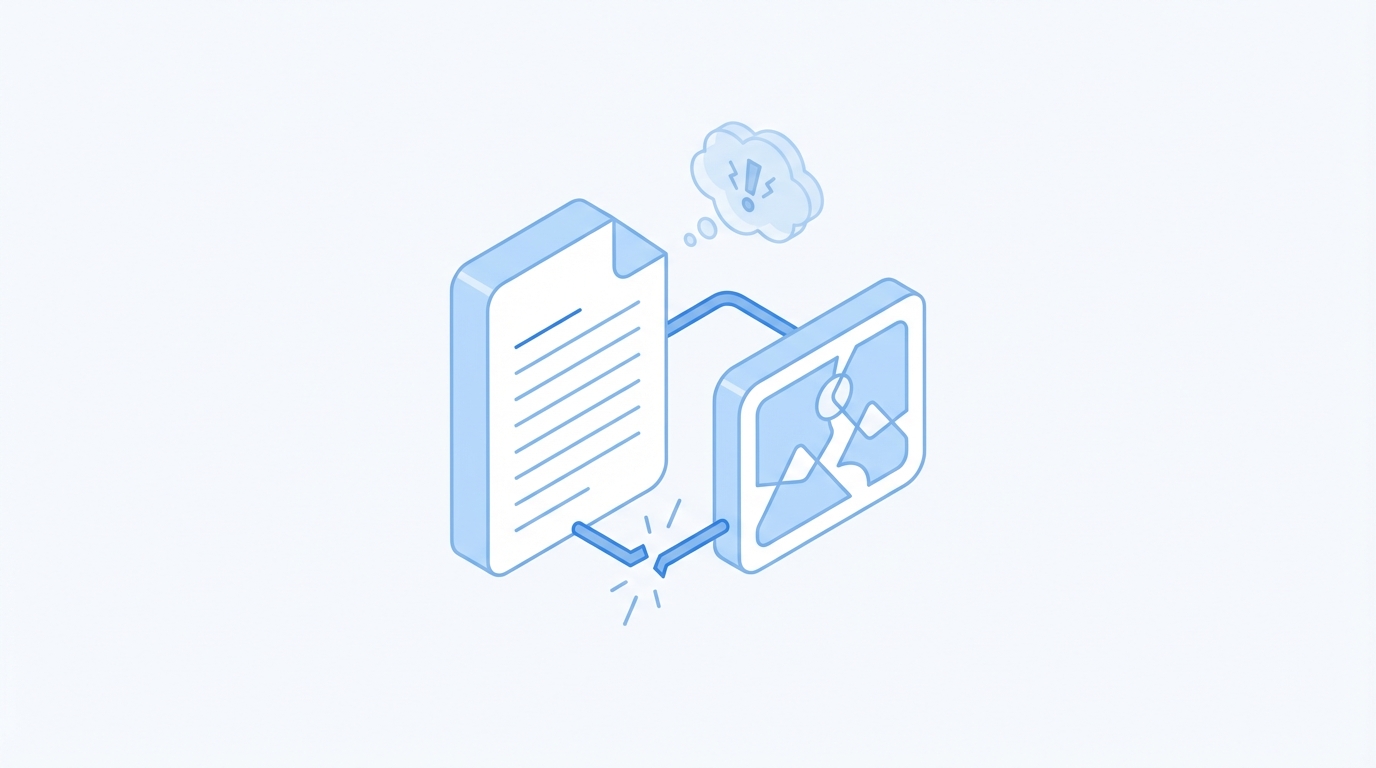
Traditional reviews surface glaring issues, but they rarely catch subtle misalignments. A confident tone with a hesitant CTA. A claims-safe paragraph next to a suggestive visual. A helpful analogy that, when paired with the hero image, implies outcomes your product doesn’t actually deliver. None of those are wildly wrong. They’re quietly off.
The common denominator is context. Reviewers see parts in isolation. They anchor on what they care about most, and skim the rest. Without explicit, testable rules for words and pictures together, the team is relying on taste and memory. That’s a fragile way to run quality at scale.
And even skilled editors burn out. After the fifth “quick” pass of the day, attention narrows, and fatigue wins. The fix isn’t more meetings. It’s codifying the rules you expect people to remember and letting software apply them the same way, every time.
why governance must be machine readable
Guidelines in slides don’t block anything. They inspire, they don’t enforce. If you want consistent outcomes, move brand guidance into policy-as-code. Define preferred terms, forbidden phrasing, CTA placement, logo usage patterns, color tokens, and allowed claims in a JSON or YAML schema the system can evaluate.
Once rules are machine readable, you can lint, score, and gate reliably across teams and tools. No more “I thought that was okay” debates. The rule either passes or it doesn’t. That doesn’t eliminate judgment, it preserves it for the parts that actually require judgment.
Others are moving in this direction too. Even high-level resources like Marq’s brand consistency research and emerging write-ups such as PromptPanda’s take on AI-driven brand evaluation point to the same pattern: encode what you can, review what you must.
which rules belong in code vs judgment?
Draw a bright line. If a rule can be described precisely, automate it. Color ranges, term usage, CTA structure, link hygiene, alt text completeness, file naming, minimum reading ease, contrast thresholds. These are deterministic. You can and should test them.
Keep humans for narrative choices, taste, and edge cases. Is the story compelling. Does the metaphor serve the point. Is the image memorable for the right reasons. That’s judgment. It won’t be the same on Monday morning and Friday afternoon, which is why you protect it by moving the repeatable checks out of the way.
When teams make this split explicit, reviews get shorter and better. People spend time where it matters. The system catches what memory forgets.
The Hidden Costs Of Multimodal Drift
Drift looks harmless in the moment, then compounds into real cost. A mismatched image here, a fuzzy claim there, and suddenly you’re reworking assets, missing publishing windows, and confusing readers. Quantifying that cost makes the risk tangible and worth fixing.
where time and money leak
Let’s pretend your weekly cadence ships 10 pieces. Two slip with off-brand visuals. You spend 90 minutes per post reworking assets, plus another 30 minutes coordinating with design and editors. That is 4 hours gone, every week. Over a quarter, that’s roughly 48 hours you can’t spend on new coverage.
There’s a conversion cost too. If 20% of those posts support evaluation content, mismatched signals erode trust at the worst moment. The lift you were hoping for stalls. Teams often overlook this because the cost is spread across people and time. But it’s still a cost.
Even basic operational guidance from customer experience and quality sources like Qualtrics’ overview of automated quality management and Siteimprove’s brand consistency guidance highlights the same pattern. A little policy up front prevents a lot of rework downstream.
risk surface in regulated claims
Copy can be technically accurate while an image implies something you cannot say. Think before-and-after visuals in categories where outcomes are regulated. Or badges that suggest affiliations you don’t have. Or a caption that, in combination with the image, implies future performance.
This is where claim boundaries need to be encoded and checked against captions, alt text, and image subjects. If the visual hints at off-limits promises, the gate should block and explain why. Humans can still decide whether a creative risk is worth it, but the system flags the risk consistently.
Ignoring this surface is expensive. It’s not just legal or compliance exposure. It’s the quiet erosion of trust that shows up later in evaluation calls.
what breaks in your CMS when checks are separate?
When text passes and images fail, drafts linger. Editors copy content into side channels, create duplicate assets, and bypass gates to hit deadlines. Someone forgets to fix alt text after the last-minute swap. Publishing becomes brittle. The next sprint starts with a backlog of cleanup work.
A single gate fixes the brittleness. It evaluates both modalities together and returns one pass or one actionable failure. No partial approvals. No merge conflicts between words and pictures. One state, one decision, one path forward.
Still dealing with broken states and late edits every week. It doesn’t have to be that way. If it’s useful to pressure test your current flow against a unified gate, you can Request A Demo and we’ll walk through it with your CMS.
The Frustration Of Publishing What You Would Not Approve
We’ve all shipped something we wouldn’t have approved with fresh eyes. The copy was solid. The visual undercut it. Readers felt the mismatch even if they couldn’t name it. That sting is avoidable with checks that look for semantic consistency before publish.
when an image undercuts the headline
You write a confident narrative about reliability. The hero image shows a messy desk. It feels small, but the brain registers the conflict and trust slips. Not a lot, just enough to make the page forgettable.
Build checks that look for consistency between headings, captions, and images. You’re not asking machines to judge creativity. You’re asking them to flag contradictions so a human can fix them. That one constraint preserves the story you worked so hard to craft.
The same applies to tone. If your voice is calm and expert, don’t pair it with visuals that are frantic or edgy. Intentional contrast is fine. Accidental contrast is where drift lives.
the late edit spiral no one budgets
Late art swaps break layout, alt text, and filenames. Then SEO suffers. You chase accessibility and miss your slot. Someone forgets to generate responsive variants and page speed drops. You pay that tax because the check happened too late and only on the visual.
Prevent the spiral with pre publish gates that validate image size, responsive variants, alt text quality, and file naming against SEO and accessibility rules before layout. This isn’t about policing creativity. It’s about catching simple mistakes that cascade into bigger ones.
A small set of deterministic checks here saves hours downstream. And it makes your designers look like heroes, not firefighters.
why should small teams care?
Because rework hurts small teams more. You don’t have spare editors or designers on call. Every late swap steals time from the next piece. A gate that blocks contradictions and suggests fixes gives you back hours you don’t have.
It also protects your narrative. When you’re under-resourced, the fastest path to consistency is rules that run whether you’re busy or not. The system carries the routine checks. Humans carry the story. That split is how small teams compete.
A Production Pipeline For Automated Visual Plus Copy Checks
A reliable pipeline for visual plus copy checks starts with policy-as-code, then runs simultaneous linting and gating, and finally integrates with your CMS. The goal is one deterministic pass that either publishes or returns specific, actionable fixes. No backchannel approvals. No partial states.
define unified brand rules as policy
Create one policy file and put it under version control. Include tone descriptors, preferred terms, banned phrases, CTA patterns, claim boundaries, color tokens, image subject guidelines, and stock usage constraints. Add accessibility rules for alt text and contrast. When everything lives in one place, drift has fewer places to hide.
Store the policy centrally so everyone references the same source of truth. Make updates explicit and reviewable. If you treat policy changes like code changes, you’ll avoid accidental shifts in voice or visuals that ripple through your library without anyone noticing.
Over time, this file becomes the backbone of your execution, not just a guideline. It’s how you keep consistency while scaling output.
run simultaneous copy and image checks
Lint copy for voice, rhythm, structure, and forbidden phrasing. Verify claims against your knowledge base so product truth isn’t stretched. In parallel, check images for brand color usage, subject alignment, and logo treatment. Validate alt text quality, filename patterns, and minimum size for responsive variants.
The key is simultaneity. You want one orchestration pass to evaluate everything together. If any check fails, return specific suggestions. “CTA uses incorrect verb form, update to approved pattern.” “Alt text missing action verb, add context.” “Color contrast below threshold, switch to approved token.” Clear feedback reduces thrash.
Run the pass on draft save so your team gets fast feedback. If they have to wait until “final review,” the incentive to bypass the system grows.
cross modality alignment and accessibility gates
Cross-reference captions with claims and headlines with image context. If the pairing introduces a risk you’ve flagged in policy, fail the check and explain why. Enforce accessibility thresholds, like alt text completeness and color contrast minimums, so the page is functional for everyone.
Accessibility rules aren’t just compliance. They’re quality. They make your content durable across devices and contexts. Folding them into the same gate reduces late stage design debt. It also aligns with what many accessibility and brand platforms recommend, even if they come at it from different angles.
The end result is a page that reads and looks like it came from the same company. Because it did.
orchestrate pre publish gating with your CMS
Use webhooks to trigger checks on draft save. Your gate returns one of two states: pass, or a list of actionable fixes. Publishing only proceeds when copy and visuals pass together. Make the system idempotent with retries, so rerunning checks won’t create duplicates or broken states if a network blip occurs.
This integration detail matters. If the gate isn’t attached to how publishing actually happens, it will be ignored under pressure. Treat it like part of your infrastructure. Stable, predictable, and boring. That’s how you protect velocity.
If you’re mapping this to your own stack, vendor docs for brand systems and automation like Bynder’s automated branding overview and operational discussions such as Datagrid’s guide on automating guideline creation can be useful for the policy layer. The execution layer is where your CMS patterns matter most.
How Oleno Runs Multimodal QA Gates In Your CMS
Oleno runs demand generation as an execution system, not a set of prompts. You encode voice, visual, and claim boundaries once, and the same rules enforce quality before anything publishes. Copy and visuals are evaluated together so contradictions don’t slip through a gap in the process.
policy as code for voice, visuals, and claims
Oleno starts with governance you define. Voice and language rules, product truth, allowed claims, and design tokens are configured once and applied everywhere. That policy becomes the gate. Nothing publishes unless it meets the bar on voice alignment, narrative structure, grounding, and visual rules.
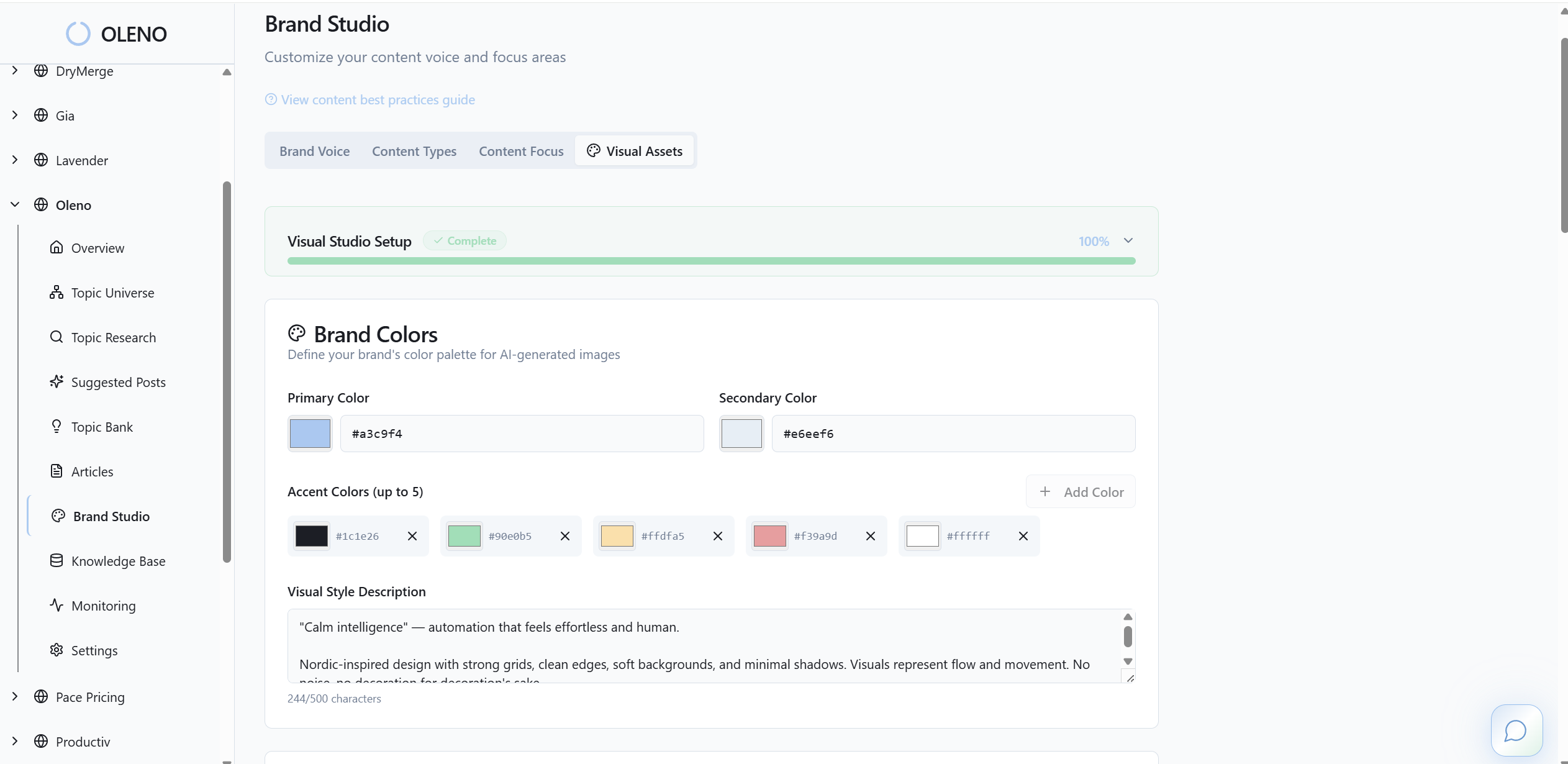
Because the rules are explicit, updates are controlled. You can evolve messaging without losing consistency. The system applies the new rules the same way, every time, regardless of who touched the draft. That’s how small teams keep quality as volume grows.
simultaneous checks with remediation hints
Oleno evaluates copy and images in the same pass. It lints tone and structure, checks for repetition and filler, verifies claims against your knowledge base, and applies brand visual rules to images. When something fails, Oleno returns plain-language suggestions and rechecks automatically when you apply fixes.
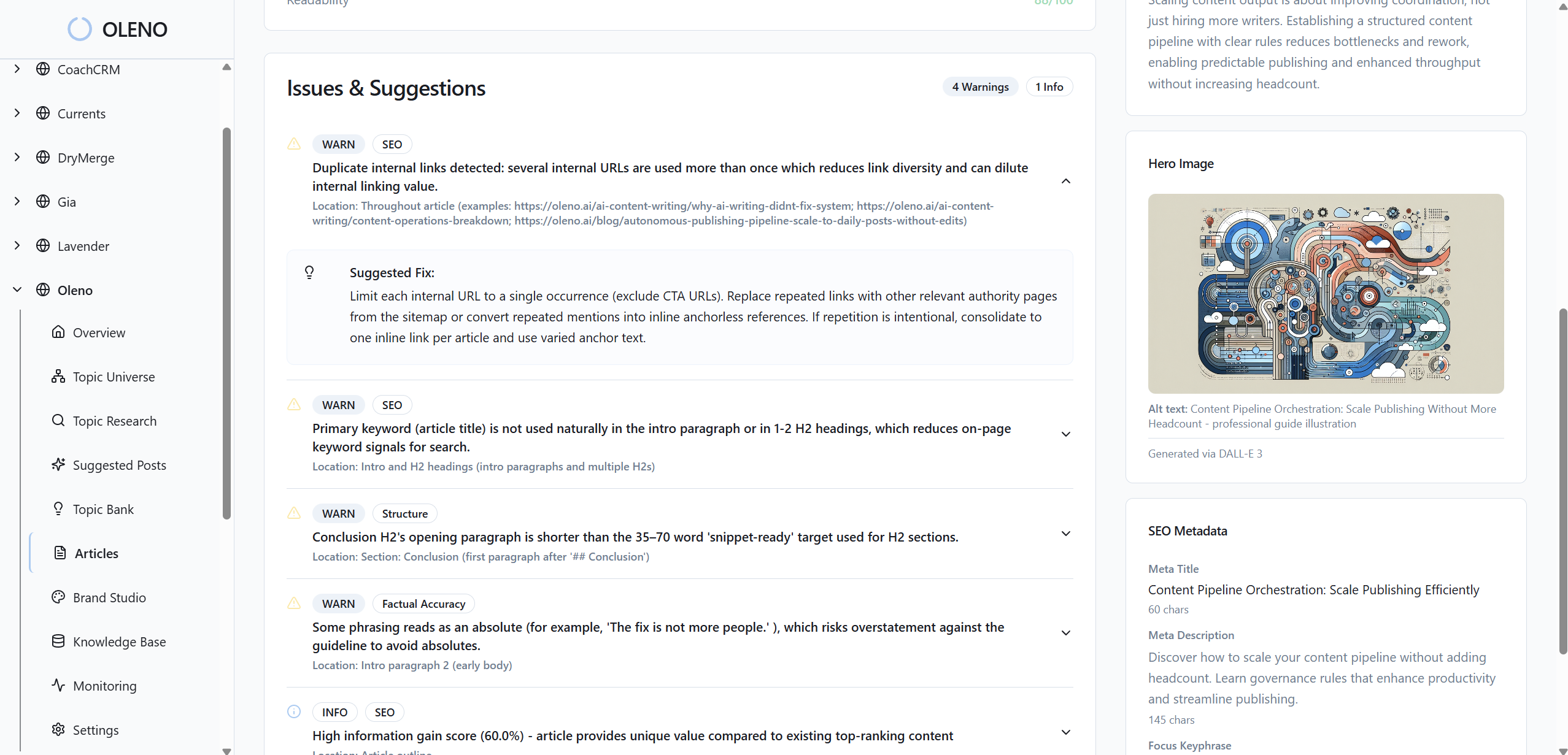
The benefit is less back and forth and fewer manual edits. Editors see exactly what needs to change and why. Designers get clear guidance on color, logo, and subject usage. Writers get feedback on phrasing and CTA patterns tied to approved rules, not vague preferences. It feels like a single review, because it is.
CMS integration with safe gating
Oleno connects to WordPress, Webflow, Storyblok, HubSpot, Framer, and more. Publishing control is enforced through webhook-based gating, so drafts only go live when both copy and visuals pass. Built-in idempotency prevents duplicates, and retries recover from temporary errors. If a check fails, Oleno blocks publish and returns actionable feedback inside the workflow.
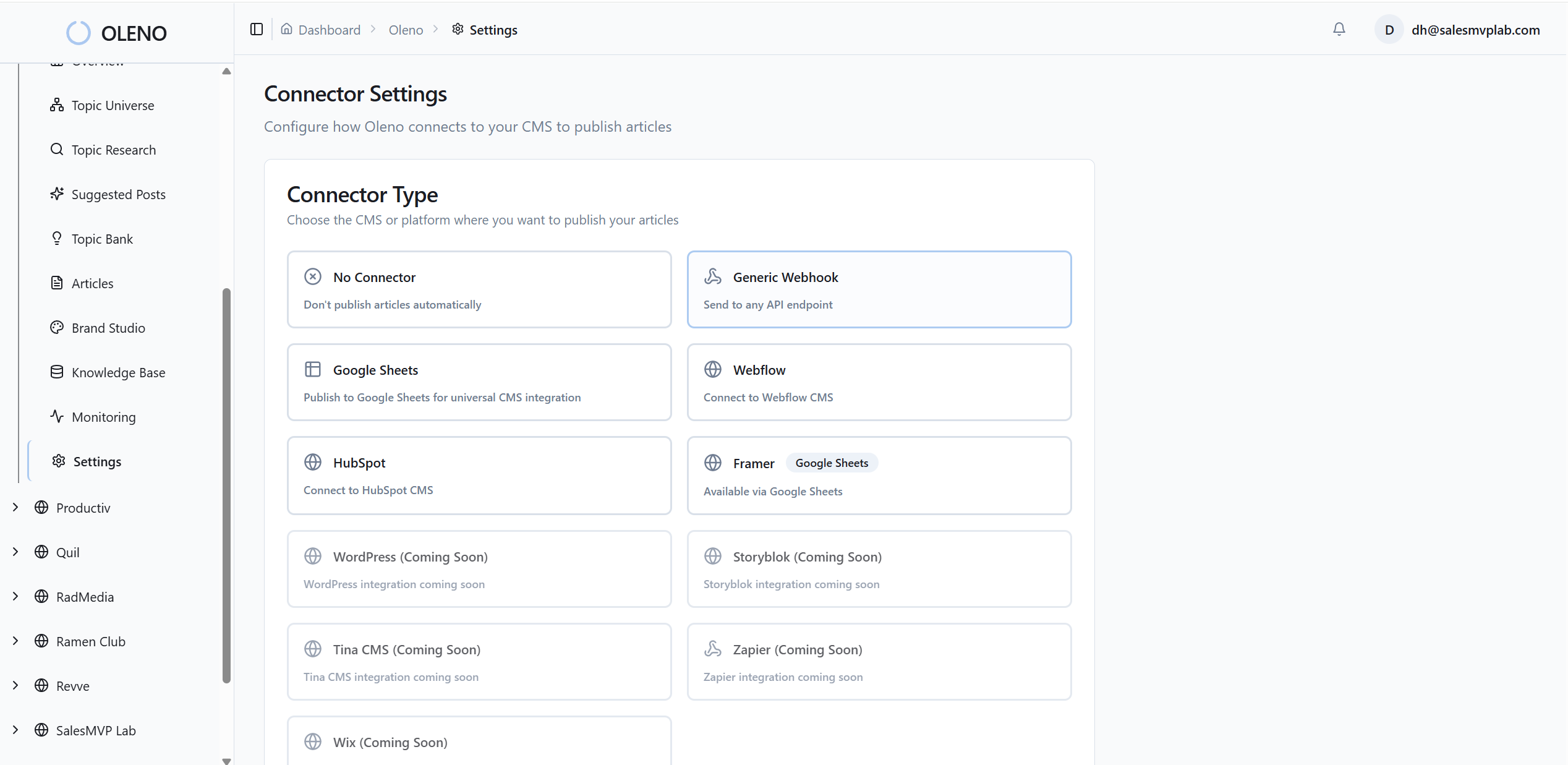
That means no side channels, no hidden exceptions, and no brittle states. Your editorial calendar can keep moving without babysitting the system. Teams stop losing hours to late fixes and broken templates.
quality telemetry and sampling
Oleno provides trend visibility on pass rates and common failure patterns, plus optional sampling to catch issues automation may miss. You see where rules are too tight, too loose, or misunderstood. That feedback loop lets you refine policy over time without guesswork.
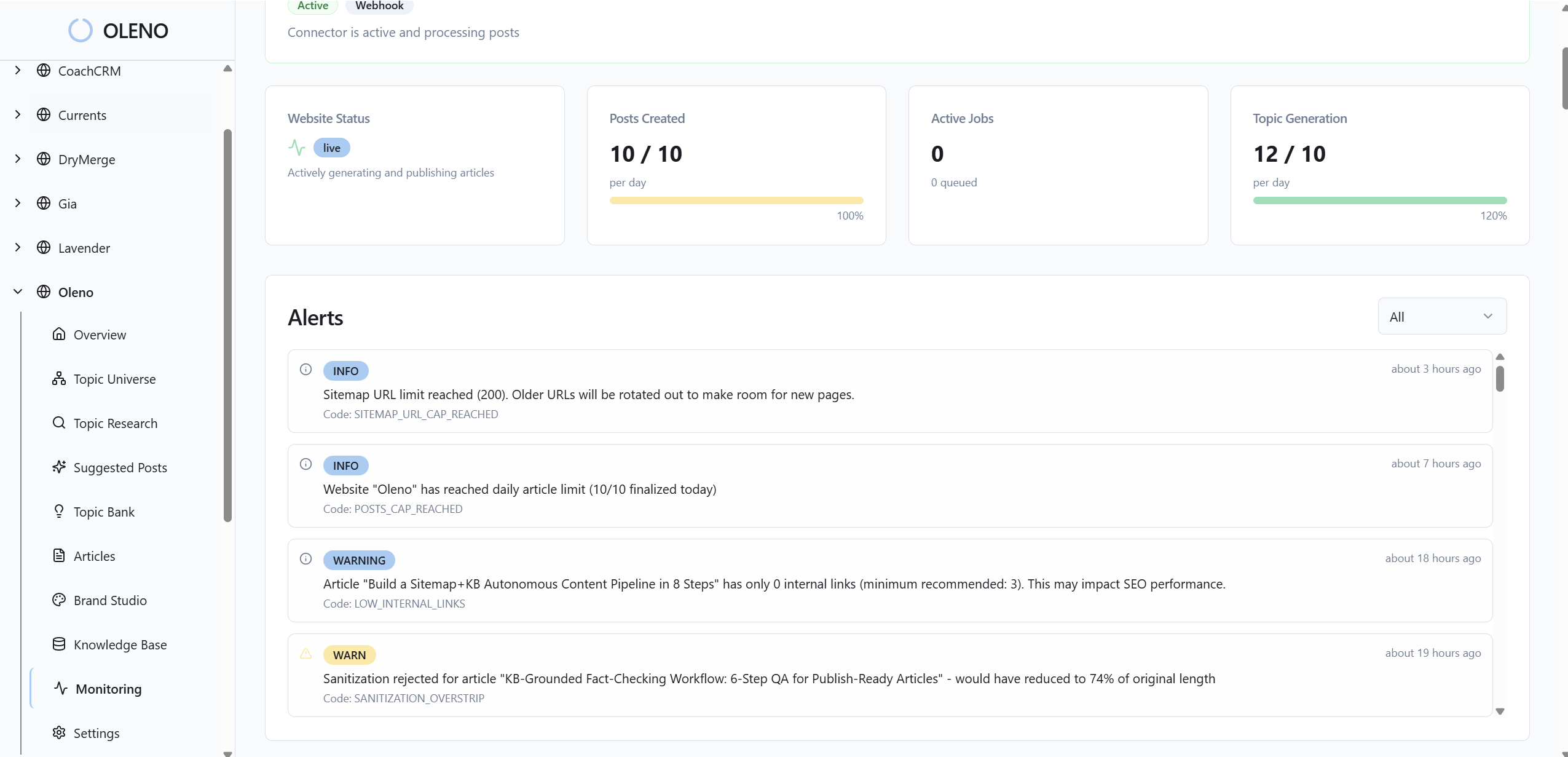
The outcome isn’t perfection. It’s stability. Fewer surprises. A library that stays on-message and on-brand as it scales. If that’s the outcome you’re aiming for, and you want to see how the gate works end to end in your CMS, you can Request A Demo.
Conclusion
Separate checks make brand drift feel like a people problem. It isn’t. It’s a policy and timing problem. When copy and visuals are evaluated together against the same machine-readable rules, you eliminate the gap where contradictions hide. The system blocks avoidable rework. Humans keep the story sharp.
That’s how small teams publish faster without lowering the bar. One policy surface. One gate. One consistent narrative across words and pictures.
About Daniel Hebert
I'm the founder of Oleno, SalesMVP Lab, and yourLumira. Been working in B2B SaaS in both sales and marketing leadership for 13+ years. I specialize in building revenue engines from the ground up. Over the years, I've codified writing frameworks, which are now powering Oleno.
Frequently Asked Questions