How Storyboard Balances Personas Across Your Content Calendar

If you're balancing personas across calendar planning right now, you already know what usually happens. The founder wants one thing, sales wants another, product needs launch support, and your content calendar quietly turns into a list of whoever asked last.
That creates a bigger problem than most teams realize. You don't just get a messy quarter. You get lopsided pipeline coverage, frustrating rework, and the same planning reset every 90 days because nothing was structured tightly enough to hold.
For small B2B SaaS teams, this is where the headache starts to compound. You may have clear strategic intent in your head, but when planning lives in scattered docs and weekly decisions, persona coverage drifts fast. Oleno is built for that exact gap: strategy stays with marketing, while execution runs inside a more disciplined system.
Key Takeaways:
- Balancing personas across calendar planning works better when you set quarterly weights up front instead of deciding audience priority week by week.
- A persona-skewed calendar can weaken acquisition, evaluation, and post-signup coverage long before pipeline numbers make the problem obvious.
- Storyboard translates persona strategy into a schedulable quarterly plan, so content is distributed more intentionally across roles and use cases.
- Lean teams can move from reactive planning to steadier output without adding headcount, especially when planning feeds directly into downstream execution.
- Storyboard improves consistency, but it won't fix weak persona definitions or unclear market priorities on its own.
If this is the quarter you want to stop rebuilding the calendar from scratch, you can request a demo and see how the planning layer works in a real workflow.
Why The Loudest Persona Usually Takes Over The Calendar
Balancing personas across calendar planning usually breaks when strategy lives in your head but scheduling happens in the moment. The team doesn't decide to ignore important audiences. It just keeps saying yes to the nearest request, and the calendar slowly bends toward urgency instead of coverage.
The Loudest Request Usually Wins The Calendar
A Head of Marketing at a 40-person SaaS company sits down Monday morning with a decent plan for the quarter. By Tuesday, sales wants a comparison page for a deal cycle. By Wednesday, the founder wants a thought leadership post. By Thursday, product wants launch support. None of these asks are bad. That's what makes this tricky.
The problem isn't effort. It's sequencing. If you don't have explicit allocation rules, each new request feels justified on its own. Then you look up six weeks later and realize you've published heavily for executive buyers while barely touching practitioners, or you've loaded the calendar with acquisition content and left evaluation content thin.
I've seen this pattern a lot. At PostBeyond, I could write 3-4 high quality posts a week when the context sat with me. As soon as that context spread across more people, speed dropped and quality got wobblier. Same thing happens in planning. Once the why behind the calendar lives across too many conversations, drift shows up fast.
Persona Imbalance Quietly Weakens Pipeline Coverage
The hidden cost isn't just an uneven content mix. It's what I'd call the Coverage Debt Loop. If one persona gets 60-70% of output for a quarter, the under-served personas don't just wait patiently. They create downstream gaps in search visibility, sales enablement, expansion messaging, and product education.
Let's pretend you publish 24 pieces in a quarter. If 15 of them end up speaking mostly to founders and senior execs, you've only got 9 left for CMOs, practitioners, operators, and product-adjacent buyers. That might sound fine on paper. In practice, it usually means one or two personas get token coverage and then disappear entirely for a month.
And that matters because demand gen isn't one conversation. It's a coverage problem. Different buyers enter through different doors, compare you through different lenses, and need different proof before they move. Miss that, and you're not just off balance. You're teaching the market unevenly.
Quarterly Persona Weighting Beats Weekly Guesswork
The fix for balancing personas across calendar planning starts before titles get scheduled. You need planning constraints that decide, in advance, how much of the quarter belongs to each audience, persona, and use case. Otherwise every planning meeting turns into a small political negotiation.
Quarterly Weighting Beats Weekly Guesswork
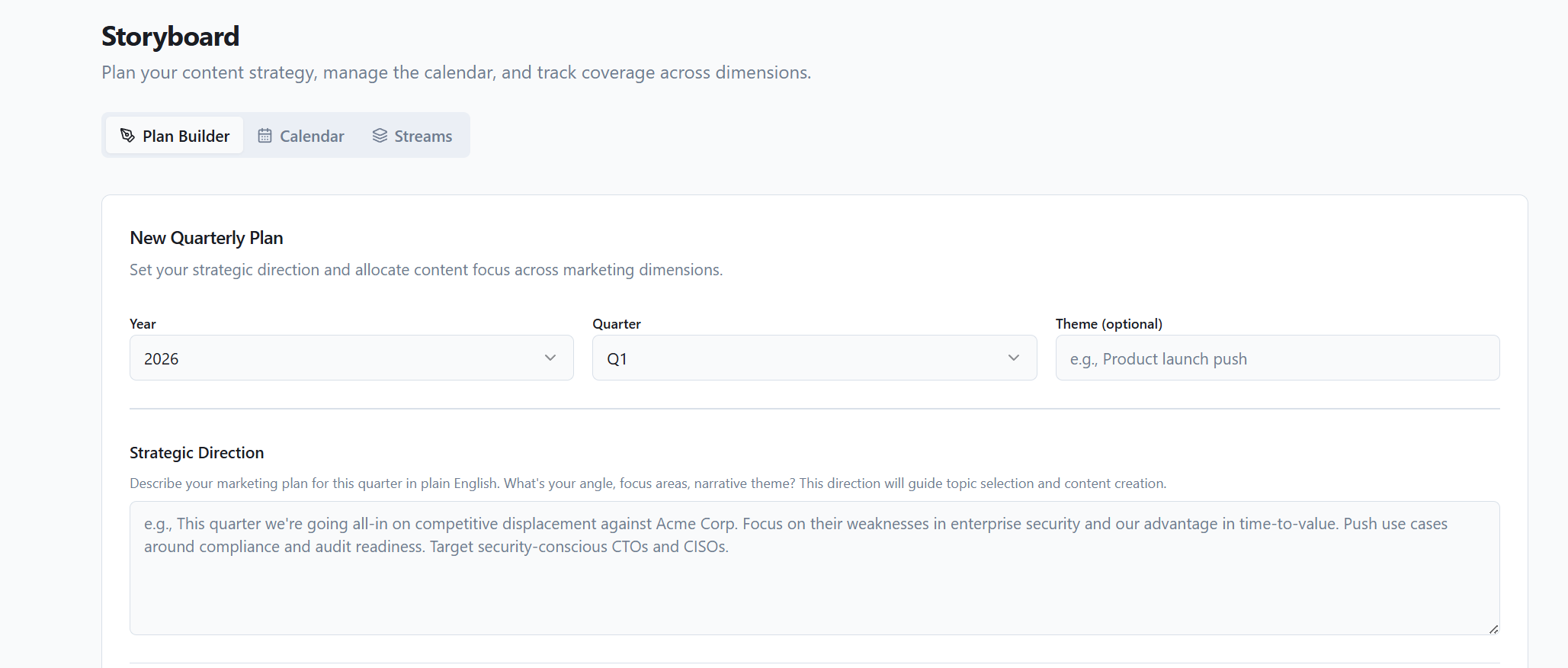
A better planning model starts with percentages, not titles. If the quarter should be 40% executive personas, 35% marketing leaders, and 25% practitioners, that decision should shape the calendar before anyone debates individual articles. That's the 40-35-25 Rule. The exact numbers will vary, but the discipline matters more than the math.
This is one of those places where the status quo has a real merit. Weekly planning feels flexible. And for very small teams with one audience and one product motion, that can be enough for a while. Fair point. But once you're trying to support founders, CMOs, and hands-on operators in the same quarter, weekly flexibility often becomes weekly drift.
Back in the Steamfeed days, we saw traffic spikes at 500 pages, 1000 pages, 2500 pages, 5000 pages, then 10000 pages. That didn't happen because we chased random ideas each week. It happened because breadth and depth accumulated in a deliberate way. Calendar balance works the same way. Consistency compounds when coverage is intentional.
Planning Works Better When Strategy Becomes Constraints
Most teams treat strategy as a set of ideas. Planning works better when strategy becomes constraints. That's a big difference.
If your positioning says executive buyers matter this quarter, your calendar should reflect that in a measurable way. If your market motion depends on both top-funnel education and bottom-funnel evaluation, that mix should show up in the plan. If a use case needs extra weight because it's converting, that should affect allocation too. Strategy without constraints is just preference.
This is also where a lot of AI content workflows break down. Prompting can generate a draft. It can't hold your quarterly mix together unless you've already defined what the mix should be. That's why I keep coming back to the same point: the bottleneck usually isn't content. It's fragmented execution without a system.
For teams who want to see how planning connects to the rest of the machine, request a demo and walk through the planning layer with your own persona mix in mind.
How Storyboard Turns Persona Strategy Into A Real Calendar
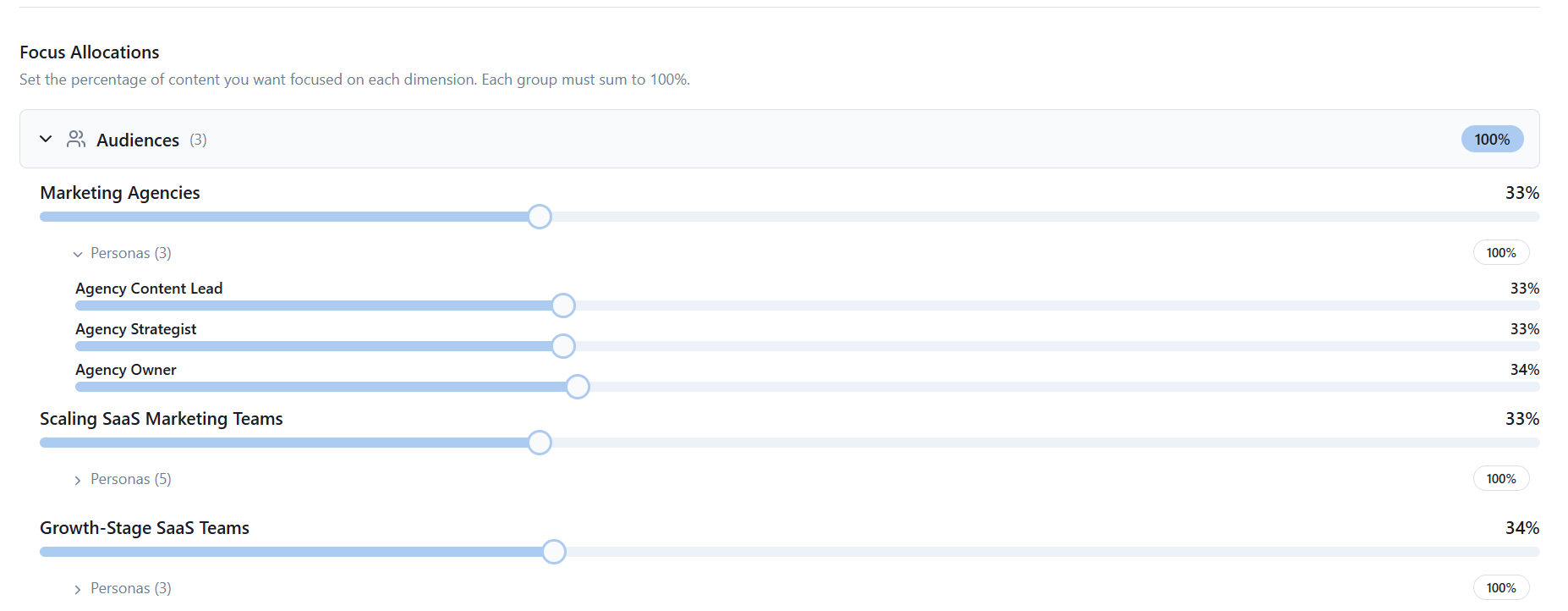
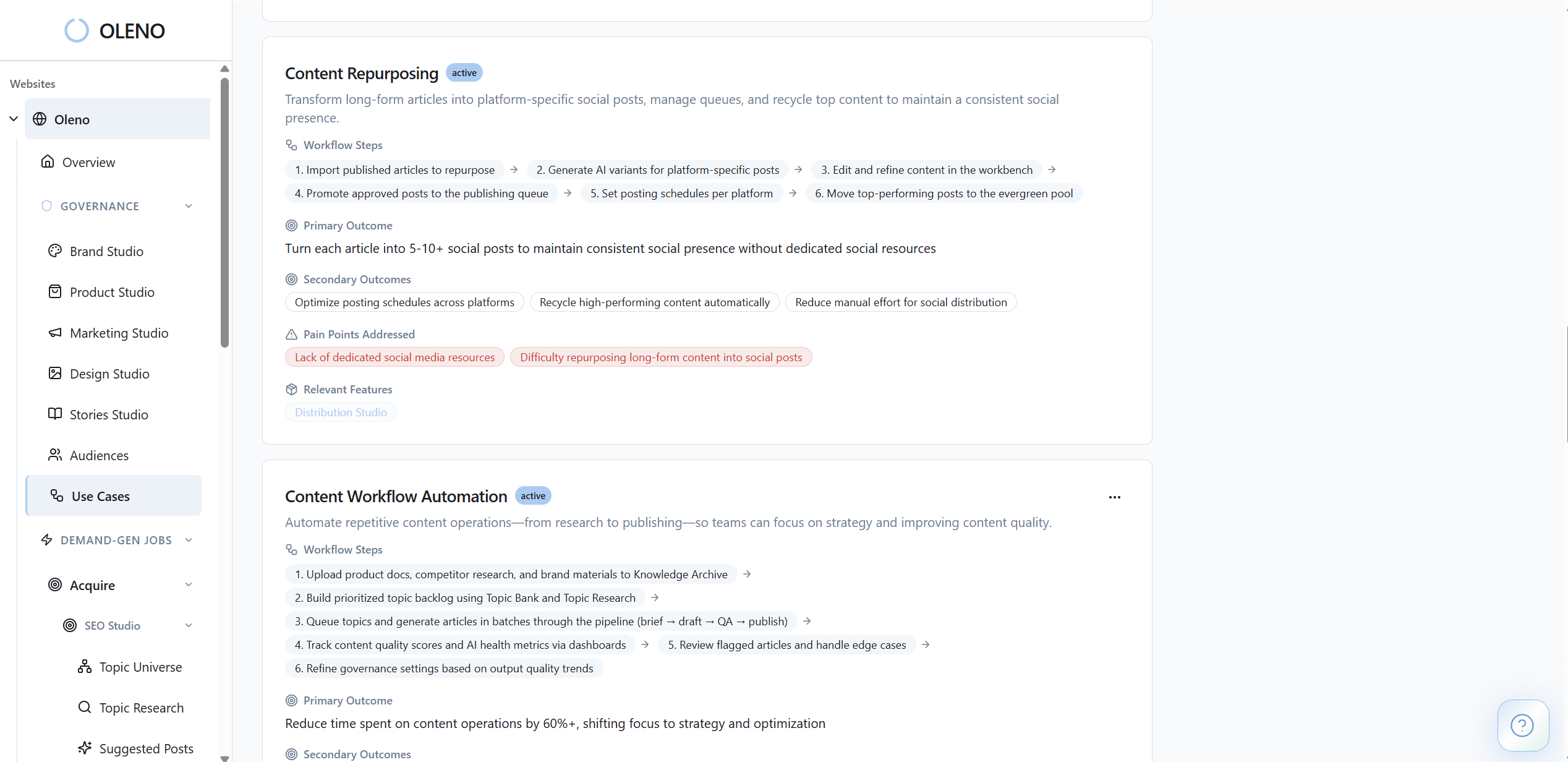
Storyboard is the planning engine inside Oleno that allocates content across audiences, personas, products, and use cases based on governance weights and coverage gaps. Instead of deciding persona emphasis title by title, you define the planning inputs up front, assign weighted focus across dimensions, and let that plan materialize into a prioritized, more balanced calendar.
Storyboard Turns Persona Strategy Into A Schedulable Plan
The first job is getting your targeting inputs clear. Oleno uses audience & persona targeting to define who you're speaking to, what those roles care about, and how they differ. A Head of Marketing and a CMO may care about some of the same outcomes, but they don't evaluate the same way or use the same language. That's where a lot of generic calendars go wrong.
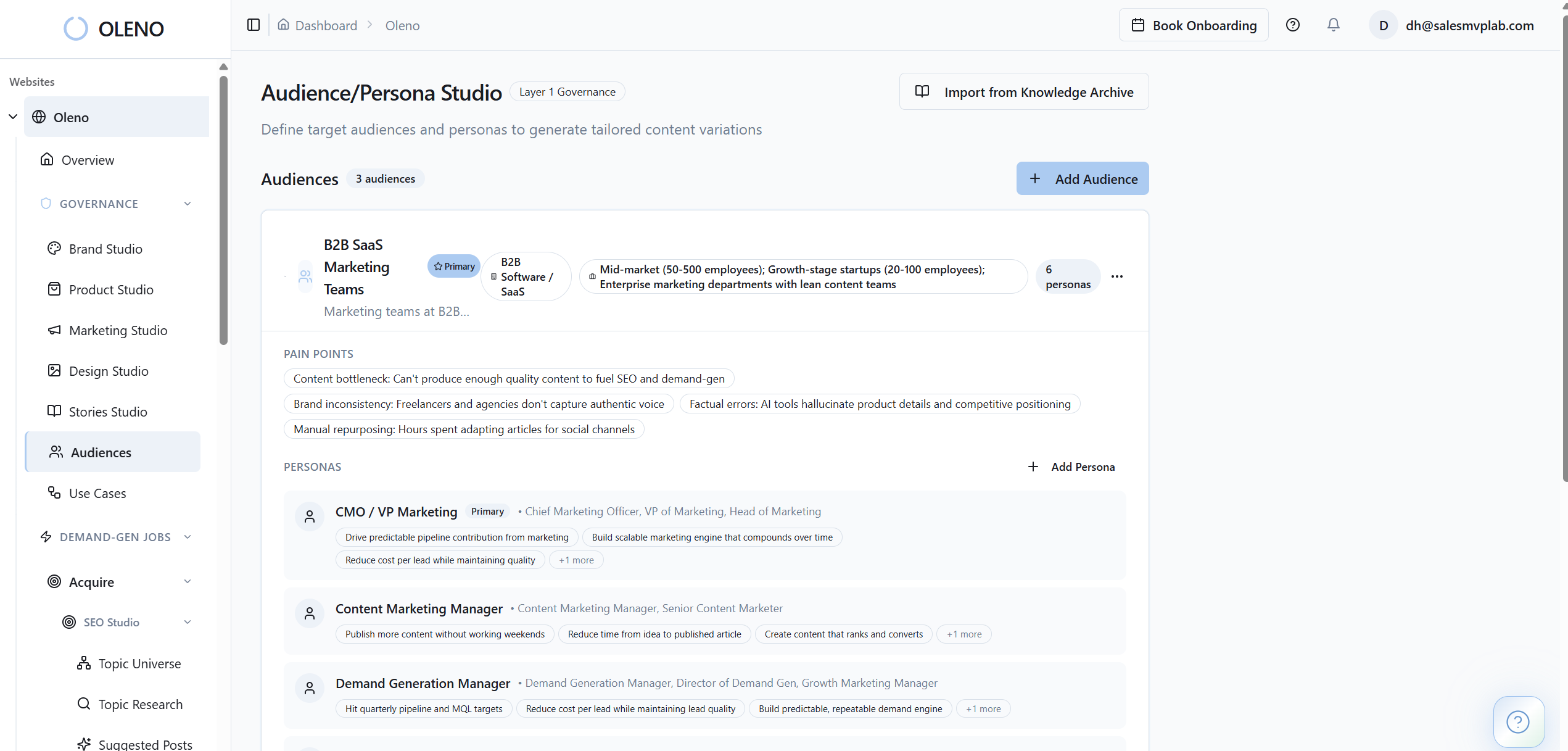
From there, Storyboard reads the dimensions that matter most, like audience, persona, product area, or use case, along with their weights and current coverage gaps. That gives you a structure for balancing personas across calendar planning without manually policing every slot.
The important part is that this isn't just a spreadsheet with colors. The plan is meant to materialize into calendar-ready work, with a visual calendar interface, drag-and-drop rescheduling, stream views, status filtering, and dimension-based coverage tracking. That changes the conversation from "what should we write next?" to "is our plan balanced the way we said it should be?"
Coverage Rules Reduce Drift Before Content Gets Created
Drift is cheaper to prevent than to fix. Once content is already being briefed and drafted against the wrong mix, the rework tax starts piling up.
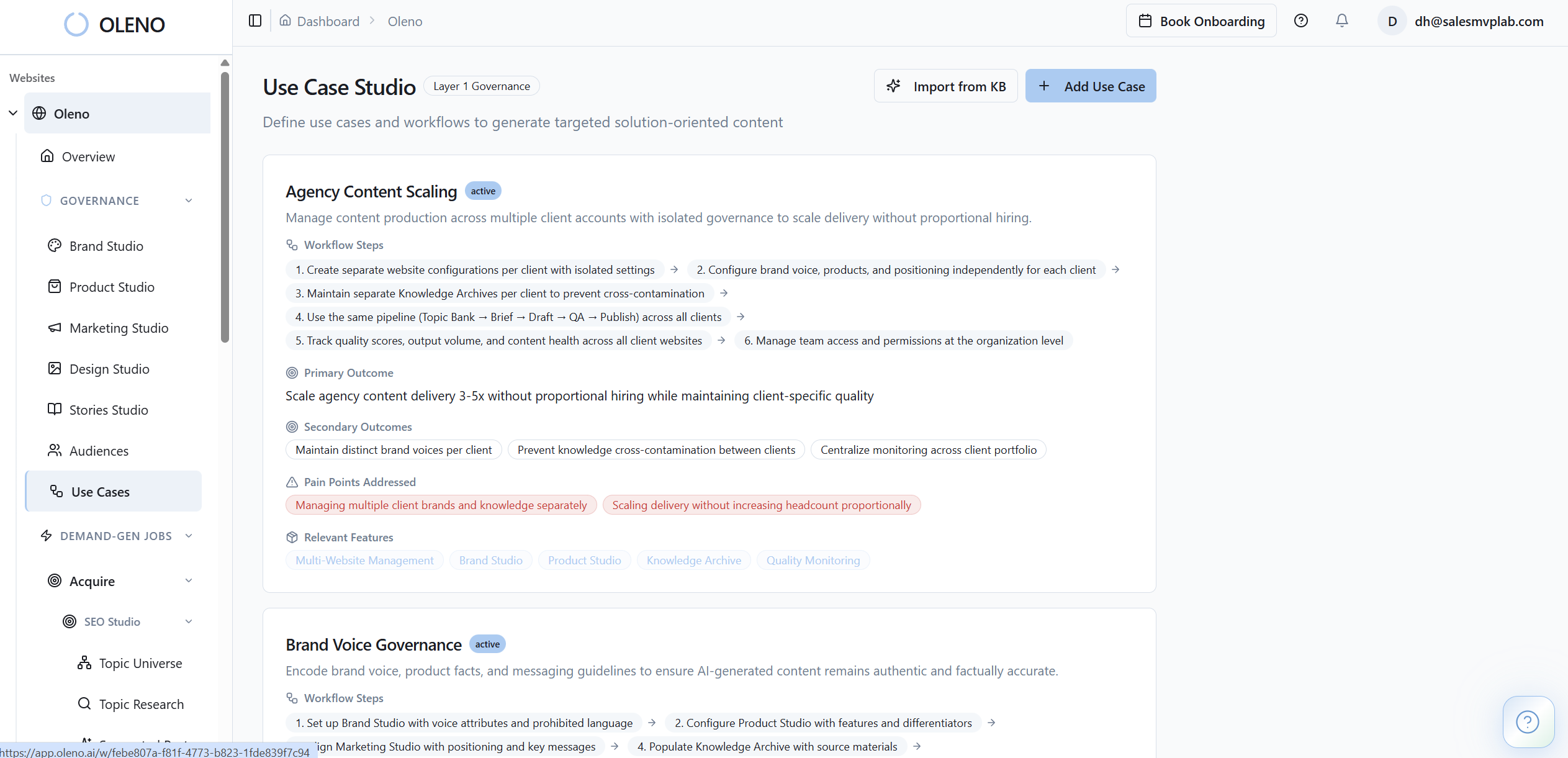
Storyboard uses governance weights and coverage gaps to distribute content across segments more deliberately earlier in the process. Some teams prefer a looser process because they don't want planning to feel rigid. That's valid. Too much rigidity can create its own problem if the market shifts mid-quarter. But the better answer usually isn't no structure. It's bounded flexibility. Keep 70-80% of the calendar aligned to planned priorities, and leave 20-30% open for reactive opportunities. That tends to hold up better than pretending every week should be a clean slate.
If you're wondering why this matters so much, think about the old manual approach like trying to run a newsroom where every editor keeps a different whiteboard. You still publish. But the front page starts lying about what you care about.
The Calendar Stays Aligned Because Planning Feeds Operations
The real value shows up when planning isn't isolated. In Oleno, Storyboard sits in the planning layer while the Orchestrator schedules approved topics and runs them through the execution pipeline. That creates more structure than manually stitching together disconnected tasks.
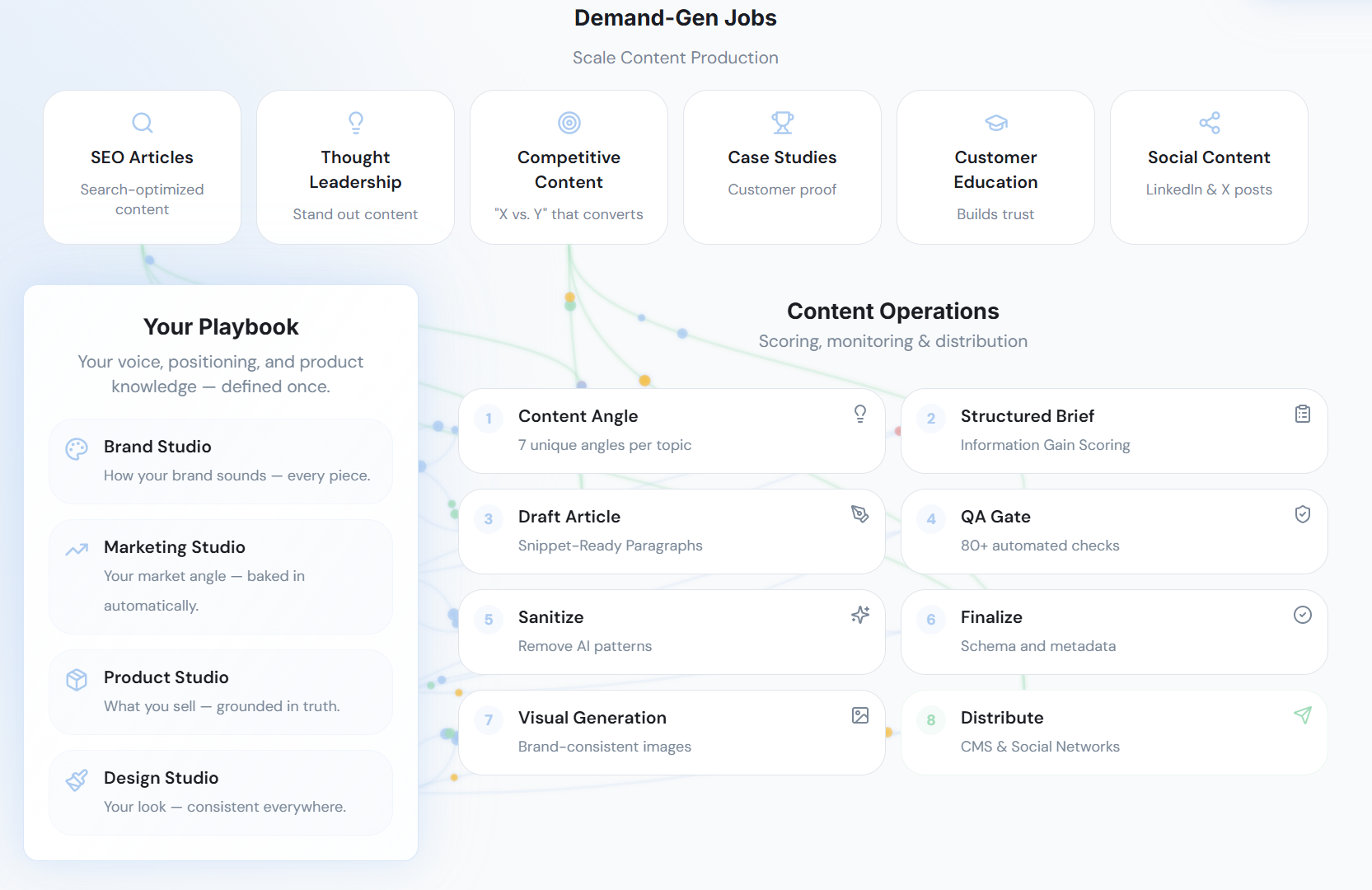
That connection matters more than it sounds. A lot of tools can help you organize ideas. Oleno is built around a governed system. Planning connects to inputs like personas, use cases, product truth, and brand rules. Then the broader system executes against those boundaries.
That was one of the big lessons behind building Oleno in the first place. Last summer I was manually prompting, copy-pasting, and pushing content into a CMS for hours every day. It worked, sort of. But it was still me carrying the system in my head. Eventually I hard-coded a more autonomous engine because I was tired of being the glue holding every step together. Planning has the same issue. If you're the glue, the system is brittle.
One Quarter Can Cover Founders, CMOs, And Practitioners
A useful way to judge balancing personas across calendar planning is to look at one realistic quarter. Not an idealized one. A real quarter where the team is lean, requests keep coming in, and there isn't extra headcount sitting around waiting to help.
One Marketing Lead Can Cover Founders, CMOs, And Practitioners In One Quarter
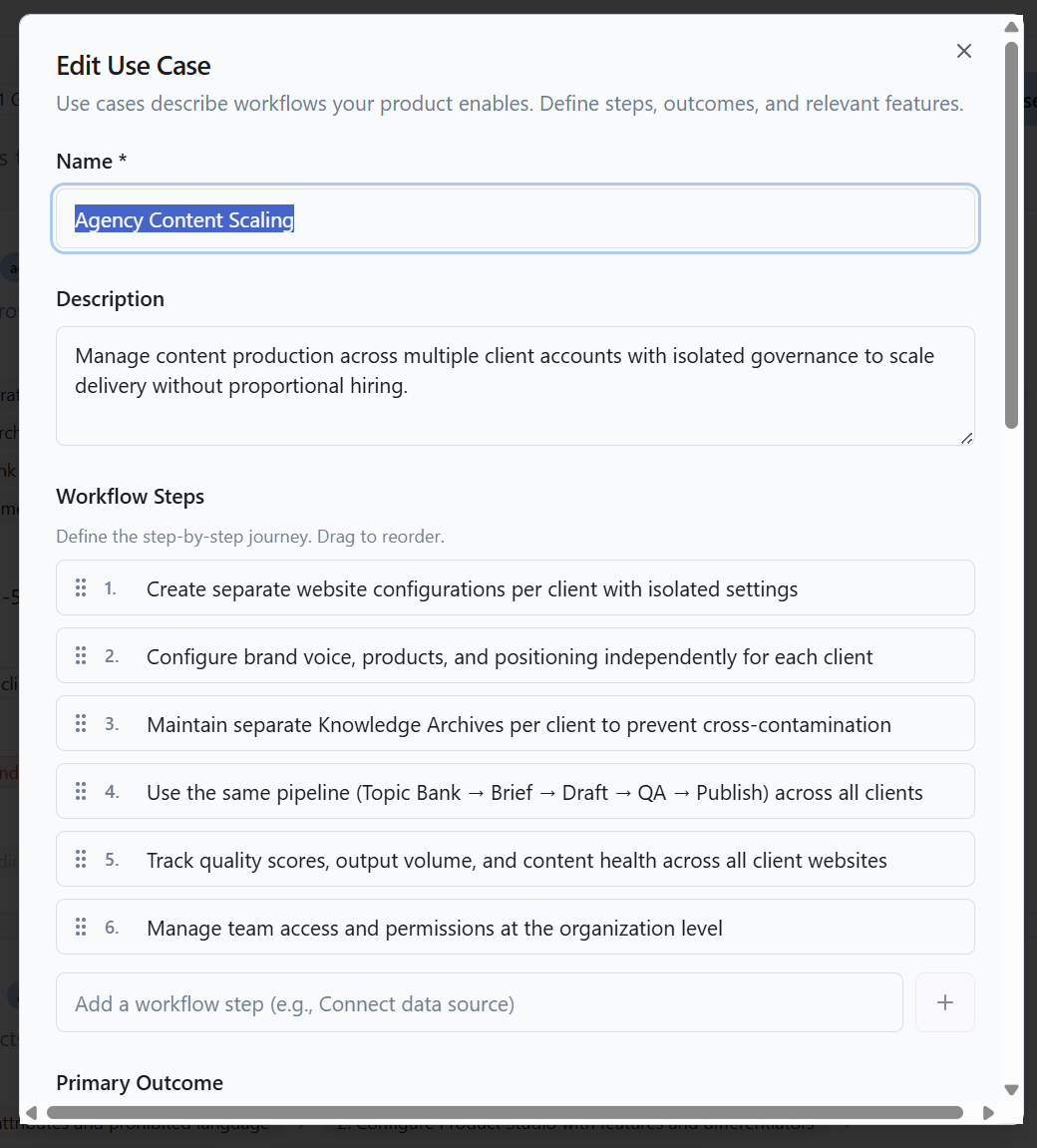
Picture a growth-stage B2B SaaS company with one marketing lead. They're trying to support founder-led thought leadership, CMO-level strategic content, and practitioner content for the people who will actually use or influence the workflow. That's a normal setup.
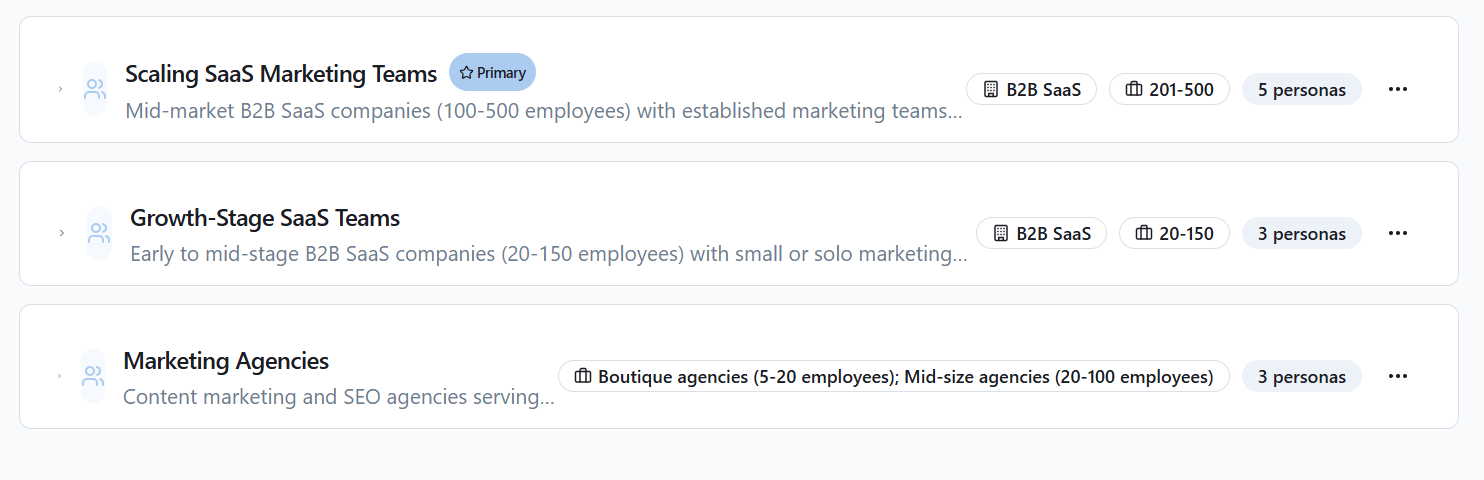
Before structured planning, the calendar usually gets dominated by near-term pressure. Maybe a few founder posts go out because leadership is visible. Maybe a cluster of BOFU pages gets prioritized because sales wants support now. Maybe practitioner content keeps slipping because it feels less urgent. By the end of the quarter, the mix reflects internal pressure more than market need.
With Storyboard, the team can define those three persona groups, assign proportional weight, and build the quarter around that mix. Maybe founders get 30%, CMOs get 40%, practitioners get 30%. Maybe the ratio is different. The point is that it's explicit. Once the plan is materialized, the calendar has a stronger chance of staying honest to strategy.
Balanced Planning Creates Steadier Output Without Adding Headcount
This is where lean teams usually care most. Not theory. Throughput.
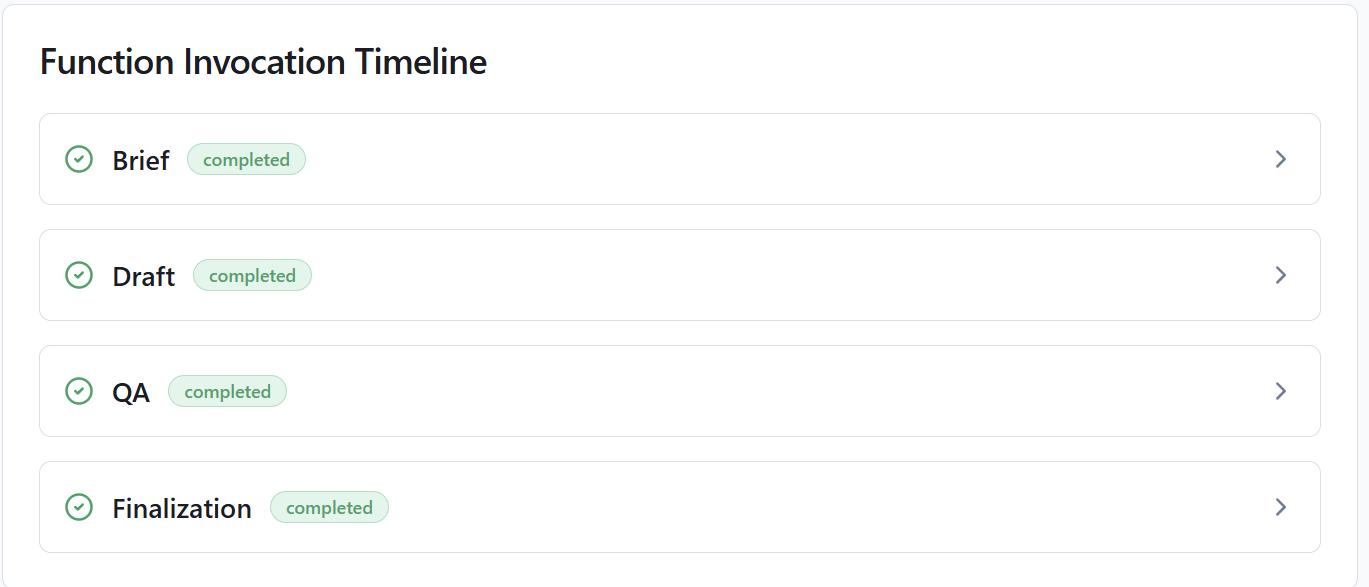
Oleno's broader use case for growth-stage teams is increasing output from roughly 4-8 articles a month to 20-40+ without adding headcount, especially when the full system is in place across planning, content generation, QA, and publishing. Storyboard isn't the only reason that happens, and it would be misleading to pretend it is. But it does solve one of the planning problems that quietly slows teams down: constant rescoping.
When the quarter has a clearer allocation model, you spend less time renegotiating who the next piece is for. You reduce those meetings where everybody sort of agrees the calendar feels off but nobody can prove why. And you stop resetting every quarter from scratch because there was no durable structure underneath.
Honestly, that's the part many teams underrate. Output doesn't just slow down because writing is hard. It slows down because the planning layer is fuzzy, which means every downstream step inherits the fuzziness.
Storyboard Improves Structure, Not Judgment
Storyboard can improve balancing personas across calendar planning by giving your quarter structure, weights, and clearer coverage rules. It doesn't decide your market position for you, and it won't rescue weak inputs. That's not a flaw. That's just the right boundary.
Better Allocation Does Not Replace Market Judgment
Marketing still owns the decisions that matter most. You decide who the priority personas are. You decide what the quarter is trying to accomplish. You decide which use cases deserve more attention and what your positioning actually is.
That's worth saying plainly because some teams want software to make the hard strategic calls for them. It won't. And honestly, it shouldn't. Oleno is built so marketers stay in control of the important decisions, while the system executes within those boundaries.
So if the quarter is weighted toward the wrong persona, Storyboard can carry that bad assumption very consistently. That's the earned tradeoff. Good systems don't replace judgment. They amplify it.
Persona Balance Only Works If Your Inputs Are Clear
Weak persona definitions create weak plans. If your personas are fuzzy, your use cases are vague, or your market priorities shift every two weeks, the calendar will still wobble.
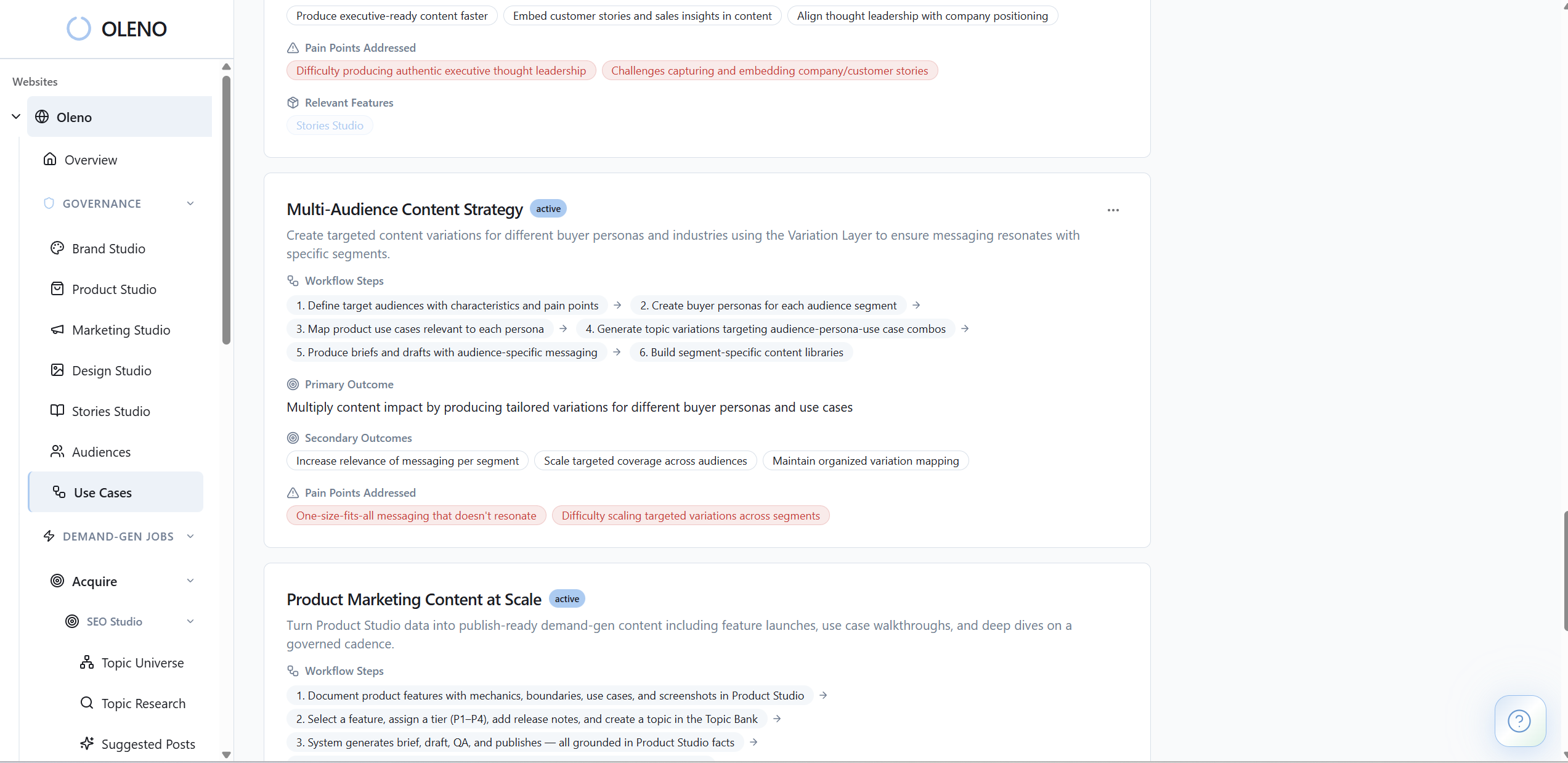
A simple rule helps here. If two personas would read the same draft, with the same language, proof, and call to action, they're probably not distinct enough yet. Tighten the input before you trust the allocation.
And one more boundary matters. Balanced coverage doesn't guarantee every topic performs. Some topics will still miss. Some personas will convert better than others. Some quarters will need more executive content because the market moment demands it. Storyboard helps you stay consistent. It does not promise identical results across every slice of the calendar.
Turn Persona Strategy Into A Usable Quarterly Plan
A balanced calendar starts with clearer planning inputs. If you know your target personas, understand the use cases that matter this quarter, and want a more durable way to distribute content across them, Storyboard gives you a planning layer that can hold that structure.
The practical next step is simple. Bring your current quarter, your top personas, and the content mix you're trying to support. Then book a demo to see how Storyboard turns that into a usable plan inside Oleno.
About Daniel Hebert
I'm the founder of Oleno, SalesMVP Lab, and yourLumira. Been working in B2B SaaS in both sales and marketing leadership for 13+ years. I specialize in building revenue engines from the ground up. Over the years, I've codified writing frameworks, which are now powering Oleno.
Frequently Asked Questions