Bayesian Content Experiments: Optimize AI-Generated Demand Gen

Most teams don’t have a testing problem. They have a decision problem. You’re waiting for proof on pages that don’t get enough traffic to ever “prove” anything, so good ideas stall and bad ones linger. I’ve been there. At PostBeyond, I could draft three to four posts a week solo, but as the team grew, decisions started moving slower than drafts.
When I ran Steamfeed years ago, volume masked a lot. Tens of thousands of pages meant we got signal fast. But in small SaaS teams, you don’t have that luxury. You need a way to learn on low traffic without gambling your cadence or your voice. Bayesian content experiments give you that path: faster, safer calls that roll learning forward instead of restarting from zero.
Key Takeaways:
- Replace binary win/lose A/Bs with Bayesian sequential decisions to cut decision latency on low-traffic assets
- Test with “variant families” from a locked brief so results transfer into templates and priors, not just one page
- Define clear decision rules, guardrails, and rollback paths so teams move without fear
- Instrument CMS → analytics → CRM so posteriors reflect down-funnel value, not just clicks
- Use bandits and expected value of information to stop early or reallocate traffic intelligently
Why Slow, Binary A/B Tests Stall Demand Decisions
Slow, binary A/B tests stall decisions because low-traffic pages rarely hit significance. Bayesian testing lets you stop when a variant’s probability of being best crosses your pre-set threshold. For a long-tail article with 300 monthly visits, that’s the difference between shipping in two weeks or waiting a quarter.

Why significance chasing hurts content velocity
Significance chasing turns content into a court case. Weeks of “collect more data” while writers keep tweaking intros and editors fight rework. The irony is you don’t need a verdict; you need a decision that preserves momentum. Demand gen is sequential. Every week you delay is a week you don’t compound.
Here’s the shift. Treat each test as a belief you update, not a trial you must win. If Variant A has an 88% chance of being best on your primary metric and guardrails look fine, do you really need to wait for 95%? Sometimes, sure. But most of the time, shipping now beats sitting still. You’re optimizing a system, not publishing a paper.
The practical payoff is obvious on low-traffic assets. That “definitive guide” that pulls in a few hundred visits? Waiting for a p-value drags your whole calendar. A sequential approach lets you move on credible evidence, capture gains early, and build a library of priors you can use next time.
What is Bayesian testing, and why should content teams care?
Bayesian testing estimates the probability that a variant is best given your data and your priors. That’s what you actually need to decide. You can stop when that probability crosses a decision threshold, even with small samples, as long as your guardrails hold. It’s practical, not academic.
Why should content teams care? Your variants share constraints: same brand voice, same claims, same brief structure. Bringing “reasonable priors” from similar past tests tightens the learning loop. You’re not starting from scratch every time. You’re narrowing uncertainty faster because the system remembers. For low-traffic assets, that’s the only way this works at a human pace.
And because the output is a distribution, not a single number, you can ask better questions. How likely is the benefit-first intro to beat pain-first given what we’ve seen? Should we reallocate traffic now or wait another week? That’s more useful than “B is +6.2%, p<0.05” with no context.
The difference between ad hoc tweaks and controlled variant families
Most “tests” are edits with a story attached. Helpful sometimes. Not reusable learning. Controlled variant families, by contrast, share a locked brief and intention, and then vary a few named levers, say, narrative angle (pain-first vs. benefit-first) and CTA microcopy.
That containment does two things. First, it makes attribution possible. If you change five things, you don’t know what mattered. Second, it makes results portable. You can update priors on “pain-first intro” or “two-step CTA” and roll those into the next template. You’re not just fixing a page. You’re upgrading the system.
Ready to move faster without flying blind? If you want to see this approach in practice, you can Try Generating 3 Free Test Articles Now.
The Real Bottleneck Is Decision Latency, Not Traffic Volume
Decision latency, not traffic volume, kills compounding gains. You don’t need thousands of sessions if your rules let you stop early on credible evidence. Use priors from similar assets, monitor probability-of-best, and compare the value of switching now against the value of waiting a bit longer.

How do you make calls with little traffic?
Sequential rules. Start with sensible priors drawn from your last five similar experiments. As events arrive, update the posterior probability that each variant is best on your primary metric. If Variant B crosses your decision threshold and guardrails hold, ship the winning lever across the family and move on.
Two more ingredients matter. First, measure expected value of information: what do we gain by waiting for more data versus switching now? Second, write failure modes into the brief. If bounce rate climbs beyond a 10% credible interval, roll back without debate. These rules aren’t red tape. They’re speed insurance for small teams.
On the ground, this looks like weekly check-ins with precomputed posteriors and clear next actions. No rehashing. No “feels better.” Just “B sits at 91% probability-of-best, no guardrail breaches, roll B across siblings and archive A.” You preserve cadence and keep the queue moving.
What traditional content experiments miss
Traditional experiments pretend pages are independent. They’re not. Articles spawned from the same brief share structure, tone, and intent. Hierarchical priors let you learn at the family level so each child page converges faster. When the “benefit-first intro” wins on one asset, your next similar asset starts with that higher prior.
This is how you move from per-page verdicts to system improvements. Your copywriters aren’t chasing “what worked on that one page” anymore. They’re drafting inside briefs that encode proven patterns with the right starting assumptions. And when a lever underperforms, you lower its prior and mark it as an exception. The system gets smarter; the workload gets lighter.
The Hidden Costs Of Waiting For Significance
Waiting for significance imposes operational, financial, and emotional costs that rarely show up on the dashboard. It delays compounding improvements, increases rework, and pushes teams toward vanity metrics. The fix isn’t more data. It’s better rules and earlier, safer decisions based on credible probabilities.
The operational drag hidden in “just wait for more data”
Let’s pretend you run three A/Bs a month and wait eight weeks for significance. That’s six quarters of delay on compounding changes. During those eight weeks, writers keep drafting without updated templates, editors carry frustrating rework, and leadership asks for updates you don’t have. Decision latency becomes a coordination tax.
There’s also context loss. As staff shifts and priorities change, the reasoning behind “we’re waiting” evaporates. A sequential approach with documented stopping rules prevents this. You either switch or you stop with a reason code: insufficient expected value of information, guardrail breach, or posterior inconclusive. That record makes future decisions faster.
If you want the bias angle: early “winners” are often overestimated. Amazon’s research on the “winner’s curse” offers practical guidance on bias correction in online experiments and why naive lifts tend to regress later. See Amazon Science on correcting the “winner’s curse” in A/B tests for context and mitigation ideas.
The revenue impact of misaligned metrics
If your success metric stops at clicks, you’ll ship peaky headlines that don’t move pipeline. Good to know, but not good enough. You need assisted conversions, demo intent, or qualified visit patterns wired into your decision rules. Otherwise, you risk local maxima that inflate top-of-funnel and depress sales conversations.
Aligning metrics also reduces internal debate. When the brief says, “Switch when probability-of-best on demo intent crosses 90%, with no credible drop on bounce,” you don’t need a meeting to interpret a CTR spike. Your rule ties directly to value, not vanity.
Still managing experiments by gut and p-values? There’s a simpler path. If you want help running the mechanics without more meetings, you can Try Using An Autonomous Content Engine For Always-On Publishing.
The Human Side Of Missed Signals And Stalled Bets
When decisions lag, confidence cracks. Teams hesitate, cadence slips, and leaders get wary of scale. Guardrails and rollback paths restore psychological safety. They let people move faster because the system makes reversals safe, visible, and boring.
When teams lose confidence in the system
You can feel it in Slack: “Feels flat.” “Let’s pause until we know.” That pause spreads. Edits pile up, QA tightens, and publishing slows. The problem isn’t talent. It’s the absence of rules that make moving forward feel safe enough when the data is thin.
Codify three things to rebuild trust: decision thresholds, guardrails, and roll-forward logic. When everyone knows the criteria and sees that reversals are contained, they stop waiting for perfect. And the tone shifts from “are we sure?” to “what did the posteriors say this week?” It’s a different vibe. A calmer one.
The 3 a.m. incident you do not want
We’ve all seen it. Auto-publish flips, a CTA variant overfires, and you wake up to an AE ping because a top page suddenly changed tone. A simple canary and rollback threshold would have kept that contained to 10% of traffic for 24 hours. No heroics. No drama. Just revert and move on.
Guardrails aren’t bureaucracy. They’re speed insurance. With a canary, a QA gate, and a documented rollback trigger, experiments stop feeling risky. They feel routine. And when experiments feel routine, teams run more of them, without worrying about a 3 a.m. surprise.
I’ve watched this happen. When we encoded our judgment upstream, voice constraints, claim boundaries, structure rules, quality went up while reviews went down. Fewer late edits. Less second-guessing. Same people, same goals. The change was the system.
A Practical Bayesian Workflow For Content Teams
A practical Bayesian workflow turns experiments into weekly habits: define decision rules, generate controlled variants, allocate traffic adaptively, and encode learnings into the next brief. The goal isn’t perfect certainty, it’s credible, reversible decisions that compound.
Define success, metrics, and decision rules you will actually use
Pick one primary metric per test, CTA submit rate, demo intent rate, or assisted demo starts. Add one or two guardrails like bounce or average engaged time, and write plain-English rules: “Switch when Variant A has 90% probability-of-best on the primary metric and no guardrail shows a 10% credible drop.”
Keep your measurement simple and durable. Map experiment and variant IDs into your data layer so analytics ties cleanly to CRM stages later. If you’re early on event design, Google’s documentation on event modeling is a solid baseline. See GA4 event design guidance for a straightforward structure you can adapt.
Then publish the rule in the brief. Decisions are faster when the rule is visible at creation, not invented at review. Editors will thank you. Sales will, too.
Generate controlled variant families from one brief
Lock the brief. Freeze voice, claims, structure, and the core “job” the content serves. Then vary only named levers. Use a semantic pivot for angle (pain-first vs. benefit-first) and one microcopy tweak (CTA label or TL;DR sentence). Cap it at two or three levers per family so attribution stays credible.
Name each lever in the experiment ID: “GF-PR-PainFirst-CTA_Benefit,” not “Test-42.” It seems fussy. It’s not. It’s how you tie analysis back to exactly what changed and roll outcomes into priors later. You’ll spend fewer hours re-reading drafts to remember what you meant to test.
The punchline: this discipline turns edits into learnings. Next month’s briefs start closer to right because they inherit what worked, with uncertainty already narrowed.
Implement Bayesian bandits and sequential testing for low-traffic pages
For binary events like submits, a Beta-Bernoulli model is enough. Initialize priors from your last similar tests, or use a weak prior if it’s new territory. Allocate traffic via Thompson sampling or probability-of-superiority. Each day or week, recompute posteriors and reassess whether to stop, reallocate, or continue.
Use expected value of information to avoid perfectionism. If switching now likely returns more value than waiting for another week of data, switch. It’s that simple. If you want to go deeper, the free, online text by Lattimore and Szepesvári is a clear reference on bandits and stopping logic: Bandit Algorithms (Lattimore & Szepesvári).
Document why you stopped. “Crossed 90% probability-of-best with guardrails intact” is a better artifact than “looked good.” That artifact becomes next quarter’s shortcut.
How Oleno Operationalizes Bayesian Content Experiments End To End
Oleno turns this workflow into repeatable operations. You define voice, claims, and structure once, generate controlled variants safely, publish with QA and canaries, and fold outcomes back into briefs and rules. The result is consistent execution without more headcount or constant coordination.
Brief locking and lever control to create true experiment families
Oleno lets you define brand voice, product truth, and structure up front, then lock those rules so variants differ only on the levers you choose. That containment is the backbone of real experiments. It keeps attribution clean and makes posterior learnings portable to the next brief.
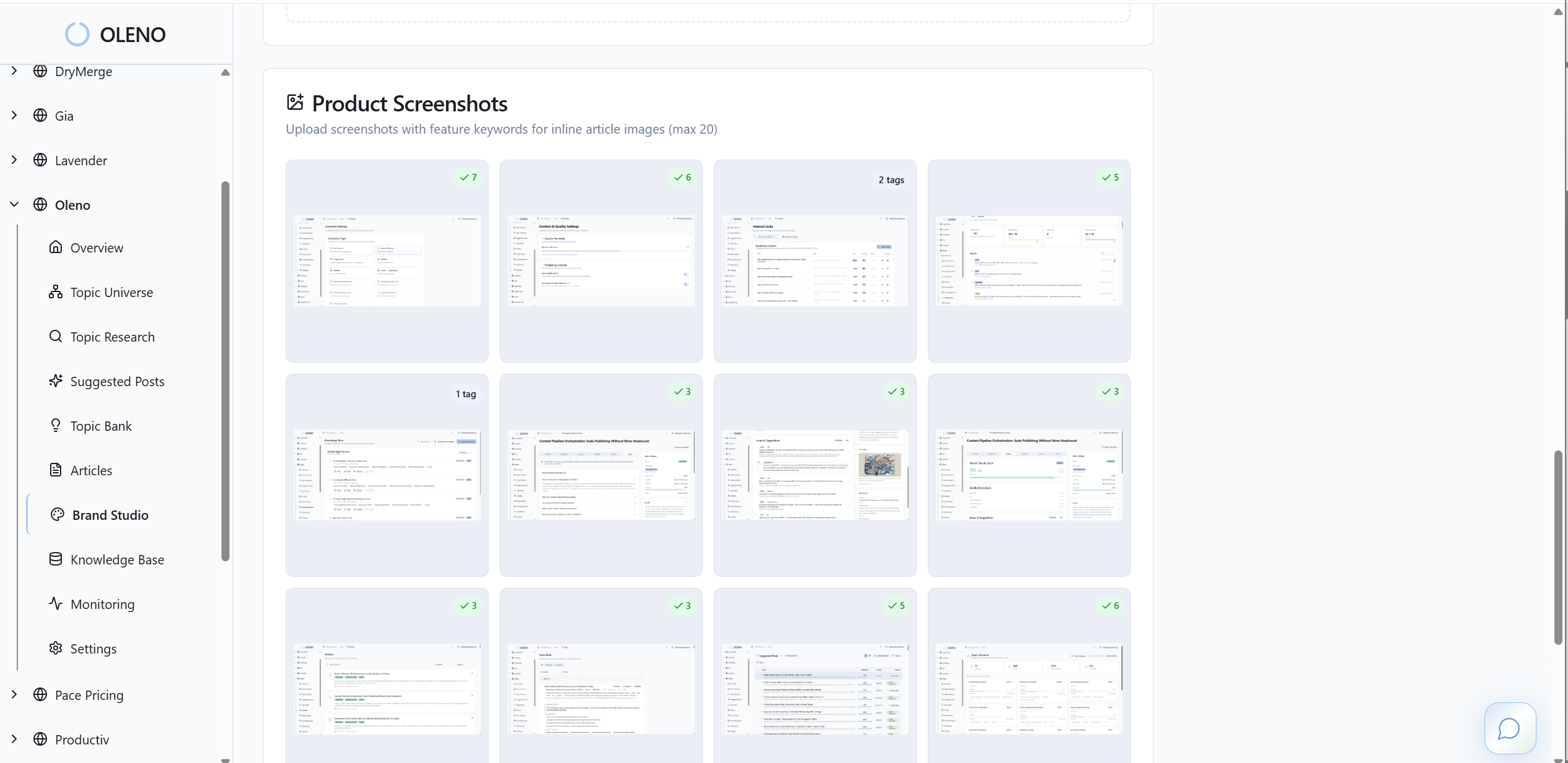
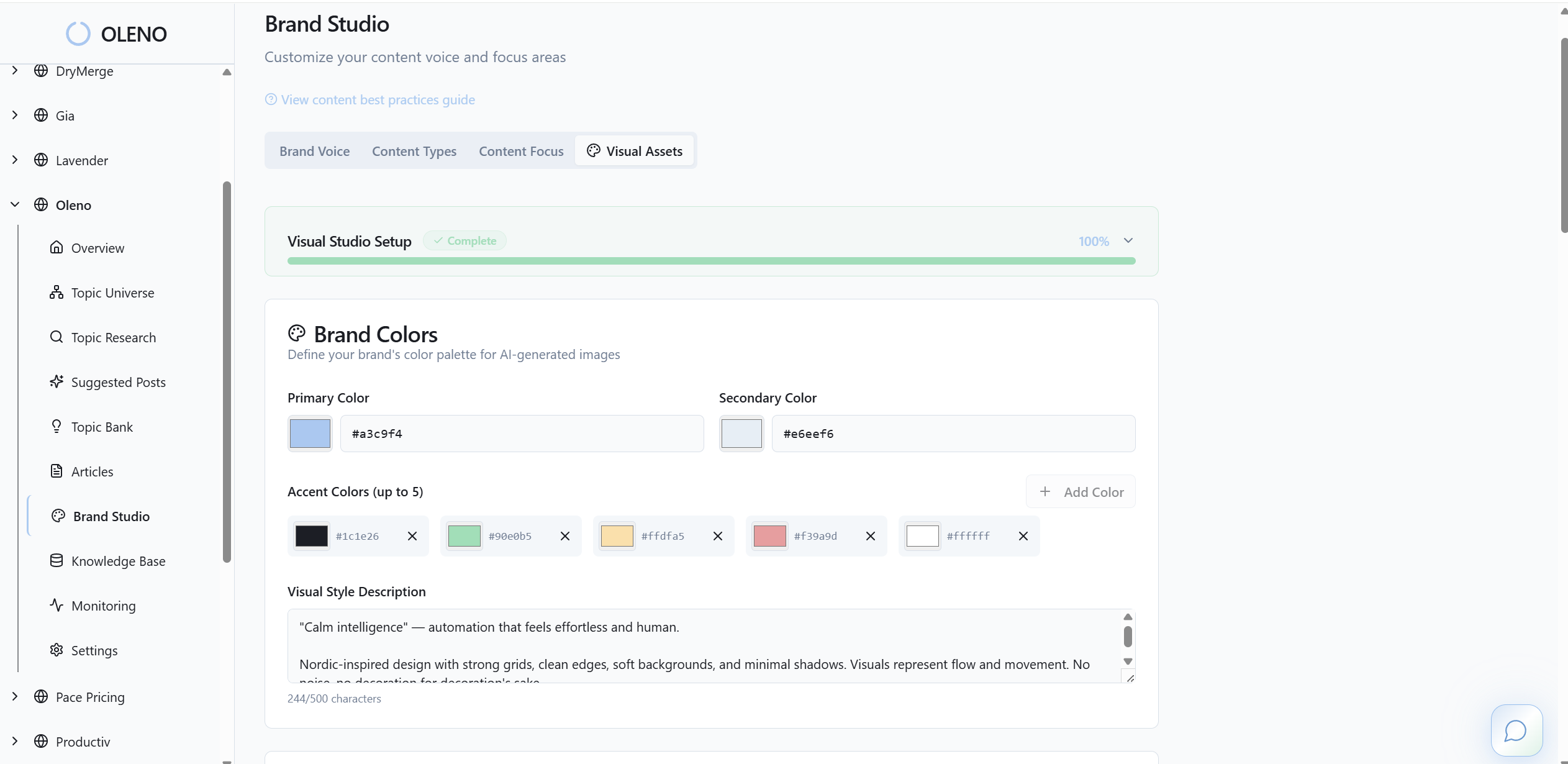
Because governance applies everywhere, you don’t babysit every draft. Approved claims, messaging boundaries, and narrative patterns carry through automatically. That reduces the chance of a “creative” variant drifting off-message just because someone tried a new angle. And it means your priors, pain-first intro, benefit-first CTA, map to real, enforced patterns you can reuse.
For distribution, Oleno publishes directly to your CMS in draft or partial rollout, WordPress, Webflow, Storyblok, HubSpot, Framer, and more, so controlled releases don’t require a spreadsheet and a prayer. You decide the canary size; Oleno keeps it consistent.
Closing the loop from posteriors to templates and priors
Nothing goes live unless it passes Oleno’s QA gate for voice, accuracy, structure, and grounding. That removes the “did we miss something?” worry and keeps canaries boring, in a good way. If a guardrail breaches, rollback is straightforward because release notes are tied to experiment IDs and variants. No scramble, no mystery.
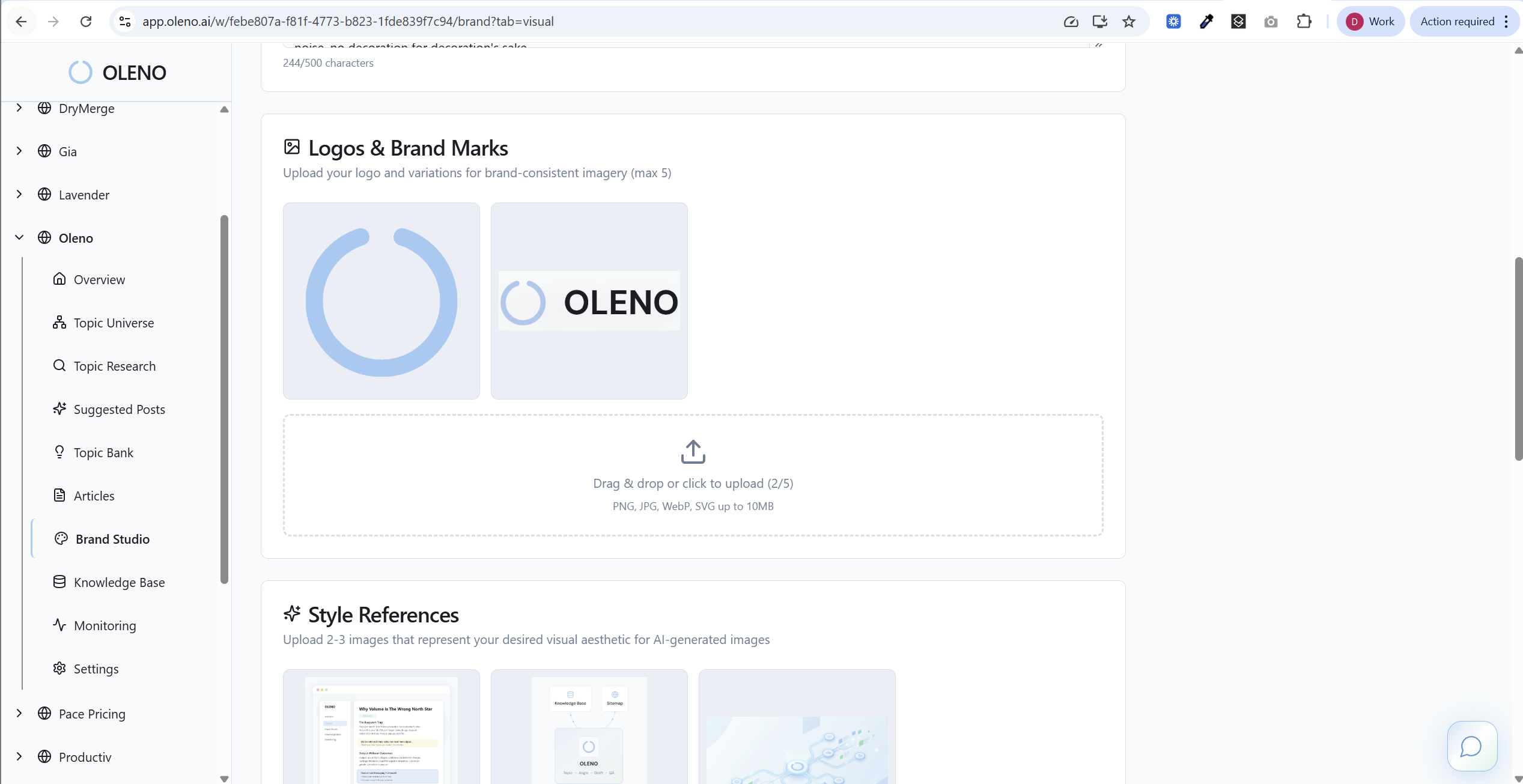
Oleno fits alongside your analytics and CRM; it doesn’t replace them. You define event taxonomy and UTM patterns in your process, and Oleno publishes consistently so your downstream systems see clean experiment IDs and variant metadata. That’s how posteriors reflect down-funnel value, not just clicks.
When a lever pattern shows lift, you can codify it into future briefs and linter rules inside Oleno. Over time, your generation starts closer to right because the system enforces what worked and blocks what drifted. That’s the antidote to decision latency and the rework tax you’ve been paying. If you want to try this without retooling your stack, you can Try Oleno For Free.
Conclusion
You don’t need more traffic to make better decisions. You need faster, safer decisions that roll forward. Bayesian testing gives you the math. Variant families, QA gates, and canaries give you the safety. Encoding outcomes into briefs gives you the compounding gains.
Do that, and content stops feeling like a coin flip. It starts feeling like a system you can trust, week after week. That’s the point. Not perfection. Progress that sticks.
About Daniel Hebert
I'm the founder of Oleno, SalesMVP Lab, and yourLumira. Been working in B2B SaaS in both sales and marketing leadership for 13+ years. I specialize in building revenue engines from the ground up. Over the years, I've codified writing frameworks, which are now powering Oleno.
Frequently Asked Questions