Best B2B Content Tools for Small Business Teams

Small teams waste the most money on the wrong content tool, not because the monthly bill is huge, but because the editing loop quietly eats 5 to 10 hours a week. If you felt that pain this week, brief in one tab, draft in another, comments everywhere, this comparison is for you.
Most small business buyers looking at B2B content tools think they're choosing between "better AI" and "worse AI." That's usually the wrong frame. You're really choosing between five operating models: lightweight generation, brand-controlled drafting, workflow automation, SEO autopublishing, and governance-first content operations.
The tools in this guide reflect those different bets: AirOps, Copy.ai, Jasper, Outrank, and Byword. I'll break down where each one fits, what each one costs, and where the tradeoffs start to show up once your team has to publish consistently, not just generate drafts.
| Tool | Best for | Starting price | Primary strength | Primary limitation |
|---|---|---|---|---|
| AirOps | SEO and growth teams with ops maturity | ~$99/mo | Configurable workflows and AI search focus | More setup work before value shows up |
| Copy.ai | Small teams needing fast, lightweight output | ~$29/mo | Low-friction templates and quick adoption | Long-form consistency can slip |
| Jasper | Marketing teams needing stronger brand controls | $49/mo | Brand voice features and broad creative support | Costs rise and fact-checking still matters |
| Outrank | Teams prioritizing automated SEO publishing | $49 to $99/mo | Keyword-to-publish automation | Quality control can become the bottleneck |
| Byword | Agencies and SEO teams running programmatic campaigns | $99/mo or per article | Bulk production across large keyword sets | Expert B2B nuance often needs more editing |
Key Takeaways:
- Best for flexibility: AirOps fits teams with process discipline that want configurable workflows and AI search experimentation.
- Best for quick adoption: Copy.ai is easier to start with if your needs are mostly emails, ads, and short-form drafts.
- Best for brand-conscious marketers: Jasper gives marketing teams more voice control, but smaller buyers should watch seat-based costs.
- Best for volume SEO: Outrank and Byword fit SEO and growth managers who care most about coverage, throughput, and programmatic scale.
What Small Businesses Actually Need From B2B Content Tools
Small businesses need content tools that reduce coordination cost, not just writing time. The hard part isn't getting words on the page. The hard part is getting publishable content that fits your voice, your product, and your growth plan without turning one marketer into a full-time editor.
The tradeoff between speed, control, and content quality
The first decision point is simple: if you optimize for raw speed, you usually give up control. If you optimize for control, setup time goes up. And if you ignore quality thresholds, the savings you thought you got from AI disappear in editing.
A small team usually learns this the annoying way. The founder wants more content. A marketer buys a tool because it can draft a blog post in four minutes. Two weeks later, the draft still needs product facts fixed, the tone sounds generic, and nobody agrees on whether it's ready to publish. Sound familiar?
I think of this as the 3x3 filter: speed, control, quality. Pick the tool that gives you two by default, then build the third through process. If a platform gives you speed but no control, expect quality to break. If it gives you control but no workflow fit, output slows anyway.
There is a case to be made for fast generators, especially when a team is tiny and needs motion fast. That's fair. But if you publish more than 4 long-form pieces a month, control starts mattering more than novelty.
What to evaluate before picking a content platform
You should evaluate content tools based on post-draft labor, not draft quality alone. That's the part most demos hide. The draft looks fine on screen. The next 45 minutes are where the real cost shows up.
A practical scorecard for small teams has five checks:
- How much editing does a first draft need before publish
- How well does the tool hold brand voice over 1,000 plus words
- Whether workflows match how your team already works
- How much SEO help exists beyond generic drafting
- Whether pricing scales by seat, credits, or output
I call this the After-Draft Test. If one article takes more than 30 minutes of cleanup after generation, the tool is acting like a writing assistant, not a content system. For some buyers that's enough. For others, especially B2B teams with technical products, it's not.
That distinction matters because the next section is where costs start creeping in.
Why Choosing the Wrong Content Tool Gets Expensive Fast
The wrong content tool gets expensive when it creates rework across your team. Monthly pricing is the visible cost. The hidden cost is the editing tax, handoff overhead, and narrative drift that starts after the first few pieces go live.

Where small teams lose time after the first draft
Most small teams don't lose time writing. They lose time fixing. One marketer drafts in an AI tool at 9:00 AM, drops the doc into Google Docs by 10:00, gets PMM comments after lunch, rewrites product claims at 4:00, then holds the post until the founder approves the intro the next morning. That one "fast" article just burned most of a workday.
That's why I don't love tool evaluations that stop at generation quality. Back when I was the sole marketer on a team, I could write 3 to 4 solid posts a week because the context lived in my head. Add one writer without the same context and output often goes down before it goes up. More people. More handoffs. More rework.
The red flags show up before the metrics do:
- One person becomes the brand voice bottleneck
- Drafts need product corrections every time
- SEO outlines and actual messaging feel disconnected
- Publishing cadence drops after the first month
- Team members start saying, "I'll just rewrite this myself"
If two or more of those are true, your issue probably isn't content volume. It's context transfer.
Why workflow fit matters more than raw AI output
Workflow fit matters because small teams don't have spare layers. There's no content ops department cleaning up process mistakes. If the tool creates one extra approval step, one extra export, or one extra round of cleanup, the team feels it immediately.
A lot of buyers underestimate this. They see a feature-rich platform and assume more capability means more value. Sometimes yes. Sometimes you've just bought a cockpit when you needed a steering wheel.
The useful rule is this: if your team has fewer than five content stakeholders, favor low-friction workflow first. If your team has five or more contributors touching briefs, messaging, SEO, and approvals, governance starts winning over simplicity.
Not everyone agrees with that threshold, and fair enough. Some very small teams are disciplined enough to run sophisticated systems. But most aren't. Most need a tool that fits the team they have now, while not creating a mess six months from now.
So which tools actually match which team? That's where the comparison gets practical.
How the Leading B2B Content Tools Compare
These leading B2B content tools solve different problems, not the same problem with slightly different branding. AirOps leans into configurable workflows, Copy.ai into speed, Jasper into brand-aware drafting, Outrank into automated SEO publishing, and Byword into programmatic scale.
AirOps: workflow flexibility and AI search optimization
AirOps is a strong option for teams that want configurable workflows and AI search optimization signals in the same environment. It has real appeal for growth and SEO operators who like building systems, not just using templates (AI Certs).
AirOps makes sense when your team already thinks in workflows. You can shape processes around prompts, steps, and search-driven tasks, and the company clearly talks about AI search and content quality as core themes (AirOps blog). For an operator-minded team, that's attractive.
The tradeoff is operational weight. A flexible workflow layer can be a strength, but smaller teams may spend too much time designing the machine before it starts producing value. If your marketer is also running paid, email, and product launches, setup complexity isn't a side note. It's the whole decision.
How Oleno is Different: AirOps gives teams a workflow builder. Oleno starts earlier, with governance defined first through brand rules, audience definitions, product truth, and market framing, then carries that into execution. That matters when the main problem isn't missing steps, it's inconsistent inputs.
Copy.ai: fast adoption for lightweight content production
Copy.ai is easiest to adopt when your team needs content fast and doesn't want much setup. It works well for short-form use cases, broad template coverage, and quick idea-to-draft motion (Deeper Insights).
This is why Copy.ai shows up so often on shortlists. A small team can get value quickly. Templates help. The interface is approachable. And if your content mix is mostly emails, social posts, ad copy, and basic blog drafts, that speed is real.
The catch is what happens after that first burst. Comparative reviews keep noting differences in long-form depth, workflow sophistication, and consistency when buyers move beyond lightweight content work (Zapier). That's not a fatal flaw. It's just a fit issue.
If your content goal is "get more assets out this week," Copy.ai is sensible. If your goal is "build a repeatable B2B content engine that stays on-message over time," you may hit its ceiling sooner than expected.
How Oleno is Different: Copy.ai is built around fast generation and templates. Oleno is built around pre-defined governance layers, so tone, argument, audience fit, and category framing are set before the draft exists. That changes what your team edits for.
Jasper: stronger brand controls for marketing teams
Jasper fits marketing teams that care about brand consistency more than bargain pricing. It offers stronger brand-oriented workflows than lightweight generators and has become a familiar choice for teams that want broader creative support across channels (Samantha North, Deeper Insights).
Jasper's appeal is pretty obvious. Better brand controls than entry-level tools. Wider use cases than pure SEO products. A platform marketers can use for blog content, campaigns, and general creative work without feeling boxed into one motion.
But cost discipline matters here. Per-user pricing tends to hurt smaller teams as adoption grows, and fact-checking still sits outside the tool more often than buyers want. That's the honest limitation. Jasper can absolutely improve speed and consistency. It doesn't eliminate the need for human judgment around product accuracy and positioning.
For a marketing team with budget and multiple contributors, that might be fine. For a lean B2B team where one wrong product claim can trigger a rewrite cycle, it may still feel heavier than expected.
How Oleno is Different: Jasper improves on-brand generation. Oleno adds governance layers around brand rules, marketing messaging, and verified product truth so the system starts from approved context, not just examples of voice.
Outrank: automated SEO publishing for volume-focused teams
Outrank is built for teams that want keyword planning, article generation, and publishing in one SEO-heavy workflow. Its pitch is convenience through automation, which is exactly why volume-focused teams pay attention (Outrank).
If you're an SEO or growth manager staring at a huge topic backlog, this can be compelling. You want throughput. You want fewer manual steps. You want the machine to keep moving. Outrank leans into that pretty hard.
The concern is quality drift at scale. Automation is valuable, but B2B teams with nuanced positioning often find that high-output systems still need editorial oversight to keep claims accurate and the narrative sharp. This is especially true once content moves from informational SEO into demand generation.
A reasonable rule here: if your KPI is keyword coverage first, Outrank will probably feel aligned. If your KPI is pipeline influence from content that must sound credible to practitioners, review the outputs carefully before you commit.
How Oleno is Different: Outrank pushes on SEO throughput and autopublishing. Oleno is built to keep brand consistency, audience targeting, and strategic framing intact before content moves into production, which changes how scale behaves over time.
Byword: programmatic content for large keyword sets
Byword is a fit for agencies and SEO teams running large programmatic campaigns. It is designed for scale across big keyword sets, bulk article creation, and publishing motions where coverage matters a lot (Skywork, TripleDart).
This is the cleanest competitor fit in this whole list. If you're an SEO or growth manager trying to publish at programmatic volume, Byword makes sense. That's what it's for. Agencies working across large topic inventories will probably see the logic immediately.
The tradeoff is nuance. Programmatic SEO can cover breadth well, but nuanced B2B content often breaks when the system doesn't deeply understand product truth, audience pain, or category framing. I learned this years ago scaling content catalogs. Volume helps. Breadth helps. But if the pages don't carry a real point of view, the traffic can detach from demand.
That doesn't make programmatic wrong. It just means you should use the right tool for the right motion. Byword is strong when throughput is the main goal. It becomes less comfortable when every page also needs to sound like a credible operator wrote it.
How Oleno is Different: Byword is optimized for throughput across large keyword sets. Oleno adds planning and governance layers so content can stay aligned to audience, narrative, and product reality across multiple demand-gen jobs, not just SEO coverage.
How Oleno Fits Teams That Need More Than Draft Generation
Oleno fits teams that need a repeatable content system, not just faster drafts. Its starting point is governance before generation. That changes the economics for scaling SaaS teams where the main problem is rework, context loss, and narrative drift across contributors.
What makes governance-first content operations different
Governance-first content operations mean the system defines content rules before production starts. In practice, that means tone, style, preferred language, words to avoid, CTA patterns, structure rules, audience fit, and category framing are set upfront rather than patched in during editing.
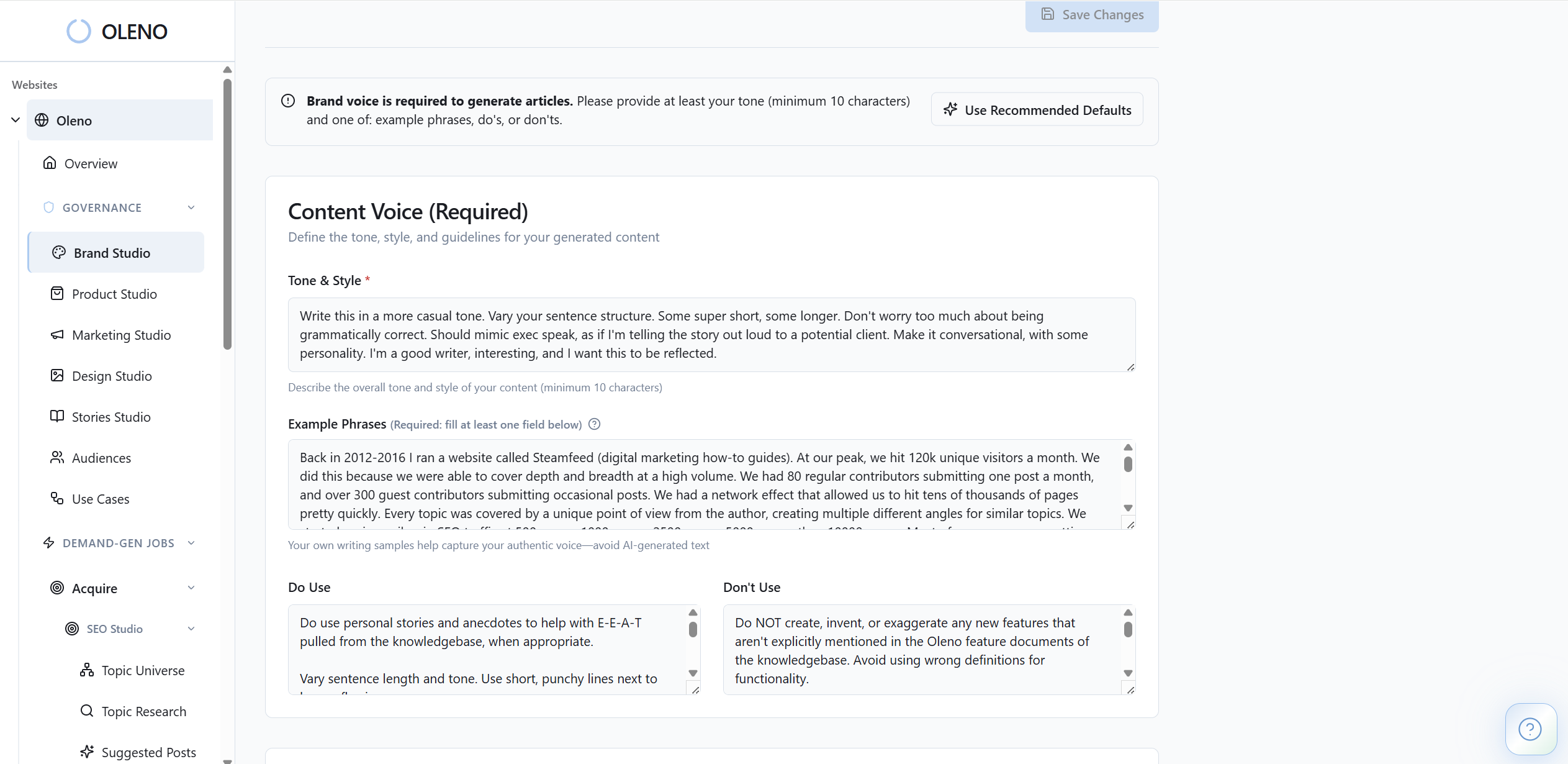
That's a different operating model from template-first tools. And honestly, I think that's the real category break. One class of tool generates text. Another class tries to reduce the editing tax by encoding the strategy that should shape the text.
Oleno does that through Brand Studio and Marketing Studio, where teams define how content should sound and what it should argue. It also uses planning and governance layers, including Storyboard and Content Calendar concepts, so output is shaped before the draft stage instead of cleaned up afterward. That's why it fits buyers looking for a brand governance content platform more than buyers looking for lightweight AI content tools for B2B marketing.
There is a real tradeoff here. Governance-first systems ask for more upfront thinking. You don't get to skip the work of defining your message. But that's also why the model fits scaling teams. If your content operation already has too many cooks in the kitchen, pushing clarity upstream is usually cheaper than fixing confusion downstream.
If you want to see how that model looks in practice for your team size and workflow, request a demo.
Built for repeatable demand-gen execution
Repeatable demand-gen execution means content keeps compounding instead of resetting every quarter. That only happens when planning, messaging, and execution live inside one operating system.
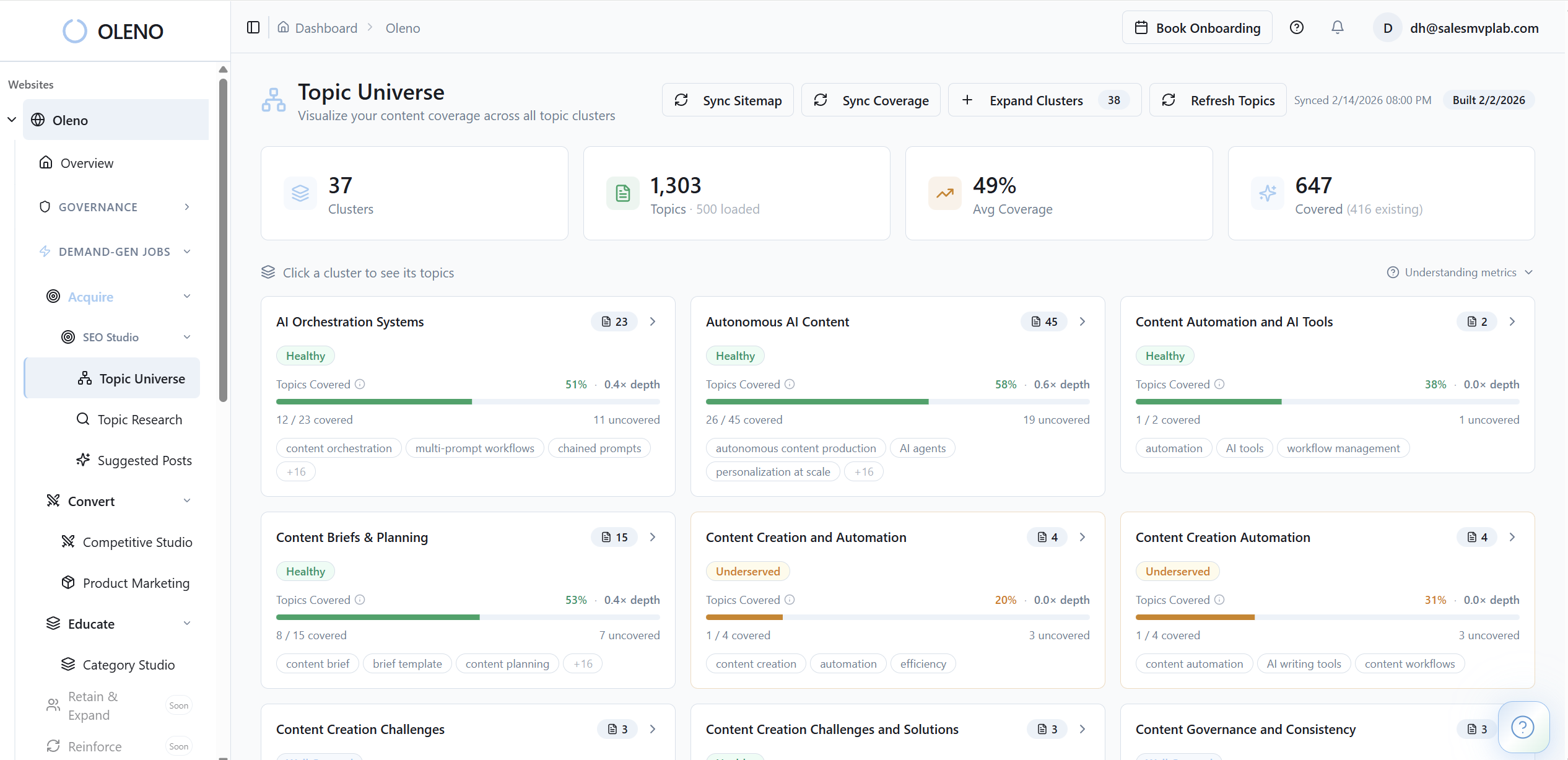
One thing I like about the positioning here is that it's honest about the actual buyer. This isn't mainly for a solo creator trying to spin up some blog posts fast. It's for growth-stage and scaling SaaS marketing teams led by a CMO, Head of Marketing, PMM, or Head of Content who need a repeatable system without adding headcount.
Programmatic SEO is part of that picture too. Oleno supports scaling SEO content production while holding onto quality and brand consistency, which is where a lot of content operations tools for small business start to wobble. And because it is designed for ongoing demand generation rather than one-off drafting, it lines up with teams that don't lack ideas as much as they lack coordination.
That's the earned pivot. The issue isn't "can AI write?" Of course it can. The issue is whether your operating model can turn strategy into publishable content without losing signal every time a new person touches the draft.
Which teams are the best fit for Oleno
The best fit is a SaaS marketing team that has already felt the pain of fragmented execution. Maybe you tried freelancers. Maybe you tried general AI writers. Maybe you even got decent traffic, but the content never connected tightly enough to the story you needed the market to understand.
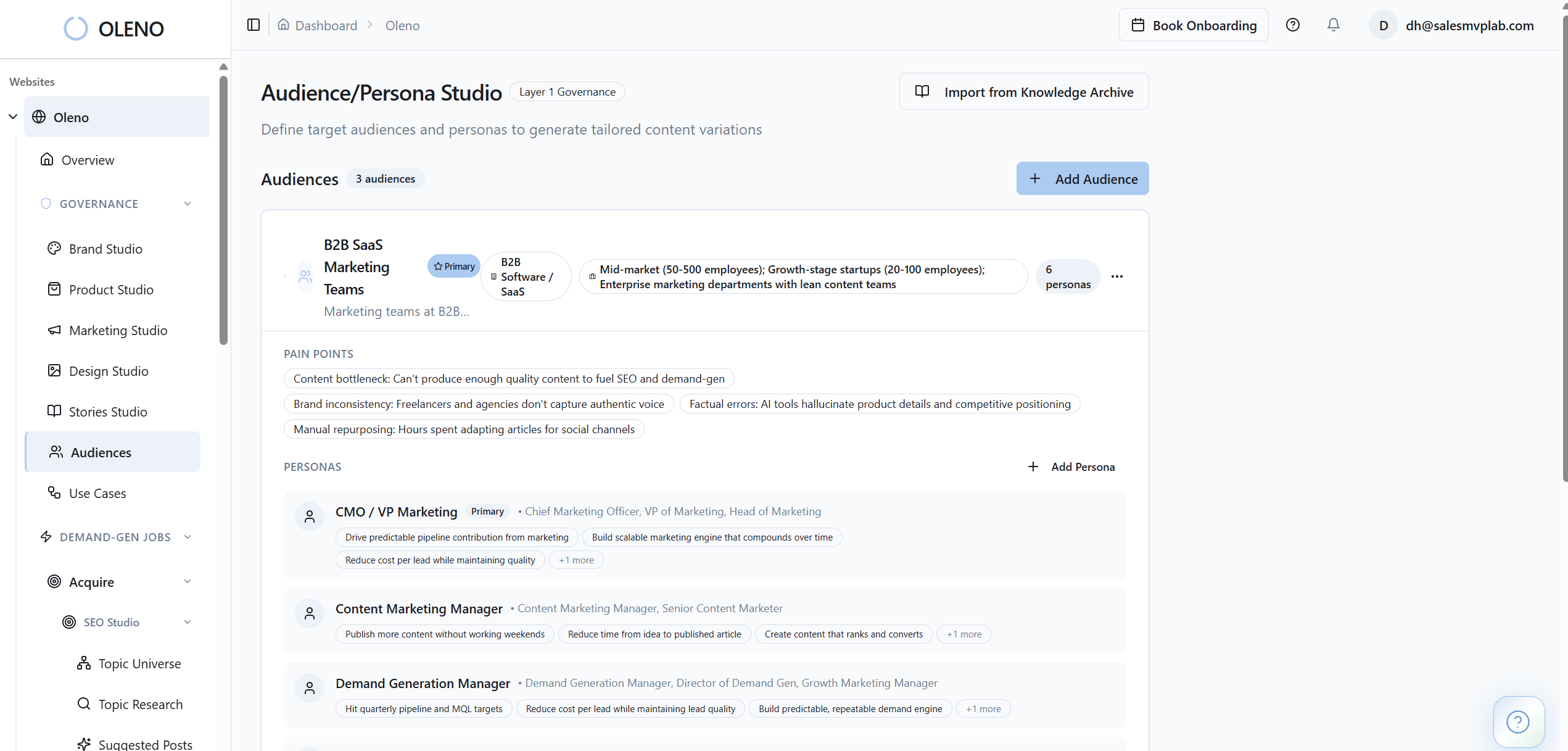
That pattern is common. I saw versions of it before. Great rankings can still produce weak demand-gen alignment if the content sits too far from the product narrative. That's why buyer fit matters more than feature count.
Here is the simple fit rule:
- If you want lightweight generation for short-form content, pick a lighter tool.
- If you want SEO automation and high-volume programmatic publishing, Byword or Outrank likely fit better.
- If you need a governance-first content operating system for a lean but growing B2B SaaS team, Oleno is the better fit.
Oleno starts at $109 per month for 1 post per day, scales to $537 per month for 5 posts per day, and moves to custom pricing for 11 plus posts per day. That output-based model won't be ideal for every buyer. Fair point. Teams with inconsistent publishing needs may prefer looser entry pricing. But for teams trying to build consistent demand-gen execution, pricing around production capacity can map more cleanly to actual output.
You can compare that fit against your current process, and if the bigger issue is consistency rather than drafting speed, request a demo makes sense before you commit to another generator.
The final comparison grid for small business teams
The right B2B content tool depends on which operating model your team actually needs. Small teams needing quick assets should bias toward simplicity. Teams chasing search coverage should bias toward automation. Teams trying to scale demand-gen without narrative drift should bias toward governance and planning.
| Tool | Best-fit team | Content type focus | SEO depth | Brand governance | Workflow automation | Collaboration | Ease of setup | Publishing support | Pricing model | Best use case | Main caution |
|---|---|---|---|---|---|---|---|---|---|---|---|
| AirOps | SEO and ops-minded growth teams | Search-driven content workflows | High | Medium | High | Medium | Medium to hard | Workflow dependent | Hybrid | Custom search-oriented processes | Setup can outpace team capacity |
| Copy.ai | Small teams needing quick wins | Short-form and lightweight blog drafts | Low to medium | Low to medium | Medium | Medium | Easy | Limited | Hybrid | Fast campaign content | Long-form quality can vary |
| Jasper | Marketing teams with multiple contributors | Broad marketing content | Medium | High | Medium | High | Medium | Limited | Per-user subscription | Brand-aware drafting across channels | Cost and review load can rise |
| Outrank | SEO-heavy small teams | Long-form SEO publishing | High | Low to medium | High | Medium | Medium | Strong | Subscription | Automated SEO content flow | Output may need quality review |
| Byword | Agencies and programmatic SEO teams | Bulk SEO content | High | Low | High | Medium | Medium | Strong | Per article or subscription | Large keyword-set execution | Nuanced B2B content needs oversight |
| Oleno | Growth-stage and scaling SaaS marketing teams | Demand-gen, SEO, product, and category content | High | High | High | High | Medium | Strong | Output-based subscription | Repeatable governed content operations | Upfront governance setup takes work |
A lot of comparison articles end with "pick the tool that fits your needs." That's true, but it's also too vague to be useful. Better rule: pick the tool that matches the bottleneck you already have.
If your bottleneck is blank-page speed, Copy.ai is fine. If it's brand-aware creative drafting, Jasper is a reasonable choice. If it's search coverage and autopublishing, look hard at Outrank or Byword. If it's fragmented execution across a growing SaaS team, that's where Oleno makes more sense.
And if you want to pressure-test that decision against your actual workflow, team structure, and publishing goals, book a demo.
About Daniel Hebert
I'm the founder of Oleno, SalesMVP Lab, and yourLumira. Been working in B2B SaaS in both sales and marketing leadership for 13+ years. I specialize in building revenue engines from the ground up. Over the years, I've codified writing frameworks, which are now powering Oleno.
Frequently Asked Questions