Best Blogging Tools for Small Business Teams in 2026

Small business blogging tools get expensive right around article 12, not article 1. That’s usually when you realize you didn’t buy a blogging system, you bought a text box with a logo on it.
A lot of small teams learn this the hard way. The founder or head of marketing starts out thinking, “We just need help writing faster.” Then three months later, the real problems show up: weak briefs, generic drafts, too much editing, no clear publishing workflow, and blog posts that technically exist but don’t really support pipeline. That’s the gap this comparison is trying to solve.
This guide looks at five blogging tools for small business teams: AirOps, Copy.ai, Jasper, Outrank, and Byword. The goal is simple. Figure out which tool fits a lean team that needs blog output, which one fits an SEO-heavy workflow, and which one makes sense when you need more than quick drafts.
| Tool | Best For | Starting Price | Primary Strength | Primary Tradeoff |
|---|---|---|---|---|
| AirOps | SEO teams with workflow expertise | ~$99/mo | Custom workflows and AI search optimization focus | More setup overhead |
| Copy.ai | Founders and small teams wanting fast drafts | ~$29/mo | Quick adoption and broad template library | Blog quality often needs more editing |
| Jasper | Marketing teams that care about brand controls | $49/mo | Brand voice support and polished writing environment | Cost rises faster for growing teams |
| Outrank | Small businesses chasing keyword-driven volume | $49 to $99/mo | SEO workflow from keyword to publishing | Quality control can be uneven |
| Byword | Agencies and teams doing programmatic SEO | $99/mo or per article | Bulk article generation at scale | Less suited to nuanced thought leadership |
| Best-fit recommendation by use case | Lean team choice: Copy.ai. SEO ops choice: AirOps. Scale publishing choice: Byword. Governed demand-gen system: Oleno | Varies | Better fit depends on what breaks first in your workflow | Cheap tools get costly if review time explodes |
Key Takeaways:
- Copy.ai fits smaller businesses that want low-cost, fast draft generation and can tolerate heavier editing on blog posts.
- AirOps is stronger when your team already thinks in workflows, prompts, and SEO systems, not just article drafts.
- Jasper makes sense for marketing teams that care a lot about brand voice, but price sensitivity becomes real as usage grows.
- Outrank and Byword are built more for publishing scale than for deep editorial nuance or product-accurate demand-gen content.
What Small Businesses Actually Need From Blogging Tools
Small business blogging tools should reduce coordination, not just speed up typing. The tools that hold up are the ones that help with topic selection, structure, consistency, review load, and publishing cadence, not just first drafts. A decent writer can make almost any tool look fine for one article. The real test shows up after a month of weekly publishing.
The difference between a writing assistant and a blogging system
A writing assistant gives you words. A blogging system gives you repeatable output. That sounds obvious, but small teams mix those up all the time.
Picture a head of marketing on a six-person SaaS team, in HubSpot at 8:10 a.m., trying to line up next week’s blog calendar. They’ve got one freelancer, one PMM giving scattered input in Slack, and a founder who wants every article to “sound sharper.” The draft gets written fast. The brief doesn’t. The editing doesn’t. The publish step definitely doesn’t. By Friday, one blog post ships, and everyone feels behind.
That’s the real split. A writing assistant handles the blank page. A blogging system handles the messy middle. I’d call this the 4-Handoff Test: if your process includes topic handoff, brief handoff, draft handoff, and approval handoff, you don’t need more text generation. You need fewer points of failure.
The simple rule is this: if one article requires more than 3 humans to touch it before publishing, the bottleneck is operational, not creative. And if your small business blogging software doesn’t reduce those touches, it’s adding cost while pretending to save time.
What small teams should evaluate before buying
The right blogging tools for small business teams should be judged on five things: setup time, edit load, SEO structure, collaboration friction, and publishing consistency. Miss even two of those, and the cheap plan starts looking pretty expensive.
I’ve seen this pattern a bunch. Teams compare tools based on prompt quality or template count, then ignore the part where content has to survive real use. A founder writes two posts with the tool and likes it. Then a contractor comes in, quality drops, briefs get looser, and now every article needs a rescue pass from the most expensive person in the company.
Use the 30-30-30 rule. If a tool can’t get a new user to a usable workflow in 30 minutes, can’t produce a draft that needs under 30 minutes of cleanup, or can’t support 30 days of consistent publishing without process drift, it’s probably not a fit for a lean team.
Some teams do prefer more flexible, build-it-yourself systems, and that’s fair. If you already have content ops muscle, customization can pay off. But for most small businesses, flexibility is often just another word for more setup work.
The buying question isn’t “Can this tool write?” Most of them can. The real question is whether it makes publishing weekly content easier or just faster at the very first step. That matters more than the demo.
Why Picking the Wrong Blogging Platform Gets Expensive Fast
The wrong blogging platform creates hidden labor costs long before it shows up as a software problem. Most of the waste comes from editing, re-briefing, and low-value posts that never connect to pipeline. Cheap tools feel efficient at first because they remove friction from drafting. Then they add it back everywhere else.

The hidden cost of cheap content workflows
Cheap content workflows usually fail in review, not in generation. Teams save $50 on software and lose 5 to 8 hours a week fixing generic intros, weak structure, and claims that don’t sound like the company. That tradeoff is more common than people admit.
A small business team using AI blogging tools often hits the same cycle. Monday, they generate five ideas. Tuesday, they draft three posts. Wednesday, the founder says none of them sound right. Thursday, someone rewrites the opening paragraphs and adds product context manually. Friday, one article gets published. Four are still sitting in Google Docs.
That’s the Editing Tax. If a low-cost tool saves 40 minutes in drafting but adds 60 minutes in revisions, you didn’t save time. You moved cost upstream and made it harder to notice.
According to HubSpot, businesses that blog consistently are more likely to attract traffic and leads, but consistency only works when the workflow is sustainable (HubSpot). And Semrush reports that higher-performing content programs are tied to planning, research, and quality control, not just output volume (Semrush).
Short version. A blog process breaks when the review loop costs more than the draft.
Why publishing volume alone does not solve pipeline goals
Publishing volume helps only when quality stays high enough to compound. A lot of teams learn this after pushing out dozens of articles that rank for low-intent terms or never connect back to the actual offer.
Back in the Steamfeed days, we saw traffic spikes at 500 pages, then 1,000, then 2,500. But that didn’t happen because we blindly published more. It worked because volume and quality moved together. Most pages got under 100 visits a month. Still worth it. Breadth plus depth built authority over time.
That’s why I don’t buy the “just publish more” advice on its own. It’s incomplete. If you’re a small business writing about your category, generic volume creates clutter. Structured volume creates surface area. Very different outcome.
Use the 20-Page Threshold. If your first 20 blog posts don’t create a repeatable process for topic quality, voice consistency, and internal relevance, your next 80 won’t save you. They’ll just multiply the mess. Which is exactly why the tool choice matters.
How the Top Blogging Tools Compare for Small Business
The top blogging tools for small business split into three camps: workflow builders, fast draft generators, and SEO scale engines. Each category solves a different bottleneck, and picking the wrong one creates review debt fast. The cleanest way to compare them is by matching tool type to team maturity.
A quick self-assessment before you pick
Before you buy, ask four questions. Are you struggling with blank-page speed, editorial consistency, SEO production, or cross-team coordination? Your answer tells you which category of blogging tool actually fits.
Most teams don’t need a giant matrix first. They need a diagnosis. If the biggest pain is “we need words fast,” then template-led tools can work. If the pain is “we publish, but it never scales cleanly,” then workflow or governance starts mattering a lot more.
Use this quick diagnostic:
- If your drafts are fast but reviews are slow, you need structure, not more generation.
- If your team can’t maintain publishing cadence, you need workflow support.
- If your issue is search coverage across many pages, you need SEO automation.
- If product accuracy and positioning keep drifting, you need governance.
That last one gets ignored a lot. And honestly, it’s the one that bites hardest once a business starts growing. Now let’s get into the actual tools.
AirOps for Workflow-Heavy Content Operations
AirOps is built for teams that want configurable workflows around SEO, AI prompts, and search visibility. It stands out when a team already has process discipline and wants to shape how content moves from research to output. For smaller businesses without content ops support, the same flexibility can feel like setup drag.
AirOps strengths for SEO and workflow customization
AirOps leans heavily into workflow customization and AI search optimization positioning, which makes it attractive for SEO teams that want control over process design (AIcerts). It’s not really a plug-it-in-and-go blogging tool. It’s closer to a configurable content operations layer.
A content lead with a strong SEO background can probably do a lot with it. You can shape prompts, orchestrate steps, and build a process around how your team already works. That’s useful when your operation is mature enough to know exactly where the friction is. It also lines up with AirOps’ own focus on avoiding low-quality AI output and treating content as a system problem, not just a drafting problem (AirOps).
The Workflow-Fit Rule is simple: if your team already documents processes before buying tools, AirOps is worth a look. If your team usually hopes the tool itself will create the process, it probably isn’t.
AirOps limitations for small teams without content ops support
What makes AirOps appealing is also what makes it risky for smaller teams. Flexibility is great. But flexible systems usually ask you to bring your own process logic.
Imagine a founder-led team with one marketer, one freelance writer, and zero content ops background. They sign up because they want better SEO blogging tools for small business growth. A week later, they’re still tuning prompts, deciding workflow branches, and trying to figure out how much structure they actually need. The tool didn’t fail. The fit did.
I might be slightly biased toward faster time-to-value for lean teams. Still, I think this is a fair point. If setup takes longer than your next two publishing cycles, the tool is already costing you momentum.
AirOps also works better when someone owns the system. Without that owner, customization can turn into drift. That’s the tradeoff.
How Oleno is Different: AirOps gives teams a flexible workflow layer. Oleno is aimed at teams that want core governance set first, including audience context, product truth, market framing, and brand voice, so execution starts from a defined operating system rather than a custom build.
Pricing and value for growing teams
AirOps starts around $99/month in the competitive pricing context provided, which puts it in the same general band as tools that promise more immediate publishing output. That means the value question comes down to setup payoff, not sticker price.
If you’re buying for process control, the cost can make sense. If you’re buying because you need blogging tools for small business use with minimal lift, the return window gets longer. And for small teams, long return windows are dangerous. You don’t have spare bandwidth sitting around.
Copy.ai for Fast, Template-Led Content Production
Copy.ai is one of the easiest tools in this group to adopt quickly. It’s built for fast generation across lots of content formats, especially when the team wants quick output without much setup. The tradeoff is that long-form blog quality often needs more human cleanup than buyers expect.
Copy.ai strengths for quick adoption and short-form output
Copy.ai is strong when speed matters more than precision. Reviews and comparisons consistently highlight its broad template coverage and quick learning curve, which is a big reason it remains attractive to smaller teams and founders (Deeper Insights).
This is probably the clearest fit in the whole comparison. If you’re a founder or head of marketing at a smaller business, and you mostly need first drafts, landing page copy, email ideas, and lightweight blog scaffolding, Copy.ai makes sense. It doesn’t ask much from you. You open it, type something, get output fast.
That matters. Friction kills adoption. A tool can be weaker strategically and still win if people actually use it. That’s the case for a lot of small business blogging software.
Copy.ai limitations for blog quality and collaboration
Long-form blogging is where Copy.ai starts to show its limits. Several reviews note that while it’s fast, quality can get repetitive or generic, especially for deeper blog content (Autoposting.ai). And when you compare it with more structured marketing writing tools, you can see the tradeoff between speed and depth pretty clearly (Zapier).
You’ve probably felt this if you’ve used tools like this before. The intro sounds fine. The bullets look clean. Then paragraph four happens and suddenly it could be about any business in any industry. That’s not a bug exactly. It’s just what happens when a tool is optimized for fast draft generation across many use cases.
The 2-Draft Rule helps here: if a blog draft still feels generic after two prompt iterations, the issue usually isn’t prompting skill. It’s that the system lacks enough context control for the kind of article you want.
How Oleno is Different: Copy.ai is a strong fit for teams prioritizing low-cost speed and easy adoption. Oleno is built for repeatable demand-gen execution where product accuracy, audience targeting, and positioning consistency matter as much as draft speed.
Pricing and value for budget-sensitive teams
Copy.ai starts around $29/month in the pricing context here, which makes it the lowest-cost entry point in this set. That’s a real advantage for budget-sensitive teams.
It’s also why Copy.ai is the strongest competitor fit for smaller businesses led by a founder, head of marketing, or content marketing manager who care more about fast drafts than deeper governance. That buyer fit is legitimate. Not every team needs a system on day one.
But if you publish weekly and your cleanup time passes 45 minutes per article, cheap stops being cheap. That’s the point where the budget win starts leaking.
Jasper for Brand-Controlled Marketing Content
Jasper is positioned for marketing teams that care about brand voice, collaboration, and a more polished writing environment. It tends to appeal to teams that want better control over marketing language than the lowest-cost generators provide. The cost question gets sharper as more contributors start using it.
Jasper strengths for brand voice and marketing teams
Jasper has long been associated with stronger brand voice workflows and a cleaner experience for marketers who want more than a bare prompt box. Public pricing and review writeups place it above entry-level generators and closer to a team-oriented marketing tool (Samantha North, Deeper Insights).
That’s useful for teams where message consistency matters. A PMM, content lead, and campaign marketer can all work from a more controlled environment. Compared with budget tools, Jasper usually feels more intentional. Less random. More polished.
Still, polished isn’t the same as fully governed. That distinction matters if your team needs content tied tightly to product truth and audience-specific messaging, not just good marketing language.
Jasper limitations for SEO depth and cost-conscious buyers
Jasper’s tradeoff is that it can get expensive relative to simpler tools, especially when more seats or advanced use expands the footprint (Wise). And while it supports marketing content well, it isn’t usually the tool teams pick first for deeper SEO workflow control or large-scale blog automation.
This is where buyers need to be honest about the job. If you want a polished writing layer for campaigns, Jasper fits. If you want a full small business blogging system with structured SEO workflow and tighter operational control, you may still need more pieces around it.
Fair point though: some teams are okay with that. They already have the surrounding process. In that setup, Jasper can do its part well.
How Oleno is Different: Jasper puts a lot of emphasis on a polished writing environment and brand-oriented generation. Oleno puts governance and execution structure first, connecting personas, positioning, market framing, and product truth across multiple content jobs, not only the draft itself.
Pricing and value for content-led organizations
Jasper starts at $49/month based on the cited pricing sources, which places it above Copy.ai and closer to tools bought by more established marketing teams. That can be reasonable if brand control is your main priority.
If cost discipline is tight, though, you need to ask whether you’re paying for a better writing environment or for a better publishing system. Those are not the same purchase.
Outrank for SEO Automation and Publishing Volume
Outrank is aimed at teams that want SEO-oriented automation from keyword research through article creation and publishing. Its main appeal is speed across the full publishing path. Its main risk is that high automation can flatten nuance and increase editorial cleanup.
Outrank strengths for keyword-driven publishing
Outrank clearly positions itself around SEO workflows for smaller businesses and publishing velocity (Outrank). If your main goal is to produce keyword-driven articles quickly, that’s attractive. Especially if your team doesn’t want to stitch together multiple tools.
This is the appeal of blog automation tools in general. One system. Fewer steps. More articles live on the site. For some teams, that alone changes the economics enough to matter.
Outrank limitations for accuracy and editorial nuance
The downside is pretty predictable. The more a tool optimizes for throughput, the more likely you are to spend time sharpening claims, adding perspective, and fixing bland sections. Independent comparisons point to quality tradeoffs and the need for editorial oversight when using Outrank at scale (BabyLoveGrowth).
A good rule here is the Founder Quote Test. If your founder wouldn’t say even one sentence from the draft out loud, the article probably isn’t carrying enough real point of view. That’s where automation-first systems often wobble.
How Oleno is Different: Outrank is a fit when the main job is SEO output and publishing speed. Oleno is the better match when content also needs message discipline, audience context, and product-accurate framing across the funnel.
Pricing and value for automation-first buyers
Outrank pricing shows up as $49 to $99/month across the materials here, which makes it competitive for automation-first buyers. That’s solid if you need search-driven publishing volume.
If you need blog content to double as demand-gen content, product education, and brand narrative, the value equation changes. Then the cleanup cost matters more than the entry price.
Byword for Programmatic Blogging at Scale
Byword is built for bulk article generation and programmatic SEO at scale. It shines when the goal is breadth across many keywords and pages. It gets weaker when the content needs richer point of view, tighter brand control, or broader campaign use beyond search articles.
Byword strengths for bulk and template-driven SEO content
Byword is widely positioned as a scale engine for programmatic SEO, with pricing models that support bulk output and high-volume publishing workflows (Skywork). That makes it useful for agencies or teams trying to build lots of search surface area quickly.
If your content strategy is template-friendly and keyword-map driven, Byword can absolutely fit. This is less “editorial blog” and more “systematic SEO coverage.” Different game.
Byword limitations for nuanced thought leadership
Byword is less suited to content that depends on distinct perspective, richer storytelling, or deep product nuance (TripleDart). That’s not a flaw. It’s just a category boundary.
When you want programmatic coverage, template discipline matters more than writer voice. When you want category leadership or demand-gen content, the balance flips. That’s why some teams love tools like this and others bounce off immediately.
How Oleno is Different: Byword is strong for structured SEO scale. Oleno is designed for teams that need governance before execution, so content reflects brand voice, audience fit, market position, and product reality across more than SEO pages.
Pricing and value for agencies and scale-focused teams
Byword starts around $99/month or per-article pricing depending on usage context, which can work well for agencies or scale-focused teams. If the mission is lots of pages, the economics can be compelling.
If the mission is fewer, higher-stakes articles tied closely to pipeline, narrative quality carries more weight than raw page count.
How Oleno Fits Teams That Need More Than a Writing App
Oleno fits teams that need a governed content system, not just a drafting interface. It is built for growth-stage and scaling SaaS teams led by a CMO, head of marketing, PMM, or head of content who need repeatable execution without adding headcount. The difference is not just faster drafting. It is tighter control over how strategy becomes publishable content.
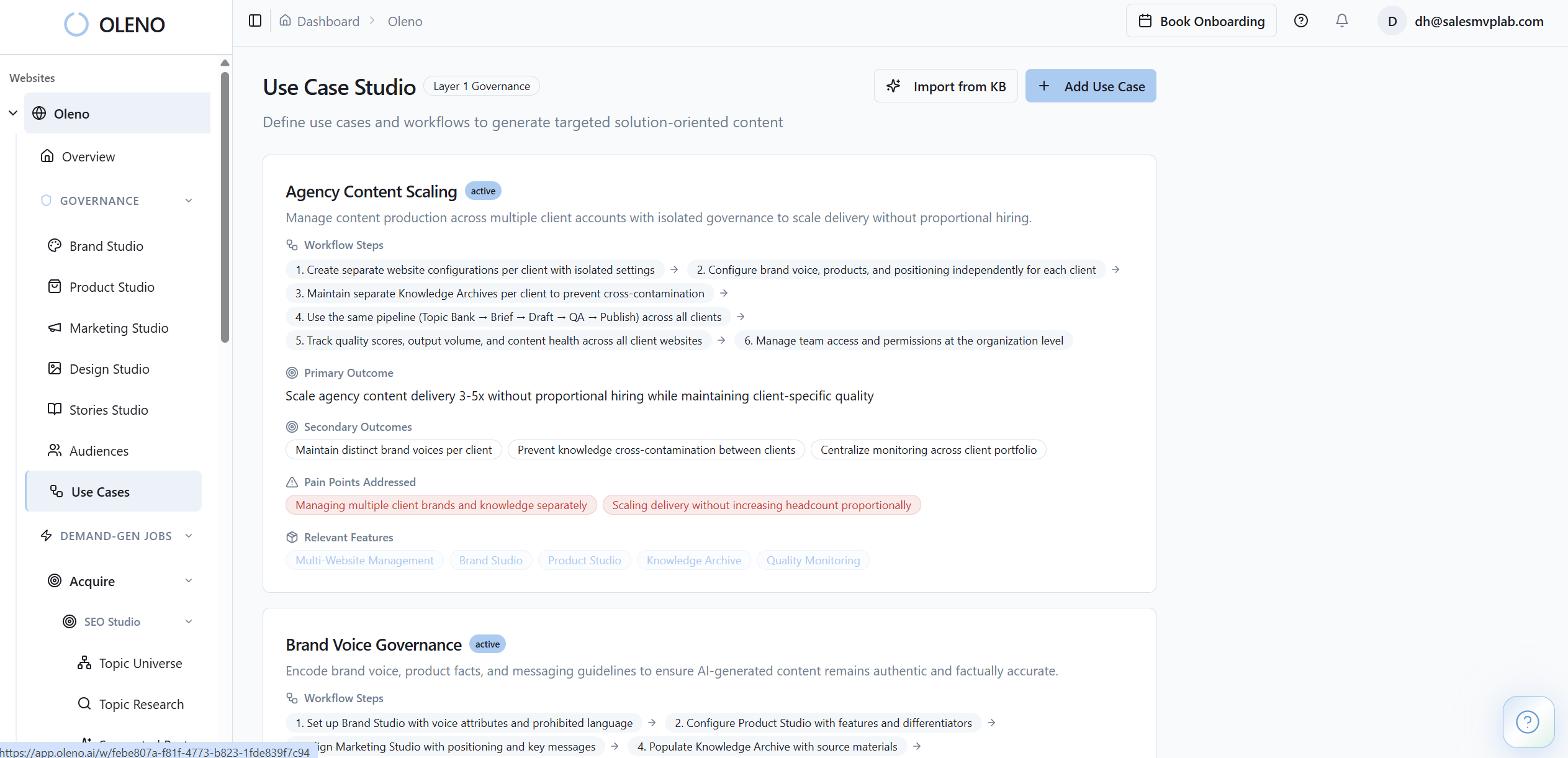
The easiest way to think about it is this. Some tools help you write. Oleno is built to help a small team keep strategy, voice, audience context, and product truth connected as content moves from planning to publishing.
That matters once the team gets a little bigger. I saw this years ago at PostBeyond. I could write 3 to 4 strong posts a week because I had all the context in my head. As the team grew, output got slower, not faster. New writers had less context. I had less time. Quality dipped. More people did not automatically mean more usable content. Context transfer became the real bottleneck.
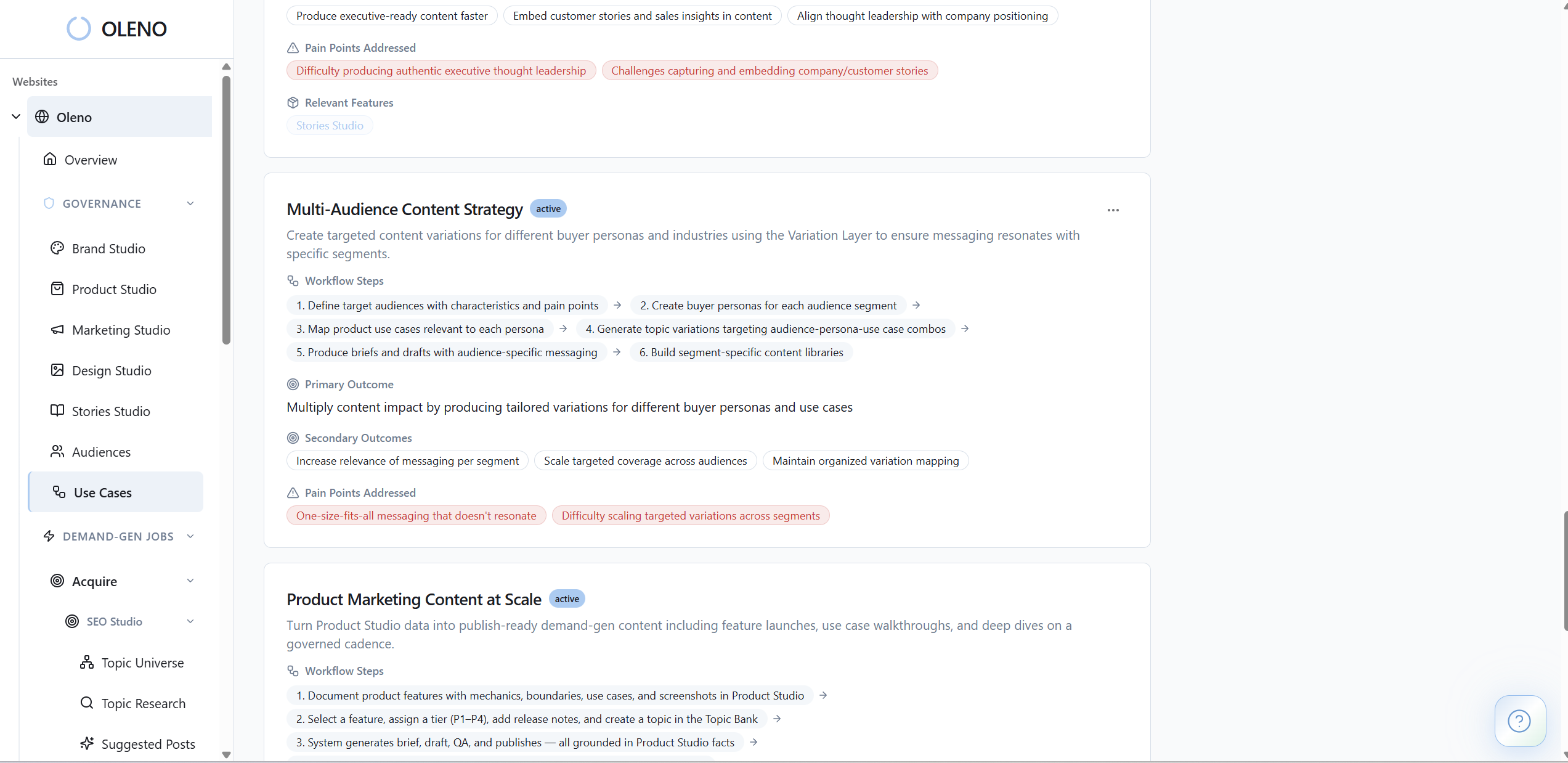
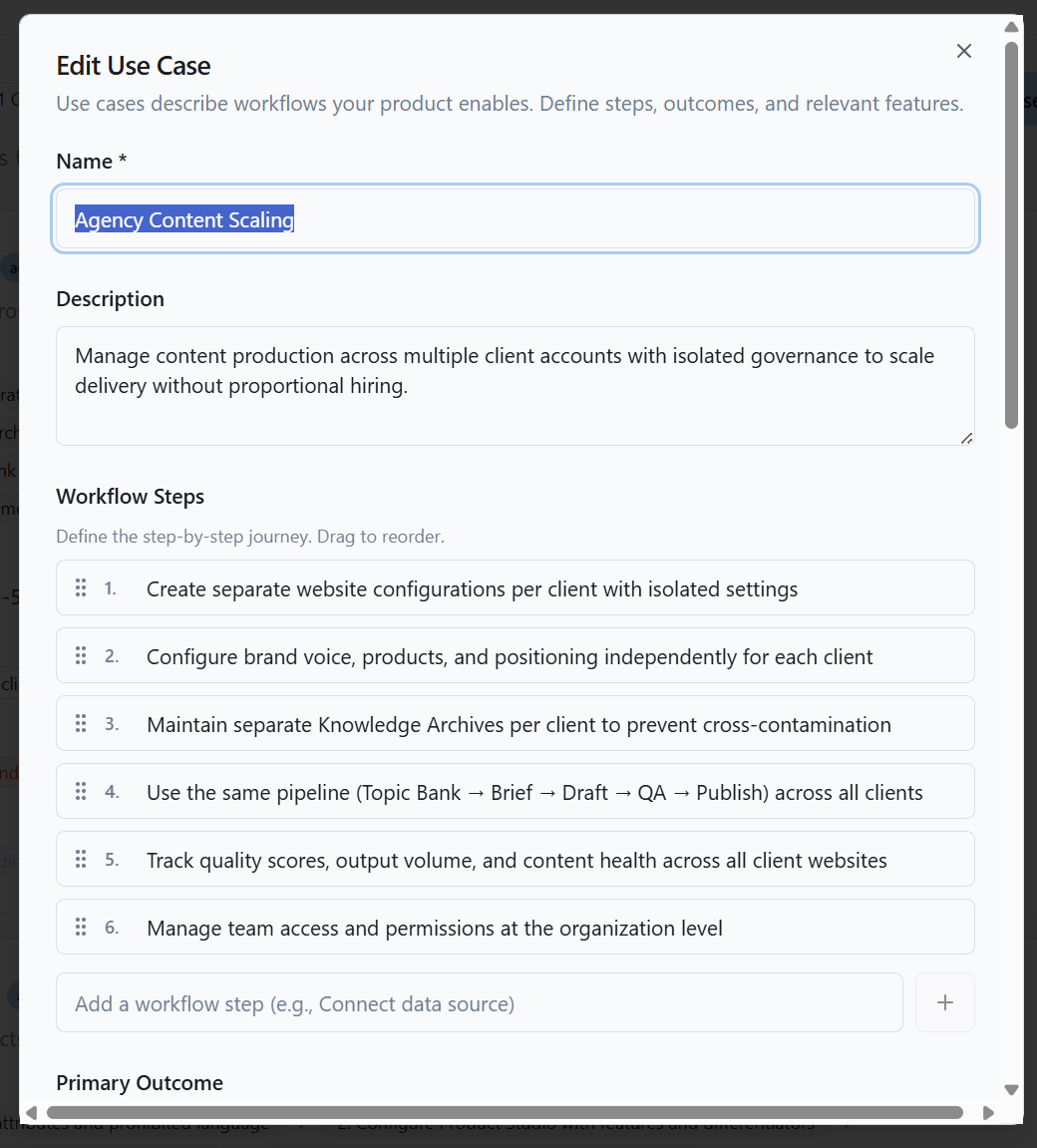
Oleno is built around that exact problem. The system is designed around governance-first execution, with structured inputs for audience, marketing context, stories, use cases, and product truth, so the content engine is not starting cold every time. That is a different model from tools that depend mostly on prompt quality or manual workflow tuning.
There is a tradeoff, and it is worth saying out loud. This kind of system asks you to define your inputs more clearly upfront. Some teams will prefer a lighter, quicker tool. Fair enough. But if you are already paying a rework tax from misaligned contributors, that upfront structure usually saves time later.
The best fit is pretty specific:
- Growth-stage SaaS teams with 1 to 3 marketers that need a repeatable content system
- Scaling SaaS marketing teams dealing with rework, context gaps, and narrative drift
- Heads of content or PMMs who need product accuracy and stronger message control
- Teams trying to scale demand-gen content without hiring 3 more people
That is also why Oleno is not just another entry in a list of best blog writing tools. It is for buyers who have already learned that faster first drafts do not fix fragmented execution.
If that sounds like your team, request a demo. You will know pretty quickly whether the issue is writing speed or system design.
Comprehensive Blogging Tool Comparison Grid
This comparison grid is the fastest way to match team shape to tool type. Small businesses should use it to compare setup burden, SEO workflow depth, collaboration needs, and publishing goals side by side. The right pick usually becomes obvious once you weight review load as heavily as starting price.
| Tool | Ease of Use | SEO Workflow | Brand Controls | Content Quality | Publishing Automation | Collaboration | Best Team Size | Best Use Case | Starting Price | Main Limitation |
|---|---|---|---|---|---|---|---|---|---|---|
| AirOps | Medium | Strong | Strong | Medium to high | Medium | Strong | 5+ | Custom SEO workflows | ~$99/mo | Requires more setup and ops ownership |
| Copy.ai | High | Basic to medium | Basic | Medium | Basic | Medium | 1-5 | Fast drafts across many formats | ~$29/mo | Long-form blog quality often needs heavier editing |
| Jasper | High | Medium | Strong | Medium to high | Medium | Strong | 3-10 | Brand-controlled marketing content | $49/mo | Costs can rise for growing teams |
| Outrank | Medium | Strong | Basic | Medium | Strong | Basic | 1-5 | Keyword-driven publishing | $49 to $99/mo | Editorial nuance and accuracy can need cleanup |
| Byword | Medium | Strong | Basic to medium | Medium | Strong | Basic | 3+ | Programmatic SEO at scale | $99/mo or per article | Less suited to nuanced thought leadership |
| Oleno | Medium | Strong | Strong | High for governed use cases | Strong | Strong | 2-30 | Governed demand-gen content execution | $109/mo | Requires clearer upfront strategic inputs |
For teams that have outgrown lightweight AI blogging tools, this is usually where the decision sharpens. If you mostly need cheap speed, Copy.ai is still the cleanest answer. If you need a system that carries strategy into execution, that is where Oleno starts making more sense.
There is also a practical next step here. If you want to see how a governed content workflow would look in your own environment, request a demo and map it against your current review loop.
The market is not lacking for blogging tools for small business teams. The real shortage is tools that reduce both production time and correction time. That’s a more useful lens to buy with.
Your decision can be pretty simple:
- Choose Copy.ai if you want low-cost draft speed and easy adoption.
- Choose AirOps if your team already has workflow and SEO ops maturity.
- Choose Jasper if brand-oriented marketing writing is the main job.
- Choose Outrank or Byword if publishing scale is the goal.
- Choose Oleno if the real problem is fragmented execution, message drift, and rework across a growing content operation.
And if you are already feeling the cost of too many handoffs, too much editing, and not enough consistency, book a demo. That conversation tends to make the buying criteria a lot clearer.
Small business blogging software should make publishing easier every month, not just exciting in week one. That is the standard I would use. It is a much harsher standard. Also a much more honest one.
About Daniel Hebert
I'm the founder of Oleno, SalesMVP Lab, and yourLumira. Been working in B2B SaaS in both sales and marketing leadership for 13+ years. I specialize in building revenue engines from the ground up. Over the years, I've codified writing frameworks, which are now powering Oleno.
Frequently Asked Questions