Best Content Orchestration Platform for Enterprise Teams

82% of enterprise AI programs still struggle with scaling value, and the problem usually isn't model quality, it's operating discipline (McKinsey State of AI). If you're comparing the best content orchestration platform for enterprise teams, that's the lens to use from the start: not who writes the flashiest draft, but who can keep strategy, workflow, governance, and publishing aligned when five teams touch the same content.
A lot of buyers get this wrong. They compare content tools like they're buying a better text box, then six months later they're buried in review loops, arguing over claims, rewriting intros, and wondering why content velocity went backward after adding AI.
| Platform | Best fit team | Core orchestration strength | Primary limitation | Starting price | Implementation complexity |
|---|---|---|---|---|---|
| AirOps | SEO and content ops teams that want flexible workflow building | Custom workflows, AI search optimization focus, integrations | Setup depth can become a project of its own | ~$99/mo | High |
| Jasper | Marketing teams that want strong brand-aware drafting | Brand voice controls, templates, collaborative creation | SEO research and fact validation still need outside process | $49/mo | Medium |
| Copy.ai | GTM teams that need fast output across many use cases | Quick adoption, broad templates, lightweight workflows | Consistency and governance depth are limited for complex teams | ~$29/mo | Low |
| Byword | Operators running programmatic SEO across large keyword sets | Batch article generation and scale | Less suited for nuanced expert content and cross-functional orchestration | $99/mo | Medium |
| Outrank | Teams chasing automated SEO publishing volume | Keyword-to-publish flow, automation emphasis | Depth, accuracy, and broader orchestration questions remain | $49-$99/mo | Medium |
| Oleno | Scaling SaaS marketing teams with multiple contributors and approval layers | Governance-first execution across planning, messaging, and publishing | Requires upfront strategy encoding to get full value | $109/mo | Medium |
Key Takeaways:
- AirOps and Byword make the most sense for operators who want workflow flexibility or programmatic SEO throughput and can tolerate more setup or editorial oversight.
- Jasper is stronger for marketing-led drafting and brand-aware creation, but it still relies on surrounding systems for deeper governance and ongoing SEO execution.
- Copy.ai wins on speed to first output, especially for GTM teams, but that same simplicity becomes a constraint when many contributors need shared rules.
- Enterprise content orchestration platforms should be judged with the GAPS test: governance, approvals, publishing, and scale. Miss one, and rework tax shows up fast.
What Enterprise Teams Should Actually Compare
Enterprise content orchestration software should be compared on governance, workflow control, publishing depth, and scale readiness. Those four areas predict whether content output compounds or collapses into review debt. A drafting tool can look impressive in a demo and still break the minute PMM, SEO, demand gen, and leadership all need a say.
The difference between content generation and true orchestration
Content generation gives you a draft. True orchestration gives you a governed system. That's not semantics. It's the difference between one person using AI well and an entire marketing org producing consistent output without the same leader fixing every piece by hand.
Back when teams were smaller, you could get away with heroics. One strong content lead knew the positioning, knew the product, knew the audience, and could clean up everything before publish. I've seen that work. I did that myself in earlier stages of companies. It works right up until it doesn't scale.
The Draft-to-Decision Test is simple. If a platform creates words but can't reliably carry product truth, audience context, approval logic, and publishing intent into the final asset, it isn't orchestration. It's assisted drafting. Useful, sure. But different.
In practice, that means buyers should separate platforms into three buckets:
- Drafting-first tools
- Workflow-builder tools
- Governance-first orchestration systems
If your team has more than four recurring stakeholders in content, bucket three matters a lot more than bucket one.
The evaluation criteria: governance, workflow control, publishing, and scale
The right evaluation framework is governance, workflow control, publishing support, and scale behavior. I call this the GAPS framework because most enterprise teams fail in the gaps between those layers, not inside any single feature. One polished editor won't save a broken operating model.
Governance is about whether the system can hold brand voice, product truth, audience rules, and market narrative in one place. Workflow control is about how work moves. Publishing is about whether drafts actually become shipped content. Scale is what happens at article 50, not article 5.
A content director at a 250-person SaaS company feels this by Tuesday afternoon. PMM updates messaging in one doc. Demand gen launches a campaign with old claims. SEO briefs a writer from a stale spreadsheet. Legal comments late. The article ships a week late, and nobody trusts the process. That's not a writing problem. That's orchestration failure.
What should you validate in each category?
- Governance: Can the platform encode brand, audience, and product inputs once and reuse them consistently?
- Workflow control: Can it handle multi-step approvals without becoming brittle?
- Publishing: Does it support moving from idea to live asset without manual copy-paste chaos?
- Scale: Does quality hold when multiple contributors and dozens of assets are in flight?
The next question is tougher: where does this usually break first?
Why Content Orchestration Breaks at Scale
Content orchestration breaks at scale because coordination cost grows faster than content volume. Once multiple teams contribute, the real bottleneck becomes misalignment, not writing speed. That's why many AI content workflow platform rollouts look productive in month one and messy by quarter two.

Where enterprise content operations usually fail
Most enterprise content operations fail in handoffs. Not in prompts. Not in draft speed. In handoffs. McKinsey has been making a broader version of this point for enterprise AI for a while: value gets stuck when operating models lag behind the tech (McKinsey State of AI).
A head of content approves a brief in Notion. The writer works in Google Docs. PMM leaves product corrections in Slack. SEO adds keyword targets in a separate sheet. Nobody agrees on the final source of truth. So every article becomes a scavenger hunt.
That's why I think "AI content workflow platform" is actually an incomplete category. Workflow alone doesn't solve drift. If strategy lives outside the system, then every workflow becomes a cleanup workflow. That's the rule.
There is a fair counterpoint here. Flexible systems are attractive because every enterprise team has weird edge cases. That's true. Some teams really do need custom branching logic. But once customization becomes the main event, content leaders end up managing the machine instead of the output. That's a bad trade unless you have dedicated ops capacity.
The hidden cost isn't just time. It's trust. When leaders stop trusting first drafts, every downstream step slows.
What buyers should validate before committing to a platform
Buyers should validate where truth lives, where approvals live, and where publishing lives before signing anything. If those three layers sit in separate tools with no governing logic, expect rework. A slick demo won't show that. Your fourth workflow build probably will.
Use the 30-Day Drift Check. Within a pilot, track these five signals:
- How many assets need factual correction after first draft
- How many review cycles happen before publish
- Whether audience and persona assumptions stay consistent
- How much manual copy-paste happens before publishing
- Whether messaging changes propagate across future assets
If two or more of those break in the first month, the platform probably isn't ready for enterprise content operations. That's a hard threshold, but it's a useful one.
And one more thing. Validate the exception case, not the happy path. Ask what happens when product marketing changes a core claim mid-quarter. Ask what happens when one campaign needs three audience versions. Ask what happens when SEO wants scale but PMM wants tighter messaging. That's where content governance software earns its keep.
Now the market view gets clearer.
How the Leading Platforms Compare
These five tools solve different slices of the content operations platform problem. Some are better at flexibility, some at speed, some at volume. The trick is not to ask which platform has more features. It's to ask which failure mode you're willing to live with.
AirOps: flexible workflows for AI search and content ops
AirOps is strongest when a team wants customizable AI search and content workflows with significant control over process design. Its pitch leans into AI Search Optimization, workflow building, integrations, and structured content operations (AIcerts coverage). For teams with hands-on operators, that flexibility can be a real advantage.
A lot of operators like AirOps because it behaves more like a configurable system than a fixed writing app. It also talks directly about AI search behavior and content quality concerns, including the risk of generic AI output (AirOps on AI slop). That matters if your team is actively preparing for AI-driven discovery.
But flexibility has a tax. A no-code workflow builder sounds clean in theory. In reality, enterprise teams often end up building a mini content ops program inside the tool before they get consistent output. If you have a strong operator, great. If you don't, setup can sprawl.
This is where the Builder Burden Rule helps: if your platform needs one internal champion to constantly maintain logic, prompts, and process branches, it is closer to an ops toolkit than a true orchestration layer.
How Oleno is Different: Instead of asking teams to build the operating model from workflow blocks first, Oleno starts with governance layers like Brand Studio, Marketing Studio, Audience inputs, Product context, and use-case structure. The bet is different: encode the rules before execution, then let the system run on those rules.
Jasper: strong brand controls for marketing-led creation
Jasper is one of the clearer choices for marketing teams that want brand-aware drafting and collaborative content creation. Its strength is familiar: templates, brand voice controls, team collaboration, and a polished writing environment (Jasper pricing overview, Jasper review). It feels approachable fast.
That matters. Honestly, I get why Jasper gets traction inside marketing orgs. A team can adopt it without redesigning the whole content operation. For campaigns, landing pages, email, and general content support, that's useful. Brand controls also reduce some randomness compared with raw chat tools.
Still, Jasper is primarily a creation layer. It can improve draft quality and speed, but it doesn't inherently solve upstream planning, product-truth governance, or downstream orchestration across an ongoing demand-gen system. SEO research depth also remains lighter than what dedicated SEO or orchestration systems provide, and fact validation still needs process around it.
If your main pain is "our team needs better on-brand drafts," Jasper is a reasonable short list. If your main pain is "our strategy gets lost between PMM, SEO, content, and demand gen," you're solving a bigger problem.
How Oleno is Different: Jasper improves creation quality. Oleno is built to carry market narrative, product truth, audience context, and execution planning into the production system itself, so the team isn't relying on brand voice alone to keep content aligned.
Copy.ai: fast adoption for high-volume GTM output
Copy.ai is a speed play. It gives GTM teams a broad template library, fast output, and relatively easy adoption across sales, marketing, and operations use cases (Deeper Insights review, Zapier comparison). If you need volume quickly, it makes sense why buyers look at it.
The upside is obvious within a week. A team can generate social posts, emails, sales support content, and lightweight campaign assets without much setup. That's appealing for lean teams or fast-moving GTM orgs where speed matters more than precision.
But Copy.ai tends to show its limits when content stakes rise. Long-form consistency, nuanced positioning, and cross-functional orchestration are tougher when the system isn't deeply modeling audience, persona, and product context. You can absolutely move fast with it. The question is whether you can stay aligned while moving fast.
A reasonable concession here: not every team needs rigorous governance. Some GTM teams really do just need velocity. Fair. But if you publish content that leadership, PMM, SEO, and sales all care about, velocity without a control layer becomes rewrite velocity.
How Oleno is Different: Copy.ai is built for broad GTM speed. Oleno is built to encode audience, persona, use case, and messaging context into the content operation itself, which matters when rework tax is already eating the team alive.
Byword: programmatic SEO production for large keyword sets
Byword is built for programmatic SEO throughput. That's its lane, and it's a clear one. Reviews and comparisons consistently frame it around bulk article generation, scaled SEO output, and efficient page creation for large keyword sets (Skywork Byword review, TripleDart AI SEO guide).
If you're an agency or SEO operator trying to cover a giant topic map, that can be attractive. There are cases where volume is the point. I learned this years ago publishing at scale. Not every page needs to be a masterpiece. But the system still needs guardrails, otherwise volume turns into index bloat and edit debt.
Byword works best when the goal is repeated SEO production against structured inputs. It is less compelling when the job requires nuanced product marketing, cross-functional approvals, or narrative consistency across funnel stages. In other words, great for page factories. Less convincing for complex enterprise demand-gen systems.
The 500-Page Threshold matters here. Below roughly 500 pages, governance quality often matters more than sheer throughput. Above that, throughput starts compounding. The catch is that low-governance throughput compounds mistakes too.
How Oleno is Different: Byword optimizes for bulk SEO generation. Oleno is aimed at broader demand-generation orchestration, where planning, governance, audience inputs, and multiple content job types matter as much as production speed.
Outrank: end-to-end SEO automation for publishing volume
Outrank positions itself around automated SEO article production, keyword research, SERP analysis, and publishing flow (Outrank AI SEO generator, Outrank site). For teams focused on automated organic output, that end-to-end framing is appealing.
You can see the use case fast. A growth marketer wants to move from keyword list to live article with less manual work. Outrank is clearly trying to compress that workflow. That's useful if your bottleneck is pure SEO execution volume.
Where buyers should slow down is depth. Automated publishing isn't the same thing as enterprise content orchestration. The harder questions are about factual consistency, nuanced positioning, and whether the system can support content outside one SEO lane. If the answer is mostly "this is an SEO publishing engine," then that's fine. Just buy it for that.
I might be wrong about this for some smaller teams, because narrow tools can punch above their weight when the use case is tight. Still, once cross-functional marketing gets involved, narrow tends to feel narrow pretty quickly.
How Oleno is Different: Outrank is centered on SEO article automation. Oleno is centered on running a governed content system where planning, brand standards, product truth, and demand-gen execution work together instead of living in separate layers.
How Oleno Approaches Content Orchestration Differently
Oleno approaches content orchestration as a governance-first system, not a prompt-first system. The product is built around encoding strategy before execution so content can scale without constant translation loss. For enterprise teams, that's a different operating assumption than starting with drafting, templates, or workflow blocks.
What governance-first orchestration changes
Governance-first orchestration changes where the work happens. Instead of fixing content after it comes out, teams define voice, product truth, audience context, and market positioning up front. Then execution runs through those rules.
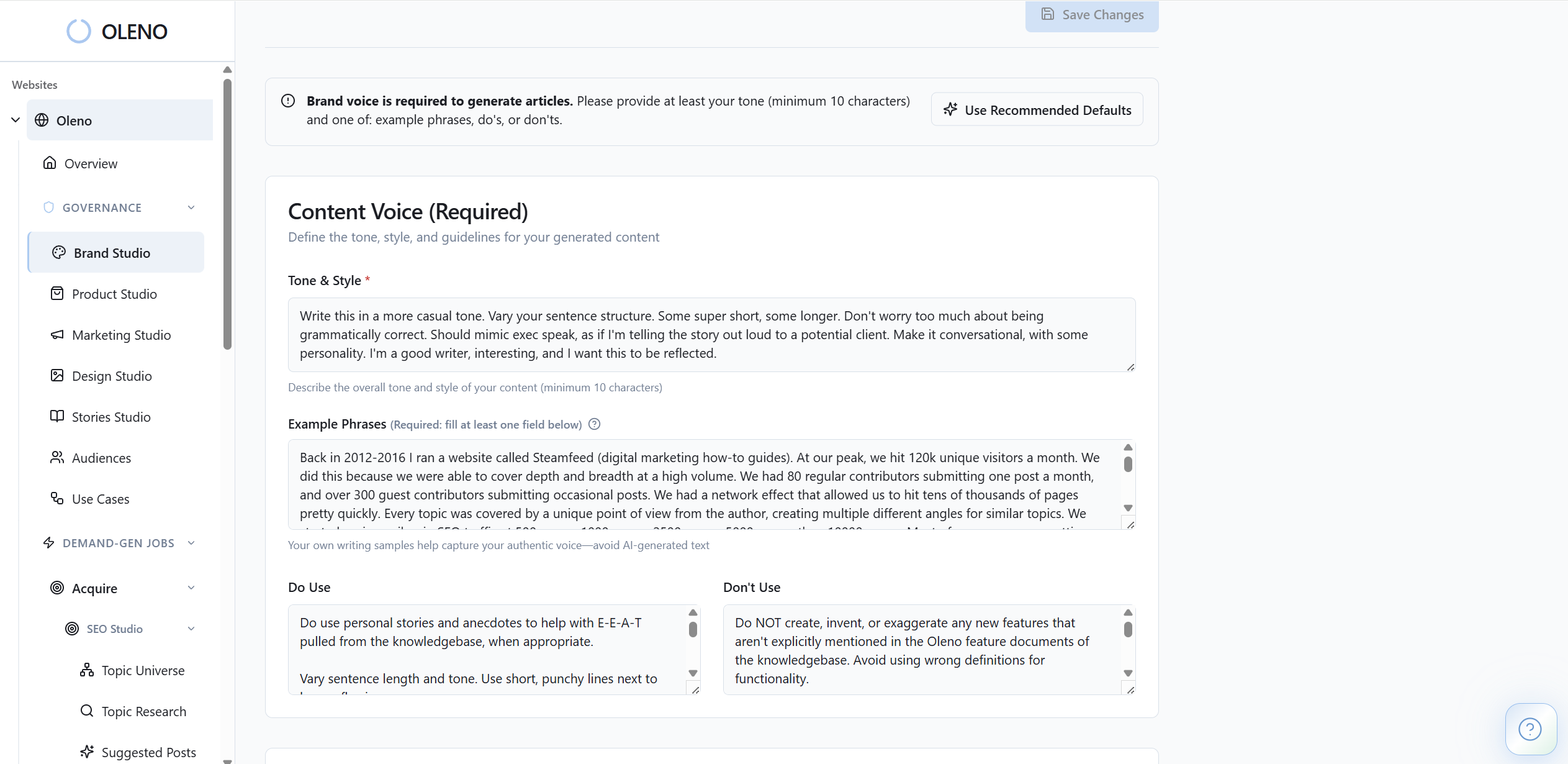
This matters more than most demos let on. A lot of enterprise content problems aren't creation problems. They're memory problems. The writer doesn't know what PMM knows. Demand gen doesn't know what SEO decided. Leadership thinks the old positioning is still live. So content becomes a game of broken telephone.
Oleno is designed around Studios that centralize and encode that context: product inputs, marketing narrative, audience understanding, stories, and use cases. There is also a planning layer and publishing flow, which means the system is meant to connect strategy to execution, not just improve writing in isolation. That's why it fits teams with multiple contributors better than tools built mainly for lightweight drafting.
A founder story sits under this product direction too. The product started after repeated manual prompting, CMS copy-paste, QA work, and publishing overhead were eating 3 to 4 hours a day. The response wasn't "make prompts better." It was "build the engine so topics queue, drafts run, QA happens, and publishing doesn't need hand assembly." That's a very operator-shaped origin. You can feel it.
If you want to see the planning side in more detail, the planning capabilities give the clearest picture of how strategy gets structured before execution starts.
Which teams are the best fit for Oleno
The best fit for Oleno is a scaling SaaS marketing team with real contributors, real approval layers, and real context drift. CMOs, heads of marketing, PMMs, and heads of content tend to feel this first because they're the ones paying the rework bill.
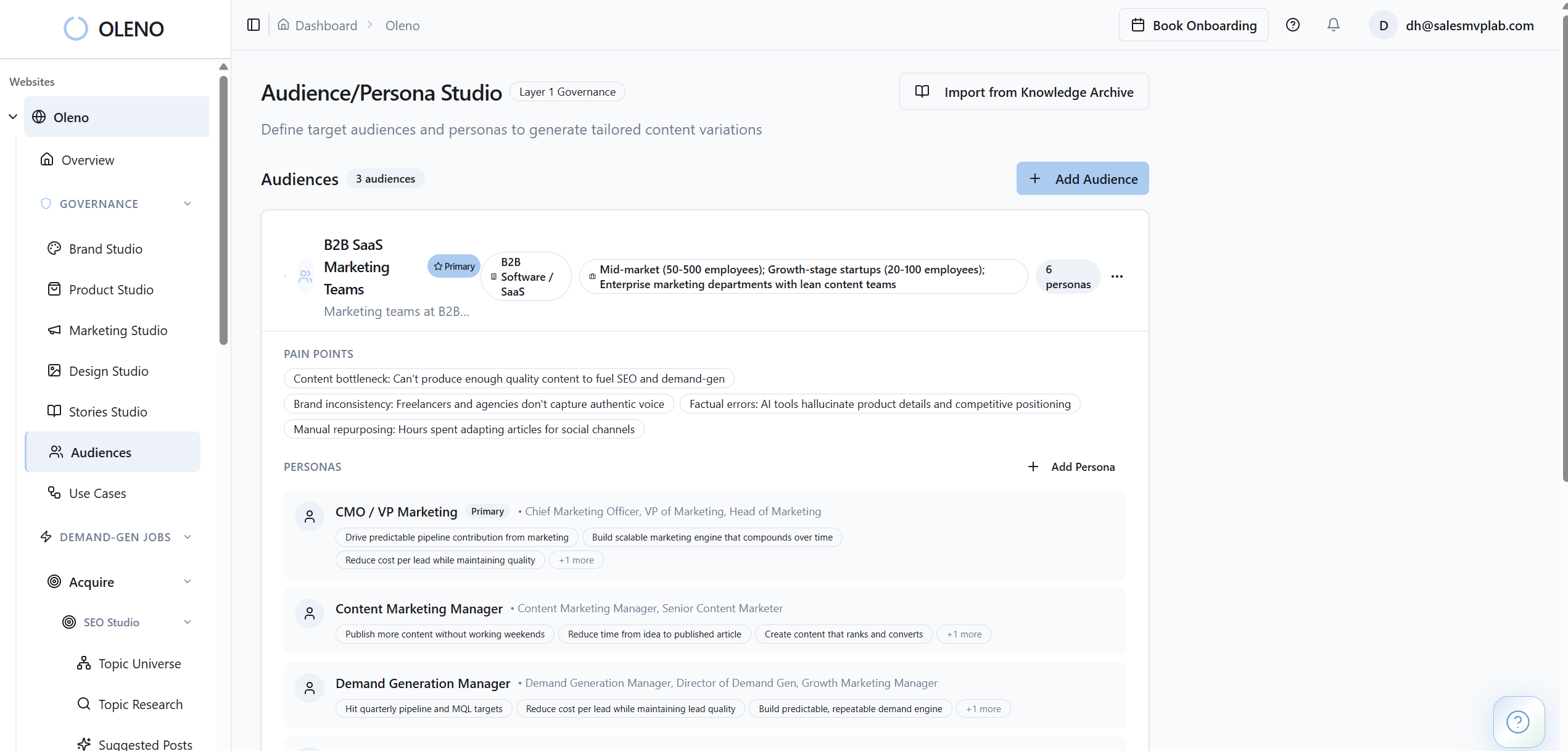
A 100 to 500 employee SaaS company is the sweet spot. Big enough to have specialization. Lean enough that nobody wants to hire three more people just to move briefs around. If that sounds familiar, the SEO content scaling use case is a useful lens for evaluating fit.
The competitor fit is different. AirOps and Byword tend to attract SEO or growth operators who value flexibility or programmatic throughput and are comfortable managing more setup or editorial oversight. Jasper fits marketing-led creation teams. Copy.ai fits broad GTM speed. Those are legitimate use cases.
Oleno makes more sense when your core issue is not "we need content faster" but "we need content faster without narrative drift, review sprawl, or product inaccuracies." That's the dividing line.
If you're in that bucket, request a demo and evaluate it against your real approval chain, not a sandbox prompt.
Implementation priorities and next-step evaluation questions
Implementation should start with shared truth, then move into execution design, then publishing. If a team skips that order, it usually rebuilds the old chaos inside a new tool. That's the part buyers underestimate.
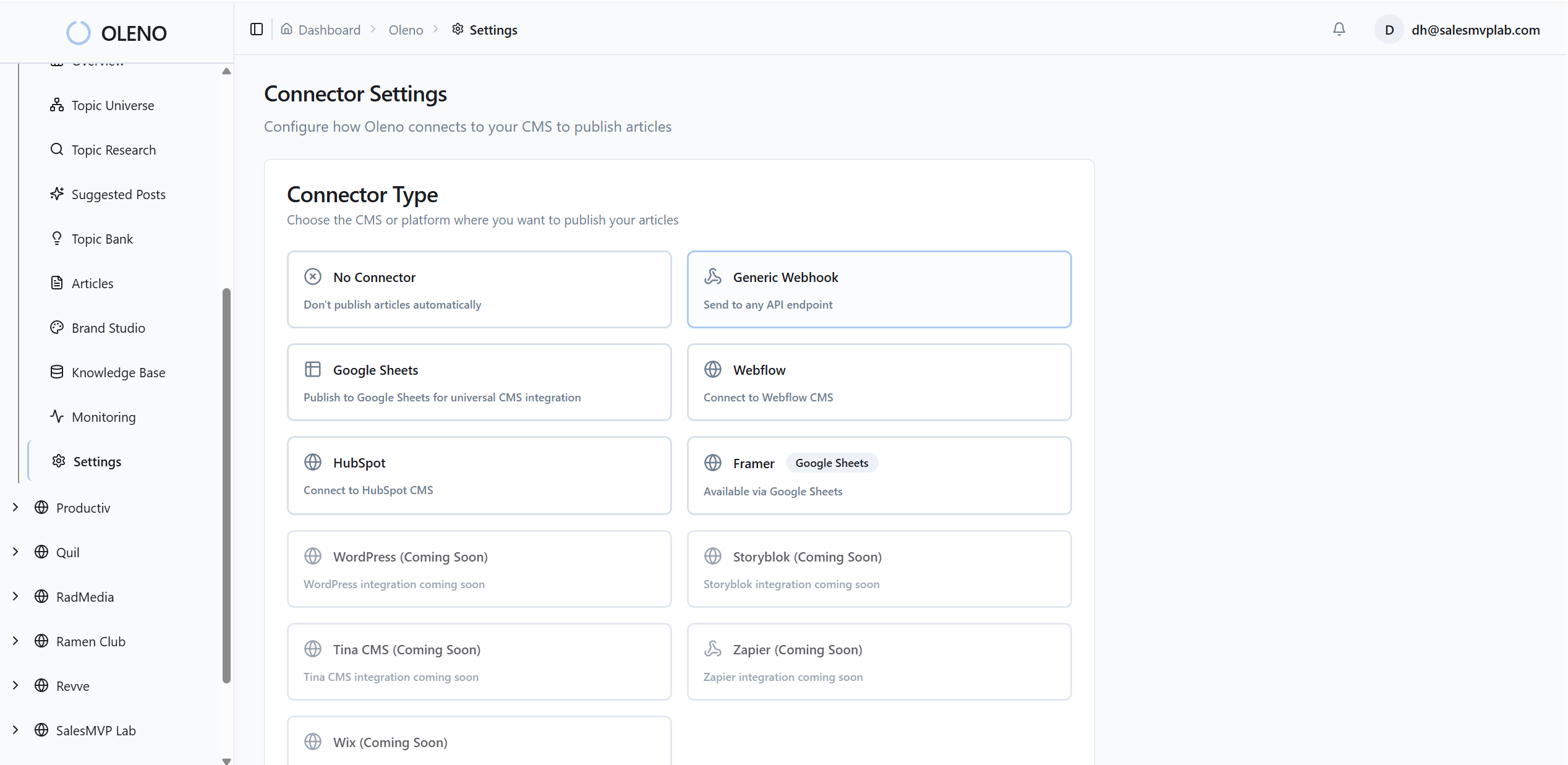
I use the 3-Layer Rollout Rule:
- Encode brand, product, audience, and message rules first
- Define the recurring content jobs and approvals next
- Connect planning and publishing only after the first two are stable
This approach has a downside. Setup takes thought. You don't get the instant dopamine hit of typing a prompt and getting ten outputs in thirty seconds. Fair point. But enterprise teams don't usually fail because they lacked instant output. They fail because nobody trusted the output enough to use it at scale.
For evaluation, ask these questions:
- Where does product truth live?
- How are audience and persona rules enforced?
- What happens when messaging changes mid-quarter?
- Can the system support both SEO and demand-gen jobs?
- How many review cycles can it remove, not just how many drafts can it generate?
And if you want to compare the governance side directly, the governance feature set is where that philosophy shows up most clearly.
A side-by-side grid for final decision making
The final decision should come down to buyer fit, governance depth, and the kind of complexity your team already has. Faster output matters, yes. But governed output matters more once content becomes a team sport.
| Platform | Primary use case | Governance depth | Brand control | Audience/persona modeling | Workflow flexibility | Programmatic SEO support | Publishing support | Collaboration and permissions | Analytics and reporting | Best for enterprise complexity | Best for lean team speed | Starting price | Main tradeoff |
|---|---|---|---|---|---|---|---|---|---|---|---|---|---|
| AirOps | AI search workflows and custom content ops | Medium | Medium | Medium | High | High | Medium | Medium | Medium | Medium | Medium | ~$99/mo | Flexibility can require heavier setup |
| Jasper | Marketing content creation | Medium | High | Medium-low | Medium | Medium | Low-medium | High | Medium | Medium | High | $49/mo | Creation strength exceeds orchestration depth |
| Copy.ai | GTM content and quick workflows | Low-medium | Medium | Low | Medium | Low-medium | Low | Medium | Medium | Low | High | ~$29/mo | Fast adoption, lighter governance |
| Byword | Programmatic SEO at scale | Low-medium | Low-medium | Low | Low-medium | High | Medium | Low-medium | Low-medium | Low | High | $99/mo | Throughput focus limits nuanced orchestration |
| Outrank | Automated SEO publishing | Low-medium | Low-medium | Low | Medium | High | High | Low-medium | Low-medium | Low | High | $49-$99/mo | Narrower fit around SEO volume |
| Oleno | Governed demand-gen content execution | High | High | High | Medium | High | High | High | Medium-high | High | Medium | $109/mo | Requires upfront strategy encoding |
The cleanest way to choose is by failure tolerance. If your team can tolerate editorial oversight and wants flexibility or raw SEO throughput, AirOps, Byword, or Outrank may be enough. If your team wants a more governed system that keeps strategy, messaging, and execution aligned across multiple contributors, the calculus changes.
Oleno fits that second category. It is built for scaling SaaS marketing teams that already have contributors but need a governed system to keep messaging, voice, and product truth aligned across high-volume demand-gen execution. If that sounds like your actual problem, not the watered-down version on the RFP, request a demo and run your own materials through it.
One more practical move. Pull three recent assets your team had to rewrite, one SEO article, one product-led piece, one campaign asset, and see which platform reduces rework without stripping out signal. That's usually where the answer gets obvious. And if you want a guided look at how the platform maps to buyer needs, book a demo.
The short version is simple. Buy for the bottleneck you actually have. If the bottleneck is drafting, pick a drafting tool. If the bottleneck is orchestration across strategy, stakeholders, and publishing, pick the platform built for that.
About Daniel Hebert
I'm the founder of Oleno, SalesMVP Lab, and yourLumira. Been working in B2B SaaS in both sales and marketing leadership for 13+ years. I specialize in building revenue engines from the ground up. Over the years, I've codified writing frameworks, which are now powering Oleno.
Frequently Asked Questions