Brand Consistency SLOs: Turn Voice Rules into Measurable SLIs

Most marketing teams treat brand voice like a vibe check, not a system. That’s why it keeps drifting. If you don’t define, instrument, and enforce brand consistency SLOs, the cost shows up slowly at first, then all at once. Missed conversions. Rewrites. Confused buyers. I’ve lived it. It hurts.
So let’s make voice measurable, like uptime. Define a few SLIs, set SLO targets tied to conversion risk, and wire your stack so off-brand work can’t sneak through. It’s not fancy. It’s discipline. And once it’s in place, you get speed and reliability without babysitting every sentence.
Key Takeaways:
- Translate brand rules into 4–6 SLIs you can measure across assets
- Set SLOs and error budgets that connect to conversion and lead risk
- Instrument your stack, add alerts, block publishes when violations exceed tolerance
- Build a remediation flow so fixes take hours, not days
- Track a simple dashboard: violation rate, time-to-remediation, and error budget burn
- Expect a meaningful shift: fewer publish-time violations and faster recovery when things slip
Stop Treating Voice As Vibes: Make Brand Consistency SLOs
Treat brand consistency like uptime by defining measurable SLIs and SLOs for voice, terms, and CTA rules. Clear metrics replace subjective debates and make drift visible before it hurts conversion. For example, set a target that 99% of published assets meet tone, term, and CTA standards on first pass.
Brand Drift Is An Operational Failure
Brand drift isn’t a copy issue. It’s a process issue. When voice rules live in slide decks and people’s heads, you force humans to carry consistency at review time. That fails under load. As volume grows, so does variance. Consistency needs ownership, measurement, and gates, or you’ll pay in rewrites and lost trust.
Voice Variance Compounds Quietly
Small misses feel harmless, then they stack. A softer tone in one article, a forbidden term in a landing page, a CTA that doesn’t match your style on social. None kill you alone. Together, they blur positioning and slow buyers. Hidden cost, real impact. You don’t feel it until pipeline sags.
Operationalize Or Pay The Tax
You can either encode voice into SLIs and SLOs, or you can keep paying the tax: more meetings, more edits, more delays. The fix is boring and powerful. Write down the signals, set targets, wire checks, and hold the line. Discipline beats taste when stakes are high.
From Guidelines To SLIs: Measure Voice Like Uptime
Guidelines become enforceable when turned into SLIs, then governed by SLOs with error budgets. SLIs define signals like tone match and forbidden term hits, while SLOs commit to targets over a time window. Site reliability taught the model, and it fits brand work too, as the Google SRE guide on SLIs and SLOs explains.
Guidelines Aren’t Enforceable Without Metrics
PDFs don’t enforce anything. Reviewers try their best, then disagree, then punt to taste. Metrics end that spiral. Define what “on brand” means in observable ways, like term usage, sentence rhythm ranges, CTA format, structure rules, and grounded claims. Quantify what used to be vibes.
Translate Vibes Into SLIs
Pick signals you can score. Examples that work:
- Tone alignment score against approved exemplars
- Preferred versus forbidden term usage rate
- CTA pattern and placement compliance
- Structure adherence, like heading and paragraph rules
- Product-claim grounding against an approved knowledge base
Tie SLOs To Business Signals
An SLO without stakes is theater. Connect targets to conversion and lead risk. If off-brand product claims spike, evaluation content stops converting. If tone drifts in top-of-funnel posts, engagement drops. Make SLOs the guardrails that protect those outcomes, not just a style wish list.
The Hidden Cost Of Missing Brand SLOs
Missed SLOs waste time, erode trust, and drag conversion. Each manual fix creates delay, while inconsistency confuses buyers and sales. Research on tone and clarity from Nielsen Norman Group shows how small language changes affect comprehension and credibility, which directly influences action.
Time Cost Of Manual Fixes
Every off-brand draft creates a chain reaction. Writer edits. Reviewer re-reads. Stakeholders weigh in. CMS updates. That’s hours gone per asset, multiplied across your calendar. I’ve watched teams lose a day a week to cleanup work that a simple gate could have blocked upfront. It’s preventable waste.
Conversion Cost Of Off-Brand Pages
Buyers smell inconsistency. A landing page that reads different from your product pages creates doubt. Doubt kills momentum. Studies often cite revenue lifts from consistent branding, with reports like Marq’s analysis of brand consistency pointing to measurable gains when teams keep language tight. Misses cost real money.
Risk Exposure Across Channels
Variations sneak in where oversight is lightest. Social. Help docs. Nurture emails. If product claims or tone slip there, you seed confusion that sales then has to unwind. The cleanest fix is upstream: set targets, monitor, and stop publishing when error budgets burn too fast, especially when evaluating brand consistency slos.
What Inconsistency Feels Like To Your Team for Brand consistency slos
Inconsistency feels like whiplash, anxiety, and rework. People lose confidence, avoid publishing, and over-index on approvals that stall momentum. You start shipping less, not better. Morale drops because the same mistakes keep showing up, and no one can point to a system fix that sticks.
The Whiplash Of Rewrites
You push an article live, then get the Slack ping. “This doesn’t sound like us.” Now you’re back in the doc, editing tone, hunting terms, reshaping CTAs. That churn wears teams down. Shipping should feel steady. Instead, it feels shaky because there’s no line everyone can trust.
The Fear Of Hitting Publish
Writers stop trusting their first pass. Editors second-guess themselves. Leaders slow-roll approvals to avoid risk. That’s a confidence spiral. A known SLO and a visible pass-fail check give cover to move faster. People ship when they trust the system has their back.
Leaders Lose Trust
Executives remember off-brand moments. One bad post gets brought up for months. That memory makes every next decision harder than it needs to be. A measurable approach replaces anecdotes with a track record. Hit your SLOs and the noise fades.
How To Define SLIs And SLOs For Brand Consistency
Start with four to six SLIs, set realistic SLO targets with small error budgets, and wire enforcement into your workflow. Keep it simple at first. Measure, publish, remediate fast when you miss, and adjust thresholds as the team stabilizes.

Pick The Right SLIs For Brand Consistency
Choose signals with high leverage and low ambiguity. Tone alignment against exemplars anchors voice. Preferred and forbidden term rates protect positioning. CTA pattern and placement keep your ask consistent. Structure rules make content scannable. Product-claim grounding prevents risky statements. Fewer, stronger signals beat a sprawling checklist.
Set SLOs And Error Budgets
Targets should be strict enough to matter, flexible enough to learn. Examples:
- Tone alignment: 98% of assets hit target score each month
- Forbidden terms: less than 1 violation per 50 assets
- CTA compliance: 99% correct format and placement
- Claim grounding: 100% for evaluation content, 99% for TOFU
Error budgets tell you when to slow down and fix root causes.
Instrument And Enforce In Your Stack
Instrumentation is where the change sticks. Add checks in briefs, drafts, QA, and CMS gates so drift can’t pass silently. Then define a simple remediation path for misses.
To operationalize quickly:
- Score tone against exemplars during draft, not after publish
- Run term checks on save, then again at QA This is particularly relevant for brand consistency slos.
- Require CTA pattern compliance before CMS push
- Block publish if claim grounding fails on product pages
- Alert owners when error budgets burn faster than plan
Ready to turn brand rules into SLIs and SLOs without adding meetings? Request a Demo
How Oleno Operationalizes Brand Consistency SLOs
Oleno encodes voice, narrative, and product truth once, then enforces them with a QA gate and CMS controls so off-brand work doesn’t ship. The system measures SLIs throughout the pipeline and blocks publishes when SLO thresholds aren’t met, which cuts rework and protects conversion.

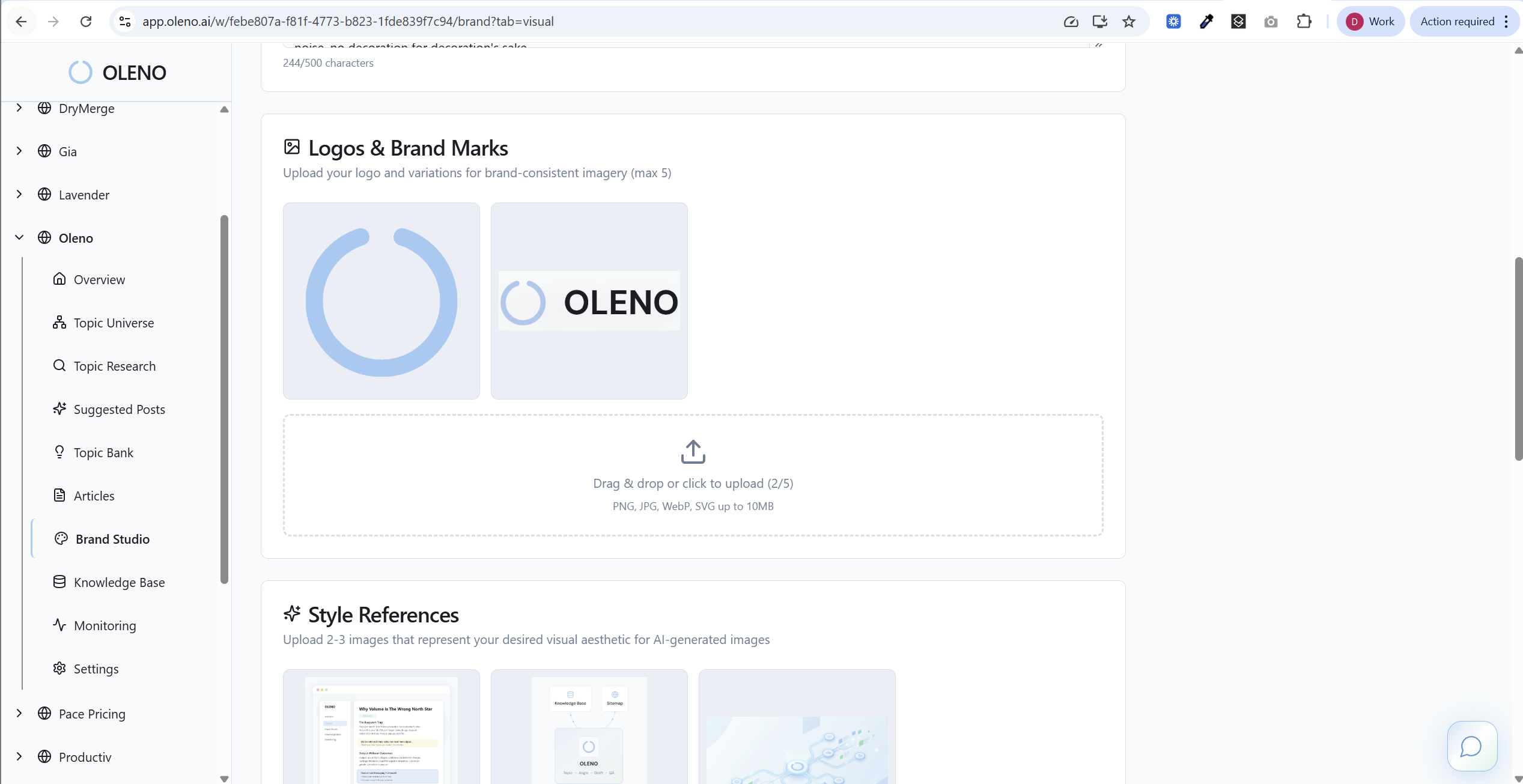
Encode Voice Once With Brand Studio
Brand Studio captures tone rules, preferred and forbidden terms, CTA style, structure constraints, and exemplar paragraphs. Those become machine-readable constraints used in every brief and draft. The payoff is simple, fewer subjective edits and a rising quality floor as volume increases. Oleno makes the consistent choice the default path.
Govern Narrative With Marketing Studio And Product Studio
Marketing Studio keeps your point of view and message hierarchy present in every asset. Product Studio grounds claims in approved descriptions and use-case boundaries, so evaluation content stays safe and accurate. Together, they reduce the risky drift that forces late-stage rewrites and hurts buyer confidence.
QA Gate, Publishing, And Measurement Close The Loop
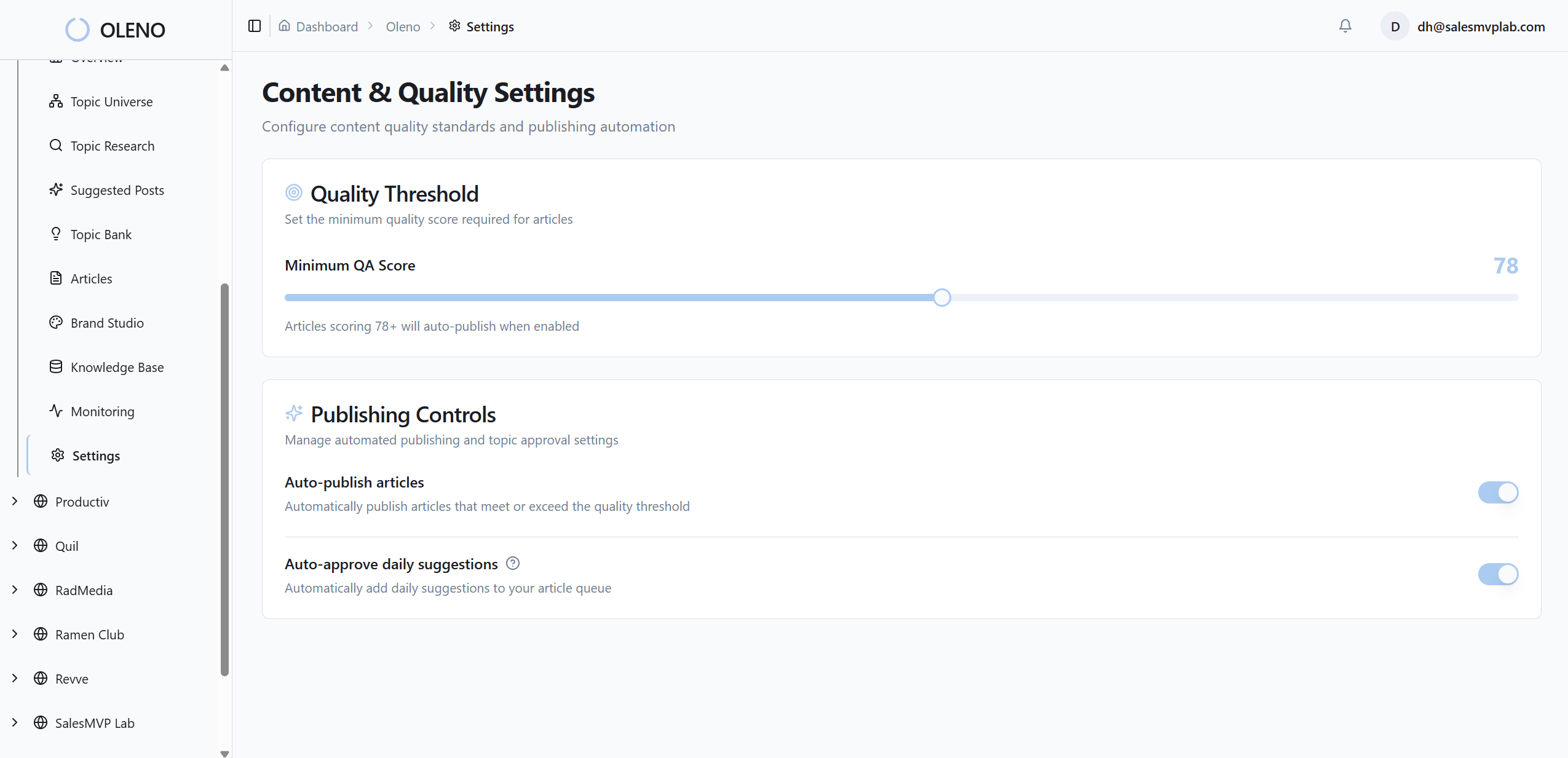
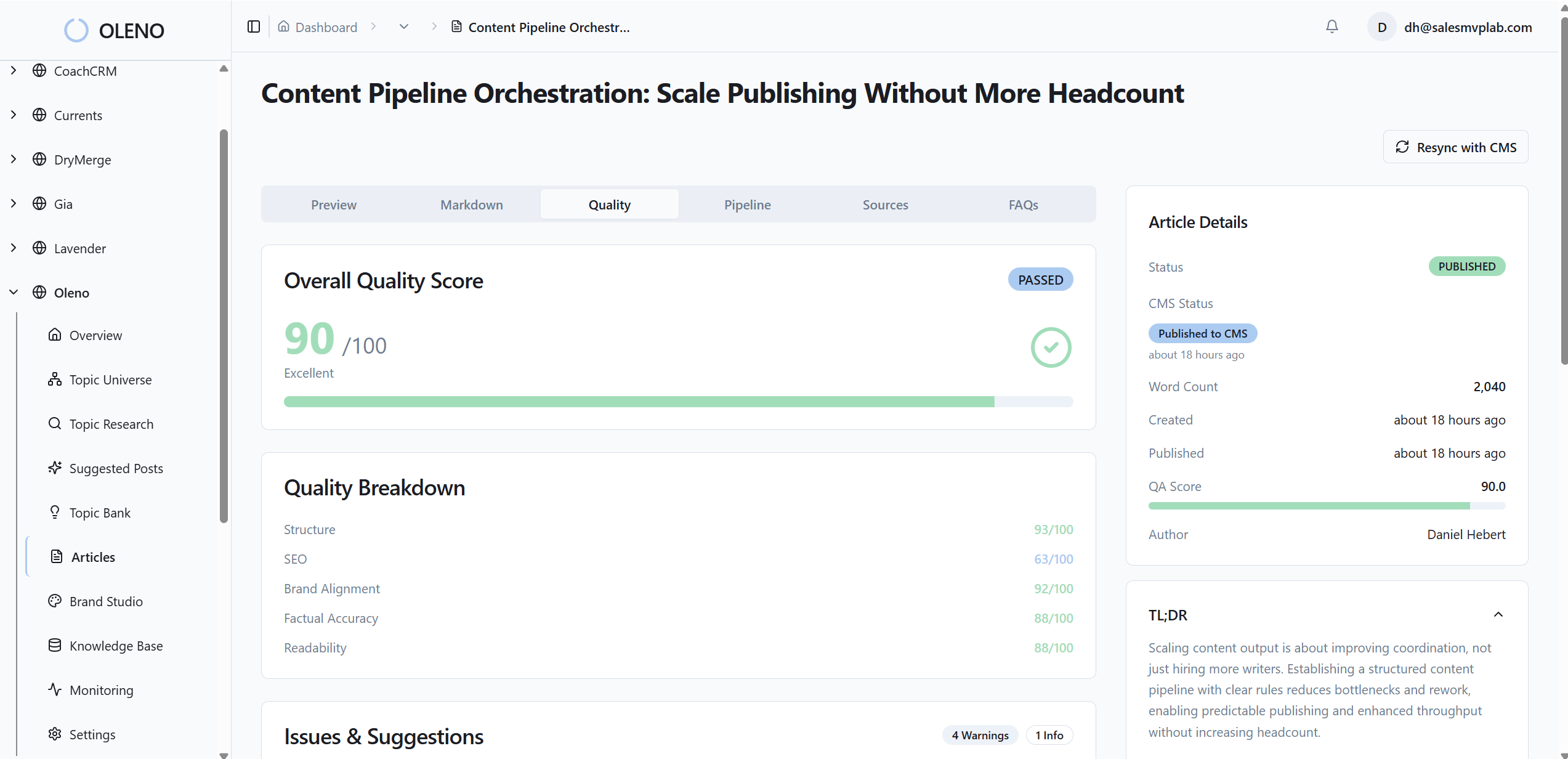
Oleno’s QA gate enforces voice, structure, grounding accuracy, and readability before anything can publish. CMS Publishing pushes approved work as drafts or live, without copy-paste. Measurement & System Health tracks cadence and quality trends so you can spot rising violation rates or slow remediation times early and fix them fast.
Key capabilities that support brand consistency SLOs:
- Brand Studio voice constraints and term rules applied at brief and draft
- Marketing and Product Studios injecting POV and claim boundaries
- Non-negotiable QA gate scoring voice, structure, and grounding
- CMS Publishing that prevents duplicates and ships only approved work
- Measurement views for violation rate and time-to-remediation trends
Most teams see the transformation where it matters. Fewer publish-time violations, faster fixes, and steadier cadence because gates do the hard work. Want to see that in your stack? Book a Demo
Conclusion
Brand voice isn’t a mood. It’s an SLO. Pick SLIs you can see, set targets with real stakes, wire checks into your pipeline, and hold the line with error budgets. Do that and you’ll reduce publish-time brand violations meaningfully and cut mean time-to-remediation from days to hours. Stop chasing off-brand edits. Start shipping governed content that compounds. If you’re ready to operationalize it, Oleno is built for this. Request a Demo
About Daniel Hebert
I'm the founder of Oleno, SalesMVP Lab, and yourLumira. Been working in B2B SaaS in both sales and marketing leadership for 13+ years. I specialize in building revenue engines from the ground up. Over the years, I've codified writing frameworks, which are now powering Oleno.
Frequently Asked Questions