Brand Voice Drift Audit: 6-Step Playbook to Fix Inconsistent Tone

Most teams treat brand voice like a PDF you hand writers. Then you wonder why the tone keeps drifting as you scale. A brand voice drift audit shows the failure is operational. Fragmented sources, no measurement, and reviews that rely on vibe create slow, expensive rework and quiet trust loss that kills conversions.
I learned this the hard way. Small teams move fast, swap contributors, and ship under pressure. If you do not encode your rules and measure the output, the voice moves. Not all at once, but inch by inch. You do not notice until sales asks why the homepage and the deck sound like two different companies.
Key Takeaways:
- Run a brand voice drift audit to find and quantify tone drift across high impact pages in under two weeks
- Build a rubric with 8 to 12 criteria so drift is scored, not debated
- Use NLP plus pattern rules to detect 70 to 90 percent of obvious inconsistencies before manual review
- Prioritize fixes by traffic and conversion impact so editorial time is not wasted on low value pages
- Integrate checks into a QA gate so drift does not come back the next sprint
- Aim for a 60 percent reduction in editorial rework and an 80 percent drop in visible tone mismatches on top pages within 6 to 8 weeks
Brand Voice Drift Is An Operations Problem, Not A Style Guide Issue
Brand voice drift happens when creation, review, and publishing run without shared constraints or measurement. A static PDF cannot hold the line as people, agencies, and AI join the mix. Systems prevent drift, not hopes and reminders. An audit exposes where process breaks, then tells you what to fix first.
Style Guides Fail Without Enforcement
Style guides are helpful, but writers do not memorize them and editors interpret them differently. As output grows, humans fall back on habit, which means tone varies by person and by day. You get polite on one page, punchy on another, and legalistic on a third. Readers feel the wobble.
What I see in audits looks like this. Teams have preferred terms and banned phrases, yet those rules never make it into briefs or checks. AI gets a vague prompt about voice. Contractors never see examples. Editors try to fix tone at the end, which is the most expensive moment to fix anything. Without guardrails early, you keep paying late.
Measurement Gaps Create Invisible Drift
If you do not score tone, you debate it. Debates stall reviews, delay launches, and create resentment between writers and approvers. A rubric turns taste into criteria, so people can align on what good looks like. It also lets you see patterns across dozens of pages.
Consistency is not just a brand preference. Consistency builds trust, which affects conversion and retention. The Edelman Trust Barometer 2024 shows how credibility drives behavior. If your voice changes from page to page, buyers sense risk. That risk shows up as lower clickthrough to pricing, weaker time on page, and more bounced sessions.
The Hidden Cause Of Tone Drift: Fragmentation And Missing Measurement
Tone drift is usually a byproduct of fragmentation. Different people own different steps, and no single source of truth governs the work. Without a shared system, each content job becomes a one off. Drift compounds quietly until performance suffers, then everyone blames the writer.
Too Many Inputs, No Single Truth
Most teams create from scattered inputs. Brand guidelines in a folder. Product claims in Slack threads. Messaging in a Notion page last edited two quarters ago. Contractors guess. AI fills gaps with generic language. Reviewers try to mop it up at the end.
A brand voice drift audit pulls all those sources into one view and shows where the machine breaks. You will find outdated rules, unclear examples, and approval chains that reward safe, bland edits. Clean the inputs, then watch the output tighten. It sounds simple. It takes intention.
Drift Starts At The Brief, Not The Draft
Writers do not fix missing context. They paper over it. If briefs do not carry tone constraints and example paragraphs, drafts will vary. If reviewers do not check against the same rubric, approval feedback clashes. That is how you end up with three rounds of edits that still sound off.
A quick sanity check helps. Does every brief include voice rules, banned terms, and two example paragraphs that match the target tone? Are reviewers trained on the same rubric? If the answer is no, your audit will score low before anyone writes a word. NN/g’s guidance on tone components is still useful context here, especially for naming what you want readers to feel and notice in your writing, see NN/g tone of voice dimensions.
Brand Voice Drift Costs You Real Money
Voice drift increases editorial cost and depresses conversion. You pay more to ship each piece, then you earn less from the pieces you do ship. That gap widens as volume grows. An audit puts numbers to it so leadership takes it seriously.
Editorial Rework Is Real Cash
Do the math. If a manager spends 30 minutes per draft on tone fixes, and you ship 40 assets per month, that is 20 hours of senior time. At a blended rate of 100 to 150 dollars per hour, you waste 2,000 to 3,000 dollars monthly on preventable edits. Double it if two leaders review.
A brand voice drift audit often uncovers the same three misses driving most of that rework. Missing examples, unclear banned terms, and no consistent CTA style. Fix those, and you cut a full review round. Not theoretical. I have seen it. The savings show up in the first month.
Trust Loss Hits Conversion Quietly
Buyers hesitate when tone flips from confident to fluffy to formal across their journey. They might not say it, but they feel it. Fewer clicks to sign up. More demo requests that go nowhere. Sales reps report confusion over what the product actually does.
Trust and clarity matter to search engines too. Google’s guidance on experience and expertise rewards clear, consistent presentation of information, see the Google Search Quality Rater Guidelines. If your voice is all over the place, your pages feel generic. Generic pages do not earn links or citations. That is missed pipeline.
What Voice Drift Feels Like Inside A Small Team
If this sounds abstract, it is not. You can feel drift inside the team before you see it in dashboards. It looks like late night edits, endless threads about wording, and a nagging sense that your brand does not sound like itself anymore.
The Late Night Rewrite Loop
You publish less because you spend nights rewriting intros to sound sharper. The CEO leaves comments about tone that are hard to translate. Writers get conservative to avoid redlines. Momentum dies. Everyone feels behind, even though they are working harder than ever.
I used to think more effort would fix it. Write longer briefs. Add another review. It rarely helps. Without a shared rubric and enforced rules, you are just adding steps. Work feels heavier, and the output still varies by author and by week. That is the loop the audit breaks.
Sales And CS Hear The Friction First
Sales uses the deck, then a prospect lands on the site and reads a different voice. Customer success sends a help doc that sounds colder than onboarding emails. People do not say the word drift, but they feel whiplash. That whiplash turns into stalled deals and more support questions.
You can fix this. Start by naming it. Then measure it. Once the team can see drift scores, they rally around the work. The mood changes fast when debates turn into shared targets. Morale is an underrated benefit of doing a real brand voice drift audit.
How To Run A Brand Voice Drift Audit That Works
A good brand voice drift audit is simple, fast, and repeatable. It scores tone on a clear rubric, covers your highest impact assets first, and feeds fixes back into your system so drift does not return. You can start next week and see signal within two.

Build A Rubric You Can Score In One Pass
Your rubric should translate taste into checkable criteria. Think clarity, assertiveness, sentence rhythm, vocabulary, CTA voice, banned terms, allowed claims, and pattern consistency. Use example paragraphs of on voice and off voice so reviewers align on what good looks like.
Aim for a tool agnostic process. You can score with a spreadsheet and short pattern rules at first. NLP classifiers and similarity checks help catch obvious mismatches quickly, but humans still call the edge cases. The goal is 70 to 90 percent automated detection, then focused human review on the tricky stuff.
To set up the audit quickly:
- Define 8 to 12 rubric criteria with short pass or fail descriptions
- Collect 10 on voice examples and 10 off voice anti examples
- Pull your top 50 pages by traffic and top 20 by conversion
- Run automated checks for banned terms, CTA style, and sentence rhythm
- Do human spot checks on the highest value pages and anything flagged
Prioritize Fixes By Impact And Prevent Recurrence
Do not boil the ocean. Start with pages that drive trials, demos, or revenue influence. Fix high traffic entry pages, pricing, product pages, top blog clusters, and sales assets that prospects see in week one of evaluation. That is where trust is won or lost.
Fold the fixes back into your process. Tighten your voice rules, update examples, and put the rubric into the review gate. Train reviewers on the same checklist. Small changes here have outsized payoff. Your goal is a 60 percent cut in rework within 6 to 8 weeks, and an 80 percent drop in visible tone mismatches on high value pages.
Ready to stop chasing tone issues and start scoring them? Request a Demo
How Oleno Makes Your Voice System Stick
Oleno turns the one time brand voice drift audit into an always on guardrail. Governance defines the voice once, automation applies it at every stage, and a QA gate blocks anything that drifts. You ship faster, pay less in rework, and keep your voice tight as output grows.

Encode The Voice, Enforce It In The Workflow
Oleno’s Brand Studio captures tone rules, preferred and banned terms, CTA style, and exemplar paragraphs, then injects those constraints during briefs and drafts. Marketing Studio encodes your point of view and narrative frames so content stays opinionated, not generic. Product Studio grounds allowed claims, so no one invents features by accident.
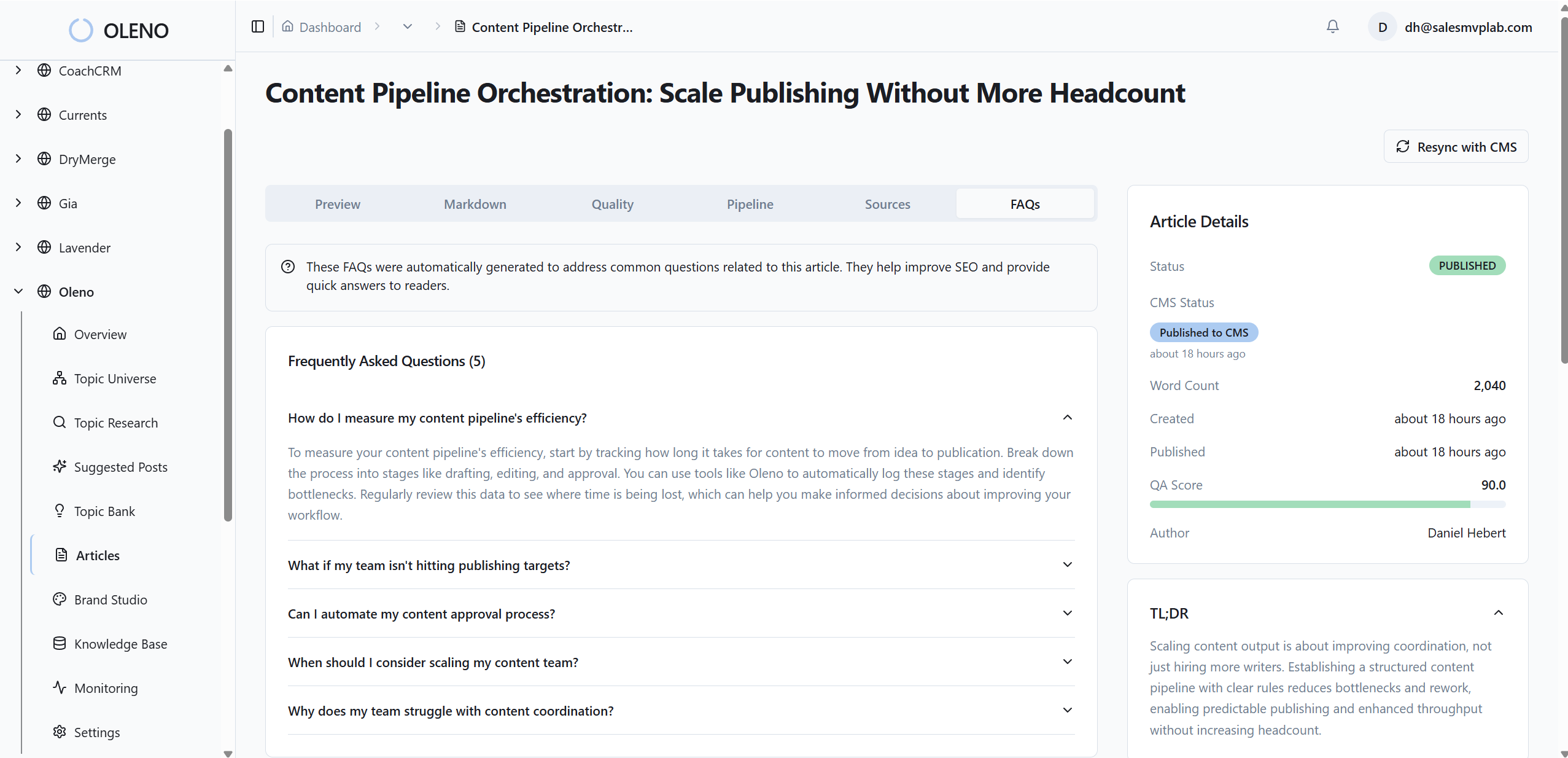
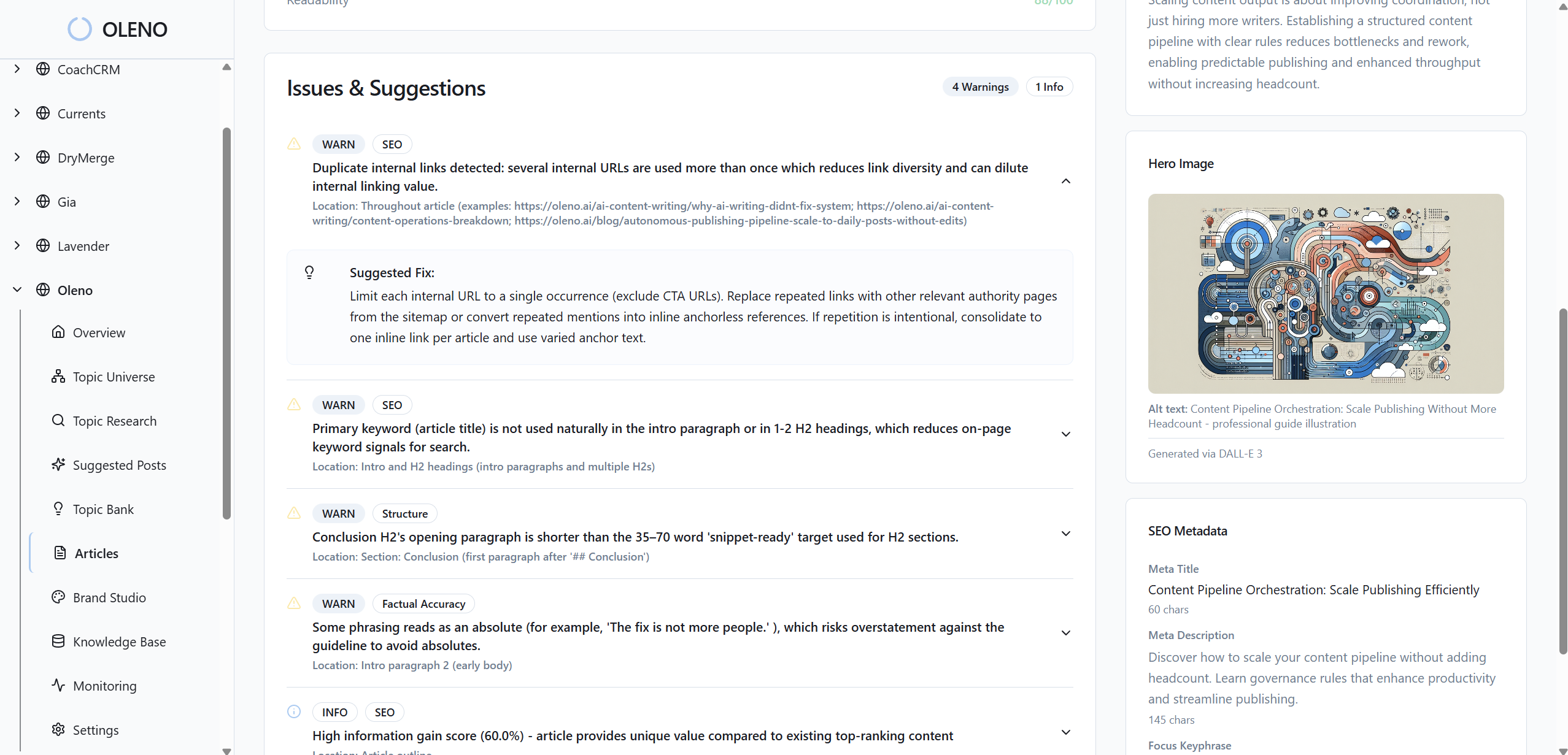
QA is not a suggestion in Oleno. A non negotiable gate checks voice alignment, narrative structure, clarity, and grounding before anything can publish. If a draft fails, Oleno revises and re checks until it passes or sends targeted fixes. That is how rework time drops in practice.
Key capabilities that matter here:
- Brand Studio rules, examples, and term lists guide briefs and drafts so tone does not drift
- Marketing Studio injects your point of view so articles do not read like templates
- Product Studio keeps claims inside approved boundaries so trust holds
- The QA gate enforces voice, structure, and accuracy so bad drafts do not slip through
60 percent less editorial rework and a clear drop in tone mismatches. That is what Oleno delivers when governance and QA actually run. Want to see it in your workflow? Request a Demo
Measure Reliability And Prevent Future Drift
Measurement and System Health track cadence, quality trends, and common failure patterns over time. If tone alignment scores start to slip, you see it early and fix the source, not the symptom. The Knowledge Archive centralizes product truth and stories so drafts stay grounded as your library grows.
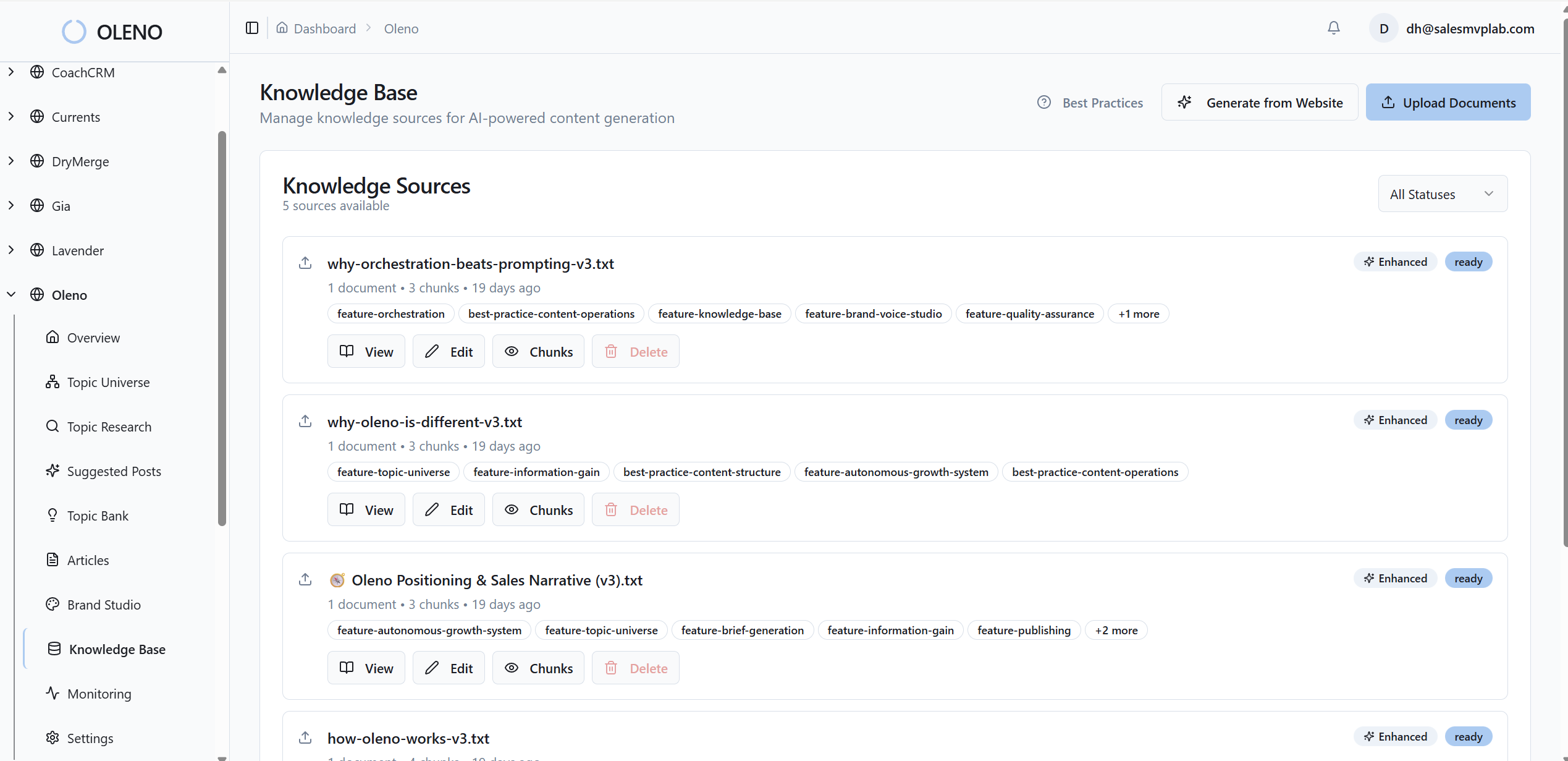
Distribution repurposes approved long form into on brand social, which protects voice across channels. CMS Publishing pushes approved content as drafts or live posts without copy paste. That keeps cadence steady while the QA gate guards quality. The system runs even when priorities shift.
Before you wrap this up, one more look under the hood usually seals it. Oleno’s Brand Studio and QA gate handle the heavy lifting so your team does not. Book a Demo
Conclusion
Brand voice drift is not a writer problem. It is an execution problem you can see and fix. Run a brand voice drift audit with a clear rubric, automate 70 to 90 percent of detection, and fix the pages that move revenue first. Then lock rules and checks into your workflow so drift cannot sneak back.
If you do that, you will feel the change in 6 to 8 weeks. Fewer late night rewrites. Tighter narrative across channels. A real 60 percent cut in editorial rework. An 80 percent drop in visible tone mismatches on high value pages. And a brand that sounds like itself, every time, no matter who hits publish.
About Daniel Hebert
I'm the founder of Oleno, SalesMVP Lab, and yourLumira. Been working in B2B SaaS in both sales and marketing leadership for 13+ years. I specialize in building revenue engines from the ground up. Over the years, I've codified writing frameworks, which are now powering Oleno.
Frequently Asked Questions