Build a Content-to-Pipeline Attribution Dashboard (GA4 + SQL)

Most teams celebrate traffic spikes and rankings, but the execs you report to care about leads and revenue. If you want to build a content-to-pipeline attribution model that actually informs budget and roadmap, you need clean inputs and a repeatable way to join them. Without that, you’re guessing. And guessing burns trust with leadership.
I learned this the hard way. Early wins felt great until the board asked a simple question: which pieces of content drove pipeline last quarter? I had anecdotes. I didn’t have proof. The fix wasn’t another report. It was instrumentation, SQL you can explain, and a dashboard that a CRO trusts at a glance.
Key Takeaways:
- Define a simple UTM and event naming taxonomy so content can be tied to leads every time
- Export GA4 to BigQuery, then join sessions, events, and UTM data to CRM contacts and opportunities
- Build multiple attribution models in SQL, not one, so you can answer first, last, and weighted-touch questions
- Ship a dashboard with decision views by asset, cohort, and source so budget moves faster
- Add validation checks that catch broken UTMs, missing events, and unjoined records before reporting
- Treat the pipeline dataset like a product with owners, SLAs, and a monthly QA routine
Why Pageviews Don’t Matter Without Content-to-Pipeline Attribution
Pageviews don’t prove marketing impact, pipeline attribution does. Executives fund channels that show sourced and influenced revenue, not traffic. If your reports stop at sessions and rankings, you’ll miss budget, because finance wants to see content linked to real opportunities.
Traffic Without Pipeline Is a Vanity Loop
Traffic goes up, everyone claps, and nothing changes in the forecast. I’ve been there. You publish ten posts, one pops, and Sales still says they can’t trace a single meeting back to it. That’s the vanity loop. It feels good, it doesn’t move anything. Until you connect a post to a contact to an opp, you’re telling stories, not showing evidence.
The fix is boring and powerful. You standardize UTMs, stamp every link, and log the same content ID everywhere. Then you stop arguing about “influence” and start showing records. It’s amazing how fast the tone changes when the dashboard shows $187k in pipeline from three specific guides.
Why Leaders Stop Trusting Marketing Metrics
Leaders stop trusting marketing metrics when definitions shift. One week “SQL” means one thing, the next week it means another. Or worse, a win gets double-counted. I’ve made that mistake, and it hurts. Once trust cracks, every future win gets an eyebrow raise.
You earn it back with clear rules. What counts as sourced versus influenced. What “touch” means. Where a piece of content gets credit. Write it down, lock it, and mirror it in your SQL. When definitions are stable, the numbers stop feeling slippery.
The Real Blocker: Fragmented Data, Not Content Ideas
Content ideas rarely hold you back, fragmented data does. Marketing data lives in GA4, BigQuery, spreadsheets, and the CRM, and none of it lines up by default. Without a shared key and naming discipline, your joins fail, your models wobble, and your story falls apart.
Data Lives Everywhere And Nowhere
GA4 has sessions, UTMs, and events. Your CRM has contacts, leads, and opportunities. Social schedulers add their own tags. Each system is “true” on its own. Together, they disagree constantly. You can’t fix this with another dashboard. You fix it by designing the path the data will follow before it starts flowing.
Map the journey. A person clicks a link with UTMs, GA4 logs the session, the session contains a content_id, a form submit fires an event with the same content_id, that event creates or updates a contact in the CRM, the contact eventually ties to an opportunity. Now at least you have a story you can implement.
Naming Conventions That Break Joins
The silent killer is sloppy naming. I’ve seen “ebook”, “e_book”, and “E-Book” used for the same thing in the same week. Joins don’t care about your intentions, they match on strings. If your utm_medium values vary, your attribution will too.
Keep it simple and enforced. Lowercase only. Underscores, not spaces. A small controlled vocabulary for source, medium, campaign, and content. Document it in one page. Share it with everyone who touches links. Then add a daily check that flags anything outside the list.
The Cost of Guessing: What Broken Attribution Hides
Broken attribution hides wasted spend and missed bets. When UTMs are wrong and events don’t fire, you’ll undercount good content, overcredit noisy channels, and keep losing hours reconciling reports. The cost is time, budget, and trust.
Time Waste You Can Measure
You can measure the waste. If a marketer spends two hours a week cleaning UTMs and three more explaining numbers to sales, that’s five hours weekly, 20 hours a month. Across a small team, you’ve lost a full workweek to cleanup. Add the extra cycles leadership spends debating the report, and you’re paying twice.
A cleaner pipeline cuts that dramatically. GA4 to BigQuery removes sampling issues, and you can write checks that auto-flag gaps. Google’s own docs explain how the GA4 BigQuery export lands session and event data, which gives you a stable base for joins.
Budget You Quietly Lose
Budget follows confidence. If content looks like a cost center, it gets trimmed. The irony is painful. Often the best-performing pieces don’t get credit because their UTMs were off by one field or the form event missed the content_id.
You prevent that with guardrails. First, train link creators on a one-page UTM guide. Second, validate campaign parameters in GA4 against your controlled list, which you can do with a lightweight query and a weekly Slack export. Third, back your narrative with a model that finance understands, like last-touch for sourced and position-based for influence. For clarity on campaign tagging, the GA4 UTM guide is a solid baseline.
What It Feels Like When Attribution Is Missing for Build a content-to-pipeline attribution
Missing attribution feels like running hard in the dark. You ship more, you still miss pipeline, and you can’t explain why. The team starts doubting the work, Sales tunes out, and leadership pulls budget. It’s demoralizing, especially when evaluating build a content-to-pipeline attribution.
Late Nights and Slack Pings
It’s 9:30 pm, the board deck is due tomorrow, and you’re stitching screenshots together. You know the numbers are soft. You also know there’s a slide coming where someone asks, “Which assets drove the most revenue?” You stall. You shouldn’t have to.
With clean data, that slide takes one click. By asset, by sourced pipeline, by influenced pipeline, last quarter, split by acquisition channel. It’s not fancy. It’s clarity. And clarity buys you sleep.
The Quarterly Board Deck Panic
Quarter end should be about decisions, not detective work. When attribution is missing, you scramble. When it’s present, you decide. Cut the channels that waste, double down on the assets that win, plan the next quarter with confidence.
People remember how reporting feels. Calm and crisp, or panicked and fuzzy. Calm wins budgets. Fuzzy loses them.
How to Build a Content-to-Pipeline Attribution Framework
A usable content-to-pipeline framework starts with instrumentation, then modeling, then a dashboard that answers executive questions fast. You don’t need perfection, you need consistency and a way to explain choices. Start small, validate weekly, and expand.

Instrument the Data Layer First
Instrumentation beats analysis. If the inputs are wrong, no number will save you. You need three things consistent across every touch: UTMs, a stable content_id, and a form submit event that carries both. Get that right, and joins become boring in the best way.
Then wire GA4 to BigQuery so you can query raw events without sampling. Use a single property for marketing site and blog to avoid cross-domain confusion. If you’re using Salesforce or HubSpot, make sure the form handler passes UTMs and content_id into contact fields. Official docs for Salesforce Campaigns are useful when mapping touches to opportunities.
To implement cleanly:
- Create a one-page UTM standard, list allowed values for source, medium, campaign, and content
- Add a content_id parameter to every link, match it to a unique asset slug
- Fire a lead_submit event in GA4 with utm fields and content_id attached
- Export GA4 to BigQuery, schedule daily loads, and verify row counts
Most teams see signal quality improve within two weeks when they do just this.
Model the Joins In SQL
Once events land in BigQuery and CRM fields are populated, write joins you can defend. Start with last-touch sourced pipeline, because finance understands it. Then add first-touch and position-based to capture influence headlines without inflating totals.
Keep the grain simple. One row per opportunity with columns for first_touch_content_id, last_touch_content_id, first_touch_date, last_touch_date, and sourced_flag. Create lookup tables for assets so you can roll up by type, author, and topic cluster. Then add cohort date fields so you can analyze by month of first touch.
Common mistakes to avoid:
- Joining on campaign name instead of a stable content_id
- Using mixed-case UTMs, which breaks equality checks
- Counting the same touch in both sourced and influenced without rules
Design the Dashboard For Decisions
Dashboards aren’t about charts, they’re about choices. Your CRO needs three views, not thirty. By asset with sourced and influenced pipeline. By channel and cohort so you can spot compounding effects. By topic cluster so content strategy gets sharper.
Add a detail view for the analyst. Let them drill into the SQL outputs and verify row-level records. Hide everything else. The more you show, the more room for debate. The more you focus, the faster budget moves, especially when evaluating build a content-to-pipeline attribution.
After you ship v1, set a recurring time to review broken links, missing events, and unjoined rows. Keep a backlog. Treat your dataset like a product.
Operational Debt You Eliminate With Clean Attribution
Clean attribution eliminates wasted effort, missed bets, and slow decisions. You stop rewriting slides. You stop funding noisy channels. You stop arguing definitions. The team moves budget faster because the story is tight and the numbers are stable.
Fewer Reviews, Faster Bets
When everyone trusts the model, your planning meetings get shorter. Product marketing picks the next three topics based on pipeline, not pageviews. Demand gen rebalances channels in days, not months. The rhythm changes. You feel it.
Confidence compounds. You can say, “These five assets sourced $220k last quarter, so we’re writing three more like them,” and nobody flinches. That’s the goal.
Better Conversations With Sales and Finance
Sales hates fuzzy. Finance hates spin. Clean attribution turns the conversation into partnership. Sales sees which pieces helped their opps. Finance sees which lines rolled into revenue. You stop defending, you start collaborating.
It’s easier to get budget when the CFO can trace a line from content to closed won. Not perfect, but credible. Credible wins.
How Oleno Helps You Operationalize The New Way
Oleno doesn’t replace your analytics stack, it makes the new way stick by keeping content consistent, governed, and on cadence. When voice, claims, and structure don’t drift, attribution signals improve and reporting stabilizes. That’s the connection leaders miss when they chase tools instead of systems.

Governance That Prevents Drift
Brand Studio keeps voice, vocabulary, and CTA rules consistent across every article. Marketing Studio encodes your key messages and category framing so the narrative repeats, not mutates. Product Studio centralizes approved product definitions so features and boundaries don’t get misrepresented in content.
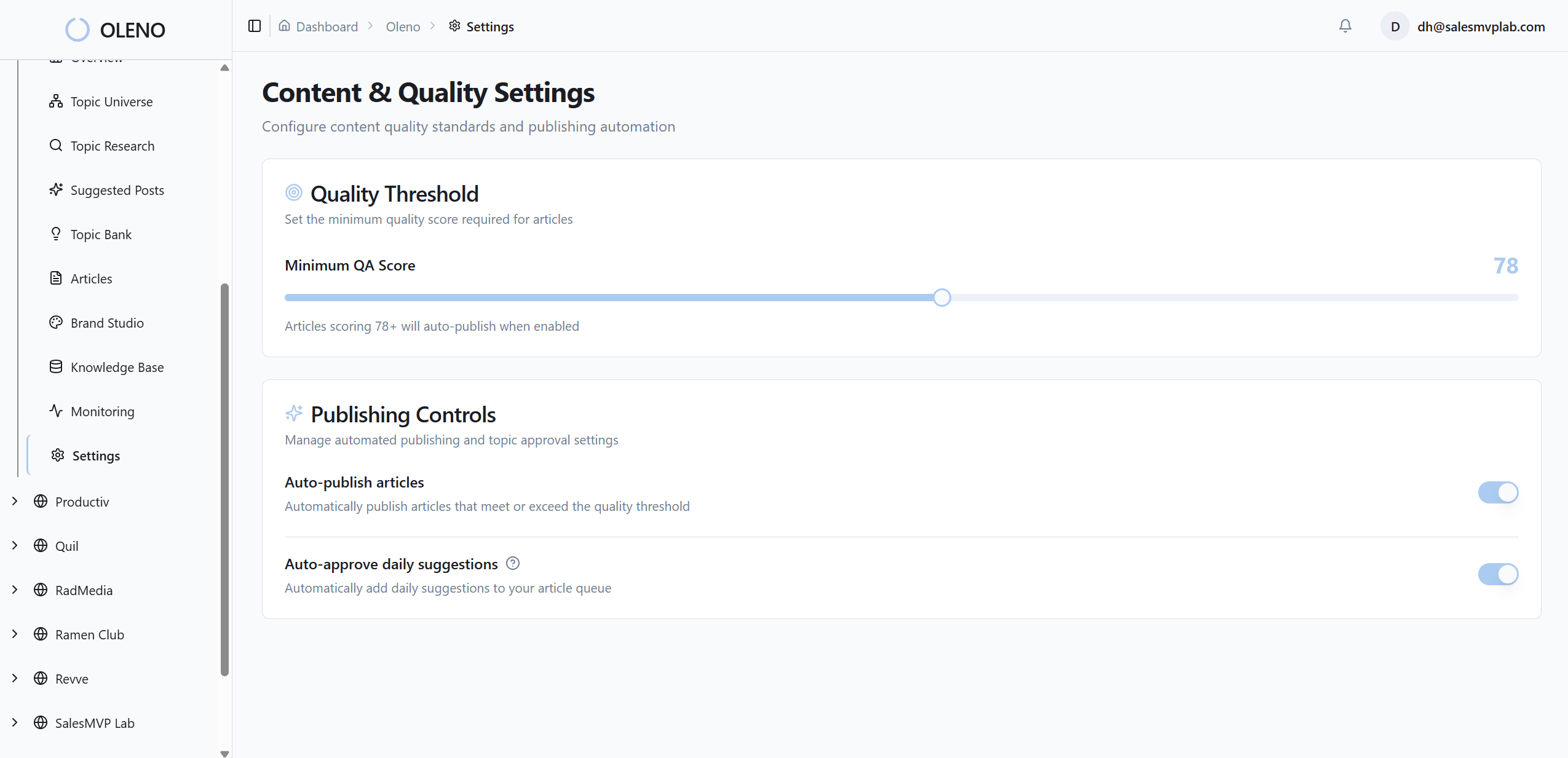
That matters for attribution because consistent copy means consistent links, and consistent links mean cleaner UTMs and fewer naming mistakes. Less cleanup, fewer manual reviews, more trust in the numbers you publish.
Pipelines That Keep Cadence
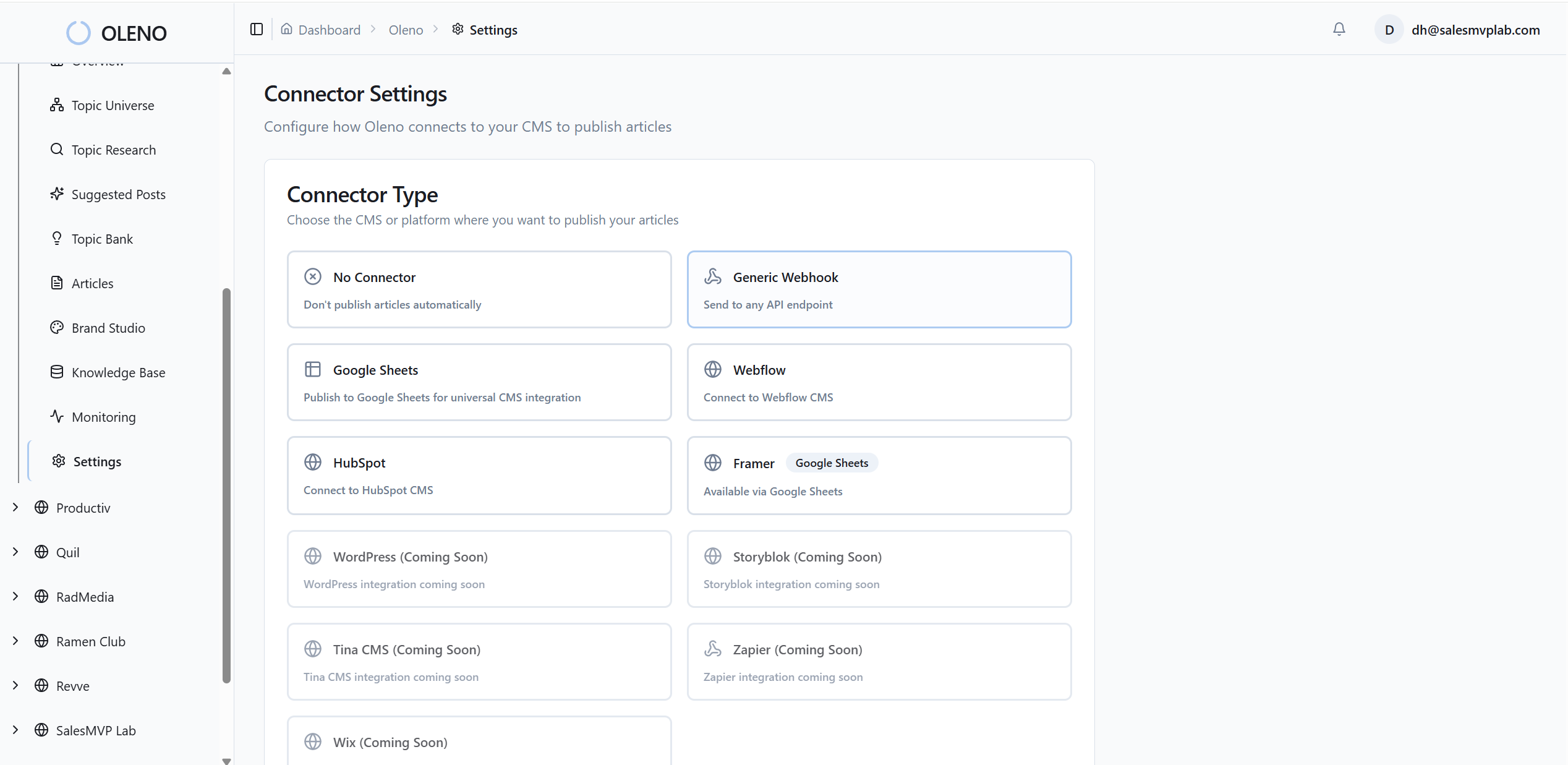
The Orchestrator runs your production schedule so content ships steadily even when priorities shift. Programmatic SEO Studio discovers and executes acquisition topics with a locked outline, so structure and on-page elements stay uniform. The Quality Gate blocks pieces that miss your standards for structure and clarity, reducing the 23-minute manual review loop that drags teams down.
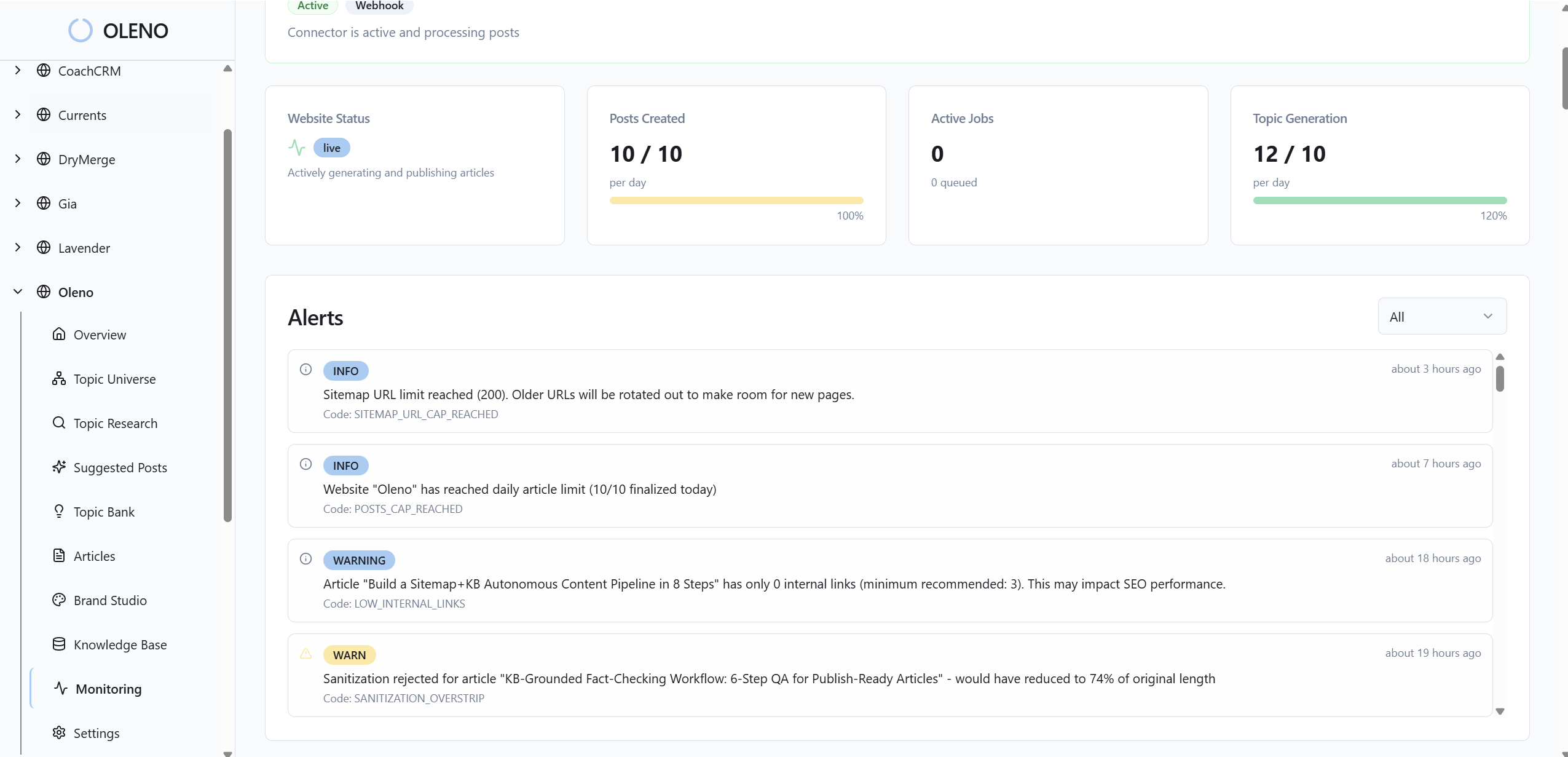
With Knowledge Archive grounding drafts in your real sources, you avoid invented claims that lead to corrections later. Fewer rewrites, fewer broken links, cleaner data trails. That’s time you get back for analysis and iteration.
Key capabilities that reinforce the system:
- Brand Studio: voice, term, and CTA rules enforced during brief, draft, and QA
- Marketing Studio: category POV and key messages injected into every outline
- Product Studio: single source of product truth to prevent inaccurate claims
- Orchestrator + Quality Gate: steady cadence with automated checks before publish
When you combine Oleno’s governance and execution with your GA4, BigQuery, and CRM setup, the transformation is real. Review time drops, UTMs stay clean, and your attribution model stops wobbling. Pipeline conversations get calmer because the inputs are stable.
Want to see how this fits your stack and cadence? Request a Demo
Before we wrap, one more thing. If your team struggles to keep publishing while also fixing measurement, you don’t have to choose. Oleno keeps the engine running while you harden the data layer. That’s how small teams punch above their weight.
Ready to map governance and cadence to your attribution goals? Book a Demo
Conclusion
Pageviews don’t buy pipeline. A simple, enforced data layer, defensible SQL, and a decision-first dashboard do. Ship a v1 that joins GA4, BigQuery, and your CRM, then harden it with validation checks and stable definitions. Use Oleno to keep content governed and on cadence so signals stay clean. In 30 days, you can go from guessing to a dashboard that leadership trusts and funds.
About Daniel Hebert
I'm the founder of Oleno, SalesMVP Lab, and yourLumira. Been working in B2B SaaS in both sales and marketing leadership for 13+ years. I specialize in building revenue engines from the ground up. Over the years, I've codified writing frameworks, which are now powering Oleno.
Frequently Asked Questions