Build an AI-Driven Content-to-Pipeline Attribution Model in 8 Steps

Most teams celebrate output, not outcomes. Feels great to ship twenty articles, five comparison pages, and a pile of LinkedIn posts. Then the board asks: where did pipeline move?
If you want to build an ai-driven content-to-pipeline attribution model that actually proves movement, you need a system that ties every asset to identity, journey, and opportunity. Not just UTMs. Real contracts, real signals, and a quality gate on AI output so you don’t reward noise.
I learned this the hard way. We cranked volume and traffic went up. Felt great…for a month. Then sales said nothing changed. Once we shifted the definition of success to "pipeline influence" and wired content to CRM truth, choices got obvious. Cut thin topics. Double down on assets that show up in paths before MQLs (marketing-qualified leads). That’s where the leverage lives.
Key Takeaways:
- Ship identity and content schemas first, then tracking. Everything else hangs off those contracts.
- Blend deterministic rules with a light ML layer to score assists on ambiguous paths.
- Track assisted MQL rate, content‑influenced opportunity count, path depth before MQL, and win‑rate lift by persona.
- Protect SEO by assigning content_id at brief and keeping canonicals, slugs, and structure stable during rollout.
- Score AI articles at publish with a content_quality_score and gate promotion on it.
- Backtest your model against last click and simple rules before you flip dashboards.
- Target outcome: within 90 days, link 50%+ of new MQLs to content assets or clusters and cut time‑to‑attribution from months to weeks.
Why build an ai-driven content-to-pipeline attribution model now
An ai-driven content-to-pipeline model shifts decisions from opinions to evidence. It ties content_id, user identity, journey events, and CRM outcomes so you can see which assets nudge buyers toward MQLs and opportunities. When the model runs, budgets move toward proven winners and waste shrinks fast.
Most marketing teams still grade content on traffic and publish count. That lens hides the articles that quietly lift conversion and overvalues posts that never show up near deals. The fix isn’t a fancier dashboard. It’s a shared contract for identity and content, event quality that survives scale, and a scoring lens everyone trusts.
If you want external proof this pays off, look at LinkedIn’s B2B Institute on creative effectiveness and McKinsey’s analytics work on growth impact. The throughline is clear: clarity on what to measure changes where dollars go. It also changes results.
Pipeline over output, always
Define success as pipeline contribution, not words shipped. When leaders agree up front, roadmaps and editorial debates get easier. You stop chasing keyword bingo and start asking: which assets appear on converting paths, for which personas, and in what order? That question slices through noise.
Simple rule I like: if an asset doesn’t show up in paths before MQL within 60 days, pause promotion and revisit angle or audience. If it does, feed it more distribution and build supportive content around it. Obvious? Sure. But most teams don’t have the plumbing to see it.
The metrics that predict revenue
Vanity metrics are loud. Pipeline signals are quieter—and more useful. Track assisted MQL rate, content‑influenced opportunity count, average path depth before MQL, and win‑rate lift for accounts with content touches. Segment by persona and industry. Patterns pop when you actually look.
Make it useful for sales too. Roll up asset performance by segment, then surface "paths that convert" so reps know which pieces to send when a deal stalls. That feedback loop builds trust and keeps the model honest.
What teams get wrong when they build an ai-driven content-to-pipeline system
Teams wire up tools, not truth. They add UTMs, flip on GA4 attribution views, then declare victory. Six weeks later, nothing reconciles with CRM outcomes and credibility drops. The real work: identity resolution, event quality, and data contracts across content, web, MAP (marketing automation platform), and CRM.
The other failure mode is purity. Some folks insist on strict deterministic rules only. Others swing to black‑box ML and can’t explain anything. Both miss how people actually buy. Journeys start with research, meander across assets, and involve multiple people. Your model needs rules you can defend and a learned layer that picks up nuance.
One more mistake: breaking SEO while you track. You change URLs, inject messy query strings, or rebuild templates mid‑quarter. Rankings wobble, canonicals fight each other, and now measurement is the least of your problems. Don’t do that to yourself.
Schema first, then tracking
The symptom is missing influence reports. The root cause is no shared schema for content and identity. Document your entities up front: content_id, canonical_url, asset_type, persona, funnel_stage, session_id, user_id, account_id, intent_state. Define relationships. Publish the contract. Lock it.
Get buy‑in from marketing, data, and engineering. When tools change, the contract stays. That’s how you keep events consistent when you add channels or rebuild the website. GA4 helps, but only if you map it to your contracts. Read the GA4 attribution docs with that lens.
Hybrid attribution beats purity
Relying only on last click ignores early research and multi‑threaded evaluation. Going full black‑box loses trust. Blend deterministic signals you can explain—like "clicked this asset then submitted form within the session"—with a lightweight model that assigns assist weights to ambiguous paths. Not fancy. Useful.
Keep features simple and auditable: recency and frequency of touches, asset_type mix, persona match, dwell depth. You’ll be surprised how much lift you get from a pragmatic blend everyone understands.
Protect SEO while you tag
You can track well without hurting rankings. Assign content_id and canonical URL at brief creation so the ID follows the piece from draft to CMS. Enforce UTMs and content_id on outbound links at publish. Keep slugs, breadcrumbs, and templates stable. Use server‑side rules for parameters so crawlers see clean URLs.
If you need custom events, use a lightweight collector or a platform like Snowplow’s design patterns. The point: stable, high‑quality signals without polluting the surface search engines evaluate.
How to build an ai-driven content-to-pipeline model, steps 1-4
Start with contracts, then tracking, then first‑pass scoring. Your goal is a minimum viable attribution spine in two sprints. It should reduce risk immediately and surface early wins you can show to leadership. Keep it shippable and testable.

I favor boring tech choices here. On purpose. The hard part is discipline, not novelty. If your team can follow a checklist and document as you go, you’ll be ahead of most companies trying to brute force this with dashboards.
And bake AI quality into scoring on day one. Otherwise, thin articles get rewarded just because there are many. Don’t let that happen.
Define the data schema contract
Create a shared schema that spans content, web, MAP, and CRM. Everyone uses the same names, types, and allowed values. Publish it in your repo with versioning so changes are visible and deliberate. Add examples for each entity so implementers don’t guess.
Plan for identity drift. Users clear cookies. Accounts merge. People switch devices. Your schema needs room for pseudonymous keys and resolution logic. That’s not a nice‑to‑have—it’s survival.
To make this real, after aligning stakeholders, do the following:
- Map core tables: content_catalog, web_events, content_events, session, user, account, mqls, opportunities—especially when you evaluate "build an ai-driven content-to-pipeline" work.
- Lock required fields: content_id, canonical_url, asset_type, persona, funnel_stage, session_id, user_id, account_id, utm_source/medium/campaign, timestamp.
- Document contracts and tests in your data repo. Use dbt best practices for tests and version control.
Instrument events across surfaces
Implement consistent IDs at the source. Add content_id as a data attribute on links and CTAs. Enforce UTMs server‑side so they don’t drift. Pass user_id or a stable pseudonymous key via first‑party cookies. Capture view, scroll, dwell, click, and submit events with the same naming rules everywhere.
Mirror CRM IDs back into the warehouse so influence reconciles without heroic VLOOKUPs. Close the loop early. Your future self will thank you.
When the plumbing is set, focus execution:
- Tag page templates with data‑content_id and canonical_url.
- Fire content_view, content_engage, and content_submit with session_id and user/account context.
- Build a nightly job that pushes new MQLs and opportunities back into your warehouse with their native IDs.
Score AI‑created assets at publish
AI makes volume easy. Quality is where teams fail. Create a rules engine that scores each AI asset at publish. Inputs include governance compliance, brand voice adherence, factual claims against product truth, and technical SEO checks. Output a content_quality_score.
Use the score as a prior in attribution. Low‑scoring content shouldn’t steal credit from assets that do the heavy lifting. Also route low scores into an editorial review SLA before you spend promotion dollars.
A simple, effective launch checklist:
- Validate voice and term constraints from your governance rules.
- Cross‑check claims against your product truth allowlist.
- Run SEO basics: title length, H2/H3 structure, schema where relevant.
- Set thresholds that block promotion below a defined score.
Train a lightweight assist model
Start with logistic regression or gradient boosting to predict MQL likelihood given content path features. Keep features interpretable so you can explain results to non‑technical stakeholders. You’re not building a recommendation engine. You’re clarifying influence.
Use the model to weight ambiguous paths and flag surprising assists your rules missed. Then review those flags with humans. The human‑in‑the‑loop step keeps trust high and improves the model over time.
Feature starter pack:
- Recency of last content touch, in hours.
- Frequency of touches in the past 14 days.
- Asset_type diversity in the path.
- Persona‑content alignment score.
- Dwell depth category on key assets.
Finish the build an ai-driven content-to-pipeline model, steps 5-8
Now connect sources, engineer features, validate, and roll out without breaking SEO or trust. This is where discipline matters. Move carefully, show lift, and communicate widely before you flip reporting defaults.
I’ve seen great models die because no one believed them. The answer isn’t more math. It’s better backtesting, cleaner data contracts, and change management that brings sales and leadership along.
Also, don’t change URLs or templates mid‑rollout. You’ll add attribution chaos on top of ranking loss. Keep the surface stable while the plumbing evolves.
Join web, content, and CRM in the warehouse
Model your warehouse with a star or data vault pattern. Build a content_touch fact that ties session_id, user_id, and content_id to a timestamp. Link those facts to MQLs and opportunities. Write dbt tests for uniqueness and referential integrity so you catch drift fast.
Identity resolution rules should be explicit, versioned, and reversible. Few things wreck trust faster than silent changes to how identities are stitched—especially when you evaluate "build an ai-driven content-to-pipeline" work.
When that foundation is solid, do three practical things:
- Materialize a daily table of assisted MQLs by content_id, persona, and segment.
- Expose a clean view for marketing ops and analysts that hides join complexity.
- Snapshot model weights and rules so you can audit changes over time.
Create model features and labels
Engineer features that capture path shape, not just counts. Include time since first touch, variety of asset types, persona‑content alignment, and number of distinct domains if you syndicate. Labels should match how you define success, like MQL within 30 days or opportunity created within 60 days.
Watch for leakage. Anything that hints at the label before the event fires will inflate results and erode trust. Document your checks so future teammates can repeat them.
A good cadence:
- Refresh features nightly with clear recency windows.
- Re‑train weekly or bi‑weekly until stable, then monthly.
- Compare to last click and simple rules to quantify incremental lift.
Validate, backtest, and roll out with guardrails
Run AUC, precision, recall, and calibration checks. Backtest against prior quarters to show lift over last click and rules. Slice by persona and segment to catch bias. Keep URLs, canonicals, breadcrumbs, and internal links stable during rollout so you don’t kneecap SEO. If you change anything structural, follow Google’s canonical guidance.
Don’t flip dashboards overnight. Pilot with one region or segment, train stakeholders on interpretation, then expand. You want momentum, not mutiny. For model evaluation references, the scikit‑learn metrics guide is plenty.
Stop chasing pageviews. Start instrumenting pipeline influence that people trust. Request a Demo
How Oleno operationalizes your content-to-pipeline attribution model
Oleno turns the new way into normal work. Governance studios define voice, claims, and message rules so AI output stays on brand. Jobs enforce IDs and UTMs at creation and publish. The engine ships content with tracking baked in, then pushes clean data back to your warehouse. Your team keeps its editorial flow. The platform handles the boring, error‑prone parts.

Do this by hand and you lose hours every week to retrofits and reconciliation. With Oleno, the work moves upstream. IDs at brief. Governance before publish. Exports that match your schema. Suddenly, analysis goes from days to hours, and the model gets the signals it needs.
Built‑in governance and content IDs
Brand Studio, Marketing Studio, and Product Studio encode how you sound, what you believe, and what’s factually allowed. That removes drift and risky claims from AI output. Every asset gets a stable content_id and canonical URL at the brief stage—not after the fact. That one move eliminates the retrofits that used to soak afternoons.
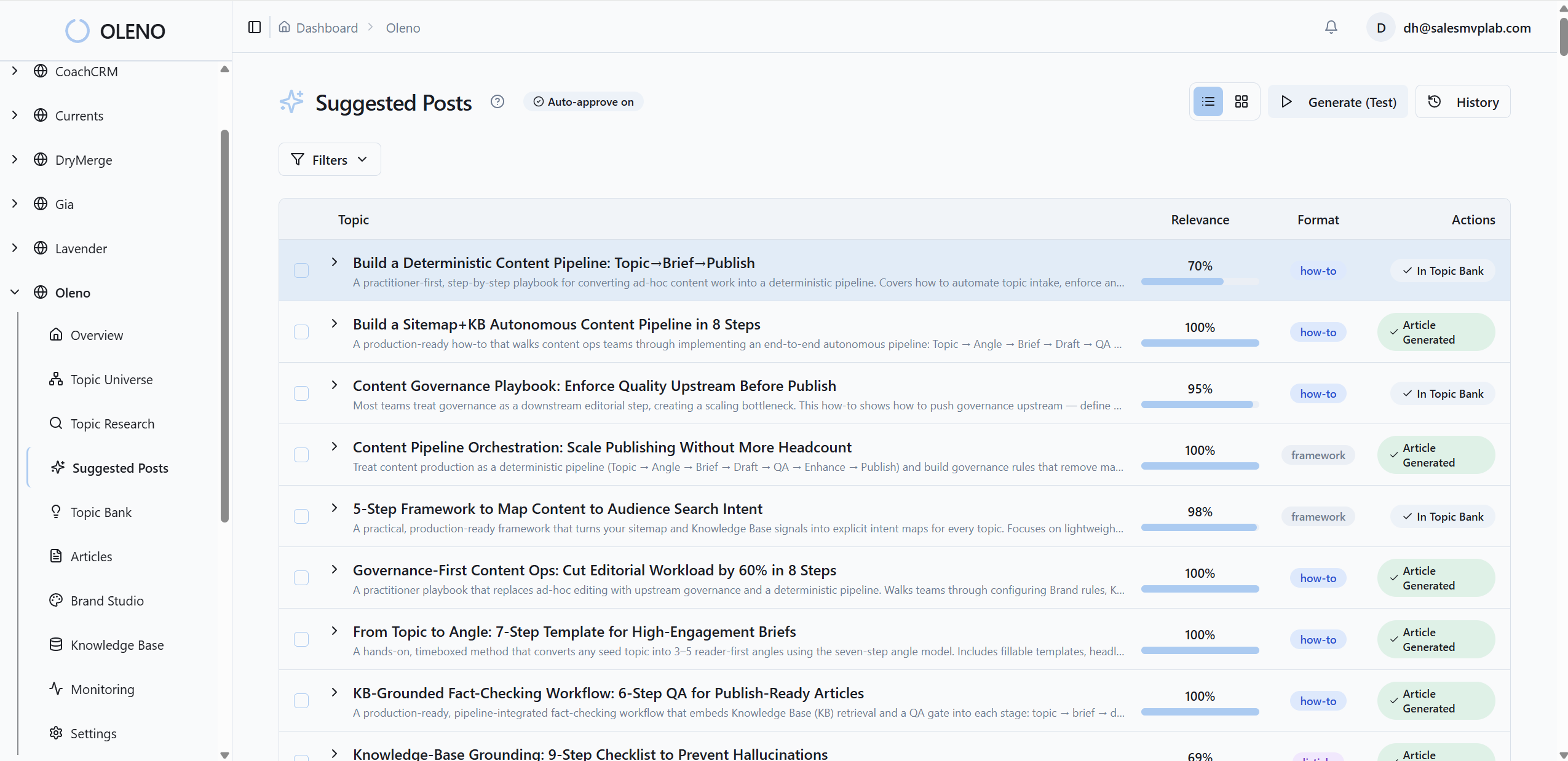

Because governance is encoded once, voice and claims stay consistent across SEO pieces, competitive pages, and thought leadership. Editors stop acting like human style checkers. Quality rises. Approval cycles shrink. Pipeline‑influencing assets hit the market faster.
Auto‑instrumentation and quality scoring
Oleno enforces UTMs and link‑level content_id tagging at publish. Optional scroll and dwell capture can be added with lightweight snippets. The platform assigns a content_quality_score at publish using governed checks for voice, claims, structure, and SEO basics. Low scores get flagged for human review so promotion dollars don’t fund weak content.
That score plugs into your attribution model as a prior. Now those high‑volume, low‑quality pieces stop stealing credit from articles that actually move buyers. Over a quarter, assisted MQL rate lifts because promotion aligns with quality automatically.
Teams report faster analysis and fewer mistakes when boring steps disappear. Want that shift without adding headcount? Request a Demo
Warehouse‑ready exports and reporting hooks
Oleno pushes normalized content_catalog and content_events to your warehouse on a schedule. Schemas align with the features you already defined, so engineering time drops. CMS Publishing sends approved content to WordPress, Webflow, HubSpot, and others as drafts or live posts, keeping cadence steady without copy‑paste overhead.
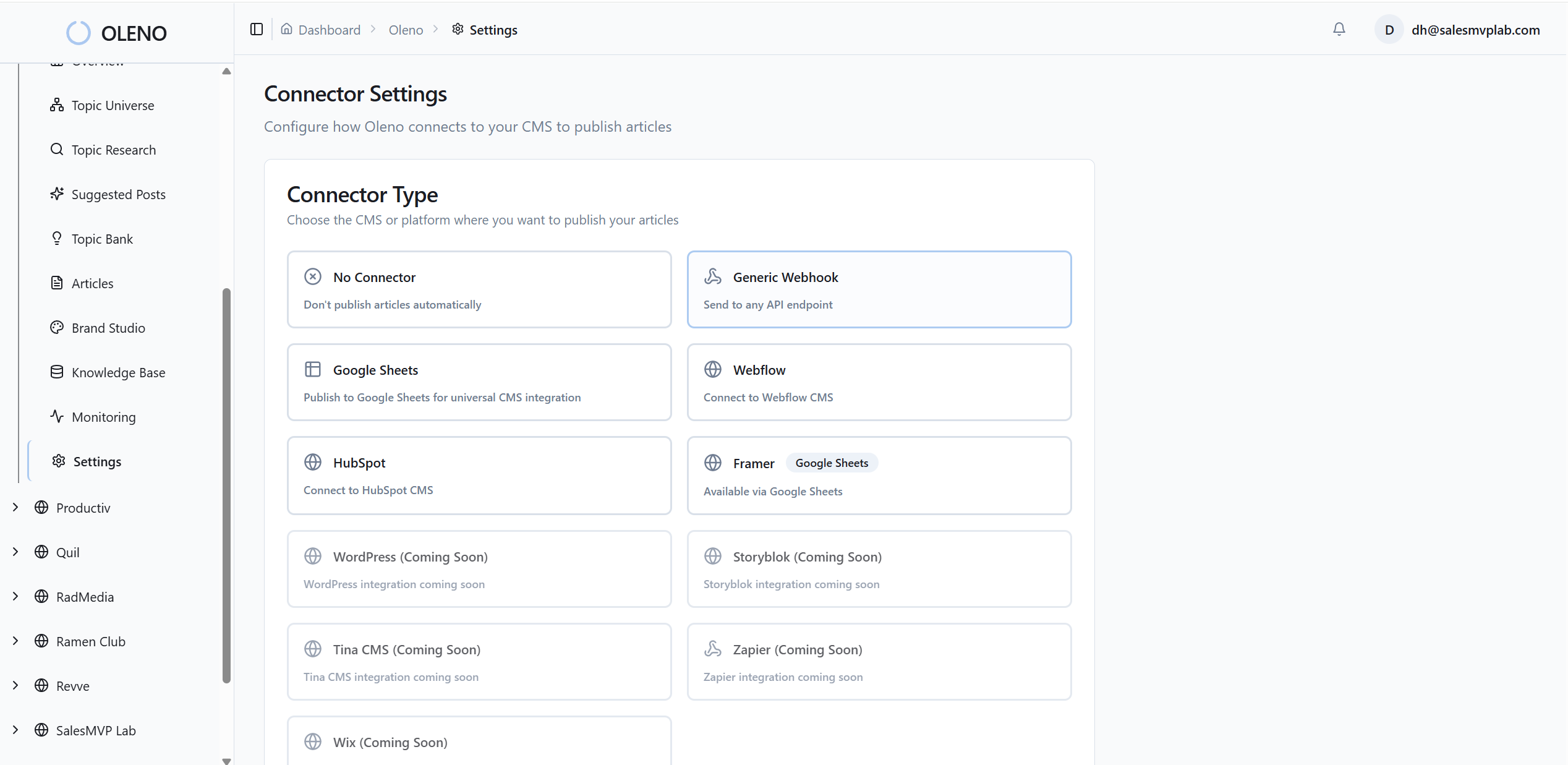
Knowledge Archive Grounding keeps claims tied to your approved product truth, which cuts corrections and boosts credibility. Quality Control blocks publish until content passes voice, structure, grounding, and readability gates. Measurement & System Health shows output volume, cadence, and quality trends so you can spot bottlenecks early. Together, those pieces reinforce the model and keep the system reliable.
Conclusion for Build an ai-driven content-to-pipeline
If the goal is pipeline, not posts, build the system that proves it. Start with contracts for identity and content. Instrument clean events. Blend rules with a small ML layer. Score AI content at publish so you reward quality, not volume. Then keep URLs and templates stable while you validate and roll out.
Do that, and within 90 days you can cut time‑to‑attribution from months to weeks and link half your new MQLs to specific content assets or clusters. That’s the bar. If you want help getting there without adding headcount or coordination debt, Oleno was built for exactly this job. Ready to see it in action? Book a Demo
About Daniel Hebert
I'm the founder of Oleno, SalesMVP Lab, and yourLumira. Been working in B2B SaaS in both sales and marketing leadership for 13+ years. I specialize in building revenue engines from the ground up. Over the years, I've codified writing frameworks, which are now powering Oleno.
Frequently Asked Questions