Build an AI-Driven Topic Universe to Prioritize Content Gaps

Here’s the uncomfortable truth about content planning: most teams are smart, experienced, and still guessing. I’ve done it too. Whiteboard brainstorms. Keyword sheets. Executive “gut” picks. It all feels productive until you zoom out six weeks later and realize you’ve got three posts that say the same thing with different titles. That’s not momentum. That’s drift.
When I ran a media property with 80+ regular contributors, we won on volume and diversity of angles. Later, at product companies, we lost time to rework because topics weren’t mapped to actual coverage gaps. The pattern is predictable: strong writers, strong opinions, weak system. You don’t need more ideas. You need a universe that shows what’s already covered, what’s thin, and what needs to exist next.
Key Takeaways:
- Stop guessing topics; map a Topic Universe that tracks clusters, saturation, and cooldowns
- Enforce information gain before writing to prevent near-duplicate articles
- Label clusters (underserved, healthy, well-covered, saturated) to focus effort
- Use cooldown windows (e.g., 90 days) to avoid premature re-coverage and cannibalization
- Reduce handoffs by running brief → draft → visuals → links → schema in one pipeline
- Prioritize by weighted gap severity and business relevance, not just keyword demand
Why Teams Keep Guessing What To Publish Next
Most teams guess because their system doesn’t show coverage, only ideas. Without a map, you greenlight topics that feel different but land in the same semantic cluster. The fix starts with one rule: does this piece add net-new coverage or deepen a specific gap?
The Hidden Repetition Behind “New” Ideas
If you pick topics from brainstorms and keyword lists alone, you create accidental repeats across clusters. The words look different, the angle is the same. That’s how you end up with “guide,” “playbook,” and “framework” posts that punch at the same query family and split authority. I’ve cut these duplicates more times than I’d like to admit.
Teach your team to ask one simple question before greenlighting any topic: does this add net-new coverage or deepen a gap we care about? If the answer is unclear, pause and check your map before writing. It’s not a creativity constraint; it’s a focus check. The point isn’t fewer ideas. It’s fewer reruns.
Why Conventional Tooling Misses Coverage Control
Most stacks optimize for drafts and SERP checks, not for whether a draft moves your coverage needle. You get keyword demand, competitive density, and “readability” scores. Useful, yes. But none of that tells you if you’re over-publishing a pillar while ignoring an edge where authority could compound.
You need a layer that understands clusters, saturation, and time-based cooldowns. Without it, you ship more content that competes with your own pages. Not because the team is sloppy, because the system is missing. When coverage control is absent, you optimize for speed and pay for it later in cannibalization.
What Happens When You Skip Cooldowns?
You burn cycles revisiting ideas before the market needed a refresh. Set a minimum interval between publishing on the same topic, say 90 days, then enforce it. Cooldowns route energy into underserved clusters, which is where you actually gain ground. It also forces stronger angles when you do return.
When you come back to a topic, make sure the angle adds information gain, not restatement. That can be a new data point, a use-case variation, or a deeper how-to that fills a documented gap. If you need a primer on classifying and mapping coverage gaps, skim this overview of content gap analysis to align your mental model.
Want to skip the theory and see it working against your own site? Try a quick spin with an autonomous pipeline and see what gets prioritized next. Try Generating 3 Free Test Articles Now.
See The Real Root Cause Of Repetitive Content
Repetition isn’t a writing problem; it’s a mapping problem. When you can’t see your semantic landscape, everything looks like a fresh idea. A Topic Universe fixes that by turning content into a system, not a guessing game.

What Is a Topic Universe And Why Does It Matter?
Think of the Topic Universe as your semantic map of everything you should cover, stitched from your knowledge base and sitemap. It clusters related ideas, tracks coverage and saturation, and shows what is underserved. The value is simple: the system tells you what to write next with evidence, not guesswork.
When you operate from a map, duplicating effort gets harder and prioritizing gaps gets easier. You also prevent teams from over-rotating into one pillar because it “feels” hot. I’ve watched calm, steady coverage in neglected edges do more for authority than another “pillar-refresh” sprint on the main topic everyone loves.
What Traditional Approaches Miss In Coverage Control
Keyword tools surface demand, not your current supply. Editorial calendars track dates, not saturation. You need a model that says: this pillar is healthy, that one is neglected, and here is the precise subtopic that closes the gap. Until you can point to those labels, duplication risk stays high.
We tend to confuse content velocity with progress. Velocity is useful, but only when it’s pointed at the right gaps. Labeling clusters as underserved, healthy, well-covered, or saturated gives you operational handles. You’re not arguing opinions, you’re routing work based on state.
How Do Embeddings Change Topic Selection?
Embeddings let you compare content by meaning, not just exact words. Use them to map KB passages and live URLs into vectors, then cluster by distance. Close neighbors form pillars, far neighbors reveal edges where you lack depth. This reduces semantic overlap and uncovers gap candidates your keyword sheet never showed.
It’s not about fancy math for its own sake. It’s about preventing two drafts that say the same thing with different nouns. If you want a practical walk-through of using AI to find less obvious opportunities, this guide on using AI to identify content gaps your competitors missed is a useful complement to your process.
The Costs Of Overlapping Articles And Thin Coverage
Overlapping articles waste time and dilute signals. Thin coverage stalls authority growth. The price shows up as lost weeks, internal link messes, and “why didn’t this move the needle?” conversations. It’s avoidable with coverage-first planning.
Time Lost To Duplicate Drafts
Let’s pretend a team of three spends 10 hours per draft and ships four overlapping posts this quarter. That’s a full work week lost to near-duplicates. Add reviews and CMS cleanup, and the cost climbs. Worse, you fragment internal links and cannibalize ranking signals.
A coverage-first queue saves those hours for new angles that move metrics. Even better, it reduces the emotional drag of killing work late. Nobody enjoys telling a writer, “this is strong, but we already published it in a different jacket.” I’ve delivered that note. It’s demoralizing.
When Thin Coverage Stalls Authority Growth
You publish a pillar, then scatter five shallow posts around it. Nothing sticks. Authority tends to accrue when each new draft closes a specific gap, adds cited facts, and strengthens cluster interlinks. If you cannot point to a measurable gap score or saturation label, odds are the piece will underperform.
Depth isn’t page length, it’s specificity. Fill a known missing use case. Add a data-backed comparison other pages lack. Clarify a definition your audience keeps asking about. For a practical diagnostic, this overview on mastering content gap analysis lays out a simple way to evaluate depth against gaps.
The Operational Drag Of Tool Handoffs
Every extra handoff adds friction. Export from research, paste to docs, manual brief, draft, internal links by hand, last-minute schema. It’s slow and brittle. Tighten the loop so priority, brief, draft, links, and schema live in one flow. Not six tabs.
I’ve run teams both ways. The orchestrated path reduces context switching and removes the roulette of who remembered to add schema or fix anchor text. It doesn’t remove judgment, it removes avoidable overhead. That’s the goal.
Still juggling handoffs and watching duplicates slip through? There’s a simpler way to keep the pipe full and clean. Try Using An Autonomous Content Engine For Always-On Publishing.
The Pain Of Publishing That Does Not Move The Needle
The real pain isn’t a bad post. It’s a good post that hurts another one. Or a backlog you can’t defend. Or a pivot that blindsides sales. These are symptoms of a system that writes words without managing coverage.
When Your Best Post Cannibalizes Another
You finally hit publish on a strong explainer, then watch it steal queries from a piece you loved last quarter. Traffic flutters, conversions wobble, the team second-guesses the strategy. Cannibalization is preventable when your queue checks similarity, cooldown, and cluster saturation before a draft exists.
I’ve seen this most when we raced to “own” a topic with overlapping angles. The fix isn’t to write less, it’s to write with spacing and distinction. Make the overlap check a gate at intake, not a retroactive forensic after the graph drops.
The Week You Realize Half The Backlog Is a Repeat
We’ve all been there. You zoom out, and three briefs are the same idea with different titles. That’s a headache. Kill two, salvage one, and make it the definitive resource. Then, put deterministic de-dup rules at intake so you never commit writer hours before that check runs.
I learned this the hard way at a startup where we were moving fast with founder-led content. Great ideas. Poor structure. The week we audited the backlog, we cut 30% and refocused on underserved edges. The change was boring on paper and effective in practice.
Who Feels The Pain When Priorities Shift Unexpectedly?
Sales wonders why this month’s content is off-narrative. Product marketing can’t find tie-ins. Writers are frustrated by late pivots. Put a system in place that updates the prioritized list automatically and notifies stakeholders before work starts, not after. You’ll still change plans, just with fewer bruises.
If you need a simple view on tailoring gap analysis by region or segment, this primer on how to do content gap analysis for geo offers a useful framing. Make the plan visible. Reduce surprise. Save relationships.
Build An AI-Driven Topic Universe That Prioritizes Gaps
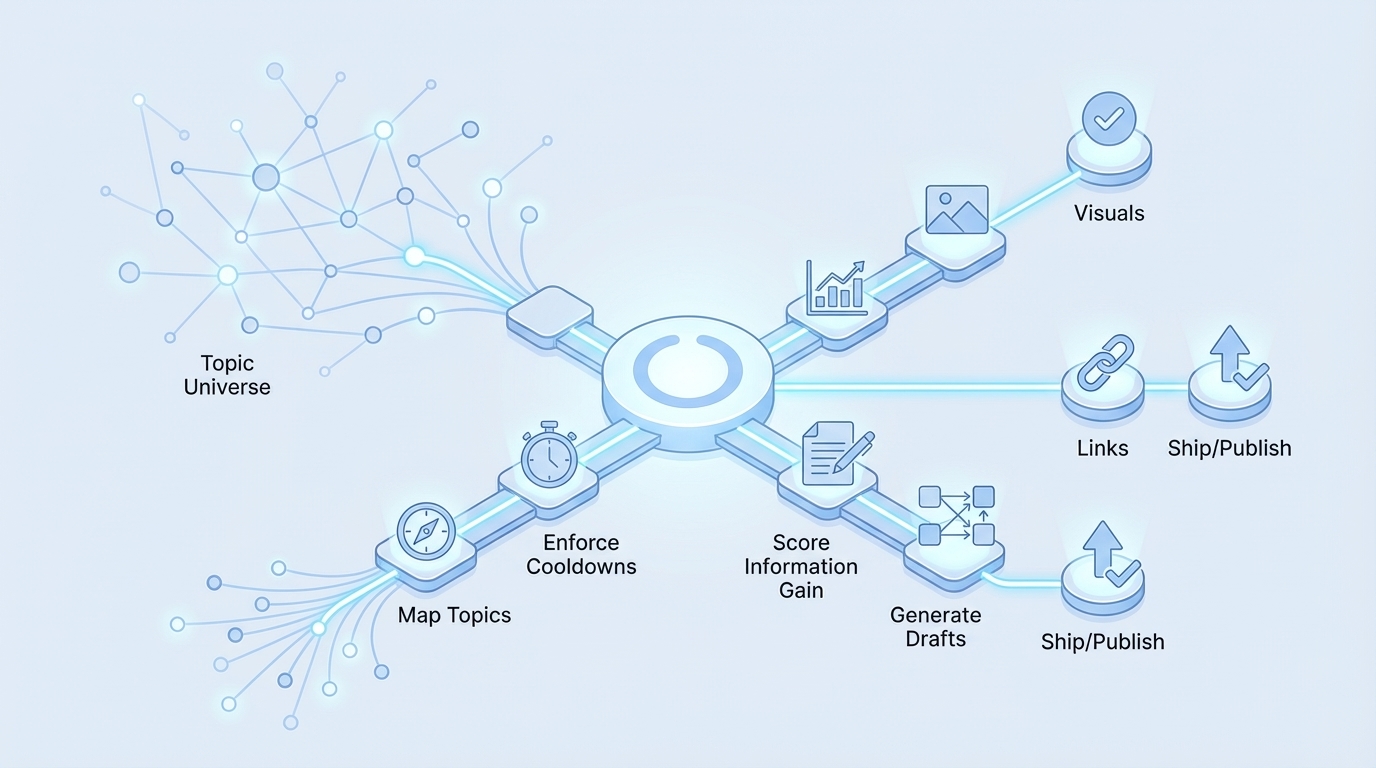
An AI-driven Topic Universe maps what exists, reveals gaps, and enforces focus. You don’t need a research department. You need embeddings, clear labels, and a priority engine that respects cooldowns and information gain. Here’s a practical way to get moving.
Step 1: Extract And Embed Your KB And Sitemap
Crawl your sitemap and export your knowledge base into clean, citable chunks. Use consistent chunking rules, 300 to 500 tokens with a small overlap works, so similarity is meaningful. Generate embeddings for every chunk and URL using a single model so vectors are comparable. Store IDs that map back to CMS slugs.
This gives you a semantic inventory. You’re no longer scanning titles and guessing whether two posts overlap. You’re comparing meaning. It’s the difference between “feels similar” and “is similar.” That clarity prevents “we didn’t realize we already said that” conversations later.
Step 4: Implement a Priority Engine With Weights And Rules
Rank candidates using a weighted score, for example 35% gap severity, 25% KB relevance, 20% business focus, 20% recency. Apply hard rules first: drop duplicates, enforce a 90-day cooldown, and block saturated subtopics unless a refresh brief clears an information gain threshold. Then emit a daily queue for approvals.
Keep the scoring transparent, not mystical. People accept the output when they understand the logic. And keep the system honest by requiring a simple “what’s new here?” note on every brief. If the brief can’t answer it, it’s not ready. That single check saves you from polite rewrites that go nowhere.
How Oleno Operationalizes The Topic Universe End To End
Oleno runs this end to end: map topics, enforce cooldowns, score information gain, generate drafts, and ship with visuals, links, and schema. It’s not a dashboard. It’s a pipeline that reduces duplication risk and increases the percentage of articles that add something new.
Topic Universe With Enforced Cooldowns And Saturation Labels
Oleno maintains clusters, calculates coverage in real time, and enforces a 90-day cooldown before you re-cover the same idea. Clusters are labeled clearly, underserved, healthy, well-covered, saturated, so decisions are obvious. This routes energy to edges where authority can grow and slows down premature refreshes.
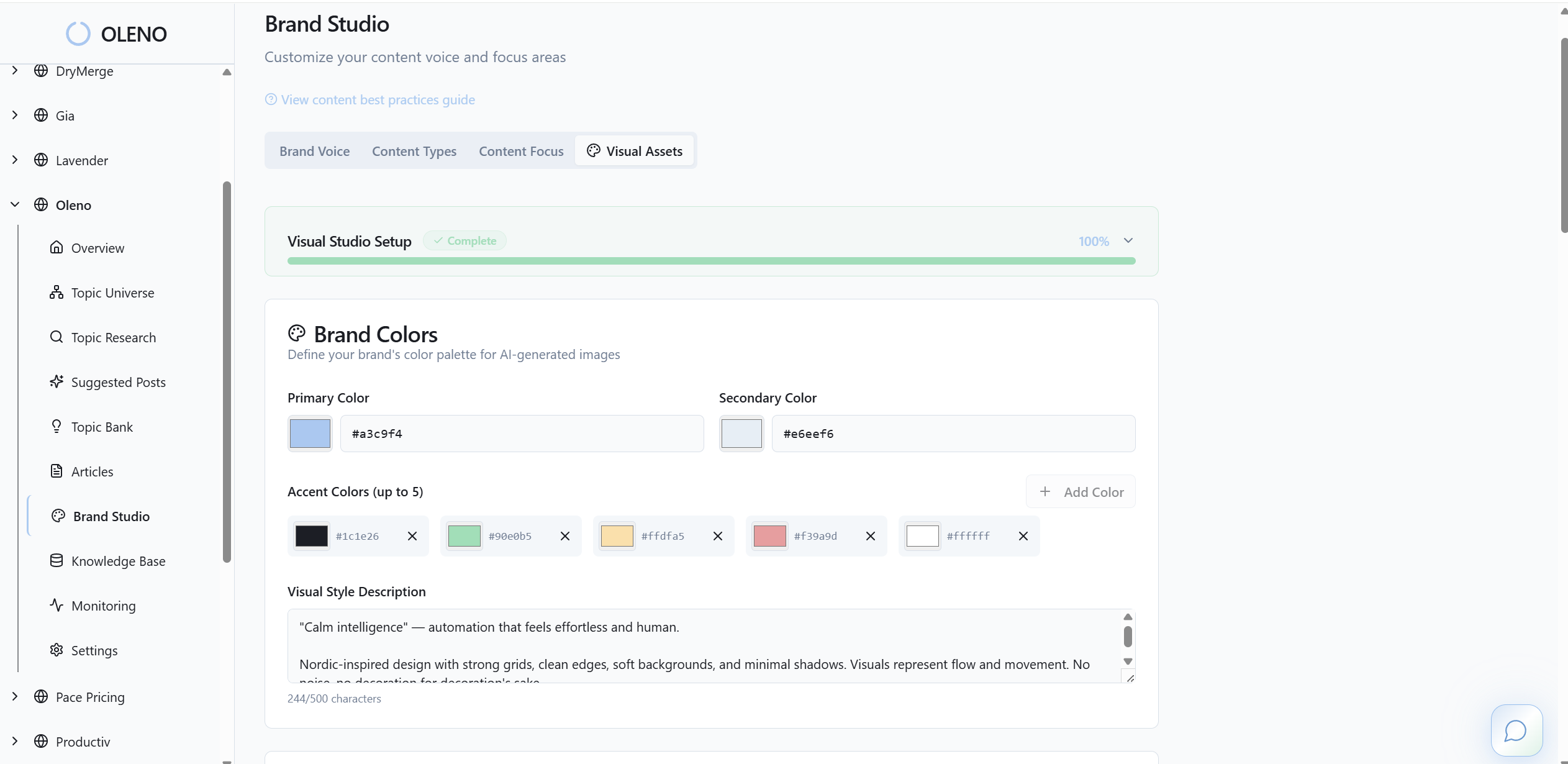
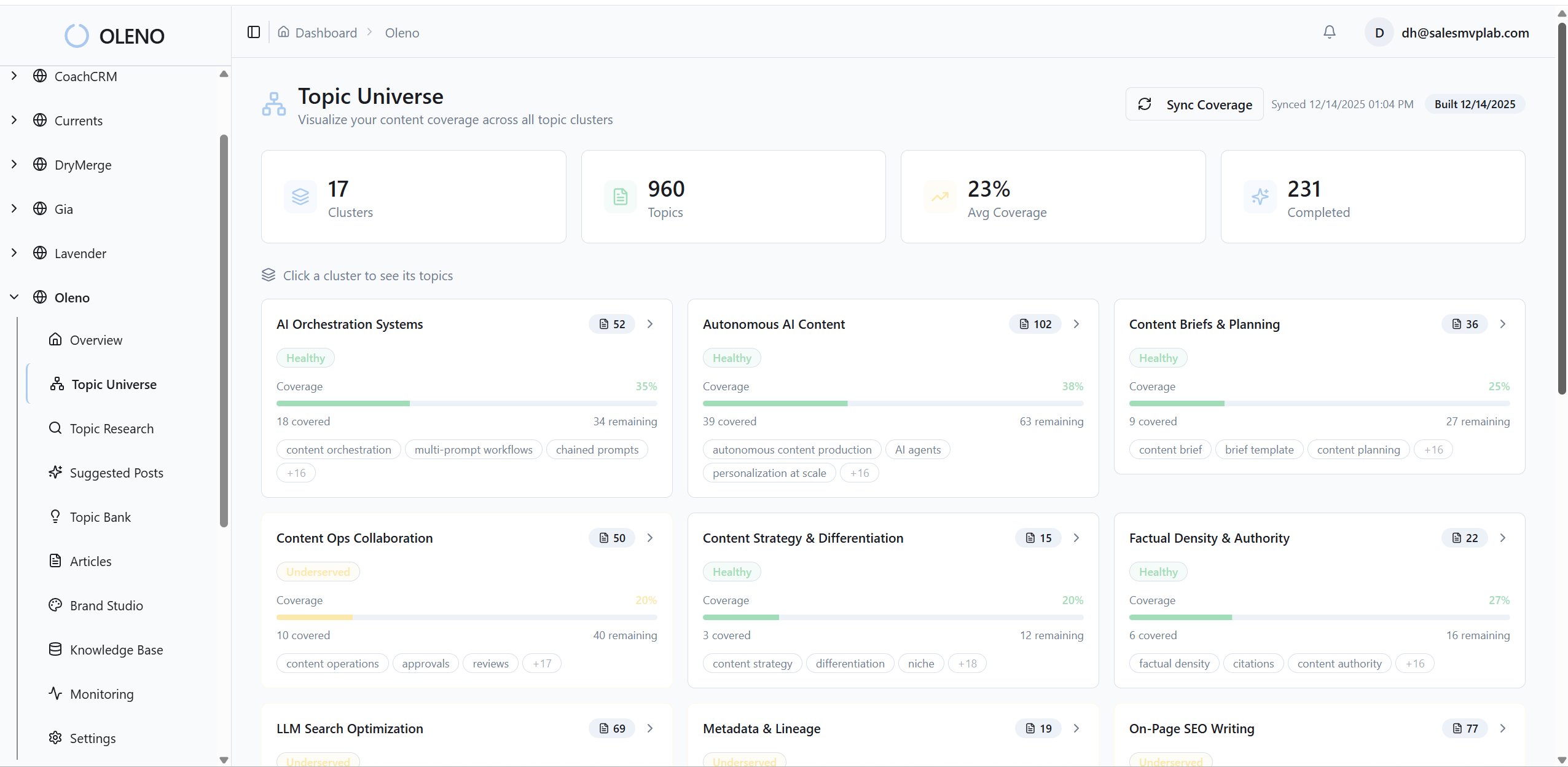
I like this because it turns the endless “should we write X again?” debate into a state change. If it’s saturated and inside cooldown, pause. If it’s underserved and aligned with your knowledge base, move it up. Oleno keeps that state current without another spreadsheet.
Deterministic Linking, Schema, And CMS Connectors
Oleno injects internal links from verified sitemaps and matches anchor text to page titles. Schema is generated programmatically. Publishing maps fields into WordPress, Webflow, or HubSpot without manual cleanup. The benefit is fewer broken publishes and no made-up URLs, just predictable delivery.
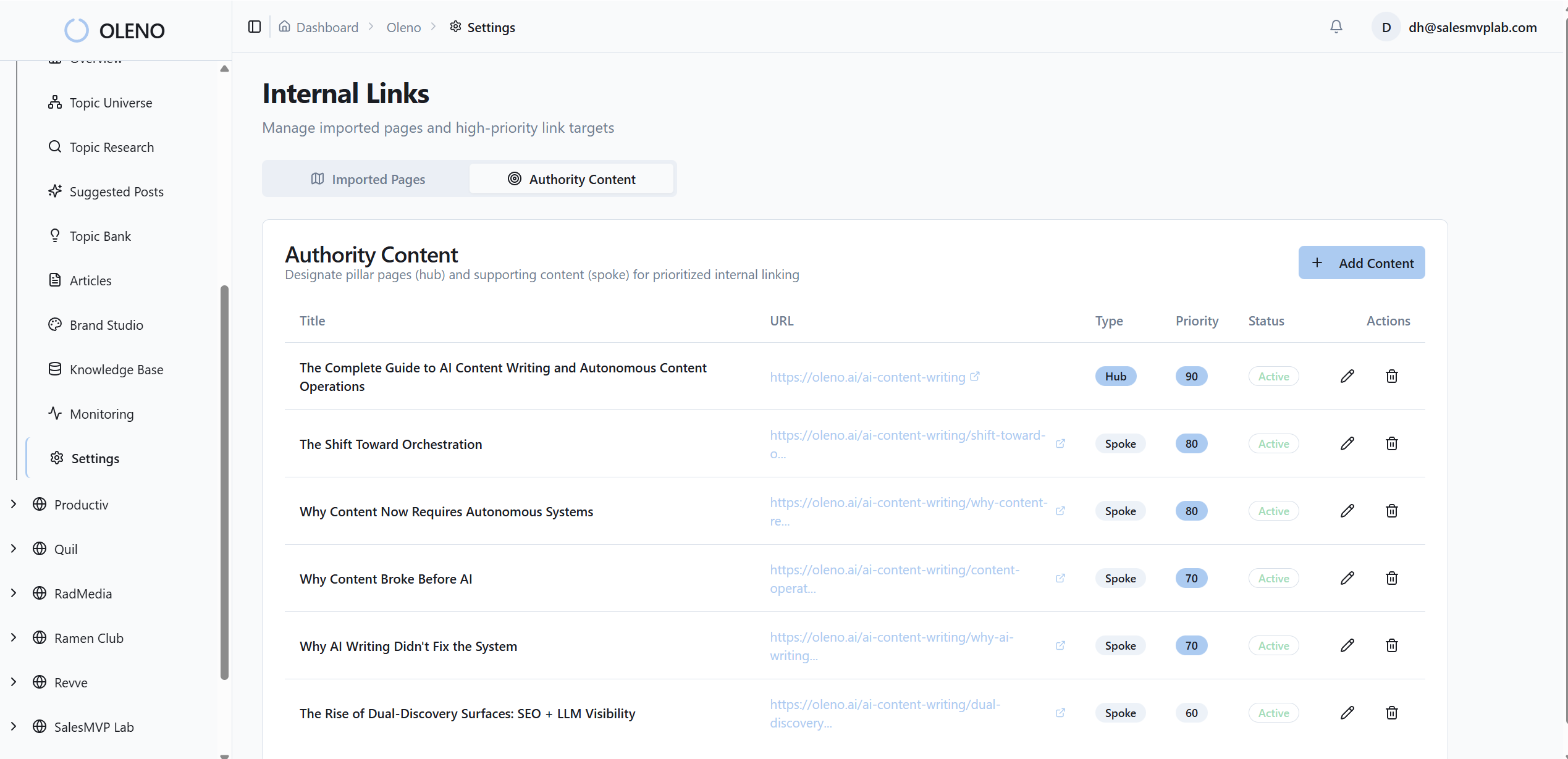
This is where teams usually lose hours. Copy-paste, reformat, fix the image, try again. Oleno bakes the structure in and keeps accuracy in code. You focus on the story, the system handles the plumbing. If you’ve been burned by last-mile errors, this is the quiet relief you notice first.
Oleno also turns every approved topic into a structured brief with competitive research and an information gain score. Low-differentiation outlines are flagged before writing, so you avoid “nice, but redundant” drafts. Then Oleno moves work through draft generation, QA, and delivery with concise notifications, draft ready, publish success, low topic inventory, so you stay in the loop without managing prompts.
If you’re ready to see your own map turn into a daily, prioritized queue that actually ships, it’s a short path from setup to first publish. Try Oleno For Free.
Conclusion
You don’t need more content ideas. You need a system that shows what’s covered, what’s thin, and what deserves the next hour of work. Build a Topic Universe, enforce cooldowns, require information gain, and route effort to underserved edges. That’s how authority compounds.
Whether you do it in-house or let Oleno run the pipeline, the principle stands. Content becomes infrastructure, not a project. And your team spends more time making new arguments, and less time rewriting the same one twice.
About Daniel Hebert
I'm the founder of Oleno, SalesMVP Lab, and yourLumira. Been working in B2B SaaS in both sales and marketing leadership for 13+ years. I specialize in building revenue engines from the ground up. Over the years, I've codified writing frameworks, which are now powering Oleno.
Frequently Asked Questions