Build an AI-Orchestrated Content Pipeline to Publish Daily

Most teams blame the writing. Faster drafts. Better prompts. Another freelancer. I’ve tried all of that. It helps a little. It doesn’t fix the real bottleneck.
The real constraint is the messy space between “we have a draft” and “we shipped something we trust.” That gap is full of broken handoffs, topic selection, differentiation, structure, visuals, links, schema, publishing. Until those are governed as one flow, you’ll ship less than you plan and edit more than you want. Daily publishing? It won’t stick.
Key Takeaways:
- Draft speed isn’t the problem, governed, repeatable execution is
- Treat content like code: inputs, stages, rules, and pass thresholds
- Push creativity to writing; make links, schema, and publishing deterministic
- Design for humans and machines with snippet-ready sections and clean structure
- Quantify rework and risk, then eliminate whole categories with system design
- Build a practical pipeline around KB grounding, topic coverage, and information gain
- Use an autonomous engine to run the play every day without manual coordination
Why Draft Speed Is Not Your Bottleneck
The Real Constraint Is Operational, Not Creative
You can write faster, sure. But the outcome isn’t a draft, it’s a published, on-brand article with the right visuals, internal links that won’t break, schema attached, and zero duplicate topics. That’s operational. It’s not about a better prompt; it’s about fewer places for things to go wrong. If you don’t map the end-to-end flow, you’ll keep paying the “last mile” tax in edits, fixes, and rework.
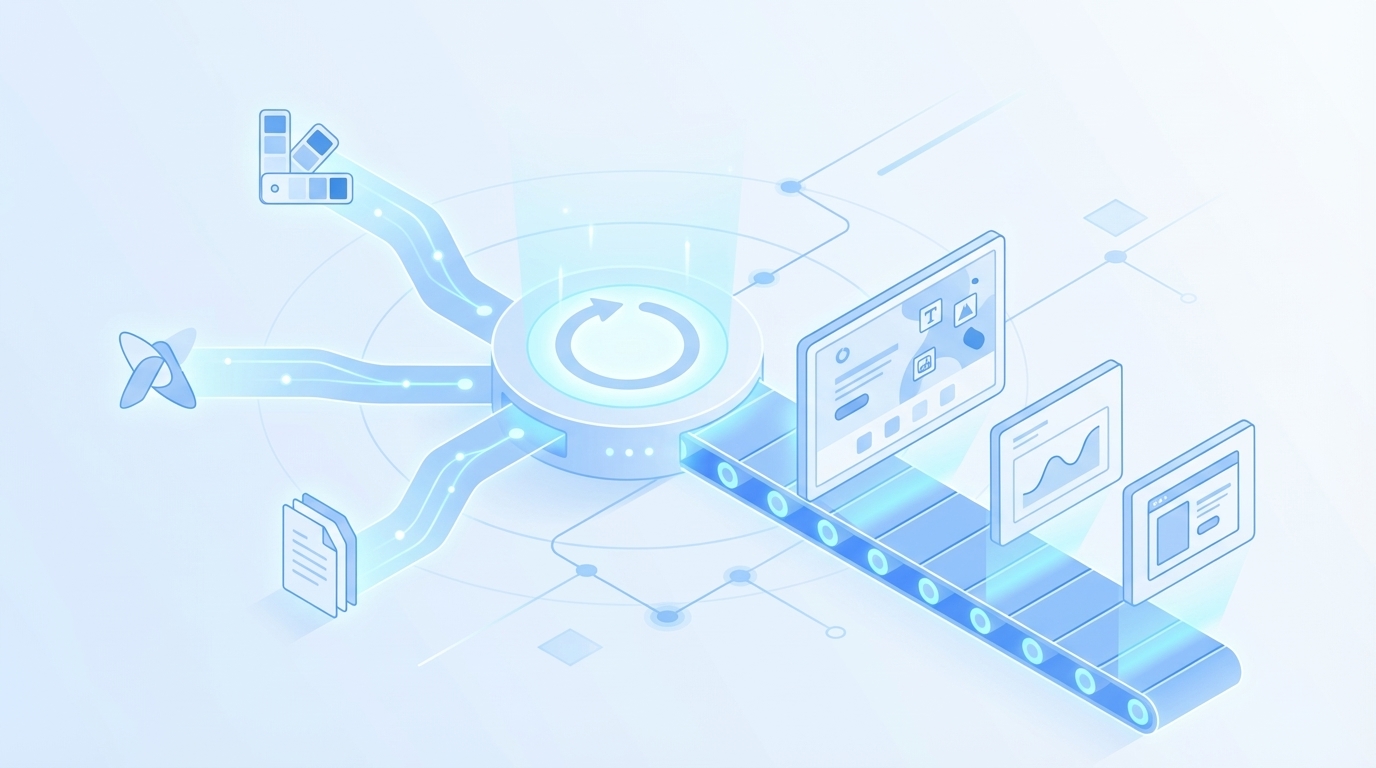
In practice, the fix starts with a map. List stages from topic selection to publish. Assign ownership, human or system, to each stage. Decide what remains creative (writing) and what becomes deterministic (links, schema, image placement, CMS mapping). Add non-negotiable quality gates. When we did this, the fire drills slowed. Not totally, but enough to matter.
What Is An AI-Orchestrated Pipeline, And Why Does It Matter?
Think “content as code.” You define inputs, stages, rules, and pass thresholds. The pipeline runs the same sequence every time. That’s how you go from ad hoc drafts to daily, publish-ready output without everyone hovering over each step. The voice and knowledge base are applied at each stage, and a QA gate prevents drift before it ships.
This isn’t a shiny idea; it’s a reliable pattern. Formal pipeline systems, like those described in AWS SageMaker Pipelines and IBM’s approach to designing data pipelines with control points, exist for a reason: reproducibility beats heroics. We’re borrowing that logic for content. Consistency creates capacity.
Why Prompts Alone Cannot Scale Daily Publishing
Prompts start from zero context every time. Tone varies. Structure wobbles. Facts drift. You keep fixing the same problems downstream. You don’t need better prompts; you need upstream rules. Voice enforcement. KB grounding. Snippet-ready sections baked in. Deterministic linking and schema later in the flow. That’s what reduces manual edits and actually sustains a daily cadence.
If you’re curious how engineering teams make this reliable, look at SAP AI Core’s orchestration model for grounding and guardrails. It’s the same story: repeatable operations beat one-off instructions. Prompts can help you write. Orchestration helps you ship.
Treat Content As A System You Can Operate Daily
What Traditional Workflows Miss Between Draft And Publish
Most stacks split strategy, drafts, visuals, QA, and publishing across different tools. No one owns the handoffs. That’s where tone drifts, facts go stale, links get fabricated, and schema gets skipped. I’ve seen great teams do great writing and still lose days to glue work, copying, fixing, formatting, repasting. It’s not laziness. It’s lack of design.

Move those decisions upstream. Write rules once, and let the pipeline enforce them. Decide who or what is responsible for each stage. Don’t ask a writer to guess anchor text or invent a URL. Don’t ask a designer to place images without context. When the pipeline handles the glue, people focus on the work only humans should do.
Determinism Where Accuracy Matters
You don’t want creativity everywhere. Keep writing flexible. Make internal links, schema, image placement, and CMS mappings deterministic. Pull URLs only from a verified sitemap. Match anchor text to page titles. Generate JSON-LD by code. Map fields to your CMS and enforce idempotency so reruns don’t double-publish. With a few intentional choices, you remove entire categories of rework.
This is standard in software systems. Microsoft’s guidance on AI agent design patterns talks about dividing flexible reasoning from hard constraints. Same idea here: let machines police structure and correctness so your team can focus on story and stance. Want to pressure-test this approach on your own stack? Try an autonomous run and see what breaks before you commit. Try Oleno For Free.
The Dual-Discovery Reality You Need To Plan For
You’re writing for two audiences now: humans and machines. That means snippet-ready H2s, clean hierarchy, chunked sections, and clear alt text. It also means every section should stand on its own with a direct answer up top. Skimmers get the gist fast. Machines can cite you accurately. This is how you increase eligibility for featured snippets and assistant references without chasing them directly.
When you build for dual discovery, you stop guessing what might surface and start formatting for what can be referenced. The effect isn’t instant. It compounds. And yes, it feels like more work at first. Later, it’s just how the system runs.
The Hidden Cost Of Fragmented Work
Let’s Pretend Your Team Ships Three Posts A Week
Run a simple model. Three posts a week. Ninety minutes of manual fixes per draft. That’s roughly 18 hours a month. Add image sourcing and alt text, another 6 hours. Internal linking audits and schema? Call it 6 more. Thirty hours total before you even hit publish. At $100 per hour, that’s $3,000 monthly just to correct workflow debt. It adds up.
That doesn’t count the sneaky costs. Re-review cycles. Slack threads. “Can you check this one more time?” It’s not dramatic. It’s constant. And it pulls your senior people into low-leverage work. Fixing this is less about writing faster and more about eliminating the places where everything slows down.
The Compounding Cost Of Manual Rework And Invisible Risk
Manual edits aren’t one-time. They repeat. Voice inconsistencies reappear when new writers join. Fabricated URLs sneak in when deadlines compress. Schema gets skipped because it’s “for later.” Your variance isn’t random; it’s structural. Codify rules once, then let the pipeline enforce them. That reduces error rates and review time in a way style guides never will.
The risk surface grows with volume. Publishing is fragile, mismatched CMS fields, bad image ratios, duplicate slugs, failed pushes. Treat delivery as a governed stage with retries, notifications, and duplicate prevention. It’s quieter when it works. And when it fails, you’ll know why and what to fix. That’s the point.
When The Publishing Chain Breaks, Trust Erodes
A Short Story From The Trenches
We were three people. CEO, VP Product, and me. I recorded ideas, turned them into posts, and shipped. It worked, until it didn’t. We ranked, sure, but the content drifted from what we actually sold, and sales stopped using it. Editing became the bottleneck. Nights got longer. That’s when it clicked for me: writing wasn’t the problem. Missing system was.
I’ve seen both sides, running content and receiving leads from content. When marketing and sales are out of sync because the pipeline is manual and brittle, you don’t just lose efficiency. You lose confidence. Momentum slows. Teams hedge. And that hesitation bleeds into results.
Why Teams Lose Confidence In Their Own Content
If QA depends on whoever has time, you’ll publish things you don’t fully trust. That creates a culture of hesitation. People hold drafts, delay posts, add more opinions, and create infinite loops that feel like collaboration but are really a lack of rules. Replace opinions with checks. Voice rules. KB verification. Snippet readiness. Pass thresholds. Confidence returns when the system catches what humans used to chase.
And when a customer finds the mistake first? They won’t email support. They’ll mention it to sales on a live call, or they’ll just bounce. You can’t remove every risk. You can reduce the set of ways things go wrong. KB-first claims, deterministic links, validated schema. Not perfect, just safer.
A Practical Pipeline You Can Implement Now
Step 1: Ground Your Knowledge Base And Brand Voice
Start by ingesting your docs, site, and sales materials. Chunk them for retrieval and embed. Extract brand voice rules, banned terms, and phrasing patterns. The goal is simple: consistent facts and consistent sound. Tie both into every downstream stage so you’re not re-litigating tone or checking claims by hand.
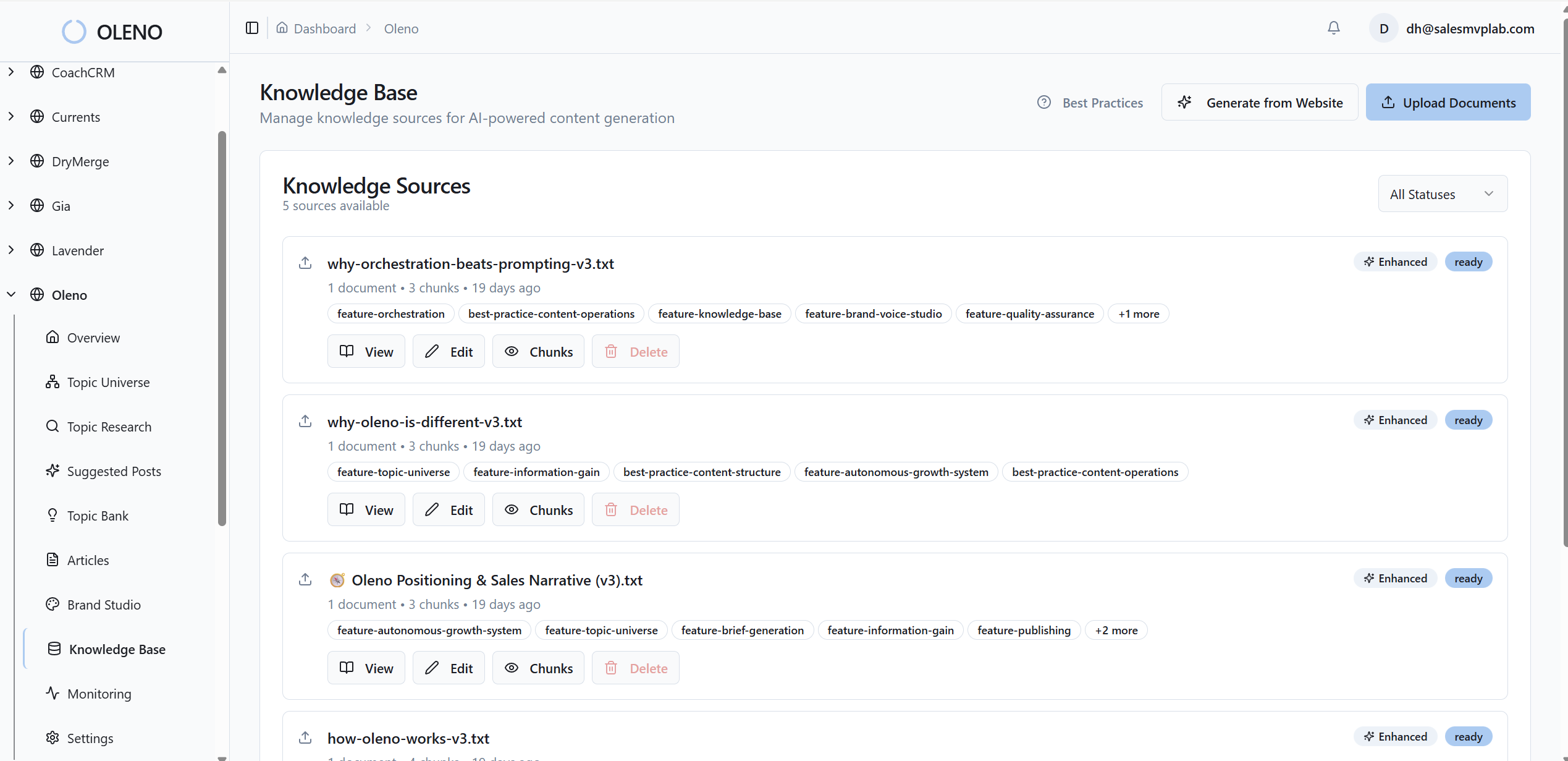
During drafting, force claims to match KB snippets. During QA, test whether every fact has a KB-verified source. This doesn’t sterilize your writing. It stabilizes it. Creativity shows up in examples and framing, not in guessing product details or policy statements under pressure.
Step 2: Build Your Topic Universe With Clusters, Saturation, And Cooldowns
Turn your KB and sitemap into a topic map. Group related ideas into clusters. Track coverage and saturation for each cluster so you can see where you’re thin and where you’re over-publishing. Enforce a cooldown window to prevent re-covering the same theme too soon. It’s not about volume; it’s about intentional coverage over time.
This is how you stop chasing what feels urgent today and start building authority that compounds. When you decide what gets covered and when, based on the system, not the calendar, you protect your team from reactive pivots and noisy requests.
Step 3: Generate Briefs And Produce Controlled Drafts
Automate competitive research for the top results. Identify common coverage and missing angles. Score your outline for information gain. If it’s low, fix the angle before anyone writes. Attach 3–5 credible external citations with context and suggested anchors so writers aren’t chasing links mid-draft. That prevents publishing content that adds nothing new.
Then generate drafts that follow the approved brief exactly. Enforce voice rules and KB grounding. Open every H2 with a 40–60 word snippet paragraph. Keep sections standalone and skimmable. Do not inject links or schema yet. Draft first, validate structure, then enrich. That sequencing keeps control where it matters and reduces downstream edits. Want to see what this looks like at full speed? Try Generating 3 Free Test Articles Now.
How Oleno Runs Your Daily Pipeline End To End
Deterministic Visual Generation And Placement
Oleno’s Visual Studio pulls from your Brand Asset Library, colors, logos, style references, and generates a hero plus 2–3 inline visuals. Product screenshots are matched to relevant sections using semantic similarity, prioritizing solution areas where visuals clarify the “how.” Alt text and filenames are generated automatically, and placement follows rules, not guesswork.
This does two things. First, designers stop getting pinged for “just one image” on every post. Second, visuals become consistent, recognizably yours, and appear where they actually help the reader. That consistency compounds trust over time, which is hard to fake.
QA-Gate With Automated Refinement Loops
Every draft passes a QA-Gate that checks structure, voice alignment, KB accuracy, snippet readiness, and visual consistency across 80+ criteria. A minimum pass threshold is enforced. If a draft falls short, Oleno refines and re-tests automatically until it clears the bar. The point isn’t zero manual edits. It’s fewer edits, earlier, with less variance.
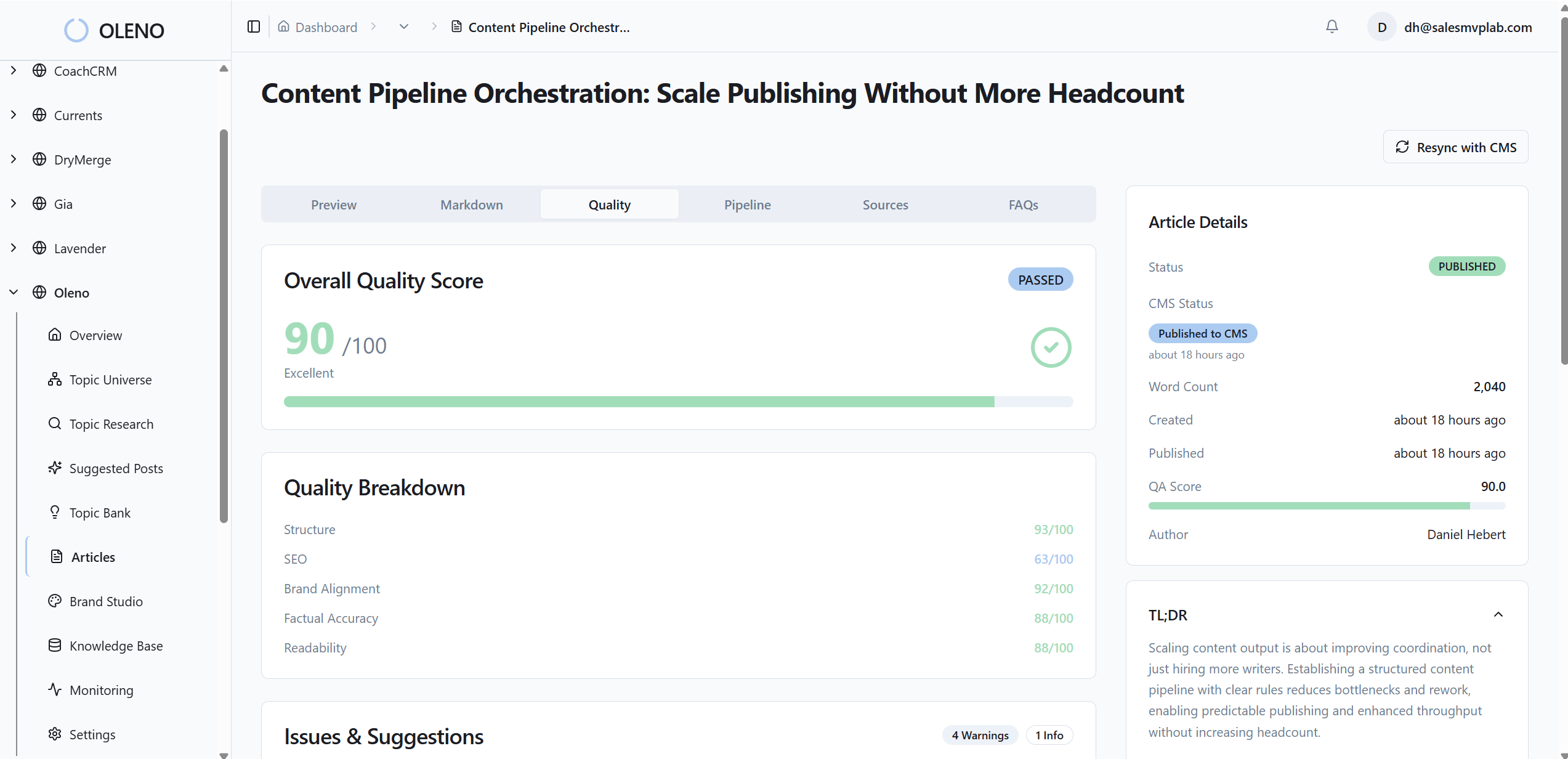
This directly tackles the costs we modeled earlier, those 30 hours of monthly cleanup. By catching drift before publish, you ship faster without gambling on quality. Teams focus on narrative decisions, not comma patrol. That’s a better use of senior time.
Code-Based Links, Schema, And Publishing Connectors
Internal links are injected after text and visuals finalize. Oleno scans your verified sitemap, selects 5–8 relevant internal pages, and matches anchor text exactly to page titles. Fabricated URLs are impossible. JSON-LD is generated for Article, FAQ, and BreadcrumbList, then validated before delivery. Fields are mapped to WordPress, Webflow, HubSpot, or Google Sheets-based flows. Duplicate publishing is prevented by design.
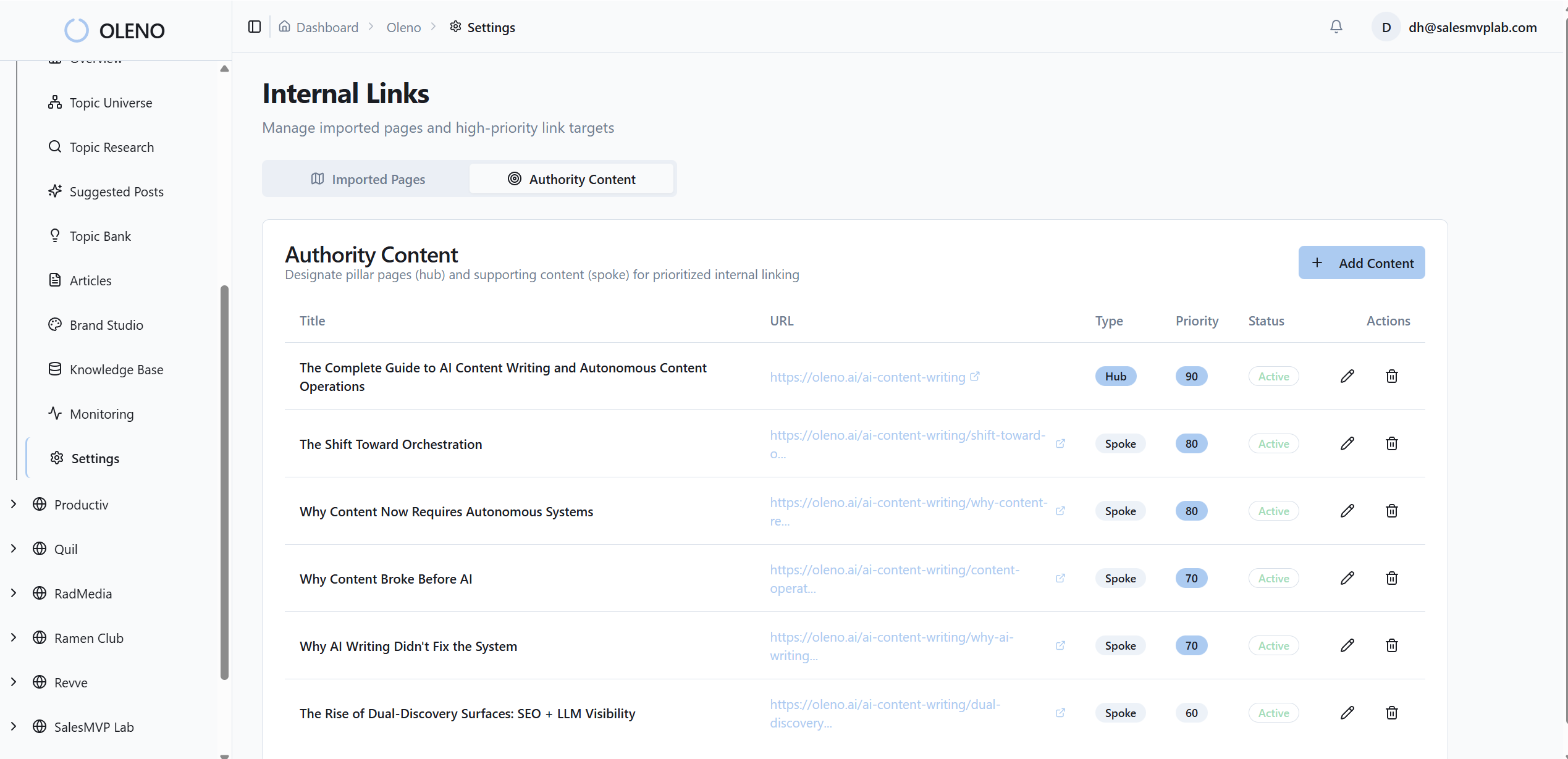
Publishing includes retries and notifications, so failed deliveries don’t go silent. Text, visuals, links, and schema arrive together as CMS-ready HTML. This is where many teams break. Oleno keeps it boring on purpose. Want to watch the end-to-end flow without manual coordination? Try Using An Autonomous Content Engine For Always-On Publishing.
Oleno ties the whole system together without adding analytics dashboards or rank tracking. It replaces fragmented steps with a daily, governed pipeline:
- Topic Universe to decide what to write next with coverage and cooldowns
- Information Gain Scoring to enforce differentiation before writing
- Snippet-ready structure to improve citation and clarity
- Visual Studio for on-brand images placed where they matter
- QA-Gate for 80+ checks with automatic refinement
- Deterministic internal linking, schema, and publishing connectors
The result isn’t magic. It’s dependable. And it’s how you move from three posts a week with 30 hours of rework to daily publishing with controlled variance. If you’re ready to test-drive the system, no long commitment needed. Try Oleno For Free.
Conclusion
You don’t need more prompts. You need a pipeline you trust. Treat content like code. Push creativity where it belongs, in the narrative, and make the rest deterministic: links, schema, image placement, publishing. Ground every claim in your knowledge base. Enforce differentiation before you write. Let a QA gate catch what used to slip.
That’s how daily publishing becomes normal, not a sprint. And how your content stops being a project and starts acting like infrastructure. Continuous. On-brand. Ship-ready.
About Daniel Hebert
I'm the founder of Oleno, SalesMVP Lab, and yourLumira. Been working in B2B SaaS in both sales and marketing leadership for 13+ years. I specialize in building revenue engines from the ground up. Over the years, I've codified writing frameworks, which are now powering Oleno.
Frequently Asked Questions