Build an Automated QA‑Gate for AI Writing: 12 Checks & Remediation

Most teams think the bottleneck is writing speed. It isn’t. The bottleneck is that your “publishing process” is a collection of good intentions without a gate that blocks bad drafts. I’ve lived this on both sides, the single‑marketer hustle and the exec who reviews at midnight, and it’s always the same story: rework, rollbacks, regrets.
Here’s the thing. You don’t need more editors; you need rules machines can enforce. When I was driving demand at Proposify, we ranked for a ton of topics, but the distance between content and product created a lot of “nice reads” and not a lot of pipeline. At PostBeyond, I could ship 3–4 strong posts a week solo, but as the team grew, quality drifted. Not because people got worse, because we didn’t have a deterministic gate.
Key Takeaways:
- Define “good” as code, not taste, and block publishes until drafts pass
- Track pass rate, retries-to-pass, and escaped defects to tune thresholds
- Codify voice, banned terms, snippet-ready openers, and KB-grounded facts
- Quantify the rework tax; pay once to encode rules, not weekly edits
- Use remediation loops to fix failing sections, not rewrite whole drafts
- A minimum QA threshold (e.g., 85) and weighted hard fails keep noise out
Why Quality Slips Without a Real QA Gate
Quality slips because most teams rely on human judgment at the end instead of codified checks before publishing. A gate defines rules, runs automated tests, and blocks drafts until they pass a minimum threshold. Think “no fabricated links, valid schema, snippet‑ready openers”, enforced every time, not just on lucky weeks.

The metrics that actually matter before publish
If you don’t define “good,” you can’t measure it, and you definitely can’t enforce it. Treat structure, voice, factuality, snippet readiness, and schema validity as pass/fail criteria with weights. Set a composite minimum (say 85) and zero‑tolerance on high‑severity defects like fabricated URLs. Now the gate has teeth.
Then make the whole thing auditable. Track pass rate, retries to pass, manual edit minutes saved per article, and escaped defect rate within seven days of publish. Tie each metric to a specific rule so you can adjust weights when reality hits. One more thing, publish decisions should feel boring. Predictable. That’s a feature, not a bug.
Why blaming the model misses the root cause
It’s tempting to say, “The model hallucinated.” Sometimes. More often, we failed to design the system around it. Without KB grounding during generation, verification against the same KB after generation, and a gate that blocks on misses, drift is inevitable. Prompts help; policy‑as‑code stops the bleeding.
What you’re really fighting is variability. In tone. In structure. In accuracy. You can’t prompt your way out of systemic variance. You build rails: rules for snippet‑ready openers, a banned‑terms linter, hallucination flags for unsupported numbers, and a deterministic publishing flow. That’s how you go from good intention to reliable output.
Ready to skip the guesswork? Try Generating 3 Free Test Articles Now.
Deterministic Rules Beat Manual Edits Every Time
Manual editing fixes sentences; it doesn’t fix systems. Editors can’t catch missing schema, fabricated links, or broken hierarchies at scale. Policy‑as‑code does. Define rules for structure, metadata, and KB‑grounded claims. Then let the gate apply them the same way, every time, across every draft and contributor.

What traditional editing misses in production
Most “edits” happen in docs, Slack, or gut checks. Helpful, sure. Repeatable? Not really. That’s why broken H2 hierarchies, missing alt text, and malformed JSON‑LD make it to prod. Humans aren’t wired to validate 80+ criteria consistently under time pressure. The work is too detailed and too frequent.
So push repeatable checks into code. Validate H2 openers are 40–60 words and direct‑answer structured. Confirm internal links exist in your site’s verified sitemap. Enforce brand lexicon and banned terms. And test schema before publish. If a rule fails, block. Humans can still shape the story, they just don’t have to police commas and markup.
Policy as code, not preference
Preferences drift. Rules don’t (unless you change them in version control). Write your quality criteria like software policy: codified, versioned, and weighted. For a mental model, borrow from SonarQube Quality Gates documentation: hard fails for high‑severity issues, soft warnings for advisories, and a composite pass threshold.
Put brand voice checks in the same bucket as technical ones. Lint for sentence length bands, CTA patterns, and banned phrases. Require snippet‑ready openers at each H2 with a strict 3‑sentence structure. And store it all alongside your site, rules in repo, changes reviewed, so when quality improves, you know why.
The Hidden Costs Draining Your Team Without Guardrails
The rework tax is quiet and constant: edits, clarifications, emergency fixes. Quantify it and it’ll make your eye twitch. A gate lets you pay once to encode rules instead of every week in fragmented, frustrating edits. That’s money, time, and team energy back on the table.
The rework tax you keep paying
Let’s pretend you publish 40 articles a month. If half require 45 minutes of edits, that’s 15 hours of rework. Add two rollbacks a quarter, each burning three hours across marketing and dev. Now you’re at ~27 hours a quarter on entirely avoidable churn. That’s before you count the Slack pings and “one last tweak” cycles.
Write it down. How many minutes do you spend verifying alt text? Fixing hierarchy? Adding snippet openers? Those aren’t creative minutes; they’re preventable minutes. Encode the rule once. Block misses forever. You’ll shift from “editing” to “system tuning,” which is where leverage actually lives.
Defects that escape to production hurt twice
When defects slip, you pay in fixes and in reputation. A bad internal link signals sloppiness and siphons crawl equity. Broken schema suppresses eligibility for rich results, which quietly reduces click‑through. Factual drift is worse; it dents trust, and you can’t A/B test your way out of that.
The financial cost is the hunt, find, fix, republish, multiplied by the number of channels the content already hit. The brand cost lingers. You don’t need to fear defects. You need to gate them. For structured data alone, following Google’s Article structured data guidelines avoids a chunk of silent visibility issues.
The KPIs that tell you if the gate works
If your gate is working, pass rate trends up while manual edit minutes trend down. False positive rate (blocked but actually OK) should sit low and stable. Retries‑to‑pass should fall as your rules improve. Escaped defect rate post‑publish should be rare, and when it spikes, you tighten a rule, not add a meeting.
Make it a short scorecard: composite pass rate, retries‑to‑pass, average remediation time, minutes saved, escapes after seven days. Review monthly. Tune weights on high‑severity checks if escapes increase. What you’re doing is moving decisions from opinion to observable thresholds. That’s how quality scales.
The Human Cost When Bad Drafts Slip Through
The cost isn’t just hours. It’s stress. Rollbacks at 3 am, anxious reviews after a “duplicate content” scare, and teams losing trust in automation. A transparent gate with visible rules and clear failure reasons diffuses that. People stop guessing. They see the system work.
The 3 am rollback nobody wants
You’ve been there. Malformed HTML ships, the article renders like a ransom note, and someone’s waking up to revert. That wasn’t a writing mistake; that was a process gap. Insert a machine check between draft and publish that validates markup and schema, then blocks automatically. You’ll save weekends and slack threads.
And keep a validator link in your runbook. A quick pass through the W3C Markup Validation Service combined with automated JSON‑LD checks catches most layout and schema breaks. Put that check before your CMS connector. The best on‑call is the one that never triggers.
How teams lose trust in AI, then stall
One bad publish can sour a team for months. Morale dips. People demand “more human oversight,” which really means slower, more fragile workflows. The fix isn’t less AI. It’s better controls and more transparency. Show the rule. Show the failure. Show the remediation. Then rerun. The confidence returns.
Make the gate’s decision visible: which tests ran, which ones failed, what changed after remediation. When people see the machine catch issues they used to chase manually, skepticism turns into relief. They stop fighting the system. They start feeding it better inputs.
A Production-Ready QA Gate You Can Ship This Quarter
A shippable gate has codified checks, weighted scoring, automatic remediation, and deterministic publishing controls. Start with a dozen checks across structure, voice, factual grounding, snippet readiness, schema, links, images, readability, and hallucination flags. Keep the list short, the rules strict, and the loop automated.
Checks 1 to 3: structure, voice, factual grounding
Good structure is predictable: valid H2/H3 hierarchy, 40–60 word openers per H2, and balanced paragraphs before lists. Treat missing openers or broken hierarchy as hard fails. Voice needs a linter: target sentence variety, banned terms, and CTA patterns aligned to brand. Soft‑warn minor misses; fail on banned language.
Factual grounding comes in two steps: ground during generation, verify after. Match claims to known KB passages or approved sources. Unsupported assertions get flagged. Then remediate only the failing paragraphs by re‑retrieving the right KB segments and regenerating those blocks. You keep speed without inviting drift.
- Structure validation: H1–H3 hierarchy, paragraph‑before‑list enforcement, opener length and 3‑sentence pattern
- Voice linting: banned terms, tone checks, CTA phrasing
- Factual verification: KB‑backed claim matching and targeted rewrites on fail
Checks 4 to 6: plagiarism, snippet readiness, SEO tags
Similarity checks aren’t about policing writers; they’re about avoiding accidental duplication. Set a threshold against your own site first, then known sources. If it trips, rewrite with constraints that preserve facts and structure while changing phrasing. Interjection: Don’t overfit. You want originality, not thesaurus soup.
Snippet readiness is non‑negotiable. Require direct‑answer H2 openers in the 40–60 word band, following the 3‑sentence pattern. If missing, auto‑generate them based on section content. For SEO tags, validate title length, meta description, canonical, and OG tags. Fill gaps programmatically with section summaries to avoid “TBD” moments.
- Similarity thresholds and constrained rewrites
- Direct‑answer openers auto‑generated on miss
- Programmatic meta tags with length and field presence checks
Checks 7 to 9: schema, internal links, image alt text
Schema isn’t optional. Generate JSON‑LD for Article, FAQ, and BreadcrumbList, then validate. Invalid JSON is a hard fail. Internal links should come only from a verified sitemap, with exact‑match anchors to page titles. Fabricated URLs? Hard fail. Images need descriptive alt text and SEO‑friendly filenames generated from section context.
Taken together, these checks remove a ton of quiet, expensive defects. They also reduce on‑page surprises and improve how machines read your page. If you want a simple benchmark, your schema tests should reflect Google’s Article structured data guidelines before any publish attempt.
- JSON‑LD generation and validation
- Verified‑sitemap internal links with exact anchors
- Alt text and filenames generated from context
Checks 10 to 12: brand lexicon, readability, hallucination flags
Small naming errors compound. Enforce product names and preferred phrasing with a brand lexicon that auto‑replaces misses. Readability targets keep prose human: grade band, paragraph length, and sentence variety. If a section runs long, split it automatically. If it’s thin, expand with KB‑backed detail.
Hallucination flags are your early‑warning system. Numbers without sources, unverifiable claims, and contradictory statements trigger targeted rewrites constrained to KB facts. Don’t let them through. Not anymore. The gate’s job is to make these issues boring and rare.
- Lexicon enforcement and auto‑replacements
- Readability bands with auto‑split/condense
- Hallucination detectors with KB‑constrained rewrites
How Oleno Enforces a Deterministic QA Gate and Fixes Drafts Automatically
Oleno turns the checklist above into a governed pipeline. Drafts are evaluated against 80+ criteria, weighted by severity, and must hit a minimum composite pass (85) before moving forward. When something fails, Oleno fixes only the failing parts and reruns the gate, preserving what already passed and cutting retries.
Weighted QA scoring with a minimum pass threshold
Oleno scores each draft across structure, voice, KB grounding, snippet readiness, schema validity, internal links, visuals, and more. High‑severity checks, fabricated links, invalid JSON‑LD, are hard fails. The composite minimum is 85, and drafts don’t advance until they meet it. That’s deliberate. It keeps noise out of production.
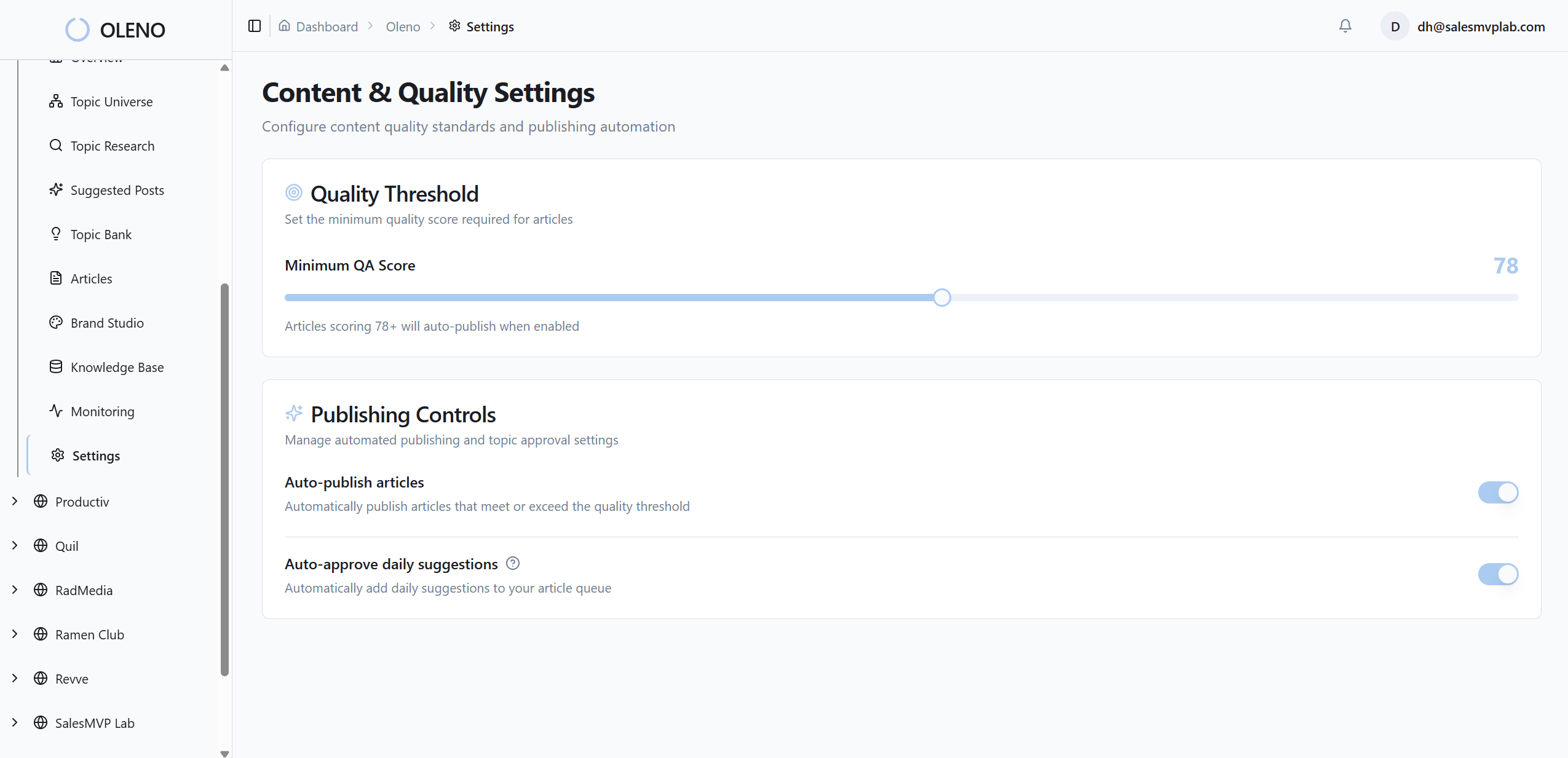
Instead of regenerating whole drafts, Oleno runs targeted remediation passes. If a section is missing a snippet‑ready opener, it generates one. If a claim lacks support, it re‑retrieves the relevant KB and rewrites that paragraph. This trims retries‑to‑pass and reduces the “good section got overwritten” headache.
Publishing connectors with draft hold, auto‑retry, and notifications
Oleno integrates with WordPress, Webflow, and HubSpot. It maps fields, generates CMS‑ready HTML, and prevents duplicate publishing by design. If a gate fail occurs, the system remediates and auto‑retries. Exhausted retries move the piece to a draft hold with a clear failure report and an email notification.
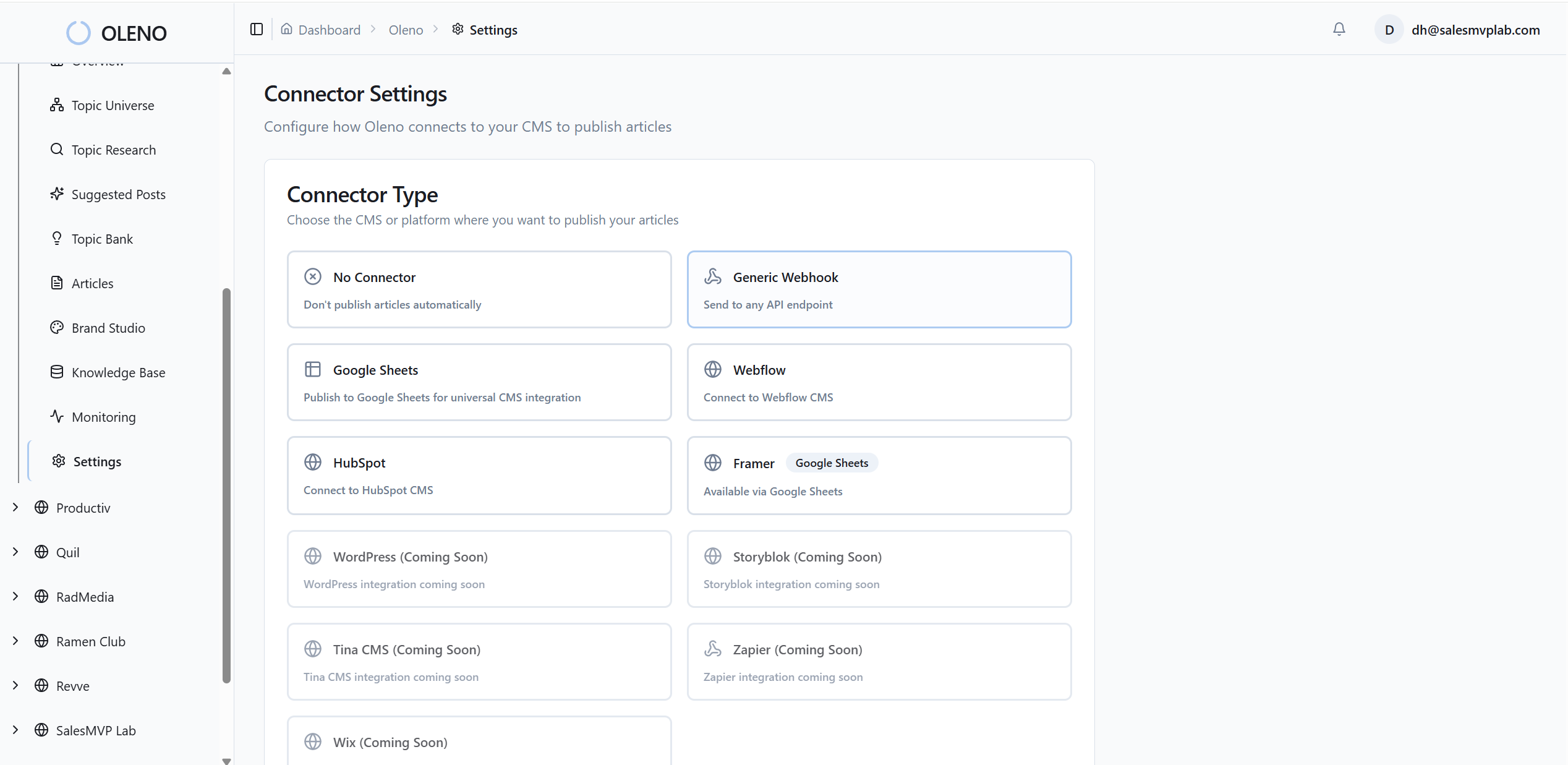
You stay in control of publish modes, draft or live, while Oleno handles the mechanics. No last‑minute copy/paste. No broken fields. No guessing which setting was missed. The gate either passes and ships, or it holds and explains why. Simple decisions, fewer surprises.
Audit logs, version history, and remediation loops
Every run records KB retrieval events, QA scoring, publish attempts, retries, and version history. That’s operational traceability, not analytics. You can see what failed, what changed, and what finally passed, which makes audits, vendor reviews, and internal QA conversations faster and less emotional.
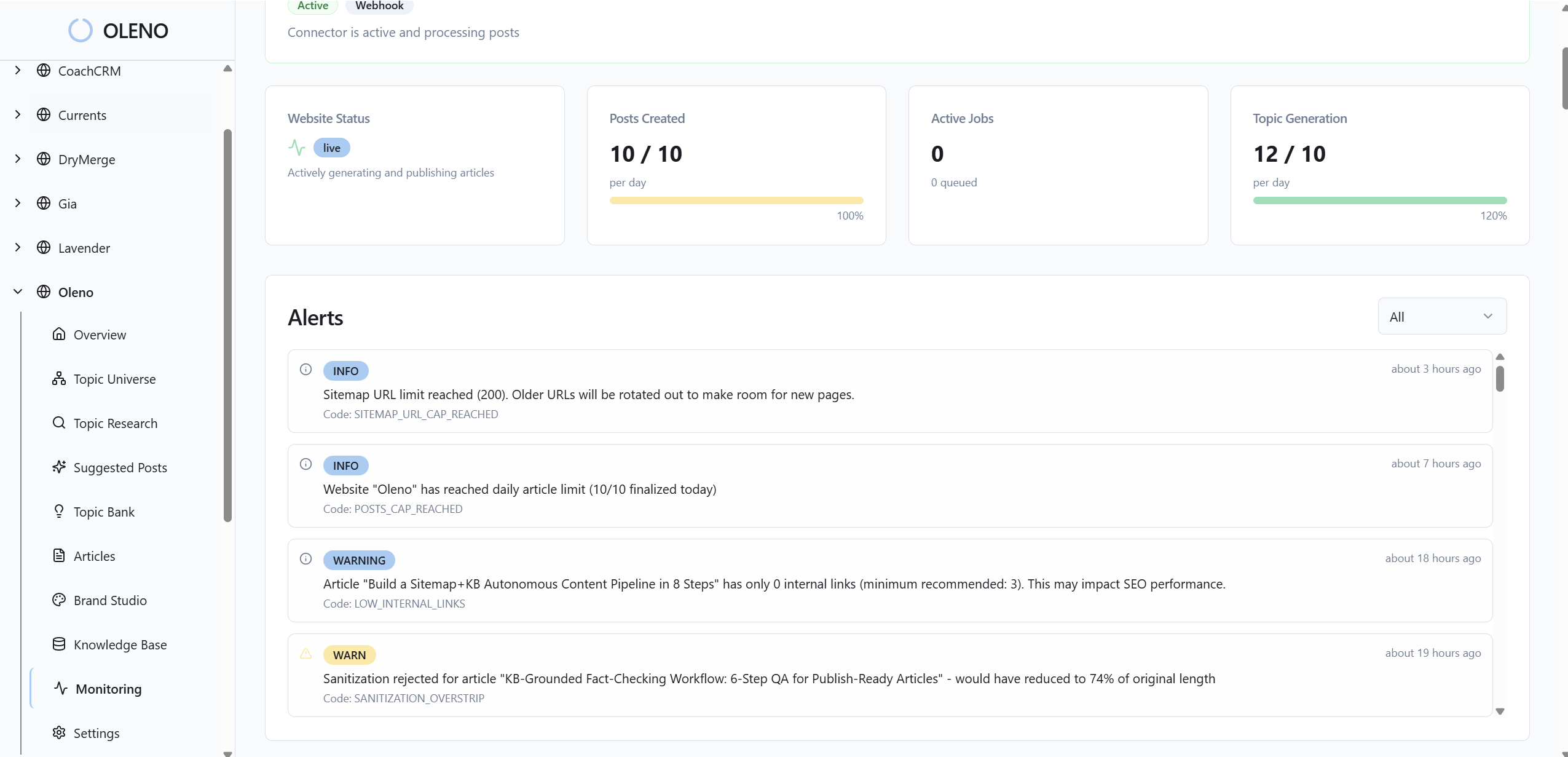
Remediation loops normalize tone, remove AI‑sounding language, generate alt text, and repair schema automatically. If your team keeps fixing the same thing manually, you codify a new rule. Oleno enforces it from then on. Over time, your pass rate rises and manual edit minutes fall, the exact trendline you want.
If you’re ready to let the system do the heavy lifting while you set the bar, Try Oleno For Free.
Conclusion
You don’t need hero editors. You need a gate that blocks bad drafts and fixes what’s fixable automatically. Define “good” as code. Weight the rules. Track the right KPIs. Then let the system do what systems do best, the boring, precise checks that humans hate, so your team can focus on story and strategy. That’s how quality scales without the 3 am rollbacks.
About Daniel Hebert
I'm the founder of Oleno, SalesMVP Lab, and yourLumira. Been working in B2B SaaS in both sales and marketing leadership for 13+ years. I specialize in building revenue engines from the ground up. Over the years, I've codified writing frameworks, which are now powering Oleno.
Frequently Asked Questions