Build an Orchestrated Content Pipeline: QA-Gated Automation for Daily Publishing
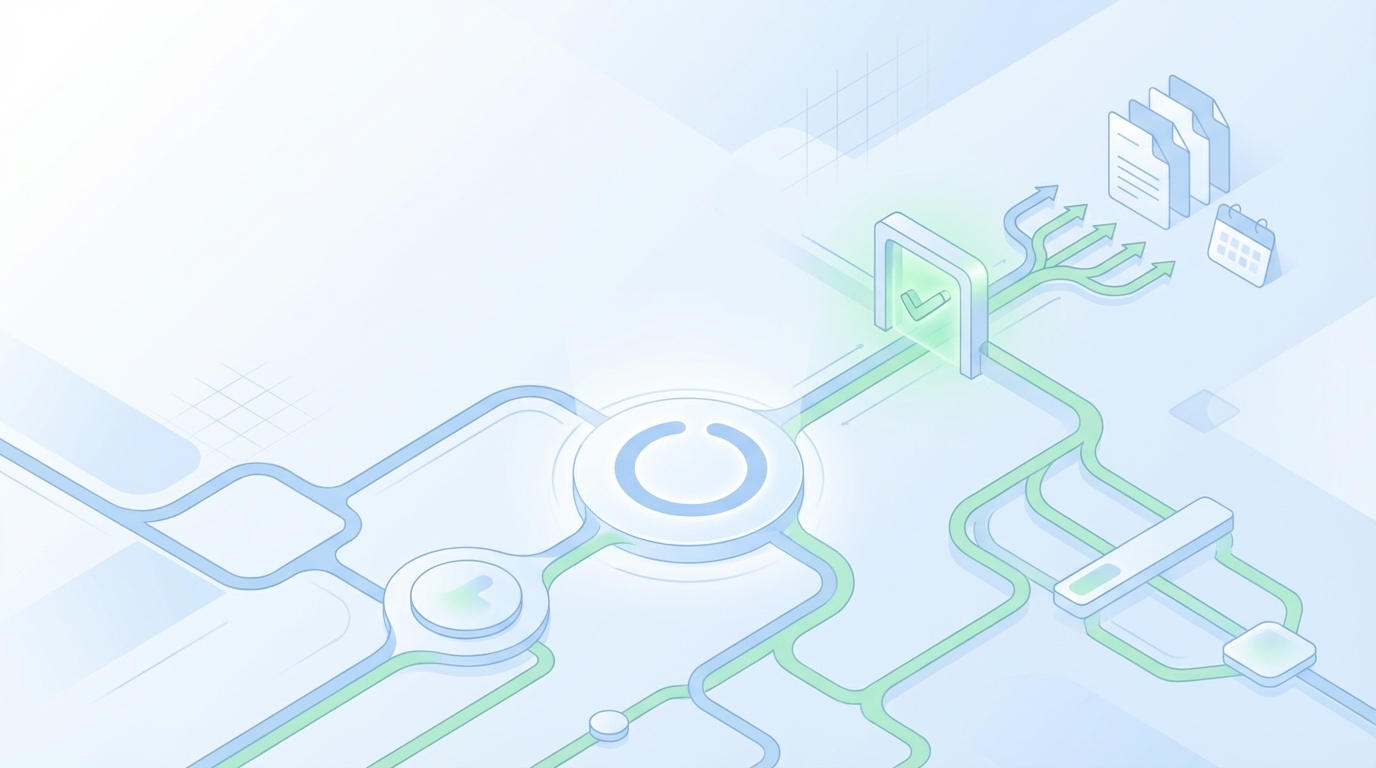
Most teams think the fix is faster drafts. They're not wrong about speed mattering. They're wrong about what creates scale. You don’t scale with keystrokes. You scale with a pipeline that refuses to ship drift, voice drift, factual drift, structure drift, and keeps output predictable even on your busiest week.
I’ve lived both sides. As a solo marketer, I could brute-force quality for a while. As a leader, I watched otherwise strong teams bleed hours on handoffs, last‑minute fixes, and CMS headaches. The common thread? Lots of writing. Not enough governed process. The day you stop editing and start enforcing rules is the day cadence sticks.
Key Takeaways:
- Faster drafting without governance creates hidden debt and brand risk
- Treat content like a release pipeline with one QA gate and clear pass/fail rules
- Make accuracy deterministic (links, schema, delivery) and keep creativity in the prose
- Quantify rework and drift, prevention is almost always cheaper than repair
- Design topic coverage with clusters, saturation, and cooldowns to avoid cannibalization
- Centralize quality checks (85+ passing score) before anything hits your CMS
Why Faster Drafts Are Not Scale, A Governed Pipeline Is
A governed pipeline scales because it removes variance at the structural level. You define a fixed sequence, a single QA gate, and rules that block drift automatically. The result is steady publishing without the constant cleanup. Think “system that ships” over “writers who sprint.”

The trap of speed-first advice
Chasing speed feels productive until you measure the rework. Drafts get written fast, then bleed hours on voice fixes, missing snippet openers, inconsistent headings, and speculative claims someone has to verify later. Speed-first cultures also create topic debt, ten posts rehashing the same idea from slightly different angles, none of them authoritative.
The real trap is invisible. When the cadence target becomes the goal, quality controls get treated as optional. Editors catch issues ad hoc. Designers get pulled in late. Publishing becomes a scramble. You might hit the calendar, but you slip on trust. That trust leak shows up months later in sales conversations that stall over credibility.
I’m not anti‑speed. I’m anti‑unstructured speed. Establish the minimum viable control plane, rules for topic selection, KB grounding for facts, a brand voice ruleset, a single QA gate, and safe publishing mechanics. Then scale. Not before.
What is an orchestrated pipeline and why does it matter?
An orchestrated pipeline is a repeatable sequence that runs work from topic to publish with deterministic checks at each stage. It’s closer to release engineering than writing sprints. The pipeline either passes or it fixes. No shrug-and-ship moments. As a reference point, software teams use similar patterns in deployment flows, and the logic translates well to content. If you want a cross‑domain primer, IBM’s overview of ML orchestration explains the “stages + gates” mindset clearly.
Why it matters: predictability beats heroics. When the system enforces structure and grounding, humans get to focus on narrative choices, not linting and link checks. You also get a clean audit trail, inputs, outputs, QA events, retries, version history, so you can improve the system itself instead of arguing about individual edits.
Early in the pipeline, you want clarity on what’s being written and why. Downstream, you need confidence that what ships meets standards every time. Orchestration delivers that balance, creative where it counts, rigid where correctness matters.
Ready to skip the theory and see end‑to‑end execution? Try Generating 3 Free Test Articles Now.
The Real Bottleneck Is Fragmentation, Not Writing Capacity
Fragmentation kills throughput because every handoff invites drift. Strategy lives in slides, research in tabs, writing in prompt chains, visuals in a separate tool, and publishing in the CMS, all with different owners. Orchestration replaces those seams with one governed flow that consumes structured outputs from the previous stage.
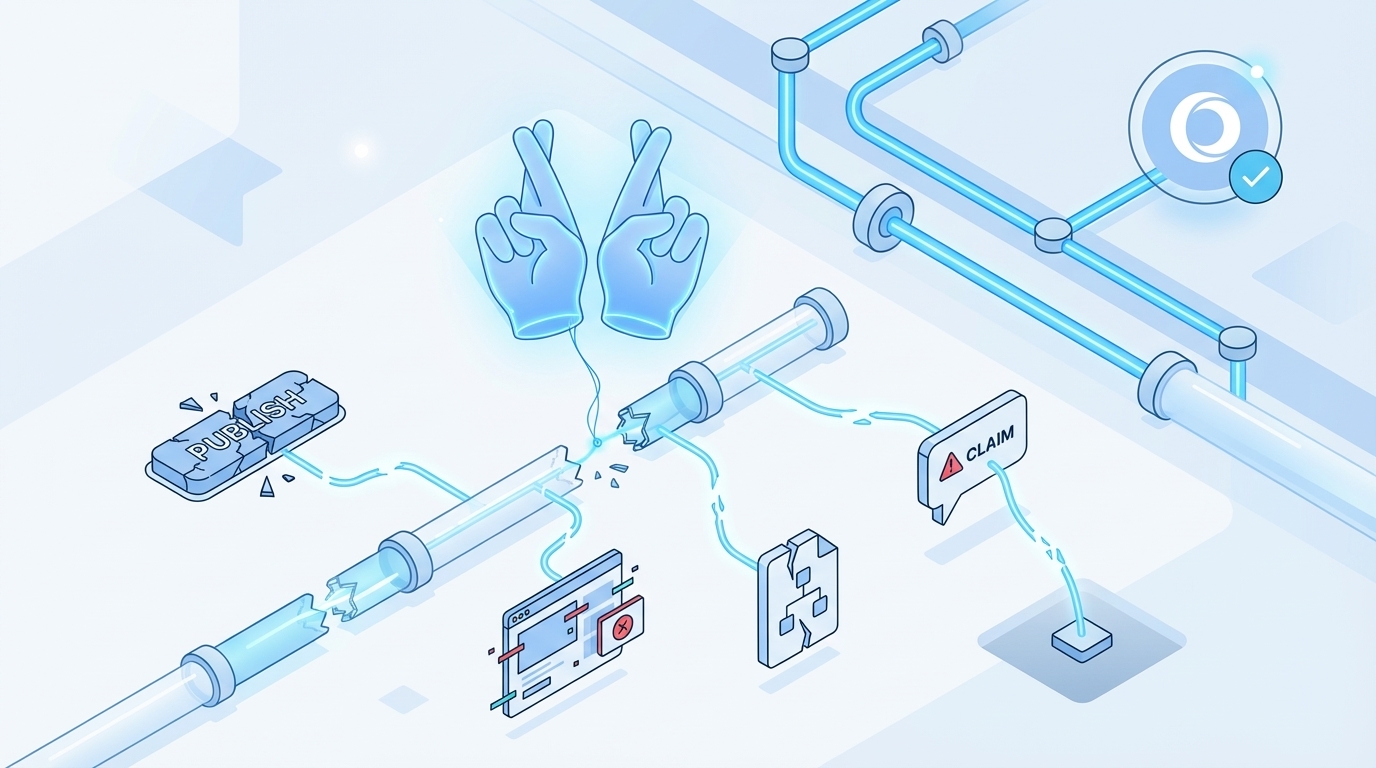
Where traditional workflows break down
The weak link isn’t writing; it’s the seams. Topic ideas in a sheet that no one revisits. Briefs that don’t enforce differentiation. Drafts with no snippet‑ready structure. Images bolted on at the end. A CMS push that quietly drops schema. Each step nudges the piece further from what you intended. You feel the cost as “one more round of edits” when the truth is structural drift.
This is precisely the problem orchestration solves in other domains, aligning work across tools with clear, automated gates. If you need a neutral explainer, Understanding data orchestration outlines how orchestrators coordinate multiple systems so the output is consistent, not just completed. Swap “data jobs” for “content steps” and the analogy holds.
I’ve watched solid teams over‑publish in one pillar while ignoring another because there was no system view. I’ve also watched beautiful drafts stumble at the finish line because publishing rules lived in someone’s head. When no one owns the outcome, you don’t get outcomes, you get activity.
What should be deterministic vs creative
Here’s the split that actually works. Deterministic: internal links pulled from a verified sitemap with exact anchor matches, JSON‑LD generated programmatically, image placement rules, CMS field mapping, duplicate prevention, and publish retries with logs. Creative: narrative arc, examples, turns of phrase, and which story leads.
Draw that line early so your QA gate can enforce the non‑negotiables without flattening voice. It’s the difference between “proofreading at scale,” which is expensive and fragile, and “policy that ships,” which is teachable and sustainable. When accuracy lives in code, you stop debating commas and start improving arguments.
Your CMS, by the way, is not the place to improvise. It should be the receiver of correct, complete payloads, not the place where correctness is created.
The Hidden Cost Of Manual Checks And Fragile Publishing
Manual checks stack up as hidden labor and uneven quality. Every “quick fix” compounds across the week into lost cycles and missed opportunities. A single QA gate that blocks below‑threshold work pays for itself by preventing rework before it starts.
How much rework are you absorbing each week?
Let’s pretend your team ships five posts this week. Each one needs 45 minutes of cleanup, voice tweaks, snippet openers, KB grounding, alt text, schema, link corrections. That’s almost four hours gone. Stretch that over four weeks and you’ve lost a full day to avoidable edits. And those are the obvious ones.
The non‑obvious cost is cognitive load. Editors and PMMs context‑switch to patch things the system should handle. Designers chase screenshots that should have been placed by rule. Engineers get pinged when a publish breaks a template. The overhead feels normal until you quantify it. Then it becomes uncomfortable.
A governed QA gate isn’t about perfection. It’s about a reasonable threshold, say 85, enforced by the system with auto‑refinements. Below the line? Fix and re‑check. Above the line? Ship. The cadence improves without heroics.
Failure modes you can prevent with gates
There are patterns we’ve all seen: missing snippet‑ready section openers, AI‑sounding filler that erodes trust, outdated KB facts slipping through, wrong anchor text on internal links, missing alt text, schema errors, and duplicate posts. None of these require meetings. They require rules.
Borrow a lesson from software delivery. CI/CD pipelines treat known failure modes as automated checks, not team debates. If you want a quick parallel in plain English, the CI/CD pipeline orchestration guide shows how “block on fail” logic improves flow. Content is no different: encode checks, score them, and block below threshold. Then tune up over time.
Preventing these failures upstream is cheaper than repairing them downstream. It’s also kinder to your team. They get to generate and refine ideas, not play whack‑a‑mole with formatting and structure.
The Emotional Toll Of Shipping With Fingers Crossed
Shipping shouldn’t feel like luck. When publishing is fragile, every button click carries risk, visual breakage, schema failures, or a claim that wasn’t grounded. Treat it like release engineering to reduce anxiety and keep evenings intact.
The 3pm publish that breaks your template
You hit publish. The hero image crops wrong. Breadcrumbs disappear. FAQ schema fails validation. No one planned to work late, but here you are. The root cause usually isn’t malice or incompetence; it’s brittle delivery. Field mapping wasn’t codified. Schema wasn’t attached programmatically. Duplicate prevention didn’t exist.
Build publishing as code plus policies. Map fields. Convert markdown to CMS‑ready HTML the same way every time. Generate and attach JSON‑LD programmatically. Make publish idempotent and log the attempt, not just the result. In other words, borrow from data engineering’s playbook on resilient pipelines; the principles, retries, idempotency, validation, are the same.
A short story, the day we outgrew prompt chains
We tried to scale with prompt threads. It worked, until it didn't. Images drifted off‑brand. Internal links pointed to the wrong pages. Drafts read like three different authors stitched together. The fix was not “write harder.” We replaced edits with rules and handoffs with a pipeline. Quality rose. Pressure dropped. Cadence held.
If you want an outside lens on why central orchestration beats tool‑sprawl, this guide to content orchestration explains the value of one system owning the flow. Different industry. Same logic. When one system owns the outcome, drift has fewer places to hide.
The Practical Playbook To Build The Pipeline End To End
Design a system that decides what to write, proves it adds something new, writes in your voice, enforces structure, and publishes safely. Start small, codify the rules, and let the machine handle the boring, error‑prone parts.
Design the topic universe, sources and cooldowns
Start by aggregating topics from three places: your knowledge base, your sitemap, and your declared focus areas. Cluster those into pillars, label saturation (underserved, healthy, well‑covered, saturated), and set a 90‑day cooldown. This prevents trampling the same idea every week while neglecting others.
A topic universe gives you a system‑level view instead of gut‑feel planning. Approve a daily queue and let the pipeline feed itself. Over time, you’ll cover your landscape intentionally, not randomly. That’s how you build authority without cannibalizing your own posts.
The nuance: don’t over‑rotate on keywords. Use clusters to guide coverage, but write to a narrative that your sales team can use. When strategy connects to demand, authority compounds.
Automate differentiation-first briefs with information gain thresholds
A good brief proves there’s something new to say. Ingest top content, list common coverage, and call out missing perspectives. Then compute an Information Gain score and set a floor. If it’s below your line, rework the angle before drafting. This prevents “yet another post” that adds nothing.
Bake authoritative external sources into the brief so claims can be grounded later. Keep briefs practical: clear H2s, snippet‑ready openers planned, and a tight argument. When a draft follows a strong brief, edits shift from structural fixes to narrative refinements. That’s a better use of human time.
One interjection: if the brief is weak, everything downstream is noise. Fix it there.
Enforce a single QA gate with automated fixes and a baseline score
One gate. Clear criteria. Block below threshold. Score drafts on structure, clarity, voice alignment, information gain, snippet readiness, visuals, alt text, and schema readiness. Set 85 as your baseline and trigger automated refinement loops until it passes. Normalize phrasing. Remove AI‑sounding language. Verify internal links and schema are ready before finalization.
This gate is where “policy” replaces “preference.” The goal isn’t sameness. It’s consistency on the things that matter to machines and trust. Humans still decide the story. The system protects the structure.
How Oleno Ships QA-Gated Daily Publishing
Oleno runs a closed‑loop system that turns strategy into published, brand‑complete articles. It handles topic selection, differentiation, drafting, visuals, QA, and delivery, with deterministic checks where accuracy matters and flexibility where writing lives.
Topic Universe and a differentiation-first brief engine
Oleno maps your topic landscape from your KB and sitemap, tracks cluster saturation, and enforces a 90‑day cooldown so coverage stays intentional. Approved topics move into brief generation, where competitive research identifies common coverage and gaps. Each brief receives an Information Gain score; low‑differentiation outlines are flagged before writing.
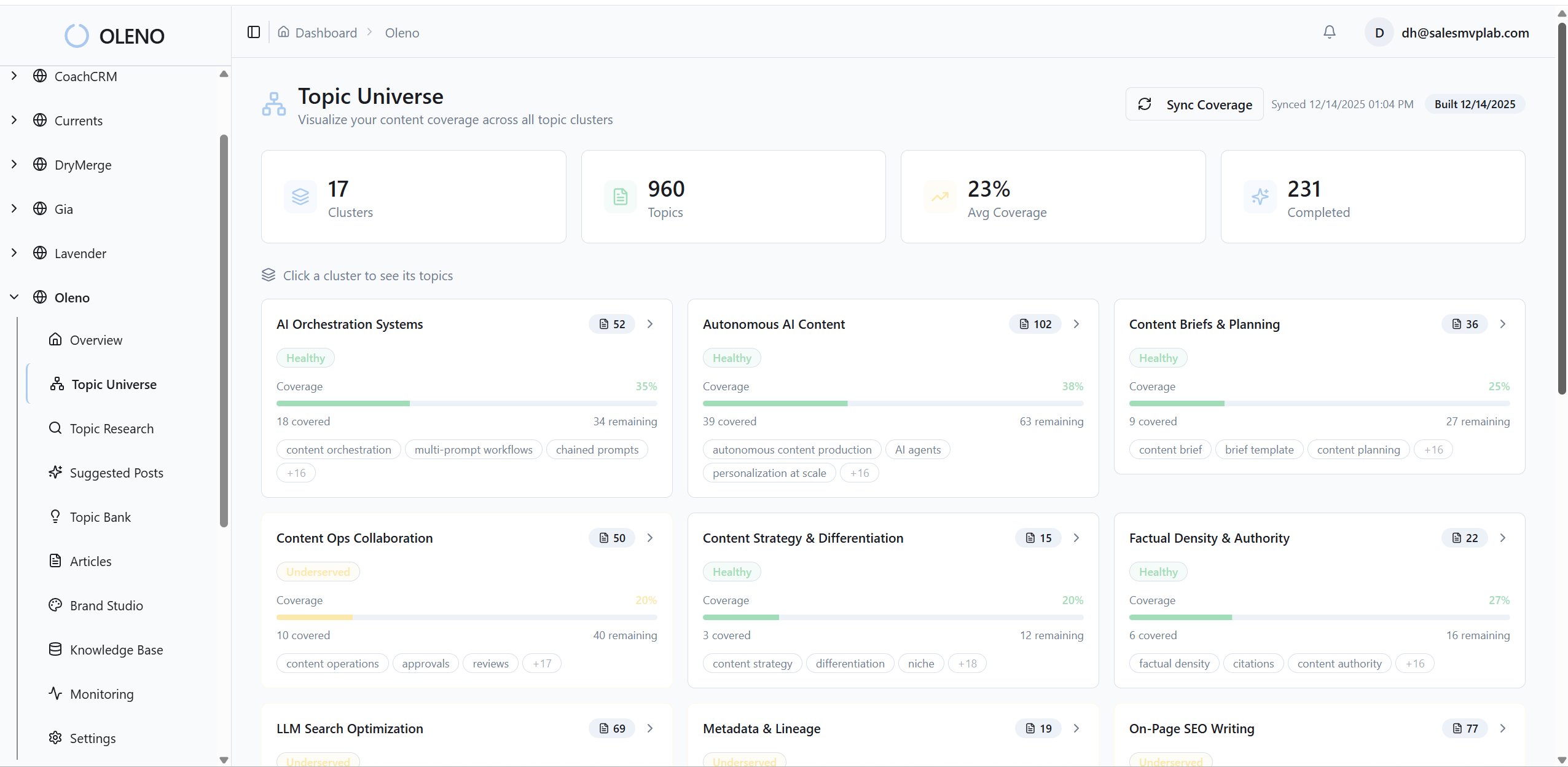
The practical benefit is simple: fewer redundant posts and a daily queue that stays useful. You get breadth where you need it, depth where it matters, and a narrative that connects back to your product without stretching.
QA gate with automated remediation and scoring
Oleno enforces quality as a system, not a suggestion. Drafts are evaluated against 80+ checks across structure, clarity, brand alignment, snippet readiness, visuals, alt text, and schema. A minimum passing score of 85 is required. Below the line, Oleno runs enhancement loops to normalize tone, remove AI‑sounding language, and fix structural gaps automatically.
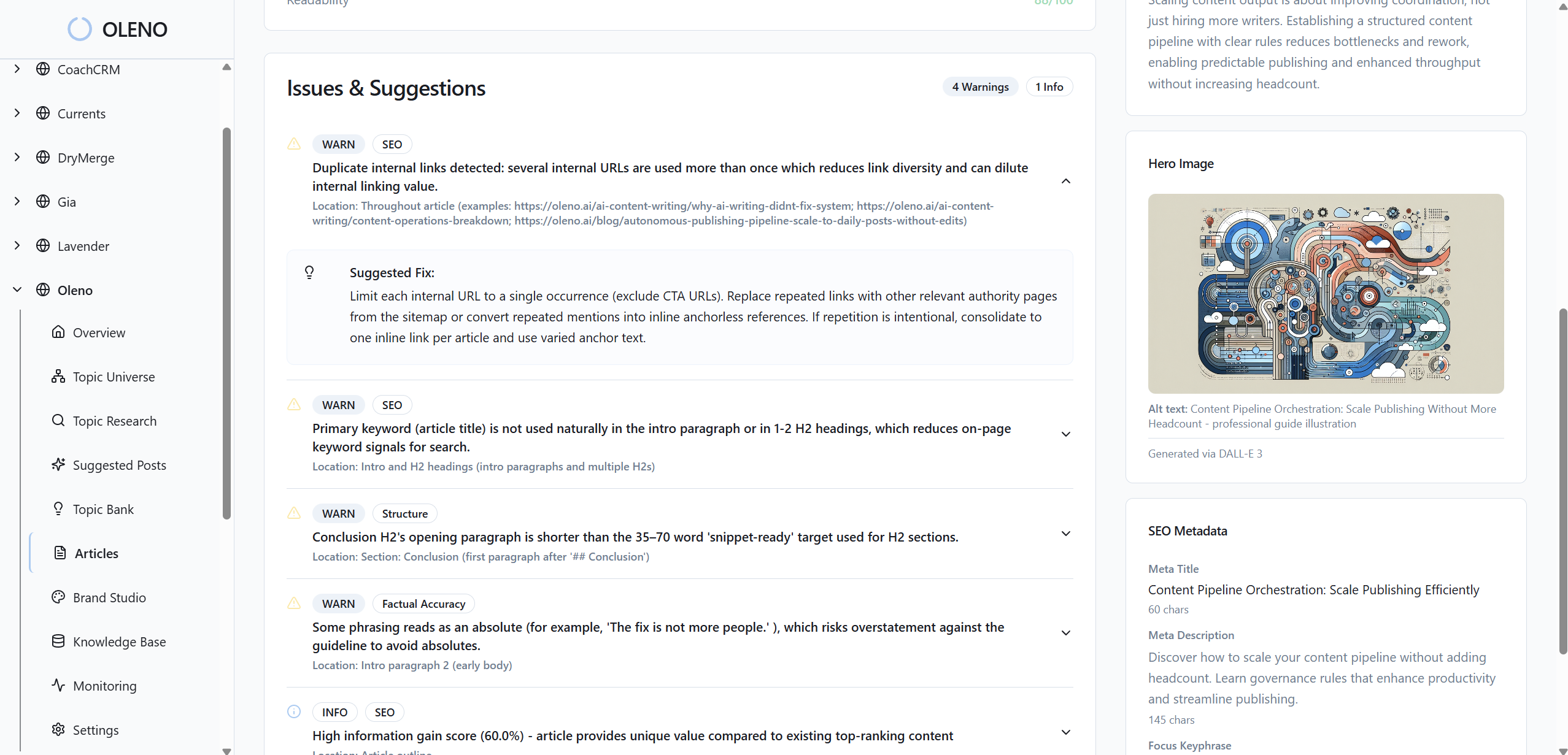
This is where the rework you’re absorbing today shrinks. The time you were spending on voice clean‑up, missing openers, or schema issues is handled by the pipeline. Your team focuses on narrative choices. The system polices the structure.
Deterministic delivery, schema, internal links, and CMS connectors with logs
After QA, Oleno injects internal links deterministically from your verified sitemap, generates valid JSON‑LD (Article, FAQ, BreadcrumbList), converts markdown to CMS‑ready HTML, and maps fields to WordPress, Webflow, HubSpot, or Google Sheets workflows. Duplicate publishing is prevented by design. Publish attempts, retries, and version history are logged so operations stay explainable without becoming a dashboard.
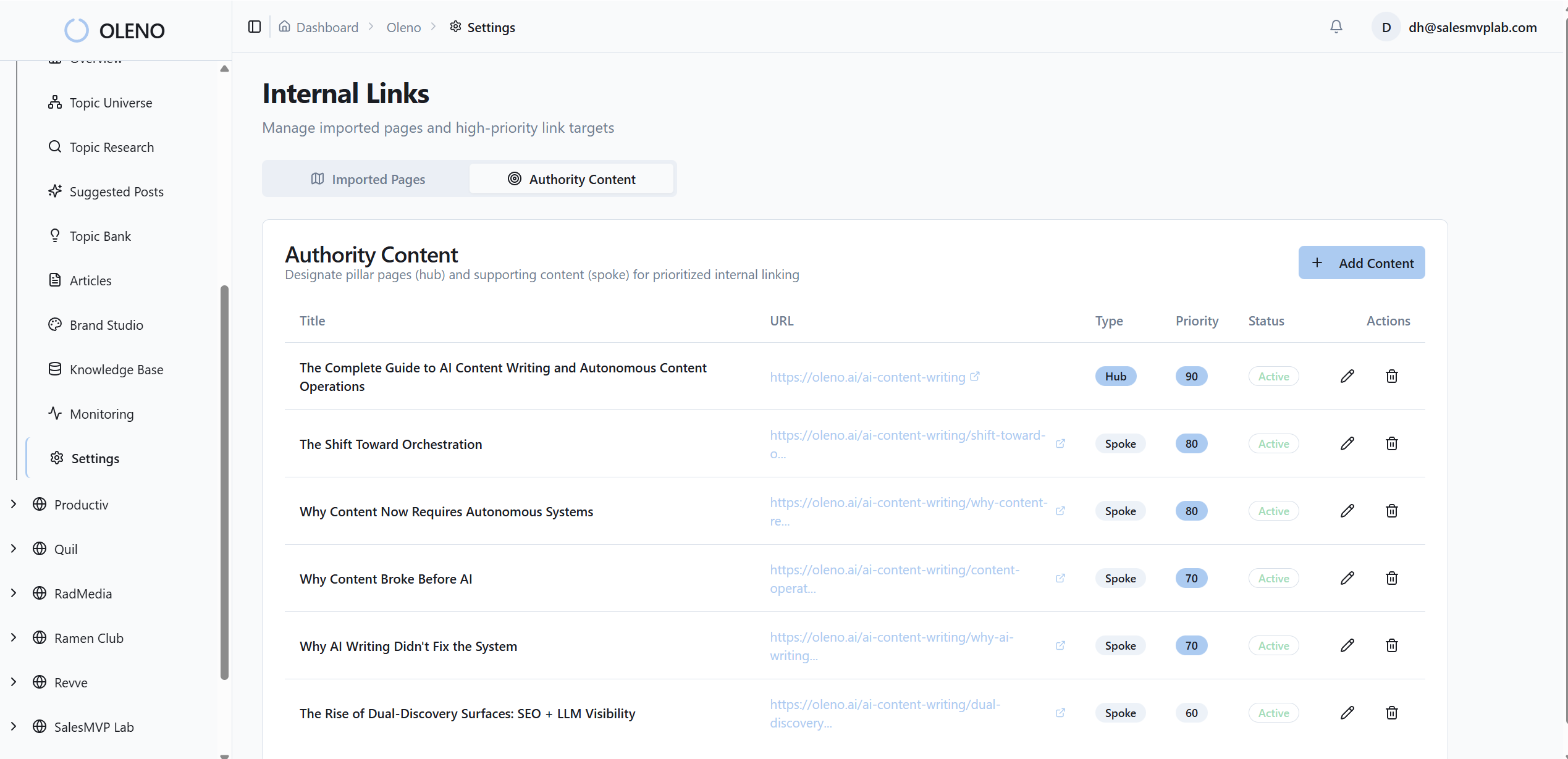
If a delivery fails, Oleno retries safely and notifies you by email. No manual copy‑paste. No broken templates. Just a clean, idempotent delivery step that treats publishing like release engineering.
If this is the kind of reliability you’ve been pushing for, it’s easy to test. Try Oleno for Free.
Conclusion
Here’s the point. Faster drafts are helpful, but they’re not scale. Scale comes from a pipeline that enforces the boring, critical parts, differentiation, structure, grounding, and safe publishing, so humans can focus on the story. When you replace handoffs with orchestration and edits with rules, cadence stabilizes and credibility compounds. You stop shipping with fingers crossed and start shipping on purpose.
About Daniel Hebert
I'm the founder of Oleno, SalesMVP Lab, and yourLumira. Been working in B2B SaaS in both sales and marketing leadership for 13+ years. I specialize in building revenue engines from the ground up. Over the years, I've codified writing frameworks, which are now powering Oleno.
Frequently Asked Questions