Build an Orchestrated Content Pipeline to Replace Prompt Chains
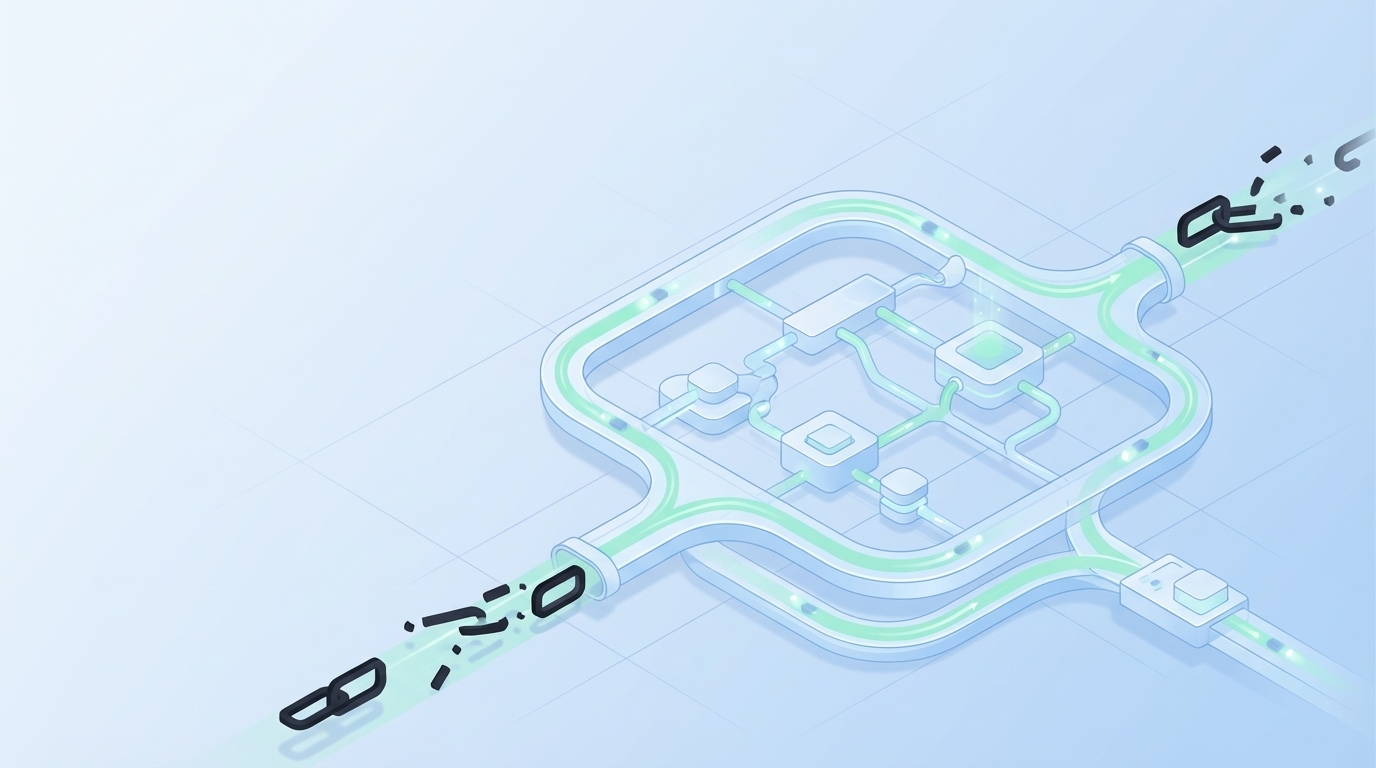
Most teams try to “fix” content with better prompts. That helps in a demo and collapses in production. The cracks show up at publish time, voice drift, missing visuals, schema weirdness, broken links. Not because you can’t write. Because the system around the writing doesn’t exist.
Here’s the thing. You don’t scale quality by coaching a model harder. You scale it by turning standards into code and running the same sequence every single time. Topic to brief to draft to QA to deterministic enhancements to publish. No handoffs. No heroics. Just reliable output that actually ships.
Key Takeaways:
- Replace ad hoc prompt chains with a governed pipeline that enforces standards in code
- Push quality checks upstream: differentiate in the brief, ground to your KB, validate with QA gates
- Quantify the hidden costs of cleanup; move link/schema/visual work into deterministic steps
- Make quality “pass/fail,” not “someone’s job”, with remediation loops until green
- Publish safely with mapped fields, duplicate prevention, and idempotent retries
- Use visuals, structure, and schema designed for citation, not decoration
Why Prompt Chains Fail In Production
Prompt chains fail in production because they can’t maintain state, brand rules, or deterministic structure across steps. Each link adds variance; at scale those variances multiply into rework. A chain that “writes, edits, formats” looks clever in a demo, then misaligns tone and facts across H2s when volume hits.

The Brittle Link Problem In Prompt Chains
Chains look elegant because they hide complexity behind sequential prompts. In reality, each output depends on the quality of the previous step, so small errors cascade. One section forgets a banned term rule, another invents a sub-claim, and now your editor is untangling contradictions you never intended to ship.
We’ve all tried to patch it with “better prompts” or an extra review hop. That buys you one clean piece, not a clean system. The moment you publish three to five times a week, the exceptions pile up. Error propagation is a pattern, not a surprise.
Where Do Hallucinations Creep In?
Hallucinations rarely start in the final draft. They seep in upstream. If your brief doesn’t enforce differentiation, the model fills gaps with speculation. If retrieval pulls loose, irrelevant chunks, you’ll get confident nonsense wrapped in pretty sentences. Cleanup here is painful and slow.
The fix is mechanical, not magical. Score information gain during brief generation. Tighten retrieval windows so only relevant KB chunks enter context. Then score drafts against your KB before anything progresses. Prevention is cheaper than cleanup, and it’s much kinder to your team’s sanity.
Ready to stop prompt-wrangling and see a governed pipeline at work? Try Generating 3 Free Test Articles Now.
Workflow, Not Prompts, Is The Real Bottleneck
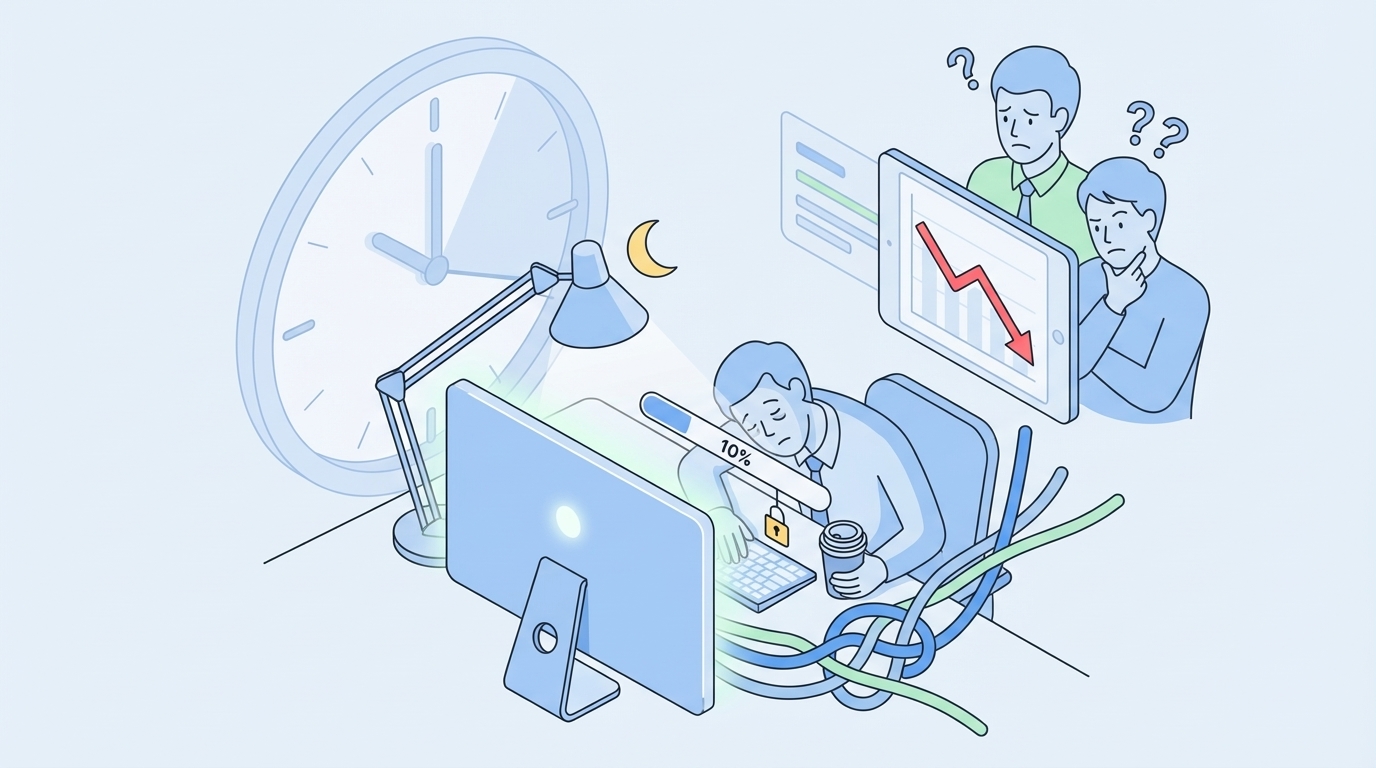
The real bottleneck isn’t the prompt. It’s the fragmented workflow that leaves strategy, writing, visuals, QA, and publishing disconnected. When each step lives in a different tool, and different person’s head, you get inconsistent outputs and late surprises. The cost shows up when you’re about to hit publish.
What Traditional Approaches Miss
Most teams optimize prompts and skip the workflow. They trust the model to “remember” voice. They rely on editors to fix structure post hoc. They bolt visuals on at the end. That creates variance because nothing upstream enforces what “good” means in the same way, every time.
You want the opposite. Codify what “good” is before writing begins. That means structured briefs that enforce differentiation, snippet-ready section design, and a pass/fail gate that blocks anything off-brand. It’s orchestration, not vibes.
Why Governance Needs To Be Code, Not Checklists
Checklists work at five posts a month. They fail at twenty. Humans get tired; code doesn’t. Encode banned terms, tone rules, snippet openings, schema requirements, and internal link counts. Then enforce a pass threshold and remediation loops. Miss the mark? The system refines and retests, no late-night scramble.
When quality is code, you can scale without adding approvers. When a draft fails, it’s a signal, not a fire. Set the minimum passing score (say, 85). Normalize tone, remove AI-sounding language, and re-run. Your editors move from doing the work to auditing the system that does the work.
When Should You Move From Prompts To Pipelines?
If you publish infrequently, prompts are fine. The moment brand accuracy and safe publishing matter, you need a pipeline. A simple test: how many editorial hours do you spend per article on cleanup? If it’s more than an hour, and you publish multiple times a week, upstream governance will pay for itself quickly.
You’ll notice it in fewer rewrites, steadier tone, and faster shipping. Not perfection. Predictability. That’s what lets your team focus on narrative instead of fixing structure and links for the fifth time.
The Hidden Costs Of Manual Cleanup And Variance
Manual cleanup burns time in tiny, frustrating ways: link checks, schema edits, voice fixes, CMS mapping. None are hard alone; together they drain velocity. The cost isn’t just hours. It’s missed slots, inconsistent structure, and lower eligibility for citations and snippets over time.
Engineering Hours Lost To Rework
Let’s pretend you ship 12 posts a month. Each one needs two hours of link checks, schema fixes, voice edits, and CMS mapping. That’s 24 hours a month, roughly three full workdays, on tasks machines can do deterministically. Annualized, you’ve burned three work weeks on preventable toil.
Push those jobs upstream into code. Guarantee 5–8 internal links. Generate JSON-LD for Article, FAQ, and BreadcrumbList. Map fields automatically. You’re not chasing errors; you’re proving compliance. This is exactly where policy-as-code patterns shine.
What Is The Real Risk To Brand And SEO?
Inconsistent structure confuses both people and machines. Search engines and LLMs prefer clean sections with direct answers, consistent markup, and sensible internal links. If every article formats its H2s differently and forgets schema half the time, you reduce your quote-worthiness.
The fix isn’t “more keywords.” It’s consistent, rule-driven structure and markup, generated after the draft, not hand-edited at the end. That reduces variance and raises the odds of snippet eligibility.
Still spending hours fixing structure and links by hand? Shift the work to the system. Try Using an Autonomous Content Engine for Always‑On Publishing.
The Human Side When Shipping Slows
When shipping slows, the cost isn’t just operational. It’s emotional. Late nights, worried stakeholders, and that feeling your best work is stuck in formatting purgatory. You can’t plan around inconsistency, so teams hesitate. Morale dips. Publishing cadence cracks.
A Short Story, The 3 PM To 3 AM Incident
We’ve all lived it. Draft looks solid at 3 pm. By 3 am you’re fighting voice drift, chasing broken links, and hoping the CMS doesn’t strip your formatting. I did that juggling sales and marketing at a three-person team. We shipped, but it took a toll. The work was fine. The system wasn’t.
Those nights are avoidable. When quality is enforced before publish, structure validated, visuals placed, schema generated, you don’t need heroics. Releases become routine. And your “I’ll just fix it fast” habit stops masking systemic gaps that keep biting you later.
Who Owns Quality In An Ad Hoc Process?
In prompt-led workflows, quality is nobody’s job and everybody’s problem. Editors patch tone, SEOs fix links and schema, engineers untangle CMS issues. Ownership diffuses, and everything takes longer. In a pipeline, quality is a gate with rules and a pass score. If an article fails, the system refines and reruns until it passes.
You get accountability without blame. The rule set owns the outcome. Your team can finally focus on story and strategy, not catching the same mistakes again.
A Production-Ready Pipeline You Can Ship Today
A production-ready pipeline starts before writing and ends after publish. It sets context, enforces differentiation, validates structure, and only then adds links, visuals, and schema. The work moves upstream. The outcome becomes predictable. Example: a weekly cadence that doesn’t require weekend edits.
Initialize Your Knowledge Base And Topic Universe
Start by embedding your docs, importing your sitemap, and extracting brand voice rules. Define content focus areas and tag product screenshots with feature keywords. Let a topic universe map clusters, coverage, and saturation so you don’t over-publish one idea and neglect another.
If you skip this, you write blind. With it, every downstream decision inherits real context, what to cover next, where you’re thin, and how each piece compounds authority. It also reduces retrieval drift when drafting because the KB is curated and relevant.
Generate Briefs With Information Gain And Differentiation Checks
Turn each approved topic into a structured brief that enforces originality. Include competitive coverage, missing angles, and an Information Gain Score. Flag low-differentiation outlines early and require a few authoritative external link candidates with suggested anchors.
Do not write before the brief is right. Drafting then becomes faster and cleaner: section-level retrieval pulls only relevant KB chunks, brand tone and banned terms apply automatically, and you skip links and schema until post-QA to reduce noise.
Design A QA Gate With Pass Thresholds And Remediation Loops
Codify checks for structure, snippet-ready openings, voice alignment, KB accuracy, information gain, and visual placement. Set a minimum passing score, 85 works well, and block publishing until it’s green. If a draft fails, remediation normalizes tone, removes AI-sounding language, and re-tests.
This replaces anxiety with clarity. Reviews focus on narrative and substance, not format squabbles. And because the rules are code, they apply the same way next week, next quarter, and across brands.
How Oleno Implements A Deterministic Topic To Publish Flow
Oleno implements this end-to-end pipeline as a closed loop. It turns topic selection, differentiation, drafting, QA, and post-processing into a single sequence that ships complete, on-brand articles. Creativity stays in the prose. Accuracy lives in code. Example: you approve a topic; Oleno takes it to publish safely.
Deterministic Post‑Processing For Links, Schema, And Visuals
After QA passes text, Oleno injects 5–8 internal links selected from your verified sitemap, with anchor text matching page titles. It generates and validates JSON‑LD for Article, FAQ, and BreadcrumbList, no manual markup. Visual Studio adds a hero and 2–3 inline visuals using your colors, marks, and style references.
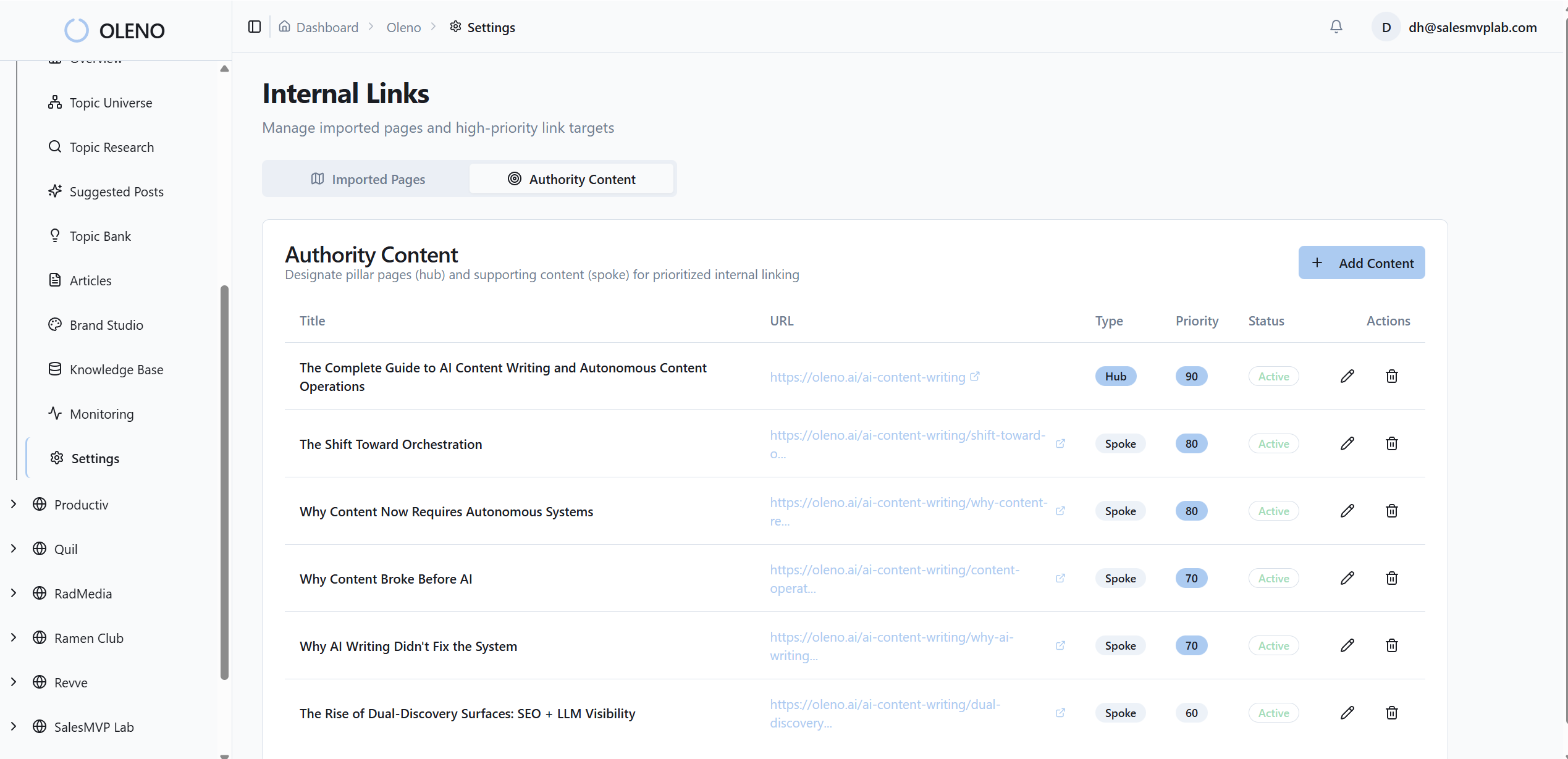
Screenshots are matched to relevant sections using semantic similarity, and alt text plus filenames follow SEO rules. Because these steps are code-based, you cut the cleanup you used to accept as “normal,” and your structure becomes consistently citable.
Publishing Connectors, Field Mapping, Duplicate Prevention, And Retries
Oleno converts markdown to CMS‑ready HTML and maps fields automatically. It publishes as draft or live to WordPress, Webflow, HubSpot, or Google Sheets–based flows. Duplicate publishing is prevented by design. Delivery failures trigger debounced notifications and safe retries, so teams stay informed without alert fatigue.
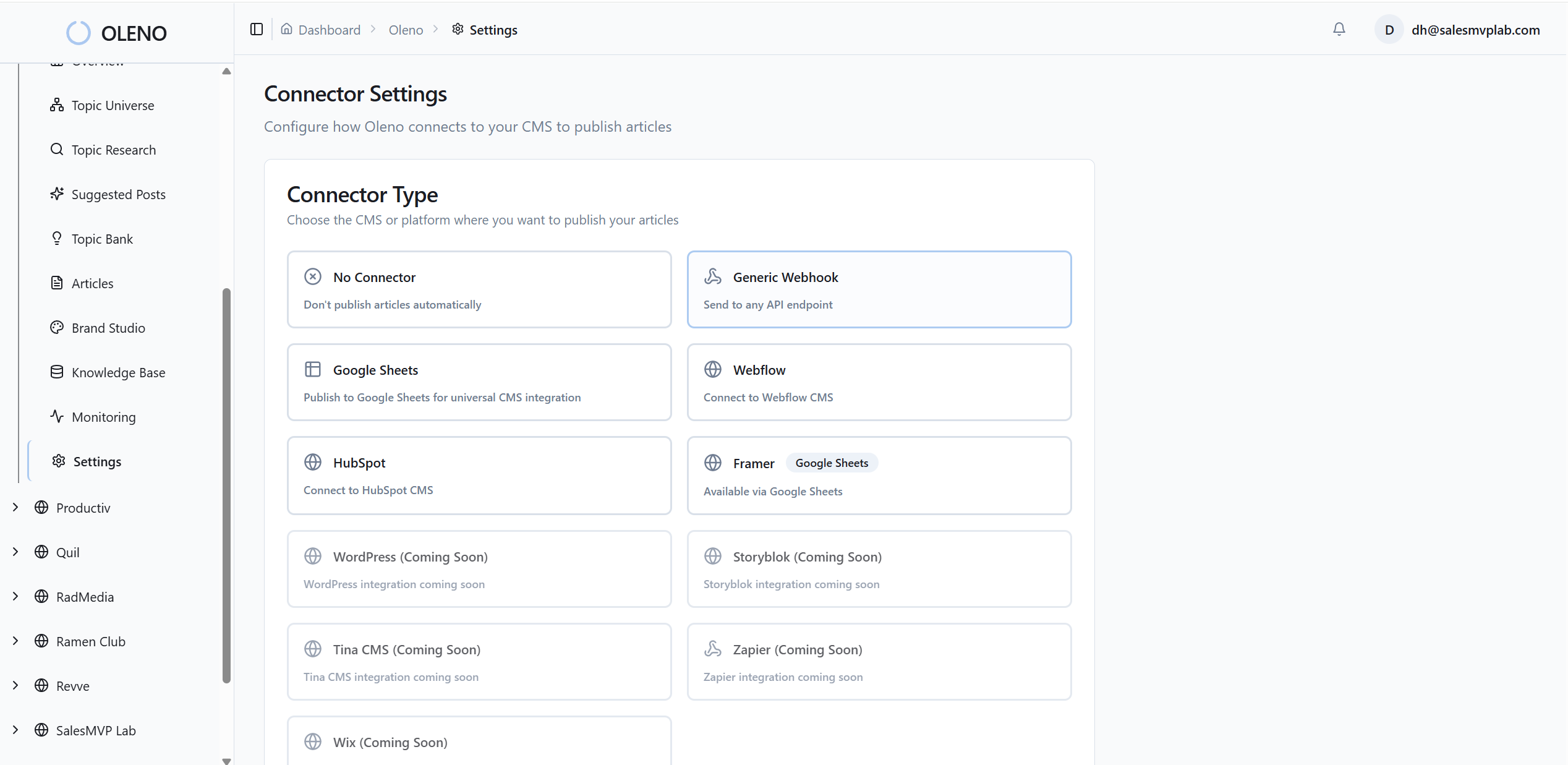
This is where idempotency matters. You can rerun delivery without creating duplicate posts or mangled layouts. It’s controlled, predictable publishing. No last‑mile surprises.
System Logs, Version History, And Auditability You Can Trust
Oleno maintains internal logs of pipeline inputs/outputs, KB retrieval events, QA scoring, publish attempts, retries, and version history. These aren’t dashboards or performance analytics; they exist so the system can retry work and keep a single source of truth across iterations.
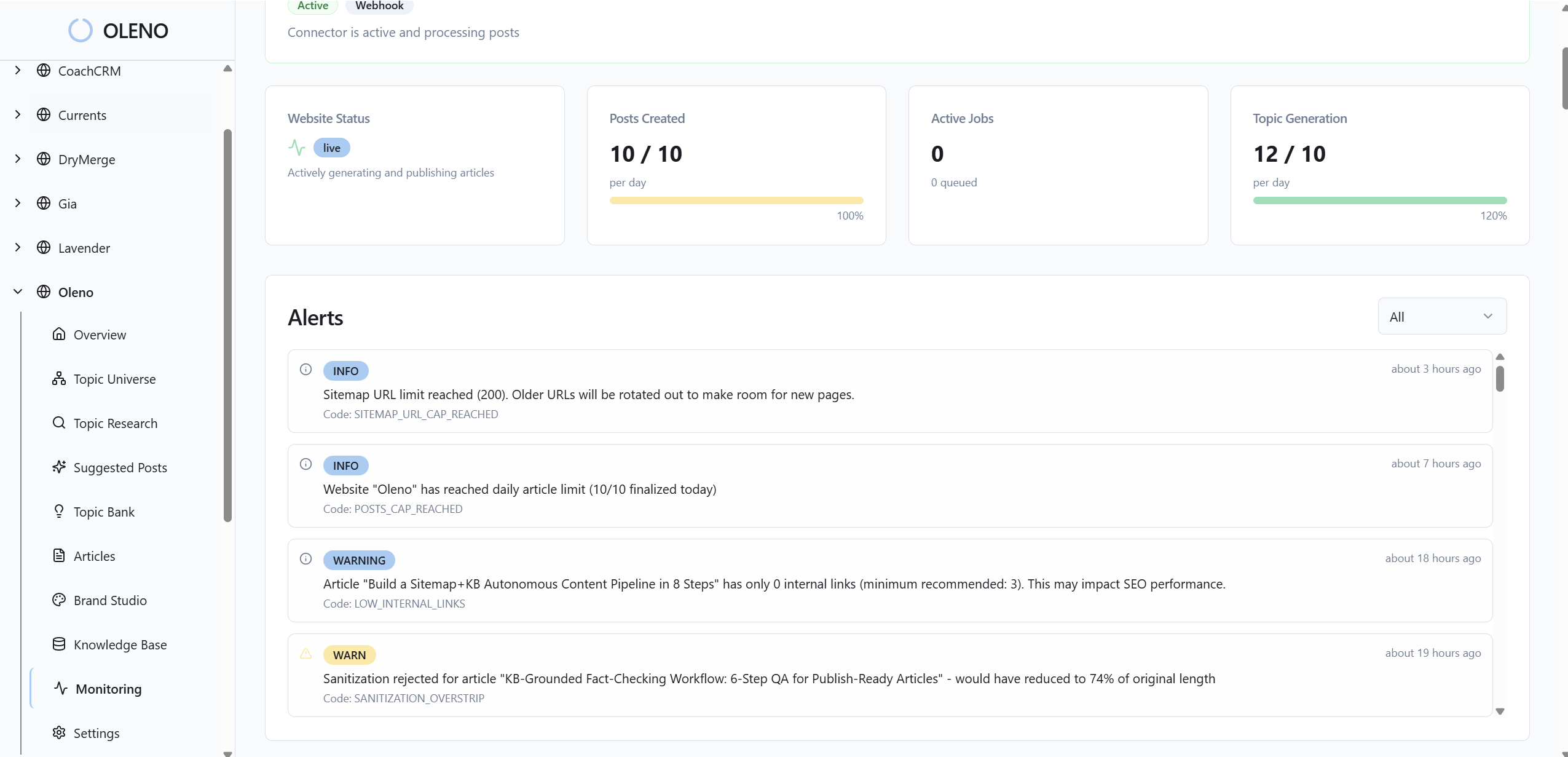
If something breaks, you can see what happened and why. More importantly, the pipeline recovers without a human doing forensic cleanup. That’s how you reclaim those “mystery” hours and ship on schedule.
If this is the system you want running quietly in the background, enabling daily publishing without drama, let Oleno carry the weight. Try Oleno For Free.
Conclusion
You don’t need another clever prompt. You need a governed pipeline that makes quality boring and shipping routine. Move checks upstream. Turn rules into code. Let deterministic steps handle links, visuals, schema, and publishing so your team can focus on the story.
Do that, and the late-night fixes fade. Your cadence stabilizes. And authority builds, piece by piece, week after week.
About Daniel Hebert
I'm the founder of Oleno, SalesMVP Lab, and yourLumira. Been working in B2B SaaS in both sales and marketing leadership for 13+ years. I specialize in building revenue engines from the ground up. Over the years, I've codified writing frameworks, which are now powering Oleno.
Frequently Asked Questions