Build Server-Side Audience Variations: Template & Canonicalization Plan

Most teams try to personalize by cloning pages. That feels fast, then tanks rankings, splits signals, and bloats caches. A better way is to build server-side audience variations with a canonical-first mindset. You keep one indexable slug, assemble persona copy at render time, and guard cache keys like they cost money. Because they do.
I learned this the hard way helping small teams push content at volume. You want relevance for a Head of Content, a RevOps lead, and a founder, but you do not want 3 URLs fighting for the same query. So you treat personalization like composition, not proliferation. Define the pieces, assemble them server-side, and keep crawlers focused on a single source of truth. That’s how you protect equity, speed, and sanity.
Key Takeaways:
- Treat personalization as composition, not page cloning, to protect rankings and cache hit rates
- Build server-side audience variations with a single canonical URL, and inject persona copy at render time
- Keep a minimal cache key, prefer cookie or header bucketing, and avoid URL sprawl that multiplies misses
- Model audience metadata once, then map it to template slots with safe defaults and guardrails
- Use a clear canonical plan, stable internal links, and QA checks that catch drift and duplicate content
- Anchor analytics to the canonical URL, add audience labels, and use holdouts to measure lift
- Ship with flags, staged rollouts, and instant rollback, so mistakes never leak to crawlers
How to Build Server-Side Audience Variations Without Index Bloat
You avoid index bloat by keeping one canonical URL and assembling persona-aware blocks on the server. Server-side controls copy slots, cache keys, and canonical tags, while the client handles light polish. The result is tailored experiences with consolidated signals and a healthy cache hit rate.
What server-side should control vs what the client handles
Draw a real line between the two. Server-side owns the parts that change meaning, like intros, proof points, and CTAs that speak to a role or industry. It also sets the canonical tag, shapes the cache key, and decides which variant shows up for a given audience. Client-side sprinkles enhancements like toggles, accordions, or minor UI state, not core copy.
When you push meaning to the client, you lose control. Crawlers see a bland default or a random state, your cache gets fragmented by needless keys, and governance becomes guesswork. Keep the heavy lifting upstream. It’s cleaner for QA and easier on your infra bill.
I’ve seen teams try to do all of this in the browser, then spend weeks untangling regressions. Keep personalization decisions at render time on the server, keep the DOM predictable, and keep your tests reliable. You’ll sleep better.
The anti-pattern: multiplying pages per audience
Spinning up a new URL for each persona sounds harmless. It is not. You dilute link equity across near duplicates, cannibalize rankings, and hand crawlers a messy index. You also turn one review into three, then five, then twelve. Multiply that by a year, and you’re burning time and trust.
Keep one primary slug as the source of truth. Inject persona copy at render time. Measure the same page differently per audience using labels, not paths. You’ll protect authority and keep writers from copying full pages to tweak five words in a headline.
If your team insists on separate pages, ask why. Nine times out of ten, it’s a measurement or workflow crutch. Fix the system instead of creating SEO debt.
How do you measure success without fragmenting analytics?
Anchor everything to the canonical URL, then enrich hits with audience context. Store persona in a signed cookie or a server-assigned header. Forward that label to analytics so you can segment performance cleanly on one path. Use holdouts or time-based splits to prove lift.
You’ll get apples-to-apples comparisons. No more guessing which variant “won” when traffic is split across five URLs. And you keep your dashboards sane when leadership asks what actually moved the needle.
One more thing, keep the model stable. Renaming personas mid-quarter breaks your trendlines. Lock names, then iterate quarterly.
The Hidden Costs of Multiplying Pages for Personalization
Multiplying pages increases cache keys, splits link equity, and explodes QA lines. The costs show up as higher latency, rankings that wobble, and teams drowning in reviews. A single canonical URL with server-side composition avoids all three.
Cache fragmentation and edge misses spike latency
Every extra URL or sloppy Vary rule creates a new cache key. More keys mean more cold starts, lower hit ratios, and higher origin compute. That’s a real cost. Model your cache key early, then keep it minimal. Prefer a small bucketed cookie or header to represent audience, not query params or path forks.
Cloud providers explain this plainly. Cache keys define reuse. Fewer keys, more hits, faster pages. If you need a primer, the guide on Cloudflare cache keys and partitioning is a solid reference.
Misses add up. You’ll see worse TTFB during spikes and more variance across regions. That variance erodes trust fast.
SEO duplication, cannibalization, and wrong signals
Near-duplicate persona pages confuse crawlers. Signals split, internal links drift, and your positions slide. Set a single canonical URL, align internal links to it, and make sure sitemaps point to the same slug. Any alternate canonical patterns will cause volatility.
Google’s own docs are clear about consolidation. Read the section on consolidating duplicate URLs and map your plan to it. Then audit monthly. Small mistakes slip in as teams ship fast.
I’ve watched one misconfigured canonical tank a top-3 ranking for weeks. It’s not worth the risk.
Canonicalization and Caching Rules That Protect SEO for Build server-side audience variations
You protect SEO by declaring one indexable URL, aligning all links to it, and rendering audience views server-side. Keep a minimal cache key, vary only when required, and use stale-while-revalidate to hold hit rates while content updates.
Canonical strategy: one indexable URL, render-time views
Set the canonical tag to the primary slug every time. Internal links should also point to that slug. Hreflang and sitemap entries do the same. Treat persona views as render-time differences, not separate pages. Crawlers then see one clean entity that consolidates equity.
This reduces crawl waste. It also simplifies review, because you are not chasing inconsistencies across similar URLs. When in doubt, run an internal crawl, then spot-check canonicals and link paths. A five-minute check saves you from a five-week headache.
If legal requires audience-specific disclaimers, keep them in slots that do not change the page’s core structure. You’ll preserve intent and keep the index stable, especially when evaluating build server-side audience variations.
How do you set Vary and Cache-Control without killing hit rates?
Start with a minimal cache key. If you personalize via a cookie or header, set Vary only on that signal. Avoid stacking Vary on User-Agent or Accept-Language unless you truly need it. Set a sane TTL, enable stale-while-revalidate, and tag content with surrogate keys so you can purge updates fast without emptying the world.
MDN’s overview of Cache-Control and stale-while-revalidate is a useful check. For deeper header semantics, the Vary section in RFC 9110 explains what actually changes a cache key. Keep it small. Your hit rate will thank you.
Run a daily report on hit ratio by audience bucket. If one bucket drifts, you probably created a new key without realizing it.
URL Design, CMS Integration, and QA to Build Server-Side Audience Variations Safely
Safety comes from a clean primary slug, audience labels that do not leak into URLs, and CMS models that separate stable blocks from variable slots. QA checks catch drift before publish, then flags let you roll back in minutes if something slips.
URL patterns: clean primary slug, audience via cookies or headers
Keep URLs simple. Your primary slug stays the same for everyone. The server sets a signed cookie or request header after consent, then picks the right variant at render time. Avoid query params for core copy decisions. If you need a preview, hide it behind a noindex, nofollow flag and make it obvious in your UI.
Simple URLs rank better, cache better, and are easier to share. They also reduce the number of places something can break. You do not want a support thread because a stale link pointed to a persona fork you retired six months ago.
One more guardrail, enforce a redirect to the canonical slug if any variant path leaks. Better safe than sorry.
CMS modeling: content blocks, audience tags, approvals
Model your pages as reusable blocks. Authors pick defaults first, then add persona variants only where it makes sense. Tie those variants to audience tags that match your data model, not ad-hoc labels. Route sensitive blocks through approvals so risky claims get checked against product truth before they ever hit the queue.
Governance matters here. Voice rules, claim boundaries, and structure constraints reduce rewrites and keep everything on-message. In my experience, teams that encode these rules once cut review cycles dramatically, because most edits move from subjective to objective.
Do not let people copy full pages to change eight words. That’s how drift starts and errors spread.
Release plan and rollback: flags, dark launches, kill switches
Big changes need guardrails. Ship with flags that control audience slots independently. Start small, watch metrics, then ramp once you’re confident. Keep a one-click rollback that restores defaults if QA finds a problem.
Here is a rollout pattern that works:
- Enable in staging with production cache rules and synthetic traffic.
- Dark launch to 5% of eligible traffic in one region and watch hit ratio and TTFB.
- Ramp to 25%, then 50% if metrics hold, and run a short holdout for lift.
- Roll back instantly if hit ratios drop or duplicate detection trips.
You will catch subtle bugs early, before crawlers or customers do. The peace of mind alone is worth the setup.
How to Build Server-Side Audience Variations With Structured Templates
You build reliably by defining a small audience model, mapping it to template slots, and constraining what varies. Vary the words that change conversion, not the structure that drives SEO. Then add fallbacks so missing data never blocks a publish.

Define audience metadata once, then reuse it
Create a typed audience model and stick to it. Role, industry, segment, maturity, and region are usually enough. Store that definition in your CMS or config, not inside prose. Templates reference the model as inputs. Writers then draft for a clear set of personas without inventing new labels.
A single model prevents drift. New teammates can ship on day two because the context lives in the system, not in someone’s head. I have watched teams rename the same persona five times in one quarter. Analytics broke, briefs conflicted, and nobody knew which copy was current. Don’t do that to yourself.
Document examples for each persona. Short, real phrases your customers use. Those lines pay off every time a writer hits a slot that needs flavor.
Template composition: slots, conditions, and fallbacks
Compose each page from stable sections and a few audience-aware slots. Mark slots clearly so audits can scan and compare variants. Add priority rules and safe fallbacks so the page always renders, even if a field is missing. Guard sensitive claims with conditions that require approval before they appear, especially when evaluating build server-side audience variations.
A simple pattern looks like this:
- Define slots for headline, intro, one proof point, and CTA language.
- Link each slot to the audience model and include defaults.
- Add conditions for high-risk claims that must pass review.
- Render defaults when metadata is missing so pages never block.
If you are assembling with a React framework, server-side rendering is straightforward. The Next.js guide on server-side rendering walks through patterns that map cleanly to this approach.
Which copy should vary, and which must stay canonical?
Vary the parts that change persuasion. Headlines that call out a role, openers that set context, proof points that match objections, and CTAs that mirror how someone talks about the job. Keep H1, primary structure, and key facts canonical. That balance keeps the page recognizable to crawlers while still speaking to different readers.
Over-variation is a common mistake. If every section changes, you did not personalize, you wrote six different pages. Keep most of the body stable and reserve variations for the moments that matter. You’ll protect coherence and rankings.
Auditors need clarity. Label every variable slot so automated checks can diff content across personas and flag drift.
Ready to stop cloning pages and start composing them safely? Stop duplicating work and start shipping governed variations on one canonical slug. Request a Demo
How Oleno Helps You Build Server-Side Audience Variations in Production
Oleno turns this approach into a working system by encoding voice, narrative, product truth, and audience definitions once, then applying them across templates with a QA gate before publishing. You get reliable variation without page sprawl, fewer reviews, and a steady cadence into your CMS.

Audience Governance and Variation Layer
Oleno’s governance captures who you are, what you believe, and what you can claim. Brand Studio and Marketing Studio encode tone, terminology, and point of view so drafts sound like you, not a generic blog. Product Studio keeps claims inside approved boundaries. Then the Variation Layer maps your audience model to template slots with defaults, so every variant stays on-message.
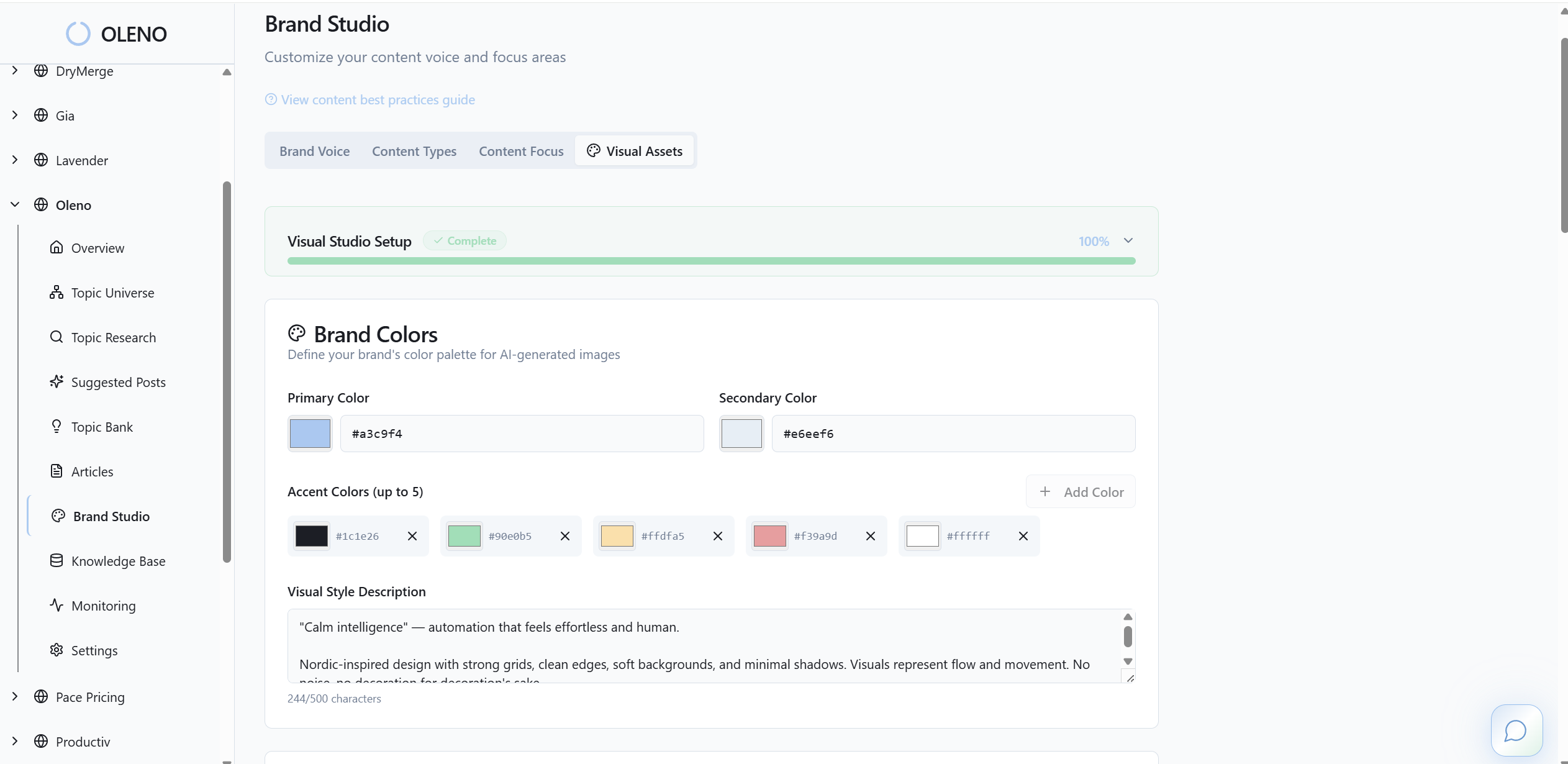
I like how this removes guesswork. Writers know exactly where persona language belongs, and reviewers stop debating tone because the rules live in the system. The result is fewer subjective edits and fewer mistakes.
Because the model is central, you avoid the trap of duplicating pages just to tweak one sentence. The system composes those differences at render time while you keep one canonical slug.
SSR and Publishing Integration
You publish directly to your CMS through Oleno, then your SSR or edge runtime renders the page using your templates. Programmatic SEO jobs produce governed briefs and long-form drafts, and CMS Publishing pushes approved content as drafts or live posts with idempotent checks that prevent duplicates. Teams keep cadence without copy-paste, and operations stay predictable.
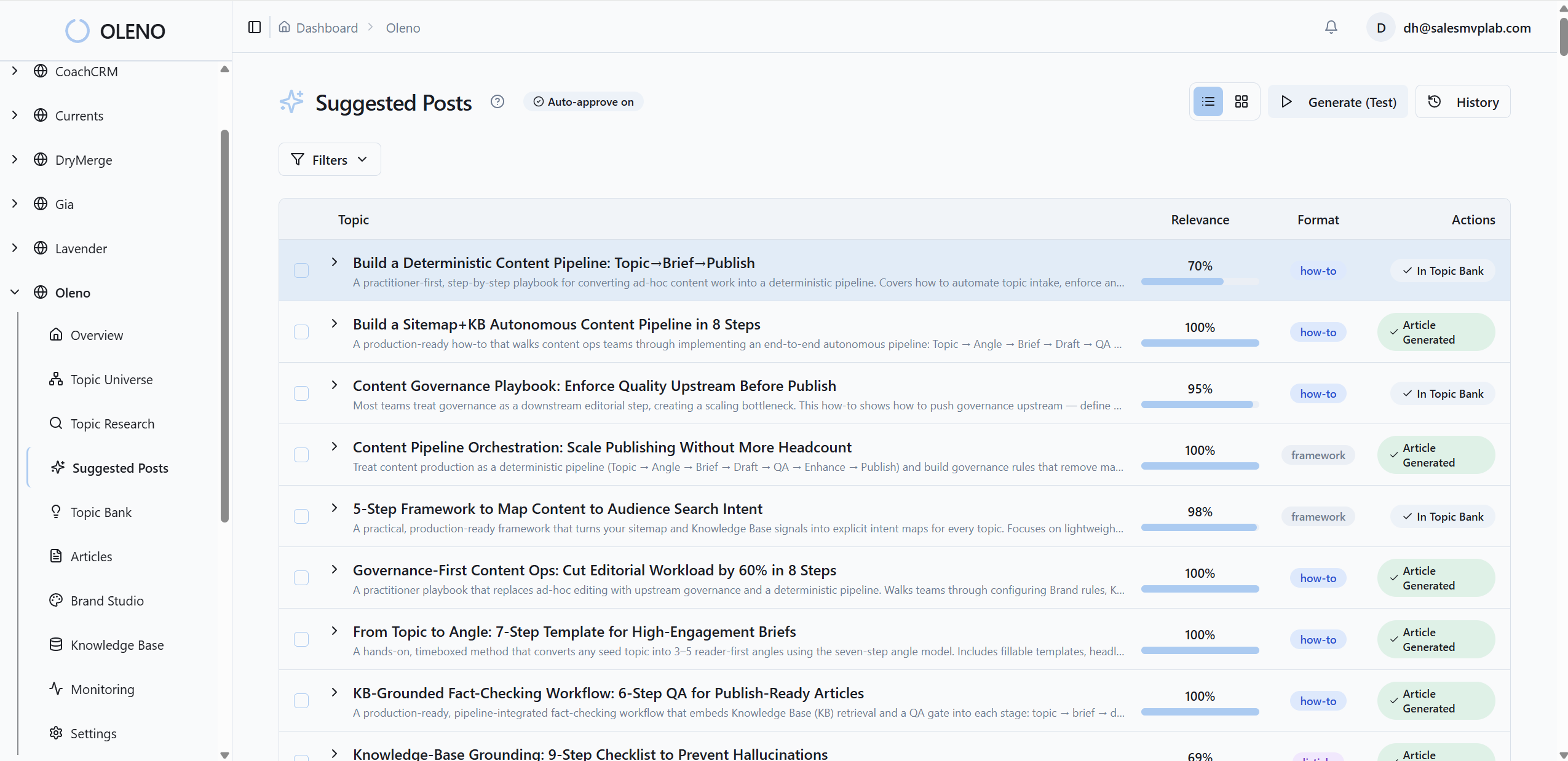
The payoff is practical. Release anxiety drops because the pipeline enforces structure and quality. Hit ratios improve because you avoided URL sprawl. Your team spends time on strategy and proofs that matter instead of manual plumbing.
If you are running content at any real volume, this kind of system-level help is the difference between steady growth and chaos.
Canonical and QA automation that closes the loop
Oleno’s QA gate blocks anything that fails voice, structure, grounding, and SEO readability checks. That includes catching duplicate content patterns, missing or inconsistent canonical usage inside the draft context, and slot drift across personas. Measurement and System Health then track cadence and quality trends so you can spot issues before they spread.
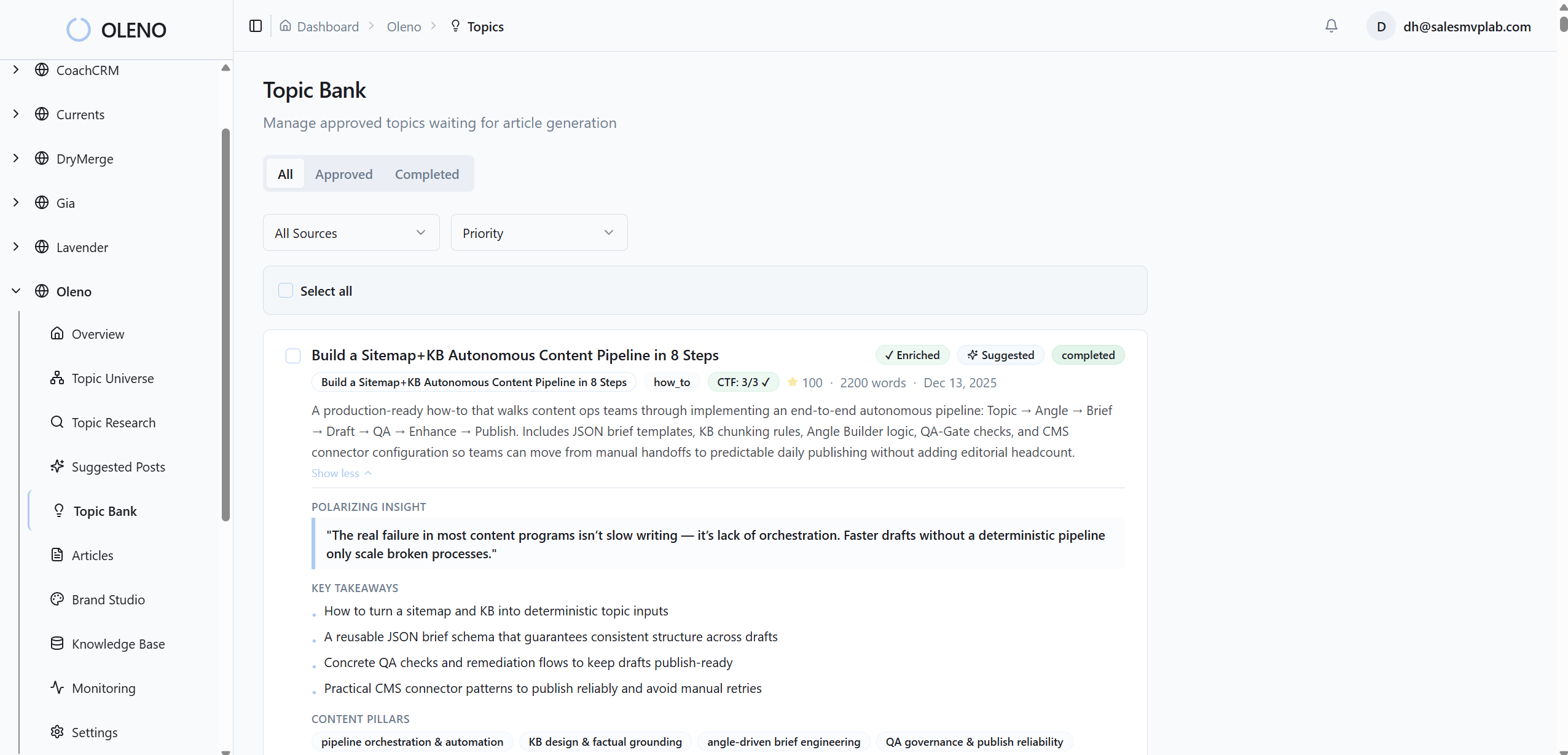
Here is how the capabilities line up:
- Quality Control: enforces voice, structure, grounding accuracy, and SEO readability before publishing
- Variation Layer & Topic Universe: adapts content to audiences without creating contradictory narratives or duplicates
- CMS Publishing: pushes approved content to WordPress, Webflow, HubSpot, and more as drafts or live posts
- Product Studio: safeguards allowed claims and supported use cases inside variable slots
Fewer review loops, cleaner analytics, and no duplicate-content incidents becoming fire drills. That’s the goal.
Seeing fewer review cycles and steadier hit rates is normal once the system is in place. Want to map it to your stack and templates in detail? Faster reviews, cleaner analytics, and one canonical slug. Request a Demo
Conclusion
Personalization does not require more pages. It requires better composition. When you keep one canonical URL, build server-side audience variations, and constrain what changes, you protect rankings, speed up pages, and cut review waste. The simple rule holds: vary what converts, canonize what crawlers count.
If you want a working plan you can ship this quarter, we can sit down, outline your audience model, define slots, and set up the QA gates that keep it safe. Oleno was built to run that system for small teams so the engine keeps turning even when priorities shift. Ready to see it mapped to your site and CMS? Book a Demo
About Daniel Hebert
I'm the founder of Oleno, SalesMVP Lab, and yourLumira. Been working in B2B SaaS in both sales and marketing leadership for 13+ years. I specialize in building revenue engines from the ground up. Over the years, I've codified writing frameworks, which are now powering Oleno.
Frequently Asked Questions