Buyer-Stage Inference: Map Content Signals to Deal-Stage Probabilities

The fastest way to waste a quarter? Tell sales that “three pricing page views equals intent” and watch them sprint after ghosts. I’ve been on that treadmill. At Proposify, our content hummed, rankings looked great, and still we’d trigger outreach that felt way too early. Buyers didn’t appreciate the push. Neither did my team.
Here’s the uncomfortable truth: content signals are noisy on purpose. People binge, skim, research for a friend, or play internal politics. If you treat each click as a label instead of a nudge, your math lies and your motion stalls. You don’t need more rules. You need probabilities that update as the story unfolds.
Key Takeaways:
- Replace binary “yes/no” scoring with stage probabilities that update per event
- Model accounts, not just individuals, and weight signals by role and asset depth
- Calibrate monthly using closed-won/lost data; don’t stack more brittle rules
- Align response actions to probability bands to protect trust and speed
- Govern your content taxonomy so signals stay stable as volume scales
Prefer to see the engine, not just the math? Try Generating 3 Free Test Articles Now.
Why Binary Engagement Scoring Sends Sales On Wild Goose Chases
Binary engagement scoring misclassifies intent because it compresses uncertainty into false certainty. Thresholds like “three pricing views” ignore recency, repetition, and context across stakeholders. Treat each event as a probability update instead. You’ll reduce noisy outreach and route more confidently when signals actually stack.
The false certainty in pageview thresholds
Hard thresholds feel decisive. They aren’t. One person binge-reads late at night after a competitor call; another tabs pricing while multitasking. A partner might be reviewing your docs for their own enablement. Collapsing that context into a 1 or 0 inflates false positives and sets reps up for awkward intros.
The better move is to admit uncertainty upfront. Score every interaction as a likelihood contribution to a stage, not a stage itself. Recency, repetition, and sequence matter. A second pricing view within 72 hours after a product page tractably increases selection-stage probability. A single pricing bounce after a blog binge? It barely moves the needle.
Why conventional wisdom fails on multi-stakeholder deals
Enterprise buying isn’t linear. It’s a committee sport. Seven people engage in fits and starts over weeks. A VP skims case studies. An engineer digs into specs. Procurement checks legal and security. Heuristics that assume one path for one person will misfire across the group.
This is where account-level modeling pays off. Weight signals by role and asset depth, then aggregate to the account timeline. A senior engineer reading an implementation guide carries different meaning than an SDR reading your blog. Research on the B2B buying journey from Highspot backs this complexity. Your model should, too.
What should you measure to actually infer buyer stage
Measure observable behaviors that correlate with stage shifts. Not vanity clicks. Examples that consistently move odds: repeat pricing visits inside a short window, sequential spec + case study consumption, email replies that ask for security documentation, high-intent resource gates with corporate email.
Treat each as a likelihood contribution. Don’t promote any single event to “they’re in selection.” You’ll see cleaner routing patterns quickly. And yes, you’ll still get edge cases. That’s fine. Probability is built to handle ambiguity without pretending certainty where it doesn’t exist.
Why should GTM leaders care about probabilities
Because probabilities let you trade risk intentionally. You can set outreach thresholds by team capacity. You can adjust for seasonality. You can tune for the cost of false positives versus false negatives. Leaders get a dial, not a switch.
The downstream impact is real. Sales spends less time on bad fits. Marketing sees clearer lift from specific assets. Ops keeps the system stable as patterns evolve. It’s not perfect, but it’s steerable, and steerable wins over brittle.
Model The Real Driver: Uncertainty, Not Just More Signals
Buyer-stage inference estimates the probability that a person or account is in a given stage based on a stream of interactions. You start with priors, update with each event, and output a posterior per stage. The output is clarity: ranked accounts by confidence and assets measured by how much they move stage odds.

What is buyer-stage inference and why does it matter
Think of stage inference like weather forecasting. You never get a definitive “it’s raining next Tuesday,” but you do get a 70% chance with factors that raise or lower confidence. Same here. Priors set a baseline, and evidence updates belief. It’s honest about what you know, and what you don’t.
That honesty changes decisions. SDRs prioritize accounts by probability bands. AEs see which assets nudge deals forward. PMM learns which narratives shift odds in evaluation. No one needs a PhD to use it. They need a clear list, a reason code, and next best actions tied to probability.
What traditional mapping misses in practice
“Top-of-funnel article equals awareness” feels tidy on a slide. It’s rarely true in isolation. Late-stage engineers often re-check primers before a board or security review. Partners consume comparison guides for their own training. That doesn’t make them your buyer this week.
Bayesian updates let you absorb those ambiguous signals without overreacting. You don’t force a label; you adjust odds gracefully. As selling has become more holistic and cross-functional, this flexibility matters even more, which aligns with findings from KU Business on modern B2B sales complexity.
The minimal inputs you need to start
Keep the model small at first. Define four to five stages that match your motion. Inventory core signals you already capture across web, downloads, email replies, and microconversions. Assign initial priors. For each signal, define likelihoods by stage based on historical patterns.
Then keep it simple technically. You can implement updates in SQL or a small Python job. Don’t overfit. Early wins come from disciplined inputs and calibration, not fancy math. As you learn, expand signals and refine likelihoods. The goal is a stable, improving system, not a perfect one.
The Hidden Costs Of Getting Stage Wrong At Scale
Misclassifying stage at scale burns time and trust. False positives create waste and buyer friction; false negatives slow velocity and hide momentum. Quantify both, then design your recalibration loop to minimize the total cost. Reporting should make drift obvious before a quarter slips.
The compounding impact of false positives and false negatives
Let’s pretend 40% of “SQLs” are actually still researching. Five reps spend 30 minutes each on 50 misrouted leads per week. That’s 125 hours a month. At $90/hour fully loaded, you’re burning $11,250, before lost opportunity from the real SQLs you missed. Flip it, and too-conservative thresholds slow pipeline.
There’s also the buyer-side cost. Push too soon and they pull back, sometimes for good. Wait too long and a competitor gets the first call. Consider that many B2B buyers self-educate deeply; one study suggests they often initiate contact after substantial progress, which aligns with patterns reported by Demand Gen Report on buyer journey completion.
Why recalibration beats more rules
Stacking more conditions feels like progress. It’s not. Every exception makes the system more fragile. A monthly calibration loop is cheaper and steadier. Compare predicted stage to ground truth from closed-won and lost. Nudge priors and likelihoods to reduce bias. Rerun and recheck.
Do this and you’ll see your false positive and false negative rates converge toward an acceptable band. If they don’t, you learn where signals lie or drifted. It’s surgery, not duct tape. And it’s how you keep routing signals dependable as your go-to-market shifts.
What reporting looks like when you instrument this properly
You want calibration curves, lift charts, and SLA adherence by probability band. Track false positive rates for outreach-triggered bands and conversion rates by predicted stage. Add drift indicators when the same signals produce different outcomes than last quarter.
Layer in simple narratives. “Spec + case study within 48 hours increased selection odds by 22% last month.” That’s actionable for sales and PMM. For broader context on turning insights into wins, see perspectives like Turn Buyer Insights Into Sales Wins. It’s not about dashboards for their own sake; it’s about decisions people actually take.
Still dealing with this manually and feeling the rework pile up? Try Using An Autonomous Content Engine For Always-On Publishing.
When Timing Is Off, Trust Erodes Fast
Misdirected outreach teaches buyers to ignore you. Trigger alerts on weak signals and teams mute them. Then a real signal hits at 3am and no one moves. Align actions to probability bands, group by account, and respect working hours. Speed is good. Predictable, human timing is better.
The awkward pricing call after one blog view
We’ve all done it. Someone glances at pricing once and a rep calls in minutes. The buyer felt pushed. The rep felt awkward. Two days later, the account ghosts. Not because they weren’t a fit, because the moment was wrong.
A basic guardrail fixes that. Require recency and repetition before live outreach. Let medium-confidence bands trigger an email nudge or a helpful resource. Save the call for when signals stack. You’ll preserve trust and the conversation you actually want next week.
What happens when alerts fire at 3am and no one trusts them
If alerts trip constantly on weak signals, teams mute everything. The next real signal is treated like noise. That’s a reliability problem, not a motivation one. Use posterior thresholds aligned with working hours and SLA windows. Group alerts by account with decay logic, so you don’t ping five people for one action.
Make the alert explain its why: “Selection probability moved from 0.41 to 0.64 after sequential spec + pricing.” Now the human trusts the system. They see the shift, not just the trigger.
How do you balance speed with respect for the buyer
Use action bands. High confidence? Outreach inside five minutes. Medium confidence? A tailored resource and soft follow-up. Low confidence? Add to nurture and keep listening. Buyers experience sequence and relevance. Your team stays focused. Everyone wins a little more often.
This is the operational version of empathy. Respect where they are, move when it helps, and don’t confuse motion with progress.
A Practical Path You Can Ship This Quarter
You don’t need a data team to start. Define stages. Clean your event stream. Implement a simple Bayesian update. Calibrate on past deals. Then turn on banded actions with conservative thresholds. In a few weeks, you’ll feel the difference in the pipeline review.
Define canonical stages and the signals you can observe
Pick stages that match your motion: Awareness, Problem framing, Evaluation, Selection, Purchase. Don’t overcomplicate it. Inventory signals you already capture: page categories, resource types, email replies, webinar attendance, microconversions. Document event owners and dedupe logic. Reliable inputs beat perfect coverage on day one.
As you map signals, note roles. A CFO on pricing is different from an SDR on a blog. That role weighting is where account-level inference shines. You’ll use it later when sequences mix and your model needs to stay honest.
Design an event taxonomy and a clean tracking plan
Create one schema across web, product, and email. Include event name, actor, account, timestamp, content taxonomy, and recency context. Enforce idempotency so duplicates don’t double-count. Standardize UTM handling and session stitching. Little details here save you months of noisy data later.
This is boring work that pays compound interest. Your Bayesian updates will stay stable. Your dashboards will reflect reality. And when you find drift, you’ll actually know where it came from.
Build a Bayesian update model with priors and likelihoods
Start with priors P(Stage). For each event, maintain likelihoods P(Event | Stage) from historical patterns. Update to get P(Stage | Events to date) at the person and account levels. Keep it simple with categorical likelihood tables and a normalizing denominator. SQL window functions or a small Python job is enough.
Don’t chase exotic models before nailing calibration and governance. A clean, transparent update routine is easier to explain to sales, and easier to maintain when the motion evolves.
Validate and calibrate with past deals before you route anything
Replay sequences from closed won and lost opportunities. Compare predicted stage over time to what actually happened. Tune priors and likelihoods until calibration plots sit close to the diagonal. Only then set routing thresholds. Start conservative and instrument SLAs so you can see if you over- or under-fire.
If you want a narrative gut-check, compare your path to research on modern buying behavior like Salesforce’s overview of the buyer journey. The point isn’t to match their model; it’s to ensure your model reflects your market.
How Oleno Operationalizes Buyer-Stage Probabilities
Oleno turns stage inference into an operating rhythm by keeping your content rules, production, and quality bar consistent. Governance encodes stage definitions and claims. Studios produce stage-aligned assets on a cadence. Operations keep quality and system health visible. Your CRM and routing logic consume cleaner, more reliable signals.
Encode stage definitions and content rules with governance
Oleno’s governance layer captures how you define stages, what message belongs where, and which claims are allowed. You set the voice, positioning, product truth, and boundaries once. Those rules apply automatically across everything Oleno produces.
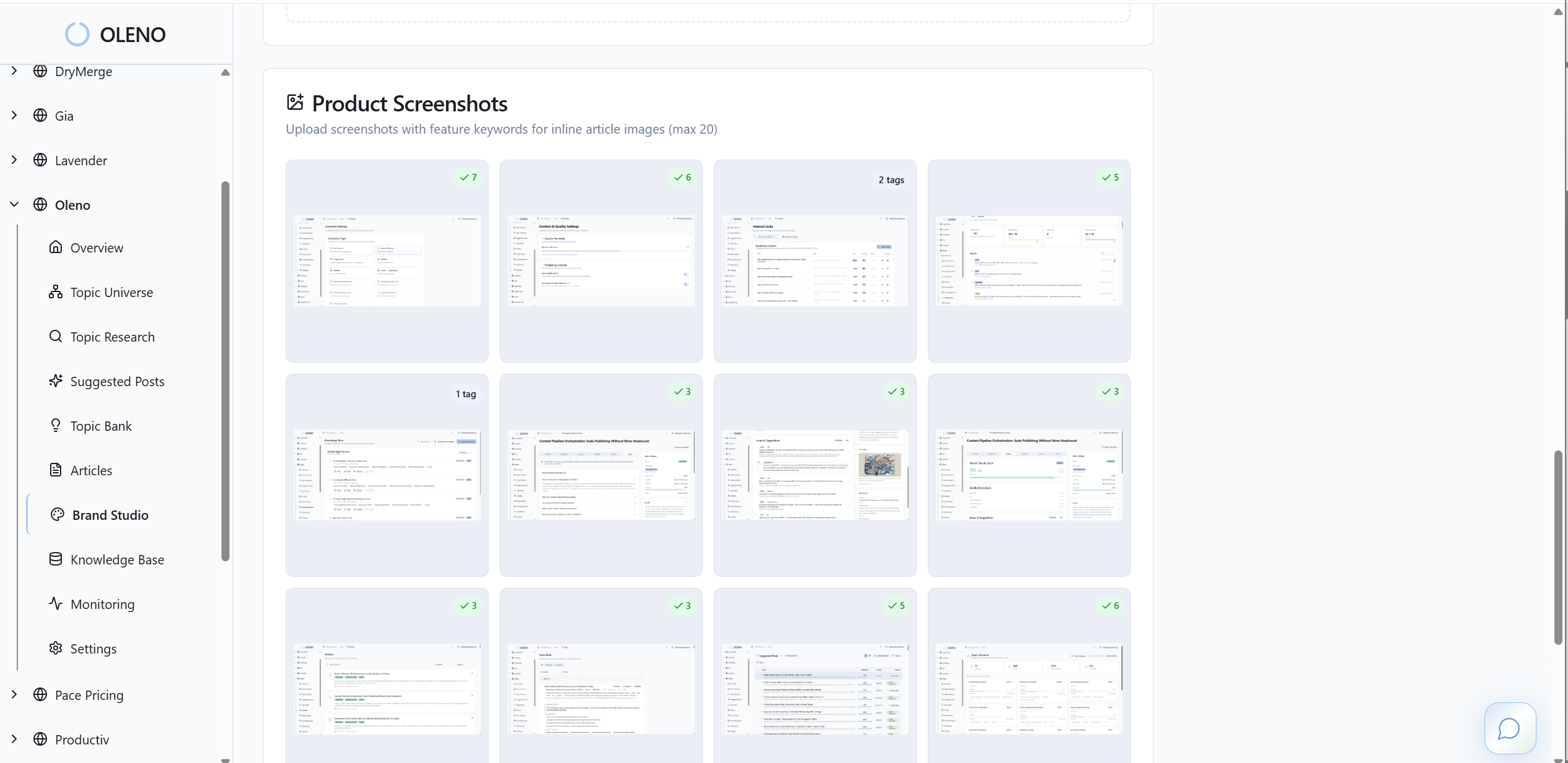
That consistency reduces ambiguous assets and keeps your taxonomy stable. As your team ships, your likelihood tables reflect reality instead of drift. This is how Oleno helps small teams keep execution tight without adding more reviewers or meetings.
Generate stage-aligned assets with job-based studios
Studios in Oleno map to demand-gen jobs. Use POV and category education to shape early understanding. Use frameworks and guides to teach. Use product marketing to support evaluation and fit. Use competitive and evaluation content safely when buyers compare options.
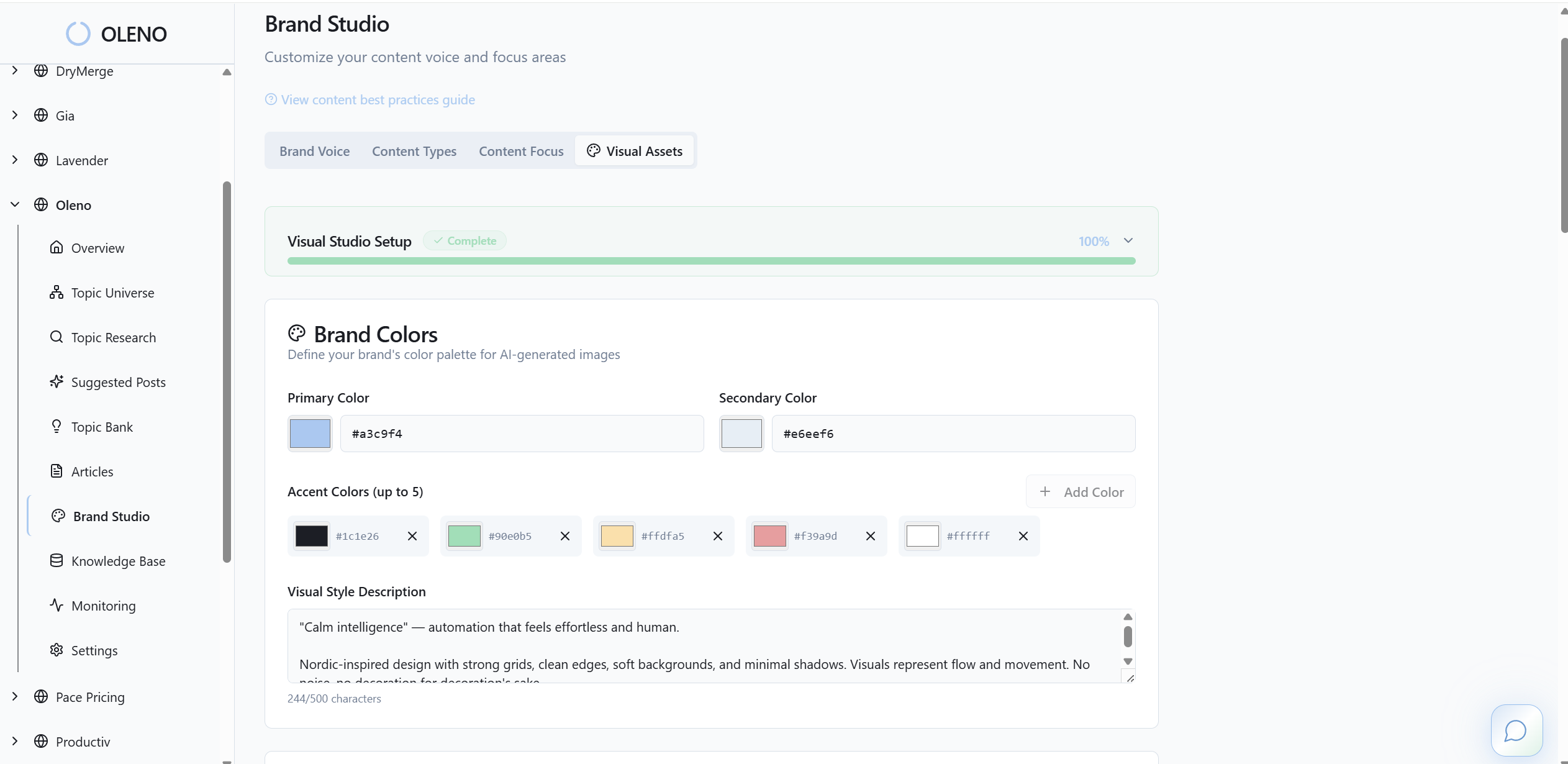
Every studio runs through the same execution engine: Discover → Angle → Brief → Draft → QA → Enhance → Visuals → Publish. A QA gate enforces voice, structure, grounding, and clarity before anything goes live. Output stays consistent, which means your signals stay trustworthy.
Monitor reliability with SLOs and system health
As volume grows, manual review won’t scale. Oleno’s operational visibility surfaces quality trend lines, common failure patterns, and samples for edge cases. You can pair routing thresholds with content SLOs and error budgets, so taxonomy drift or duplicate events don’t quietly poison your model.
This isn’t traffic analytics. It’s operational reliability for your content engine. When the system stays healthy, your stage inference stays calibrated. Sales trusts the alerts again.
Still routing on guesswork while content signals wobble? Let the system carry the structure. Try Oleno For Free.
Fit alongside your CRM and routing stack without disruption
Oleno doesn’t replace your CRM, scoring, or enrichment. It complements them. Use Oleno to keep content and taxonomy governed, ship stage-aligned assets, and enforce quality. Your inference model and CRM rules consume cleaner inputs.
The practical result: fewer noisy alerts, tighter probability bands, and outreach that lands closer to the buyer’s moment. Strategy stays human. Execution becomes a system.
Conclusion
Most teams don’t have a content problem. They have an execution problem that turns signals into noise. Move from binary labels to probabilities, calibrate monthly, and align actions to confidence, not hope. Put governance and steady production behind it so your signals stay clean. That’s how you stop chasing and start compounding. If you want help running that system, Oleno’s built for exactly this motion.
About Daniel Hebert
I'm the founder of Oleno, SalesMVP Lab, and yourLumira. Been working in B2B SaaS in both sales and marketing leadership for 13+ years. I specialize in building revenue engines from the ground up. Over the years, I've codified writing frameworks, which are now powering Oleno.
Frequently Asked Questions