Choosing Oleno for Growth-Stage SaaS: What to Look For

Choosing Oleno for Growth-Stage SaaS: What to Look For usually comes up when you’re sick of the content reset every quarter, and you’re tired of pretending a new tool will fix a broken system. You’ve probably got goals tied to pipeline, you’ve got pressure from leadership, and you’ve got a team size that doesn’t match the workload.
Pick wrong, and you don’t just waste budget. You waste weeks of momentum, create more frustrating rework, and end up right back in Google Docs hell, chasing reviews, arguing about positioning, and wondering why the output still feels generic.
The goal here is simple: you should be able to evaluate whether Oleno fits your team, your GTM motion, and your maturity level, without getting dragged into a glossy feature tour.
Key Takeaways:
- A growth-stage SaaS team should evaluate whether a tool can preserve positioning and messaging across every asset, not just generate drafts.
- If you can’t get from brief to publish in a repeatable weekly rhythm within 30 days, the tool probably isn’t solving the real bottleneck.
- Most “AI writing tools” fail because they optimize channels and tactics while ignoring the actual marketing plan.
- You’ll make a cleaner decision by scoring vendors on inputs (product, audience, positioning, voice) before you score outputs (blogs, landing pages, ads).
The Problem Growth-Stage SaaS Teams Are Actually Trying To Solve
Growth-stage SaaS marketing doesn’t fail because you “need more content.” It fails because every piece of content becomes a one-off debate about what you sell, who it’s for, and what you sound like, and that debate eats the time you don’t have.
I’ve seen this pattern a bunch. You start a quarter with a plan. Then launches happen, sales wants new decks, the CEO wants a narrative shift, and suddenly your content calendar turns into a graveyard of half-finished drafts and “we’ll revisit next week” threads.
The annoying part is that content is rarely the hard part. Coordination is. The back-and-forth. The second-guessing. The “wait, are we positioning this as X or Y now?” conversation that should’ve been settled once, but keeps resurfacing because nothing is captured in a way the team can reuse.
Manual Content Ops Quietly Wastes 10 Plus Hours A Week
Manual content workflows waste time in small chunks, and that’s what makes it dangerous. You don’t notice a 12-minute Slack thread here, a 25-minute rewrite there, and a 40-minute meeting to align on “tone.” Add it up over a month and you start realizing why nothing ships.
Let’s pretend you publish 4 pieces a month (which is not crazy for a small team trying to stay consistent). If each piece takes:
- 45 minutes to re-explain the product context
- 60 minutes of positioning cleanup after the first draft
- 30 minutes of stakeholder review coordination
- 45 minutes of final edits and formatting
That’s 3 hours per asset. 12 hours a month. And that’s the optimistic version where nobody blows up the doc with conflicting opinions.
That time doesn’t just disappear. It comes out of strategy time, campaign iteration, partner marketing, sales enablement, and honestly your ability to think.
Most AI Writing Tools Create More Rework, Not Less
Most AI-content and SEO tools don’t really understand marketing. They understand patterns in writing, they understand keywords, they understand structure. But they don’t understand your POV, your enemy, your category framing, or why a specific claim matters to a specific buyer.
I remember listening to a panel back when I was at LevelJump at the DMZ in Toronto. One guy kept rattling off tactics like a checklist. Use this tool, scrape this list, run this sequence, post this cadence. You know the type.
Then April Dunford jumps in, kind of deadpan, and says: tactics without strategy are shit.
That line stuck with me because it’s the same issue with most content tools. They’ll crank out “a blog post.” But if your positioning is fuzzy, or your differentiator isn’t baked in, you’re just generating words. Then you, the human, become the editor, the fact-checker, the positioning police, and the brand voice enforcer.
So you still do the hard part. You just do it later, when you’re already annoyed.
The Real Bottleneck Is Missing Inputs, Not Output Speed
Output speed is the vanity metric. Inputs are the real constraint.
When a system doesn’t have your market POV, your product definitions, your personas, your use cases, and your brand rules, it can’t stay consistent. It will drift. Then every draft becomes an argument. And that argument is where your week goes to die.
Not everyone agrees with this, and fair point, some teams do fine with a scrappy “just write” approach. But once you’re trying to scale GTM content across funnel stages, across multiple launches, across multiple personas, the drift starts costing you.
What Matters When You’re Buying A Demand-Gen Execution System
The buying mistake is assuming the category is “AI writing.” For a growth-stage SaaS team, the category is closer to “demand-gen execution system,” because your problem isn’t typing speed. Your problem is getting a repeatable engine that can ship consistent messaging without you supervising every sentence.
So what actually matters?
Positioning Fidelity Beats Generic Content Quality Every Time
Positioning fidelity means the content keeps the same spine every time. Same enemy. Same POV. Same set of differentiators. Same language that your buyers recognize from your site, your pitch, your demos, and your sales calls.
If the tool can’t preserve that, you’ll spend your life rewriting intros and swapping out the same three phrases you hate. And worse, your market gets mixed signals. One week you sound enterprise. Next week you sound SMB. Then you wonder why pipeline is noisy and conversion rates wobble.
A decent test: give a vendor two prompts on different days about the same use case. If the outputs don’t feel like they came from the same company, you’re buying inconsistency.
Audience And Persona Specificity Prevents “Looks Fine” Content
Generic content often “reads fine” but it doesn’t convert. That’s the painful part. You publish it, traffic maybe moves a bit, but nobody raises their hand because the content never speaks to a real person with a real job and a real headache.
You want to see if the system can hold multiple audience segments without blending them into mush. Head of Marketing. Product Marketing. RevOps. Sales Enablement. Different objections, different triggers, different vocabulary.
If you’re targeting growth-stage SaaS, that persona nuance is not optional. It’s the difference between “nice post” and “we should talk.”
Product Truthfulness Is A Hard Requirement, Not A Nice-To-Have
Marketing content breaks trust fast when it gets product details wrong. You probably know this already because you’ve felt it: you read a draft and you’re like, “we don’t do that,” or “that’s not how it works,” or “that’s a legal problem.”
So you need to evaluate whether a tool can stay anchored to your actual product definitions and boundaries. What features do. What they don’t do. What use case they’re meant for. What they’re not meant for.
If that’s missing, your team becomes a correction layer. Again. More rework.
Consistency Across The Funnel Matters More Than A Single Great Blog Post
A lot of tools can generate one decent blog post. Cool. But growth-stage demand gen is about volume with consistency, across formats:
- product launch pages and emails
- comparison pages and competitive pages
- FAQ libraries
- buyer enablement content for sales cycles
- campaign assets that match the narrative
If a system can’t carry the same narrative across those, you’ll get fragmentation. Your brand becomes a bunch of disconnected content islands.
And a disconnected brand is hard to buy from because buyers can’t form a clean mental model of what you are.
How To Evaluate Oleno Without Getting Trapped In A Feature Demo
You can evaluate Oleno (or any similar platform) without doing the classic “demo first, figure it out later” trap. Run an evaluation where you control the inputs, you test real outputs, and you measure the amount of human cleanup required.

You’re not looking for flashy. You’re looking for repeatable.
A Good Evaluation Starts With A Real GTM Asset, Not A Toy Prompt
Pick one asset that matters this quarter. A launch narrative. A competitor comparison. A “who it’s for” page. Something where positioning actually matters.
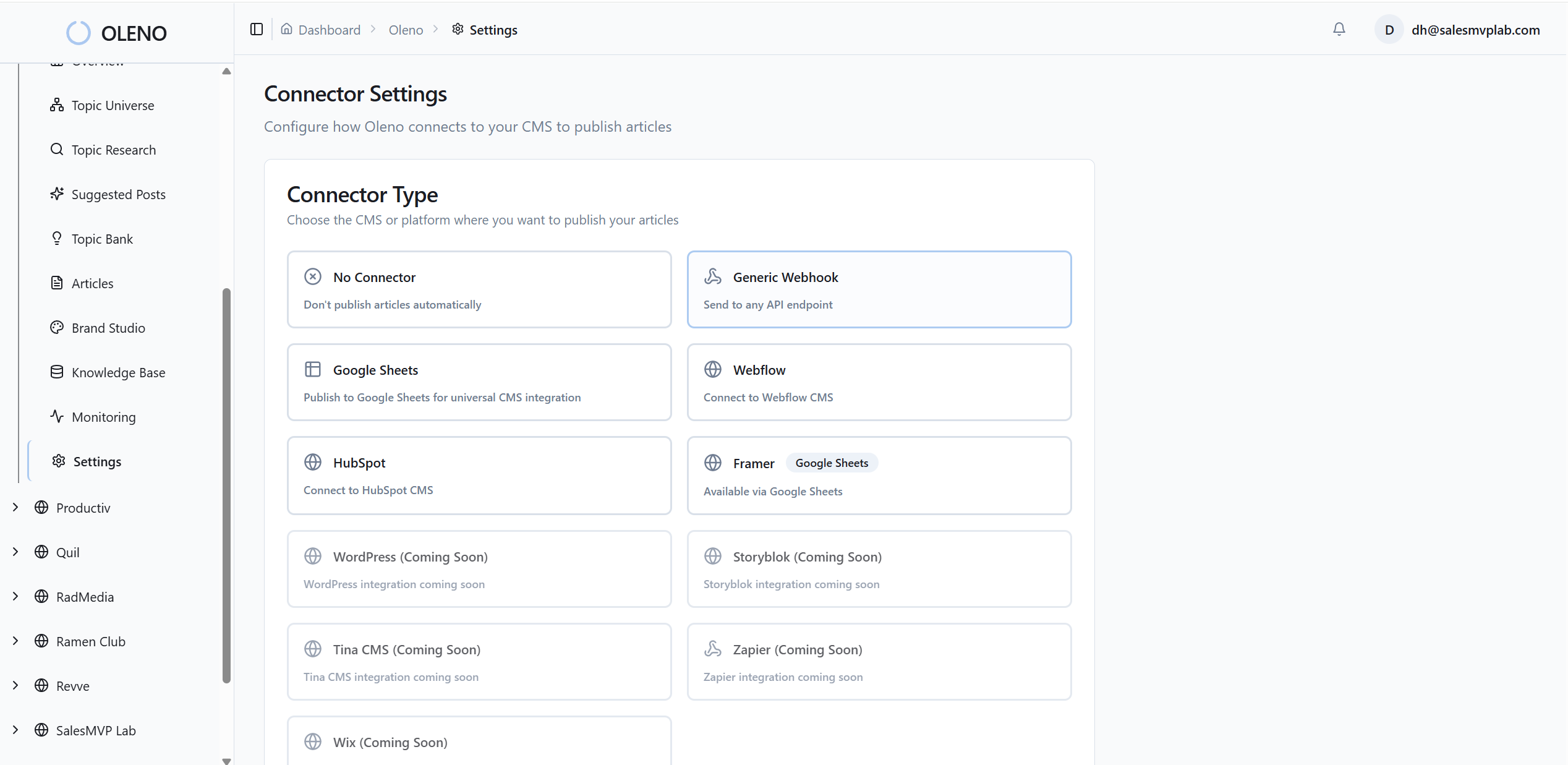
Toy prompts hide the truth because anything can write a generic “5 tips” blog post. That’s not your job.
If you want to keep it simple, choose one:
- a competitor comparison page for a deal you’re seeing in pipeline
- a launch page for a feature shipping in the next 30 days
- a buyer enablement one-pager that sales can send after a demo
Then judge the system on whether it stays aligned to your messaging without you babysitting it.
Score The Inputs First, Because Outputs Are A Downstream Symptom
Before you even look at drafts, check whether the platform forces you to define the stuff that actually drives quality. Things like positioning, personas, use cases, and brand voice rules.
Most teams skip this because it feels like “setup.” Then they complain the output is generic. That’s not a mystery.
Use a simple input checklist:
- Do we have a documented POV and category framing inside the system?
- Do we have clear persona definitions (not just “ICP”)?
- Do we have product definitions and boundaries captured somewhere reusable?
- Do we have brand voice examples and do-not-do rules that can be enforced?
Interjection: if a vendor waves this off and says “just prompt it,” you’re probably signing up for more manual review work.
Measure Rework Time, Not Output Quality
This is the metric I’d use if I was buying for a small team: minutes of rework per asset. Because that’s the real cost.
Run a test where you create 3 assets and track:
- how long it takes to get a first draft that is directionally correct
- how many edits are about messaging vs just polish
- how many stakeholder comments are “this isn’t us” type comments
If you still need to do the positioning work after the draft exists, the tool didn’t remove the bottleneck. It just moved it.
If you want to pressure test Oleno specifically with your own assets, request a demo and come with one real deliverable you need this month. That single choice makes the conversation way more useful.
Validate Whether The System Handles Multiple Formats Without Drift
Ask for the same narrative in different containers. That’s where drift shows up.
Example test:
- Take a positioning statement for one persona.
- Generate a short LinkedIn post version.
- Generate a buyer enablement email version.
- Generate a comparison page section version.
Then read them back-to-back. If they sound like four different companies, you’ll fight inconsistency forever.
Common Mistakes Buyers Make When They Choose A Content Platform
Buyers don’t usually mess this up because they’re dumb. They mess it up because they’re overloaded and trying to solve a capacity problem quickly.
I get it. I’ve been there.
Buying A “Writing Tool” When You Actually Need A System
If you’re a solo marketer or a tiny team, the temptation is to buy anything that promises speed. But speed without a system creates churn. You ship more drafts. You publish less. Because you’re stuck in review cycles.
A system forces repeatability. Repeatability is what lets you ship weekly without feeling like you’re sprinting uphill.
Overweighting The Demo And Underweighting The First 30 Days
Demos are staged. Your first month is real.
If you don’t ask what implementation looks like, you’re guessing. If you don’t ask what the minimum viable setup is, you’re guessing. If you don’t ask what you need to bring as inputs, you’re guessing.
A practical question I like: “What does week 1 look like if we want one publishable asset by Friday?” If the answer is vague, that’s a risk.
Ignoring The Cost Of Misaligned Messaging
Misaligned messaging is expensive in a way most teams don’t track. It shows up as:
- sales cycles that stall because buyers are confused
- campaigns that underperform because the offer isn’t clear
- content that gets traffic but no demos
- internal churn because nobody agrees on what you’re saying
Choosing a platform that doesn’t lock in positioning and voice can quietly keep you in that loop.
Treating “GEO” As A Trick Instead Of A Consistency Problem
Lots of teams are waking up to GEO and AI search, and the instinct is to chase tactics. Optimize for this format. Write for that bot. Stuff the right terms.
But the bigger driver is consistency. When LLMs surface brands, they’re pulling from repeated signals across pages and assets. If your story changes every week, you’re harder to surface.
Not guaranteed, obviously. But it’s a pattern worth respecting.
A Simple Decision Framework You Can Use With Your Team
You can make this decision a lot less emotional if you score vendors with a framework that reflects your real constraints. Growth-stage SaaS constraints are brutal. Small team, high expectations, shifting priorities.
So score for that.
A Practical Scorecard For Choosing Oleno For Growth-Stage SaaS
Use a 1 to 5 score for each row. Then add notes. Notes matter more than the number.
| Criteria | What you’re looking for | Why it matters at 20-150 employees | Score (1-5) | Notes |
|---|---|---|---|---|
| Positioning capture | Can you encode POV, category, enemy, differentiators once? | Stops weekly “what are we?” debates | ||
| Persona specificity | Can it keep separate messaging per persona and use case? | Prevents generic content that “reads fine” but doesn’t convert | ||
| Product truthfulness | Can it stay accurate to product definitions and limits? | Avoids trust-breaking errors and endless corrections | ||
| Multi-format consistency | Can it carry one narrative across blog, page, email, enablement? | Prevents fragmentation across the funnel | ||
| Rework minutes per asset | How much human cleanup is needed to ship? | Your time is the real budget | ||
| Time to first shipped asset | Can you ship something real in 30 days? | If you can’t, you’ll abandon it |
If you want to be strict, set a “must pass” line. Anything under a 4 on product truthfulness or positioning capture is usually a deal breaker for small teams, because those two gaps create the most rework.
A Lightweight Pilot Plan That Doesn’t Burn Your Quarter
Don’t pilot with 12 assets. Pilot with 3. Keep it tight.
- One top-funnel piece (category POV or SEO page)
- One mid-funnel piece (comparison or use case page)
- One bottom-funnel piece (buyer enablement doc or sales follow-up email)
Then measure two things: how long to ship, and how much you argued internally while doing it.
If you want a second set of eyes on how to structure that pilot around your current GTM priorities, request a demo and bring the three assets you’d pick. The conversation stays grounded when there’s a real finish line.
Next Step If You Think Oleno Might Fit
You don’t need more information. You need one clean test that tells you whether this will reduce headaches or create new ones.
Pick a real deliverable that matters this month, define the inputs you want the system to respect (positioning, personas, product truths, brand voice), and run a short pilot where you track rework minutes like it’s a budget line item. Because it is.
If Oleno is on your shortlist, the simplest next step is to book a demo and ask to walk through that exact workflow end-to-end with your own use case. You’ll know pretty quickly whether you’re buying a system, or just buying another draft generator.
About Daniel Hebert
I'm the founder of Oleno, SalesMVP Lab, and yourLumira. Been working in B2B SaaS in both sales and marketing leadership for 13+ years. I specialize in building revenue engines from the ground up. Over the years, I've codified writing frameworks, which are now powering Oleno.
Frequently Asked Questions