Cluster-Based Internal Linking: Build Topical Authority in 90 Days

Most teams treat internal links like decorations you hang at publish time. Toss a few to recent posts, maybe a homepage link, call it good. Then six months later your pillar page still can’t rank and you’re confused. It’s not the words. It’s the routing.
I learned this the hard way. Back when we scaled Steamfeed to tens of thousands of pages, we didn’t model clusters. Links were guesswork. Some writers were great. Others… not so much. The result was predictable: link sinks, orphan pages, and constant cleanup. When we fixed the structure, authority finally compounded. Not overnight, but predictably.
Key Takeaways:
- Treat internal links as routing, not decoration, equity follows structure
- Model clusters with a pillar and deterministic link rules that scripts can enforce
- Keep anchors consistent: exact-match titles for pillars, clean variations for supports
- Track orphan rate, link sinks, and per-cluster pillar links, fix the graph, not the prose
- Separate writing from routing; standardize link policies outside the draft
- Use deterministic, sitemap-verified injection to avoid broken slugs and “cleanup” work
Why Ad‑Hoc Internal Linking Fails To Build Authority
Ad‑hoc internal linking fails because equity follows a predictable structure, not best intentions. When links are added inconsistently, a few pages hoard links while pillars stay starved. Think of your site as a graph. If clusters aren’t modeled, search engines don’t see a coherent topic, just a pile of pages.

The Systemic Nature of Link Equity
Internal links are routing rules in disguise. They move authority around the graph, and that graph either supports the pillar or diffuses it. When links are added based on memory or convenience, the distribution skews toward recency and “popular” posts, not the pages that should lead. That’s how link sinks form and pillars go hungry.
The fix isn’t harder work; it’s modeling. You define the cluster once, pillar, tier‑1, tier‑2, and lock the rules: every support links up to the pillar with an exact‑match title anchor, relevant laterals cross‑link, and link counts are capped per page. That one decision propagates everywhere. For a deeper dive on the concept, I like IPullRank’s approach to internal linking for topical authority. It speaks in graphs, not guesswork.
Why Checklists Fall Apart at Scale
“Add 2–3 internal links” sounds responsible until you have ten writers, two editors, and a backlog of 500 posts. Checklists drift. Anchors vary wildly. Old posts never get refit. At Steamfeed, we relied on memory early on. It worked until it didn’t. Cleanup eventually took more time than writing new content. That’s not a process. It’s a tax.
The pattern repeats in small SaaS teams, PostBeyond, LevelJump, you name it. As soon as the founder stops writing every word, context fragments. Writers guess. Editors patch. The structure loses. If you want consistency, move links out of the draft and into deterministic rules. Let the humans focus on story. Let a script enforce the routing.
What Is Cluster‑Based Internal Linking and Why Does It Matter?
Cluster‑based internal linking is a model where a pillar page leads, supporting pages cover subtopics, and links follow a deterministic pattern between them. Every support links up to the pillar with a clean title anchor. Laterals connect where useful but never siphon the core route. The outcome is clarity, for readers and machines.
Done well, search engines see a coherent topic map instead of isolated posts. That’s why teams publish fewer “hero” pieces and get better outcomes: structure compounds authority. If you need a visual starting point, tools like the content cluster topical map generator can help you sketch the graph before you write a word.
Ready to skip theory and see a system produce this structure for you? Try Generating 3 Free Test Articles Now.
Treat Internal Links As Cluster‑Level Infrastructure
Treat internal links as infrastructure by defining “who links to whom” once and applying it everywhere. Most teams tweak links at the page level, which guarantees drift. A site‑level policy ensures every new article strengthens the cluster rather than randomly distributing equity. This is less about SEO tricks and more about reliable routing.

What Traditional Approaches Miss in Link Graphs
Page‑level thinking hides graph‑level problems. You can’t see orphan rate, link sinks, or whether clusters even connect to their pillars. That’s how teams end up optimizing headlines while the real leak lives in the site architecture. You need node‑and‑edge visibility to make decent decisions, even if the decisions are simple.
The pattern that works is boring in the best way: define the cluster, define pillar/support roles, define mandatory pillar links and guardrails, then apply at scale. Keep the writing creative, but standardize the routes. For context on the content side of clusters (not just links), see MarketMuse’s explainer on how topic clusters build authority. You’ll notice the same principle, coverage before tactics.
Anchor Text Needs Consistency to Win Snippets
Anchors that match page titles reinforce clarity. They’re short, clean, and map directly to what the page promises. Over‑optimized or clever anchors can feel smart and read worse. Worse, they create six versions of the same “concept” that machines don’t consolidate. Title‑match for pillars, intent‑clean variants for supports, and you’re set.
This isn’t only for algorithms. Humans scan. A concise, title‑clean anchor tells them exactly what they’ll get. Think “Internal Linking Audit Playbook” versus “how to fix the links that are maybe hurting you.” The former is scannable. The latter is muddy. Keep anchors human, clear, and ruthlessly consistent.
The Hidden Costs Of Random Linking On Crawl And ROI
Random linking wastes crawl budget and delays outcomes because search engines can’t follow a predictable route to your pillars. Orphan pages go unnoticed; link sinks hoard equity. You feel it as slower discovery and flatter impression curves. This is a structural cost, not a writer problem.
Orphan Rate and Link Sinks Erode Crawl Efficiency
When 10–20% of your URLs have zero internal links, those pages are effectively invisible unless they’re in your XML sitemap. That’s a crawl tax you pay every week. Let’s pretend you’ve got 800 URLs and a 15% orphan rate. That’s 120 blind alleys. Now add a handful of link sinks hogging in‑links. Your pillars are starving.
Fixing this isn’t glamorous. You identify orphans, eliminate sinks, and route supports up to their pillar with clean anchors. As that graph stabilizes, crawl paths shorten and cluster discovery accelerates. Case write‑ups like The HOTH’s content cluster examples illustrate the directional lift when the structure gets boringly consistent.
The Rework Tax From Manual Anchor Choices
Every inconsistent anchor is a cleanup ticket waiting to happen. Writers do their best; editors catch some; the backlog grows. Let’s pretend each cleanup pass costs 20 minutes, and you ship 40 articles a quarter. You’re burning 13 hours on avoidable rework plus carrying the opportunity cost of diluted signals while you wait.
This is why “we’ll tidy links later” turns into a quarterly headache. You don’t need more editorial cycles. You need rules. A short anchor whitelist. A denylist for over‑optimized phrases. A link cap per page. A rule that the pillar gets an exact‑match title anchor. The cleanup tax drops because drift can’t sneak in.
Still wrangling orphan pages by hand? There’s a faster way to standardize routing without slowing writers. Try Using An Autonomous Content Engine For Always‑On Publishing.
When Authority Leaks, Everything Feels Harder Than It Should
Authority leaks feel like “we’re doing everything right, but nothing’s moving.” You publish great posts, the pillar stays flat, and teams start chasing headlines or rewriting copy. Usually, the issue isn’t quality. It’s routing. The link graph isn’t feeding the right pages with the right anchors at the right frequency.
When Your Pillar Will Not Rank Despite Dozens of Posts
If your pillar is stuck after weeks of supporting content, check the return routes. Do supports link up with an exact‑match title anchor to the pillar? Or are laterals over‑linked and siphoning equity? I’ve watched teams rewrite brilliant articles three times when a simple routing fix would’ve done more work than a thousand new adjectives.
This is the least satisfying advice to give because it’s not creative. But it works. Put the right links in the right places with the right anchors, and the pillar finally starts moving. You don’t have to be perfect. Just consistent. Good structure forgives a lot elsewhere.
The 3am Sitemap Tweak That Breaks Half Your Links
We’ve all pushed a slug change or URL cleanup and woken up to a mess. Crawl logs spike. 404s creep in. Half your “best links” point to ghosts. The fix lives in your process: treat the sitemap as the single source of truth, whitelist destinations, and test anchors against verified URLs before anything ships.
When you make routing deterministic, night changes don’t nuke your graph. They either pass checks or they don’t. This is one of those policies that saves you stress. It also keeps well‑meaning teammates from improvising link destinations in the editor. Fewer surprises. Fewer weekend fixes.
A Deterministic, Cluster‑Based Linking System You Can Ship In 90 Days
You can ship a deterministic, cluster‑based linking system in 90 days by auditing current links, mapping clusters and roles, and codifying anchor and placement rules. Start with a crawl export, then move to a Topic Universe‑style map. Finally, encode policies in a lightweight config the whole team can follow.
Audit Your Current Link Graph and Crawl Paths
Start by exporting an internal links report from your crawler of choice. Load it into SQLite or BigQuery and compute in‑degree per URL, orphan pages, and top link sinks. Join with your XML sitemap to highlight “in sitemap, zero in‑links” pages. You’ll immediately see where equity is pooling and where it’s missing entirely.
From there, generate a prioritized fix list by cluster. You don’t need heavy analytics, just enough structure to route attention. If you want a conceptual primer on how clusters help structure the problem space, revisit IPullRank’s internal linking for topical authority alongside your export. It’ll help translate findings into routes.
Map Clusters and Designate Pillar vs Supporting Pages
Create a simple Topic Universe‑style map: one pillar per cluster, tier‑1 supports that answer primary subtopics, tier‑2 supports for depth. Put it in a CSV your team can maintain. Columns: url, cluster, role (pillar, tier‑1, tier‑2), anchor_policy (title‑match, clean‑variant), link_cap, lateral_rules.
You don’t need a thousand lines to start. Pick a 10‑URL cluster and practice. Pillar gets a title‑match anchor from every support. Tier‑1s cross‑link laterally where context demands. Tier‑2s link to their tier‑1 and the pillar. It’s simple and, more importantly, auditable. That’s how you keep it out of personal memory and in a system.
Encode Deterministic Anchor and Placement Rules
Write a short policy file, YAML or JSON, that tools can read and humans can understand. Rules to encode: exact‑match anchors for pillars, max one link per sentence, four to six internal links per article, denylist over‑optimized phrases (“best guide”, “ultimate”), whitelist title‑clean variations (“Internal Linking Basics”).
Then enforce it. Add a check that counts links, checks anchors against the whitelist, and verifies destinations against the sitemap. Keep it boring. Keep it strict. Your draft process won’t slow down because writers aren’t guessing. They’re writing. The routing happens later and always matches the rules.
How Oleno Implements Deterministic Internal Linking End To End
Oleno implements deterministic internal linking by scanning your verified sitemap, selecting 5–8 relevant pages, and injecting links where they read naturally with exact‑title anchors. The system structures every section for snippet clarity and validates links at QA before delivery to your CMS. The goal isn’t more links, it’s correct routes, every time.
Sitemap‑Verified Linking With Exact‑Title Anchors
Oleno scans only verified URLs from your sitemap, which means fabricated or outdated destinations never make it into your draft. It then selects 5–8 relevant pages and places links at natural sentence boundaries. Anchors match destination page titles, keeping signals clean for both readers and machines.
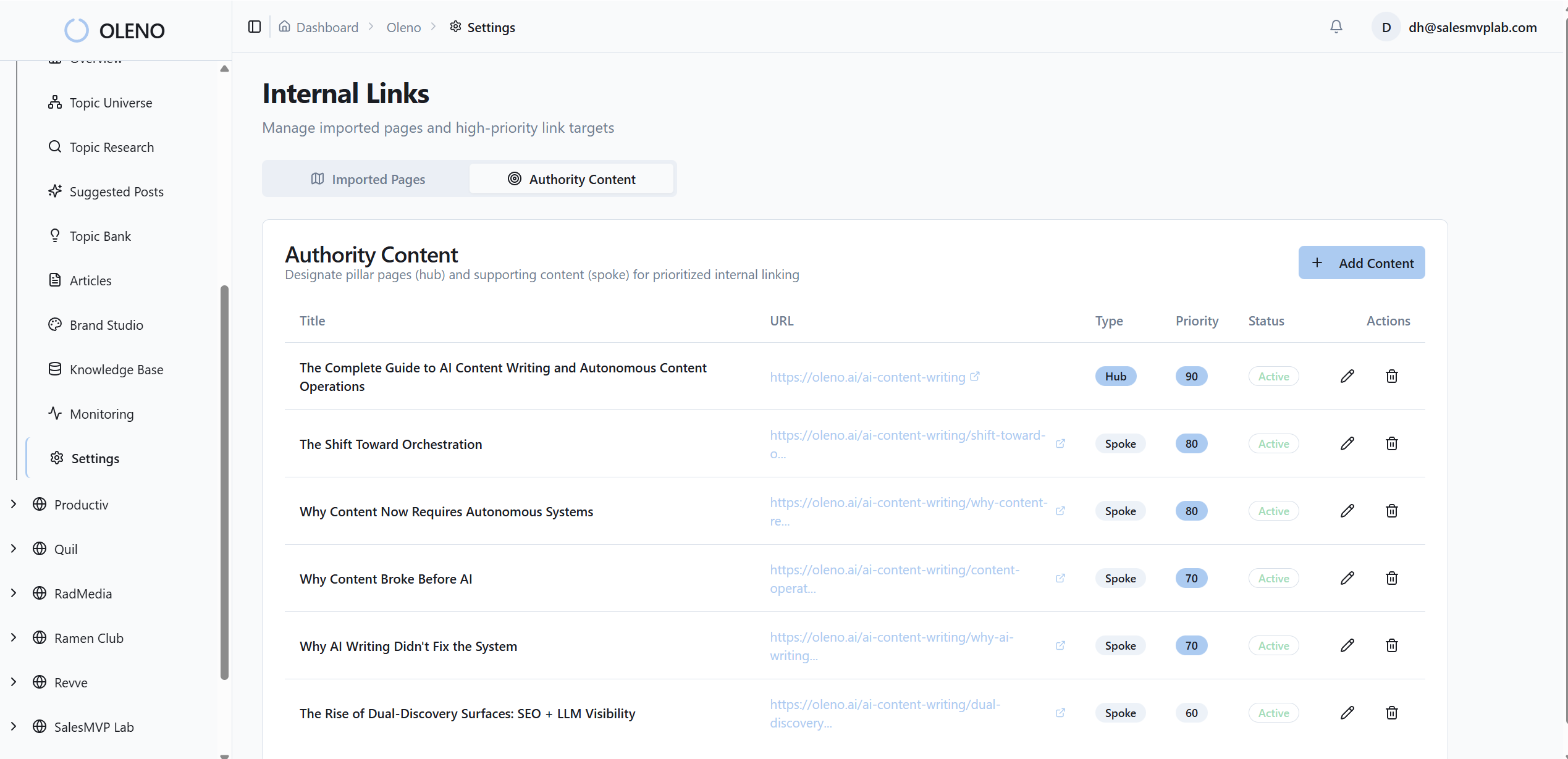
This approach reduces orphan creation and prevents link sinks from quietly hoarding equity. It also insulates you from the “3am slug change” problem because routing references a single source of truth. Oleno keeps routing deterministic so your team can focus on narrative, not link hygiene.
Snippet‑Ready Structure That Keeps Anchors Clean
Because every H2 opens with a direct answer and sections stand alone, Oleno’s drafts are naturally chunked for citations. That structure supports short, readable anchors that align with titles instead of stuffed phrases. It’s easier to read, and it’s clearer for machines parsing context within sections.
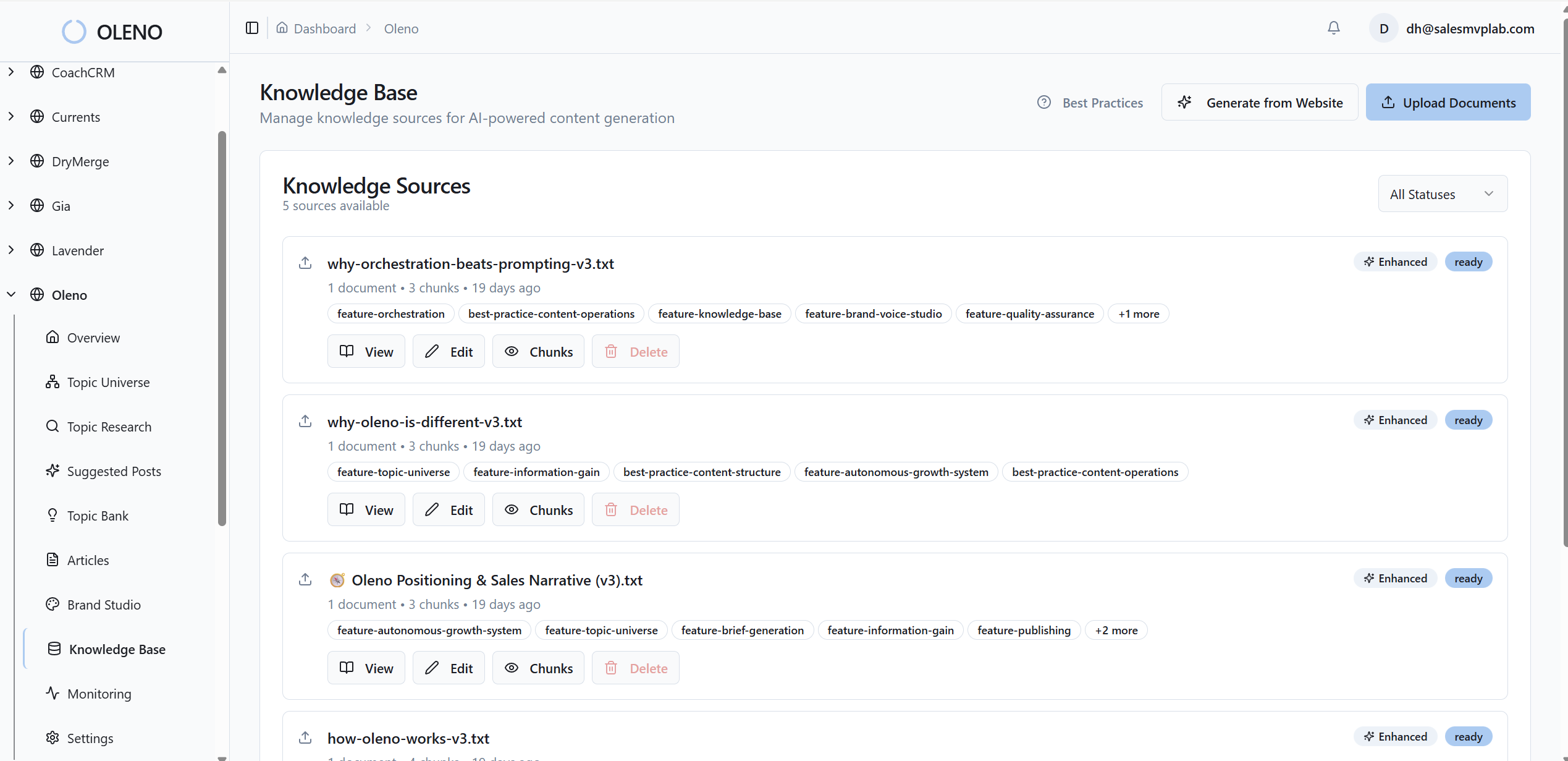
We’ve seen this structure reduce cleanup cycles and make content less brittle overall. If you’re curious how opening paragraphs are tuned for citation, this framing aligns closely with approaches like MarketMuse’s topic cluster guidance, but it’s enforced by the system rather than requested from writers.
Automated QA Gate for Links Before Publish
Oleno enforces an automated QA gate with 80+ checks across structure, tone, snippet readiness, and link policy. Link count thresholds, anchor whitelist compliance, and sitemap‑verified destination checks all happen before publishing. If a draft fails any of these, Oleno refines it until it passes, then proceeds.
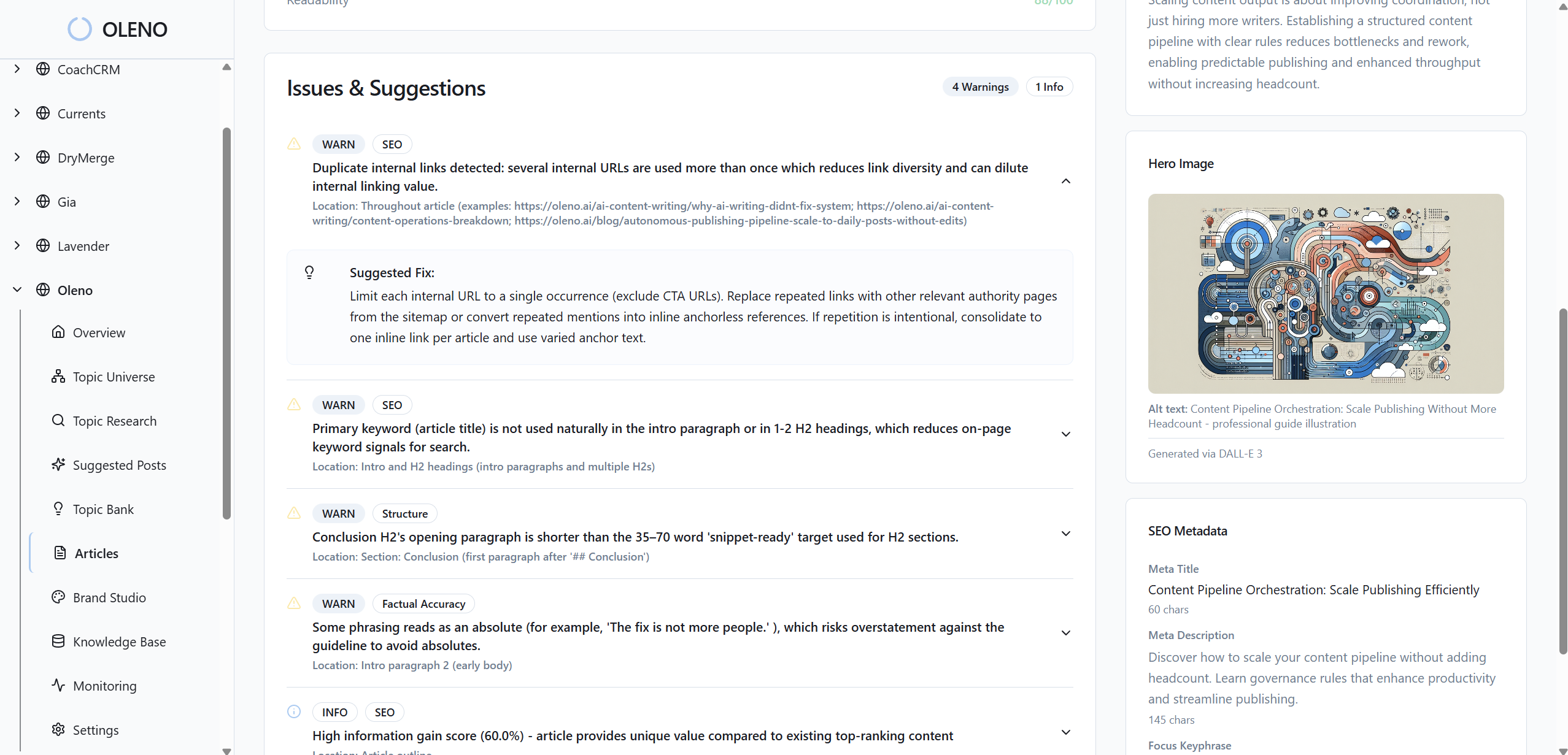
This is how you eliminate the rework tax we covered earlier. You don’t rely on individual editors to spot drift. The gate catches it. Over time, that consistency compounds authority, reduces “we’ll fix it later” tasks, and keeps your pillar pages from starving.
If you want this handled end to end, strategy to publishing, without adding headcount, Oleno was built for that. Try Oleno For Free and see how deterministic linking changes your next 90 days.
Conclusion
You don’t need more links. You need the right links, placed the same way, every time. Model clusters. Title‑match your pillar anchors. Cap links per page. And move routing out of the draft and into code. Do this for 90 days and watch crawl efficiency improve, cleanup time shrink, and pillar pages finally move. That’s authority built on structure, not hope.
About Daniel Hebert
I'm the founder of Oleno, SalesMVP Lab, and yourLumira. Been working in B2B SaaS in both sales and marketing leadership for 13+ years. I specialize in building revenue engines from the ground up. Over the years, I've codified writing frameworks, which are now powering Oleno.
Frequently Asked Questions