Competitive Content Gap Analysis: Build an Information Gain Brief in 6 Steps

Back when I ran Steamfeed, we didn’t win because we were clever with keywords. We won because every page added something new. Fresh examples. Clearer explanations. Depth others skipped. Volume helped, but it only compounded because differentiation was baked into how we worked. When we drifted from that, rankings slowed. Pipeline slowed. We felt it.
Later, at PostBeyond and LevelJump, I saw the other side. Great writers and beautiful visuals. But briefs that told people what to write, not what to add. That’s the miss. If you can’t prove your outline adds new information, you’re paying for rework and publishing echoes. There’s a straightforward fix. Make information gain a pass/fail gate before anyone writes a sentence.
Key Takeaways:
- Prioritize information gain over keywords: score net-new claims, data depth, and usefulness
- Centralize all research into one brief so writers stop restating the same SERP points
- Quantify costs of low-gain topics to protect your calendar, budget, and credibility
- Use a claim matrix and weighted scoring to decide what deserves to be written
- Bake snippet-ready openers into your brief so sections actually get cited
- Enforce pass/fail gates with thresholds and escalation paths before drafting
Ready to skip the spreadsheets and see a working system? Try Generating 3 Free Test Articles Now.
Stop Approving Briefs With Zero Information Gain
Information gain prevents duplicate drafts by scoring how much new value your outline adds compared to current results. It measures net-new claims, data depth, and clarity, not keyword overlap or word count. Example: two guides on “sales onboarding” can rank—if one adds benchmarks, a calculator, and implementation pitfalls the SERP ignores.
The Metrics That Actually Matter For Differentiation
Information gain isn’t a vibe. Treat it like a checklist with teeth. Start with net-new claims: what will a reader learn here they can’t get elsewhere? Then measure depth: specific numbers, timestamps, frameworks, and named examples beat generic talking points. Third, usefulness: will a practitioner act differently after reading? Finally, clarity: fewer, tighter sections that stand alone cleanly.
Most teams don’t score this. They scan keyword tools and approve on “looks good.” That’s how repetition sneaks in. A practical approach looks like this: assign weights to claims, data depth, and usefulness; score each proposed section from 0 to 1; require a minimum per-section score before it survives. You don’t need external analytics for this. You need a rubric and the backbone to enforce it.
If you’re looking for a foundational primer on gap thinking (with a keyword tilt), Brian Dean’s overview of content gaps is a solid baseline to contrast against an information-gain model. See Backlinko’s content gap hub for context, then raise the bar with claim-first scoring.
Your Real Bottleneck Is Research That Lives In Tabs, Not In One Brief
Scattered research kills differentiation because writers default to the median of what’s open. A single source-of-truth brief changes that by merging SERP claims, customer language, and missing angles into one prioritized outline. Example: one sheet with canonicalized claims, evidence strength, and “what we’ll add” notes.

What Traditional Approaches Miss
Export spreadsheets. Twelve open tabs. A Notion doc with quotes. This is how good teams publish repetitive content. With research fragmented, writers chase what’s easiest to recall, not what’s missing. You need one canonical brief that does the normalization for them: dedupe syndications, reconcile overlapping claims, and highlight the delta per section.
Here’s the kicker. SERPs mix formats, dates, and intents. If you don’t normalize by canonical URL and time window, you’ll overcount coverage or miss the one angle that matters. Your brief should state the scope, include canonicalized claims, and call out “we’ll add: benchmark, teardown, calculator, or counterexample.” That single document becomes the product. Drafts follow it, not reinterpret it. If you want a traditional take on gap analysis to compare against this claim-first approach, this overview from Brafton on content gap analysis is helpful—but stop at awareness, not action.
The Hidden Costs You Can Predict Before A Single Draft
Low-gain briefs produce drafts that echo the SERP. That means more rewrites, fewer snippets, and weaker internal link value across your cluster. Example: two low-differentiation posts in a pillar can drag down the whole topic, not just their URLs. You can model these costs before you write.
Let’s Pretend You Greenlight 10 Topics
Let’s pretend five of those briefs are soft on information gain. Each goes to draft. Each comes back with vague claims and no original examples. One rewrite per piece at 2.5 hours, plus an hour of editor time. That’s 17.5 hours gone before you publish a single net-new idea. If you’re using agencies, that’s real budget. If you’re using staff, that’s velocity you won’t get back this quarter.
Multiply that by a cluster. Those low-gain posts probably won’t win snippets or attract links. Now your cluster authority takes a hit, which reduces the lift of your next article, even if it’s strong. This isn’t theoretical. It’s the predictable outcome of approving outlines without a pass/fail gate. If you need a primer to orient your team on basic gap work (before you upgrade to claim scoring), see Hike SEO’s guide to onsite content gaps. Then implement thresholds that block weak outlines outright.
The Pain Of Shipping Content That Adds Nothing New
Teams feel the cost in Slack, not dashboards. The 3am “how is this different?” ping lands because differentiation wasn’t enforced up front. The fix is a score that proves uniqueness before drafting begins. Example: a brief with a 0.72 information gain score, two net-new examples, and snippet-ready openers.
The 3am Slack After Publish Day
You’ve seen it. “We’re live. How is this different from the top three?” Cue the frustrating rework. Writers get defensive; leaders get worried about credibility. This isn’t a writing problem. It’s a briefing problem. A claim-first brief with a visible score changes the conversation. You can say, here’s the delta we’re adding and where it shows up in the outline.
I’ve been on both ends of that message. When I pushed depth into the brief—benchmarks, counter-intuitive examples, named teardowns—the 3am pings disappeared. Everyone slept better because expectations were explicit. No mystery. No hoping. Just a model that either passes or doesn’t. If leadership wants constant motion, show them the threshold and the queue. Greenlight what clears the bar; spin the rest for interviews or product-backed research.
Still dealing with this debate after every publish? There’s a cleaner way to run it. Try Using an Autonomous Content Engine for Always-On Publishing.
A Production-Ready Way To Build One Information Gain Brief From SERP Data
Building an information-gain brief takes six steps: scope, capture, extract, score, assemble, and gate. Each step reduces duplication and focuses the draft on net-new value. Example: Step 3’s claim matrix makes it obvious where you’re repeating and where you’re adding.
Step 1: Define Scope, Depth, And Competitor Set
Start with guardrails. Pick your SERP depth—usually the top 10 to 15 results. Set a time window (last 12 to 18 months) to avoid stale advice. Separate SERP rivals from commercial competitors to keep bias out. Decide whether adjacent intents belong in one article or separate briefs. Write these rules at the top of the brief so nobody debates them later.
Include canonical URLs up front. Syndicated content and parameter-filled links will pollute your set if you don’t normalize. Call out ambiguous queries early. If “sales enablement program” surfaces both platform pages and how-to guides, split it. You’re building a research object, not a brainstorm. Clarity here saves hours downstream.
Step 2: Crawl And Capture SERP, Metadata, And Canonicals
Capture the basics in a single sheet: title, URL, canonical URL, published or updated date, H2s and H3s if you can extract them, and visible schema. If your tool doesn’t expose headings, scrape responsibly and label the source. Normalize domains and strip query parameters. These rows become your source-of-truth dataset—don’t write yet.
Why this matters: SERPs are messy. One domain might own three results via syndication. Dates might be “updated” without meaningful change. You want clean inputs before you compare claims. If a piece predates your window, mark it. If it’s a listicle and your angle is a teardown, note the format. You’re not chasing every page—you’re building a fair comparison.
Step 3: Extract And Canonicalize Claims Into A Matrix
Turn headings and paragraphs into distinct claims. One row per unique claim. Add columns for supporting data points, example type (case study, benchmark, calculator, teardown), and the source that makes the claim. Merge similar statements under a single canonical phrasing so you’re comparing like with like.
Tag each claim with evidence strength (firm number vs. hand-wavy guidance) and usefulness. You’ll spot patterns fast. Lots of “why it matters,” not much “how to do it.” Or everyone says “measure onboarding time-to-first-close,” but nobody offers a benchmark or worksheet. That’s your opening. This matrix becomes your comparison engine and prioritization tool.
Step 4: Calculate Information Gain With Weights And Formula
Create a simple scoring model. Score each proposed section from 0 to 1 on three dimensions: originality of claims (0.4), depth of data (0.35), and usefulness (0.25). Compute a weighted average per section, then the article-level mean. Add a small penalty if a section repeats common claims without adding context, data, or a concrete example.
The weights aren’t sacred. Adjust to your team’s goals. If your audience is technical, dial up the weight on data depth. If you’re aiming for snippet capture, bump usefulness and clarity. The point is to stop approving on vibes. A section with a 0.42 doesn’t go forward until you raise it—by adding a benchmark, building a mini-framework, or sourcing a named example.
Step 5: Assemble The Brief With Snippet-Ready Prompts
Translate your highest scoring claims into H2 prompts written as direct answers or imperatives. For each H2, include a 40–60 word snippet-ready opener: one direct answer, one supporting detail, one quick example. Add one practical example per section—a teardown, calculator, or named scenario—so the draft has gravity from the start.
Include 3 to 5 authoritative external link candidates per section in the brief. Your writer won’t need to hunt, and your citations will skew authoritative, not convenient. Add internal link targets and any product context that belongs in “Solution” sections. If you need a solid reference process for shaping briefs, this walkthrough from Pepperland’s content gap analysis guide pairs well with the claim-first approach.
Step 6: Apply QA Gates, Thresholds, And Escalation Paths
Set the bar before anyone writes. For example: article-level information gain ≥ 0.65, no section below 0.50, at least two unique examples, and snippet-ready openers present for every H2. If the brief fails, you’ve got three options: add research, split the topic, or queue it for an interview-backed piece. Don’t draft until it passes.
Make escalation paths explicit. If research can’t raise the score, it’s a signal that the topic’s saturated or the angle is wrong. That’s not a failure; it’s a win that protects your calendar from noise. The point of the gate is to make “no” a productive outcome, not a dead end.
How Oleno Automates Information-Gain Briefs End To End
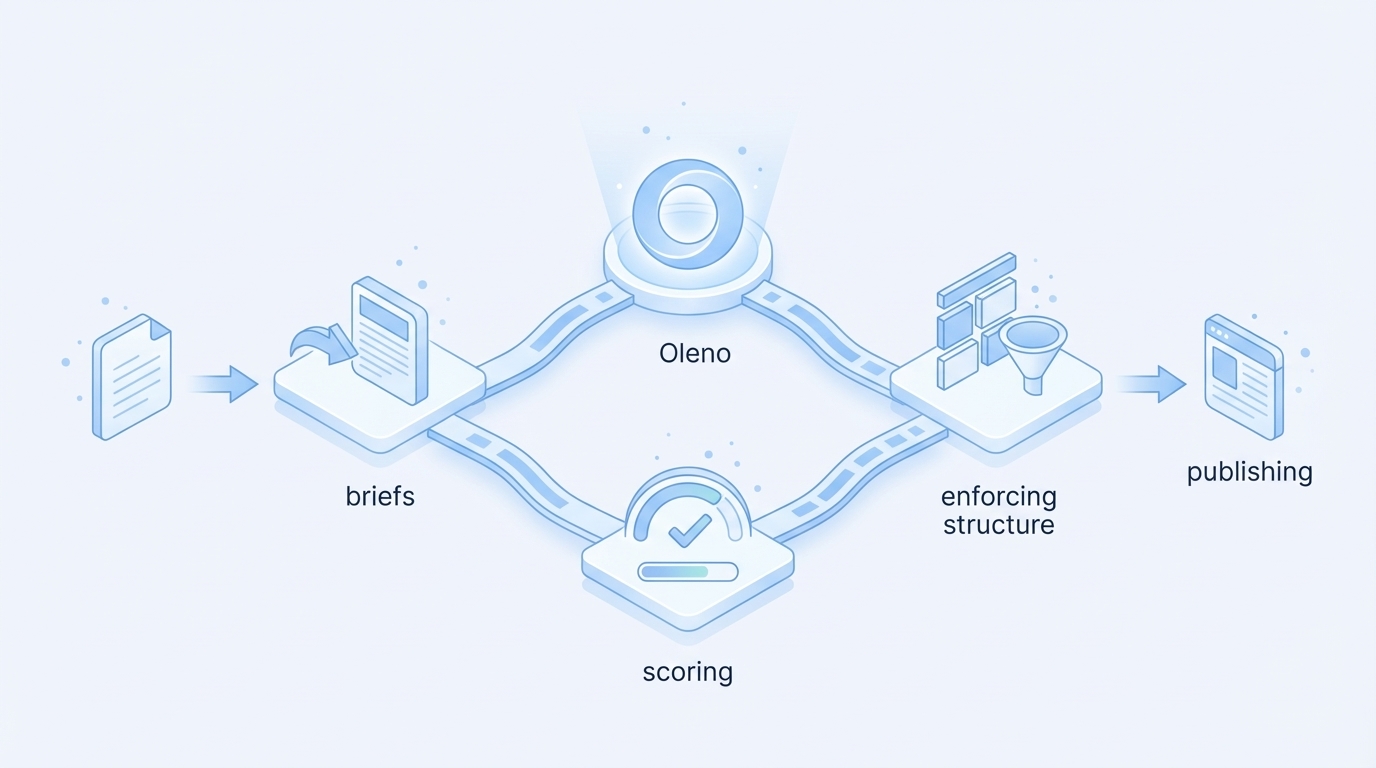
Oleno operationalizes this methodology by generating structured briefs, scoring information gain, and enforcing snippet-ready structure before publishing. It centralizes research, flags low-differentiation outlines, and injects deterministic links and schema. Example: a brief with an Information Gain Score of 78/100 and H2 openers already written and validated.
Competitive Research During Brief Generation
Oleno starts with the work most teams skip. During brief generation, it analyzes top-ranking content to identify common coverage, missing perspectives, and shallow explanations. Results are consolidated into a single, structured brief—no scattered tabs, no ad-hoc notes. Writers start from a differentiated plan with sources, angles, and claim gaps already mapped.
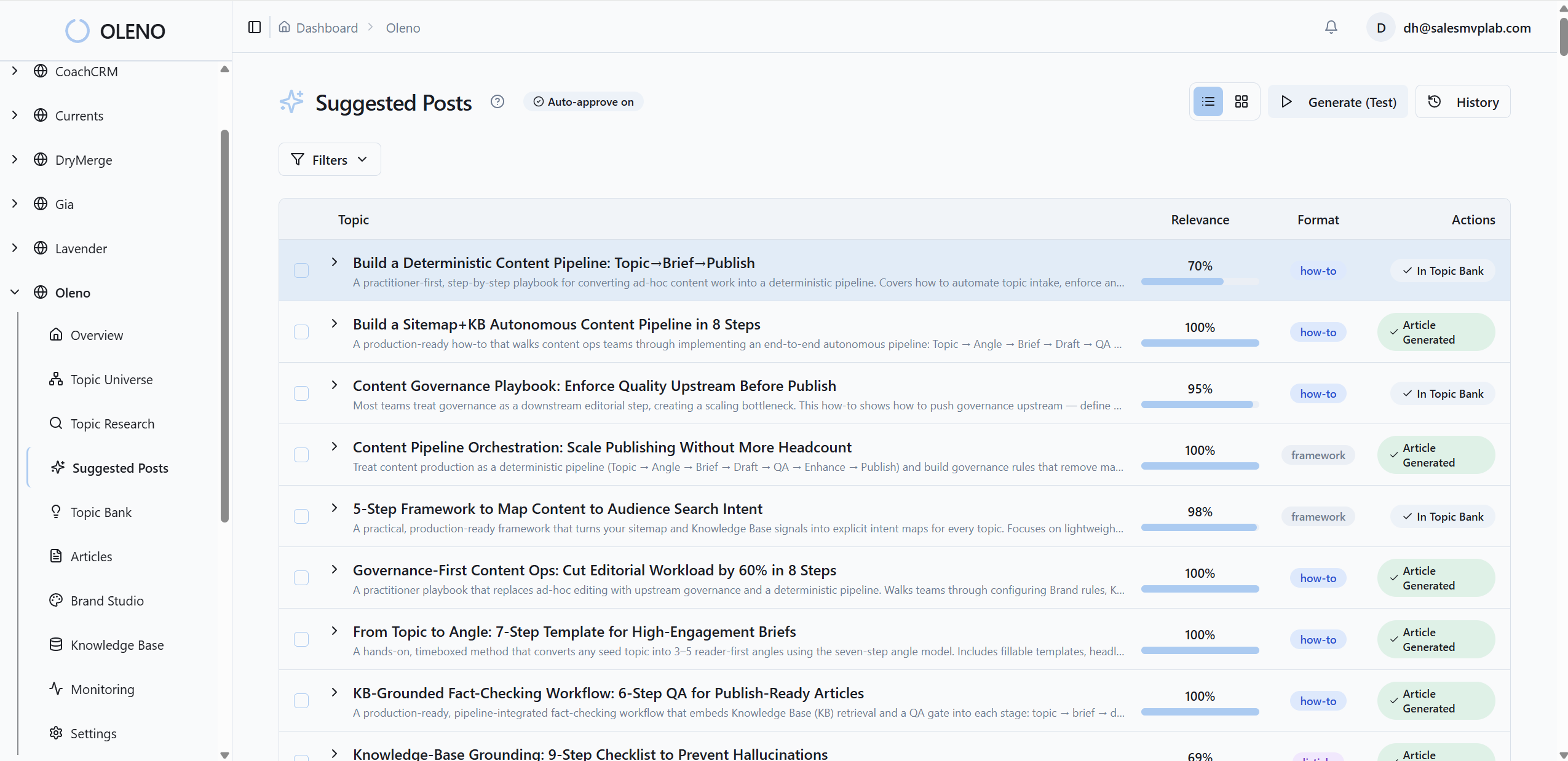
Because competitive research exists to improve originality (not monitor competitors), the brief stays focused on differentiation. Oleno’s Topic Universe also reduces duplicates by prioritizing underserved clusters and enforcing cooldowns before re-covering the same idea. Less overlap. More signal. Better use of everyone’s time.
Information Gain Scoring And Alerts
Every Oleno brief gets an Information Gain Score from 0 to 100. If the score is low, Oleno flags it before any draft work begins. You can require minimum section-level and article-level thresholds so soft outlines never hit your calendar. During QA, higher information gain is rewarded, pushing drafts toward deeper explanations and concrete examples by default.
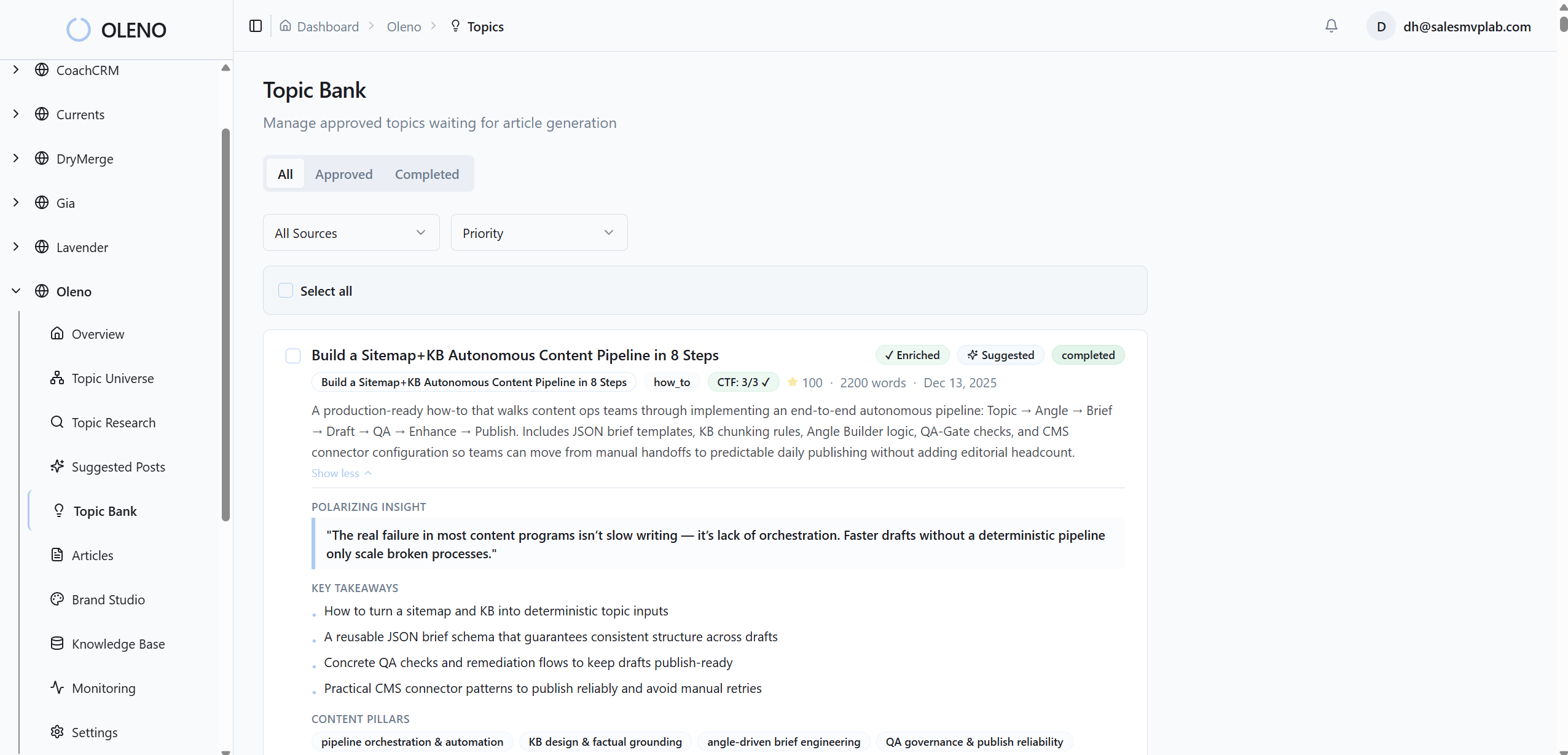
This is where costs drop. Those “rewrite because it says nothing new” cycles get blocked upstream. In practice, teams see fewer back-and-forth pings, faster draft approvals, and clearer expectations. You’re not hoping a writer finds a new angle. You’re setting the angle and measuring it before writing starts.
Deterministic Internal Linking And Schema
Once a draft passes QA, Oleno injects internal links and schema programmatically. Links come only from your verified sitemap, and anchors match page titles exactly—no fabricated URLs, no messy cleanup. Oleno also generates JSON-LD for Article, FAQ, and BreadcrumbList to clarify meaning for machines and support snippet eligibility.
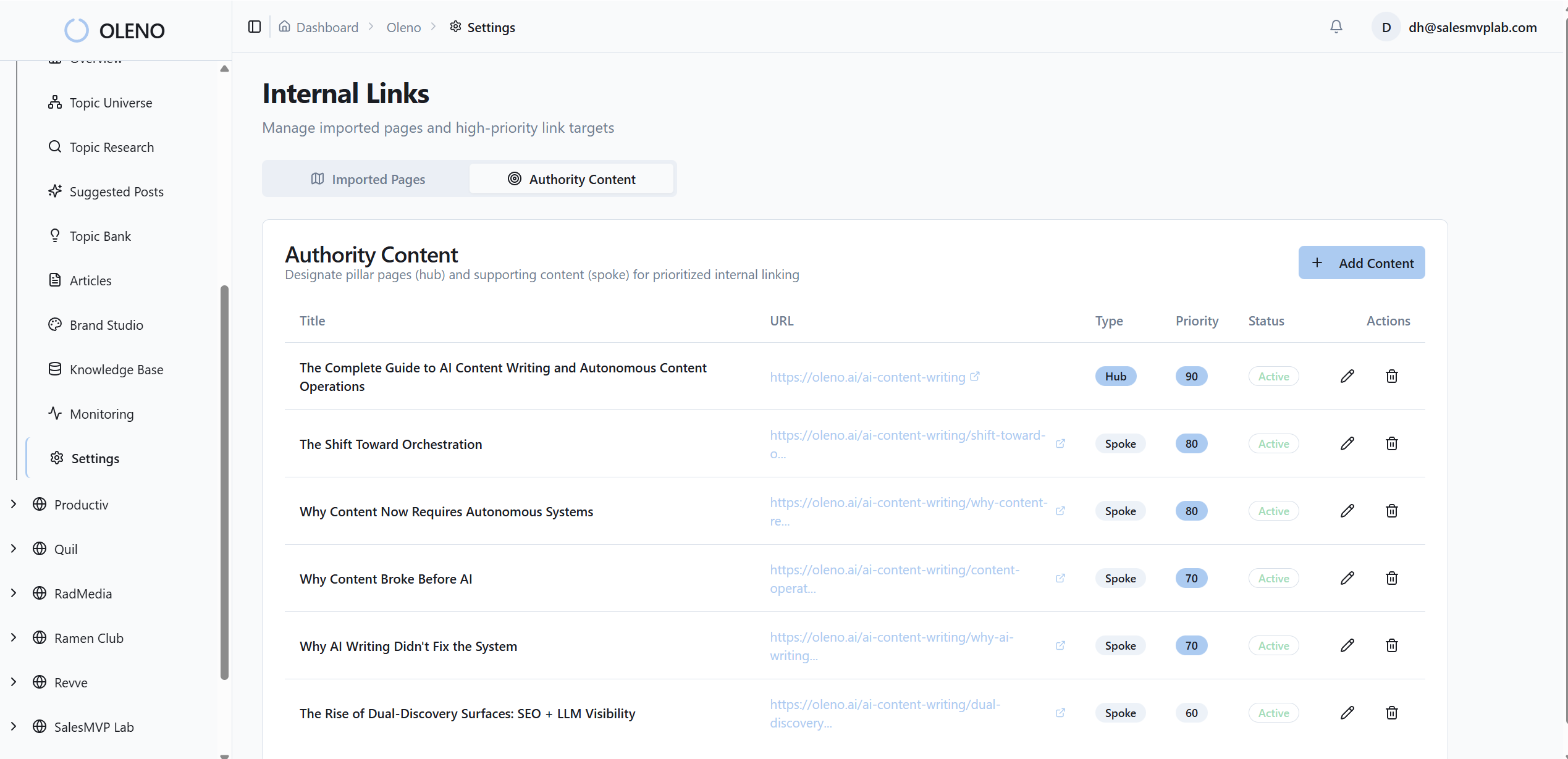
Tie it back to the pain: those tedious, error-prone finishing tasks that slow teams? Gone. Structure gets handled by code so your people focus on narrative decisions—what to say and why—not commas, anchors, or microdata. The result aligns perfectly with an information-gain model: clean sections that stand alone, link correctly, and are easy to cite.
Want to see this pipeline without building it from scratch? Try Oleno for Free.
Conclusion
You don’t need more drafts. You need briefs that prove what’s new—and a system that enforces it. When information gain becomes a gate, two things happen: writers move faster with fewer questions, and leaders stop asking “how is this different?” Because it’s obvious. Make the delta explicit, score it, and ship work that deserves to exist.
About Daniel Hebert
I'm the founder of Oleno, SalesMVP Lab, and yourLumira. Been working in B2B SaaS in both sales and marketing leadership for 13+ years. I specialize in building revenue engines from the ground up. Over the years, I've codified writing frameworks, which are now powering Oleno.
Frequently Asked Questions