Competitive Content Gap Scoring: Prioritize Pages to Turn into 'Vs' Content

I used to say yes to every “we need a vs page” request that hit my inbox. Sales would ping me with three names before lunch. Product would want to “set the record straight.” I would pick one and start writing. A week later, someone else would ask for a different one. We moved fast, but we were guessing. That guess cost time and trust.
Once we tied competitive content to pipeline, the pattern was obvious. Some comparisons pull real buyers down the funnel. Others collect vanity traffic and create rework. So we built a simple score, 0 to 100, and stopped arguing. If it cleared the line, it shipped. If it did not, it waited. Life got calmer. Output was cleaner.
Key Takeaways:
- Treat “vs” pages as evaluation assets, not blog posts. Define the job, target actions, and qualifying intent.
- Score demand, fit, effort, and defensibility on a 0 to 100 scale so decisions stop being loudest-voice wins.
- Use buyer-intent signals first, then layer traffic and difficulty. Volume without intent is a trap.
- Detect SERP intent before you draft. If the page type does not match, pick a different asset and link forward.
- Band scores into publish, refresh, or deprioritize with SLAs so work does not linger in limbo.
- Guard claims with a governed inventory and prohibited list to reduce legal risk and rework.
- Close the loop. Compare predicted effort to actual and adjust weights quarterly.
Most Teams Chase Every Competitor Page. Score Before You Write
Competitive content gap scoring ranks which “vs” pages you should create or refresh based on pipeline impact. It prioritizes buyer intent, fit, and expected effort over raw volume. When you score first, you publish fewer pages, yet you win more evaluation moments. That is the point.

Define the job to be done for 'Vs' content
A “vs” page is not a thought piece. It is an evaluation asset built to answer “which should we pick, and why.” Success looks like downstream actions, not sessions. Decide your primary action, demo click, pricing view, or trial start. Set a secondary action, like a deeper product page. Then capture a baseline, so you can compare before and after without hand waving.
If you do not define the job, stakeholders will judge by the metric they care about most. PR will chase share of voice. SEO will celebrate pageviews. Sales will ignore it if calls do not get easier. I have been that person, cheering traffic while pipeline stayed flat. The fix is simple, name the action, set the guardrails, and measure against that, not vanity.
What signals prove high commercial intent?
Look for brand plus competitor queries, pricing terms, alternatives, and feature head terms tied to outcomes, not just nouns. A query set like “YourBrand vs Competitor A,” “YourBrand pricing,” and “Competitor A alternatives” usually signals evaluation. Cross-check with paid overlap and talk tracks from recent calls. When those data points line up, you have energy worth chasing.
Be careful with broad head terms. “Proposal software” might look attractive, but it often pulls research-stage readers. Do the basics: mine Search Console for clusters, pull assisted conversions from your CRM, and listen to how prospects phrase tradeoffs on recorded calls. For extra context, review a primer on content gaps from Backlinko’s content gap hub. Keep your bar high for what counts as intent.
Ready to stop guessing which “vs” page ships first? Start with a lightweight score, then let Oleno run the boring parts. Request A Demo.
See The Real Problem: Reactive Requests Waste Time And Budget
Reactive “vs” requests break calendars because they ignore system tradeoffs. Each unscored page steals hours from assets with higher intent and better fit. Tying scoring factors to revenue stops the thrash. It also makes prioritization boring, which is a good sign.

Map business outcomes to scoring factors
Give each factor a reason that ties to pipeline. Commercial intent predicts close potential, so it gets the heaviest weight. Traffic estimates size the pond you are fishing in. Ranking difficulty approximates the cost to show up. Conversion fit checks if your product can win credibly. Defensibility tests if you can hold that ground over time. Document how each factor rolls up to dollars, not just clicks.
I like to review one win, one stall, and one loss each quarter and map them to the factors. Where did intent show up in queries or calls. Which features decided the outcome. Where did we win on narrative and lose on table stakes. When you do this with your sales lead, the scoring stops feeling like an SEO exercise and starts looking like revenue planning.
Where do you pull reliable data?
Start with what you own. Query clusters from Search Console, CRM-assisted conversions by landing page, and snippets from discovery calls. Then layer public data. Scrape the SERP and label page types, comparisons, category pages, listicles, or reviews. Pull difficulty and traffic from your tool of record. Validate demand by checking paid keyword overlap. Note gaps so no one mistakes estimates for ground truth.
A quick note on tools. Any scoring model is only as good as the inputs. Use outside references to anchor your approach, like this guide on content gap analysis. Still, keep your source-of-truth list short, and be explicit about accuracy ranges. That honesty speeds up buy-in.
Put Numbers To It: A 0 To 100 Competitive Gap Priority Score
A 0 to 100 score creates a single decision surface everyone can read. It is transparent, repeatable, and boring by design. You can build it in a sheet, normalize inputs between 0 and 1, apply weights, and compute a composite. Then band the result so action is obvious.
Weighting matrix and normalization in Sheets
Set columns for raw inputs, normalize each to a 0 to 1 scale, and apply weights that reflect your business. A starter set works: intent 0.35, traffic 0.25, conversion fit 0.2, defensibility 0.1, effort inverse 0.1. The composite is just a weighted sum. Keep formulas visible so people trust the math.
Two operational notes matter. First, store the raw values, the normalized values, and the final score. You will need them when you tune weights. Second, keep a short text field for notes on each item. Why did we mark defensibility low. What would change the fit score. Those sentences prevent relitigating old debates. If you want a broader playbook for finding gaps, this walkthrough on content gap analysis tools is a useful reference.
Sample thresholds and decision bands
Use three bands. For example, 75 to 100 ships this quarter, 50 to 74 refresh or brief for the next sprint, 0 to 49 gets parked. Tie SLAs to each band so there is no ambiguity. Band A gets a brief within five days and published in 21 days. Band B gets briefed within 21 days and a backlog slot. Band C gets parked with a note on what would change the score.
I like to add one interjection in review meetings. If we feel a Band B item “should be” an A, write the change we need to see. Maybe it needs a stronger win condition or a clearer conversion path. Then move on. The score is a tool, not a court.
Fewer rewrites and a faster path to publish. That is what Oleno delivers when your team stops guessing and starts scoring. Request A Demo.
The Cost Of Guessing And The Pain Of Comparison Rework
Rework hides inside calendar stats. You think you shipped two pages, but you actually wrote three drafts, fought over claims twice, and still do not know what moved the pipeline. The emotional cost shows up in Slack, not dashboards. You feel it when reps stop sharing your pages.
What your sales team feels when pages miss the brief
If the claim is buried, the proof is thin, or the tone feels off, reps go around you. They worry about wrong claims and angry follow-ups. So they start pasting screenshots into custom decks. Shadow content multiplies, the narrative drifts, and your credibility drops. I have watched this happen, and it is avoidable.
Give sales one sharable sentence that matches how they already talk. Add a comparison table that answers obvious questions. Include a “when not to pick us” note if that is part of your brand. People respect honesty. For broader context on the upside of finding real gaps, this take on why competitor content gaps matter is worth a read.
Guardrails to reduce anxiety about wrong claims
Create a claims inventory that includes source links, dates, and prohibited statements. Require a product truth check before any draft moves to editing. Add a fairness rule so you compare like for like and cite context. This lowers legal risk and speeds review cycles because people trust the rules.
I have seen review times drop from days to hours when teams adopt a simple claims sheet. Not because lawyers got nicer, but because the inputs were clearer. You do not need a heavy process. You need rules everyone can find and follow.
The New Way: A Lean Triage Workflow For 'Vs' Pages This Quarter
A lean triage workflow turns scoring into action. You decide quickly, publish what matters, and avoid duplicates. The cadence feels steady instead of spiky. That rhythm is what lets small teams win.
Triage rules: publish, refresh, deprioritize with SLAs
Decide in the first meeting. If a page scores in the publish band, assign an owner and start the brief this week. If it sits in the refresh band, update the existing page rather than creating a duplicate. If it is low, park it with a note on what would change the score. Hold a short weekly standup to clear blockers and keep the queue honest.
You will be tempted to sneak in a low-score favorite. Do not. Put it in the notes and revisit next quarter. Your future self will thank you. Consistency beats bursts here.
The brief template that preserves product truth
Keep the brief to a single page. Include the top claim, secondary points, proof sources, prohibited claims, and risk notes. Add table rows for feature by feature comparisons and a tone sample so voice stays aligned. End with a checks section for accuracy-sensitive claims and schema items you need on the page.
When the brief is tight, drafting is straightforward. The writer is not guessing, the reviewer is not rewriting, and sales gets something they can share without caveats. If you want extra reading on gap frameworks, I like this overview on competitive gap analysis. Use it as a sanity check, not a script.
How Oleno Operationalizes Competitive 'Vs' Content Scoring And Execution
Oleno turns your scoring model into a reliable execution loop. It encodes voice, product truth, and fairness rules, then runs briefs through deterministic pipelines. That removes coordination debt and shortens the path from score to live page. You still set direction. Oleno keeps the engine running.
Competitive Studio and Topic Universe integration
Competitive Studio pulls your competitor list, maps opportunities, and drafts comparison topics grounded in your knowledge archive. Topic Universe tracks coverage, cooling periods, and duplication risk so you do not cannibalize yourself. The result is a clean backlog aligned to real demand, not a stack of ad hoc requests.
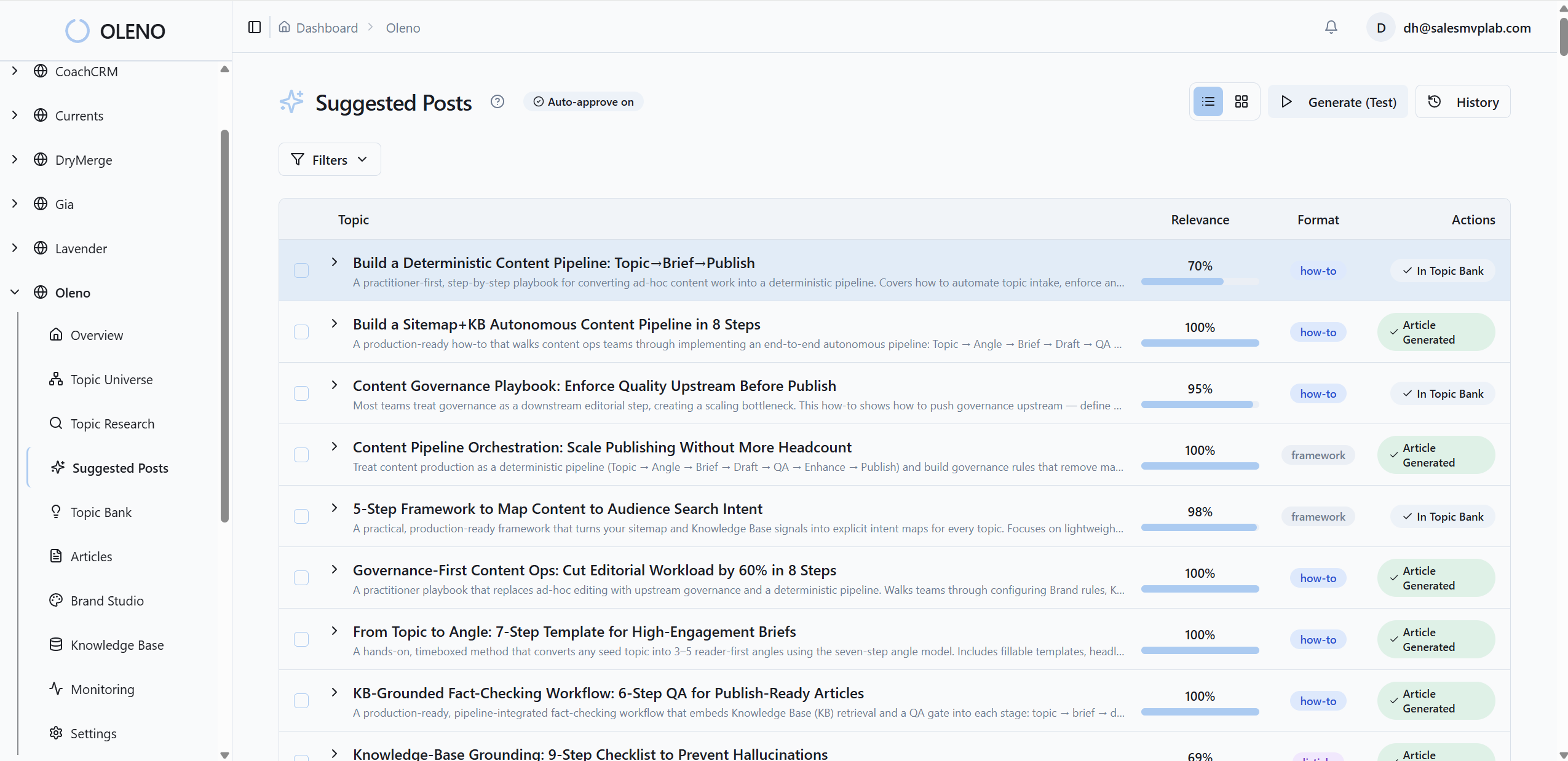
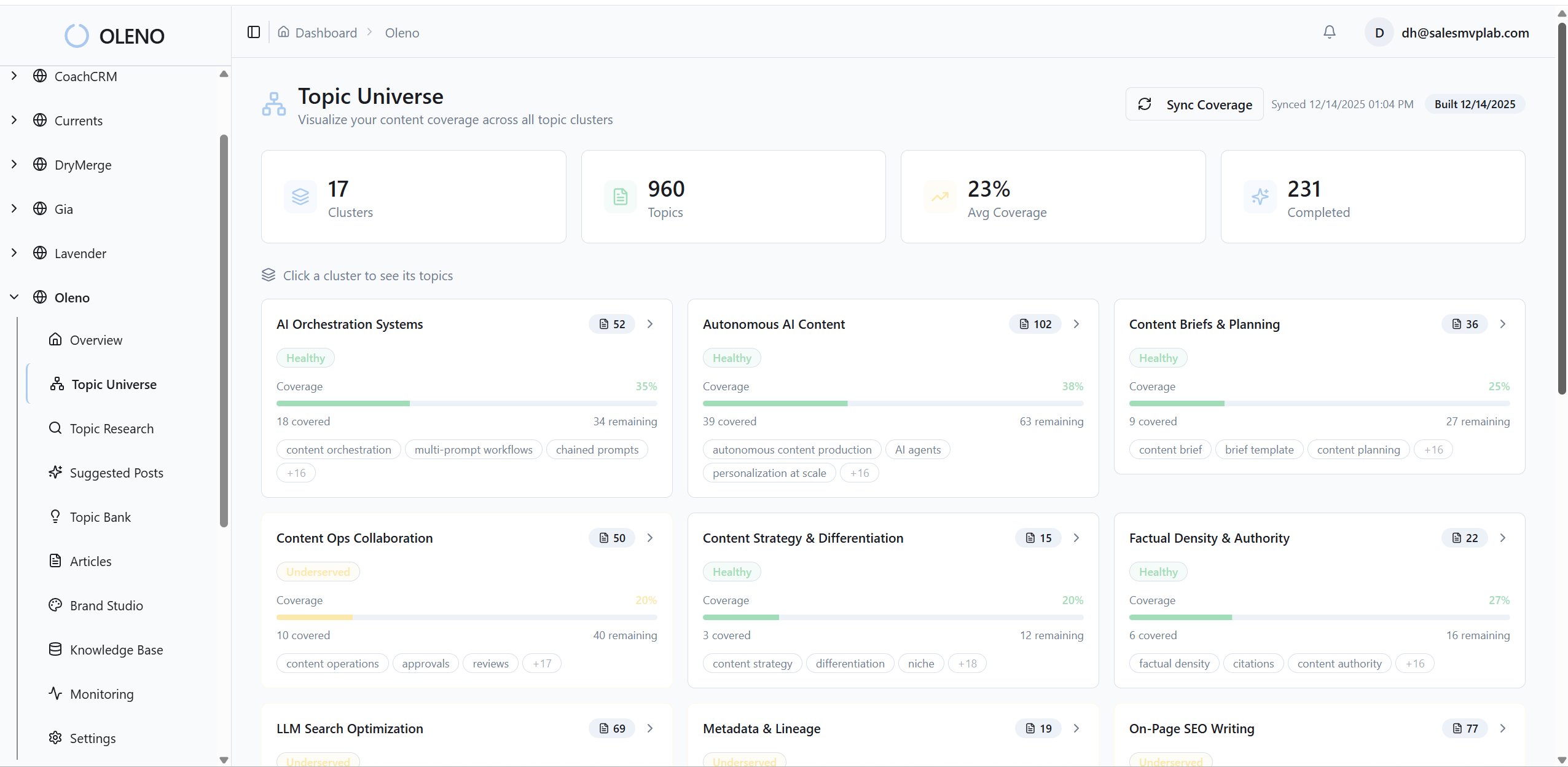
Because everything sits on governed inputs, “vs” ideas are not free-floating. They inherit the positioning, the allowed claims, and the markets you care about. That is the difference between a list of ideas and a system that publishes on purpose.
From score to publish with QA gates and cadence
Connect your prioritization sheet to a triage queue. Oleno generates briefs with snippet-ready structure, then moves drafts through a consistent flow, discover, angle, brief, draft, QA, publish. Brand Studio keeps tone steady. Product Studio blocks prohibited claims. A QA gate prevents publishing until required checks pass. You get consistent tables, citation patterns, and internal links, and you see fewer rewrites, fewer errors, and faster publishing against your bands.
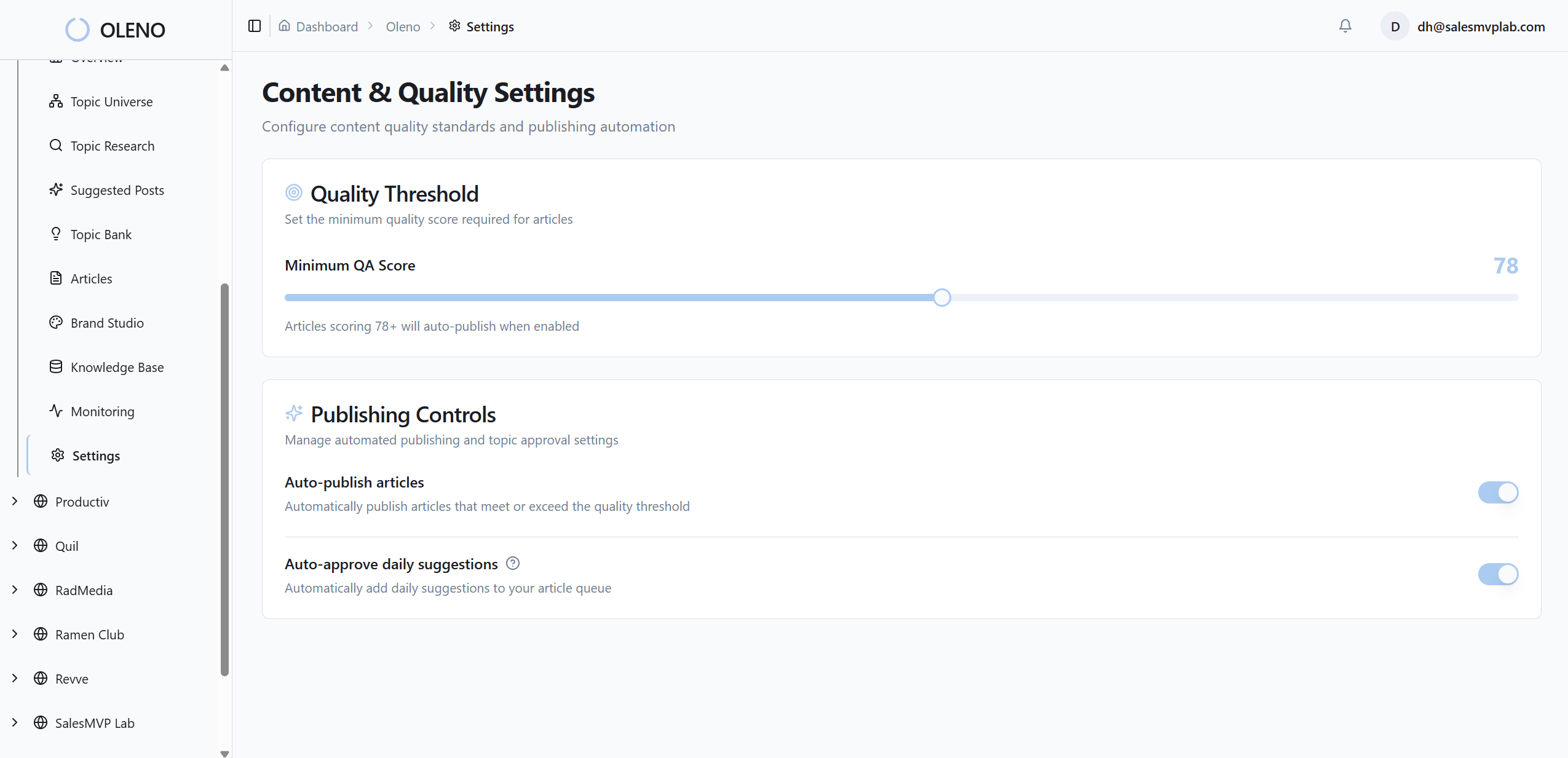
If your earlier pain was rework and missed intent, this is the callback. Those costs drop when the system enforces what used to live in people’s heads. Want to see it in your setup. Request A Demo.
Conclusion
You do not need more “vs” pages. You need to pick the right ones, write them for buyers, and ship on a steady cadence. Score for intent and fit, band the outcome, guard the claim, and keep the loop tight. When you do that, comparison content stops being a scramble and starts moving pipeline. That is the job.
About Daniel Hebert
I'm the founder of Oleno, SalesMVP Lab, and yourLumira. Been working in B2B SaaS in both sales and marketing leadership for 13+ years. I specialize in building revenue engines from the ground up. Over the years, I've codified writing frameworks, which are now powering Oleno.
Frequently Asked Questions