Compliance‑First Content Framework for Regulated B2B

Most teams treat legal like a gate that blocks publishing. The real mistake? Building a process that drags legal into every single piece, even when risk is tiny. I’ve watched that stall calendars for weeks. The fix is boring and powerful: a compliance‑first content framework that pushes rules into the workflow so legal only sees what actually needs eyes.
I’m not saying skip legal. I’m saying earn fewer reviews by encoding the rules, claim‑mapping your facts, and running pre‑publish checks that catch the easy stuff. Do that well and legal turns from bottleneck to backstop. You move faster without adding risk.
Key Takeaways:
- Encode compliance once, then apply it everywhere so standard content can publish without full legal review
- Map every factual claim to a real source so legal scans, not rewrites
- Run automated pre‑publish QA to clear 60–80% of trivial legal questions before review
- Classify content by risk tier so only high‑risk pieces need full review
- Measure review turnaround, touch count, and rework to cut time from weeks to 48–72 hours
- Aim to reduce full‑review volume by 50% while keeping risk flat or lower
Why a Compliance‑First Content Framework for Marketing Beats Endless Legal Gates
A compliance‑first content framework replaces gatekeeping with governance, so standard content moves without a full legal pass. You do it by encoding do‑not‑say rules, approved claims, and disclosure patterns into briefs and drafts. Fewer blockers. Faster cycles. Lower risk. Think claims tied to sources, not opinions.
Legal as a Bottleneck Is a Process Problem
When legal reviews everything, the queue explodes. The pattern is predictable. Marketing ships drafts with loose language, vague claims, and no sources. Legal sends it back with a dozen questions. Ping‑pong. Hours lost. Trust burned. Cadence gone. The root cause isn’t legal. It’s missing guardrails upstream.
So fix the upstream. Govern voice and claims inside the brief. Use examples that match your industry’s risk profile. Spell out what words carry regulatory baggage in your space. When writers see constraints before they draft, reviews shift from discovery to verification. You stop asking legal to solve writing problems.
I’ve watched teams reclaim weeks by banning three phrases that always triggered review, requiring sources for any number, and standardizing two disclosure lines that were non‑negotiable. Simple rules. Big lift. You can do the same, without a bigger team.
Encode Rules Upfront, Not After Draft
Governance only works when it lives where the work happens. Put your do‑not‑say list in the brief. Add approved product definitions in a sidebar. Show two on‑brand examples with correct disclosures. Writers model what they see. Reviewers check against the same rules. Alignment cuts debate and rework.
You’ll still have edge cases. That’s fine. The goal is shrinking the surface area of review, not eliminating it. If 70% of your pieces can route under marketing governance and 30% need legal eyes, you just changed your throughput math. And your lawyers will thank you for sending tighter work.
Start small. Pick one content type, document three rules, require sources, and track the outcome for a month. If rework drops and turnaround tightens, keep going. If not, refine the rules. Don’t guess. Measure.
The Real Bottleneck: Unmapped Claims and No Source of Truth
The biggest slowdown isn’t legal scrutiny. It’s claims without sources and teams without a single source of truth. When facts are fuzzy and definitions drift, reviewers must fact‑find from scratch. Map every claim to a source and lock approved product language, so legal verifies instead of investigates.
What Legal Actually Reviews
Legal checks risk, not style. They care about substantiation for specific claims, regulated terms, comparative statements, disclosures, and anything that could mislead. If you send unsourced stats, aggressive comparisons, or undefined “best” language, you invite a stall. That isn’t legal being picky. That’s risk management.
Hand them what they need. Include a claim table with the draft: exact wording, linked source, and status. Add a short rationale if the claim is interpretive. Standardize disclosures for affiliates, endorsements, and data handling. The fewer unknowns, the faster the approval.
Quick test before you submit: would a stranger understand what we’re promising, what it depends on, and where the proof lives? If not, you’re not ready for review.
Where Marketing Creates Risk Without Noticing
Risk sneaks in through convenience. You grab a stat from an old blog. Round a number. Borrow a competitor’s phrase that implies superiority. Feels small in the moment. Becomes big when it hits a lawyer’s screen with no paper trail.
Build two habits:
- Never ship an unlinked number
- Never introduce a comparative claim without criteria
If you say “faster,” say faster at what, by how much, and for whom. That’s the difference between confident and risky—and between a one‑touch review and a week of back‑and‑forth.
If you need a public playbook, the FTC’s updated Endorsement Guides and disclosure guidance are a solid baseline for US consumer claims, and the UK ICO’s consent guidance clarifies expectations for data use and marketing practices under GDPR and PECR (ICO consent guidance). Ground your patterns in these, then tailor to your industry.
The Hidden Cost of Ad‑Hoc Compliance in Content Ops
Ad‑hoc compliance wastes time, adds risk, and kills momentum. Each manual review adds context‑setting, scavenger hunts for sources, and subjective edits. That cost compounds across dozens of pieces per month. You lose calendar predictability, miss launches, and train the org to avoid content that might matter most.
Time Slippage You Can Measure
Every extra reviewer touch adds minutes. One pass becomes three. A draft sits for days because a key legal approver is booked. Multiply that by five in‑flight pieces and you’ve lost a week of calendar time without changing a word. You won’t see it on task lists. You’ll feel it in missed windows.
Track three numbers: touches per asset, review cycle time, and percent of drafts that require claim rewrites. If touches are above two on standard content, you have a governance gap. If cycle time swings wildly, your classification is wrong. Data turns “legal is slow” into “our process is broken here.”
You’ll also see spillover cost. Sales asks for assets that never ship. Paid campaigns slip. Social goes quiet. That shows up in pipeline and brand recall a quarter later. The tax is real, just delayed.
Opportunity You Lose
When content that should be fast gets stuck, you say no to higher‑value work. That’s the silent cost. Short‑turn posts die. Category stories get bumped. Leadership pieces never land. You end up publishing safe evergreen while competitors eat intent with bolder, still‑compliant content.
The fix isn’t louder reminders. It’s clearing the runway. Build a publishing lane where standard pieces move with minimal friction. Spend human time on complex, high‑risk work that actually needs it. That’s how you protect speed and quality at once.
The gap often shows up in missed tie‑ins. You planned to back a launch with three supporting articles. One publishes on time. Two trail a week later. By then, momentum is gone—because review time was unpredictable.
Risk You Carry
Ironically, ad‑hoc review can increase risk. When you rush at the end, you miss disclosures. When teams avoid legal out of fear, they publish without checks. That’s how mistakes hit production. A governance‑first approach lowers this risk by making the safe path the fastest path.
You don’t need perfection. You need defaults that are hard to do wrong: standard disclosures saved as snippets, approved product definitions in briefs, and sources embedded next to claims. When the easy way is the right way, you stop gambling with compliance under deadline pressure.
Here’s a simple cost snapshot you can adapt:
- 2–3 extra review touches per asset adds 30–60 minutes of labor
- Unlinked stats trigger 1–2 day delays for fact‑finding
- Missed disclosures risk takedowns and forced edits post‑publish
- Drift in product language confuses buyers and invites corrective work
What It Feels Like to Ship With a Legal Queue
Shipping with a legal queue feels like running with a parachute on your back. You can move, but you never hit stride. Writers wait. Editors ping. PMMs juggle six “almost there” posts. You plan for Friday, then slip to next Wednesday. Morale takes a hit, and so does quality.

Late‑Night Rewrites and Slack Pings
I’ve lived the 9 pm rewrite after a legal comment thread lands. Everyone’s tired. Context is cold. You change three phrases, resubmit, and hope. That scramble isn’t about skill. It’s process debt. The draft lacked guardrails, so review turned into rewriting, not verifying.
When that happens often, people get defensive. Legal feels blamed. Marketing feels blocked. Leaders avoid the topic. You can break the loop with shared rules and a lighter queue. Same team, less friction. Attitudes improve fast when the work moves.
Even small wins help. One disclosure template restored Sunday evenings for a PMM at a past company. Sounds small. It wasn’t. That change unlocked trust for bigger shifts.
Approval Anxiety in Every Draft
When every draft invites a battle, writers self‑censor. They shave off strong claims, avoid examples, and write in the safest possible voice. You get bland copy that doesn’t convert. Different risk. Quiet cost.
Clear, approved language is a confidence booster. When writers see product definitions, acceptable phrases, and example claims with sources, they take smart swings. Reviewers see familiar patterns and move faster. Anxiety fades because the rules are visible and fair.
You’ll feel the change in standups: fewer “stuck in legal,” more “publishing today.” That’s governance working.
Building a Compliance‑First Content Framework for Fast Publishing
A compliance‑first content framework for fast publishing classifies content by risk, maps every claim to a source, and runs automated pre‑checks before human review. It shifts review from discovery to verification. The payoff is simple: fewer full reviews, faster cycles, and steady governance at scale.
Classify Before You Create
Content types don’t carry equal risk. A customer story with ROI claims is not a casual blog. A feature comparison is not a how‑to. Treating them the same is the first mistake. Classify everything into low, medium, and high risk before you brief. Route accordingly.
- Low‑risk: ships under marketing governance once it passes pre‑checks
- Medium‑risk: light legal pass focused on claims and disclosures
- High‑risk: full review with more time and context
Make the rules visible. Industry, topic, claim density, and distribution channel all matter. If you’re in a regulated space, raise the bar. If not, keep it lean but real. The goal is fewer surprises and honest timelines.
Pilot path:
- Define low/medium/high criteria with legal
- Add a risk field to your brief template
- Pre‑approve disclosure and claim patterns per tier
- Set SLAs by tier, then measure real times
- Tune monthly until hit rates are stable
Claim‑Mapping That Sticks
Claim‑mapping turns “we think” into “we know,” and it makes reviews boring—in the best way. The template is simple. For each factual statement, capture:
- ID and exact wording
- Linked source (primary where possible)
- Status (approved, needs review, retired)
- Rationale or math if modeled/derived
Keep the claim table close to the draft, not buried in a separate doc. Reviewers skim the draft, then scan the table. If they can verify in minutes, you win. If they need to Google, you lose. The difference shows up in cycle time and tone.
Retire claims on a schedule. If a stat turns two years old, flag it. If a product definition changes, cascade the update. Stale claims create risk and invite rework. A light rotation keeps content honest.
Automated Pre‑Publish QA
Automated pre‑checks are your first line of defense. Catch unsourced numbers, banned phrases, missing disclosures, and off‑brand product language before a human ever reads the draft. That alone removes a huge chunk of legal questions.
You don’t need a giant toolset. A checklist script, a style‑guide linter, and a claims scan go a long way. The key is running it every time. Consistency builds trust. Trust creates the fast lane you want.
Wrap checks into your workflow. If a draft fails, it doesn’t move. Fix it, rerun, then submit. Reviewers will notice the cleanup. Your calendar will breathe again.
Ready to reduce your legal queue and publish faster without adding risk? Request a Demo
How Oleno Enforces a Compliance‑First Workflow Without Slowing You Down
Oleno turns compliance‑first from a policy into an operating system by encoding rules in governance, grounding claims in real sources, and blocking low‑quality drafts before review. It doesn’t replace legal. It makes legal’s job lighter by sending tighter work, with proof, on a predictable cadence.

Product Truth and Claim Control With Product Studio
Product Studio centralizes approved product descriptions, feature boundaries, supported and unsupported use cases, pricing notes, and screenshots. That becomes the single source of product truth for content. During briefs and drafts, Oleno pulls from Product Studio so writers use the right language and stay inside guardrails.
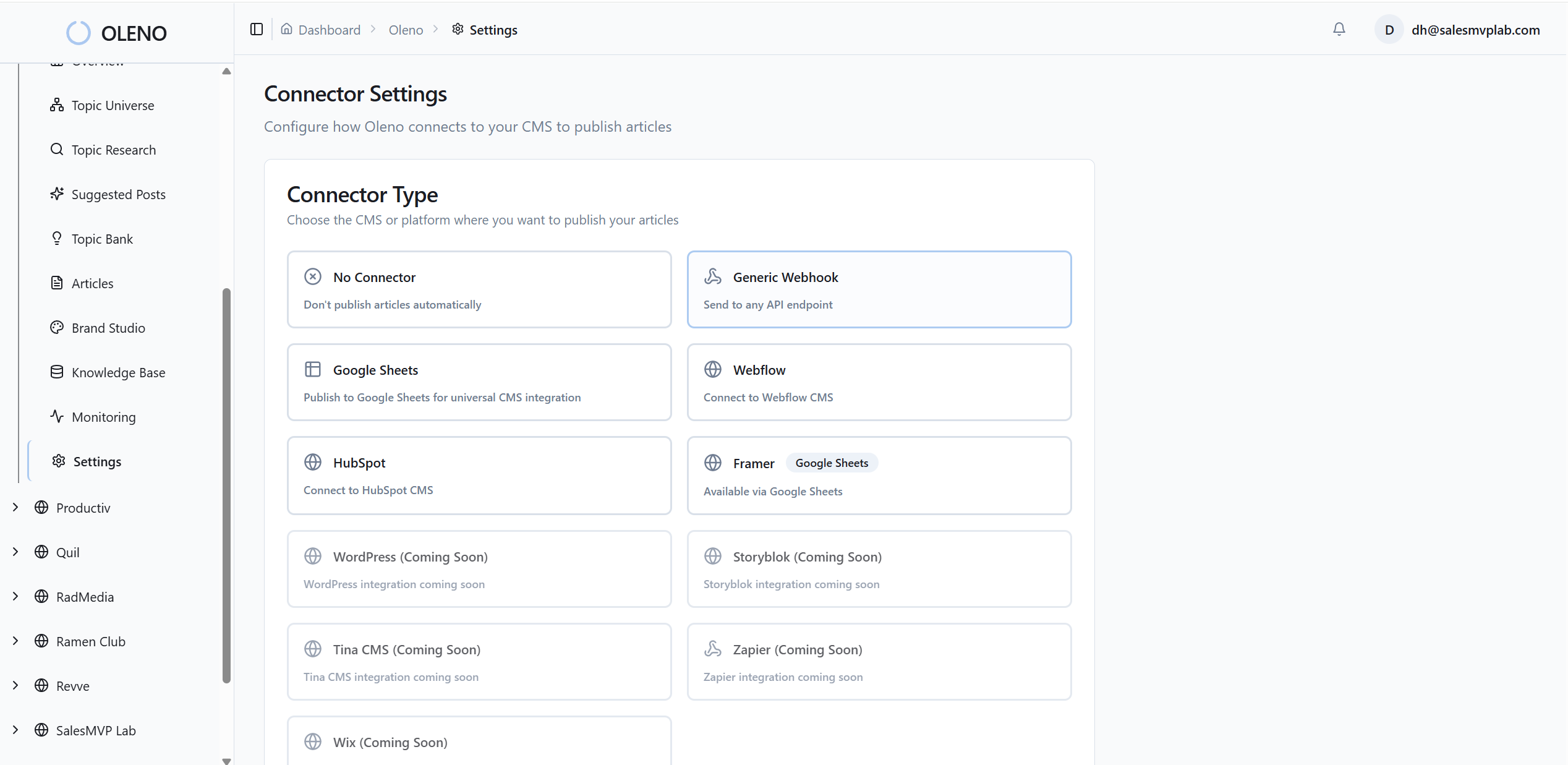
Tie this back to claim‑mapping. When a draft cites a product capability, it aligns to the documented feature—not a memory from a call months ago. Reviewers stop chasing down what the product actually does. That’s where a lot of review time goes to die. You cut it off at the source.
When product changes, you update Product Studio once. New truth propagates across jobs. That prevents drift and the painful “please fix old pages” scramble that eats cycles.
Source‑Backed Drafts With Knowledge Archive
Knowledge Archive tackles the research bottleneck. Upload product docs, help articles, customer stories, and competitive intel. Oleno indexes that and retrieves relevant passages during brief and draft. Writers don’t guess. They pull from real sources. Claims have receipts.
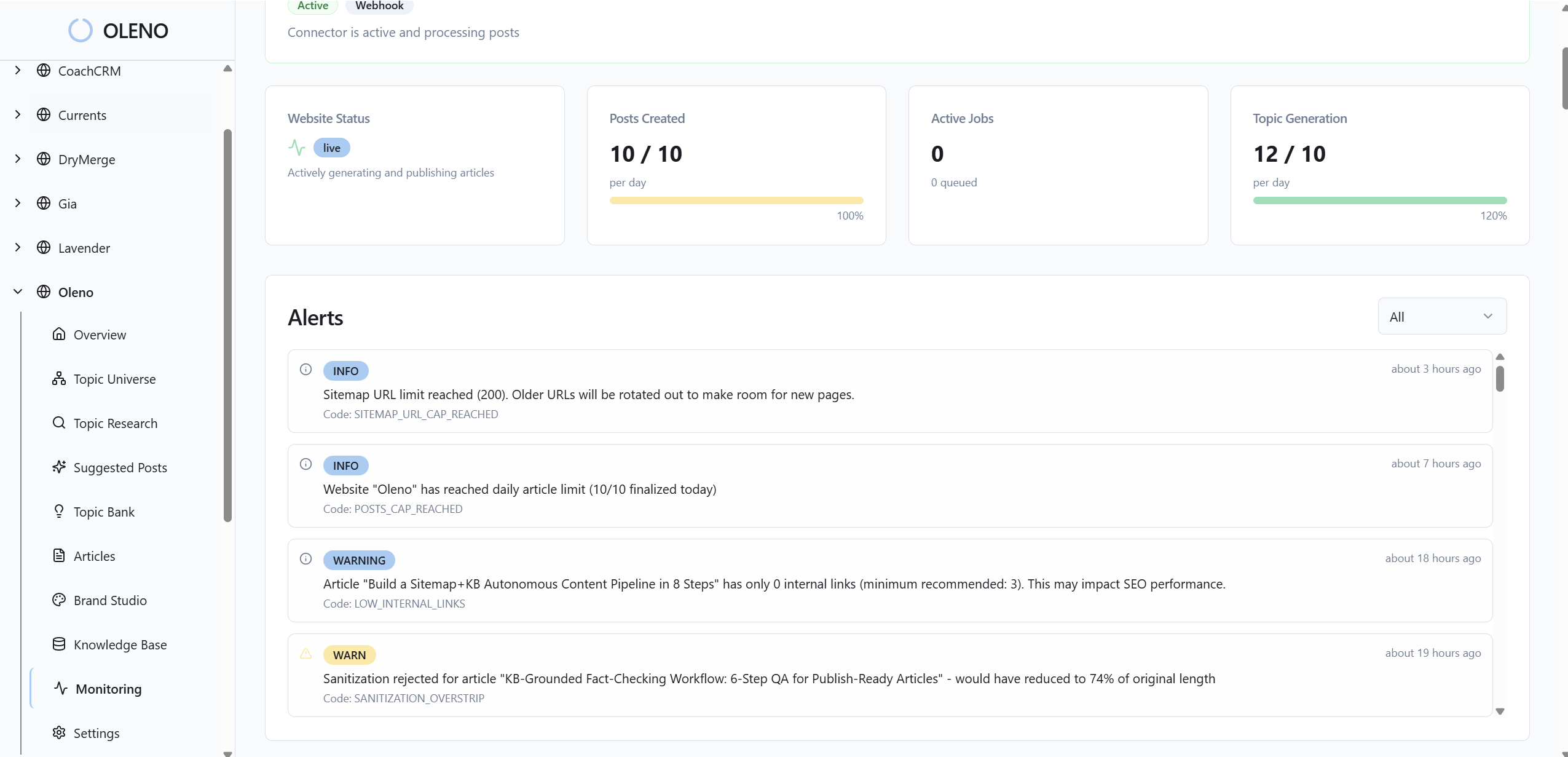
That grounding lowers the risk of invented features or vague stats. It also makes the claim table faster to assemble, because the source is already attached to the line that inspired the text. Legal can click, verify, and move on. Faster, safer, calmer.
If your team spends 20–40 minutes per draft hunting links, this is how you get that time back—by working anchored.
Voice, Boundaries, and Pre‑Checks With Brand Studio and Quality Gate
Brand Studio enforces voice, terminology, and CTA rules inside every job. You define preferred and prohibited terms, tone, and structure. Oleno uses those rules at brief, draft, and QA so tone stays consistent and banned phrases don’t slip in. That alone reduces subjective edits that often mask compliance edits.
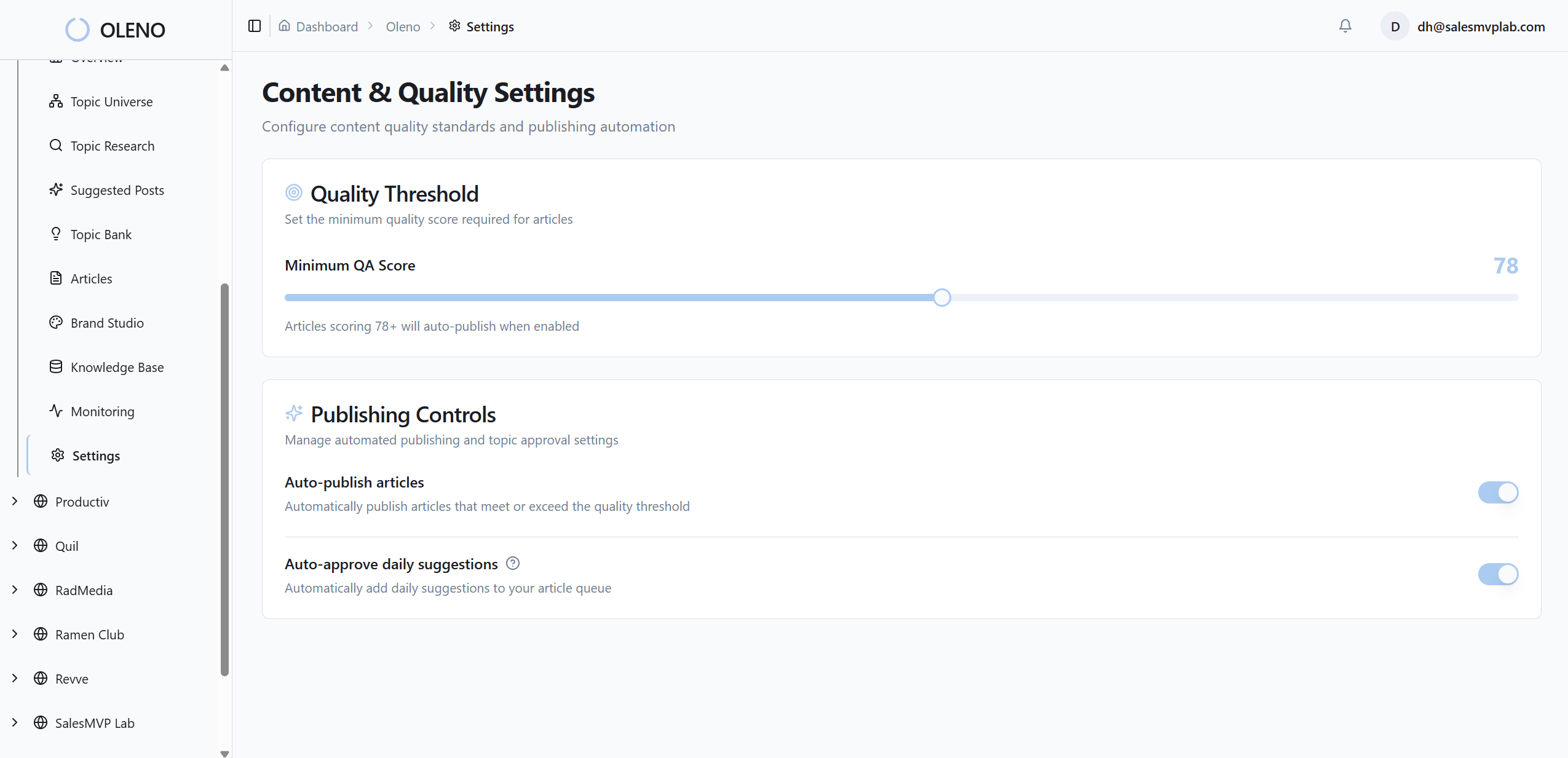
Quality Gate evaluates every article before it hits your review queue. It scores structure, clarity, grounding and voice, and blocks anything that fails. You can add checklist items that reflect compliance needs, like “no unsourced numbers” and “disclosure present on affiliate sections.” Nothing moves until it meets the bar.
Put it together and the transformation is clear. Standard content ships under marketing governance, review time drops toward 48–72 hours for pieces that need eyes, and full‑review volume falls because precursors are clean. That’s the target outcome you set at the start—delivered by process, not heroics.
48–72 hour review turnaround for standard content. That’s the benchmark teams reach when governance and QA do the heavy lifting. Request a Demo
Keep Cadence Without Chaos With Programmatic SEO Studio and CMS Publishing
Speed without a stable pipeline is fragile. Programmatic SEO Studio keeps acquisition content moving with locked outlines and governance injected at every step. You get steady, on‑voice drafts that already respect product boundaries and claim rules. Fast and safe becomes repeatable, not lucky.
CMS Publishing closes the loop by pushing finalized content to your CMS in draft or live mode. No copy‑paste. No structure breaks. Fewer post‑publish fixes. When the system handles routine work, your team spends time where judgment is needed—not on formatting or rework.
Most teams won’t need more headcount to feel bigger. They need orchestration and guardrails. Oleno gives you both in one place.
Want to see how Product Studio, Knowledge Archive, and Quality Gate pre‑check drafts before anyone pings legal? Book a Demo
Conclusion
If legal reviews everything, you will always feel slow. The path out is simple: build a compliance‑first content framework that classifies risk, maps claims to sources, and runs automated pre‑checks before review. Do that well and you can reduce turnaround to 48–72 hours, cut full‑review volume by 50%, and keep risk flat.
The bonus is cultural. Writers gain confidence. Legal breathes. Leaders see predictability. You don’t need heroics or more people. You need governance that lives in the work. Encode the rules. Make the safe path the fast path. Then publish on time, every time.
About Daniel Hebert
I'm the founder of Oleno, SalesMVP Lab, and yourLumira. Been working in B2B SaaS in both sales and marketing leadership for 13+ years. I specialize in building revenue engines from the ground up. Over the years, I've codified writing frameworks, which are now powering Oleno.
Frequently Asked Questions