Content automation implementation guide for marketing teams
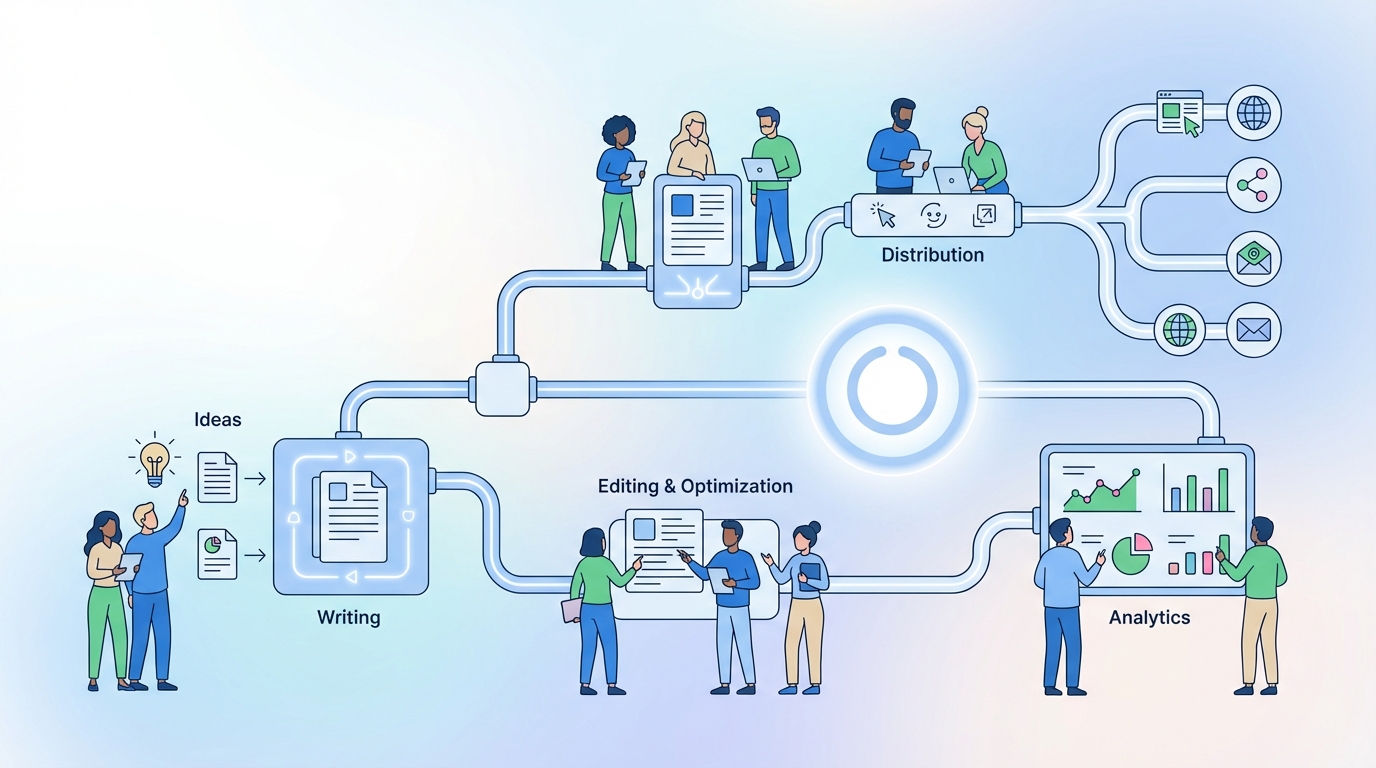
Most teams think they need more content. They need a system. If you want scale that doesn’t collapse under reviews, handoffs, and rewrites, you need a content automation implementation guide for marketing teams that actually fits how work gets done. Not another prompt library. A real operating model you can roll out in weeks, not quarters.
I learned this the hard way. When your output rises, gaps in governance, voice, and product truth show up fast. And when LLMs start deciding who gets cited, consistency beats volume. GEO rewards teams that encode their fundamentals and express them the same way across hundreds of pages. Humans, search, and LLMs each look for different signals. You need a system that satisfies all three.
Key Takeaways:
- Treat demand gen as a system, not a set of prompts and tools
- Start with one workflow, one audience, one use case, then expand
- Codify voice, POV, and product truth before you automate anything
- Lock structure upfront so writers and AI follow the same blueprint
- Automate briefs and drafts, keep approvals and final judgment with humans
- Measure cadence, quality, and coverage, not just pageviews
- Scale once the 14‑day pilot hits acceptable quality and time savings
Stop Treating Content Automation Like a Prompt Factory
Content automation only works when it runs a repeatable system, not a stack of clever prompts. LLMs speed up drafts, but they don’t own your voice, your POV, or your product truth. In the GEO era, consistent fundamentals beat ad-hoc speed, and brands that encode those fundamentals get cited more often.
Output Isn’t The Same As A System
You can ship five drafts today with prompting. That feels productive. Then the review cycle starts, voice drifts, product claims get fuzzy, and publishing stalls. The cost hides in rework. You lose time, trust, and momentum. In my experience, that rework tax compounds until everyone’s burnt out.
A real system defines the rules first, then runs the work inside those rules. You separate governance from execution. Judgment lives with people. Repetition moves to the machine. That’s how you get speed without losing control.
Consistency, Not Volume, Wins In GEO
GEO changed the bar. LLMs synthesize across sources and favor brands that show a consistent POV and precise definitions over time. They don’t just count links. They look for clarity, repetition, and authority. Google’s own updates point in the same direction with AI-generated results emphasizing clear, citable answers from trusted sources. See how Google describes AI-generated overviews in their own words here: Google’s explanation of AI-generated results.
If your last ten articles feel like ten different writers, you’re invisible. If they sound like one brain with one stance, you start showing up.
The Real Bottleneck: Fragmented Execution, Not Ideas
The core problem isn’t a lack of ideas. It’s too many handoffs without a shared system. Writers, PMMs, SEO, and leadership each hold a piece. No single source of truth. No consistent structure. That fragmentation creates slow reviews and watered-down content that doesn’t move pipeline.
Too Many Handoffs, Not Enough Ownership
Work bounces between Asana, Google Docs, Slack, and the CMS. Every bounce adds context loss. Reviewers change the angle because the original intent got muddy. Rewrites spike. Timelines slip. Sound familiar? Most teams compensate with more meetings. That’s a band-aid, not a fix.
You need clear ownership of the workflow, not just the tasks. Who defines the angle? Who protects voice and product truth? Who presses publish? Decide that upfront and codify it.
Missing A Single Source Of Voice And Product Truth
Writers guess at tone. PMMs correct features and claims late. Leadership edits toward instinct, not rules. It’s not malice. It’s missing governance. Create one place that holds voice, POV, and product definitions. Load it into every brief. Demand that each draft maps to it. You’ll cut half your edits overnight.
The Cost Of Skipping Content Automation
Manual orchestration looks safe. It’s actually expensive. Each brief takes hours. Each draft triggers extra review. Publishing piles up at month-end. The hidden cost is calendar slip and missed coverage. And yes, it shows up in budget. CMOs already face flat budgets while expectations rise, according to Gartner’s 2024 CMO Spend Survey.
Time Drains You Can Measure
If a writer spends 60 percent of their time researching and assembling context, that’s lost leverage. Gen AI can reduce time-to-first-draft when paired with clear rules, as studies like McKinsey’s 2023 generative AI research suggest. But without a system, you replace writing time with coordination time. You don’t win. You shift the burden.
The other cost is opportunity. When you can’t sustain cadence, you miss clusters, long-tail coverage, and the repetition LLMs need to see.
What It Feels Like When The System Is Broken
You feel stuck in review purgatory. Drafts that should take a day take a week. Slack pings at 9 pm to “tweak the opening.” Approvals live in inboxes. The calendar becomes a wish list. People stop trusting the plan and start doing one-offs. It’s demoralizing.
Late Nights, Ping-Pong Reviews, And Moving Targets
You write a brief. Writer fills gaps with guesses. PMM fixes claims. SEO adds keywords. Exec changes the angle. Nobody is wrong, but everyone moves the target. That’s the cycle. It burns time and goodwill. And it’s fixable.
The Content Automation Implementation Guide for Marketing Teams
Here’s the simple approach that works. Define rules once, pick one workflow, lock the structure, automate the parts that don’t need judgment, then scale. You can run this with a small team in 14 days and prove value before you expand.
Start With One Outcome And One Workflow
Pick one clear business outcome for your pilot. For example, increase SEO output on definitional articles for a single audience. Then choose the highest volume, repeatable workflow behind that outcome, like “Topic → Brief → Draft → Review → CMS Publish.” Keep scope tight so you can measure change fast.
You’re reducing risk by narrowing variables. One audience. One use case. One content type. That focus lets you ship and learn instead of debating edge cases.
Codify The Rules Once, Then Reuse
Governance beats opinions. Document voice, POV, product truth, audience, and persona details. These rules become your non-negotiables. Every brief pulls from the same source. Every draft is checked against it. Reviews shift from taste to criteria.
A practical governance set should include:
- Voice and tone specifics with yes/no vocabulary
- Market POV and enemy framing you want reinforced
- Approved product claims, limits, and definitions
- Audience and persona goals, pains, and language cues
Design The Locked Outline Everyone Follows
Loose structure invites drift. Create locked outlines per content type so writers and AI follow the same blueprint. That blueprint should anticipate GEO with extractable answers and consistent heading claims. I like clear, scannable sections with direct first-sentence answers.
A strong locked outline for definitional articles includes:
- A 40-60 word direct-answer intro paragraph after each H2
- Claim-based H2s that match search and buyer questions
- Standard H3 slots for examples, metrics, and pitfalls
- A brief-to-draft checklist that enforces structure before writing starts
Automate Where Judgment Isn’t Required
Human judgment stays on angle, claims, and final approval. Automation handles topic enrichment, brief assembly, and first drafts. Think of it as moving the heavy lifting to the machine while you keep the steering wheel.
Where automation makes sense:
- Brief generation from governance rules and sources
- Draft creation against locked outlines and acceptance criteria
- CMS formatting and metadata population for publishing
Run A 14-Day Pilot Before You Scale
Prove it small, then expand. Your goal is to show measurable time savings and equal or better quality on a narrow slice of work. Calendar it like a sprint. Hold the team to the rules.
Try this 7-step rollout:
- Define the outcome, audience, and one content type
- Document voice, POV, and product truth in one place
- Build the locked outline and acceptance criteria
- Automate brief creation from your governance set
- Generate drafts against the outline for 5-10 topics
- Review against criteria, not taste, and publish
- Measure cadence, review time, and on-page quality
Measure Cadence, Quality, And Coverage
Don’t just count posts. Track the system. You want steady velocity, lower review time, and consistent structure. For GEO, coverage and repetition matter more than sporadic spikes. If those move in the right direction, scale the model to the next workflow.
Useful metrics and guardrails:
- Weekly publish cadence by content type
- Average review cycles per draft and time-to-publish
- Voice and product-claim accuracy against your rules
- Coverage across priority audiences and use cases
- GEO-friendly structure adherence on every article
Ready to put this in motion without building it from scratch? Request a Demo.
How Oleno Automates Content Operations
Oleno makes this approach practical by encoding your rules once, then running the work inside those boundaries. It doesn’t replace strategy. It turns strategy into repeatable execution with governance, job-based pipelines, and quality gates that block drift. That’s how small teams operate like big ones without hiring.

Governance That Keeps Voice, POV, And Product Truth Aligned
Oleno centralizes the rules that matter so drafts stop guessing and reviewers stop rewriting. Brand Studio holds tone, style, vocabulary, and CTA guidance. Marketing Studio injects your category framing, key messages, and enemy narratives into briefs and drafts. Product Studio locks approved features, limits, and claims so product-led content stays accurate as your roadmap evolves.
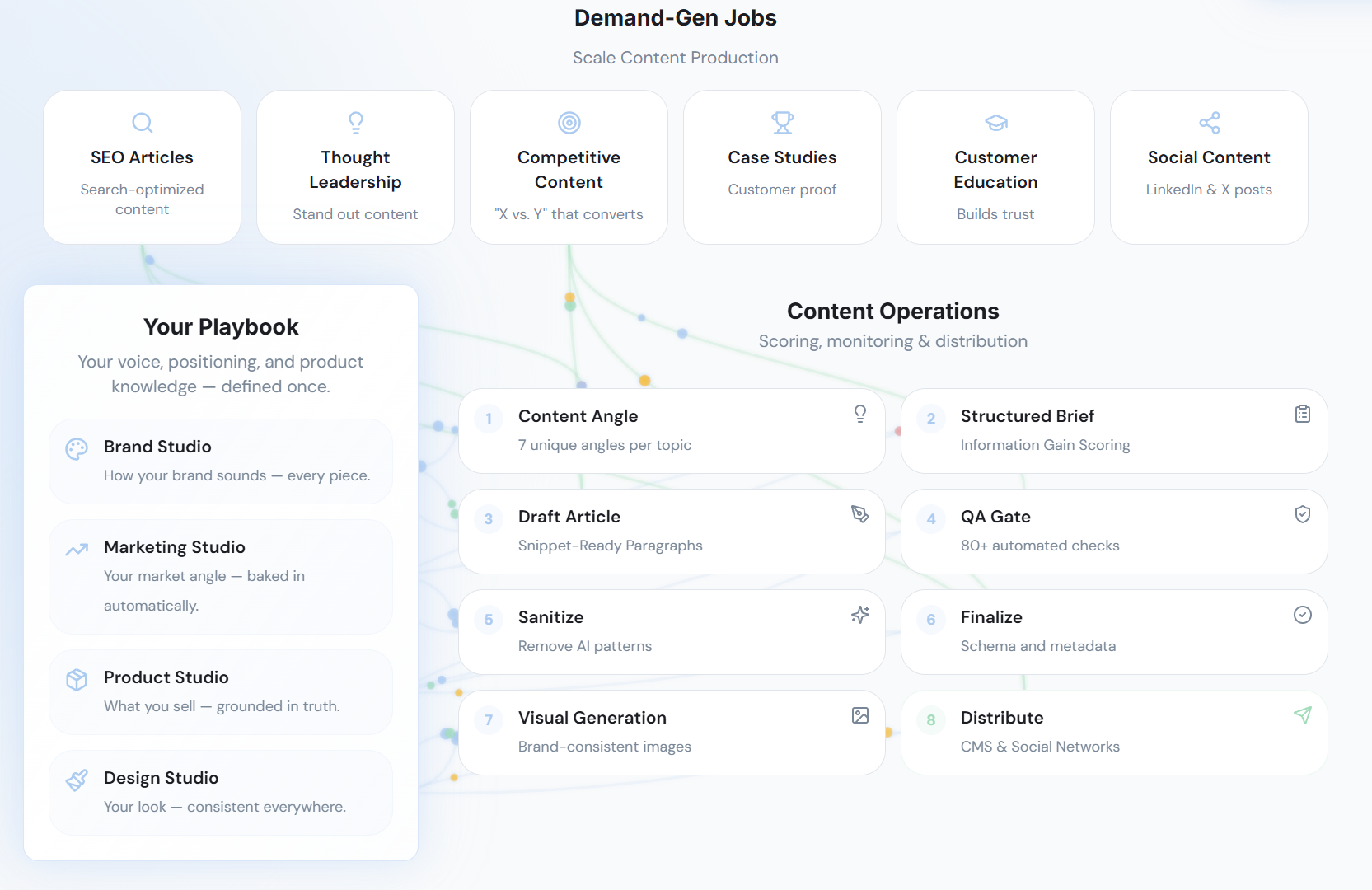
In practice, that means the same truth shows up everywhere. Writers and AI pull from one source. Reviews check against defined criteria. You avoid the mistake of fixing voice and facts late in the cycle because governance handled it early.
Programmatic SEO And Orchestration For Reliable Velocity
Programmatic SEO Studio discovers topics, deduplicates them, and runs a locked-outline pipeline for acquisition content with consistent on-page SEO structure. The Orchestrator schedules work against quotas, executes blueprints end to end, and keeps cadence steady without constant handholding. Storyboard helps you allocate coverage across audiences, personas, products, and use cases so clusters actually get built.
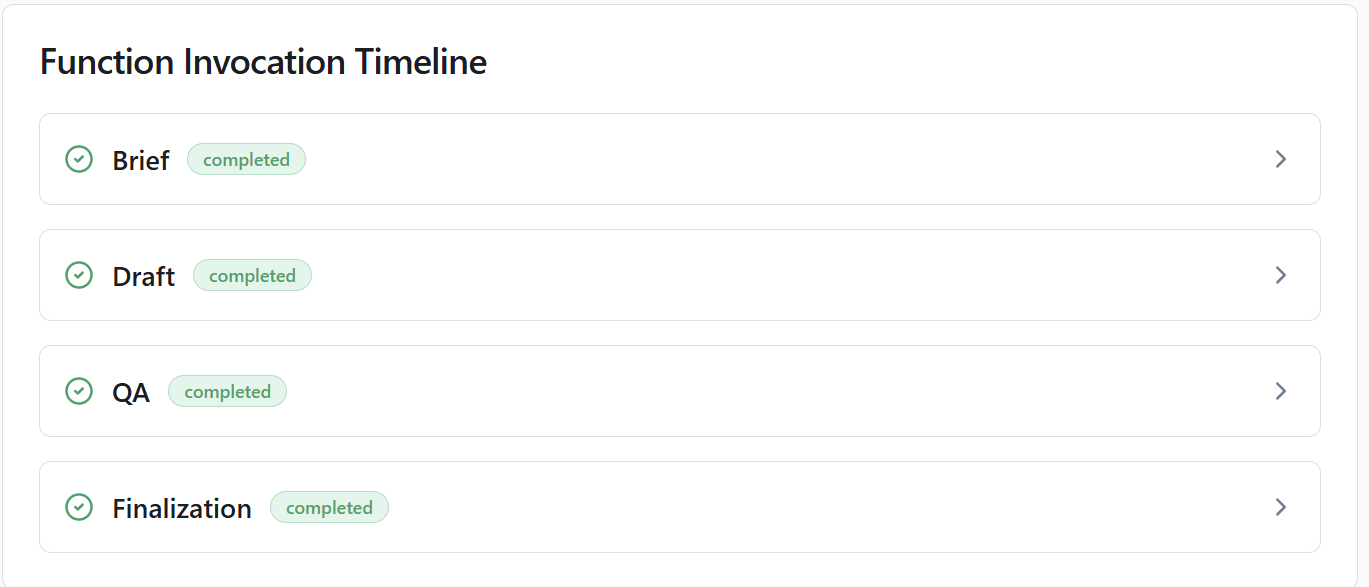
The payoff is predictable throughput. Instead of last-minute scrambles, you get a rolling pipeline that moves from brief to draft to QA to publish. It addresses the earlier cost of manual orchestration by removing coordination overhead.
Key capabilities in practice:
- Programmatic topic discovery, deduplication, and enrichment for intentional coverage
- Locked-outline briefs that enforce consistent on-page SEO structure
- Autonomous job execution that respects your cadence and quota settings
- Advisory planning that balances cross-segment coverage
Want to see the orchestration layer in action on a real calendar? Book a Demo.
Quality And Visibility That Cut Review Time
Quality Gate evaluates every article for voice alignment, structural compliance, grounding to product truth, and SEO structure before it reaches review. If it fails, the system auto-revises or blocks it. Executive Dashboard shows output cadence, quality trends, coverage gaps, and pipeline health so you can manage by signal, not anecdotes. Article Editor lets your team make targeted edits with version history and field-level metadata control.
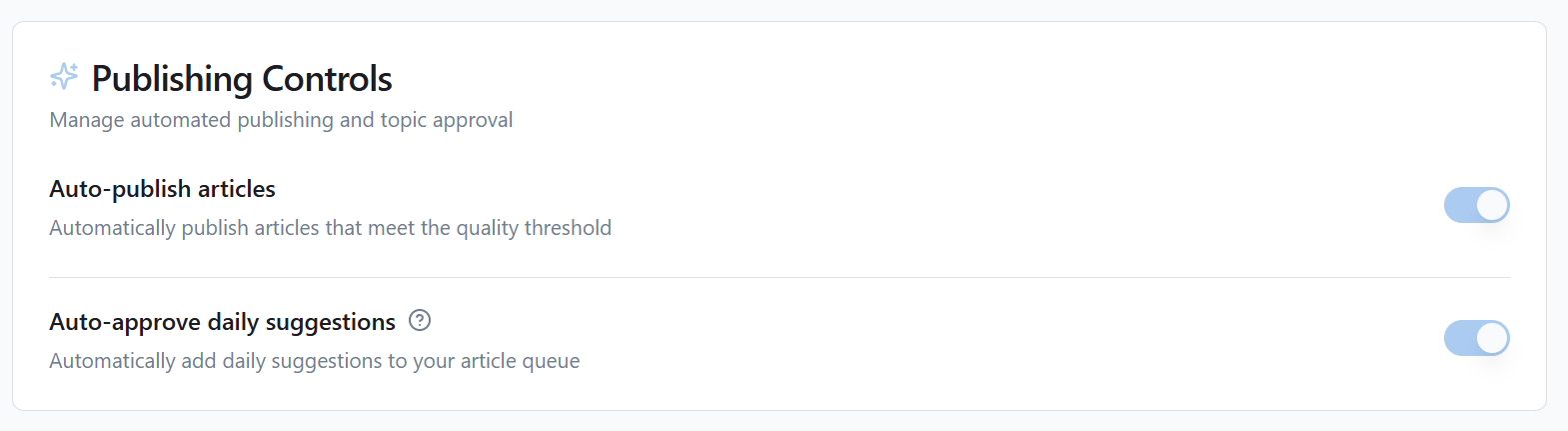
This is where the earlier costs get addressed directly. Instead of 3-4 human review loops to catch drift, the system flags issues before they become rewrites. Leaders see the pattern-level view they need to defend investment and guide allocation.
Stop drowning in coordination and late edits. Start running a governed system that ships every week. Request a Demo.
Conclusion
You don’t need more prompts. You need an operating system for demand gen. Start small, encode your fundamentals, lock the outline, automate the repeatable parts, and keep judgment with people. Prove it in 14 days, then scale.
In the GEO era, consistency is the moat. The teams that win won’t be the loudest. They’ll be the ones that sound the same, everywhere, backed by a system that never gets tired. If that’s where you want to take your team, the path is clear. Start with the workflow you can control, and build from there.
External Sources Used:
- Google’s explanation of AI-generated results
- Gartner’s 2024 CMO Spend Survey
- McKinsey’s 2023 generative AI research
About Daniel Hebert
I'm the founder of Oleno, SalesMVP Lab, and yourLumira. Been working in B2B SaaS in both sales and marketing leadership for 13+ years. I specialize in building revenue engines from the ground up. Over the years, I've codified writing frameworks, which are now powering Oleno.
Frequently Asked Questions