Content Governance Decision Matrix: Centralize vs Decentralize

You can centralize your content rules and grind output to a halt. Or you can decentralize and watch your narrative splinter into twelve dialects. Most teams have felt both forms of pain. The fix isn’t more policy or stronger opinions. It’s deciding who controls what, on purpose, with a matrix you actually use.
I’ve sat in the middle of this fight. Founder edits on Monday, brand edits on Tuesday, legal on Wednesday. By Friday, the window’s gone and the team’s frustrated. When we shifted from “review everything” to “encode the rules and route by risk,” velocity went up and the edits went down. Not perfect. But usable.
Key Takeaways:
- Build a decision matrix that allocates control by vector (voice, claims, approvals, publishing) and risk
- Centralize enduring, high‑risk constraints; decentralize fast‑changing context within guardrails
- Quantify the cost of delay and drift to justify governance changes
- Define RACIs and name a risk-acceptance owner per vector to unblock decisions
- Pilot the model for 90 days with sampling and KPIs before scaling
- Use encoded rules, QA gates, and upstream approvals to prevent rework later
Ready to see a governed content system that still moves? Try Using an Autonomous Content Engine for Always-On Publishing.
Why Governance Models Break Without A Decision Matrix
Most governance models fail because they apply a single control pattern to different types of decisions. Voice rules and product claims don’t behave like campaign tweaks or local references. A decision matrix separates durable, high‑risk controls from fast‑moving context so teams keep quality without crushing speed.

The rules are not the problem, placement is
Most teams write solid rules. Then they route every decision through one central editor and create a bottleneck. Or they let every team set their own guidelines and drift sets in. The core issue is placement. High‑risk, slow‑changing rules belong centrally. Fast‑changing decisions need local control with guardrails.
I’ve watched a small team ship three pieces a week with central control, then stall at ten when reviews stacked up. Same rules. Different placement. The lesson: centralize what protects trust (claims, legal) and decentralize what fuels relevance (examples, angles). The literature on IT governance says the same, balance control and autonomy, don’t pick a side. See CACM’s discussion of centralization versus decentralization in governance for a broader framing.
Why conventional wisdom fails here
“Centralize to be safe.” “Decentralize to move fast.” Both are half-truths. Voice rules and product truth demand consistency. Campaign hooks and regional idioms benefit from proximity to context. Treat them the same and you either slow to a crawl or ship a fractured brand.
Here’s the nuance most teams miss: time horizon and blast radius. If breaking a rule creates brand-level risk, keep it centralized. If breaking a rule hurts only a single email’s performance, push control closer to the work. Thought leaders like Soren Kaplan on balancing control and innovation echo this: standards where it matters, freedom where it helps.
When should you centralize and when should you not?
Centralize enduring, high-risk constraints: product truth, allowed claims, legal guardrails, and global voice rules. Decentralize fast-changing context: campaign angles, local references, channel‑specific edits. Use a weighted decision matrix so the choice is explicit, not negotiated at 9 p.m.
A simple frame helps: risk tolerance, latency needs, expertise concentration, cross-brand reuse, and contributor velocity. Score each vector against those criteria. If claims score high on risk and reuse, they go central. If regional examples score high on latency, they go local. Make the call visible, then stick to it.
The Real Root Cause Of Centralize Vs Decentralize Confusion
Teams argue models before defining what they’re governing. The fix is to split control into clear vectors: voice, product truth/claims, approvals/escalation, and publishing/distribution. Each vector can be centralized or decentralized on its own, which unlocks practical, hybrid governance.

Define control vectors before you pick a model
You can’t choose a governance model if you haven’t defined the system. Start by naming four control vectors: voice and language, product truth and claims, approvals and escalation, publishing and distribution. Then decide placement per vector. This avoids one-size-fits-none decisions.
We’ve seen teams try to centralize everything because claims are risky, which drags down publishing. Or they decentralize voice because publishing needs speed, and drift explodes. Decoupling vectors is the unlock. Voice can be central, while publishing is local, if rules are encoded and checks are automated.
Map responsibilities with a RACI, not titles
Titles change. Decision rights shouldn’t. Assign Responsible, Accountable, Consulted, and Informed by vector. For claims, Product might be Accountable, Marketing Responsible for usage, Legal Consulted, Regions Informed. For voice, Brand is Accountable, editors Responsible, business units Consulted.
Keep the RACI alive by vector, not buried in a deck. When roles shift, the decision rights don’t. This is orchestration in practice: shift the judgment upfront, encode it, and keep execution predictable. It’s not glamorous. It is what stops “Who approves this?” from becoming a weekly fire drill.
Who owns risk acceptance?
There’s always a residual risk. Someone has to own it. Name a risk-acceptance owner per vector, and publish the escalation path. For claims, it’s usually Product or Legal. For voice, Brand. For publishing SLOs, your content operations owner.
Without this, you get heroics and hedging. With it, you get speed. I’ve seen review loops collapse from three passes to one verification step simply because we pre‑agreed who can say “ship it” when the clock runs out. Don’t leave this to vibes. Write it down.
The Hidden Costs Of Getting The Model Wrong
Over‑centralization taxes speed with waiting and rework. Under‑governance taxes trust with drift and inconsistent claims. You also inherit compliance risk, which costs more than hours. Quantify each cost so your governance changes aren’t just opinions, they’re tradeoffs you can defend.
The delay and rework tax from over‑centralization
Let’s pretend you ship 30 pieces a month. If each waits two days in central review and 30% bounce once, you lose around 120 person‑hours monthly to waiting and rework. That’s more than a part‑time headcount. During launches, the drag multiplies and compounds.
I’ve been there. We thought more review equaled more quality. It didn’t. It created more rework. TDWI has written about cycle-time impact under centralized models. The punchline is simple: if your process adds time without reducing defects, move decisions closer to where work happens or encode rules so review becomes verify, not rewrite. See TDWI’s practical guidance on balancing governance for levers.
Inconsistency and narrative drift from under‑governance
Decentralize everything and speed improves. For a quarter. Then the voice fractures, claims diverge, and your POV weakens. Buyers might not name it, but they feel the inconsistency. That’s a trust leak. You need drift detection and sampling to see it before it spreads.
One team I worked with found three distinct voices across product lines, punchy, academic, and hyper‑technical. The fix wasn’t heavy-handed editing. It was a shared voice spec plus examples, and a linter that caught banned terms. Sampling 20 items per month made drift visible and measurable, which is how we held the line without throttling output.
What does a missed compliance check really cost?
If a claim slips through and hits 10,000 readers, cleanup is more than a quick edit. You’ve got takedowns, corrections, a fresh enablement deck for Sales, and possibly legal review. That’s hours you can measure. The bigger cost is trust you can’t measure precisely.
This is why product truth and claim boundaries need a central owner and encoded templates. No invented features. No “creative” math. When rules are enforced upstream, you don’t need hero reviewers downstream. That tension, speed versus safety, eases when rules live in the system, not in people’s heads.
Still dealing with these costs by adding more reviewers? There’s an easier path. Try Generating 3 Free Test Articles Now and see how encoded guardrails change the review math.
What It Feels Like When Control And Speed Fight
You can feel governance friction in your calendar and in your gut. Review loops pile up. Voice whiplash shows on a single page. Quarter‑end approvals spike for no good reason. The fix isn’t heroics. It’s pre‑encoding rules and shaping flow so people can ship with confidence.
The week of three review loops
I’ve lived the founder pass, the brand pass, and the legal pass in a single week. Nobody was wrong. Everyone was protecting something important. We still shipped late, and morale took a hit. The move that helped? Pre‑encoding banned terms, claim templates, and CTA structures.
Once we codified the obvious, most edits disappeared. Reviews shifted from rewrite to verify. Legal stopped rewriting adjectives. Brand stopped fixing CTAs. And founders, well, founders still tweaked a headline, but the body sailed through. That shift saved us days we needed during a launch window.
The brand voice whiplash across business units
Sales wants punchy. Product wants precise. Regions want local idioms. Without a shared voice spec and a linter, every page pulls in a different direction. Readers feel the wobble even if they can’t name it. The cure is a voice baseline with approved local variants and examples.
We created a global baseline, plus regional packs with do/don’t examples. Then we enforced it automatically. Local teams still sounded local, but in-bounds. Precision and personality coexisted. That balance unlocked speed without sacrificing the POV we’d worked hard to build.
Why do approvals spike at quarter end?
Because teams push volume late. Central reviewers get slammed, SLAs slip, and shortcuts creep in. You’re not witnessing failure of people; you’re seeing a flow design problem. Shape volume with clear publishing SLAs, capacity assumptions, and a fast‑track for low‑risk updates.
When we tagged assets by risk and set explicit turnaround times, claims within 24 hours, voice within 8, publishing in 2, quarter‑end crunches eased. A simple fast‑track for minor updates kept the queue moving. No heroics required. Just clearer rules and honest capacity planning.
A Practical Decision Matrix You Can Run This Quarter
A decision matrix makes control placement explicit and repeatable. Score each vector against five criteria, apply weights that match your risk posture, and let the math guide central versus decentralized placement. Then pilot for 90 days with sampling and KPIs before rolling out.
Score the decision criteria
Use five criteria: latency sensitivity, risk tolerance, domain expertise concentration, scale and cross‑brand reuse, and contributor velocity. Score each 1–5 per vector, then apply weights. High risk and high reuse lean central. High latency and high local velocity lean decentralized.
Don’t overcomplicate it. A simple sheet works fine. Start with equal weights, then adjust as you learn. The magic is making the tradeoffs visible so you’re not negotiating every Tuesday. If the scores say voice is central and publishing is local, you’ve just prevented months of avoidable debate.
- Example: Claims (Risk 5, Reuse 5, Latency 2, Expertise 4, Velocity 3; weighted total: central)
- Example: Regional examples (Risk 2, Reuse 2, Latency 5, Expertise 3, Velocity 5; weighted total: decentralized)
Design your operating model
Write a RACI per vector. Define approval SLAs by risk, claims in 24 hours, voice in 8 hours, publishing in 2 hours. Document exceptions: who can override, for what reasons, and how overrides get logged. Add a contribution contract so writers know what inputs skip review loops.
Make it boring and clear. If a draft includes an approved claim block, a voice‑checked glossary, and a source note tied to your knowledge base, it qualifies for fast‑track. If it doesn’t, it queues normally. That single rule moves work faster than any new meeting ever will.
How Oleno Enforces Governance Without Slowing Teams Down
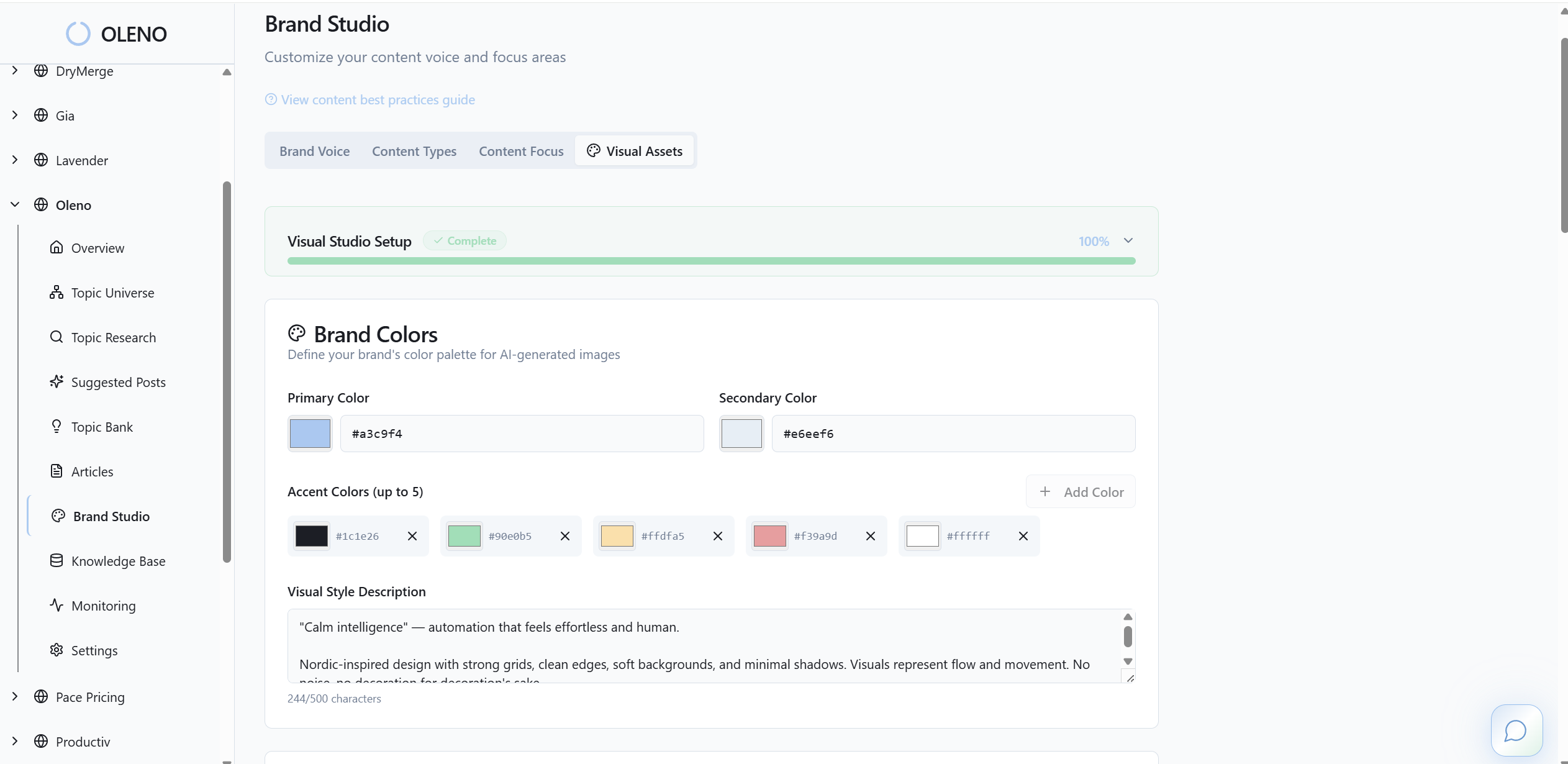
Oleno encodes governance so rules show up where work happens. You define voice, terms, banned phrases, CTA structure, product truth, and allowed claims once. Oleno applies them across briefs, drafts, QA, and publishing. The result is fewer edit loops and a steadier cadence without promising perfection.
Brand voice and claim control applied automatically
Oleno starts with governance, not output. You set voice and language rules, preferred terms, banned phrases, and CTA structures. You also lock product truth and allowed claims with boundaries. Those rules are enforced in briefs, drafts, and revisions so creators can ship without inventing features or debating style.

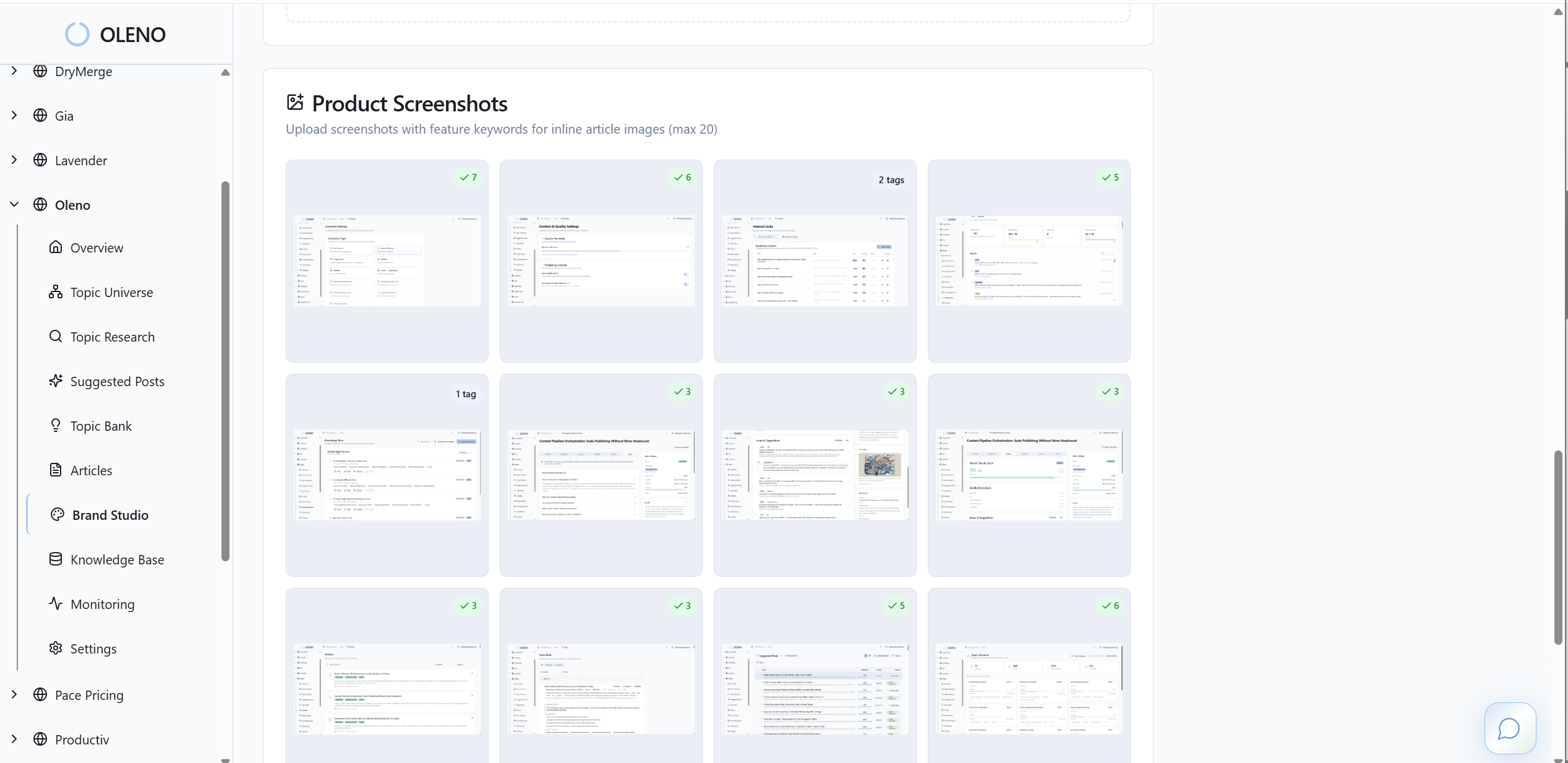
Then the QA gate does its job. Oleno checks voice alignment, narrative structure, clarity, and grounding to your knowledge base before anything can publish. Sampling plans help catch edge cases and monitor drift over time. On the last mile, Oleno publishes directly to your CMS, draft or live, with idempotent safeguards, so no duplicates and no chaos. Fewer rework hours. Faster first‑pass approvals. Less quarter‑end panic. And when pressure rises, system health visibility shows output volume, cadence, and common failure patterns, so you can loosen or tighten controls intentionally.
If you want to feel the difference between “review everything” and “verify the rules,” run a small test. Try Oleno for Free and see how the guardrails change your queue.
Conclusion
You don’t need a grand governance overhaul. You need a decision matrix, clear vectors, and rules that live in the system. Centralize what protects trust. Decentralize what drives relevance. Pilot it for 90 days, measure drift and rework, then scale what works. When the guardrails are encoded and the flow is honest, your team spends less time negotiating and more time publishing work you’re proud of.
About Daniel Hebert
I'm the founder of Oleno, SalesMVP Lab, and yourLumira. Been working in B2B SaaS in both sales and marketing leadership for 13+ years. I specialize in building revenue engines from the ground up. Over the years, I've codified writing frameworks, which are now powering Oleno.
Frequently Asked Questions