Content QA-as-Code: Declarative Editorial Rules & CI
Most teams don’t have a writing problem. They have a “too many hands on a fragile process” problem. You see it when deadlines stack up: style drifts, facts get fuzzy, and everyone prays the final pass catches what slipped. It rarely does. Not because people aren’t good. Because the system is brittle.
Here’s the shift. Quality stops being a judgment call when you make it a rule set that runs. Not a PDF. Not a “please remember” Slack thread. Actual rules. Versioned, testable, enforced in CI. You still review edge cases. But the default path is deterministic. Predictable. Consistent.
Key Takeaways:
- Treat editorial rules as code and run them in CI, not meetings
- Encode voice, structure, KB grounding, and link logic as JSON/YAML
- Block publish events when tests fail; allow only exceptions to go manual
- Reduce rework by removing subjective interpretation from routine checks
- Keep governance in git for auditability, rollback, and collaboration
- Pair deterministic checks with sampling when human nuance matters
Why Manual Editorial QA Fails At Scale
Manual editorial QA fails at scale because human judgment varies and rules drift under pressure. As volume climbs, reviewers interpret style guides differently and miss subtle KB grounding issues. The real fix is policy encoded as code, deterministic checks that run the same way every time, even on Friday at 4 p.m.
Why Humans Become A Bottleneck, Not A Safeguard
Editors are great at judgment calls. They’re not great at repeating the same 60 checks identically, every time, under deadline. When bandwidth tightens, people skip line items, reinterpret rules, or assume “close enough” will pass. That’s not negligence. That’s human. The result is variance, and variance compounds into rework.
What actually needs humans? Narrative clarity, risky claims, unfamiliar scenarios. What doesn’t? Headings present, link domains whitelisted, KB grounding present, voice patterns consistent, banned terms absent. Codify the routine checks so your team can spend energy where it matters. Save human time for creative calls, not commas.
What Does QA-As-Code Actually Mean?
QA-as-code means your editorial standards live as versioned, machine-readable rules that run automatically. Think JSON or YAML for structure, voice patterns, KB provenance, internal link policies, and CTA placement. A linter enforces them. Unit tests validate templates. CI blocks publishing when tests fail. It’s policy that executes, not just policy that reads well.
If you’ve adopted “docs as code,” this will feel familiar. The same principles of repeatability and review apply to content rules. Resources like Write the Docs’ guide to Docs as Code map directly, treat content assets and policies like software, and you’ll get the same operational benefits.
The Policies Your Team Enforces, But Cannot Reproduce
Every org has unwritten rules. “We never use that phrase.” “We always ground claims in the KB.” “Every comparison must separate opinions from facts.” Veterans know them. New hires don’t. And when the calendar gets tight, the tribal rules bend. That’s how drift sneaks in quietly, then bites loudly.
Write those norms down as rules the machine can verify. Examples: “Every H2 must be followed by a snippet paragraph,” “No invented internal URLs,” “All fact-bearing sentences include a KB pointer,” “Only approved domains allowed in external links.” When these live in code, two things happen: you can test them, and you can keep them current with pull requests.
Want an early look at how this feels when it’s running for you? Try a system that enforces rules end-to-end. Ready to skip handoffs? Try Generating 3 Free Test Articles Now.
The Real Root Causes Behind Inconsistent Content Quality
Inconsistent quality stems from static guidance, not dynamic enforcement. PDF style guides don’t run checks, and Slack consensus fades. Move your authority to version control, with rules that can be diffed, tested, and rolled back. When governance lives in code, quality becomes reproducible.
Where Traditional Style Guides Fail
Style guides are helpful, until they’re not. They’re static, they diverge from reality, and nobody can tell which version is “the one” during crunch time. Editors end up interpreting, not enforcing. That’s how two reasonable people make two different choices, and both feel right in the moment.
Shift the center of gravity. Put your rules in a repo. Discuss changes as pull requests with diffs everyone can see. Merge only when new or updated rules ship with tests that prove the intent. This turns “please remember” into “can’t regress.” You get clarity, not debates about which PDF applies.
How Does KB Grounding Change The Rulebook?
Once you commit to knowledge-base grounding, you can test it. That’s the unlock. Require citations to mapped KB entries in briefs and drafts. Validate that fact-bearing sentences reference a KB chunk or source pointer. Flag claims without provenance automatically. You’re narrowing judgment to where it’s useful.
This also shifts accountability. If a claim isn’t grounded, it doesn’t ship. The machine is the first pass. Editors become escalation, not enforcement. It’s the difference between hoping a claim is right and proving it’s grounded. That confidence changes how teams move, especially under deadline.
Why Governance Must Live In Version Control
Governance that lives in chat is fragile. Threads get buried, decisions go undocumented, and six months later nobody can explain why a rule exists. Put your editorial lexicon, banned terms, narrative patterns, and exception logic in a repo. Tag releases. Add changelogs. Roll back when something misbehaves downstream.
This is the same impulse behind Everything as Code in the AWS guidance: if it matters, version it. The benefit isn’t just orderliness. It’s auditability and speed. People trust systems they can see, diff, and revert when needed.
The Hidden Costs Of Manual Reviews And Policy Drift
Manual reviews are expensive in time and morale, and policy drift magnifies the waste. As volume grows, subjective calls multiply rework and delay launches. The predictable fix is enforcement-as-code that eliminates routine variance and stabilizes templates, links, and structure.
The Compounding Cost Of Slow, Subjective Reviews
Let’s pretend four editors spend 45 minutes per draft, 60 drafts per month. That’s 45 hours, before back-and-forth. If 20% bounce back twice, add roughly 18 hours. Now add context-switching tax and the hidden cost of missed windows. It’s not just hours. It’s momentum lost.
The real pain is variance. Ten reviewers produce eleven interpretations. Authors guess. Editors re-explain the same rules weekly. Morale dips. Pipeline slips. When you codify the repeatable checks, you cut the variance that fuels rework. Keep subjectivity for story, not syntax. Your calendar will thank you.
The Downstream Impact Of Inconsistent Internal Links And Structure
Inconsistent structure and link logic quietly erode discoverability. Orphaned pages linger. Topic clusters fragment. Crawl paths get messy. Authors spend cycles on “where should this link?” instead of the point they’re making. It looks small. It isn’t.
QA-as-code stabilizes templates and enforces canonical link targets by pattern. Require specific H2/H3 order. Validate link domains and placement by section. Small consistency gains compound into better crawl, more predictable snippets, and fewer last-minute fixes that derail publishing. Tools cataloguing documentation quality, like Acrolinx’s overview of documentation tooling, reinforce this: structure and consistency drive clarity.
Still burning cycles on manual fixes? There’s a faster route. Try Using An Autonomous Content Engine For Always-On Publishing.
What It Feels Like When Quality Slips In Production
Quality slippage shows up as quiet anxiety first, crisis later. Drafts read fine until someone flags a claim that isn’t grounded. Then the rework cascade starts. QA-as-code removes that fear by validating provenance and structure upfront, so “looks right” isn’t the bar.
When The Draft Looks Right, But It Is Not Grounded
You skim a clean draft. Voice is close, structure looks okay. Then support pings: “Where did this claim come from?” Now you’re worried about credibility, legal review, and an emergency rewrite you didn’t plan for. That’s the tax of “trust me, I checked.”
Provenance checks close that gap. If claims require KB pointers, the linter will fail the draft before it reaches you. You can still move fast, because the burden shifts to validation. External references on content QA, like Braze’s overview of content QA, echo the same point: checks need to be systematic, not heroic.
A Short Story About Drift And Delay
Back when we scaled to hundreds of writers, we had personality in the voice, but style and structure drifted. We ranked sometimes, then sagged. The real headache was editing time. We fixed the same issues over and over. It wasn’t a talent problem. It was a rules problem.
If we had encoded those rules as tests, structure, KB grounding, internal links, we could’ve removed the repetitive editing and kept the voice intact. That’s the lesson I wish we’d learned earlier. Keep humans on narrative choices. Let the rules run the rest.
QA-As-Code In Practice: From Rules To CI Gates
QA-as-code becomes real when rules are machine-readable, linting is consistent, and CI blocks merges on failure. Start by codifying structure, voice, and provenance. Then add unit tests for narrative patterns and link logic. Finally, make CI the gate that protects publishing.
Codify Your Editorial Rules In JSON Or YAML
Put your editorial policy in a structured format the machine understands. Define required sections, heading order, minimum word counts per section, banned terms, voice patterns, CTA placement, and link domain allowlists. Keep these files in a repo alongside examples and edge cases. Version every change.
Two quick guidelines help. First, keep rules granular so failure messages are precise. Second, store intent with examples, good and bad, so contributors grasp why a rule exists. That reduces bikeshedding later and clarifies where exceptions belong.
How Do You Lint Briefs And Drafts Reliably?
Build or adopt a linter that parses headings, counts sentences, validates link domains, detects banned terms, and checks KB provenance markers. Add schema validation for required metadata and structural constraints. Run it locally with a pre-commit hook and in CI on every pull request.
Make it noisy, but helpful. Clear, line-specific messages with suggested fixes shorten the loop. Lint both briefs and drafts. Catching issues upstream saves authors from repeated rewrites and keeps editors from being human linters. You’re teaching the system to enforce the basics.
What Should Unit Tests Cover Beyond Structure?
Structure’s the start, not the finish. Write tests for narrative sequence, existence and format of the KB sources line, presence of question-format H3s where required, and internal link placement by section. Add negative tests for invented internal URLs. Include provenance tests if you use KB chunk IDs.
When you introduce a new template, write tests with it. When you change one, update the tests. This is standard software discipline applied to content. The goal isn’t perfection. It’s stability. Consistency that survives team changes and calendar stress.
Integrate Checks Into CI With Blocking Gates
Wire your linter and tests into CI. Make failures block merges. For publishing, trigger a final pipeline that re-runs the suite on the merged artifact, then either publishes or holds the job for human review based on severity thresholds. Keep logs for every run so you can trace failures and see what changed.
If you’re coming from “everything as code,” this will feel normal. The twist is applying it to editorial assets, not infrastructure. For a broader frame of reference, see Documentation Quality Assurance from Deepdocs and the culture behind Write the Docs’ docs-as-code approach. The practices translate cleanly.
How Oleno Operationalizes QA-As-Code Without Slowing Publishing
Oleno operationalizes QA-as-code by embedding a QA Gate, remediation loops, and idempotent CMS publishing into one pipeline. You define the rules and voice; the system executes deterministically. Publishing waits until standards are met, without dragging editors into repetitive checks.
Built-In QA Gate Enforces Structure, Voice, And KB Grounding
Oleno’s QA Gate checks narrative structure, brand voice alignment, SEO formatting, LLM clarity, and knowledge-base grounding before anything can move forward. Drafts below the threshold are automatically improved and re-tested. Nothing publishes because “it’s close enough.”
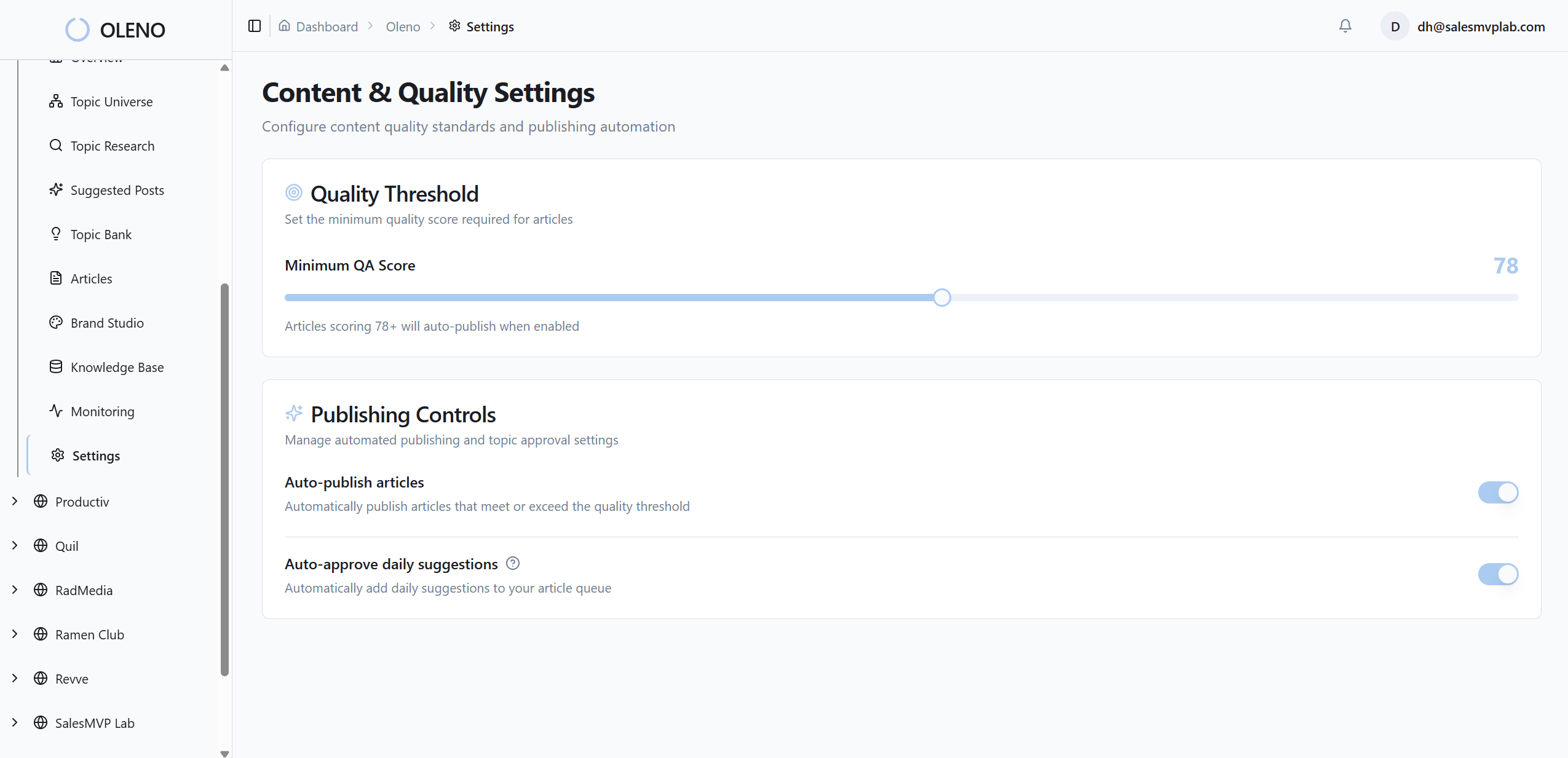
You configure the voice and rules once. Oleno applies them on every piece. That consistency is the difference between hoping quality holds and knowing the gate will stop regressions. It’s policy executed as a system, not a suggestion.
Automatic Remediation Loops And Publish Blocking
When a draft fails, Oleno doesn’t escalate to an editor by default. It revises, re-runs checks, and iterates until it passes a minimum score. Publishing remains blocked until it does. You reserve human review for flagged exceptions and judgment calls, not routine linting.
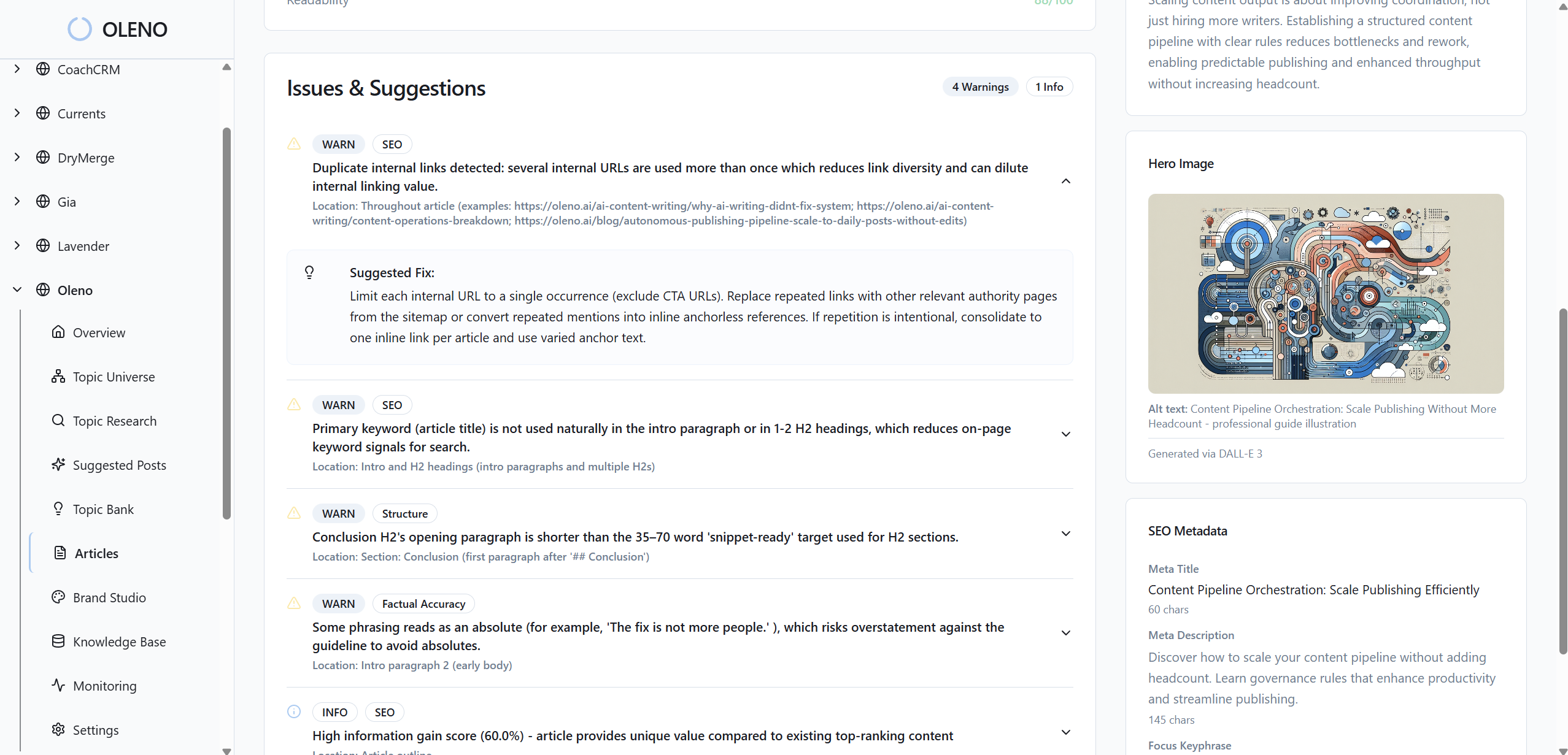
This mirrors a CI mindset: encode policy, enforce it automatically, and keep a tight loop on fixes. The benefit is twofold. Editors get their time back. Authors get faster, clearer feedback. The result is fewer surprises and steadier velocity.
Idempotent CMS Publishing With Version Logs
After QA passes, Oleno publishes to your CMS, WordPress, Webflow, Storyblok, HubSpot, Framer, in draft or live mode. Publishing is idempotent, so you don’t get duplicates. Internally, the system keeps logs, QA scoring events, retries, and version history for operational traceability.
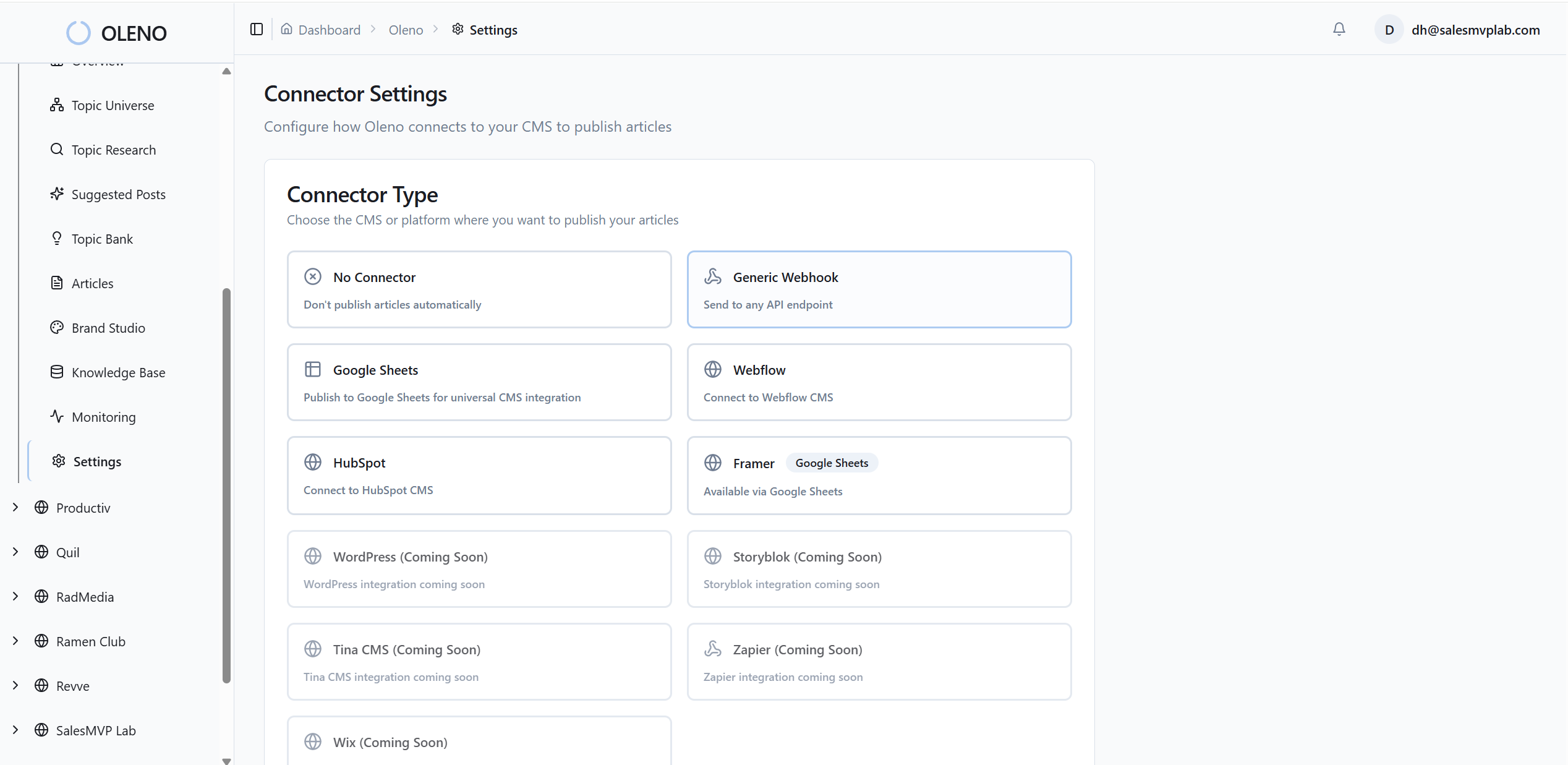
That trace matters when a rule change correlates with unexpected downstream behavior. You can see what changed, when, and why. Rollback becomes a decision, not a fire drill. It’s the operational confidence you want from an autonomous system.
Where Oleno Fits With Your Existing CI Rules
If you’ve already encoded declarative editorial rules, keep them. Oleno handles Topic → Brief → Draft → QA → Visual → Publish with quality enforcement and CMS publishing once content is ready. You define the rules and voice in your Brand Studio and KB. Oleno runs them continuously.
If you’d rather prove it in your environment first, start small. Point Oleno at a subset of topics, let the QA Gate enforce your standards, and see how much rework disappears. Curious what it’s like in practice? Try Oleno For Free.
Conclusion
Here’s the bottom line. You can’t edit your way to consistency at scale. You need rules that run. Move your policy into code, let CI enforce the basics, and keep humans focused on story and judgment. That’s how you reduce rework, publish on time, and protect accuracy, without slowing down.
About Daniel Hebert
I'm the founder of Oleno, SalesMVP Lab, and yourLumira. Been working in B2B SaaS in both sales and marketing leadership for 13+ years. I specialize in building revenue engines from the ground up. Over the years, I've codified writing frameworks, which are now powering Oleno.
Frequently Asked Questions