Content Repurposing Scorecard: Prioritize High‑ROI Channel Reuse

Most teams repurpose blindly—pouring hours into assets that never move pipeline. I see it every week. The backlog grows, the wins don’t, and everyone’s busy without leverage. A content repurposing scorecard fixes the mess because it forces you to rank what’s worth slicing before you touch a timeline. Prioritize for conversions, not for comfort.
When we get this right, repurposing becomes a weekly habit that pays. Fewer, better cuts. Less editing. Fewer late nights. And a real lift on the channels that matter. I’d argue most teams can cut ~60% of low‑value repurposing and double conversion lift per hour within a quarter. The trick is picking the right 20% to stretch first.
Key Takeaways:
- Build a six‑factor content repurposing scorecard to rank assets by expected ROI before you cut a single clip
- Use an effort vs ROI matrix with hard thresholds so low‑impact work never enters the queue
- Add simple metadata tags and UTM conventions to automate triage and tie reuse to results
- Run a weekly SOP with SLAs so repurposing ships on a steady cadence
- Track conversion lift per hour, not just outputs, to keep your priorities honest
- Use governance to lock voice and narrative so repurposed pieces don’t drift
Stop Repurposing Everything: Why 70% of Effort Lands on Low-Impact Assets
Most repurposing fails because it’s reactive, not ranked, so the hours land on assets that will never convert. Teams chase what’s new, easy, or loud instead of what the funnel needs. The fix is a selection system, not another format, and it starts before anyone opens an editor.
Volume Without Selection Is Waste
Busy is not leverage. When every blog, webinar, and deck gets sliced just because it exists, you create noise that burns time and annoys your audience. The hidden cost shows up in approvals, rewrites, and underperforming posts that still need managing. Without a ranking step, you’re paying full price for scraps.
I’ve watched teams cut five clips from a lukewarm webinar while a mid‑funnel case study with clear proof sits untouched. Why? The case study felt harder to adapt—even if it had higher intent. That’s the mistake. The queue should start with the assets closest to revenue, not the ones that feel fun.
If you only change one thing, add a “must clear the bar” step before any repurposing begins. No score, no slot. You’ll save hours instantly.
What High Performers Actually Repurpose
Winners don’t slice everything. They look for proof, novelty, and repeatable hooks. Proof beats hype because buyers are screening for risk. Novelty cuts through because channels punish sameness. Hooks carry the lift because people remember angles, not formats.
When your inventory shows three strong proof points and a repeatable angle your audience cares about, that’s a green light. If it’s just another top‑of‑funnel explainer, let it sit.
A simple practice helps: track which assets earned replies, demos, or trials within seven days of publish. Those are conversion‑adjacent. That’s your short list.
The False Comfort of Activity
Activity feels productive. Calendars fill, Slack pings, and the feed stays warm. But if outputs don’t map to conversion moments, you lose twice. You waste time and you train your audience to ignore you.
What changes the game is committing to fewer, better cuts tied to real demand signals. Say no to the rest without guilt. You won’t miss it.
The Real Bottleneck: You Need a Content Repurposing Scorecard, Not More Formats
A content repurposing scorecard fixes selection by ranking assets against conversion‑linked factors before work begins. Instead of arguing in meetings, you score, sort, and schedule. The result: fewer edits, faster approvals, and a higher win rate per hour. Formats come later, after the call is made.
From Ideas to Inventory
You can’t score what you can’t see. Start by listing your last 90 days of assets with basic metadata: type, funnel stage, primary angle, and proof depth. Add channel fit and historical performance if you have it. Now you have an inventory, not a pile.
This step sounds simple. It is. And it removes half the debates. The team sees the same data, so the highest‑potential assets float to the top without politics. Decisions get faster. Confidence goes up.
Keep the inventory live. New wins slide in, weak assets slide out. You’ll stop arguing and start shipping.
Tie Repurposing to Conversion Moments
The scorecard only works if the factors connect to outcomes. Measure close to the money: demo requests, trials, qualified replies, or sales‑assisted responses. Views and likes can inform, but they shouldn’t lead.
If a webinar drove five demos within a week, that signal matters more than a thread with 200 likes and zero replies. Optimize for real behavior. Everything else is a distraction.
You’ll spot patterns fast: certain angles and formats consistently nudge buyers forward. Double down there.
Make Scoring Visible
Scores in one person’s head don’t change behavior. Put the score next to every asset in your planning doc so anyone can challenge it. When the team sees the same numbers, the queue stops bouncing around based on who shouts loudest.
Keep this light. Five minutes to score, then move. Speed is part of the value here.
What Random Repurposing Really Costs in Time, Pipeline, and Sanity
Random repurposing burns 6–10 hours per week on edits, context switching, and posts that never convert. That cost compounds into missed cadence and stale channels. Studies show content teams already fight resource limits and distribution gaps, which magnify when reuse is unplanned.
Research from the Content Marketing Institute found resource constraints and content distribution remain top challenges for B2B teams (CMI 2024 B2B Report). HubSpot reports marketers still overspend time on production versus promotion, a sign that priorities skew to motion over impact (HubSpot State of Marketing). And social reach keeps tightening, so weak cuts sink faster, wasting effort (Hootsuite Social Trends 2024).
Time Sinks You Don’t See
The hidden time isn’t in the edit. It’s in the back‑and‑forth on voice, the hunt for links, and the rebuild of context when a post misses the mark. Every miss needs more review. Every extra reviewer adds another round.
Stack that across a week and you lose a day, sometimes two. That’s a quarter of your output gone to corrections and cleanup. Not a good trade.
You can claw this back by tightening selection first. Better inputs cut approval time in half.
Pipeline Drag You Can Measure
When repurposed posts don’t support buyer steps, pipeline stalls. You see impressions, maybe clicks, but no replies, no trials, no calls. The team feels busy; the funnel does not.
Tie reuse to intent paths. If an asset never shows up in your sales conversations or assist reports, question it. You’re not trying to be everywhere; you’re trying to be present at the moment that matters.
Put assist metrics next to repurposed assets and the weak links pop.
Team Morale and Context Switching
People hate fixing the same problems twice—missed voice, fuzzy claims, off‑angle posts. Morale dips. Turnover risks rise. And every context switch kills focus. Most teams underestimate the cost.
A clear short list and a shared score stop the whiplash. Work feels coherent again. Confidence returns.
You Feel the Drag Every Week: Missed Posts, Late Nights, Shrinking Reach
The lived experience is simple: you miss slots, spend nights fixing tone, and watch reach decay on filler posts. It’s not for lack of effort. It’s because the queue is wrong. Once the queue changes, the pressure eases fast, and the wins start to stack.

The Weekly Grind
Mondays start with a scramble for topics. Midweek brings edits that should’ve been caught at selection. Friday is a coin flip on whether you publish or punt. Sound familiar?
That pattern isn’t a talent problem. It’s a prioritization problem. With a score‑then‑schedule habit, your calendar calms down. You stop rewriting. You start releasing.
The relief is real.
The Confidence Gap With Leadership
Leaders don’t care about post counts. They care about progress. When you can show how repurposing maps to demos, trials, or qualified replies, budget talks flip. You’re no longer asking for time. You’re showing returns.
Bring a one‑pager with scorecard ranks and last week’s conversion lift per hour. That story lands.
Quick one‑pager ingredients:
- Top 10 assets, their scores, and green/yellow/red status
- Last 7 days: repurposed pieces, hours spent, conversions within 7 days
- Next 7 days: planned assets with score and ETA
- Notes: what to double down on, what to drop
The Moment You Flip the Switch
The first week you say no to low‑score assets is awkward. The second week is easier. By week four, the team wonders why you didn’t do this years ago. The wins are clearer. The edits are lighter. The channels feel alive again.
Habit beats heroics.
Build a Content Repurposing Scorecard and an Effort vs ROI Matrix
A working content repurposing scorecard ranks assets before work begins, then an effort vs ROI matrix decides what clears the bar. Score by conversion potential, schedule by thresholds, and track conversion lift per hour to keep the loop honest. Keep it simple so it sticks.
The Six-Factor Scorecard
Start with six factors that predict conversion lift, then weight them to your context. Keep scoring fast—five minutes max per asset. The goal is consistent decisions, not perfect math.
Score each 0–5, then sort top to bottom (max 30):
- Intent proximity: how close the asset is to a conversion moment you care about
- Proof strength: specific results, named customers, concrete outcomes
- Angle resonance: a hook your audience already engages with
- Channel fit: native to where you plan to publish next
- Freshness or novelty: adds something new, not a repeat
- Effort to adapt: estimated hours to reach publish‑ready (reverse‑score if helpful)
When two assets tie, pick the one with higher proof and lower effort. Bias to speed where impact is equal.
Quick example of use:
- Mid‑funnel case study with named customer, strong ROI stat, audience‑tested angle → green light
- Top‑of‑funnel explainer with no proof, high edit time → park it
Effort vs ROI Thresholds
A score without a threshold invites debate. Draw lines so work either qualifies or it doesn’t. This is where you cut 60% of low‑value reuse.
Here’s a simple approach:
- Set a minimum score for greenlight (example: 22/30)
- Cap effort per piece (example: 90 minutes to publish)
- Require at least one conversion‑adjacent signal (example: recent demos or qualified replies)
- If any check fails, it waits or gets dropped
These rules protect your time when pressure rises. The queue stays clean.
Operationalize With Metadata and SLAs
If the system lives in a slide, it dies. Add the score and factors as fields in your planning doc, then tag repurposed outputs with UTM conventions that match the source asset, angle, and channel. Build a weekly SOP so this runs on rails.
Keep it light:
- Asset record: title, link, stage, proof notes, score, effort estimate
- UTM plan: utm_source=channel, utm_medium=repurpose, utm_campaign=asset‑slug, utm_content=angle
- SLA: score on Monday, ship by Thursday, review in 10 minutes or less, publish on schedule
Track the metric that keeps you honest:
- Conversion lift per hour = (conversions attributed to repurposed pieces within 7 days ÷ total hours spent). Plot weekly.
Ready to prioritize with a content repurposing scorecard and ship fewer, better cuts each week? Request a Demo
How Oleno Operationalizes Your Content Repurposing Scorecard
Oleno turns the scorecard and matrix into repeatable execution by encoding voice and narrative, grounding claims, enforcing quality, and keeping cadence steady. You still decide priorities—then Oleno carries the work so selection pays off fast and reliably.

Encode Voice and Narrative Once
With Brand Studio, you capture tone, terms, CTA style, and structure so every repurposed piece sounds like you without manual policing. Marketing Studio stores your key messages and point of view, so angles stay aligned with how you want to shape the market.
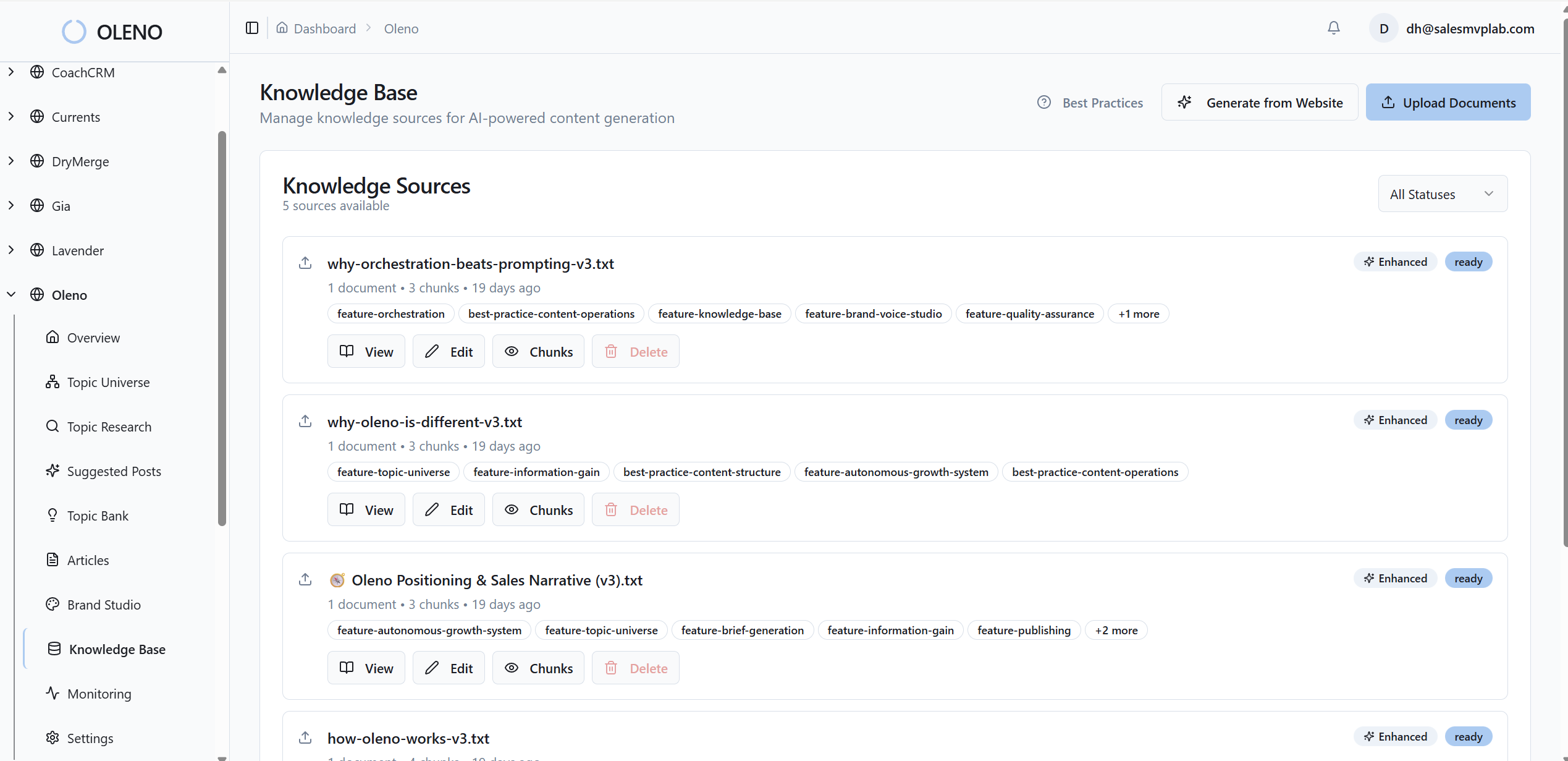
The payoff is less rewriting and faster approvals. When you cut a clip or adapt a section, Oleno applies voice and narrative rules automatically. That removes a common failure point that wastes hours every week.
Quality holds as volume rises because the guardrails are built in.
Ground Every Asset and Guard Quality
Product Studio and the Knowledge Archive keep your repurposed outputs accurate. Approved product claims, use cases, and references are at hand, so you don’t risk invented features. The QA Gate blocks anything that drifts on voice, structure, or grounding until it passes checks.

That addresses the exact costs we called out earlier: time lost to fix inaccuracies, morale hits from redo work, and pipeline drag from unclear claims. Less cleanup. More publishing. Safer statements.
When the QA Gate says it’s ready, you can feel confident it won’t come back for avoidable edits.
Run Repurposing as a Cadence
Distribution turns long‑form wins into channel‑ready variants and routes them to a review workbench. Approved posts move into a schedule, so you maintain presence without firefights. CMS Publishing pushes finished pieces as drafts or live posts, which removes copy‑paste delays. Measurement & System Health tracks output volume, cadence, and quality trends, so you see whether the engine is running clean.
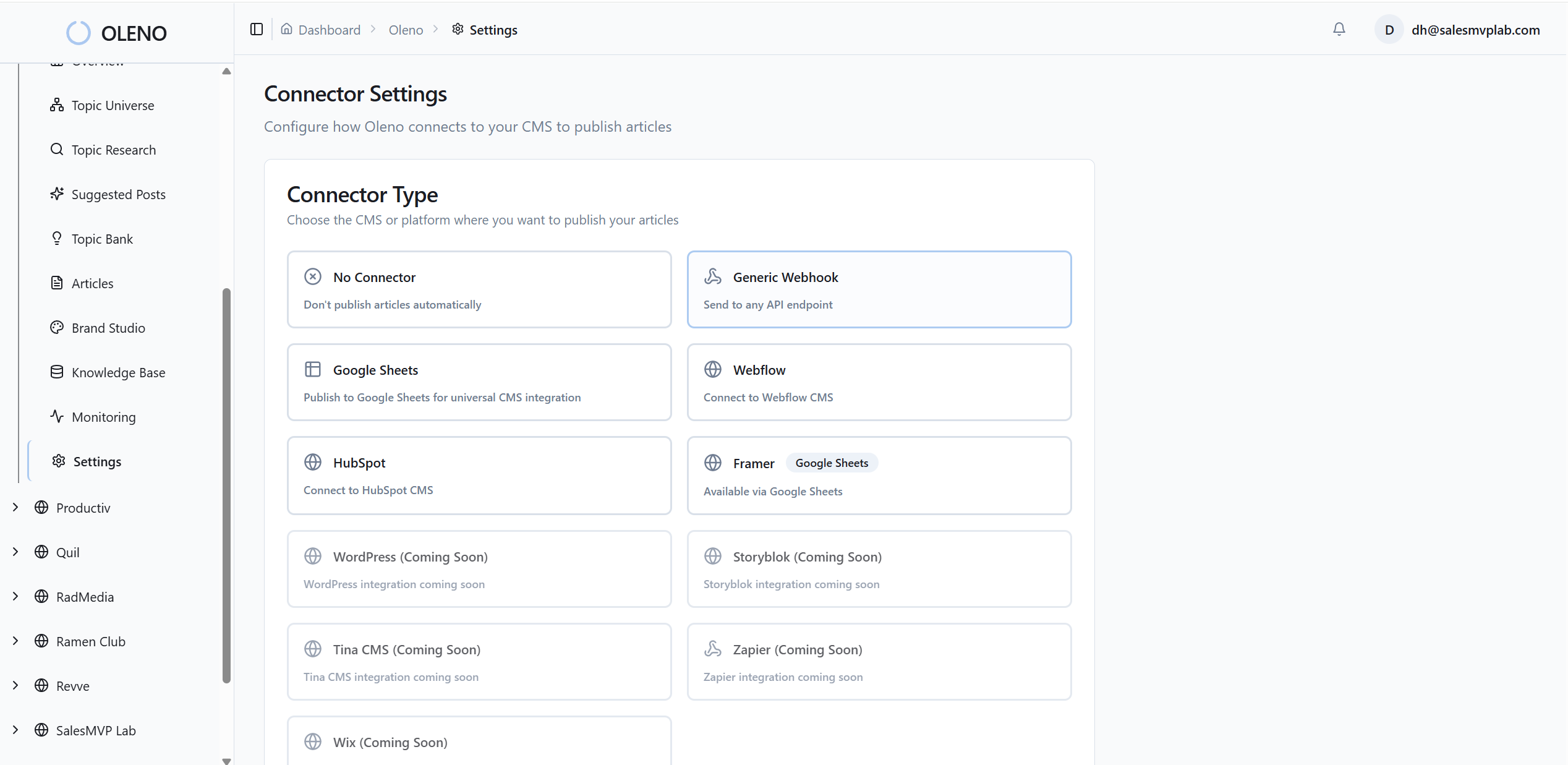
If your scorecard prioritizes proof‑heavy assets, Oleno helps you actually ship them on time. Variation Layer adapts copy for specific audiences and personas without rewriting your story, which lifts resonance without multiplying effort.
Want to see how your scorecard flows through voice rules, QA, and scheduling on real content? Book a Demo
Conclusion
Most teams don’t need more formats. They need a better queue. When you rank assets with a content repurposing scorecard, set hard effort vs ROI thresholds, and operationalize with simple metadata and a weekly SOP, you can cut low‑value work by about 60% and double conversion lift per hour. The work feels lighter; the results feel heavier. That’s the trade you want.
If you’re ready to stop wasting time on low‑impact reuse and run a governed, conversion‑focused repurposing cadence, let’s set up a quick walkthrough. Request a Demo
About Daniel Hebert
I'm the founder of Oleno, SalesMVP Lab, and yourLumira. Been working in B2B SaaS in both sales and marketing leadership for 13+ years. I specialize in building revenue engines from the ground up. Over the years, I've codified writing frameworks, which are now powering Oleno.
Frequently Asked Questions