Content Saturation Guardrails: Implement 90-Day Cooldowns & Info-Gain Checks

Publishing more content often feels like progress. More posts. More keywords. More surface area. Then the numbers flatten, and the back catalog looks the same in five different ways. The problem isn’t that you’re not writing enough. It’s that you’re repeating yourself without noticing.
If you want authority, not noise, you need guardrails. Simple ones. Enforced ones. A 90-day cooldown that pauses repeat topics. An information-gain gate that blocks low-differentiation briefs. Policy, not vibes. This is how you slow just enough to publish work that compounds.
Key Takeaways:
- Set a 90-day cooldown for any saturated topic or cluster to prevent thin re-coverage
- Track repeat topic rate and unique section ratio to quantify duplication risk
- Enforce an information-gain score at brief time to gate low-differentiation drafts
- Use a simple coverage table to label clusters and drive queue decisions
- Consolidate near-duplicates into a canonical, section-rich resource
- Move approvals upstream with CI-style content checks and pre-publish blocks
- Reserve exceptions for launches and corrections, then do a quick retro
Publishing More Often Dilutes Authority (Unless You Add Guardrails)
Publishing more without guardrails dilutes authority because repeat coverage crowds your own signals. The fix is to slow re-coverage, not publishing entirely. A 90-day cooldown and an information-gain gate reduce duplication while keeping your pipeline moving with higher-quality angles.

What content saturation is and why it sneaks up
Content saturation is repeat coverage inside a topic cluster that adds little or no new substance. It shows up as similar headers, recycled examples, and minor phrasing changes that look different but read the same. Fragmented workflows make it worse, as you can see in this content operations breakdown. Everyone is moving fast, nobody is comparing against your own canon.
Set an explicit repeat topic rate threshold. Cap net-new articles on the same subtopic at 25% of monthly cadence with the shift toward orchestration and require a pass on information gain before re-coverage. You will feel slower for a week. Then you notice fewer late-stage cuts and a stronger narrative spine across the cluster.
Guardrails work in software for a reason. Policy beats preference. If you want a framing, think about the way LLM guardrail research reviews describe policy and enforcement. It translates cleanly to content.
Curious what this looks like in practice? Try Oleno for free.
Cluster coverage and repeat topic rate
Group ideas into clusters mapped to your pillars. Track total posts, posts in the last 90 days, and the repeat topic rate for each primary intent. Label clusters “underserved,” “healthy,” “well-covered,” or “saturated.” Pause “saturated” until an information-gain gate proves the next draft adds something new. This is what an autonomous content operations mindset looks like. Decisions are triggered by labels, not opinions.
Use a unique section ratio for each brief. Count how many sections introduce a net-new argument, dataset, or product pattern. Set a floor, for example 0.6. If fewer than 60% of sections are new, the brief does not proceed. Interjection. You need a hard line somewhere, or the rework cost sneaks back in.
Who benefits when you slow cadence
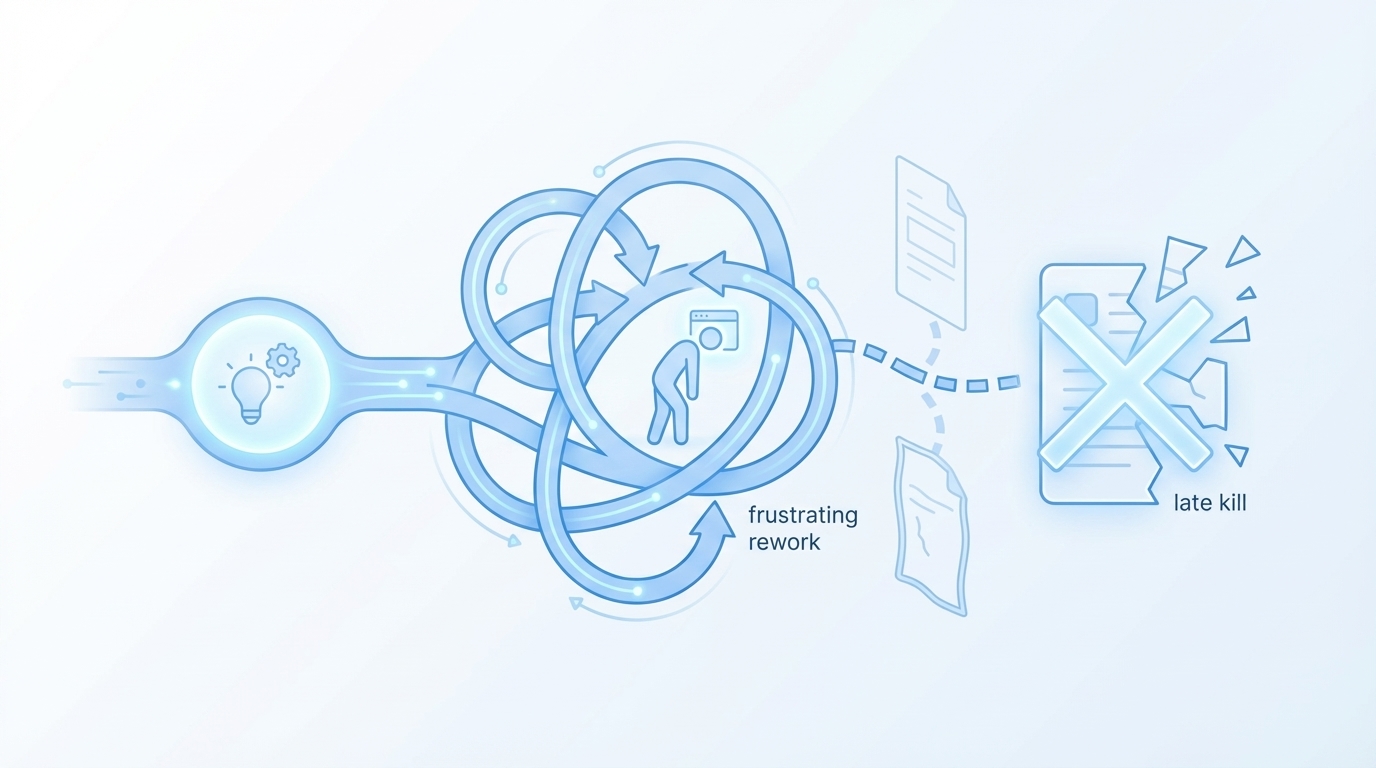
Writers avoid frustrating rework and the “rewrite the same piece” loop. Editors stop policing overlaps and spend time on clarity and depth. Brand stakeholders notice tighter story arcs. Even SEO benefits when crawl equity and internal links point to a few definitive sources instead of a dozen thin variants.
Readers feel the difference. Clearer answers. Stronger point of view. Fewer half-new takes. That builds trust over time, including why ai writing didn't fix, and that trust tends to be what assistants, search engines, and analysts cite when they need a reference.
Saturation Is An Operations Problem, Not An Ideation Problem
Saturation comes from the lack of rules, not a lack of ideas. Treat guardrails like policy: define thresholds, label states, and gate drafts before they exist. Put those rules in the brief and enforce them in pre-publish checks so the debate happens upstream.
Define actionable thresholds
Work with operations, not just editorial, to set thresholds. Define cluster states, a 90-day cooldown on any topic ID, and a minimum information-gain score to ship. Make the rules visible in the brief, so approval is pass or fail, not “feels good.” Start conservative and revisit monthly. If your backlog starves, loosen slightly. If quality dips, tighten.
Here is a pragmatic baseline many teams can start with: mark a cluster saturated if it has more than eight articles in 90 days or a repeat topic rate above 30 percent. Fail briefs that score below 65 out of 100 on information gain. This is not forever. It is a starting line you can tune.
Build a simple coverage table
Maintain a small table: cluster, total posts, posts last 90 days, repeat topic rate, unique section ratio average, status label. Update it automatically from your CMS and brief generator. Keep it boring so it gets used. Enforce decisions with the labels, not with extra commentary.
Tie labels to queuing logic. “Underserved” gets first priority in topic suggestions. “Saturated” is auto-paused unless a brief passes the information-gain gate and includes a materially new product use case, dataset, or counter-argument. Governance patterns in comparative LLM guardrail analyses show why this matters: clarity plus enforcement beats ad hoc debate.
When should you revisit clusters? Weekly reviews keep the team from drifting. Monthly adjustments prevent thrash. If the repeat topic rate falls or a strong high-gain angle is proposed, re-open. If exceptions spike, your thresholds are probably mis-set. Systemize the decision path with autonomous content systems so the routine calls are automatic.
Want a dead-simple way to enforce this “rules first” approach? Spin up a coverage table and brief with Oleno.
The Hidden Costs Of Redundant Content (Time, Budget, And Trust)
Redundant content burns hours and spreads signal so thin that even your best articles struggle. The direct costs show up in editing and approvals. The indirect costs show up in cannibalization, link dilution, and a brand voice that sounds repetitive.

Let’s pretend you published 30 posts in one cluster
Let’s pretend you shipped 30 posts in 60 days on one pillar. If 40 percent reuse the same sections with minor changes, you likely spent 120 hours on rework and approvals that did not move the narrative. Editors comb through internal overlaps. Product reviews cycle. Momentum fades.
Now pause for 90 days after 12 high-quality posts. Move the saved cycles into briefs with fresh data, stronger visuals, and specific product walkthroughs. Even with fewer posts, each piece carries more authority and link equity. It reads like a library, not a feed.
Where duplication drains SEO equity
Thin variants split internal links and confuse topical signals. Orphan pages rise. Engines and assistants struggle to identify your definitive source. You see cannibalization and unstable rankings. This pattern is consistent with how consolidation affects signals in research like a recent Scientific Reports analysis of signal coherence.
Consolidate near-duplicates into a canonical, section-rich guide. Then let the cooldown policy prevent relapses. Use the information-gain gate to protect the canon so every update raises the floor, not just the word count. If you want a system-level safeguard, pair the cooldown with an automated qa gate that stops thin drafts early.
Why Teams Feel Stuck: Frustrating Rework And Late Kills
The pain rarely comes from a lack of ideas. It comes from late-stage vetoes, exhausted editors, and thin posts that make everyone nervous. You probably recognize at least one of these scenes.
A short story: the late-stage veto
You greenlight a topic. The draft lands fast. Then review hits. The editor finds overlap with two recent posts. Legal flags a claim. Product says the examples are stale. The kill comes late. Hours lost. Morale dips. The fix is not more brainstorming. Move the decision earlier with cooldown checks in ideation, information-gain scoring in the brief, and a CMS block that stops thin pages from going live.
Why editors burn out under volume
Editors spend too much time diff-checking your own catalog while trying to coach narrative quality. That is mentally expensive. They become the “no” team, which nobody enjoys. Faster drafting did not fix this, and it will not, as this breakdown of ai writing limits explains. Operationalize uniqueness scoring and cooldown rules so editors focus on clarity and proof, not repeat policing.
Who feels the risk of thin posts
Demand gen feels wasted budget. SEO feels cannibalization. Product marketing feels vague positioning. Leadership worries about trust. Different teams, same headache. A shared guardrail policy reduces the debate. Automate enforcement so exceptions are the only time anyone has to talk about it.
Guardrails That Stop Waste Before Publish: Cooldowns + Info‑Gain
Cooldowns and information-gain gates prevent waste before it starts. The combo is simple: pause repeat topics for 90 days and require a quantified degree of novelty before writing. Design the rules once, then enforce them in your pipeline.
Design a 90-day cooldown with exceptions
Make the cooldown a policy, not a preference. Apply a 90-day pause per topic ID and per cluster when it is labeled “saturated.” Define exceptions for major launches, safety or pricing updates, and urgent corrections. Require a short exception ticket with rationale and the planned differentiation. Then codify the rule, which is where policy as code becomes practical.
Choose soft versus hard cooldowns. Soft allows scheduled updates and consolidations during the window. Hard blocks any net-new posts. Give editorial a small exception budget each month and require a brief retro for each use. Small friction. Big clarity.
Score information gain without bias
Build a rubric with four dimensions and clear weights: new data or examples, novel product application, contrarian stance, and clearer structure. A simple split could be 35, 35, 20, 10 with a pass threshold at 70 out of 100. Automate the scoring at brief time by comparing against your top internal resources and common SERP coverage. Studies comparing LLM guardrail enforcement patterns and quantitative gating approaches like this arXiv preprint on scoring gates support the approach: policy plus scoring, then enforcement.
Bake the rules into the brief template. Include the cluster label, recent coverage, repeat topic rate, unique section ratio target, the information-gain score with commentary, and exception status. Link to the canonical internal assets the new work must reference or surpass. If the brief cannot articulate how it adds net-new value, it does not proceed. That is the point. For the narrative shift behind these decisions, connect it to your orchestration shift so it sticks.
How Oleno Enforces 90‑Day Cooldowns And Information‑Gain Gates
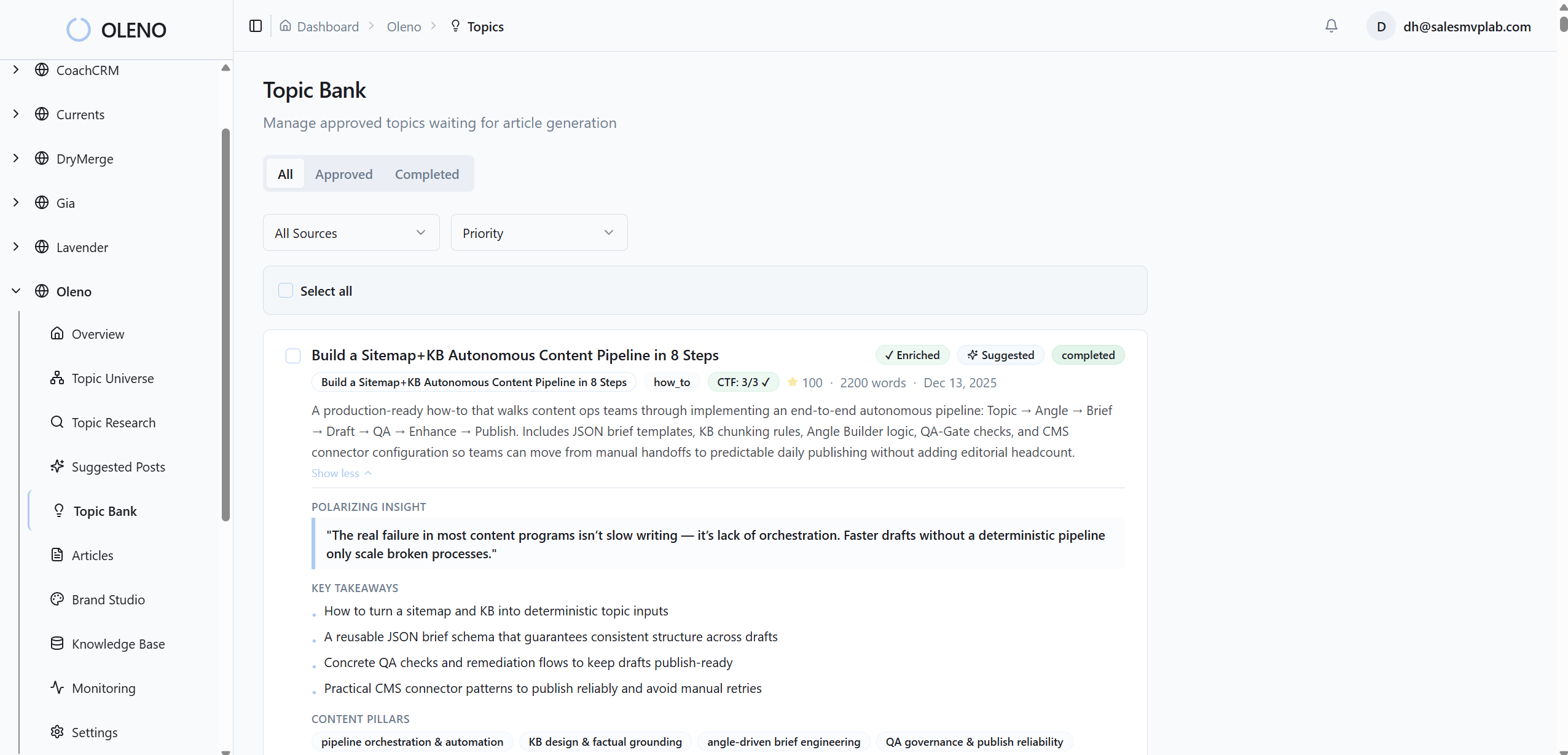
Oleno enforces cooldowns and information-gain gates by design. The checks live inside the pipeline, not in a checklist. Briefs are scored, drafts are QA’d, visuals and links are attached, and publishing is blocked when rules fail. It is deterministic, and it keeps you honest.
Integrate checks into CI-style content QA
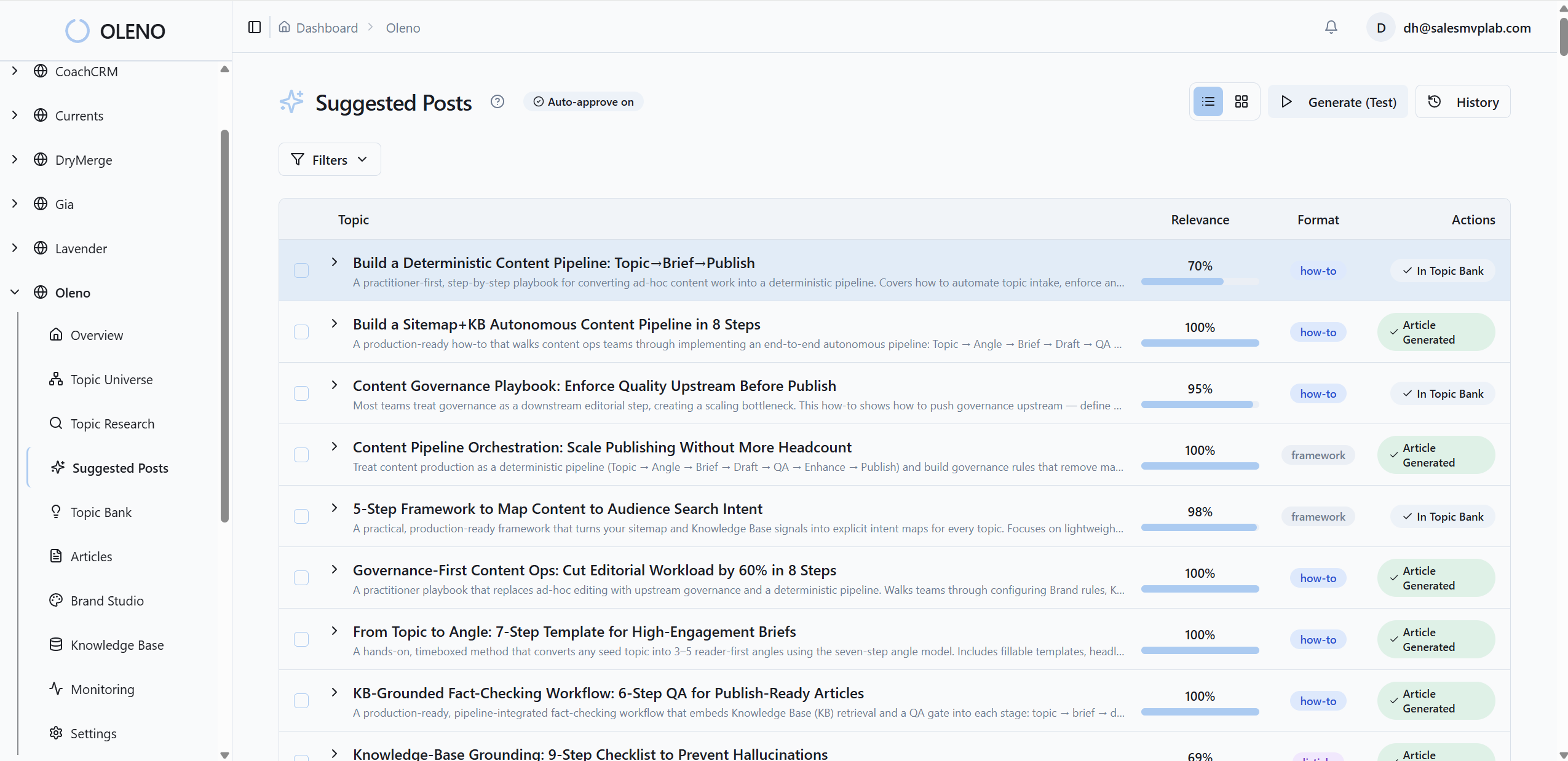
Treat briefs like code. Oleno calculates an Information Gain Score during brief generation and enforces minimum QA scores, for example 85 or higher, before an article can proceed. Low-scoring areas trigger automatic refinement loops so humans are not chasing repeats. The path is fixed: Topic to Angle to Brief to Draft to QA to Enhancements to Visuals to Publish. Rules run in the same order each time, which means cooldowns and information-gain checks are not optional. They are the path.
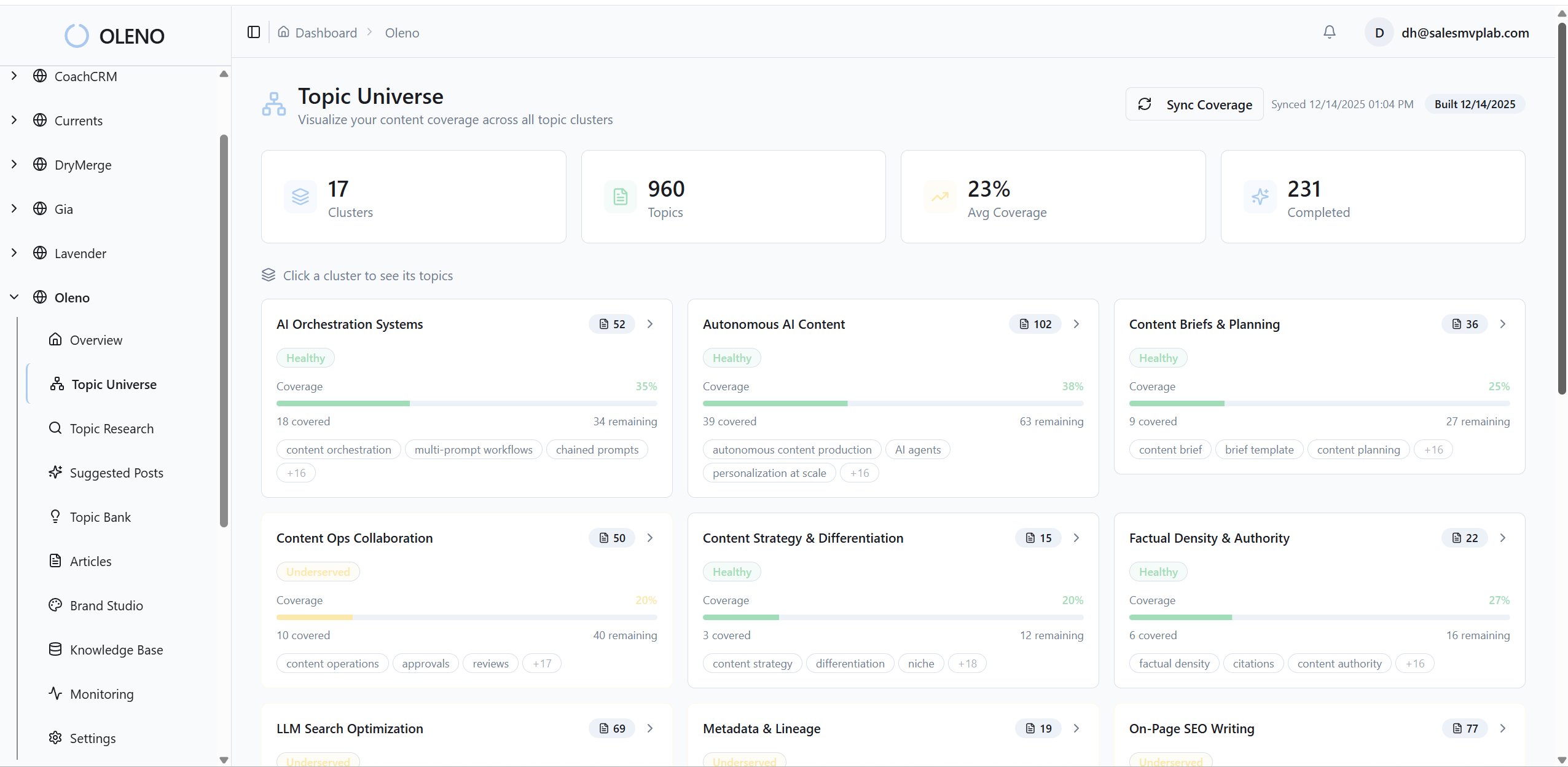
Oleno’s quality gate evaluates structure, brand alignment, snippet readiness, and information gain against clear thresholds. When a draft fails, it is improved and re-tested automatically. The goal is not to judge performance after the fact. It is to stop thin content before it consumes more time.
How the CMS pre‑publish block works
Oleno maps fields, converts markdown into CMS-ready HTML, including ai content writing, injects schema, and places internal links deterministically. Supported connectors include WordPress, Webflow, HubSpot, and Google Sheets for custom flows. Publishing can be draft or live based on policy. Duplicate publishing is prevented by design, and delivery failures trigger notifications so you fix upstream.
If a publish attempt violates cooldown or quality gates, Oleno halts it and sends a notification that explains the rule that failed. Use hard blocks for saturated clusters and low information-gain scores. Use soft warnings for borderline cases. The difference is intentional, it keeps momentum where it should be.
Roles, approvals, and rollback procedures
Assign ownership so nothing is fuzzy. Operations configures thresholds and cooldowns. Editors tune the rubric and hold the line on clarity. Product marketing approves exceptions tied to releases. SEO monitors consolidation opportunities. Keep approvals lightweight, explicit, and logged.
If a thin post slips through, have a rollback playbook. Unpublish or consolidate within 48 hours, update internal links, and re-run the cluster label. Add a rule to the template so it does not recur. Monitor saturation weekly. Refresh labels, review exception usage, and scan blocked publishes to see where rules are too strict or too loose. Then adjust monthly. Decisions, not dashboards. When clusters stay clean, your dual signals improve, which helps with dual discovery visibility across search and assistants.
Want to see it with your topics and rules? Try using an autonomous content engine for always-on publishing.
Conclusion
You do not need more ideas. You need fewer repeats. A 90-day cooldown and an information-gain gate, enforced in your pipeline, will slow duplication and speed up authority. The table stays simple, the labels do the work, and the policy becomes habit.
When the guardrails are real, everything downstream lightens. Writers ship with confidence. Editors coach instead of police. Stakeholders hear a consistent story. And your best pieces get the air they deserve. If you want to prove it quickly, start small. One cluster. One cooldown window. One gating rubric. Then scale what works.
About Daniel Hebert
I'm the founder of Oleno, SalesMVP Lab, and yourLumira. Been working in B2B SaaS in both sales and marketing leadership for 13+ years. I specialize in building revenue engines from the ground up. Over the years, I've codified writing frameworks, which are now powering Oleno.
Frequently Asked Questions