Continuity Playbook: Keep Marketing Running When People Leave
People leave. Priorities shift. And suddenly, the “always-on” engine goes quiet. I’ve felt that drop more than once. At Steamfeed, volume masked the risk. At PostBeyond, it punched us in the nose the day I got pulled into exec meetings and our writer couldn’t mimic the voice or claims. The system depended on people. Not rules.
Here’s the real consistency killer: memory. Voice rules in someone’s head. Claim boundaries in an old deck. A publish checklist stuck in a DM. When one person exits, the glue melts. You don’t need more ideas. You need fewer places for the truth to hide. Codify what matters, tie it to jobs, and keep shipping even when the roster changes.
Key Takeaways:
- Codify voice, claims, CTAs, and publishing steps so work survives people changes
- Shift from roles to small, swappable jobs with clear inputs and finish criteria
- Set a minimum viable cadence before you need it; protect it during churn
- Add upstream QA gates to stop frustrating rework and missed windows
- Run a 48-hour continuity playbook: triage, freeze, rota, templates, automation, retro
- Use system rules, not memory, so drafts don’t drift and cadence doesn’t stall
Why Small Teams Lose Momentum During Churn
Small teams lose momentum during churn because critical knowledge lives in people’s heads, not in shared systems. Publishing steps, voice rules, and claim boundaries disappear with the person who held them. One departure can stall cadence instantly, like when the only CMS admin is out during a launch.
The Work Everyone Forgot Lives In Heads
If your brand voice, product truths, and do-not-say lines aren’t written, they don’t exist when you need them. That’s the uncomfortable truth. The first time I watched a strong writer struggle to mimic our voice, it wasn’t their skill—it was our undocumented nuance. We’d assumed “everyone knows.” Turns out, no one does, consistently.
Write the rules in one place and make them the law for every draft. Define tone, banned phrases, approved claims, and how you want to be cited. Make CTAs explicit. Then go one layer deeper: link those rules inside every brief. You want the rules where the work happens, not in a lonely folder.
When the next context drop hits, your future self will thank you. And your editor won’t spend Friday night trying to reverse-engineer why a paragraph “feels off” but no one can explain why.
What Breaks First When One Person Disappears?
The fragile bits go first: publishing steps, QA checks, and access. If one person knew the CMS quirks, expect duplicates or half-published drafts. If only one person enforced claims, expect near-misses on accuracy. And if your “latest messaging” lives in Slack, expect three versions of truth by Tuesday.
Create a short dependency map today. Identify single-person keys: briefs, drafts, design requests, CMS credentials, brand voice do’s and don’ts, claim boundaries, CTA patterns, visual templates. Put it on a board, assign a backup for each, and check the “can someone else run it in 30 minutes?” test.
That list becomes your triage guide—not the loudest ping. When churn hits, you’ll work the plan, not the chaos.
Why “Just Write Faster” Makes Dependency Worse
Speed without structure increases variance. It feels productive. It isn’t. You get more rewrites, more off-voice drafts, more “can you just take a quick look?” that derails a day. I’ve tried to sprint through it. The headache multiplies. And you ship less, not more.
Take half a day to encode rules and split work into small jobs. Lock H2/H3 structure where it helps. Define finish criteria for each job. Upstream checks beat downstream fixes every time because they remove loops. Paradoxically, slowing down briefly is how you get reliable speed later.
If you’ve ever done a 3am fix on a broken post, you know the cost. Prevent it at 3pm with rules.
Ready to turn rules into output, even when the roster shifts? Try Oleno For Free.
Your Real Risk Is People-Dependency, Not Headcount
Your real risk isn’t that you lack enough people—it’s that the work depends on specific people. When strategy lives in decks, content in tools, and execution in someone’s head, capacity looks fine until that person is out. Systems beat staffing when continuity is the goal.

What Traditional Continuity Plans Miss For Marketing?
Most continuity plans cover facilities, backups, and DR playbooks. They skip the messy, marketing-specific truth: voice rules, claim boundaries, and publishing workflows. You need a marketing appendix that captures the minimum viable cadence, who can push publish, and what “safe” output looks like during recovery.
Spell out where your brand voice lives and who owns it. Define claim boundaries. Record a one-page “how we publish” checklist per channel. And define the plan you’ll run when you’re under-resourced for 48 hours. Traditional continuity covers the building; your appendix keeps demand gen breathing. For context, frameworks like a general business continuity plan are a starting point, but you’ll need to adapt them to narrative and publishing realities many teams face, similar to how tech companies document operations and failover in their own plans, which you can see modeled in the GitLab Business Continuity Plan.
Jobs, Not Roles, Keep Publishing Predictable
Roles are big and squishy. Jobs are small and swappable. Break the work into four or five jobs: brief assembly, draft expansion, SEO checks, QA pass, CMS publish. Document inputs, outputs, and finish criteria. Now anyone can run a job in a 30-minute shift without a heroic knowledge transfer.
This is the move that saved me when our writer was out and I still had to keep cadence. We didn’t assign “own the blog.” We assigned “expand this draft to 1,400 words from this outline with these claim references” and “QA for voice/accuracy with this checklist.” Work moved. Quality held.
When jobs are clear, capacity becomes modular. That’s how you reduce risk without adding headcount.
How Do You Make Narrative Portable?
Make your narrative a portable reference, not a vibe. Lock your POV, banned terms, product truths, and CTA patterns into a single doc that every brief must cite. Require claim alignment and voice checks before anything moves to publish. Now your narrative goes wherever the draft goes.
Link the doc in templates. Include “cite the claim source” in the checklist. Keep it updated weekly in under 15 minutes. You’re not trying for a novel. You’re building a guardrail that prevents drift when hands change midweek. If you want a grounding overview for the broader plan, reference the mechanics behind building continuity documents in resources like a “how to write a BCP” guide; they explain structure, and you adapt the parts that translate to marketing’s rules and cadence, similar to general guidance found in How To Write A BCP.
The Hidden Cost Of Ad-Hoc Recovery
Ad-hoc recovery costs more than the missed article. It compounds across rework, context switching, and slipping cadence. Each failure is small. Together, they push opportunities out a quarter and erode momentum. You don’t notice it in a day. You feel it in pipeline lag a month later.
Let’s Pretend A Writer Leaves Thursday Afternoon
Let’s pretend you target three articles per week with one writer and one editor. The writer exits on Thursday. The editor burns eight hours recovering context and four hours fixing off-voice drafts. Two publishing windows are missed. Even at modest conversion rates, two missed articles can delay one opportunity an entire quarter.
That’s not fatal. It’s avoidable. Encode the voice and claim boundaries. Split the work into jobs. Protect a minimum viable cadence. An ounce of upstream structure beats a week of downstream repair. It’s the difference between a blip and a stall.
I’ve paid this tax. It’s unnecessary once you set the rules.
Where Rework And Context-Switching Eat The Week
Unwritten rules create loops. A draft fails voice. Edits pile on. Claims don’t match approved boundaries. Back it goes. Multiply across channels, and you lose two days on fixes that a simple QA gate would’ve caught once, upstream. The team looks busy. The calendar stays empty.
Set pre-draft checklists that include voice references and claim sources. Add a QA gate before publishing with clear pass/fail criteria. When a piece fails, fix it once—not seven times in micro-form across the week. The cost difference is hours, not minutes.
Upstream clarity is cheaper than downstream chaos.
What Does Stalled Cadence Do To Pipeline?
Cadence gaps don’t just hurt this week’s traffic. They stall compounding effects. Email loses momentum. Social goes quiet. Search misses fresh internal links and signals. If cadence dips by 50 percent for even two weeks, you lose touchpoints and likely slip a cycle on a comparison keyword you were about to win.
Recovery lags the dip. You’re now playing catch-up while still short-staffed. The better move is to protect a minimum cadence during recovery—one article, one email, two socials. Keep the flywheel turning at a lower gear so you don’t have to rebuild momentum from a dead stop. If you need structure prompts, planning resources like Continuity Plan Templates can help you sketch the operational cadence you’ll enforce.
Still firefighting when someone’s out? There’s a steadier path. Try Using An Autonomous Content Engine For Always-On Publishing.
What The Team Feels In The First 48 Hours
The first 48 hours feel loud because everyone needs something and no one has time. You’re pulled into drafts, stakeholders queue requests, and priorities blur. Predictability—not heroics—wins this window. Create a rota, freeze non-critical asks, and protect a minimum cadence.
When Your Founder Is Back In Drafts Again
It happens. The founder jumps in, the tone reads like a sales call, and editors scramble. Embrace the impulse, then channel it. Give a three-question brief and a simple outline, not a blank page. Capture the founder’s take, then route it through the exact same QA checks as any draft.
The trick is to contain variability. Lock H2/H3 structure. Anchor claims to the reference doc. Ask for two anecdotes, not an essay. With constraints, founder-speed drafts become assets, not clean-up projects. Everyone breathes easier.
A little structure preserves a lot of voice.
The Request Queue That Will Not Stop
Support wants a page. Sales needs a case study. Product wants launch copy. You can’t do all three while recovering. Freeze non-critical asks for 48 hours and publish a note with two lanes only: protect in-flight assets and uphold minimum cadence. Everything else waits.
People respect clarity. They don’t respect whiplash. A visible list with owners and status beats ten DMs. The point isn’t to say no forever. It’s to keep demand gen breathing while you rebuild capacity. Clear rules calm the room.
You Can Avoid Firefighting With A Simple Rota
Create a lightweight on-call schedule for teams of five or fewer. One person expands drafts, one runs QA and publishing, one is the backup. Shifts are 60–90 minutes. Not full days. Predictability beats brute force when you’re thin.
Rotate daily until capacity returns. Document handoffs in the brief itself. This prevents “everyone touches everything” chaos and lets you protect the minimum cadence without burning out the same two people. For structure examples on planning continuity and operational roles, see how larger organizations describe responsibility and rotation in documents like the GitLab Business Continuity Plan.
A 48-Hour Continuity Playbook For Teams Of Five Or Fewer
A 48-hour continuity playbook stabilizes output when someone leaves or gets pulled away. The goal is simple: keep shipping the minimum viable cadence while you capture knowledge and reset roles. Use six moves—triage, freeze, rota, templates, automation, retro—to restore predictability fast.
Step 1: Run A 4-Hour Triage To Protect What Ships Next
Start with risk and momentum. Inventory three buckets: published-risk assets needing edits or takedowns, in-flight pieces at risk of stalling, and urgent external asks with deadlines. Move every item to one board with owner and status. Cancel anything not tied to business goals. Share the list publicly.
This reduces panic because visibility reduces guesses. Make “next publish” the north star and protect it. Don’t get cute with new ideas. Stabilize first. You can add ambition next week.
Step 2: Freeze Non-Critical Requests And Set A Minimum Viable Cadence
Announce a 48-hour freeze on new requests. Define what “alive” looks like: one article, one email, two socials. Pre-approve topics or reuse a proven angle. The aim is continuity, not novelty. You’re keeping the engine warm, not flooring it.
Set a simple calendar and schedule drafts as placeholders. It’s easier to replace a placeholder than to remember to publish. Protect these few commitments and say no to everything else.
Step 3: Role-Map Jobs And Spin Up An On-Call Rota
Split work into four jobs: brief assembly, draft expansion, QA, publish. Write start and finish criteria for each and link the reference doc with voice, claims, and CTAs. Assign one person per job per shift. Share CMS access and templates. Rotate daily.
This prevents everyone from jumping into everything. It also creates a clear escalation path: the on-call backup resolves blocks. You’ll feel the room calm as the rota takes shape.
Step 4: Capture Tacit Knowledge With Lightweight Templates
Use 10–20 minute templates to pull context out of heads. A quick interview to capture voice, an asset annotation that marks final claims, and a one-click publish checklist. Record a five-minute Loom walking the flow. Attach links to rules, boundaries, and CTA guidelines.
You’re not writing a manual. You’re bottling what usually happens over shoulder taps. Small, fast, repeatable. Done consistently, these artifacts outlive the week and shorten every future handoff.
Step 5: Automate Low-Touch Production For Two Days
Lean on reusable briefs, existing outlines, and scheduled CMS drafts. Lock H2/H3 structure in templates so drafts don’t drift. If visuals are required, choose pre-approved patterns. Don’t introduce new formats during recovery. Predictability beats novelty here too.
Use the same QA gate for every piece. Pass or revise. No exceptions. These two days are about keeping the flywheel turning and preventing slow, expensive rework from piling up.
Step 6: Close The Loop With A Post-Event Runbook
Run a 30-minute retro. What slipped? What saved time? What still depends on a person? Update the governance doc with missing rules, add job checklists, and document publish steps. Put the rota on the calendar for the next quarter. Continuity becomes a habit, not a one-off fix.
Archive the board but keep the template. You’ll use it again. Not because you want to, but because people’s lives happen. Systems absorb shocks. Lists don’t.
If you need a primer for documenting processes and recovery steps (so this doesn’t live in heads), resources like DR Documentation and general guides such as How To Write A BCP can help you structure the essentials you’ll adapt to marketing.
How Oleno Keeps Cadence When Roles Change
Oleno helps small teams keep cadence when roles change by turning voice, claims, and workflows into reusable rules that apply everywhere. You define how you show up once. The system runs the jobs daily with QA gates and safe publishing. When people rotate, standards don’t.
Governance Turns Voice And Claims Into Reusable Rules
Oleno starts with governance, not output. You define voice, banned terms, CTA patterns, and approved product truths once. Those rules apply everywhere, automatically. New or rotating contributors don’t guess; drafts are grounded by design instead of memory.
In practice, this removes a ton of frustrating rework. You’ll see fewer off-voice drafts and fewer claim rewrites because the system enforces boundaries before anything hits “publish.” During churn, that’s the difference between steady and stalled. Oleno becomes the safety rail that keeps the narrative intact while people shift.
When your brand evolves, you update the rules once. Future output reflects it without a re-education cycle.
Job-Based Pipelines Run Without Prompt Chains Or Meetings
Oleno is organized around demand-gen jobs tied to your funnel—acquisition content, category education, evaluation pages, product explainers, and proof. Each job runs a deterministic pipeline from brief to publish with quality checks at each stage. No prompt wrangling. No ad-hoc reinvention.
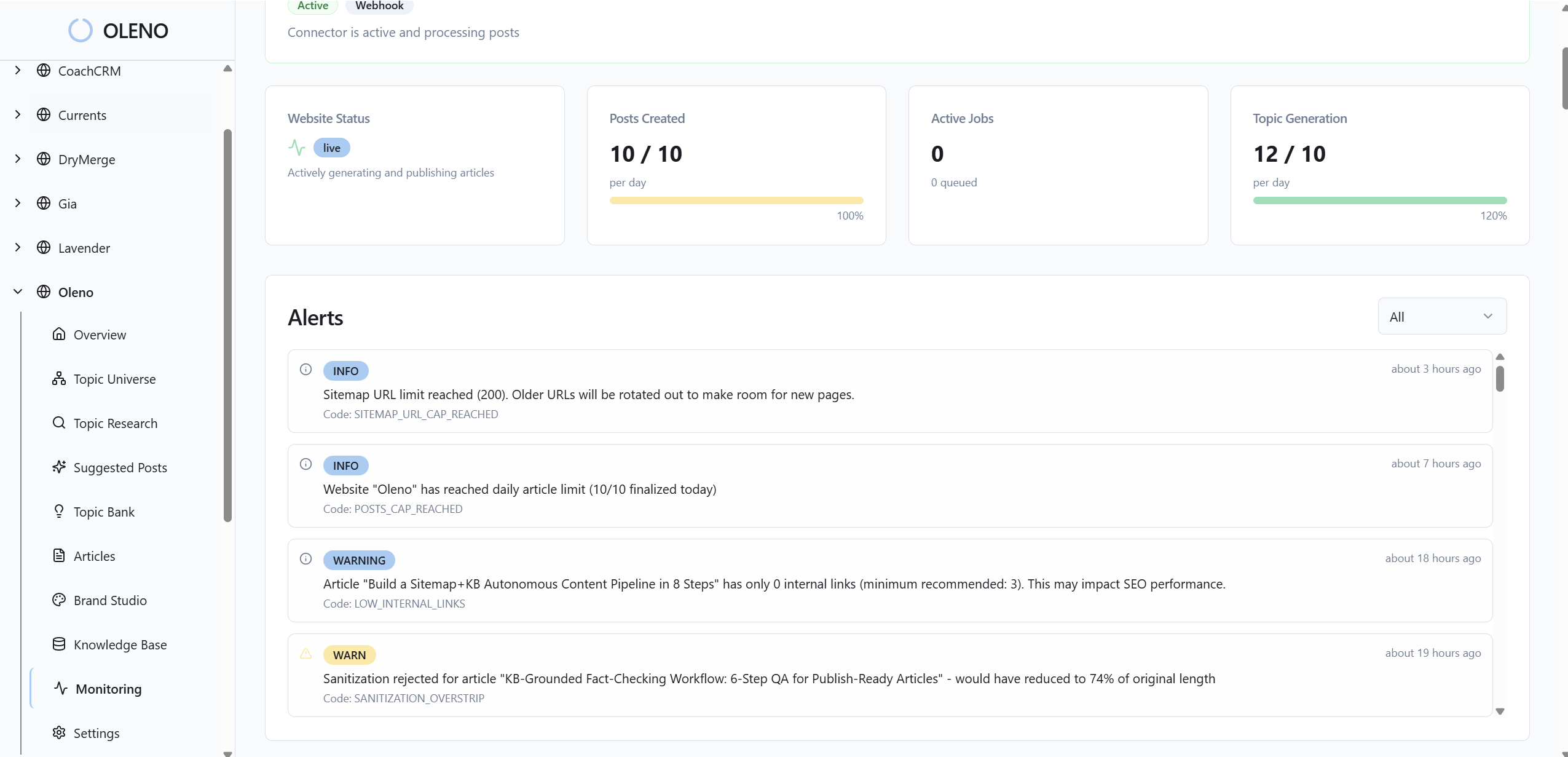
This means work is modular and predictable. If someone is out, another person can own a job shift without inheriting tribal knowledge. You get consistent outputs that align to your POV and product truth, on a rhythm you control. The meetings you used to hold to “get everyone on the same page”? They shrink.
Predictability isn’t fancy. It’s what keeps cadence during churn.
QA Gate And Idempotent CMS Publishing Reduce Breakage
Nothing publishes from Oleno unless it passes quality checks for voice, narrative structure, clarity, grounding, and approved claims. Publishing integrates with your CMS as draft or live and avoids duplicates by design. That idempotent behavior protects your site from double-posts and half-published pages.
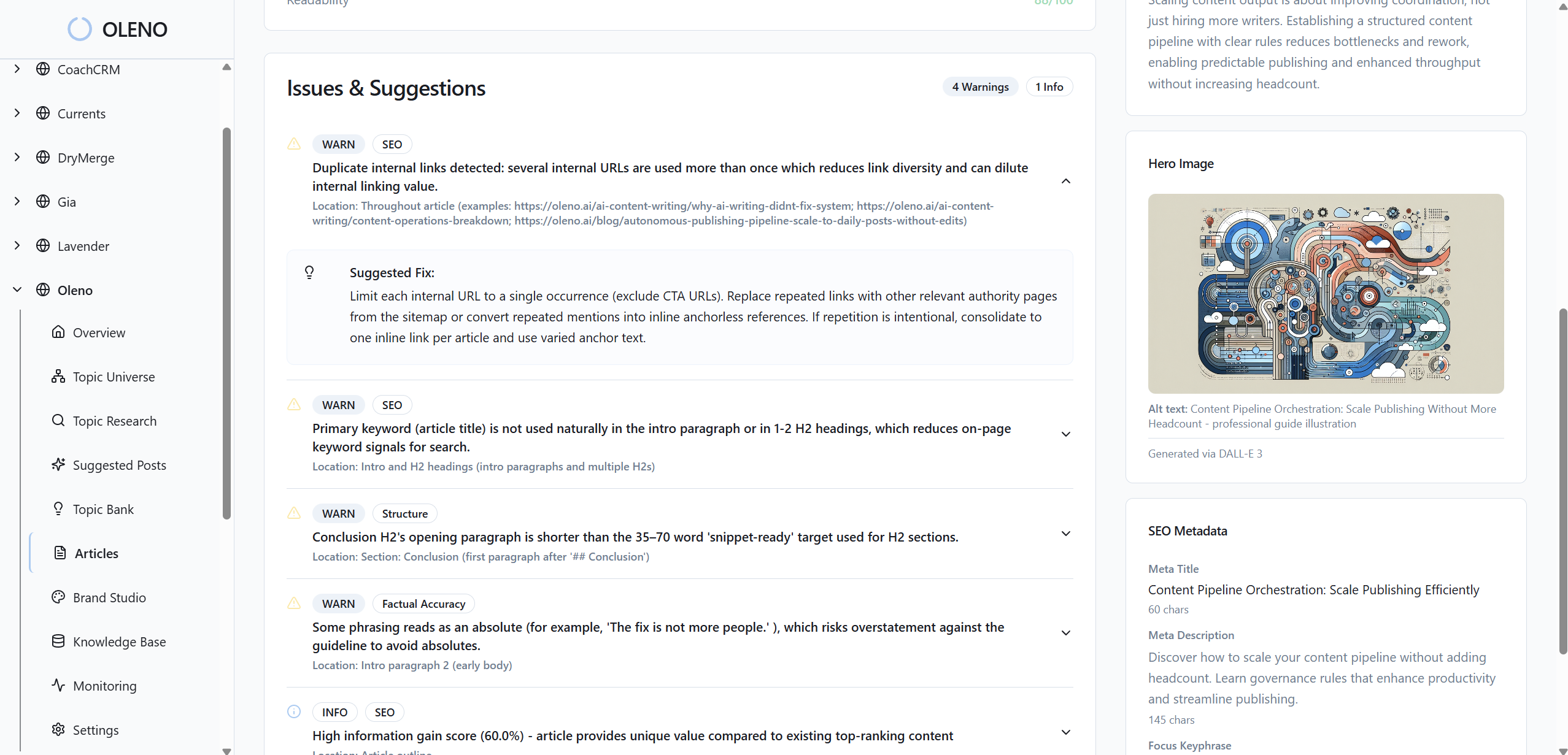
It also protects your weekends. The QA gate catches issues once, upstream. The publishing layer removes common operational errors when hands change. During a week of churn, fewer late-night fixes translate directly to more time on the few assets that matter most.
You can run lighter and still hold the bar.
Operational Visibility Signals If The Engine Is Still Running
When volume grows, manual review doesn’t scale. Oleno offers optional operational visibility—output and cadence tracking, quality trend signals, and common failure patterns—so you can see whether the engine is running well over time. You adjust the rota or the rules before problems hit production.
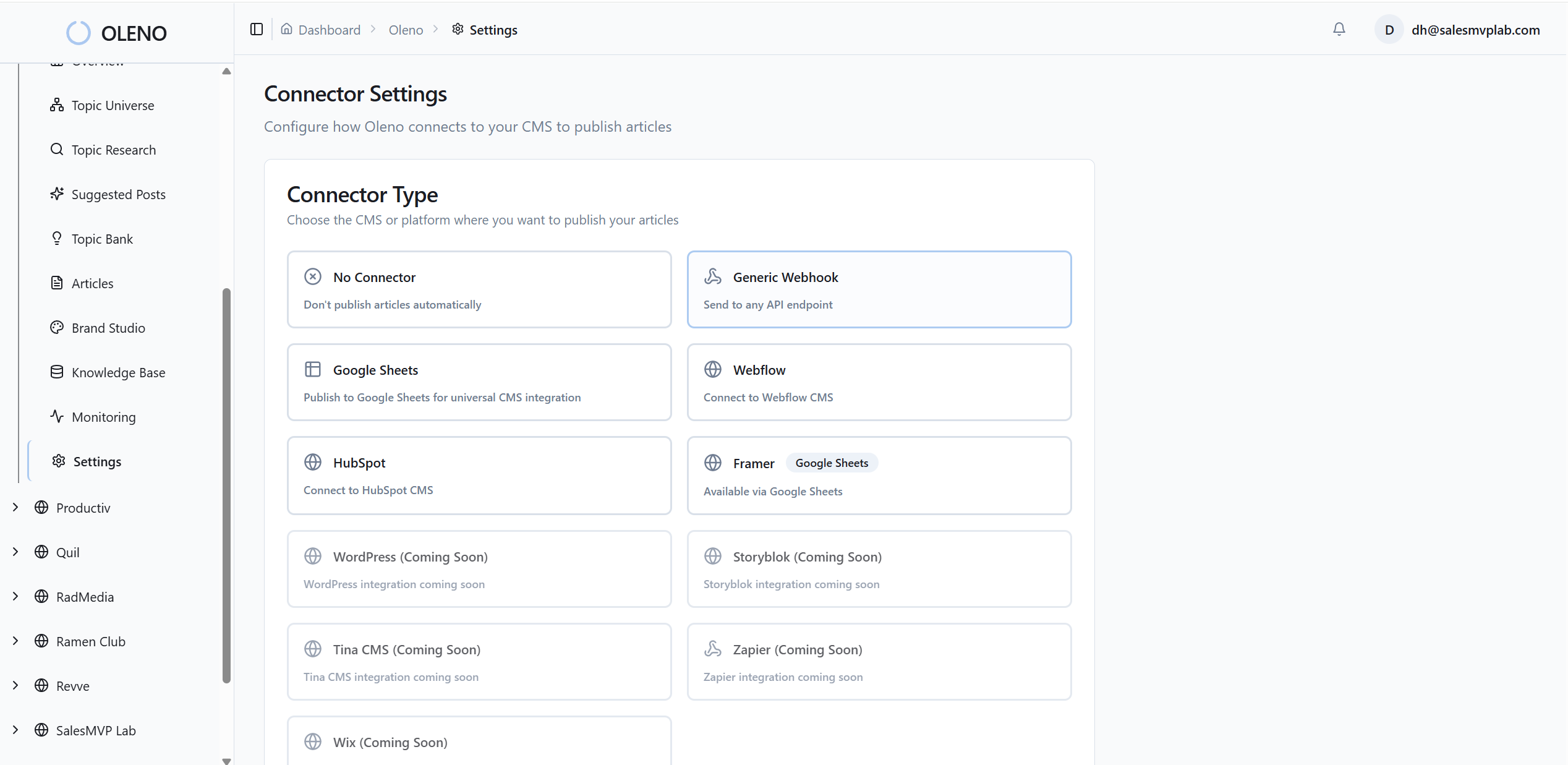
This isn’t traffic analytics. It’s confidence that your system is still shipping what you intended. During role changes, that early signal trims recovery time and keeps you from overcorrecting. You’ll sleep better knowing drift is flagged before it becomes a rework week.
Want to stabilize your cadence without adding headcount? Try Generating 3 Free Test Articles Now. Prefer to see the whole system operate? Try Using An Autonomous Content Engine For Always-On Publishing.
Conclusion
Here’s the thing. Continuity isn’t a staffing story—it’s a systems story. If the rules live in heads, your cadence lives in luck. Encode voice and claims. Split work into jobs. Protect a minimum cadence with a simple rota. Then let a system like Oleno enforce the boring parts so your team can focus on the story, not the scramble.
About Daniel Hebert
I'm the founder of Oleno, SalesMVP Lab, and yourLumira. Been working in B2B SaaS in both sales and marketing leadership for 13+ years. I specialize in building revenue engines from the ground up. Over the years, I've codified writing frameworks, which are now powering Oleno.
Frequently Asked Questions