Continuous Experimentation for Automated Content: A/B Tests & Canaries

Autonomous publishing without experiments is a mistake. You need continuous experimentation for automated publishing, or you risk shipping regressions at scale. Content is not inventory, it is a product. If you do not test it before you roll it out broadly, you will pay for it in traffic, CTR, and brand trust. I learned this the hard way, and I have the scars to prove it.
The fix is not complex tech for tech’s sake. You pair automation with a canary and A/B layer, set SEO‑safe hypotheses, and wire in rollback rules. Now your engine learns every week instead of breaking every quarter. The result feels boring in the best way possible, because stability is what compounds.
Key Takeaways:
- Treat content like a product, not inventory, with canary and A/B experiments baked into your automation
- Write SEO‑safe hypotheses, define primary KPIs, and pre‑commit thresholds before any test ships
- Use a canary release pattern, update a small cohort first, then expand only when it wins
- Monitor CTR, time on page, and error signals automatically, then rollback when thresholds slip
- Tie experiments to a weekly cadence so learning becomes routine, not a fire drill
- Use governance to keep voice, product truth, and positioning consistent across variants
- Aim for 10–25% CTR and engagement lifts on tested cohorts within 60 days while cutting regressions by about 90% with automated rollback
Why Automated Publishing Without Continuous Experimentation Fails
Automated publishing fails without experimentation because it treats content like inventory, not a product with feedback loops. Automation increases throughput, but without tests and rollbacks, you scale mistakes. A single template change can tank CTR across hundreds of pages, like flipping the wrong switch in production.
Autonomy Without Feedback Is Inventory, Not Product
Shipping more is easy. Shipping better is the game. If your system pushes updates sitewide with no canary, you blur cause and effect. Now you cannot tell if the new intro style helped, hurt, or did nothing. And when numbers dip, you are arguing feelings, not facts.
I have done that debate. It drains teams. You lose a week chasing hunches while traffic drips away. A small test group would have told you within days whether that change earned the rollout. Without it, you gamble with your entire catalog. That is the wrong table.
Where Regressions Sneak In
Regressions hide in details. Headline length tweaks. Fold placement. New FAQ schema. Internal link changes. Even small tone shifts. Each looks safe alone, but stacks quickly. Automation magnifies the blast radius.
The risk is higher on templated pages and programmatic clusters. One change touches hundreds of URLs at once. If your approval path is only “does it read well,” you will miss the data signals that matter. A canary cohort de‑risks this. You shrink the surface area first, then expand when it wins.
LLMs Reward Consistency, Not Blind Volume
GEO changed the bar. LLMs look for clear, repeated signals across many pieces. You cannot hold that line if variants drift, facts wobble, and templates swing back and forth. Consistency wins. Experiments validate changes without breaking the signal your brand sends to LLMs and search.
Winning looks boring from the outside. Inside, it is systematic. Hypothesis, canary, measure, expand. Repeat. That rhythm is what compounds.
The Real Bottleneck: No Experiment System, Only Automation
The real bottleneck is not a lack of automation, it is missing experimentation and control. Most teams wired the publish button. They never wired the canary, the KPI guardrails, or the rollback.
Symptom vs Root Cause in Content Ops
Slow growth looks like weak content. The root cause is weak learning. If nothing in your system proves cause and effect, you are throwing outputs at the wall. That is why opinions win meetings. The loudest voice is not a strategy.
You fix this by deciding how changes get proven. Not someday. Upfront. Define what counts as a win. Decide how long you will run a test. Decide what triggers a rollback. Write it down, then follow it.
What You Think Is Working, Isn’t
A lot of teams point at traffic and say “we are growing,” while the per‑page CTR is sliding. That is a hidden cost. Growth hides mistakes. When the spike fades, the baseline is worse.
You only catch this with controlled tests and cohort views. If your charts only show the whole site, you cannot see if the template change helped one cluster and hurt three others. That is how regressions sneak by.
Define the Unit of Change
Before you test anything, define the unit. Is it a template? A section block? A headline pattern? A schema tweak? Now map which clusters it touches. The test should isolate one unit, on one cohort, for one period. Simple beats clever here. Clear beats fancy.
Good experiments are small on blast radius and big on signal. That combo is rare without discipline.
The Measurable Cost of Shipping Changes Without Canary Tests
Skipping canaries costs time, traffic, and trust. A sitewide change that underperforms by 10% CTR on 500 pages is not a rounding error, it is lost pipeline. Google explicitly documents how to run website tests without hurting SEO, and teams still wing it. That is expensive bravado.
Google Search Central on website testing explains how to run experiments without confusing crawlers. Microsoft’s survey of controlled experiments shows how small UX shifts reliably move key metrics at scale. You do not want those shifts landing on your entire catalog on day one.
Time Cost per Regression
Every regression triggers a scramble. Someone pulls reports. Someone rewrites. Someone reverts. Multiply that by the number of hands in the loop. That is days of work with zero net gain, just to get back to baseline.
The worst part is context switching. You stop doing proactive work to plug holes. Momentum dies. Those weeks do not come back, especially when evaluating continuous experimentation for automated.
SEO Impact and CTR Loss
CTR dips compound. Lower CTR can reduce ranking over time, which lowers CTR more. A bad change rolled sitewide kicks off a negative loop. Tests avoid that loop by proving value on a safe slice first.
You want to see green lights before a broad rollout. Not after. Cohorts give you that proof.
Team Morale and Opportunity Cost
When results are random, teams hesitate. You hear more “let us wait” and fewer strong calls. Confidence drops, which slows shipping, which slows learning. That is the hidden cost no one logs in a spreadsheet.
A working experiment system flips that. Wins stack, losses reverse fast, and the team trusts the process again.
- Hidden time cost: 5–10 hours per regression across analytics, writing, and approvals
- Traffic impact: 5–15% CTR swings are common on template changes
- Morale drag: delayed decisions, more meetings, fewer bold moves
What It Feels Like When SEO Regressions Hit for Continuous experimentation for automated
It feels like whiplash. Last week looked fine. Then a quiet template change lands, and by Wednesday, traffic looks soft. By Friday, you are dissecting five theories in Slack. No one agrees. Everyone feels behind.

The Late‑Night Rewrite
You are in the editor at 10 pm rewriting intros that used to work. You do not know if this fixes anything. You just need to act. I have done those nights. They are a tax on poor systems.
When the change that caused the slide is not isolated, rewrites become guesswork. That is maddening.
The Slack Panic Loop
Slack lights up. Charts are posted. Arrows drawn. Hot takes everywhere. Meetings spawn other meetings. By the time you decide to revert, you have burned two days of attention on a problem you created.
Small tests avoid the panic loop. Either the canary wins and you roll forward, or it loses and you roll back. No drama.
The Erosion of Trust
Leaders stop trusting changes. Writers stop trusting guidance. Everyone gets cautious. Caution can be wise, but fear slows learning. You want bold moves with seatbelts, not tiptoeing without a plan.
The fix is giving the team a safety net they believe in. Experiments, monitoring, rollback. Simple, visible, reliable.
A Playbook for Continuous Experimentation in Automated Content Ops
The playbook is simple. Design SEO‑safe hypotheses, run a canary, monitor the right signals, then expand or rollback. Tie it to a weekly rhythm so you always learn.
Hypothesis Design That Is SEO‑Safe
Start with one clear change and one primary KPI. Keep variants meaningfully different, not tiny. Avoid cloaking or anything that confuses crawlers. Document your hypothesis, metrics, and thresholds before you hit publish. Use noindex only when you truly need isolation.
Good hypothesis examples:
- Changing H1 pattern from benefit‑first to outcome‑first, KPI is CTR
- Moving FAQ higher on page for comparison pages, KPI is scroll depth and time on page
- Rewriting meta descriptions to align with query intent, KPI is CTR
Google’s own guidance supports responsible testing when you do not cloak content or trap crawlers. If a test requires technical routing, follow the documented patterns from Google Search Central.
Canary Release Pattern for Content
Treat content rollouts like software. Do not flip the switch across the site. Roll to a canary cohort first.
- Pick a tight cohort, for example 2–5% of pages in that cluster
- Ship the change to only that cohort, leave the control untouched This is particularly relevant for continuous experimentation for automated.
- Run for a fixed period or until you hit statistical power
- If it wins on pre‑set thresholds, expand in stages, 25%, 50%, then 100%
- If it loses, rollback and record the learning
For traffic splitting patterns and safe rollouts, see Cloudflare’s traffic splitting docs. The software world solved this years ago. Content teams can borrow the same playbook.
Auto‑Monitoring and Rollback Rules
Decide the numbers that matter. CTR and qualified engagement usually lead. Pick thresholds and act automatically when the line is crossed. No debates.
Suggested guardrails:
- CTR lift target: 10–25% on the canary vs control, expand when met
- Floor: rollback if CTR drops 5% or more for two consecutive snapshots
- Secondary checks: bounce rate, scroll depth, or return rate for that cluster
Teams that run experimentation at scale share one trait, opinion does not beat data. Etsy’s engineering team wrote a great overview of how they systematized this mindset in their experiment framework.
Ready to validate this approach on your programmatic content engine? Request a Demo
How Oleno Operationalizes Continuous Experimentation for Automated Demand Gen
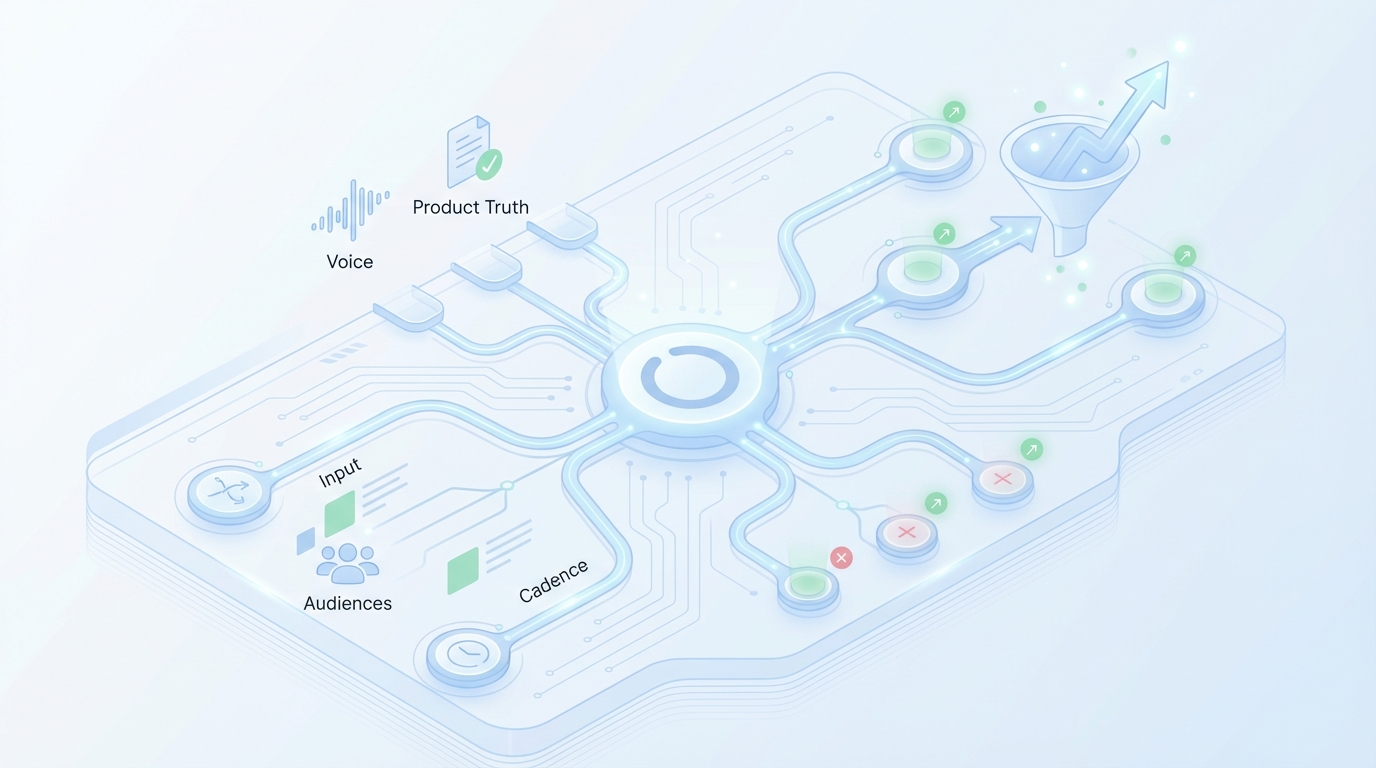
Oleno does not guess. It turns your rules into execution. You define voice, product truth, audiences, and the cadence you want. Then you run experiments inside a reliable system, not in a pile of prompts and one‑off docs.
Orchestrated Cadence With Safe Rollouts
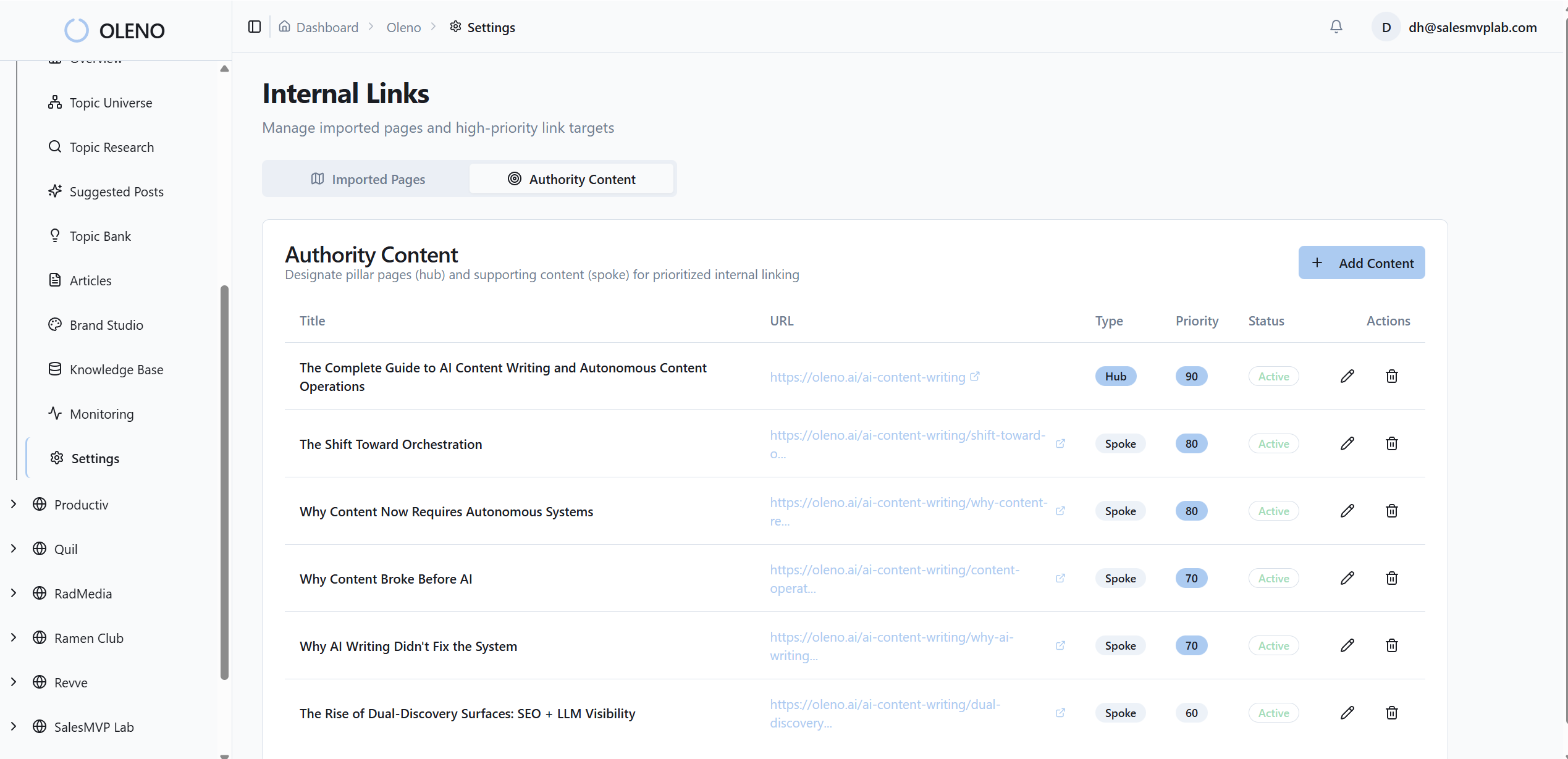
Use the Orchestrator to pace work on a weekly schedule. You can queue canary cohorts as distinct jobs, control when they go live, and expand rollouts in stages once results are in. Because Topic Universe tracks clusters and coverage, selecting tight, representative cohorts is straightforward instead of ad‑hoc.
Quality Gate keeps drafts and updates aligned to voice, structure, and grounding. That means your control and variant both pass the same bar before they ever reach the CMS, which prevents test noise from sloppy execution.
Governance That Prevents Drift
Brand Studio, Marketing Studio, Product Studio, and the Knowledge Archive give you a stable foundation, so experiments test what you intend. Voice stays consistent. Product claims stay accurate. Positioning does not wobble. Now your tests isolate the change you care about instead of measuring random drift.
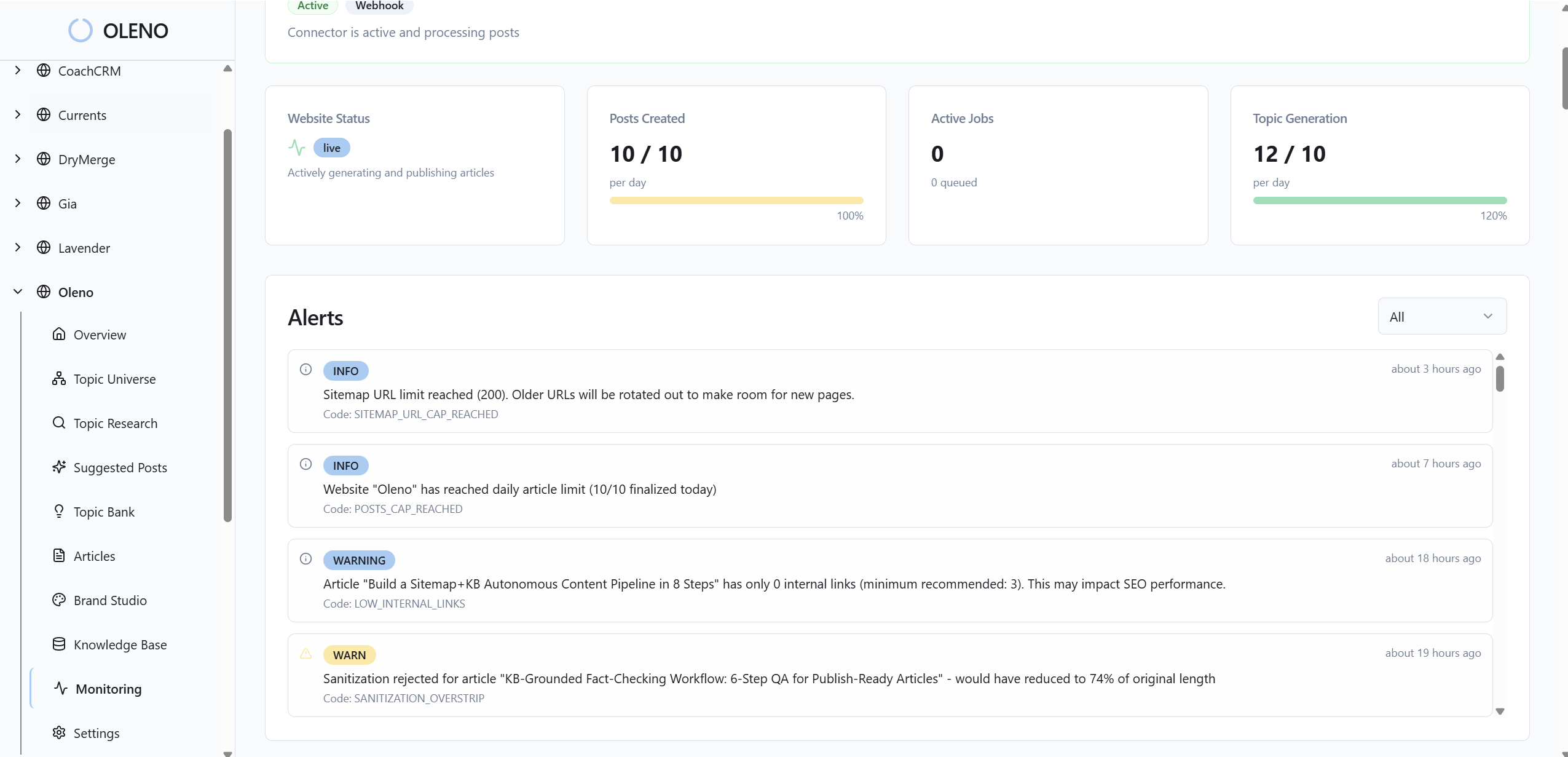
Health Monitor shows cadence and quality trendlines across jobs, which helps you spot regressions early and decide whether to expand or rollback a cohort. You get a clear picture of output volume and outcomes without spreadsheet archaeology.
From Idea to Publish Without Losing Control
Programmatic SEO Studio runs locked‑structure briefs and drafts on a steady cadence. You can pair that repeatability with canary cohorts by scheduling a small subset first, verifying results, then scaling production. CMS Publishing pushes approved changes directly to your CMS in draft or live mode, so you do not burn hours reformatting or chasing duplicate posts.
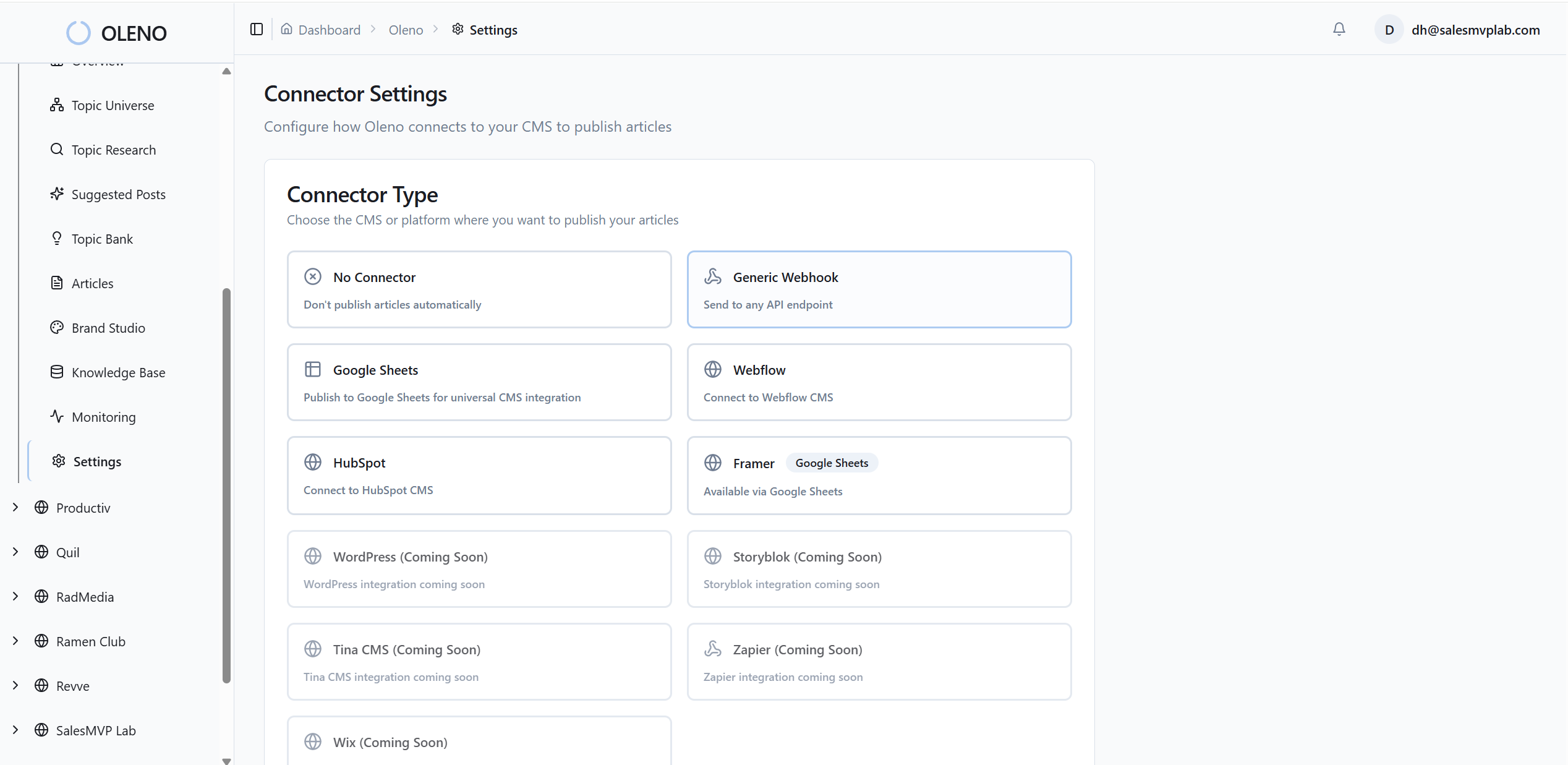
When a change wins, Distribution Studio repurposes the approved long‑form into platform‑specific social posts, keeping your messaging grounded in what proved out. No drift. No off‑brand one‑offs.
What does this look like in practice:
- Orchestrator schedules canary jobs first, then scales winners to the rest of the cluster
- Quality Gate blocks weak variants so bad tests never go live
- Health Monitor surfaces trend breaks so you can rollback fast if a metric slips
10–25% CTR lift on tested cohorts within 60 days is a realistic target when you pair automation with experiments, and automated rollback cuts large‑scale regressions dramatically. Want to see this flow end to end with your topics and templates, not a toy example? Request a Demo
Conclusion
Automate the engine, but never automate the guesswork. You need continuous experimentation for automated publishing, or you will scale mistakes. The fix is a tight loop, SEO‑safe hypotheses, a canary release pattern, clear thresholds, monitoring, and fast rollbacks.
Do that, and your content stops feeling random. You learn weekly. You protect your brand signal for LLMs and search. You grow on purpose. If you want a system that encodes those rules and runs them without adding headcount, Oleno was built for that. See it with your own pages and your own metrics. Book a Demo
About Daniel Hebert
I'm the founder of Oleno, SalesMVP Lab, and yourLumira. Been working in B2B SaaS in both sales and marketing leadership for 13+ years. I specialize in building revenue engines from the ground up. Over the years, I've codified writing frameworks, which are now powering Oleno.
Frequently Asked Questions