Stop Chasing Personas. Start Asking Where Do You Sit

Most teams asking “who is the persona?” are solving the wrong problem, and that’s why “where do you sit” ends up being the question that actually leads to content that converts. Demand-generation execution software is a marketing operating system that delivers consistent, narrative-driven pipeline by orchestrating governance, planning, creation, QA, and publishing into a single end-to-end workflow that maintains voice, product truth, and cadence across the funnel so quality stays predictable as volume scales. Unlike persona templates and prompt libraries, demand-generation execution software is about running the whole system week after week, not producing a pile of drafts that need human glue.
And to be clear, this isn’t an anti-persona rant. Personas can be useful. The problem is when personas become the first question, the main lens, and the reason you spin up 14 “versions” of the same asset that all say slightly different things.
That’s how you end up trapped in fragmented, prompt-based demand-gen execution. Lots of activity. Lots of output. Still no compounding.
Key Takeaways:
- “Where do you sit” beats persona-first briefs because seat context predicts constraints, urgency, and buying triggers, so your CTA and proof land cleaner.
- Fragmented, prompt-based demand-gen execution creates drift and rework, and it quietly forces quarterly resets that kill compounding.
- You can operationalize “where do you sit” with a simple seat template, a stage-by-seat matrix, and a lightweight QA checklist that blocks irrelevant persona detours.
- Run a 60-day experiment: convert three persona-heavy pages into job-mapped pages, then measure review cycles and conversion signals before and after.
Where Do You Sit Beats “Who Is The Persona” For Conversion
Personas don’t convert, context of work does. A title like “VP Marketing” tells you who someone is. It doesn’t tell you what they can actually ship, what they’re afraid of, what they’re measured on this quarter, or what tradeoffs they’ll accept to get the win.
That’s the seat. Where they sit inside the org, the stage, the mandate, and the mess.
Personas Explain Identity; “Where Do You Sit” Predicts Behavior
A persona doc usually reads like: goals, pains, objections, preferred content formats, yada yada. And it’s not wrong. It’s just incomplete in the place that matters most: decision context.
Take “VP Marketing.”
- At a 20 person startup, they’re writing copy, running paid, and trying to get from 5 demos a week to 12. Their risk tolerance is high because the risk is dying slowly.
- At a 300 person SaaS, they might be managing a team of 12, juggling board pressure, and trying to make pipeline predictable. Their risk tolerance is low because the risk is getting called out in QBRs.
Same persona label. Different seat. Different reality.
So your content ends up generic if you start with persona. You write like you’re addressing a fictional average VP Marketing, which is basically nobody. When you start with “where do you sit,” you can write to what’s actually true: constraints, urgency, internal politics, buying trigger, and what proof they need to feel safe.
That’s where conversion comes from. Not clever copy. Clarity.
Output Without A System Inflates Noise, Not Pipeline
Prompting looks like progress because it creates output fast. So do freelancers. So do agencies. You can crank out 10 drafts in a week and feel like the engine is running.
But demand gen doesn’t care about output. It cares about the system holding together.
Fragmented, prompt-based demand-gen execution breaks because every asset becomes a one-off event. Someone prompts. Someone edits. Someone argues about tone. Someone changes the CTA because “we’re pushing a webinar now.” Someone else changes the positioning because “the founder saw a competitor say this.”
Next week, repeat.
You end up with a library that looks busy and reads inconsistent. A bunch of assets that don’t line up with each other, don’t build memory, and don’t guide a buyer from “I’m curious” to “I’m ready.”
That’s noise. Not pipeline.
Demand Gen Is A System; Persona-Led Content Is A List
Demand gen that compounds has a few boring traits.
It’s consistent. It repeats the same truths in different ways. It covers the full funnel. It ships on cadence even when the week gets chaotic.
Persona-led planning tends to turn into a topic list. You map a persona to a list of pain points, then you brainstorm 40 blog posts, and you call it a strategy.
But without a system, it resets constantly. It also doesn’t protect the narrative. It can’t, because the “system” is actually a bunch of humans trying to remember what matters across 12 tools, 6 docs, and 30 Slack threads.
That’s why AI writing didn’t fix demand gen. It made drafting faster. It didn’t make the system run.
Reframing “Where Do You Sit” As The Primary Targeting Question
“Where do you sit” is a targeting question that forces you to be honest about what the buyer’s day looks like. It makes you pick the real levers: stage, mandate, constraints, and what they need to prove internally to buy.
It also exposes the hidden flaw in persona-led thinking: it assumes context is stable. In real companies, it’s not.
Org Context Determines Jobs-To-Be-Done And Acceptable Tradeoffs
Same person. Same title. Different acceptable tradeoffs.
If you’re a CMO at an early stage SaaS, you’ll accept ugly to get fast. You’ll trade polish for momentum. You’ll probably ship “good enough” if it gets you meetings.
If you’re a PMM in a later stage org, you’ll accept slower if it reduces risk. You’ll trade speed for consistency. You’ll want proof, approvals, and clean claims because one wrong sentence becomes a headache with sales, legal, and product.
Seat context determines:
- what “good” means
- what “safe” means
- what proof is required
- what CTA is reasonable
That’s why “where do you sit” predicts behavior. Personas don’t.
Funnel Intent Changes By Seat Faster Than Demographics Do
A persona doc makes intent feel fixed. “This buyer is top of funnel.” “This buyer is bottom of funnel.” Real life isn’t that clean.
I’ve seen a Director of Demand Gen swing from “teach the market” to “close deals now” in a single quarter because the pipeline number got missed. Same person. Same role. Different seat pressure.
Your content has to keep up with that. Not by rewriting everything every week, but by having a system that knows what job it’s trying to do per asset.
Acquire. Educate. Convert. Retain and expand. Reinforce.
Those are jobs. Seats influence which job matters right now.
Replace Role Fiction With Situational Truth You Can Actually Run
If you want this to be operational, you need to get seat context out of brainstorming land.
This is what I mean by situational truth:
- company stage and growth pressure
- who they report to and what they get judged on
- what they can approve without a committee
- what they’re afraid of shipping
- what kind of proof they need to move
Once you write that down per seat, your content stops being “for the persona.” It becomes “for the moment.” That’s a massive difference.
And it also makes it easier to create fewer variations that matter, instead of tons of tiny tweaks that just bleed time.
The Real Cost Of Fragmented, Prompt-Based Demand-Gen Execution
Fragmented, prompt-based demand-gen execution is expensive in a way most teams don’t measure. It doesn’t show up as a line item called “fragmentation.” It shows up as resets, rework, and meetings that feel necessary because nothing else is holding the line.
And the kicker is it gets worse as you produce more.
Quarterly Resets Kill Compounding And Waste Hard-Won Learning
Most demand gen programs reset every quarter. New theme. New campaign. New docs. New “priority content.” Same meeting. Different slide deck.
It’s not because marketers love chaos. It’s because the system can’t carry momentum on its own. The only way to keep it aligned is to restart and realign. That becomes the ritual.
The cost is brutal. All the learning you earned in the last 90 days gets diluted. The buyer memory you were building gets interrupted. The narrative you were repeating gets replaced by “this quarter’s message.”
Compounding needs reinforcement. Quarterly resets are the opposite of reinforcement.
Coordination Cost Scales Faster Than Content Volume
Let’s pretend you’re a lean B2B SaaS team.
You publish 8 pieces a month today. Each piece takes:
- one writer
- one editor pass
- one PMM check for claims
- one stakeholder review because “we need buy-in”
- one CMS upload
- some social repurposing
Now you want 20 pieces a month. That’s a reasonable goal. You add more writers or you add AI or both.
Here’s what usually happens: the drafts come in faster, but the review and coordination explodes. More volume means more disagreement. More edits. More “can you tweak this for Sales.” More meetings because nobody trusts the output.
That’s the hidden tax. As output volume increases, coordination cost increases too. Not linearly either. It feels like it doubles.
That’s also why manual, headcount-heavy approaches cost at least 10x more than a system where one strategic writer can produce with AI support and not drown in coordination. You’re not paying for words. You’re paying for the human glue.
Narrative Drift Lowers Conversion Even As Rankings Rise
I’ve lived the “we rank, but it doesn’t convert” problem.
At Proposify, we had a strong content team. Great writers. Great design. We ranked for a ton of stuff. The problem was the content drifted away from the thing we actually sold, so it couldn’t pull the reader toward the product in a clean way.
So traffic looked good. Pipeline didn’t follow the way you’d expect.
Now add prompting into the mix. Week-to-week drift in tone and narrative is real. Even prompts written a week apart produce different outputs. It’s subtle at first, then it erodes positioning over time.
The buyer feels it. Sales feels it. You end up rewriting CTAs and intros constantly because the “voice” isn’t stable.
And that’s the frustrating part. You did the work. You had the strategy. The system still failed you.
What Fragmentation Feels Like In The Week
Fragmentation feels like you’re reviewing more and trusting less, even though your team is working hard and you’ve “added AI” and you have more tools than ever. You show up to Monday standup and realize three drafts disagree on claims, the calendar slipped again, and leadership wants quick wins while you rewrite CTAs to match last week’s pivot.
You’re Reviewing More And Trusting Less
You know that moment where you’re reading a draft and thinking, “Did we already decide we don’t say it like this?”
So you go hunting. Old doc. Old Notion page. Slack message. A random Loom. A comment thread in Google Docs. Eventually you find the “approved” wording from two months ago.
Then you realize nobody used it. Again.
That’s not incompetence. It’s what happens when governance lives in people’s heads and scattered docs. Fragmented, prompt-based demand-gen execution forces humans to be the QA system.
Humans are bad QA systems. We get tired. We miss things. We disagree. We change our mind.
Cadence Slips, Pressure Rises, And Creativity Shrinks
When cadence slips, pressure spikes. When pressure spikes, you stop experimenting. You play it safe. You write boring content because boring content is less likely to get you in trouble internally.
Creators become fixers. PMMs become traffic cops. Leaders lose confidence in the calendar.
And then the final insult is someone says, “Maybe we just need more content.”
No. You need a system that holds together.
How To Operationalize Where Do You Sit Without Hiring More People
You can implement “where do you sit” without buying new software. It’ll be a bit manual, but it’s doable, and even a lightweight version will cut a lot of the pointless variation.

The key is to map seats to jobs, then force content to declare what job it’s doing before you write it.
- Governed Truth: Centralize market POV, brand voice, and product facts so every asset inherits consistent narrative and accurate claims.
- Orchestrated Execution: Plan-to-publish workflows produce stage-by-seat assets on a reliable cadence, eliminating resets and rework.
- Compounding Cadence: Measure, refresh, and reuse systematically so quality and pipeline impact grow over time instead of restarting each quarter.
That’s the framework. Now make it real.
Define Seat Contexts That Actually Drive Decisions
Start with 3 to 5 seats. Not 12. You can always add later.
For each seat, answer these in plain language:
- What stage are they in (early, growth, mature)?
- What’s their mandate this quarter?
- What KPI are they actually judged on?
- What are their constraints (time, headcount, risk)?
- Who do they need to get buy-in from?
- What’s the buying trigger that makes them act now?
- What proof makes them feel safe (numbers, stories, third-party validation, internal consensus)?
If you want a shortcut, steal this rule: don’t write anything until you can say what the reader is trying to get done this quarter.
That’s the job. That’s “where they sit.”
Build A Stage-By-Seat Content Matrix That Forces Coverage
Your calendar shouldn’t be a pile of topics. It should be a coverage plan.
Make a simple matrix:
Rows = seats. Columns = the job of the content: Acquire, Educate, Convert, Retain and expand, Reinforce.
Then add three more fields per cell:
- narrative anchor (what truth are we reinforcing?)
- required proof type (what makes this believable?)
- CTA type (what’s the next step that matches the job?)
For example: “Director of Demand Gen, Convert” = narrative anchor: compounding beats campaigns; proof: 2 customer stories with numbers; CTA: short demo. If you can’t fill those fields in 60 seconds, you don’t have a brief. You have a wish.
Most teams overproduce Acquire content because it’s easier to justify. “We need more traffic.” Fine. But if your Convert column is empty, you’re basically paying for awareness and hoping it turns into pipeline through magic.
It won’t.
Encode Governance So Voice And Truth Don’t Drift
You don’t need a 40 page brand book to do this. You need a usable one.
At minimum, centralize:
- voice rules (how you talk, what you don’t say)
- your POV (what you believe about the market, and what you’re pushing against)
- product truth (what you can claim, what you can’t, what use cases you support)
- CTA rules per job (acquire CTA is not the same as convert CTA)
Then give every asset a lightweight QA checklist before it ships:
- Does this match our voice?
- Are claims grounded in what’s true?
- Is the CTA correct for the job and the seat?
- Did we accidentally add persona fluff that doesn’t change the decision?
One sentence interjection: this feels annoyingly strict at first.
But it saves you from the painful version of strict later, which is five people in a doc arguing about wording because nobody knows what the rules are.
If you want to see what this looks like when it’s encoded into an actual system, request a demo.
How Demand-Generation Execution Software Differs From Prompting And Patchwork Stacks
Demand-generation execution software exists because the old categories don’t own the full problem. Content tools help you write. SEO platforms help you analyze. Agencies help you produce. AI assistants help you draft.

None of those run the system end to end. Not another writing tool, but a system that carries your rules from plan to publish.
Here’s the difference in one table.
| Dimension | Old Way | Category Way |
|---|---|---|
| Planning cycle | Resets every quarter | Continuous system that reinforces and compounds |
| Cost to scale | Headcount heavy, coordination cost rises with volume | Lower marginal cost because rules and workflow carry consistency |
| Consistency | Voice and narrative drift week to week | Voice, POV, and claims are enforced, not remembered |
| Output mix | Skews top of funnel because it’s easier | Stage coverage is intentional, including conversion assets |
| Quality control | Meetings and gut checks | Deterministic QA gates and repeatable checks |
That’s the category shift. Less heroics. More reliability.
In Practice, Where Do You Sit Becomes A Real Workflow In Oleno
Oleno is built around the idea that demand gen should run like a system, not like a weekly scramble. It starts with the boring stuff most teams skip: writing down your voice, your POV, and your product truth, then making sure every asset inherits those rules before it ever hits a draft.
That’s also how you stop fragmented, prompt-based demand-gen execution from creeping back in when the calendar gets busy.
Seat-Aware Inputs Become Repeatable Output In Oleno
In Oleno, you encode how you want to show up in brand studio, what you want the market to understand in marketing studio, and what’s actually true about the product in product studio. Then you layer in audience & persona targeting so the content can be framed differently without your team manually rewriting the same asset 10 times.
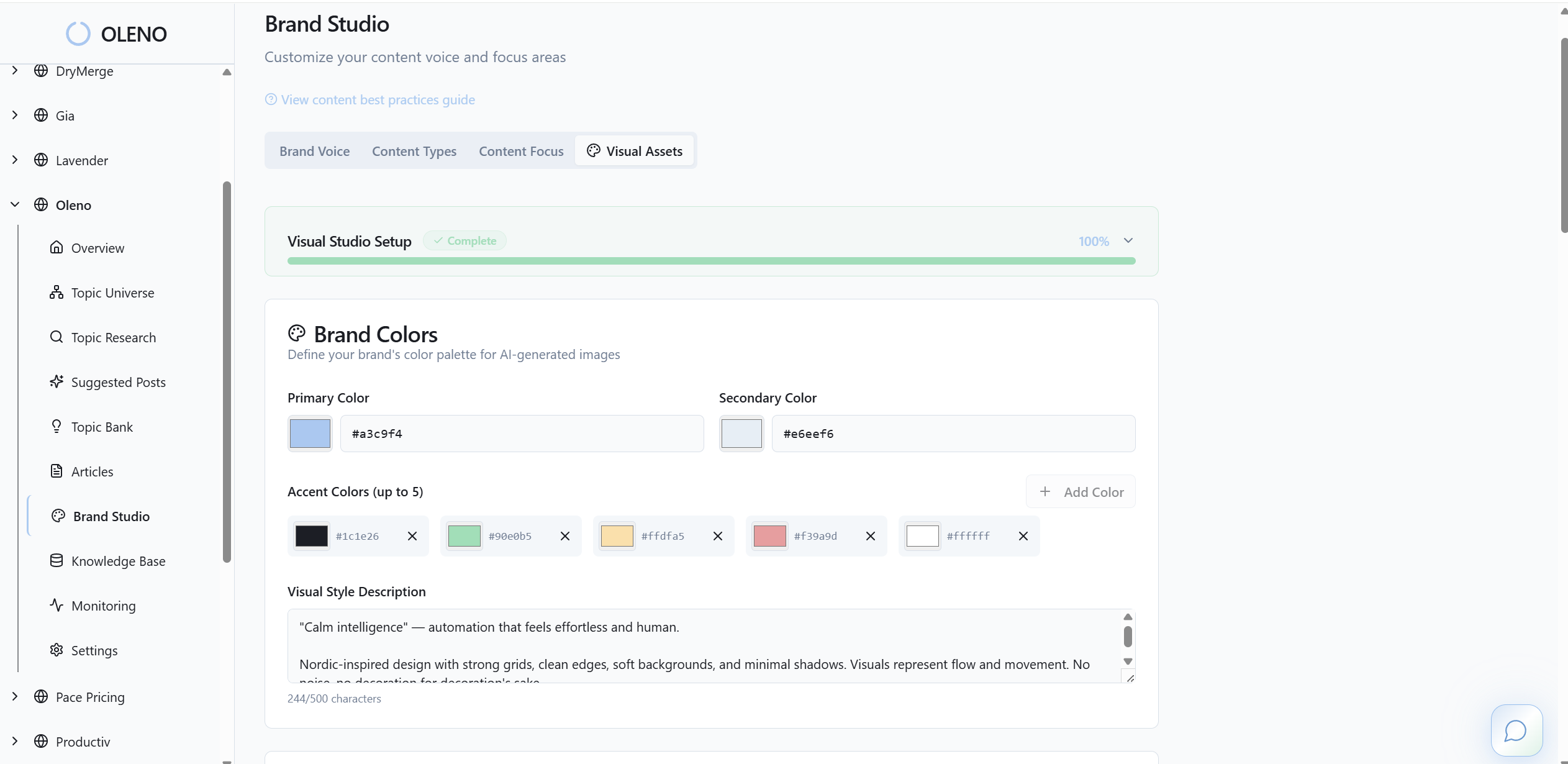
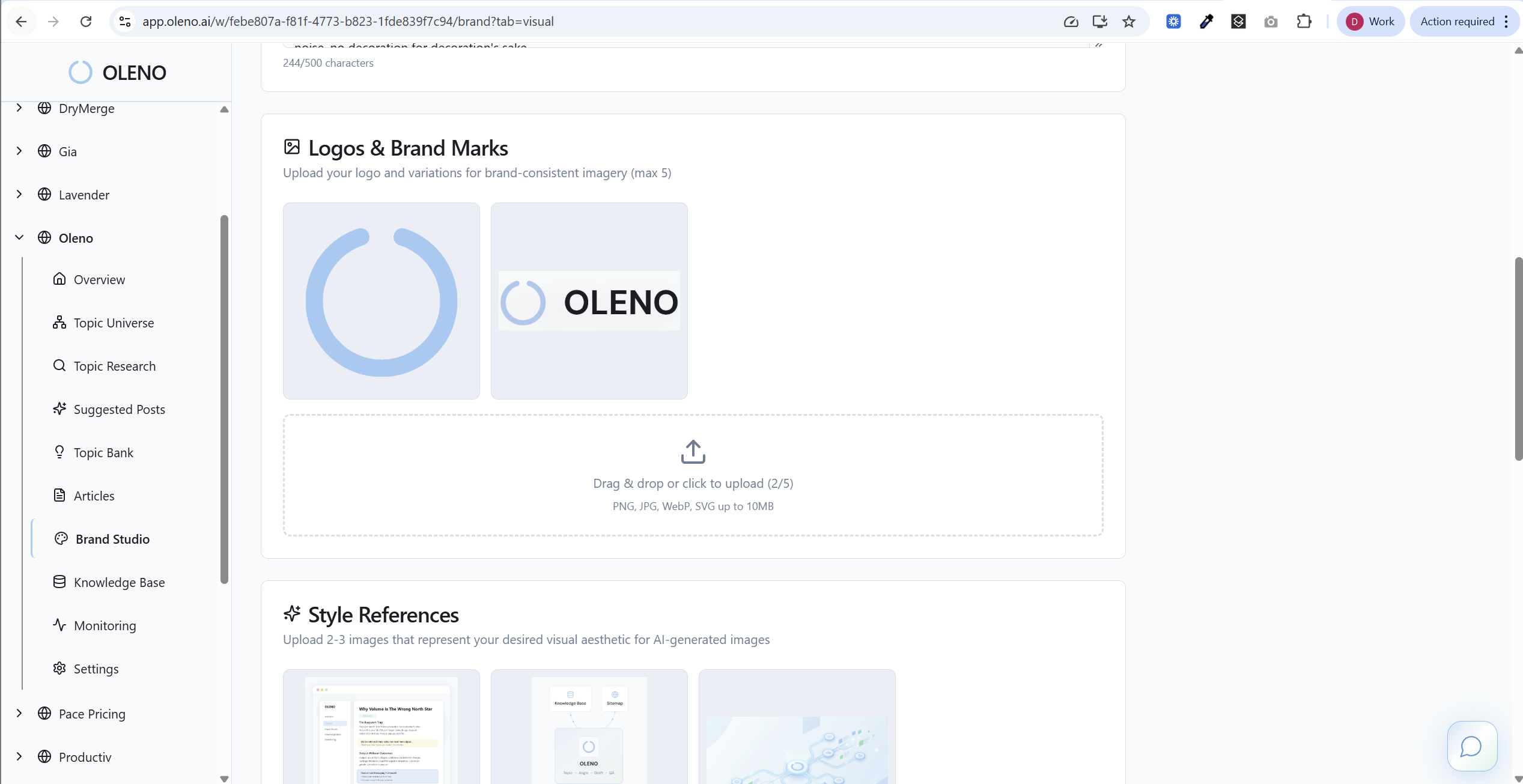
The practical change is you stop debating basics in every doc. The system carries the rules forward.
Oleno also uses the variation layer & topic universe so you can build one core idea and then create variants only where they’re worth it, like role-specific H2s or proof points, instead of doing tiny low-value persona edits that waste time.
If you want to see the workflow end to end, request a demo.
From Prompt Chaos To A Deterministic Pipeline
Prompting is fine for a one-off task. It falls apart when you’re trying to ship week after week without drift.
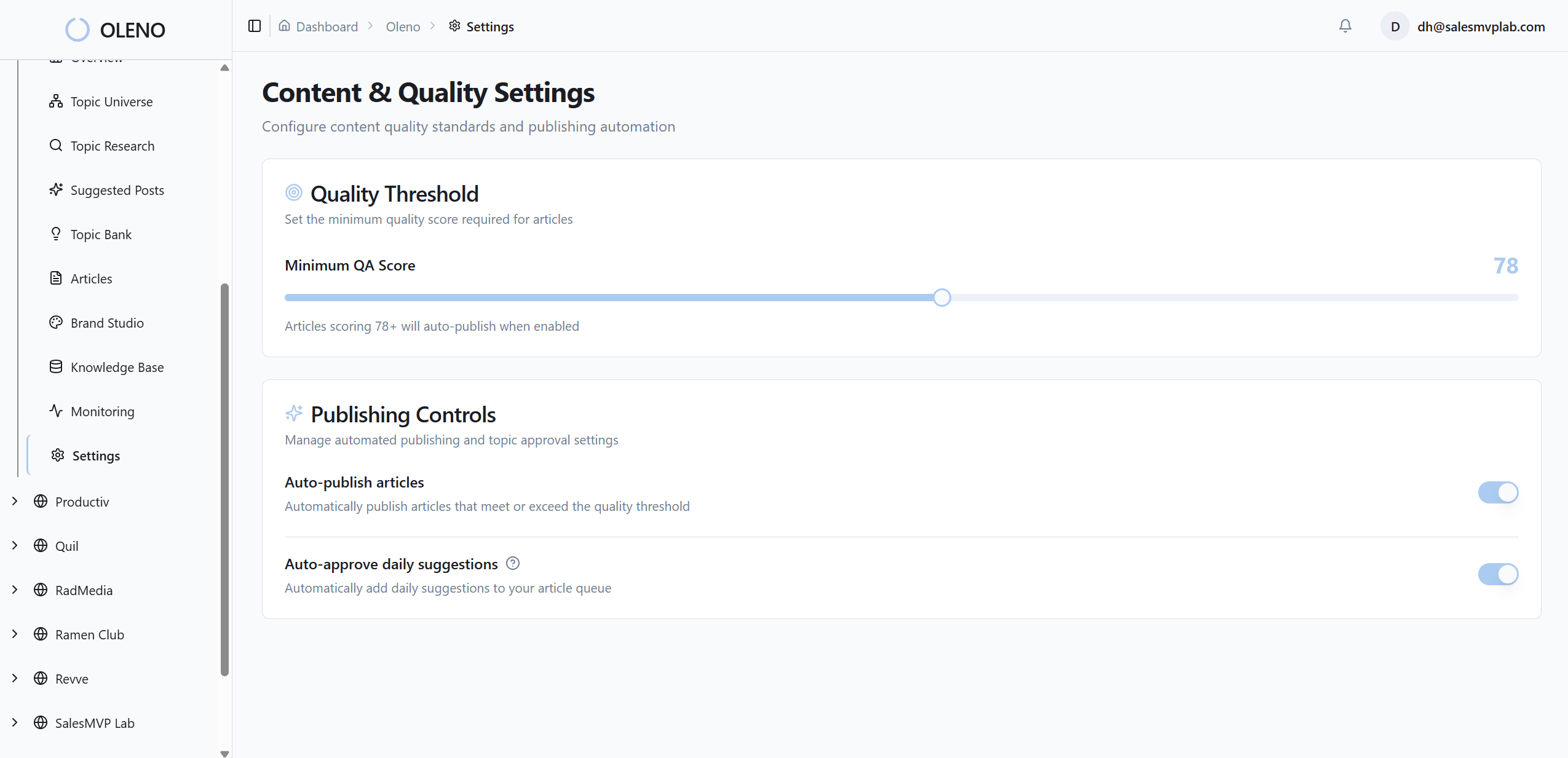
Oleno runs content through a deterministic pipeline (discover to publish) with quality control (qa gate before publishing) so nothing goes out unless it matches voice, structure, and grounding standards. Then you can push it through cms publishing, and repurpose it through distribution without inventing new messaging.
That’s the whole point. You’re not trying to write faster. You’re trying to stop the resets, cut the coordination cost, and keep the narrative tight across the funnel.
If you’re at the point where you want this running as a system, not a project, book a demo.
The Three-Asset Experiment To Prove Where Do You Sit Works
If you do nothing else from this, do this: run a tiny, controlled test you can ship this week. No new budgets. No committee. Take what you already have and reshape it around a single seat so we can see if clarity beats volume when it hits your buyers. Fast loop. Real signal.
Pick three existing pages that are persona-heavy. The kind that say “for the VP Marketing” and then try to be everything to everyone.
Convert them into job-mapped pages:
- One Acquire asset for a specific seat
- One Educate asset for that same seat
- One Convert asset for that same seat
Run it for 60 days.
Measure two things:
- How many review cycles it takes to ship each asset (editing time is a real cost).
- Whether CTAs align better to the job, and whether conversion signals get cleaner (demo clicks, contact flow starts, sales mentions, whatever you track).
You’ll usually see two changes fast: fewer subjective edits, and fewer muddy CTAs. That’s the whole game.
Stop asking “who is the persona.” Start asking where do you sit. That question forces clarity, and clarity is what makes content convert.
About Daniel Hebert
I'm the founder of Oleno, SalesMVP Lab, and yourLumira. Been working in B2B SaaS in both sales and marketing leadership for 13+ years. I specialize in building revenue engines from the ground up. Over the years, I've codified writing frameworks, which are now powering Oleno.
Frequently Asked Questions