Contrarian: Stop Chasing Virality — Use Demand‑generation Execution Software to Compound Quiet Wins

Most people asking “what is demand-generation execution software?” are really asking a different question, even if they don’t know it yet. They’re asking, “Why does our demand gen keep stalling out even though we’re working all the time?”
Demand-generation execution software is an operational marketing category that produces consistent, narrative-driven pipeline by orchestrating governance, topic coverage, and a QA-gated production-to-publishing pipeline across the funnel. It lets lean teams run demand gen end to end with predictable quality and cadence. Unlike AI writing assistants or SEO tools, it’s not here to help you write faster; it’s here to keep the system coherent so output compounds.
Why now? Because fragmented, prompt-based demand-gen execution hit a ceiling. AI made drafts cheap. It didn’t make end-to-end execution easier. So teams shipped more words, with less control, and pipeline still felt random.
Key Takeaways:
- Stop treating virality like a strategy. It’s a dopamine hit, not a system.
- Fragmented, prompt-based execution is why your output doesn’t compound.
- Demand gen is an execution system, not a content activity.
- Category leaders win with governance first, coverage second, QA-gated cadence third.
- Start with basic docs and discipline; graduate into software when you’re ready.
Virality Is a Sugar High: Compounding Quiet Wins Beats Spikes
The seduction of spikes
Virality is addictive because it’s obvious. You post, it pops, Slack explodes, the CEO forwards it, and for 48 hours it feels like you cracked the code. Spikes are fun. They also create a dangerous illusion that demand gen is about moments.
Quiet wins don’t feel like that. Quiet wins look like the same viewpoint showing up again and again, in different formats, aimed at different stages, in the same voice, with the same spine. Nobody celebrates the 17th post in a cluster that finally pushes the whole thing over the edge. But that’s usually where the pipeline lift comes from.
Anchor on spikes and you optimize for what’s visible, not what compounds. You chase novelty, not coverage. Speed, not reliability. Then you rebuild your “strategy” every quarter because nothing stuck long enough to become an asset.
The real blocker isn’t ideas, it’s fragmentation
Most teams don’t have an idea problem. They have a system problem.
You’ve got half a machine in five places. A doc with positioning notes. A Notion page with content ideas. A bunch of prompts. An SEO tool. A freelancer. A design queue. A “content calendar” that’s really a graveyard of half-finished hopes. Then someone tries to duct-tape it together in Slack.
That’s fragmented, prompt-based execution. It feels like work, people busy, drafts flying, yet nothing runs end to end, so nothing compounds. High activity, low momentum.
Prompting ≠ demand gen
Prompting is drafting. Drafts don’t make pipeline; decisions do.
The hard part isn’t a first draft. It’s staying on-message, consistent with your POV, accurate on product, aimed at the right audience, connected to the rest of the funnel, and actually getting to publish without dying in review.
Prompting pushes that judgment onto humans. Strategy turns into, “Who has time to review this doc today?” Scale volume and coordination cost scales with it. More reviews. More edits. More tone drift. More “wait, are we still saying it this way?”
You’re not building leverage. You’re building editorial debt.
The category alternative (teaser)
The alternative isn’t “write more” or “prompt better” or “hire a better agency.”
Treat demand gen like what it is: an execution system that has to hold together over time. That’s what demand-generation execution software names. It’s the shift from chasing moments to building momentum, governance, coverage, and cadence designed into the process instead of living in someone’s head.
If your demand gen is fragile, it’s not because your team isn’t smart. It’s because your system can’t survive a busy week.
You’re Solving the Wrong Problem: Demand Gen Is an Execution System
Old categories solve slices, not the system
Most tools you buy solve a slice.
Content tools draft or edit. SEO platforms find and track. AI assistants put words on a page. Agencies add output. Stacks route leads and run campaigns.
Useful, yes. But none of them runs demand gen end to end.
The failure point is governance and orchestration. Who owns the narrative? Who enforces voice? Who ensures what you publish this month connects to last month and next month? Who keeps TOFU aligned with what you sell? In old categories, the answer is “a person.” Usually a very busy one.
So parts get faster while judgment sits on humans. Output climbs; reliability doesn’t. And reliability is what makes compounding possible.
Why fragmentation feels normal
Fragmentation is the default. Every point solution has a clean local ROI. “We need SEO.” “We need more content.” “We need capacity.” “We need experts.”
Individually rational. Systemically, it creates dependencies and handoffs.
Prompting feels productive because it shows you something in five minutes. Agencies feel productive because they deliver deliverables. Stacks feel productive because they make dashboards. None of that guarantees continuity. Demand gen is a continuity game.
Small teams feel it hardest. Stacks assume coordination capacity you don’t have. Someone will review. Someone will ensure consistency. Someone will connect the dots. In reality, “someone” is three people wearing twelve hats. So the work stays manual and reactive. Until it breaks.
Not “writing tools,” but an orchestration layer
Unlike AI writing assistants or SEO tools, demand-generation execution software governs narrative, coverage, and cadence, and then operationalizes publishing.
A writing tool asks, “How do we create this asset?” An orchestration layer asks, “How do we run demand gen every week without resetting, drifting, or bogging down in approvals?”
It’s outcome-defined. The outcome is compounding pipeline, not “more drafts.” Governance is first-class, because speed without governance just scales inconsistency, especially when evaluating what is demand-generation execution software?.
Quick example: One strategic owner sets narrative and rules once. The system enforces the rules across briefs, drafts, QA, and publish. Output stays on-message without twelve meetings.
Who it’s for and when it matters
This is for lean B2B SaaS teams that need predictable, compounding pipeline impact without headcount sprawl.
Big teams can brute force with layers of editors, PMMs, and channel owners. Expensive, but possible.
Small teams can’t brute force. You need the system to do coordination. You need to ship consistently without a weekly content therapy session, especially when pipeline pressure is high, product is changing, and leadership wants “more content” yesterday. That’s when fragmentation turns into chaos.
The Math of Compounding vs. Chaos
Quarterly resets erase momentum
Reset themes, messaging, and priorities every 90 days and you erase compounding. Topic clusters stay shallow. Internal linking stays thin. Your POV isn’t repeated enough to stick. Buyers keep getting “new” messages that don’t reinforce each other.
It also trashes confidence. You’re always in week two of something. Always building. Never harvesting.
And most resets aren’t strategic. They’re operational. Keeping continuity manually is harder than starting over. Fix the system and the resets slow down.
Coordination cost scales with volume
Go from 4 to 12 assets a month and you don’t just triple output, you often 5x coordination. More reviews, more surface area for disagreements, more edits, more meetings, more “who owns this?”
Volume exposes lack of governance. Week-to-week tone and narrative drift become inevitable. You spend more time fixing than creating. That’s the grind.
The 10x cost delta
Manual, headcount-heavy approaches cost at least 10x more than an orchestrated system. If every asset requires multiple humans to coordinate, edit, and align, your cost per publish is wild. Agencies and freelancers add capacity, and also dependencies.
The alternative: one strategic owner sets direction; AI inside a governed pipeline does repetitive execution. You cut cost and raise consistency because the system enforces rules. People handle edge cases and story.
Early signals from operationalized teams
Two failure modes look like “content isn’t working” but they’re different:
- Tons of output, low alignment to demand gen. One company ranked like crazy. Great writing, big traffic. But content detached from solution, hard to turn into pipeline. SEO win, demand gen miss.
- Strong founder POV, weak structure to capture intent. I’ve done the “record videos → transcribe → publish” thing. Fast, real. But without topic discovery and SEO structure, you miss long-tail demand that compounds.
Compounding needs both: coverage that maps to how people discover you, and narrative alignment so traffic doesn’t float away from what you sell. Fragmentation makes both hard because nothing enforces either.
What Fragmentation Feels Like Day to Day for What is demand-generation execution software?
Another Monday, another prompt thread
Three Slack threads on the same piece. One person dropping prompts. Another pasting AI drafts. Someone asking if the tone is “too spicy.” A sales leader wants a new angle for a vertical you don’t sell to yet.

Meanwhile, a Google Doc with unresolved comments. A freelancer asking where the brand guidelines live. A content calendar that doesn’t reflect reality because everything changed again.
So the week starts with coordination, not momentum. You’re not building on last week. You’re rebuilding context you already earned.
Voice drift and review purgatory
If governance isn’t encoded anywhere, every asset becomes a debate.
Is this how we talk? Is this claim accurate? Do we believe this POV? Mention product here or not? Are we still positioning against the same enemy?
Content falls into review purgatory. People get tired. Edits get softer. The POV gets watered down. Final output ships safe, and forgettable.
Meetings instead of momentum
The hidden tax of fragmentation is meetings. Status. Alignment. “Quick syncs.”
Those meetings exist because the system isn’t doing enforcement. Humans are. Time comes out of customer calls, real strategy, better creative, the stuff that makes demand gen strong. Messier execution → more meetings → even messier execution. That’s debt, not leverage.
How Category Leaders Compound Quiet Wins
Here’s the clean replacement for fragmented, prompt-based execution. Not magic. Just what serious teams do consistently, even when they’re busy.

Three pillars:
- Governed Narrative: Centralize voice, POV, and product truth so every asset inherits accuracy and stance by default.
- Systemic Coverage: Plan topic depth and breadth across the funnel with a steady cadence that compounds SEO and LLM visibility.
- QA-Gated Cadence: Run an end-to-end pipeline with minimal QA gates and automated handoffs to ship reliably without drift, especially when evaluating what is demand-generation execution software?.
Principle 1, Governance before output
Governance sounds boring. It’s where compounding starts.
If you don’t define how you sound, what you believe, and what you can safely claim, contributors reinvent it on every asset. That’s why voice drifts and positioning erodes, not one big mistake, a hundred tiny ones.
Create a few artifacts and treat them like law:
- Message map: what you believe, what you’re against, what you’re for
- Voice guide: do’s and don’ts, “words we never use,” exemplar paragraphs
- Product truth sheet: what’s true, what’s not, lines you won’t cross
- Proof pack: top stats, customer quotes, constraints for claims
When governance is first, output gets faster and less fragile. Fewer subjective edits. More signal.
Principle 2, Coverage map and cadence
Next is coverage. Not “ideas.” Coverage.
Build a map you can execute weekly:
- Acquire: capture search and discovery demand
- Educate: teach your POV and category
- Convert: comparisons, evaluations, objections
- Retain: customer education, adoption, expansion
- Reinforce: proof, stories, reminders
Assign cadences. Define “steady.” Treat it like a publishing operating rhythm, not a campaign.
Depth + breadth over time = authority, repeated narrative exposure, and more surface area for both classic search and LLM-driven discovery. Consistency wins.
Principle 3, QA-gated, publish-ready pipeline
You need a pipeline that ends in publish. Reliably.
A minimal QA gate is enough, but it has to be real. Checklist blocks publish until true:
- Facts and claims verified against the product truth sheet
- Voice matches governance exemplars
- Narrative ties to POV; not generic advice
- Clear funnel lane with a next step (CTA, related links)
- Distribution metadata ready (title, description, snippets, internal links)
- Accessibility basics covered (alt text, headings)
Then design handoffs: Draft → Edit → Design → CMS → Distribution. Remove “who owns this?” gaps. Build reuse in from the start, refresh winners, republish strong angles, reinforce core messages across formats. Net-new isn’t the only path to growth.
Start today without buying software
You can start this without anything fancy. Just stop pretending prompting is a system.
Here’s a lightweight starter kit for this week:
- One-page governance doc (voice, POV, approved claims, prohibited terms)
- A 12-week coverage plan across funnel lanes (with weekly cadence targets)
- A simple Kanban with a hard QA checklist gate
- A weekly “reinforce” slot to refresh or repurpose a winner
How to know it’s working (leading indicators in 4–6 weeks):
- Stable weekly publish count without heroics
-
70% of assets pass QA on first attempt
- Cycle time from brief → publish trending down week over week
- Each piece links to at least two related assets (continuity)
- Fewer review comments about tone/claims; more about insight/angle
That’s the point: less chaos, more continuity, more momentum.
In Practice: Operationalizing the System with Oleno
What it looks like in Oleno
Oleno operationalizes demand-generation execution as a system, not a pile of tools.

Encode governance once, then run repeatable jobs through a deterministic pipeline: Discover → Angle → Brief → Draft → QA → Enhance → Visuals → Publish. The win isn’t the step names; it’s that the system enforces them so content doesn’t die in handoffs or drift from your POV.
Oleno also supports audience and persona targeting so the same topic can be framed for different segments, without manual wrangling every time.
Closing the enemy’s gaps
The enemy is fragmented, prompt-based execution. Oleno closes the gaps that make it expensive.
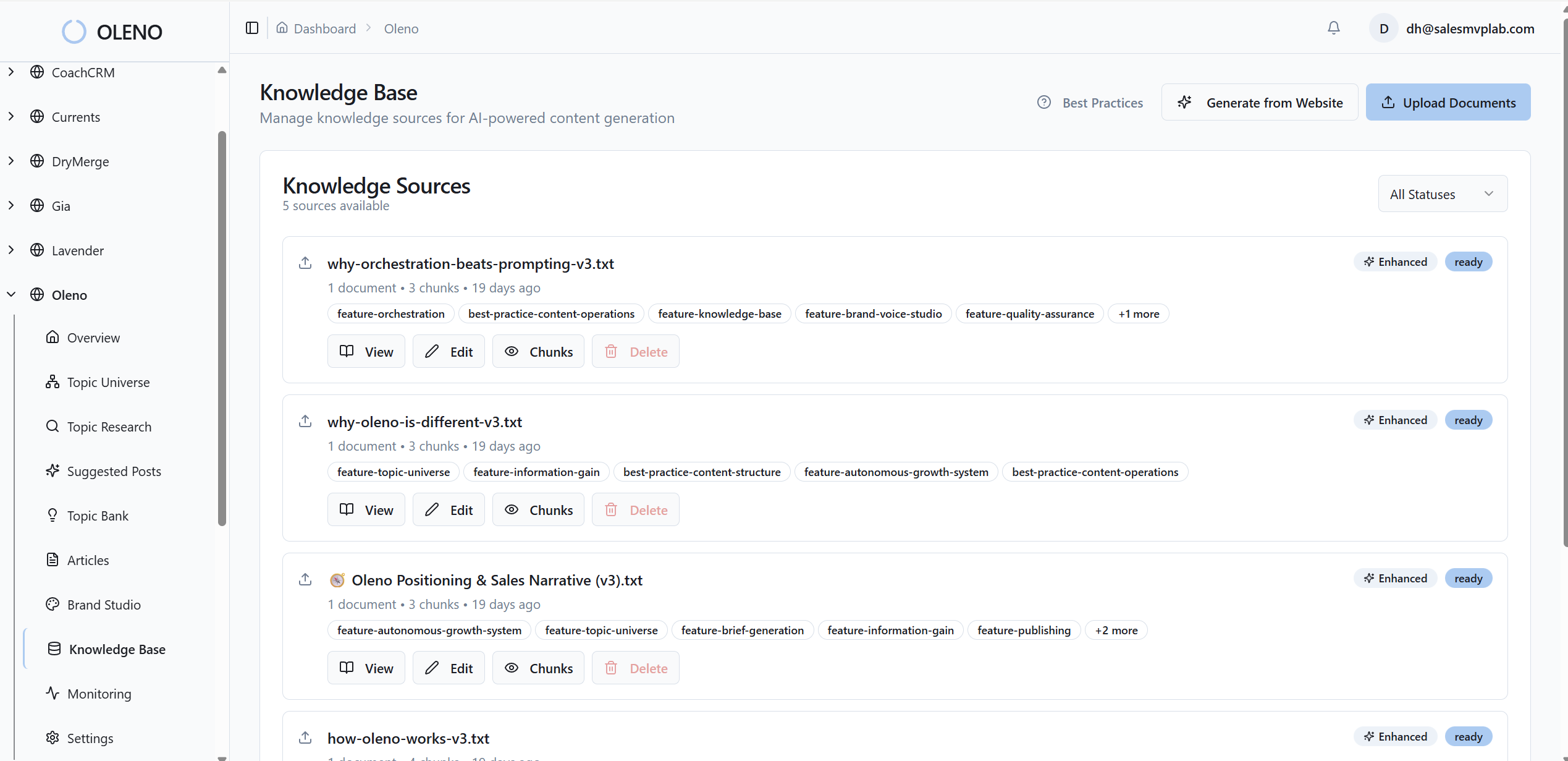
Brand Studio locks in how you sound, no more weekly voice fights. Marketing Studio encodes category framing and POV, so you don’t ship “nice content” that doesn’t move buyers. Product Studio plus knowledge archive grounding keeps claims accurate, cutting review cycles that kill cadence. Then quality control (QA gate before publishing) blocks weak outputs from shipping, so you can scale without brand damage.
That’s the system doing coordination work. Not your calendar.
Early proof and outcomes
Oleno started as an autonomous programmatic SEO engine. It indexed quickly and proved the point: a governed system can produce steady output that search rewards. Then the pull happened, people kept asking, “Can I use this?” That’s the signal.
It also forced a bigger lesson. Ranking isn’t demand gen. If content isn’t tied to narrative and product truth, you can win traffic and still lose pipeline. So the product evolved into an execution system across the funnel, not just an SEO machine.
Getting started checklist
If you want to implement this in Oleno without overthinking it, the path is clean:
- Encode voice and rules in Brand Studio
- Encode POV and category framing in Marketing Studio
- Ground product truth in Product Studio and knowledge archive
- Pick 3–5 funnel lanes and set your first 12-week cadence
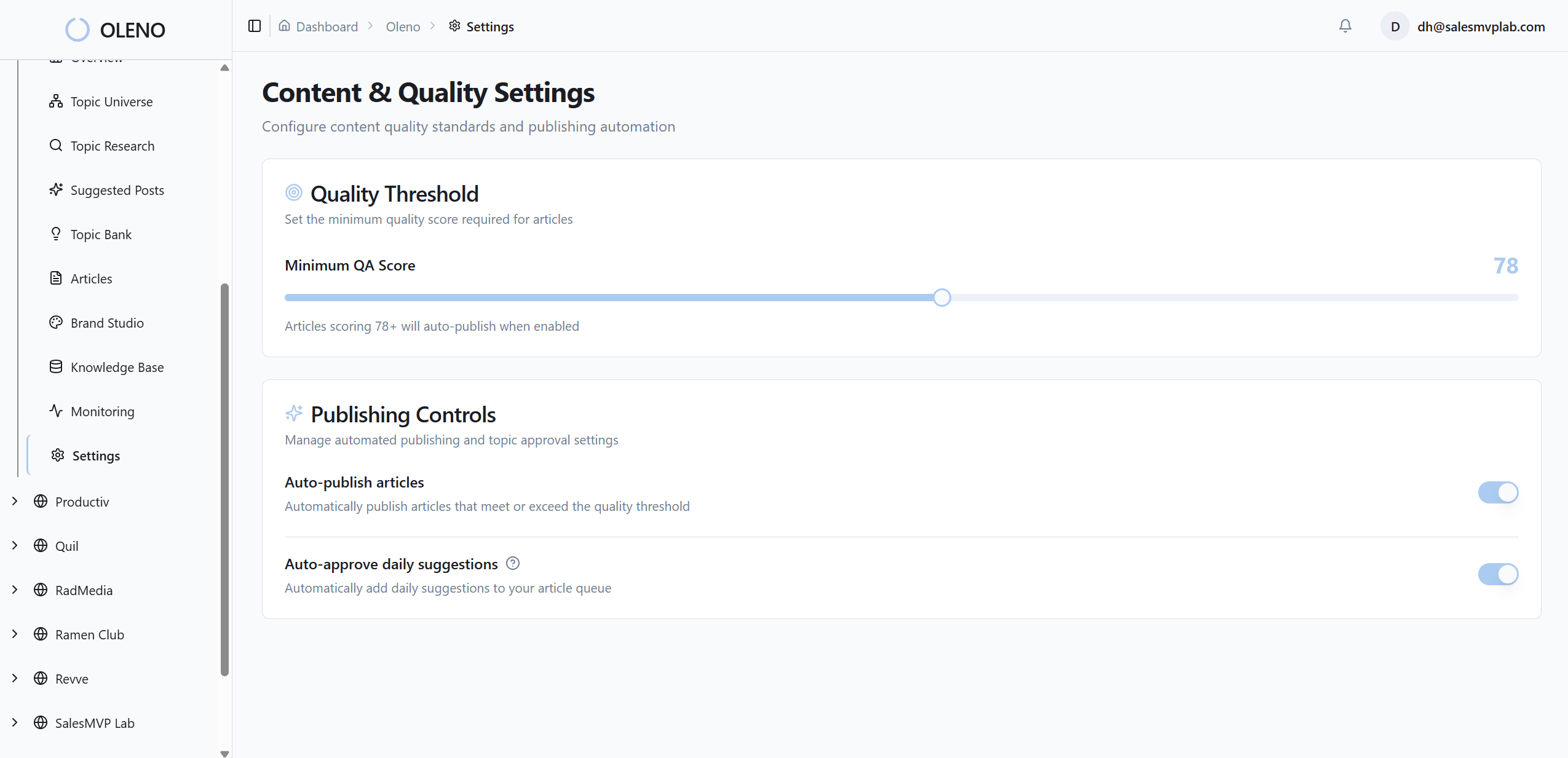
- Turn on quality control (QA gate before publishing) to protect the floor
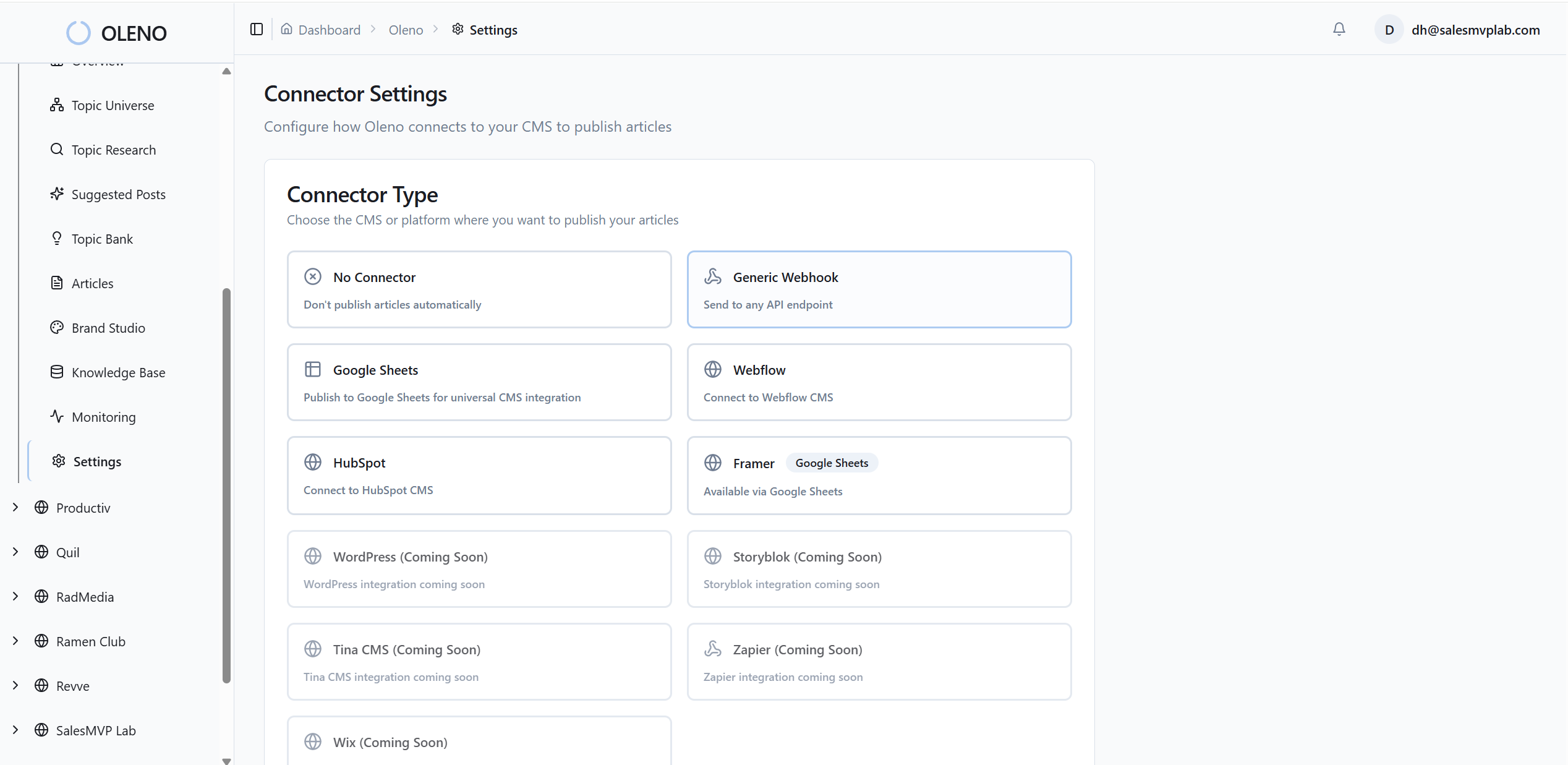
- Connect CMS publishing and distribution so “done” means published
If you’ve been living in fragmented execution, this feels like someone finally put rails on.
Conclusion
If you’re chasing virality, you’re usually chasing a feeling. It feels like leverage. It feels like progress. But most teams don’t lose because they didn’t have a hit; they lose because they never built a system that could compound quiet wins.
Fragmented, prompt-based execution is the trap. It makes you busy, reactive, and reset-happy. Demand-generation execution software is the category response: governance first, coverage second, QA-gated cadence third.
Do it with docs and discipline, or do it with a system like Oleno. Either way, same goal. Stop chasing spikes. Start building momentum.
About Daniel Hebert
I'm the founder of Oleno, SalesMVP Lab, and yourLumira. Been working in B2B SaaS in both sales and marketing leadership for 13+ years. I specialize in building revenue engines from the ground up. Over the years, I've codified writing frameworks, which are now powering Oleno.
Frequently Asked Questions