Contrarian: Stop counting articles. Start measuring the 6-layer demand-gen execution stack’s health

If you’re running the 6-layer demand-gen execution stack, you stop asking “how many pieces did we ship this week?” and you start asking “is the system getting healthier, or are we just busy?” Demand-generation execution software is a workflow orchestration platform that turns strategy, brand rules, and product truth into consistent, end-to-end content operations by governing narrative, automating creation and quality control, enforcing cadence SLOs across channels, and continuously measuring system health so demand compounds without adding headcount. Unlike AI writing tools or content utilities, demand-generation execution software manages the system, not individual drafts.
And yeah, I know, this sounds like semantics. It’s not. Most small B2B teams aren’t failing because they don’t work hard. They’re failing because they’re stuck in fragmented, prompt-based demand-gen execution, and they’re measuring the wrong thing, so the failure hides behind “we published 12 posts.”
Key Takeaways:
- Stop counting assets shipped, start tracking system health (quality, cadence, accuracy, coverage).
- Fragmented, prompt-based demand-gen execution scales coordination cost faster than output.
- The 6 layers work as a stack, if one layer is weak, you get drift and quarterly resets.
- Set SLOs for each layer so you can manage reliability, not vibes.
- You can implement the stack with simple docs and checklists before automating anything.
Output Isn’t Demand: Why Volume KPIs Create a False Sense of Progress
The seductive lie of “more posts = more demand”
Most teams run content like a factory. More blog posts. More LinkedIn posts. More landing pages. More “assets.” Then the dashboard looks good, so everyone breathes out for a second, until the next week hits and the machine needs to be fed again.
The problem is that volume KPIs reward activity, not compounding. You can ship 20 pieces and still have weak funnel coverage, a muddy POV, and zero clean path from problem to solution. I’ve seen teams rank for a ton of stuff and still not create demand, because the content was detached from what they actually sell. Traffic happened, but it wasn’t attached to a narrative, so it didn’t convert into trials, demos, or pipeline.
Fragmented, prompt-based demand-gen execution makes this worse because it turns content into random acts of production. You’re not building a library, you’re stacking one-offs. So you get little spikes, then a fade, then a new campaign replaces the last one, and you’re back at zero.
Prompt velocity masks execution fragility
Prompting feels like speed. You type a thing, you get words, you feel productive. Then you do it again. And again. And after a month, you realize you built a system where humans are the glue for everything important.
People are doing QA in their head. People are doing voice enforcement through subjective edits. People are doing claim checking by asking product folks in Slack. People are doing publishing by copy-pasting into the CMS, fixing formatting, resizing images, tweaking CTAs, and trying to remember what “good” looked like last week.
So the output looks fast, but the execution is fragile. The more you ship, the more coordination you need, because you’re creating variance. You’re basically manufacturing rework. And variance is expensive because it turns into meetings, edits, approvals, and “can you just take another pass at this?”
The quarterly reset trap
Here’s the cycle I see everywhere.
Quarter starts. New themes. New OKRs. New content calendar. Everyone’s excited. You ship a burst. Then reality hits. Launches happen. Sales asks for something. A founder wants a post. A webinar pops up. Your “system” gets bent out of shape because it was never a system, it was a plan.
Then the quarter ends. You look back and it’s hard to say what compounded. The work doesn’t reinforce itself. The narrative didn’t get tighter. The content doesn’t ladder. And you don’t have real operational learning because your process was different every week.
That’s what fragmented, prompt-based demand-gen execution does. It resets your momentum every 90 days. You keep paying the startup costs of demand gen, over and over.
Leaders don’t manage volume, they manage system health
The better teams don’t obsess over volume. They obsess over reliability. They treat demand gen like an execution system with health metrics, not like a creative treadmill.
They look at things like QA pass-rate, cadence SLO attainment, claim-failure incidents, and variation coverage. Not because they’re obsessed with process. Because those are the leading indicators that predict whether their content is going to compound, or whether it’s going to drift and die.
If your only KPI is “posts shipped,” you’re flying blind. You can feel busy and still be losing.
The Real Scoreboard: From Counting Outputs to Managing the 6‑Layer Stack
The category confusion that keeps teams stuck
Most buyers don’t buy “demand gen execution.” They buy pieces.
An SEO tool for rankings. An AI writer for drafts. A freelancer for capacity. A content ops tool for workflows. A social scheduler for distribution. Then a bunch of Notion docs and Loom videos to hold the context together. On paper, it looks like a stack. In practice, it’s a pile.
Each tool solves a slice, but none of them run demand generation end to end. So you still need humans to coordinate the slices, and humans are the bottleneck. That’s why prompt-based workflows explode. They’re the easiest way to get “something,” even if the system behind it is broken.
And once you’re in it, it’s hard to see, because you’re measuring the wrong thing. You’re measuring output, not system health.
Define the 6-layer demand-gen execution stack
Here’s the frame that changes the conversation. The 6-layer demand-gen execution stack isn’t a list of tactics. It’s an operating system model. The point is that each layer reduces variance for the next one, so you can scale output without scaling chaos.
The layers:
- Narrative Governance
- Product Truth & Claims
- Visual & Identity Standards
- Variation & Audience Targeting
- Production & Quality Gates
- Distribution, Cadence & Telemetry
When teams don’t have this, they try to “go faster” by adding more prompts, more writers, or more agencies. That scales headcount, not systems. And you can’t out-hire variance.
Also, quick origin point here. This stack didn’t “emerge” because marketing people got bored and wanted new jargon. It emerged because fragmented, prompt-based demand-gen execution made the old approach unsustainable. The more content surfaces expanded, and the more AI increased volume expectations, the more obvious it became that coordination, quality, and narrative drift were the real bottlenecks.
The new scoreboard: system-level health metrics
Once you accept the stack, the scoreboard changes. Output is still a number, but it’s not the number that matters.
Here are the system health metrics that actually predict whether the machine is working:
- QA pass-rate: how often content is acceptable without rounds of edits
- Cadence SLO attainment: do you hit your publishing promises by channel
- Claim-failure incidents: how often you ship something wrong (severity-tiered)
- Variation coverage index: persona x funnel stage x channel coverage
- Narrative cohesion / drift score: does the story stay consistent week to week
- Lead time to publish: idea to live, not “draft to done”
- Funnel coverage index: are you only doing top-of-funnel, or do you have the full journey
- Reuse / reinforcement ratio: how much new work reinforces old work (refresh, repurpose, link, sequence)
If you track those, you can predict output quality and pipeline stability before it shows up in revenue.
Resource decisions change when you see the system
When your goal is system health, a bunch of “normal” decisions start looking dumb.
Hiring a junior writer to crank content can actually lower throughput because you add review load. Adding an agency can increase speed for a month, then create dependencies and coordination debt. Buying another point tool can feel like progress, then you realize you just added another workflow and another place for things to drift.
In the stack frame, the goal isn’t “more hands.” It’s lower variance. Fewer handoffs. Fewer meetings. Fewer rewrites. You want a setup where one strategic owner can run a high-output engine, because the rules are explicit and the quality is enforced.
That’s how small teams win.
Proof It Compounds: Data, Costs, and Signals That System Health Predicts Pipeline
Manual scaling is 10x costlier than orchestrated systems
The cost curve is brutal if you scale manually, especially when evaluating the 6-layer demand-gen execution stack.
One of the sneaky consequences of fragmented, prompt-based demand-gen execution is that every extra asset isn’t just extra writing time. It’s extra coordination time. More review. More edits. More “can you double check this claim?” More design requests. More publishing steps.
That’s why manual, headcount-heavy approaches can easily cost 10x more than an orchestrated system. If one strategic writer with AI and explicit quality controls can do the work for under 10% of the cost, it’s not because they type faster. It’s because the system removes rework and coordination loops.
The marginal cost per asset drops when the system is stable. In manual mode, marginal cost rises as you produce more.
Coordination tax grows faster than output
Coordination tax is the thing nobody budgets for. It’s invisible in your content calendar, but it eats your week.
Every additional asset adds:
- another reviewer who wants their opinion reflected
- another place for tone to drift
- another chance to make a claim you can’t back up
- another formatting and publishing cycle
- another Slack thread asking “who owns this”
So output increases linearly, but coordination cost increases faster than that. It’s superlinear. And the first thing coordination tax breaks is cadence. You miss the week. Then you miss the next one. Then the channel gets quiet. Then demand gen “stops working.” Not because content is dead, but because your system couldn’t hold the load.
Cadence SLOs don’t get missed because people are lazy. They get missed because the system can’t absorb variance.
Drift and claim failures erode brand equity
Tone drift sounds soft, but it’s measurable in outcomes. If your story changes week to week, buyers don’t know what you stand for. And confused buyers don’t convert.
Claim failures are worse. They cause internal trust issues too. Once product or legal gets burned by a few wrong statements, reviews get heavier. That slows everything down, which increases pressure, which increases mistakes. You can spiral pretty fast.
That’s why “claim-failure incidents” is such an important metric in the stack. If you’re tracking it and running postmortems, you can actually reduce it. If you ignore it, it just becomes an accepted cost of doing content, which is insane.
Case signals: high traffic without demand vs. system-led compounding
I’ve lived this one.
I was on a team with an amazing content crew. Great writers, lots of personality, great design. We ranked insanely well for a lot of topics. But we wrote stuff that was too far from the product and the narrative, like “how to manage an SDR team.” We got the traffic, but it didn’t attach to demand. There was no clean bridge back to what we sold, so we couldn’t convert that attention into pipeline.
That’s the trap. Rankings feel like winning, but if the system doesn’t enforce narrative alignment and funnel coverage, you can build a giant library that doesn’t move buyers. It’s content, not demand gen.
System-led teams do the opposite. They make sure the system stays healthy, so the content stays on-message, accurate, and sequenced. Then the library compounds because each piece reinforces the last one. That’s when you see the steady lift, not just spikes.
The Human Toll: Living With Fragmented Execution Week After Week for The 6-layer demand-gen execution stack
Tuesday triage, Wednesday rework, Friday slips
You know the week.
Tuesday you’re in triage. “We need a post for this keyword.” “We need a landing page for this campaign.” “Sales needs a deck.” So you prompt your way into drafts. It feels like progress.
Wednesday you’re reworking. Someone says it doesn’t sound like you. Someone flags a claim. Someone wants a different angle. You rewrite, but now you’re off your original plan.
Friday you slip. Publishing gets pushed because the final review didn’t happen, or the visuals aren’t ready, or the CMS formatting took longer than it should. Then next week starts and you’re behind again.
That’s not a motivation problem. That’s a system problem.
Narrative whiplash across channels
The worst part is the whiplash.
Your blog sounds one way. Your emails sound another. Your LinkedIn posts have a totally different CTA style. Your product pages are written like a different company. So buyers get mixed signals. Internally, it’s demoralizing because you’re trying to build something coherent, but the process won’t let you.
Fragmented, prompt-based demand-gen execution turns narrative into a suggestion. And narrative can’t be a suggestion if you want category authority.
The morale drain of quarterly resets
The reset is the punch in the gut.
You start the quarter with energy, then you watch it evaporate, and at the end you realize you have to re-debate everything again. Themes. Voice. Priorities. What “good” looks like. Which claims are safe. Which personas matter.
If you don’t encode continuity into the system, learning doesn’t stick. You just repeat the same arguments every 90 days. People burn out on that.
Instrument the New Way: How to Measure the 6‑Layer Stack’s Health
Define the six layers and set SLOs
If you want the 6-layer demand-gen execution stack to work, you need two things. Clear definitions, and SLOs. If you don’t have SLOs, you don’t have a system, you have intentions.
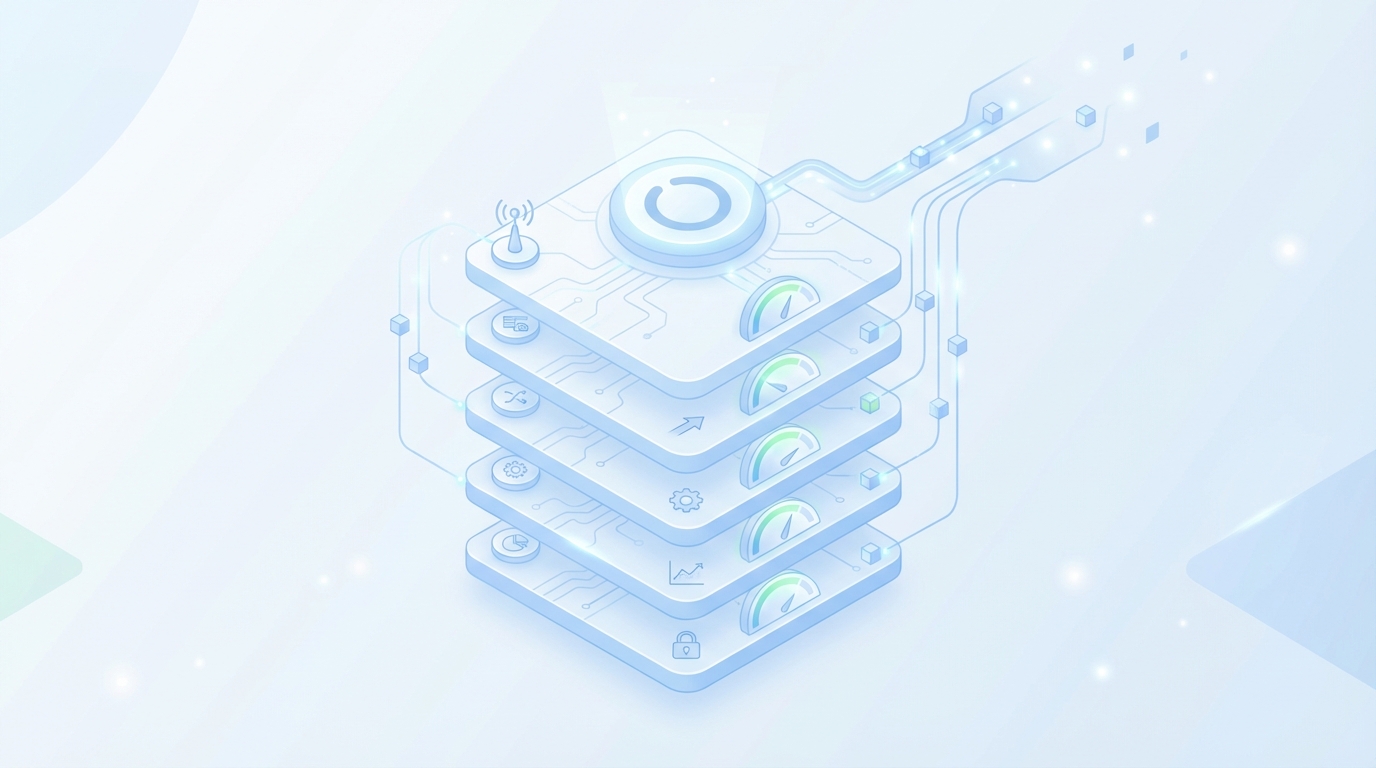
Here are the six layers with example SLOs that a small team can actually run:
- Narrative Governance: one source of truth, and zero off-voice drafts make it to publish
- Product Truth & Claims: 0 critical claim failures, under 1% minor issues
- Visual & Identity: 100% of published visuals match brand rules
- Variation & Audience: every core topic gets targeted variants across key personas and channels This is particularly relevant for the 6-layer demand-gen execution stack.
- Production & Quality Gates: 95% or higher first-pass QA acceptance
- Distribution & Cadence: 95% or higher cadence attainment by channel
If you’re reading this and thinking “that sounds intense,” it’s actually the opposite. SLOs reduce stress because you stop arguing about opinions. You’re just checking whether the system is healthy.
And this is the part people miss, the layers interlock. If narrative governance is weak, QA fails rise. If product truth is weak, reviews get heavier. If distribution cadence is weak, you don’t compound. You can’t “fix” layer six with more posting effort if layers one to five are unstable.
Adopt system-health metrics that predict revenue
SLOs are the promises. Metrics are how you keep them.
Here’s a practical set, with how I’d operationalize each one:
- QA pass-rate: track first-pass acceptance vs. revise loops, aim to push it up every month
- Cadence SLO attainment: publish planned vs. published per channel per week, no excuses hidden
- Claim-failure incidents: log failures, severity-tier them, and run postmortems on critical ones
- Variation coverage index: map persona x funnel stage x channel, then measure gaps weekly
- Narrative drift score: simple checks, do CTAs, terminology, and story structure match your governance
- Lead time to publish: idea-to-live, because “draft is done” is meaningless
- Funnel coverage index: count assets by stage and intent, not by format
- Reuse / reinforcement ratio: measure refreshes, repurposes, and sequenced follow-ups vs. net-new only
You don’t need perfect math here. You need consistency. The point is to stop guessing.
Build operating rhythms that prevent resets
The way teams avoid resets is boring, and it works.
Weekly:
- review SLOs and health metrics
- check backlog, check incidents, unblock bottlenecks
- decide what gets reinforced this week (not just what gets created)
Monthly:
- narrative audit for drift (tone, claims, structure, CTA patterns)
- variation review, where are we missing persona coverage
Quarterly:
- reinforcement plan, what gets refreshed, republished, re-sequenced
- update governance only when the market or product truth changes, not because someone got itchy
Also, assign owners. Not “shared.” Shared means nobody. One person owns system health. Others contribute.
Implement with simple tools before you automate
You can run the whole stack with basic tools before you buy anything. Seriously.
Starter pack:
- a governance doc (voice, POV, CTA patterns, structure rules)
- a claims registry (what you can say, what you can’t, and proof links)
- a QA checklist (pass/fail, not vibes)
- an incident log (claim failures, off-voice publishes, cadence misses)
- a cadence calendar with SLOs per channel
- a variation matrix (personas x funnel x channel)
30/60/90 rollout:
- 30 days: define governance + claims + QA checklist, start tracking QA pass-rate and cadence
- 60 days: implement variation matrix and funnel coverage, start reinforcement work
- 90 days: add drift checks and incident postmortems, tighten SLOs based on reality
And name your assets like you mean it. If you can’t trace a piece back to a persona, stage, and narrative angle, it’s going to float away from the system. That’s where drift comes from.
After you’ve done this manually, automation actually works, because you know what you’re automating.
In Practice: How Oleno Operationalizes the 6‑Layer Stack
Governance encoded once, enforced everywhere
Oleno is built around the idea that governance can’t live in people’s heads. That’s where drift is born.
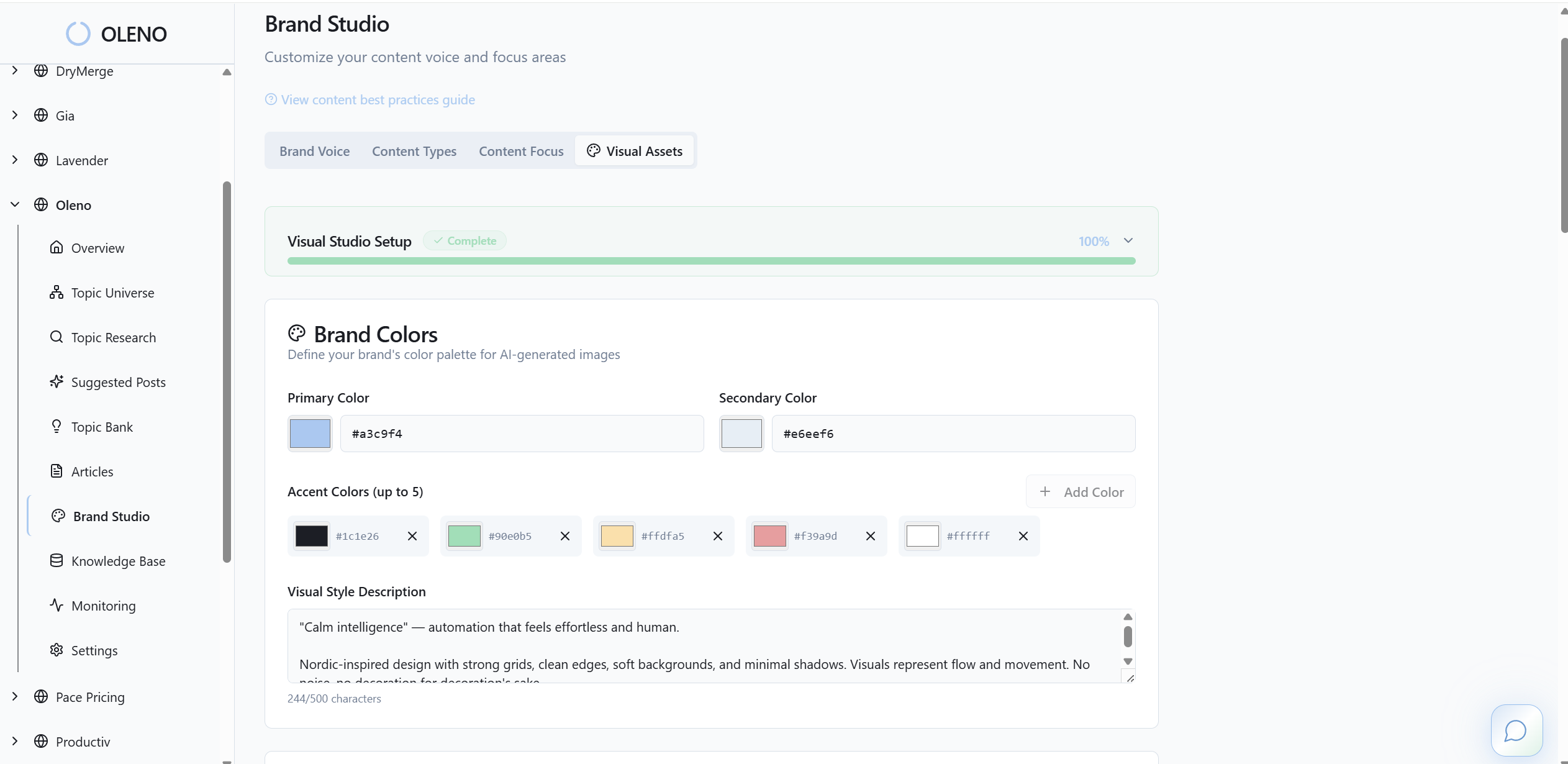
So it encodes governance up front using brand studio, marketing studio, and product studio. That means voice rules, POV, narrative frames, and allowed product claims become the reference point for creation and QA. You don’t have to re-teach the system every week, and you don’t have to hope a freelancer “gets it.”
For a small team, that’s the win. Consistency without babysitting.
Execution engine with quality gates and variation
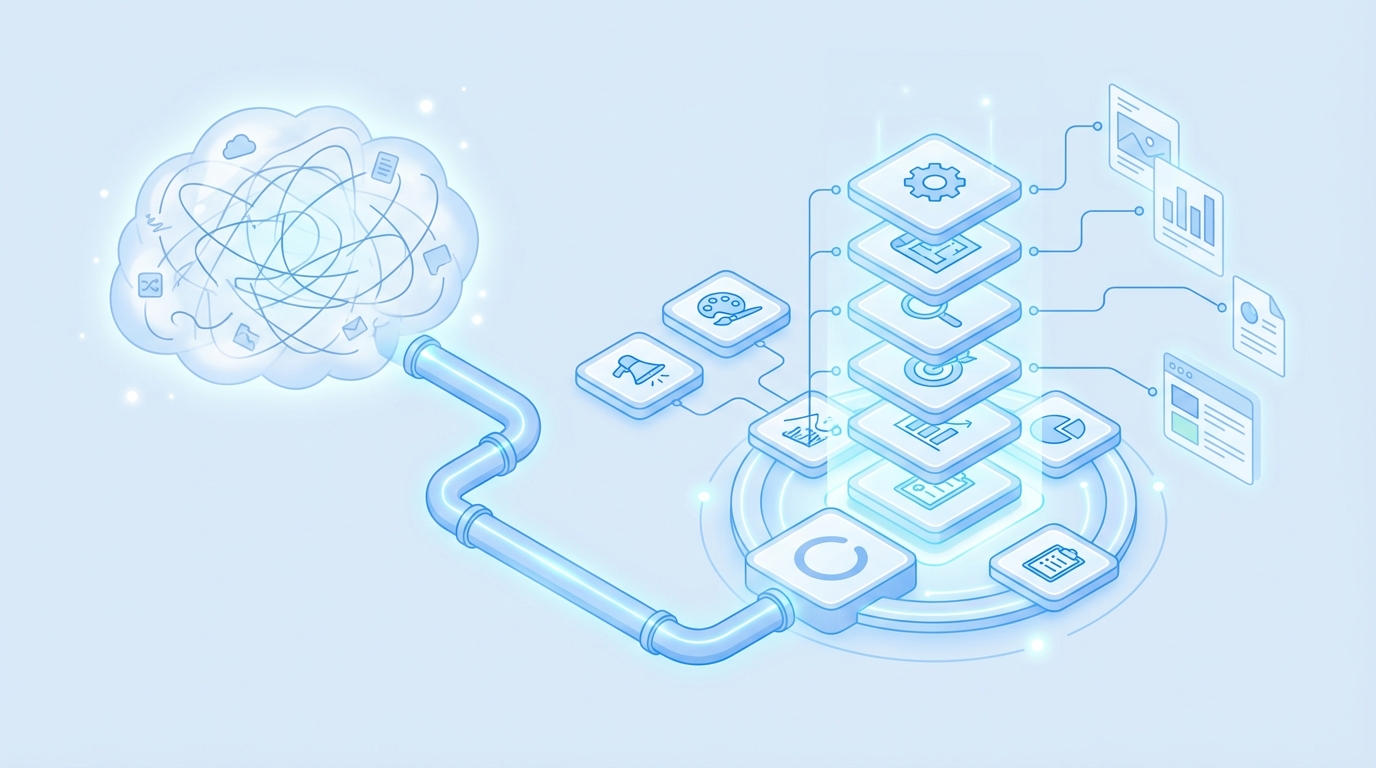
Oleno runs content through a deterministic pipeline (Discover → Angle → Brief → Draft → QA → Enhance → Visuals → Publish) and blocks publishing with quality control (qa gate before publishing) until outputs meet standards for voice, structure, grounding accuracy, and readability.
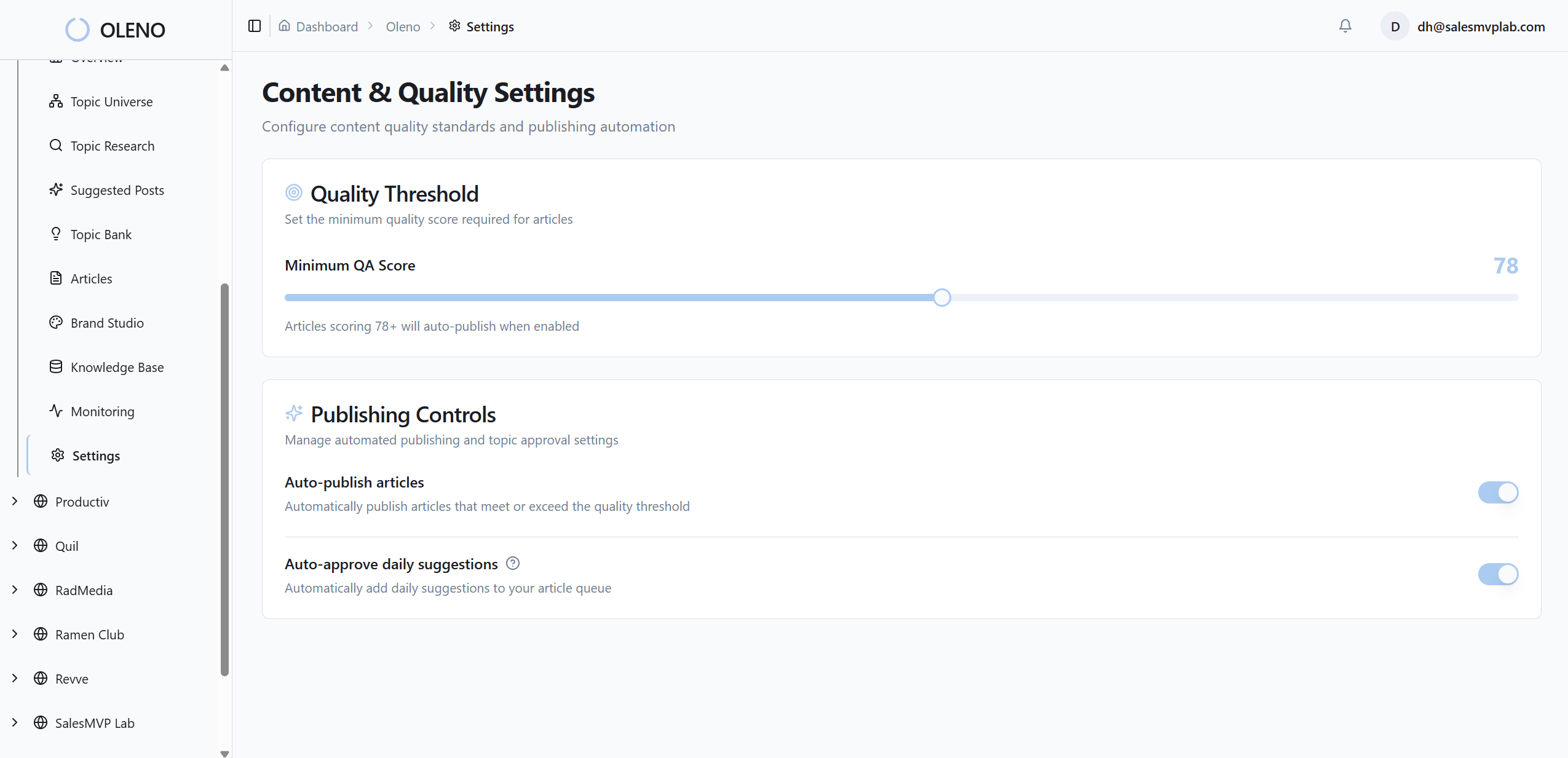
Then you can adapt the same base piece using audience & persona targeting plus the variation layer & topic universe, so you get coverage without turning your calendar into a nightmare. Less rework. Fewer review loops. Higher first-pass acceptance.
Midway through seeing this in action, most teams have the same reaction. “Oh, we don’t need more writers. We need fewer failure modes.”
Health telemetry and incident feedback loops
The compounding part comes from visibility.
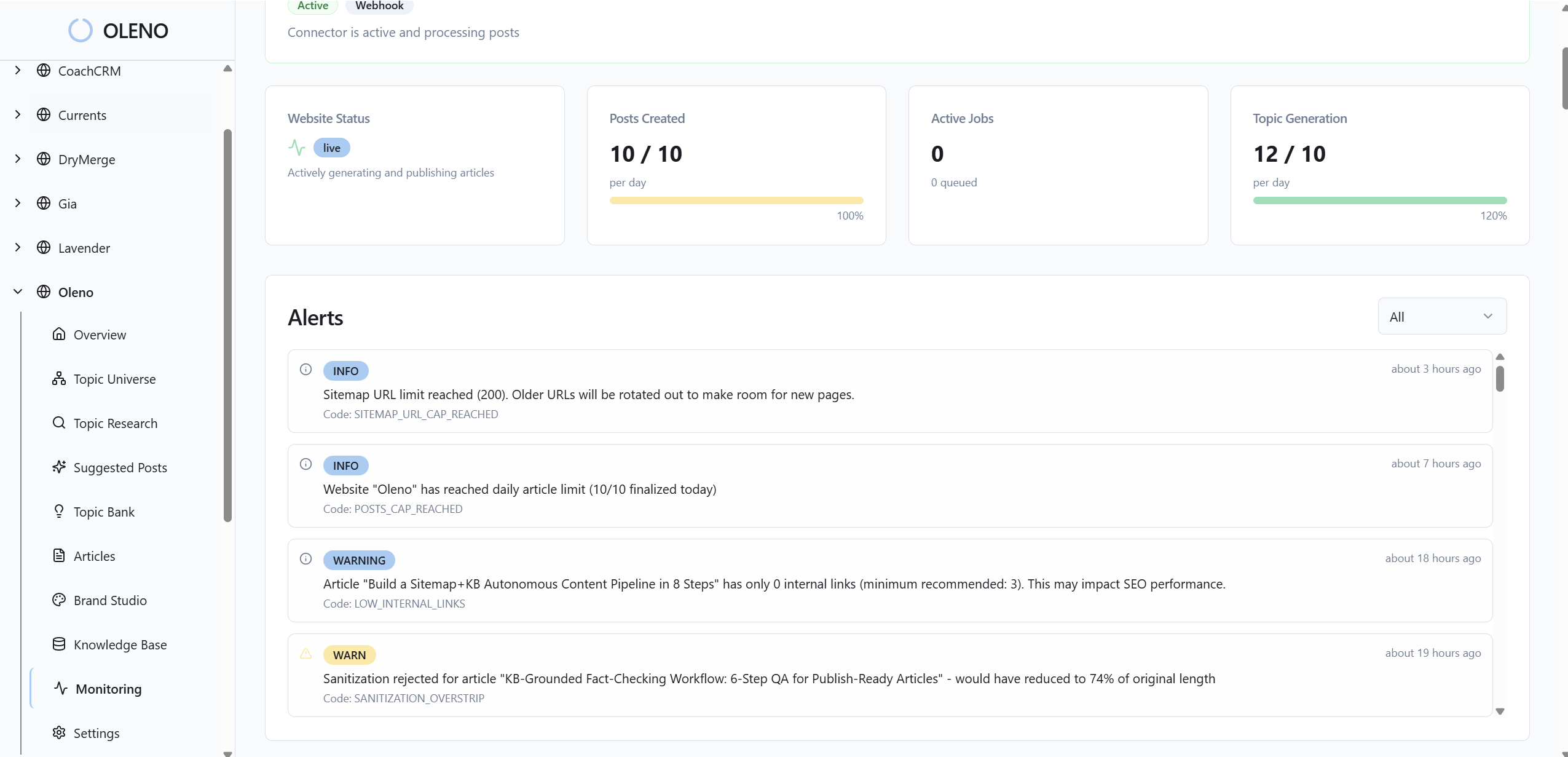
Oleno includes measurement & system health, so you can see QA pass-rate, cadence attainment, and other health signals without building a spreadsheet monster. Then you can actually run weekly health reviews like an operator, not a firefighter.
It also supports distribution and cms publishing, so the last mile doesn’t become the place where cadence dies. And if you want visuals to stop being a bottleneck, brand-consistent images closes that loop without breaking identity standards.
Net, it’s not “AI that writes.” It’s an execution system that makes the stack real.
Conclusion
Counting articles is a comfort metric. It makes you feel like you’re moving, even when demand isn’t compounding.
The shift is treating demand gen like a system. Govern the narrative. Lock the claims. Standardize the visuals. Build variation on purpose. Enforce quality gates. Hit cadence, and measure health like you mean it. That’s what the 6-layer demand-gen execution stack is really about.
If you do that, fragmented, prompt-based demand-gen execution stops being “normal.” It starts looking like the expensive mistake it is.
About Daniel Hebert
I'm the founder of Oleno, SalesMVP Lab, and yourLumira. Been working in B2B SaaS in both sales and marketing leadership for 13+ years. I specialize in building revenue engines from the ground up. Over the years, I've codified writing frameworks, which are now powering Oleno.
Frequently Asked Questions